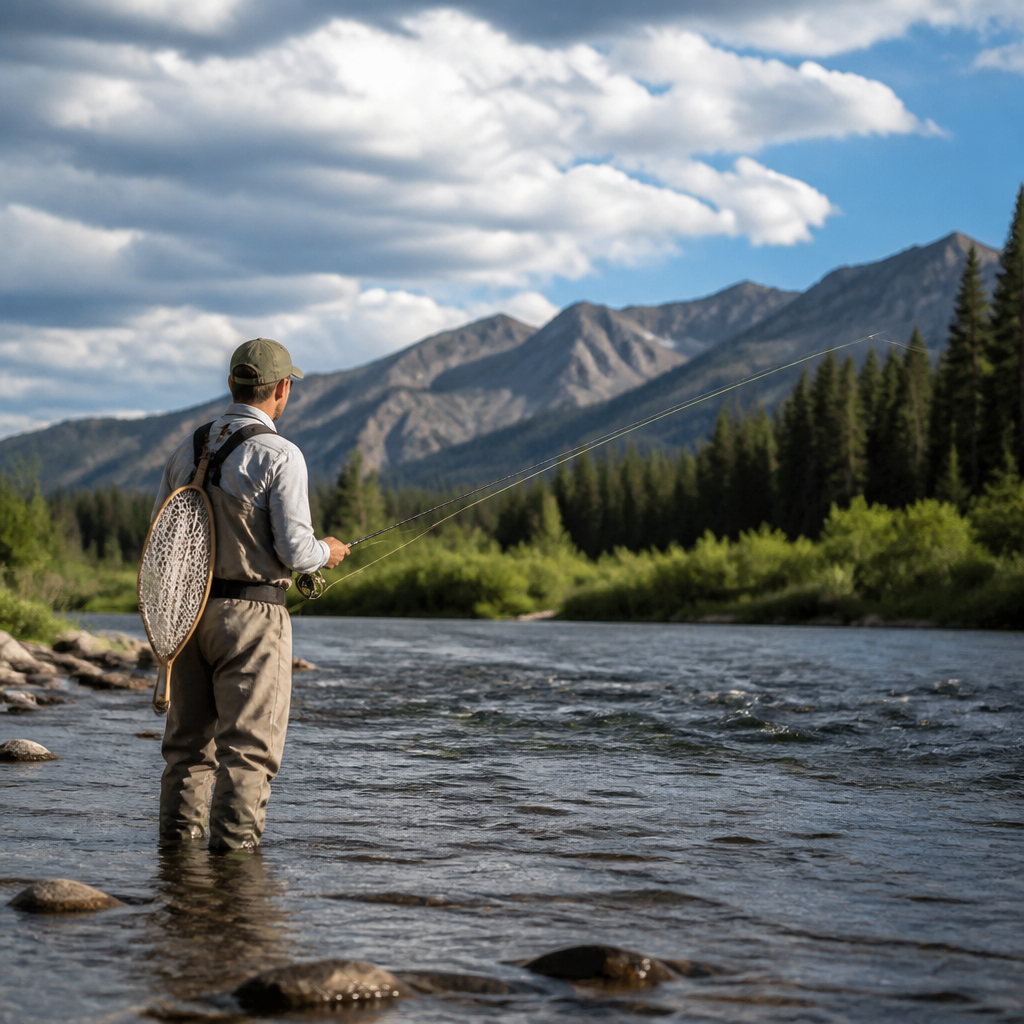
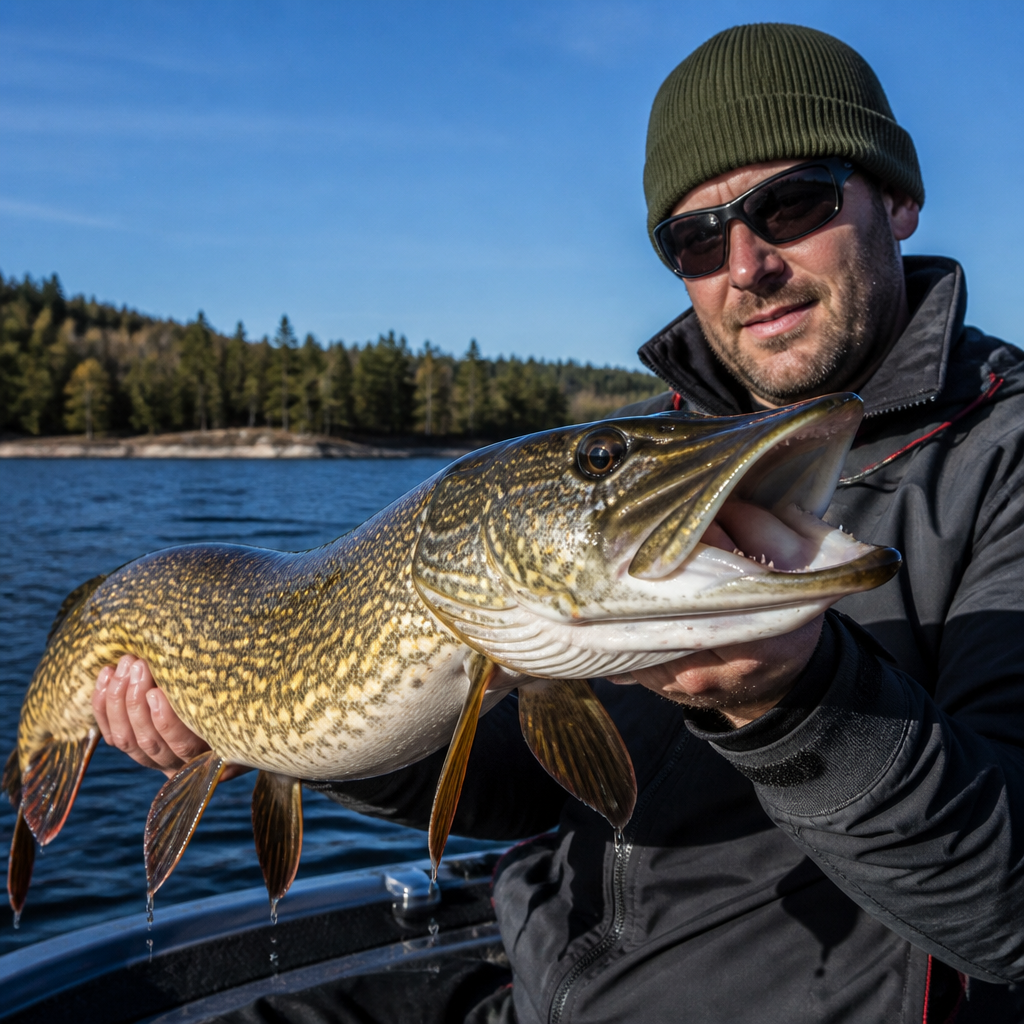
Articulated flies have become a staple in modern streamer fishing because they solve a basic problem: how to present a long, lifelike baitfish, leech, or sculpin profile without building a hook shank so oversized that fish short-strike the tail. In practical terms, an articulated fly uses two or more connected sections, usually linked by wire, braid, or shank hardware, so the pattern swims with hinge-like motion. I started tying and fishing them for trout and smallmouth after too many follows on single-hook streamers, and the difference in tracking, pause response, and hookup location was immediate. Fish that used to nip at marabou tails began eating deeper, especially in cold water when they wanted a slower, more convincing target.
For anglers exploring specialized techniques, articulated flies matter because they sit at the intersection of design, presentation, and species behavior. They are not just larger streamers. They are purpose-built tools for triggering predatory responses through movement, silhouette, and water displacement. A well-tied articulated pattern can imitate a six-inch juvenile trout, a broad-shouldered sculpin, or a rabbit-strip leech while still casting more cleanly than a single long-shank hook pattern. That efficiency explains why they are central to streamer systems used on Western trout rivers, Great Lakes tributaries, warmwater fisheries, and pike lakes.
Several key terms help frame the subject. The front section is typically built on a hook or metal shank and often carries the head, weight, and primary control point. The rear section may be tied on a trailing hook or short shank and contributes bulk, motion, and hooking efficiency. Articulation refers to the flexible connection between those sections. Balanced weight means the fly tracks level rather than nose-diving or rolling. In fly design, profile is the shape the fish sees, while pulse describes how materials expand and contract on strips and pauses. Understanding those ideas makes pattern choice far easier.
This hub article covers specialized techniques around articulated flies comprehensively: when to use them, how to select patterns, how to rig and retrieve them, common mistakes, and where they fit among broader streamer tactics. If you fish rivers where big trout key on whitefish fry, creeks with sculpin populations, or lakes where bass pin bait against weed edges, articulated flies offer one of the most adaptable and effective solutions available.
When articulated flies outperform standard streamers
Articulated flies excel when predators are feeding on larger forage or reacting to motion more than precise detail. In rivers, that often means post-spawn brown trout hunting juvenile fish near cutbanks, under logjams, and along current seams. In lakes, it can mean smallmouth cruising shoals for perch fry or pike ambushing suckers around reeds. The articulated design creates a longer body with a shorter functional hook gap, which improves both swimming action and conversion rates on fish that strike behind the head. Compared with a standard Woolly Bugger or Clouser Minnow, an articulated pattern usually pushes more water, presents a bigger silhouette, and stays animated during the pause.
They also shine in cold water because articulation allows movement at slower retrieve speeds. Rabbit strips, marabou, and composite loops continue breathing even when stripped inches at a time. That matters in water below about 45 degrees, when trout often follow for several feet before deciding. I have seen fish ignore a fast-swum baitfish imitation, then eat an articulated sculpin pattern crawled through the same bucket because the fly never went rigid between strips. On the other hand, in very clear, shallow water with selective fish feeding on tiny prey, a sparse unarticulated streamer can be the better choice. Bigger and busier is not always better.
Core design principles and pattern categories
The most effective articulated flies are built around function, not novelty. Every component should support profile, motion, sink rate, and hookup placement. A rear stinger hook is standard because it catches short eaters, but its size should match the target species and local rules. For trout, many tiers use short-shank hooks in sizes 2 to 8 on the rear section, then place the front section on a 20 to 35 millimeter articulated shank. For pike and musky, multi-shank systems and heavier wire connections are common. Materials matter just as much as hardware. Rabbit zonker strips create unmatched undulation, marabou gives soft collapse and pulse, and synthetic brushes add durability with less water retention.
Most articulated patterns fall into a few categories. Baitfish patterns imitate trout fry, dace, shiners, or perch. Sculpin and goby patterns use broad heads and bottom-oriented posture. Leech patterns rely on fluid rear-body movement and subtle profiles. Dragon and intruder-inspired flies borrow steelhead construction ideas to create long silhouettes without excess weight. Color should follow forage and water clarity. Olive, black, white, and tan remain foundational. In stained water, black often outperforms brighter colors because it forms the strongest silhouette. In glacial or off-color systems, white and chartreuse can help fish locate the fly. Flash should support visibility, not dominate the design.
| Pattern style | Best use | Typical materials | Strength |
|---|---|---|---|
| Baitfish | Open runs, banks, bait-rich lakes | Marabou, flash, synthetic wing | Fast search profile |
| Sculpin | Bottom structure, ledges, pocket water | Rabbit, wool head, lead eyes | Strong dive and pause action |
| Leech | Cold water, stillwater, slow currents | Rabbit strips, chenille, schlappen | Movement at very slow speed |
| Intruder-style | Big water, trophy fish, low light | Composite loops, ostrich, shanks | Large profile with manageable weight |
Choosing size, weight, and color for conditions
Size selection should start with forage length, fish mood, and casting practicality. For trout, articulated flies from 2.5 to 4.5 inches cover most situations. That range matches juvenile trout, sculpins, and larger minnows without overwhelming average rods. Five to seven inches can be excellent for trophy hunting, but those flies demand heavier lines and disciplined presentations. If your current, depth, and structure require repeated accurate casts under overhanging branches, a lighter four-inch fly often outfishes a giant pattern simply because it lands where it should. In bass water, larger profiles are more forgiving because fish often commit aggressively and cover is broader.
Weight controls depth, posture, and retrieve feel. Coneheads and dumbbell eyes create jigging action and get a fly down quickly, but too much forward weight can make a pattern crash into rocks or invert poorly. Tungsten beads increase sink rate significantly in compact form; brass is subtler and easier to cast all day. Unweighted articulated flies pair well with sink-tip lines because they hover on pauses and glide naturally. I prefer weighted sculpin patterns for steep banks and pocket water, then switch to lightly weighted or unweighted baitfish patterns when fishing broad shelves where a fly should suspend between strips. Match the fly to the line system rather than forcing one pattern to cover every depth.
Color choices become simpler when reduced to contrast, forage, and light level. Start dark on dark days and in stained water, natural in clear water, and white when fish are tracking bait schools. Olive over white is a reliable all-round baitfish scheme. Black and purple are excellent low-light combinations for brown trout. Tan, rust, and olive suit sculpin patterns on freestone rivers. If fish are following but not eating, change contrast before changing size. A silhouette shift is often more important than a profile shift.
Rigging systems, rods, lines, and leaders
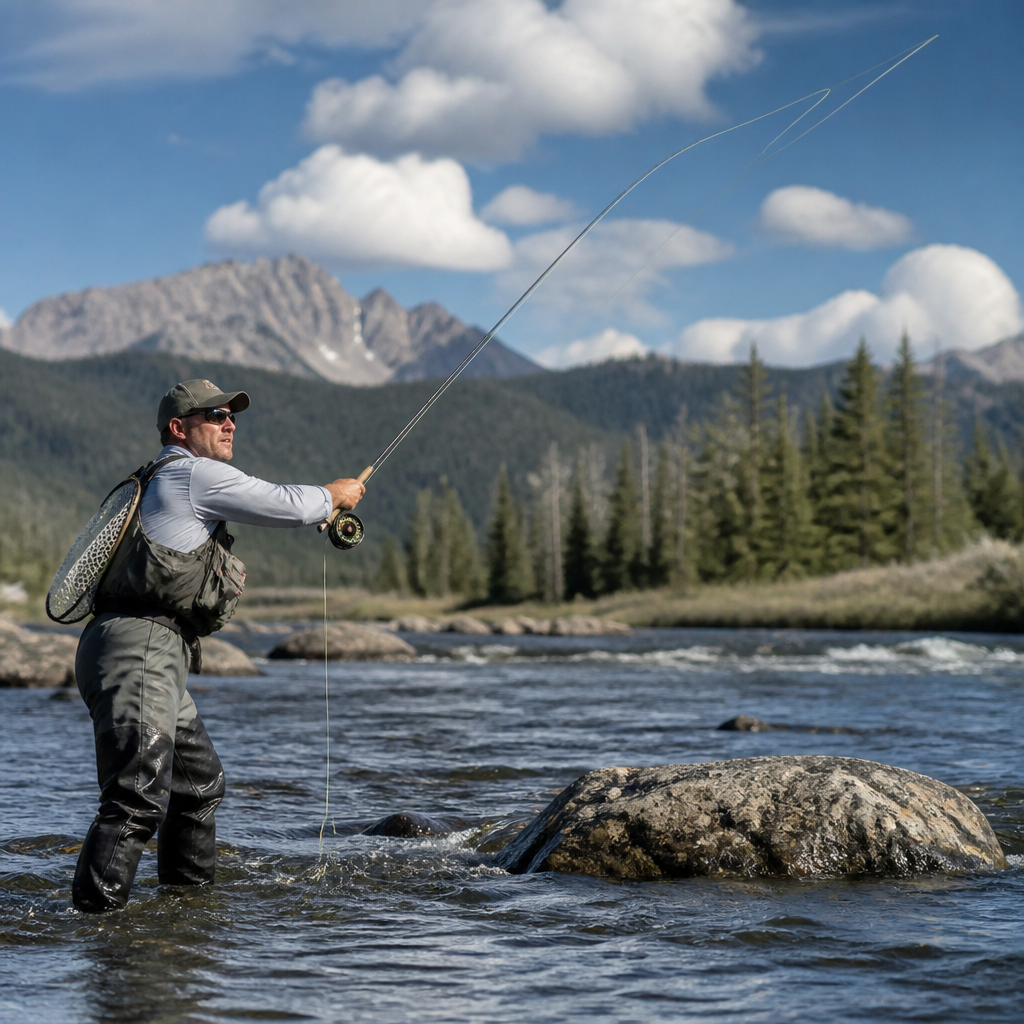
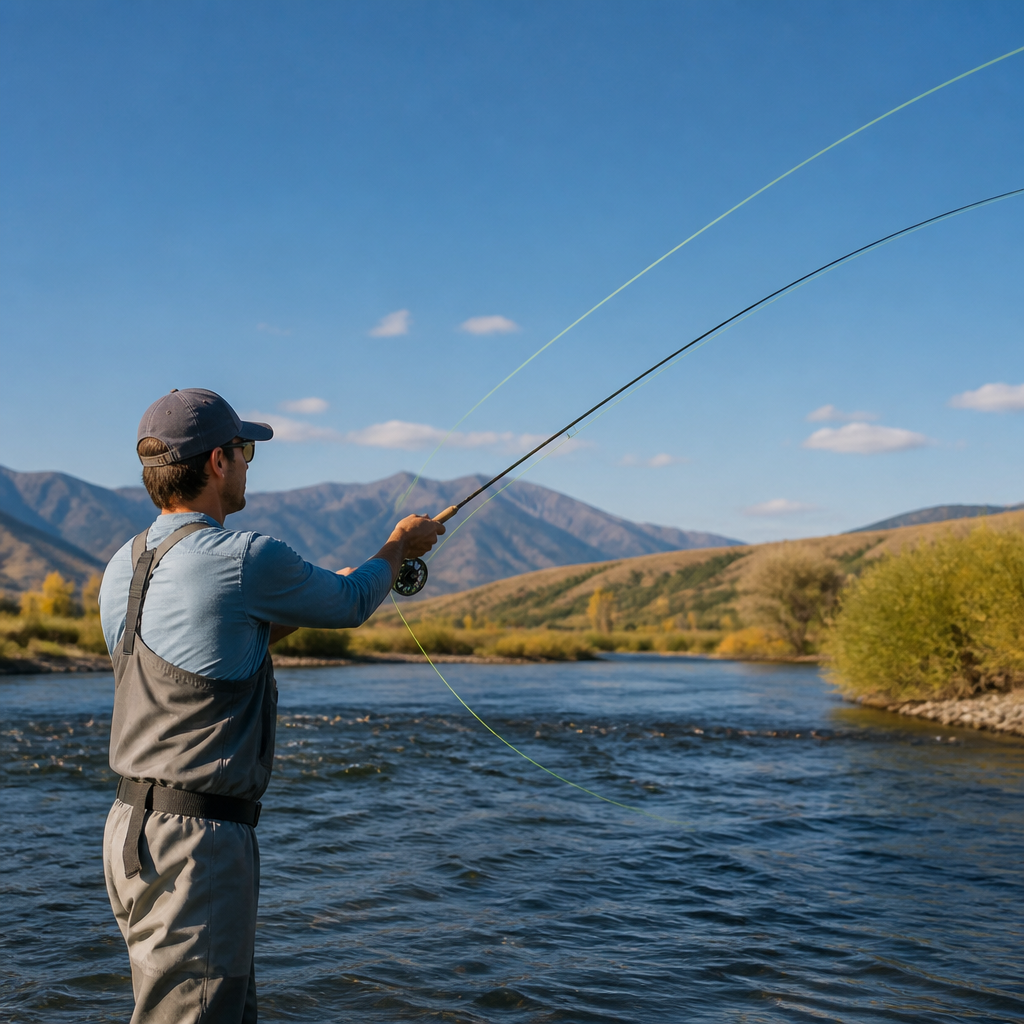
Articulated flies fish best on tackle matched to their air resistance and intended depth. For trout, a 6- or 7-weight rod with a strong butt section is the most versatile tool. It protects lighter tippets but still turns over weighted flies and sink tips. In tight rivers, a 9-foot rod gives line control; from boats, many anglers prefer faster 9-foot 6-inch models for reach and lifting sink tips. Fly lines matter more than many anglers realize. Short, aggressive heads designed for streamers load quickly and carry bulky patterns better than standard weight-forward trout lines. Sink-tip and full intermediate lines are especially useful because they keep contact with the fly during the swing, strip, and pause.
Leader design should be simple and stout. Long tapered trout leaders waste energy when casting articulated flies. A common trout setup is 3 to 5 feet total: a short butt section of 20-pound mono or fluorocarbon connected to 0X, 1X, or 2X tippet depending on fly size and cover. Fluorocarbon sinks faster and resists abrasion around wood and rock, while nylon can help a lightly weighted fly ride higher. For pike or musky, add a bite tippet or wire section. Knots must be checked frequently because articulated flies create leverage during fights. The rear hook and front shank can twist against fish and tippet in ways small nymphs never do.
Presentation techniques that trigger eats
The best retrieve depends on prey type and fish posture. Baitfish patterns usually respond to strip-pause cadence. Two firm strips followed by a slackened pause often triggers fish that tracked the fly through the strip. Sculpin patterns are most effective with downward mends, short pops, and contact near the bottom. Leech patterns like slow hand-twist retrieves in lakes and gentle strips in winter rivers. What matters is keeping the fly alive between movements. Many anglers strip articulated flies too fast because the pattern looks dramatic near the rod tip. Fish usually see it from farther away and decide during directional change or stall, not maximum speed.
Angle is just as important as cadence. Across-and-down presentations let a fly swing broadside and pulse naturally. Quartering upstream gives more depth control and keeps the fly in front of structure longer. On banks with heavy wood, lead the cast tight to cover, throw an upstream mend, then make one or two strips as the fly begins to drop. That sequence keeps the pattern in the strike zone immediately, which is critical because predatory fish often hold inches from the snag rather than cruising open water. In lakes, count the fly down systematically and repeat productive depths instead of guessing. Consistency catches more fish than constant random changes.
Figure-eight moves, hang-down pauses, and boatside turns are underused with articulated flies. Smallmouth and pike frequently eat when the fly changes direction at the end of the retrieve. Trout do this too, especially from drift boats, where a following fish commits as the fly accelerates upward. If you stop stripping as soon as the fly nears you, you eliminate one of the most reliable trigger points in streamer fishing.
Specialized strategies for seasons, water types, and species
Seasonality changes how articulated flies should be deployed. In spring runoff edges, use darker, higher-contrast flies that displace water and can be tracked in reduced visibility. In summer low flows, downsize and emphasize accuracy, especially at dawn, dusk, and under shade lines. Fall is peak season for large articulated streamers targeting territorial brown trout; this is when six-inch profiles, jerk-strip retrieves, and aggressive bank coverage can produce fish that ignore smaller offerings. In winter, slow down dramatically. Deep slots, tailout shelves, and soft inside seams reward heavy but mobile patterns crawled with long pauses.
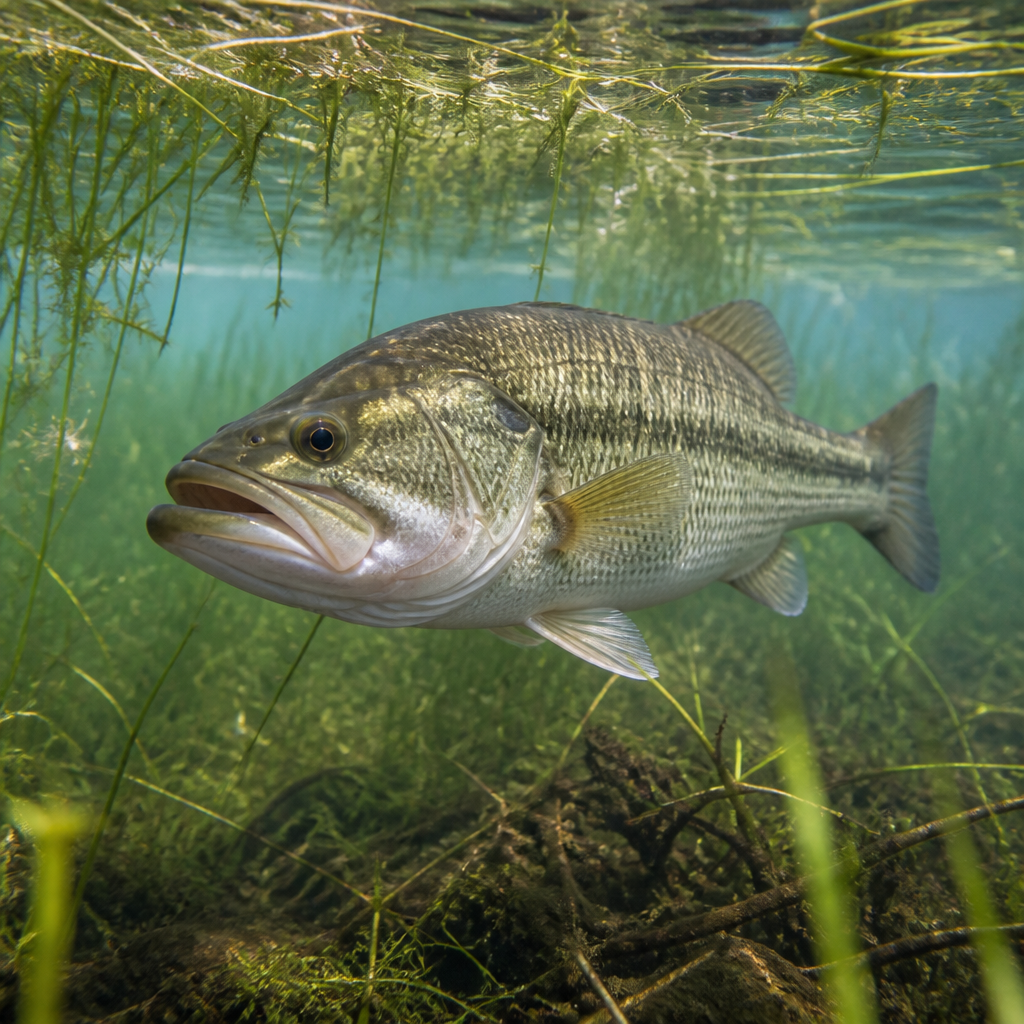
River type matters too. Freestone rivers with wood, boulders, and mixed current reward weighted sculpins and baitfish with sink tips. Tailwaters often fish better with more refined profiles because clearer water exposes overly bulky tying. Great Lakes tributaries favor larger eggs-and-meat ecosystems, where articulated leeches and white baitfish excel for migratory browns and steelhead. For smallmouth, focus on current breaks, grass edges, and rocky transitions; olive, black, and white patterns from three to four inches cover most forage. For pike, increase profile, add flash strategically, and use hardware built for teeth and torque. The underlying principle is constant: match movement and depth to feeding position.
Common mistakes and how to avoid them
The first mistake is choosing flies that are too heavy for the rod and line system. Poor turnover kills accuracy and causes anglers to fish the wrong water because hard targets become unreachable. The second is overstripping. If follows are common but eats are rare, slow the cadence, lengthen pauses, and watch for tension changes. Third, many anglers neglect hook maintenance. Articulated flies often contact rocks, wood, and boat decks, and even premium hooks dull quickly. Carry a hook file and use it. Fourth, some tiers overdress patterns. Excess bulk traps water, ruins balance, and reduces movement. A sparser articulated fly frequently fishes larger because materials expand underwater.
Another major mistake is failing to fish the fly all the way in or through the swing. Predatory fish commit late. Finally, do not treat articulated flies as magic. They are high-value tools, not universal answers. On days when fish feed on inch-long fry or refuse larger silhouettes under bright skies, a slim single-hook streamer can be more efficient. The smartest approach is to build a specialized fly box around functions: one bottom-diving sculpin, one neutrally swimming baitfish, one slow leech, and one large low-light search pattern in proven colors. Fish them with intention, observe how they track, and adjust line, angle, and cadence before blaming the fly. Master that process, and articulated flies become one of the most effective specialized techniques in your arsenal.
Using articulated flies well comes down to understanding why they were invented and what problems they solve. They create long, mobile profiles with better hook placement, more convincing pulse, and stronger triggering action than many standard streamers. When matched to the right rod, line, leader, and water type, they let you cover banks, structure, seams, shelves, and weed edges with precision. The biggest gains usually come from fundamentals: choosing the correct size for local forage, balancing weight with your line system, and fishing a retrieve that lets the fly breathe on the pause rather than racing it back.
As a hub within specialized techniques, this topic connects directly to deeper subjects such as streamer line selection, sink-tip control, trophy trout tactics, warmwater predator strategies, and fly design for specific forage. The patterns and methods in this article provide the framework. From there, the most useful next step is practical testing. Pick three proven articulated flies in different functions, fish them across contrasting depths and angles, and note where follows become eats. That record will teach you more than constant fly swapping. Build your system around those observations, refine it season by season, and articulated flies will earn a permanent place in your strategy.
Frequently Asked Questions
What is an articulated fly, and why do anglers use one instead of a standard streamer?
An articulated fly is a streamer built in two or more connected sections rather than on one long hook shank. The rear section is usually joined to the front hook with wire, braid, or purpose-built articulated shanks, which creates a hinge point in the pattern. That hinge is the defining feature. It allows the fly to move more naturally in the water, especially on strips, pauses, and swings, where the tail can kick and track independently from the front of the fly.
Anglers use articulated flies because they solve a very practical problem in streamer design: how to create a long baitfish, leech, or sculpin profile without relying on an oversized hook. A very long single-hook streamer can lead to poor movement, extra leverage during the fight, and more short strikes from fish that grab only the back of the fly. By separating the body into sections, you get the appearance of a larger meal while keeping the actual hook where it matters. That means better action and often better hookups.
They are especially effective when targeting aggressive fish like trout, smallmouth, pike, and other predators that key in on larger forage. In many situations, an articulated pattern gives the illusion of a wounded or fleeing baitfish better than a rigid single-shank fly. That added realism matters when fish are following but not committing. If you have ever watched fish track a fly to the rod tip and turn away at the last second, an articulated design can be the difference between interest and an actual eat.
When should I choose an articulated fly on the water?
Articulated flies shine anytime fish are feeding on larger prey or when you need to trigger a reaction strike. They are a strong choice in off-color water, during high flows, in low light, and in seasons when predatory fish are willing to move for a bigger meal. In trout fishing, that often means spring runoff windows, fall streamer fishing, and overcast days when larger fish leave cover to hunt. For smallmouth, articulated patterns are especially effective around current seams, ledges, wood, and rocky banks where baitfish and crayfish are present.
They also make sense when fish are following but short-striking traditional streamers. That is one of the biggest practical reasons to tie one on. Because articulated flies carry length and movement without forcing the entire pattern onto one long hook, they often convert nips and bumps into solid hookups. If your standard streamer gets attention but not commitment, moving to an articulated pattern can change the fish’s angle of attack and make the fly feel more alive.
That said, they are not always the best answer. In very clear, low water or when fish are feeding selectively on small forage, a sparse, simple unarticulated streamer may outperform a larger articulated design. The key is to match the fly not just to the forage, but to the fish’s mood. If you need presence, motion, and a bigger silhouette, articulated flies are hard to beat. If fish are cautious and inspecting closely, downsizing or simplifying may be the smarter move.
What are the best retrieves and presentation tips for fishing articulated flies effectively?
The biggest mistake anglers make with articulated flies is retrieving them too mechanically. These flies are designed to move, pulse, and hinge, so you want to give them chances to do that. A varied retrieve usually outfishes a steady one. Start with a strip-pause cadence, because the pause is often when the articulated rear section swings, stalls, and looks vulnerable. That moment can trigger strikes from fish that are tracking behind the fly.
In moving water, quartering casts are often very effective because they let the fly swing across the current while still giving you room to strip and animate it. On the swing, articulated patterns can look especially alive, with the rear section undulating naturally. In lakes or slower pools, mix short sharp strips with occasional long pulls and complete dead stops. A baitfish rarely swims at one speed forever, so your retrieve should feel irregular and believable.
Depth control matters just as much as retrieve style. Use sink-tip lines, weighted flies, or upstream casts when you need to get the fly down. Many anglers fish articulated streamers too high in the water column, especially in cold water when fish hold deeper and chase less willingly. If the fly is not getting near the fish, even the best action will not matter. Adjust line density, fly weight, and pause length until you are consistently covering the right zone.
Finally, fish them with intent. Strip all the way to the rod tip, because predatory fish often follow close and eat late. Make directional changes during the retrieve if possible. A sudden acceleration or angle shift can trigger a committed strike. Articulated flies are built to suggest life, but it is your presentation that brings that design to its full potential.
What are some reliable articulated fly patterns and color choices to start with?
If you are just getting started, focus on proven silhouettes rather than overly complicated designs. Articulated baitfish patterns, sculpin-style streamers, and leech imitations are all excellent foundations. Popular examples include Game Changer-style flies, Sex Dungeon-type patterns, Double Deceiver concepts, and articulated woolly bugger variations. These patterns work because they combine a full profile, strong motion, and a manageable tying structure. You do not need dozens of options at first. A few dependable shapes in smart colors will cover most situations.
For trout and smallmouth, olive, black, white, and natural tan are hard to beat. Olive is a great all-around baitfish and sculpin tone. Black is excellent in stained water, at dawn and dusk, or anytime you want a bold silhouette. White excels when fish are keyed on shiners, dace, or other bright forage, and it is often easy for fish to track. Tan, brown, and rust shades are useful when you want to imitate sculpins, juvenile bass, or crayfish-related tones.
Color should support profile and contrast, not replace them. In dirty water, darker flies or patterns with a strong light-dark contrast are often easier for fish to locate. In clear water, more natural tones usually perform better. It is also smart to carry the same basic pattern in multiple weights and sizes. Sometimes a fish wants the movement of an articulated fly, but in a smaller package. Starting with a few confidence patterns in size ranges that match local forage is much more effective than carrying a giant box of untested variations.
What should I know about tying articulated flies, including common mistakes to avoid?
Tying articulated flies is easier once you understand the goal: create movement, maintain profile, and keep the fly fishable. The connection between sections should be secure but not so stiff that it kills action. Most tiers use wire, braid, or articulated shanks, and each has tradeoffs. Wire is durable and holds shape well. Braid can offer flexibility but must be tied carefully to avoid failure. Articulated shanks simplify construction and are especially useful if you want consistent length and spacing from fly to fly.
One of the most common mistakes is overdressing the fly. Too much material can make the pattern heavy, hard to cast, and surprisingly lifeless in the water. Many articulated flies look best in the vise when they are dense, but fish often respond better to patterns that are relatively sparse and mobile. Materials need room to breathe and collapse. Another mistake is making the rear section too long or too bulky, which can lead to tail nipping without improving the overall swimming action.
Hook placement is critical. In many articulated trout and bass patterns, the front hook is the primary hook, while the rear section is built on a shank or a trailer arrangement depending on the style and local regulations. You want enough length to suggest a substantial meal, but not so much that the fish repeatedly grabs behind the hook point. Proportion matters more than pure size. A fly that is balanced and tracks straight will outperform one that is oversized and unstable.
It also helps to think about durability from the beginning. Predator fishing is tough on flies, and articulated patterns have more components that can fail if tied carelessly. Use strong thread, solid wraps, well-seated junctions, and durable head finishes. Test the articulation by pulling on it before the fly ever touches water. If you are new to tying them, start with a simple two-part pattern before moving into more complex multi-shank baitfish designs. The best articulated flies are not just creative; they are balanced, durable, and built with a clear purpose in mind.