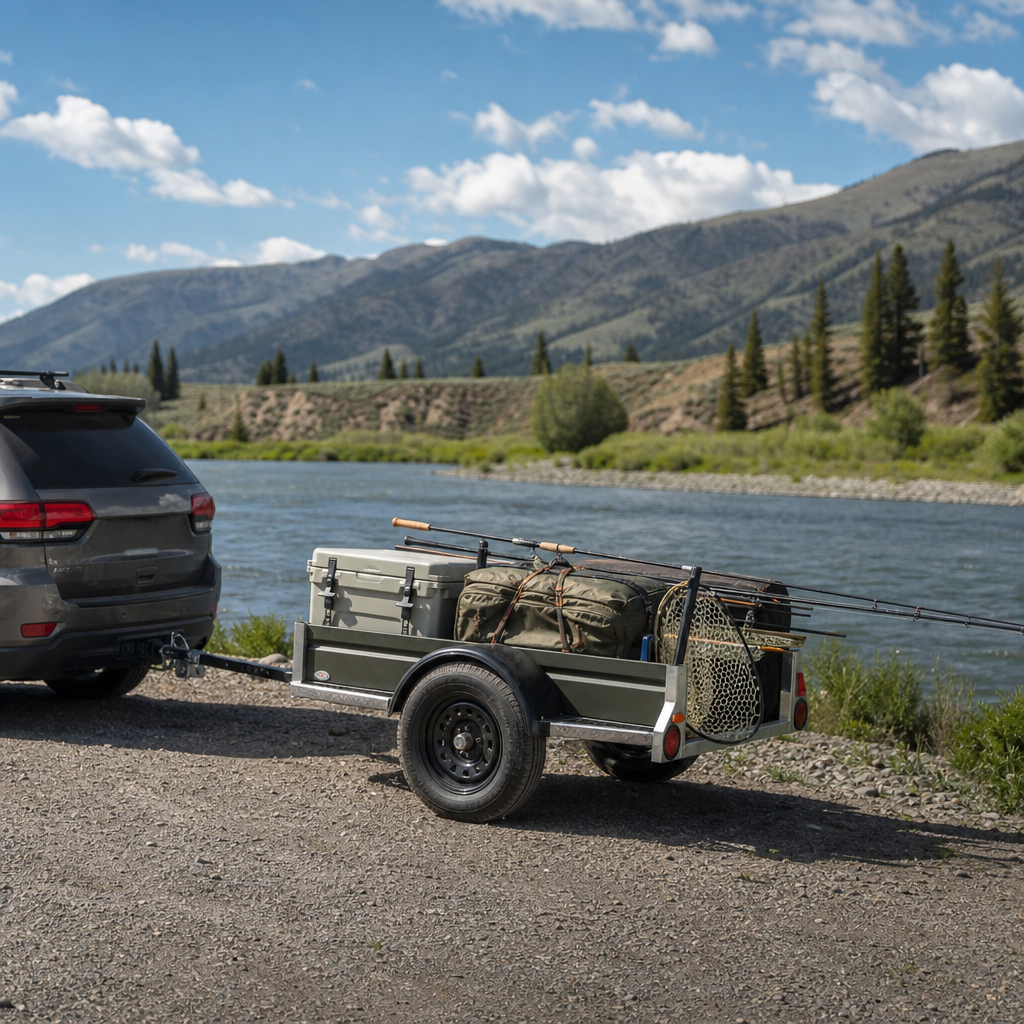
Fly fishing trailers solve a specific problem that every serious angler eventually faces: how to move boats, rafts, frames, rods, waders, coolers, and repair gear safely without turning every trip into a packing puzzle. In practical terms, a fly fishing trailer is a purpose-built trailer configured for drift boats, skiffs, rafts, raft frames, or mixed gear loads used on rivers and stillwater fisheries. The best models make transport easier, launch routines faster, and long-distance travel less stressful. That matters because transport failures are expensive. A weak frame, poor bunk support, undersized tires, or bad weight distribution can damage a boat before it ever touches the water.
I have loaded and towed enough fishing rigs to know that convenience is not a luxury feature. It directly affects how often you fish and how much energy you have when you arrive. A trailer that fits your boat correctly, tracks straight at highway speed, and keeps gear organized turns a rushed departure into a repeatable system. This hub article covers equipment reviews for the fly fishing trailer category as a whole, so readers can compare major trailer types, understand must-have specifications, and identify which designs work best for common fly fishing setups. Whether you tow a hard-sided drift boat, a raft with fishing frame, or a compact pram, the right trailer reduces wear on your equipment and cuts setup time at the ramp.
Choosing among the top fly fishing trailers for easy transport requires more than reading a manufacturer brochure. You need to look at frame material, axle rating, suspension, bunk layout, winch post adjustment, tire size, tongue weight, tie-down points, corrosion resistance, and storage integration. You also need to match the trailer to the roads you actually drive. A guide towing daily on washboard access roads has different needs than a weekend angler storing a raft in a garage. This article explains those differences in plain language, with examples drawn from common trailer designs from builders such as ClackaCraft, Pavati, Hyde, NRS, Yakima, and general-purpose utility trailer brands frequently adapted by fly anglers.
The core idea is simple: the best trailer is not the most expensive one. It is the one that supports your hull or raft correctly, protects your gear, and stays dependable through years of launches, long highway miles, and rough access roads.
What Makes a Fly Fishing Trailer Easy to Transport
Easy transport starts with fit. A drift boat trailer should support the chines and keel according to the boat builder’s guidance, with bunks angled to distribute weight evenly. A raft trailer should carry the frame and tubes without creating pressure points that deform the fabric during long storage or travel. When I inspect trailers that tow well, I usually see the same fundamentals: balanced load placement, straightforward tie-down geometry, and enough clearance to launch on uneven ramps without dragging the rear crossmember.
Weight balance is the most important towing variable. For bumper-pull trailers, tongue weight should generally land around 10 to 15 percent of gross trailer weight. Too little tongue weight causes sway; too much overloads the tow vehicle’s rear axle and hurts braking. On a typical drift boat package weighing 1,500 to 2,200 pounds with trailer, coolers, anchor system, and basic gear, that means roughly 150 to 330 pounds on the hitch. The easiest trailers to live with have adjustable winch stands and axle placement that let owners dial this in instead of accepting a fixed, imperfect setup.
Ease of transport also depends on launch efficiency. A low-profile trailer with sealed LED lighting, side guides, non-marking bunks, and accessible tie-down points saves time every trip. So do practical features like walk boards, spare tire mounts, locking storage boxes, and retractable straps. These are not cosmetic add-ons. On cold mornings at a crowded launch, they reduce mistakes. I have seen many scratched hulls and bent fenders caused by trailers that were technically roadworthy but awkward at the ramp.
Best Trailer Types for Different Fly Fishing Setups
Different boats demand different trailer architectures. Drift boat trailers are usually welded steel or aluminum frame trailers with carpeted or synthetic bunks shaped for hard-sided hulls. They often include a forward winch stand, rear guide posts, and an anchor system clearance layout specific to river boats. These are the most stable and easiest options for owners of fiberglass or aluminum drift boats from brands like Hyde, Willie, ClackaCraft, and Pavati because they are designed around hull geometry rather than generic utility use.
Raft trailers split into two categories: dedicated raft trailers and modified utility trailers. Dedicated raft trailers often use low decks, wide loading platforms, and side rails or frame cradles that carry a fully rigged raft. This is ideal for guides who want to arrive ready to fish and avoid reassembly at the put-in. Modified utility trailers are more flexible for anglers who carry dry boxes, rowing frames, camp gear, and multiple rod tubes, but they need careful strapping and padding. If the deck is too high, loading becomes frustrating. If anchor points are poorly placed, gear shifts on rough roads.
Small craft such as prams, jon boats, inflatables, and pontoons benefit from lightweight single-axle trailers. These trailers are easy to maneuver by hand, easier to store, and often tow well behind midsize SUVs. The compromise is payload and accessory capacity. Once anglers start adding hard storage, spare oars, fuel, batteries, and casting platforms, they quickly exceed what an entry-level lightweight trailer handles comfortably.
| Trailer type | Best for | Main advantage | Main limitation |
|---|---|---|---|
| Drift boat specific trailer | Fiberglass or aluminum drift boats | Precise hull support and easier launching | Less flexible for non-boat cargo |
| Dedicated raft trailer | Fully rigged fishing rafts | Fast launch and minimal setup time | Larger storage footprint |
| Modified utility trailer | Mixed gear loads and modular setups | Versatility for boxes, frames, and camp gear | Usually needs customization |
| Lightweight single-axle trailer | Prams, pontoons, compact inflatables | Easy towing and garage storage | Lower payload and fewer built-in features |
Key Features to Review Before You Buy
Frame material is the first major decision. Galvanized steel remains popular because it is strong, relatively affordable, and resists corrosion better than painted steel, especially around wet ramps and road salt. Aluminum trailers are lighter and naturally corrosion resistant, which helps fuel economy and hand maneuverability, but not every aluminum frame is equally robust on rough roads. Weld quality, gusseting, and crossmember design matter as much as material choice. A well-built galvanized frame often outlasts a lightly engineered aluminum one.
Axles, hubs, and bearings deserve more attention than most buyers give them. A single axle is usually sufficient for many drift boats and rafts, but tandem axles provide better stability and redundancy for heavier rigs or long-distance travel. Look for axle ratings that exceed your real loaded weight, not just the dry package weight. Torsion axles ride more smoothly and independently than leaf springs, which can reduce bouncing on washboard roads. On the maintenance side, greaseable hubs or easy lube spindles are useful, but they do not eliminate the need for annual bearing inspection. I treat bearings, seals, and spare hub kits as mandatory travel items, not optional accessories.
Tires are another overlooked variable. Trailer-specific ST tires have stiffer sidewalls than passenger tires and are designed for trailer loads. Radial ST tires generally run cooler and last longer on highways than bias-ply designs. Wheel diameter also matters. Small 8-inch and 10-inch wheels spin faster and struggle more with potholes and heat than 13-inch or 14-inch setups. If you routinely tow long distances, larger wheels and quality radials are worth the extra cost.
Storage and rigging features can make a trailer much more useful. Lockable tongue boxes, rod vaults, side-mounted oar tubes, and integrated strap points simplify packing and protect expensive equipment. Guides especially benefit from trailers that keep daily-use items in fixed locations. When your pump, repair kit, spare strap, wheel chock, and anchor rope each have a consistent place, turnaround time drops and forgotten gear becomes rare.
Top Brands and Trailer Configurations Anglers Commonly Choose
In the drift boat world, boat manufacturers frequently offer matched trailers, and these are often the safest starting point. ClackaCraft, Hyde, and Pavati each sell trailers designed around their hull shapes and weight distribution. That matters because chine support, transom clearance, and bow stop positioning are not universal. A matched package usually launches better and requires fewer aftermarket adjustments than a generic trailer. For owners who fish often and want the least trial and error, factory-paired trailers remain the benchmark.
For rafts, NRS is a common reference point because its raft frames, straps, and modular accessories influence how many anglers build their transport systems. Many serious raft anglers combine an NRS frame with a low-deck utility trailer from regional builders such as Diamond C, Echo, Aluma, or ShoreLand’r, then add custom decking, storage boxes, and frame tie-down points. This approach works well when one trailer needs to support both fishing and overnight river camping. The downside is setup complexity. It is easy to build a highly capable trailer that is also too heavy, too tall, or awkward to load.
Yakima enters the conversation mainly through roof and gear transport rather than full boat trailers, but its rod carriers, cargo systems, and bike attachments often complement compact trailer builds for anglers traveling with families. In practice, the best overall transport system may combine a boat trailer with vehicle roof storage and bed organization. That broader equipment review perspective matters because transport efficiency is rarely solved by the trailer alone.
Custom fabrication is common in the fly fishing space, especially among guides. The strongest custom builds solve one repeated problem: carrying a fully rigged boat while also securing anchors, dry boxes, spare oars, and wet gear. The weakest custom builds ignore serviceability. If a trailer uses obscure hubs, inaccessible wiring routes, or welded-in boxes that block bunk adjustment, every repair becomes harder than it should be.
How to Match Trailer Size, Capacity, and Tow Vehicle
The safest buying process starts with real weights. Add the boat or raft, frame, anchor, batteries, cooler, dry box, fuel if relevant, spare tire, and all the equipment that normally travels. Then compare that total to the trailer’s gross vehicle weight rating and axle rating. Do the same for your tow vehicle’s towing capacity, payload rating, hitch rating, and tongue weight limit. Many anglers focus only on tow rating, but payload is often the hidden constraint, especially with midsize SUVs loaded with passengers and gear.
Brake requirements depend on state law and total trailer weight, but from a practical standpoint, trailer brakes are worthwhile well before the law demands them. Surge brakes are common on boat trailers because they are simple and water friendly. Electric brakes offer stronger control and easier in-cab adjustment, though submersion and wiring quality matter more. For mountain travel, brakes reduce heat load on the tow vehicle and improve stopping confidence on long descents.
Dimensions matter too. Measure garage depth, gate width, and turnaround space before buying. I have seen anglers purchase excellent trailers that fit neither their storage area nor the narrow side yard where they planned to park them. Swing tongues, folding jack wheels, and compact fender profiles can make a meaningful difference in real homes, not just dealership lots.
Maintenance, Safety, and Long-Term Value
A reliable fly fishing trailer follows a simple maintenance schedule. Check tire pressure before every trip. Repack or inspect bearings annually or more often if the trailer is submerged frequently. Inspect bunks, rollers, winch straps, safety chains, coupler latch function, light connections, and frame corrosion at least at the start of each season. Replace cracked sidewalls, frayed straps, and rusty hardware early. Trailer failures usually give warning first; problems become roadside emergencies only when owners ignore the signs.
Long-term value comes from durability, parts availability, and adaptability. Powder coating looks sharp, but galvanization usually wins where wet use and chipped surfaces are common. Standard hub sizes, common wheel bolt patterns, and easy-to-source lights and couplers reduce downtime. Resale also favors trailers with sensible, universal features rather than overbuilt one-off add-ons that fit only a narrow use case.
The best fly fishing trailers for easy transport are the ones that make every stage of a trip simpler: loading at home, towing on mixed roads, launching quickly, and storing gear securely between outings. For most drift boat owners, a matched factory trailer is the clearest choice. For raft anglers, a low-deck dedicated or carefully customized utility trailer offers the best mix of speed and flexibility. In every case, stable towing, proper support, and durable components matter more than cosmetic extras. Use this equipment reviews hub as your starting point, then compare trailer-specific guides for drift boats, rafts, compact inflatables, and accessory storage systems. If you are upgrading this season, begin by weighing your full rig, measuring your storage space, and choosing the trailer designed for how you actually fish.
Frequently Asked Questions
What should I look for in a fly fishing trailer if I want the easiest transport possible?
The easiest fly fishing trailer to live with is one that matches both your boat and the way you actually fish. Start with fit. A trailer designed for a drift boat will support a hard hull differently than one intended for rafts, raft frames, or mixed camping and fishing gear. Proper bunks, rollers, frame support, and tie-down points matter because they keep the load stable, reduce hull wear, and make loading less stressful at the end of a long day on the water.
Next, pay close attention to capacity and layout. A good trailer should carry the boat or raft securely while still leaving room for essentials like oars, rods, coolers, dry boxes, anchor systems, spare tires, pumps, waders, and repair kits. Anglers often underestimate how much gear accumulates over a season, so smart storage is one of the biggest time-savers. Side rails, lockable boxes, rod vaults, gear baskets, and frame-mounted compartments can turn a basic trailer into a highly organized transport system.
Ease of launching is another major factor. Look for a trailer with a low loading height, balanced weight distribution, and a setup that allows quick loading and unloading at rough ramps, gravel pullouts, or river access points. If you travel long distances, highway stability, suspension quality, corrosion resistance, and durable tires become even more important. In short, the best trailer is not just strong enough to haul your boat. It should simplify every stage of the trip, from packing in the driveway to launching at dawn and heading home tired after a full day of fishing.
Are fly fishing trailers different from standard utility or boat trailers?
Yes, and the differences are important. A standard utility trailer can haul gear, and a general-purpose boat trailer can move some watercraft, but a true fly fishing trailer is usually configured around the realities of river angling. That means accommodating specialized loads such as drift boats, inflatable rafts, fishing frames, anchor systems, dry boxes, rod storage, and all the loose equipment that tends to pile up on multi-stop or multi-day trips.
For example, drift boat trailers are often built to support hull shapes that do not sit properly on generic bunks. Raft-focused trailers may use flat decks, frame cradles, or custom tie-down systems that make it easy to secure inflatable setups without over-compressing tubes or awkwardly stacking gear. Some models also include elevated storage, side racks, or lockable compartments to keep fishing equipment protected and organized. Those features may sound small, but they make a big difference when you are trying to launch quickly, keep expensive gear from shifting in transit, and avoid the constant repacking that happens with improvised setups.
Another key difference is durability in real fishing environments. Fly fishing trailers are often expected to handle gravel roads, wet launches, muddy banks, and repeated loading cycles over the course of a season. Better models are designed with corrosion-resistant materials, sealed wiring, accessible tie-down points, and a layout that supports both convenience and safety. So while a utility trailer may work in a pinch, purpose-built fly fishing trailers are generally a better long-term solution for anglers who want reliable, organized, and efficient transport.
How much gear can a fly fishing trailer realistically carry without becoming overloaded or hard to manage?
That depends on the trailer’s axle rating, frame design, deck size, and the towing capacity of your vehicle, but the practical answer is often “more than you think, if the trailer is designed well.” A quality fly fishing trailer can usually handle not just the boat or raft, but also the surrounding ecosystem of equipment that serious anglers bring along: oars, anchor systems, dry bags, coolers, rod tubes, pumps, waders, repair kits, camp gear, spare parts, and safety equipment. The issue is not just raw weight. It is how that weight is distributed.
A trailer loaded intelligently will tow more safely and feel easier to manage than one carrying less gear piled in the wrong places. Heavier items should sit low and balanced around the axle area, while lighter or awkwardly shaped items can go in racks, boxes, or dedicated storage areas. Too much tongue weight can make towing unstable in one direction, while too little can create sway at highway speeds. This is why a trailer with integrated storage and a thought-out layout is often more valuable than one that simply offers a large open space.
The smartest approach is to choose a trailer with enough capacity for your current load plus some room to grow, but not so oversized that it becomes cumbersome to tow, store, or launch. Many anglers eventually add more accessories, safety gear, or overnight equipment than they originally planned. A well-built trailer should accommodate that expansion without forcing compromises in safety or convenience. Always confirm the trailer’s gross vehicle weight rating, match it to your tow vehicle, and load with balance in mind. Easy transport is not just about fitting everything on the trailer. It is about towing it confidently and unloading it without frustration.
What trailer features matter most for long trips to rivers, lakes, and remote fishing access points?
For long-distance travel, reliability and protection matter just as much as carrying capacity. One of the most important features is a durable frame with good suspension. Fishing trips often involve interstate miles, rough county roads, washboard gravel, and uneven launches, so a trailer that absorbs vibration well will protect both the boat and your gear. Quality tires, dependable hubs, and a properly rated axle are essential because breakdowns on the way to a remote fishery can quickly turn into expensive, trip-ending problems.
Corrosion resistance is another priority. Fly fishing trailers are regularly exposed to water, mud, road grime, and changing weather, so galvanized finishes, aluminum construction, or protective coatings can significantly extend service life. Sealed lights and wiring are worth seeking out because electrical issues are common on trailers that see frequent wet use. If you travel early in the morning, late at night, or through poor weather, dependable lighting and visible trailer markers become even more important.
Storage and security also deserve serious attention on longer trips. Lockable compartments for rods, tools, and tackle can reduce clutter and protect expensive gear when you stop for fuel, meals, or overnight lodging. Spare tire mounts, easy-access tie-down points, and room for emergency equipment such as jacks, straps, and patch kits make roadside problems easier to manage. If your fishing involves more than one type of craft or changing destinations, modular or multi-use trailer layouts can be especially valuable. The best long-trip trailer is one that tows straight, keeps gear protected, and reduces the number of little transport headaches that wear you down over the course of a season.
Is it worth investing in a premium fly fishing trailer, or will a budget option do the job?
A budget trailer can absolutely work, especially for anglers who fish locally, tow short distances, or only need a simple setup for occasional use. If your needs are basic and your watercraft is lightweight, an entry-level trailer may cover the essentials as long as it is properly sized and safely equipped. That said, the real question is not whether a cheaper trailer can move your gear once or twice. It is whether it will continue to do so efficiently, safely, and conveniently over years of regular use.
Premium fly fishing trailers usually justify their higher price through better materials, more durable hardware, smarter storage, improved launch convenience, and a more refined design overall. Those upgrades matter a lot if you fish frequently, travel long distances, or carry expensive equipment. Better support systems can reduce wear on your boat. Better organization can shorten launch prep and breakdown time. Better suspension and build quality can make towing less stressful and protect gear from constant vibration. Over time, those practical advantages add up in saved time, reduced frustration, and fewer repair or replacement costs.
For serious anglers, a premium trailer is often less about luxury and more about consistency. It helps turn a complicated load of boats, frames, rods, waders, coolers, and repair gear into a repeatable, dependable system. If the trailer makes every trip faster to pack, easier to tow, and simpler to launch, it is doing more than hauling equipment. It is improving the entire fishing experience. The best value comes from buying the trailer that realistically fits your fishing style now while leaving enough capability for where your adventures are likely to go next.