Top fly fishing sunglasses straps are not a small accessory decision; they are part of the clothing system that keeps vision clear, expensive eyewear secure, and time on the water productive. In fly fishing, a “sunglasses strap” is the retainer that connects to the arms of your glasses and keeps them attached around the neck or against the back of the head when casting, wading, rowing, or landing fish. I have tested retainers on drift boats, spring creeks, windy reservoirs, and salt marsh flats, and the difference between a reliable strap and a cheap one is immediate: one disappears into your kit and quietly works, while the other loosens, grabs shirt collars, soaks up sweat, and eventually lets your glasses sink. For anglers building a practical clothing system, this category belongs beside sun hoodies, gaiters, hats, and wading jackets. It matters because polarized lenses are essential for reading currents, spotting fish, and protecting eyes from hooks and glare, yet even premium frames fail if they are not secured. The right retainer also affects comfort, heat management, compatibility with hats and buffs, and how quickly you can transition from active casting to running the boat. This hub article covers the main strap types, best-use cases, fit issues, materials, maintenance, and buying criteria, while also connecting the choice back to broader clothing reviews for fly fishing.
Why sunglasses straps matter in a fly fishing clothing system
Most anglers first think about a strap after losing a pair of glasses. That is understandable, but the real value is broader. A good strap protects your eyewear investment, reduces distraction, and makes your entire clothing kit function better. On technical water, sight fishing depends on uninterrupted visual contrast. If glasses slide while double hauling, ducking under branches, or climbing riprap, your attention leaves the water. When I review fishing clothing, I treat the strap as a performance accessory, not an afterthought, because it directly interacts with collars, hoods, hats, neck gaiters, and rain shells.
There are three main tasks a fly fishing sunglasses strap must perform. First, it must retain the glasses during sudden movement, including stripping line, netting fish, bending to unhook flies, and motoring in chop. Second, it must remain comfortable over long hours in heat, wind, and humidity. Third, it must survive exposure to salt, sunscreen, sweat, and repeated wet-dry cycles without stretching out or degrading. These demands explain why casual eyeglass retainers often disappoint anglers even if they seem fine around town.
The best options also support safety. Polarized glasses are eye protection, and in fly fishing that matters every cast. Wind gusts, errant backcasts, and weighted flies turn missed hook sets into face-level hazards. A secure retainer keeps the glasses where they belong. On moving water, it also prevents the bad habit of taking glasses off and stuffing them into a shirt neck or hat brim, which is how lenses get scratched and frames get stepped on.
As the hub page for clothing reviews in product reviews and recommendations, this guide should help you evaluate related apparel choices too. If your hat presses the strap awkwardly, if your hood rubs the adjustment bead, or if your sun mask traps heat around neoprene foam, that is not a minor annoyance; it is a clothing integration issue. The best clothing systems are built from compatible parts. A strap that works with your frames, headwear, outerwear, and fishing style is the one worth buying.
Core strap types and where each one performs best
Not all retainers are built for the same water or the same angler. In practice, fly fishing sunglasses straps fall into four categories: foam floating retainers, neoprene retainers, cord retainers with sliders, and technical webbing or performance fabric retainers. Floating retainers are designed to add buoyancy so glasses stay on the surface if they come off. Neoprene retainers usually provide a soft, broad contact area and dependable grip on frame temples. Cord retainers use thinner materials, often polyester or nylon, with an adjuster for a close fit. Technical webbing styles aim for lower bulk and faster drying.
For boat anglers, kayak anglers, and anyone fishing big western rivers or stillwaters where dropped glasses can vanish instantly, floating models are often the safest choice. Brands such as Chums popularized this category, and the concept remains strong. The tradeoff is bulk. Some floating retainers feel warm against the neck and can interfere with high collars or integrated hoods. They also vary by frame weight; a retainer that floats light nylon frames may not reliably float heavy glass-lens sunglasses.
Neoprene retainers remain the mainstream option because they balance comfort, security, and simplicity. They are easy to put on, hard to lose, and generally fit common fishing frames from Costa, Smith, Bajío, and Wiley X. On cold mornings, neoprene feels unobtrusive. In midsummer, however, it can hold moisture and feel clammy. If you mostly fish rivers while wading and you care more about retention than minimum bulk, neoprene is still a dependable default.
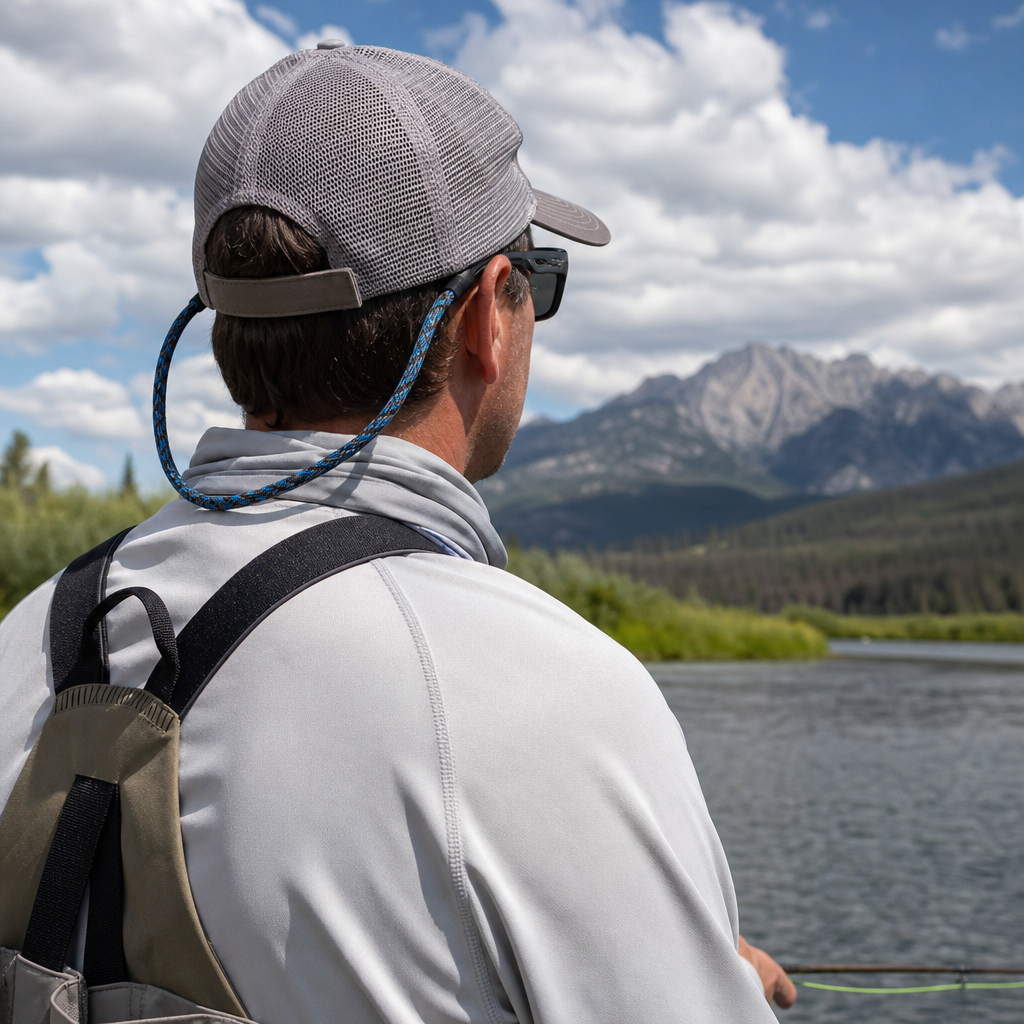
Cord retainers are the best choice for anglers who dislike the feeling of material against the neck or who regularly wear technical sun hoodies, buffs, and rain jackets. A well-made cord style with a silicone gripper and rear slider can be cinched tight for active wading, climbing, and poling. It dries quickly and packs small. The downside is that very thin cords can tangle with collars or feel less secure if the temple grips are poorly designed.
Technical webbing designs split the difference. They usually use hydrophobic fibers, low-profile hardware, and shaped ends for modern frame compatibility. These are especially good for saltwater flats fishing and hot-weather trout fishing, where ventilation and quick drying matter more than buoyancy. They are also the most likely to pair cleanly with premium fishing apparel.
How top brands compare on fit, comfort, and durability
Several brands consistently appear in serious fly fishing kits, and each has a clear use case. Chums remains the benchmark for broad availability and proven neoprene and floating retainers. Costa’s retainers often match the company’s frame geometry well and appeal to anglers already using Costa 580 lenses. Smith offers clean, technical options that integrate well with lower-profile sport frames. Croakies, one of the older names in retainers, still delivers straightforward neoprene choices that many trout anglers trust. Bajío, a newer eyewear brand with strong fishing credibility, also offers retainers tuned to performance saltwater and inshore use.
When I compare them in the field, the biggest differences are not marketing features but temple fit and wet comfort. Some retainers slide onto frame arms with a snug, confidence-inspiring hold; others require too much force or loosen after repeated use. Temple compatibility matters because fishing sunglasses vary widely. Thick, rubberized temples common on wrap styles need larger openings or stretchier sleeves. Thin wire-style or lifestyle frames can slip in oversized retainers. That is why checking the retainer’s supported temple diameter is not optional.
Durability is mostly about three points of failure: the temple attachment, stitching or bonded seams, and hardware corrosion. Saltwater anglers should be skeptical of low-grade metal adjustment beads or clips. Plastic, silicone, and marine-safe components last longer. Stitching quality is easy to miss in product photos, but loose thread and thin seam construction usually show up after one season. If a retainer claims premium performance, the seams should be even and the attachment points reinforced.
| Brand or type | Best use | Main strength | Main tradeoff |
|---|---|---|---|
| Chums floating retainer | Boats, kayaks, stillwater | Buoyancy and easy availability | Bulk around collars and hoods |
| Classic neoprene retainer | General trout and warmwater fishing | Secure, simple, comfortable fit | Can stay wet and feel warm |
| Cord retainer with slider | Wading, hiking, hot weather | Low bulk and fast drying | Less forgiving with poor temple fit |
| Technical webbing retainer | Saltwater, flats, travel | Lightweight and clothing compatible | Usually no flotation |
If you are building a clothing review shortlist, these categories map neatly to broader apparel decisions. Bulky cold-weather layers pair fine with neoprene. Minimal summer sun clothing usually pairs better with thin cords or technical webbing. In other words, the best strap is rarely the one with the loudest branding; it is the one that matches the rest of your system.
Material choices, lens security, and real-world performance
Material selection determines how a retainer feels after six hours, not six minutes. Neoprene remains popular because it stretches, grips, and cushions well. But in humid climates and saltwater environments, polyester webbing, nylon cord, and hydrophobic woven blends often outperform it in comfort. These materials shed water faster and reduce the “wet collar” feeling many anglers dislike. Silicone temple sleeves are another important detail. Good silicone grips the frame securely without damaging coatings or rubber temple overlays.
Buoyancy claims deserve scrutiny. A floating retainer only works if the combined weight of the strap, frame, and lenses stays within its buoyant capacity. Glass lenses are significantly heavier than polycarbonate or nylon lenses, and large wrap frames with side shields are heavier than minimalist frames. Manufacturers do not always state the exact buoyancy limit clearly. In testing, I have seen retainers float one frame model comfortably while barely keeping another at the surface. If you use heavy glass-lens sunglasses, verify the retainer with a controlled test before trusting it on deep water.
Drying speed affects comfort more than many buyers expect. A strap that stays wet can chill your neck in shoulder seasons and trap salt residue in summer. Salt buildup gradually stiffens some fabrics and shortens product life. After saltwater trips, rinse straps in fresh water and air dry them away from direct heat. This simple habit extends seam life and keeps temple attachments from hardening or cracking.
Another overlooked factor is noise and interference. Some adjustment beads tap against frame arms when running a boat. Some broad retainers bunch under neck gaiters. Some stiff webbing edges rub against the collar seam of a sun hoodie. These are small issues in isolation, but over a full season they determine whether a product stays in rotation or gets left in the truck. In clothing reviews, comfort under motion is what separates good accessories from genuinely fishable ones.
How to choose the best strap for your fishing style
The fastest way to choose among top fly fishing sunglasses straps is to start with where and how you fish. If you spend most of your time rowing, paddling, or fishing from a skiff, prioritize flotation first and bulk second. If you wade freestone rivers, hike into alpine lakes, or fish all day in summer sun, prioritize low weight, quick drying, and compatibility with hats and hoods. If you travel often, choose a retainer that packs flat and fits multiple frame styles.
Next, evaluate your frames. Measure the temple width or compare it to the manufacturer’s compatibility range. Thick temples need broader sleeves; thin temples need a tighter grip or a narrower silicone end. If you switch between prescription sunglasses and fishing-specific wraps, consider buying two retainers rather than forcing one model to fit both poorly. This is one area where a small extra cost prevents expensive losses.
Then consider climate. Cold-weather steelhead anglers can tolerate warmer materials and may appreciate neoprene’s soft feel under jackets and beanies. Flats anglers in Florida, Louisiana, Belize, or the Yucatán usually prefer minimalist, ventilated retainers that do not trap heat under sun gaiters. For surf and saltwater use, corrosion-resistant hardware and rinse-friendly materials matter more than in freshwater.
Finally, think about adjustment philosophy. Some anglers want glasses held loosely around the neck when not in use. Others want a strap cinched securely behind the head during active casting and running. Adjustable cord systems serve the second group best. Fixed neoprene sleeves suit the first group. There is no universal winner. The correct choice is the one that matches your actual behavior on the water, not the product photo.
Clothing reviews hub: how straps connect to hats, hoodies, jackets, and gaiters
As a hub for clothing reviews, this page should make one point clear: sunglasses straps do not operate alone. They are part of a layered apparel setup. Hats with deep rear closures can push some retainers downward and create neck pressure. Sun hoodies with snug hoods may bunch thicker straps at the nape. Waterproof jackets with tall storm collars can force adjustment beads into awkward spots. Neck gaiters can either stabilize a thin cord or make a bulky foam retainer feel stifling.
That interaction is why clothing recommendations should be made as systems. A trout angler wearing a lightweight cap, UPF hoodie, and breathable gaiter will usually be happiest with a narrow cord or technical webbing retainer. A boat angler in a shell jacket, bibs, and insulated hat may prefer a floating neoprene model because ventilation is less important than security. Reviewing these items together produces better advice than rating each product in isolation.
The same systems approach applies to maintenance and longevity. Sunscreen residue from collars and gaiters transfers to straps. Salt from buffs and shirt necklines accumulates on fabric. Jacket zippers can snag loose cords if retainers are too long. Small compatibility choices reduce wear and improve comfort. If you are upgrading your fishing wardrobe, include the retainer in that plan rather than treating it as a checkout-page add-on.
The main takeaway is simple: top fly fishing sunglasses straps are the retainers that match your frames, climate, and clothing system. Choose flotation for boats, low-bulk cords for active summer wading, and durable technical materials for salt. Check temple fit, test buoyancy with your exact glasses, and pay attention to how the strap works with hats, hoods, jackets, and gaiters. That approach protects your eyewear, improves comfort, and keeps your focus on reading water and tracking fish instead of babysitting your sunglasses. If you are building out your product reviews and recommendations shortlist, use this hub as the starting point, then compare straps alongside the rest of your fly fishing clothing kit before your next trip.
Frequently Asked Questions
What makes a good sunglasses strap for fly fishing specifically?
A good fly fishing sunglasses strap needs to do more than just keep your glasses from falling off. It should hold securely during repeated casting, hiking to access points, rowing, stripping line, and bending over to land fish, while still feeling comfortable for a full day on the water. In practical use, the best retainers balance three things: grip, comfort, and adjustability. A strap that grips the sunglass arms too loosely can slide off when your frames get wet, while one that is overly tight may be frustrating to install, especially on thicker temples found on many polarized fishing sunglasses.
Material matters a lot. Neoprene retainers are popular because they float, feel soft against the skin, and spread pressure well, making them comfortable for long days. Rope-style and woven retainers tend to be lighter, drier, and less bulky, which many anglers prefer in hot weather or when layering with buffs, hoods, and hats. Adjustable cinch straps are especially useful in fly fishing because they let you tighten the glasses during active movement or boat runs, then loosen them when you want the frames hanging comfortably around your neck between spots.
Another important factor is how the strap behaves when wet. On drift boats, spring creeks, windy reservoirs, and salt marsh flats, moisture is unavoidable. A good retainer should not become heavy, slippery, or irritating after repeated exposure to water and sweat. It should also play nicely with other gear. If a strap constantly tangles with your collar, catches on rain jackets, or interferes with hat straps and landing nets, it becomes a nuisance instead of a useful tool. The best fly fishing sunglasses straps disappear when you are fishing and only make themselves known when they save your glasses from going overboard.
Are floating sunglasses straps worth it for fly fishing?
Yes, for many fly anglers, floating sunglasses straps are absolutely worth considering, especially if you fish from boats, float tubes, kayaks, skiffs, or anywhere there is a realistic chance your glasses could end up in the water. High-quality polarized sunglasses are expensive, and losing them in a river, lake, or tidal flat can end a trip fast. A floating retainer adds a layer of insurance that standard retainers simply do not provide.
That said, not every floating strap performs equally well. Whether a retainer truly floats depends on the strap material, the size and weight of your glasses, and how saturated the strap becomes. Heavier glass lenses or large framed sunglasses may require a more buoyant strap than lightweight polycarbonate lenses. For that reason, it is smart to test your exact sunglasses-retainer combination in shallow water before trusting it on a remote float or saltwater trip. A strap labeled as floating is helpful, but real-world buoyancy is what matters.
There are tradeoffs. Floating straps are often bulkier than low-profile cord retainers, and some anglers find them warmer around the neck in midsummer. Still, if your fishing includes leaning over gunwales, handling fish boatside, poling flats, or scrambling around slick rocks, the added flotation can be the difference between a brief scare and a costly loss. For anglers who primarily fish small creeks on foot, a non-floating but highly secure adjustable retainer may be enough. In general, if there is significant water exposure and expensive eyewear involved, a floating strap is a smart investment.
Should I choose a neoprene strap, rope retainer, or adjustable cinch style?
The right choice depends on how and where you fish. Neoprene straps are often the go-to option for anglers who want comfort, simplicity, and flotation. They are easy to use, soft against the skin, and generally very forgiving during long days. If you spend time in drift boats, raft fishing, or warmwater and saltwater settings where dropped sunglasses are a serious concern, neoprene can be an excellent fit. The downside is that neoprene straps can feel bulky under jacket collars or hoods, and in very hot weather they may feel warmer than slimmer alternatives.
Rope retainers and low-profile woven cords appeal to anglers who want less bulk and quicker drying performance. These styles work well for technical wading, hiking into streams, and hot-weather fishing where lightness matters. They are also often more comfortable with layering systems because they sit flatter under buffs and collars. However, not all rope retainers grip sunglass arms equally well, so fit is important. Some can also swing around more when left loose, which may bother anglers who move constantly.
Adjustable cinch styles are arguably the most versatile for active fly fishing. They let you customize the fit so the glasses stay snug against the back of the head while casting in wind or running a boat, then loosen easily when you want to rest them around your neck. If you fish a wide range of water types and conditions, an adjustable style often gives you the most control. The main thing to watch is the quality of the slider and end grips. Cheap cinch systems can slip over time or become annoying when wet. If you want one strap to handle drift boat days, wading, and travel, a well-made adjustable retainer is often the best all-around option.
How tight should a sunglasses strap be when fly fishing?
A sunglasses strap should be tight enough to keep your eyewear stable during casting, wading, rowing, and landing fish, but not so tight that it creates pressure points or pulls the frames out of proper alignment on your face. The ideal fit is secure without being distracting. When properly adjusted, your sunglasses should stay in place when you look down to tie knots, turn quickly to track a fish, or walk through uneven riverbanks, yet still feel natural after hours of wear.
For adjustable retainers, a good starting point is to snug the strap so the glasses sit comfortably on your face with minimal bounce when you move your head. In windy conditions or while running a boat, you may want a slightly tighter fit for extra security. When you are resting, changing flies, or moving between spots, loosening the strap allows the glasses to hang more comfortably around your neck. That versatility is one reason adjustable systems are so popular among serious anglers.
If a strap is too loose, it can let the frames shift while you cast or bend over, which becomes frustrating and increases the risk of losing them. If it is too tight, it may cause headaches, ear pressure, or make your sunglasses sit crooked, which can actually reduce visual clarity. Since fly fishing depends heavily on clear sight lines for spotting structure, currents, and fish movement, comfort and optical stability are directly connected. The best fit is one you barely notice, but that still gives you confidence your sunglasses are not going anywhere.
Do sunglasses straps interfere with hats, hoods, buffs, or other fly fishing clothing layers?
They can, but a well-chosen strap should integrate smoothly with the rest of your fishing clothing system. In fly fishing, sunglasses are rarely worn in isolation. Most anglers are also wearing a hat, sun hood, neck gaiter, rain shell, or cold-weather layering pieces, and a bad retainer can absolutely create friction between those items. Bulky straps may bunch under collars, catch on hood seams, or feel awkward against a buff, especially when everything gets damp. That is why strap profile, material, and length matter more than many anglers expect.
Low-profile rope and thin adjustable retainers usually work best with technical layering systems because they sit close to the neck and do not create much bulk. They are especially good in cooler weather when jackets and hoods are in constant use. Neoprene straps are often more comfortable directly on bare skin, but they can feel crowded when layered under high-collared shells or sun hoodies. In warm-weather fishing, that may not matter much. In foul-weather conditions, it becomes more noticeable.
The key is to think of the retainer as part of your overall setup, not as a separate add-on. If you typically wear a trucker hat and a lightweight sun shirt, you have a lot of flexibility. If you fish in heavy rain gear, with a buff and a fitted cap, a slim strap may be the better choice. It also helps to adjust the length so excess material does not swing around or snag when you reach for tools, nets, or shoulder straps. The best sunglasses strap is one that supports your vision and security without competing with the rest of the gear you rely on every day on the water.