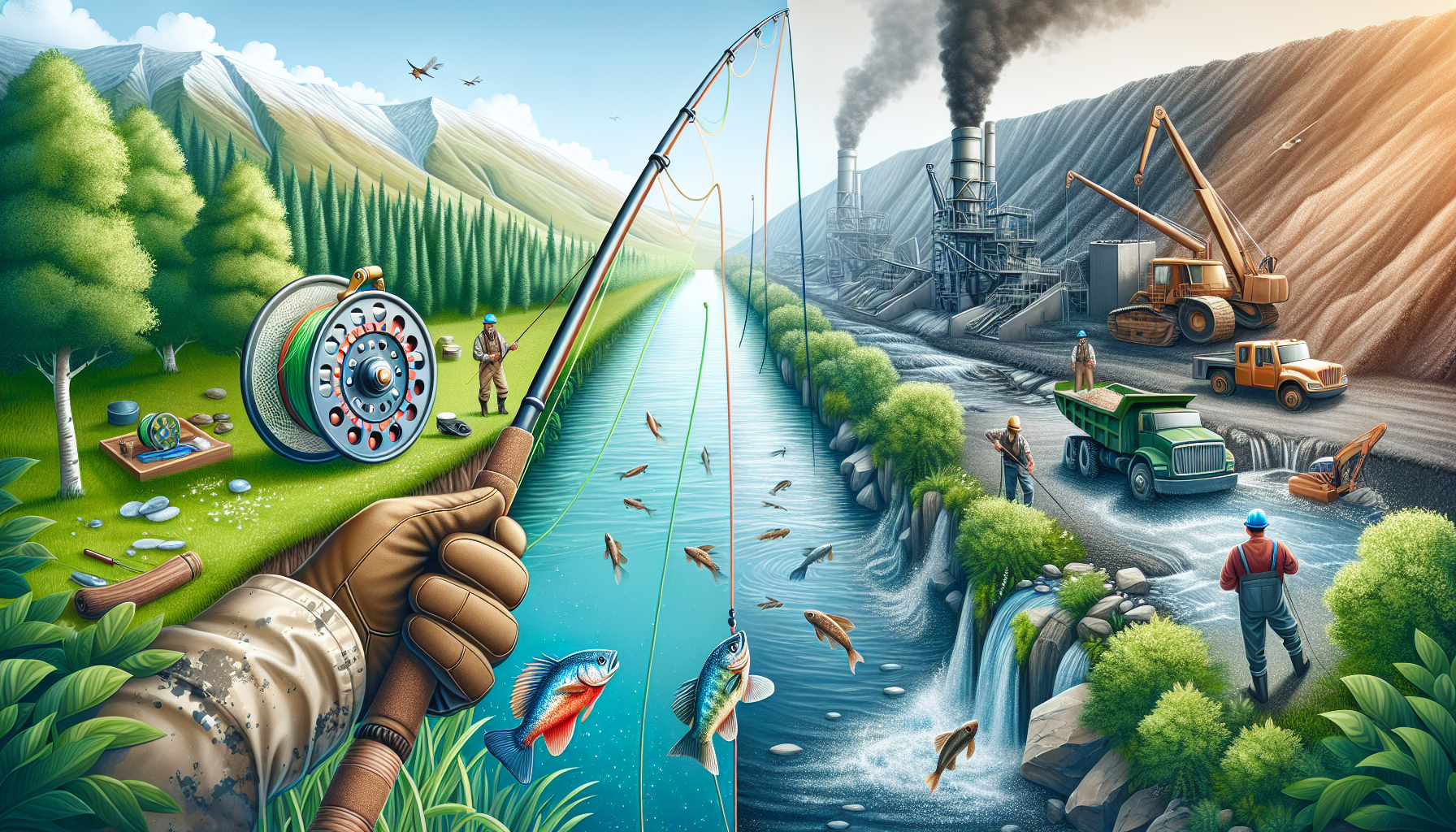
Mining changes rivers long before an angler notices fewer rising trout, and understanding those changes is essential to protecting fly fishing habitats. In practical terms, mining includes hard-rock extraction for metals such as gold, copper, lead, zinc, and lithium, as well as coal mining, aggregate pits, and the roads, tailings facilities, and water diversions that support them. Fly fishing habitat refers not only to the visible channel where fish hold, but also to cold-water inflows, gravel spawning beds, aquatic insect communities, floodplain wetlands, riparian vegetation, and the chemistry that keeps all of it functioning. When those linked systems are disturbed, the effects cascade through the food web. I have spent enough days sampling streams downstream of old mine sites to know that the problem is rarely one dramatic fish kill alone; more often it is a slow simplification of a living river.
This matters because fly fishing depends on ecological precision. Trout, char, grayling, and many salmonids need cold, oxygen-rich water, stable seasonal flows, clean gravel, and abundant macroinvertebrates such as mayflies, caddisflies, and stoneflies. A watershed can still look fishable while losing the subtle conditions that sustain these species. Mining can increase sediment, release acid mine drainage, mobilize heavy metals, alter stream temperature, and fragment habitat with roads, culverts, and dewatering. Even historical mines remain active stressors because exposed sulfide minerals can generate acidic runoff for decades after closure. For anglers, guides, land managers, and conservation groups, this topic sits at the center of broader conservation challenges: water quality, land use, reclamation policy, public access, and ethical stewardship. This hub explains how mining affects fly fishing habitats, what warning signs matter most, where impacts show up first, and which restoration approaches actually improve river health over time.
How Mining Alters Water Quality and Aquatic Chemistry
The most widely documented mining impact on fly fishing habitats is degraded water quality. In metal mining districts, sulfide-bearing rock exposed to air and water can oxidize and create sulfuric acid, a process that drives acid mine drainage. Once pH drops, metals such as aluminum, copper, cadmium, lead, iron, and zinc become more soluble and biologically available. That matters because fish and aquatic insects do not respond only to obvious toxicity. Sublethal exposure can impair olfaction, feeding behavior, growth, smolt migration, and reproduction. Copper is a classic example: even at low concentrations, it can disrupt salmonid sense of smell, reducing the ability to detect predators, prey, and natal streams.
In the field, these chemical shifts often appear before anglers connect them to mining. You may see orange iron staining on rocks, white aluminum precipitates, or unnaturally clear water with very little insect life. The U.S. Environmental Protection Agency and many state agencies use benchmarks for pH, dissolved metals, total suspended solids, and conductivity because conductivity often rises when mine-affected waters carry elevated dissolved ions. In western trout streams, I have seen reaches where brook trout or cutthroat still survive, yet kick-net samples show sharply reduced mayfly diversity below an abandoned adit. Fishing pressure was not the issue; chemistry was. Once aquatic insects decline, trout lose both food supply and the seasonal drift patterns that make feeding efficient.
Coal mining introduces a related but distinct problem. Surface mines and valley fills can elevate conductivity and sulfate, and in some Appalachian watersheds those changes have correlated with reduced stream invertebrate richness. Selenium can also accumulate in food webs near some coal and phosphate operations, causing deformities and reproductive failure in fish. Meanwhile, aggregate mining and placer operations may not trigger acid chemistry to the same degree, but they can still raise turbidity, mobilize fine sediment, and destabilize channels. The result is a broad lesson for conservation planning: there is no single mining impact profile. Effective assessment must identify the ore body, waste stream, hydrology, and receiving habitat, then track how those variables interact through seasons and storm events.
Sediment, Spawning Gravel, and the Loss of Insect Production
Many anglers think first about toxic runoff, but excessive sediment is just as destructive to a river that supports fly fishing. Mining roads, waste rock piles, stream crossings, and disturbed slopes increase erosion. Fine sediment enters tributaries, fills interstitial spaces in cobble and gravel, and reduces the flow of oxygenated water through spawning redds. Trout eggs and alevins are especially vulnerable because they develop within gravel. When sediment clogs those pores, embryos can suffocate or emerge smaller and weaker. Salmonid recruitment often falls long before adult fish disappear from view.
Fine sediment also strips a river of insect productivity. Mayflies, stoneflies, and caddisflies depend on clean substrate and stable surfaces for feeding, attachment, and case building. Sediment blankets periphyton, buries leaf packs, and homogenizes habitat that should contain riffles, pockets, and cobble margins. In practical fishing terms, this means fewer hatches, less nymph drift, and trout that feed less predictably because the invertebrate community has narrowed. A stream with only a handful of pollution-tolerant taxa is a poorer fishery than one with broad seasonal emergence patterns.
Placer mining offers an especially visible example. Dredging and excavation in alluvial valleys can rework streambeds, suspend sediment for long distances, and disconnect channels from side braids and wetlands. Even when operations are legal and engineered, they can simplify habitat if not properly buffered and sequenced. I have walked reaches below disturbed tributaries where the river looked broad and attractive, yet the gravel was embedded, the side channels were dry, and the usual stonefly shucks were almost absent. That mismatch between appearance and ecological function is why sediment monitoring matters. Pebble counts, embeddedness surveys, turbidity records, and macroinvertebrate indices tell a fuller story than visual inspection alone.
Flow Regime, Temperature, and Physical Habitat Fragmentation
Healthy fly fishing water is defined by more than chemistry and clean gravel. Mining changes hydrology. Water withdrawals for processing, dust suppression, and camp infrastructure can reduce base flows in headwater streams precisely when summer temperatures are already high. Dewatering of pits and underground workings may intercept groundwater that would otherwise feed springs and cold tributaries. Tailings impoundments, diversion ditches, haul roads, and culverts further alter runoff timing and floodplain connectivity. A stream that once had complex seasonal flow pulses can become flashier after storms and thinner during drought.
Temperature follows flow. Lower summer discharge warms faster, and the loss of riparian vegetation during mine development removes shade. Cold-water fish live close to thermal limits, so even modest warming can reduce feeding, growth, and dissolved oxygen while increasing disease risk. Bull trout, for example, require especially cold water and often disappear from warming headwaters before more tolerant species do. Brown trout may persist longer than native cutthroat in altered systems, but persistence should not be mistaken for ecological health. The fishery may shift toward a simplified, less resilient assemblage.
Fragmentation is another underestimated effect. Roads built for mineral access cross tributaries repeatedly. Poorly designed culverts can create velocity barriers or perched outlets that block fish movement. For migratory salmonids and resident trout seeking spawning or thermal refuge, that barrier can be decisive. Habitat fragmentation also isolates subpopulations, reducing genetic exchange and making local extirpation more likely after wildfire, drought, or toxic spills. Conservation work on mining-affected watersheds increasingly focuses on reconnecting cold-water refuges because fish need access to a network, not a single protected reach.
| Mining-related stressor | Primary habitat effect | What anglers often notice first | Typical conservation response |
|---|---|---|---|
| Acid mine drainage | Low pH and dissolved metals | Iron staining, sparse insect life, absent young trout | Source control, water treatment, adit plugging, long-term chemistry monitoring |
| Fine sediment from roads and waste rock | Embedded spawning gravel and reduced insect habitat | Cloudy water after storms, fewer hatches, smothered riffles | Erosion control, road upgrades, riparian buffers, slope stabilization |
| Water withdrawal and dewatering | Lower flows and warmer temperatures | Shallow runs, stressed fish in summer, loss of cold seeps | Flow standards, groundwater review, seasonal withdrawal limits |
| Culverts and infrastructure crossings | Blocked fish passage and fragmented refuges | Fish concentrated below crossings, empty upstream habitat | Fish-passable crossings, tributary reconnection, watershed barrier inventories |
Abandoned Mines, Catastrophic Failures, and Long-Term Legacy Impacts
Not all mining impacts come from active operations. Across North America and many other regions, abandoned hard-rock mines continue to leak contaminated water long after the original companies dissolved. The legacy burden is enormous because historical sites were often developed before modern permitting, bonding, and tailings design standards. Adits discharge year-round, waste piles erode into creeks, and tailings remain exposed on floodplains. For trout streams, that means chronic stress rather than a single event. Recovery can be slow because metals stored in sediment are remobilized during high flows, prolonging exposure even after source reduction begins.
Catastrophic failures create a different pattern. Tailings dam breaches and accidental releases can bury channels, spike metal loads, and devastate downstream habitat in hours. The 2015 Gold King Mine spill in Colorado, while complex in its ecological aftermath, became a public illustration of how suddenly mine wastes can move through a river network. Large failures elsewhere, including major tailings disasters in Brazil and Canada, have shown that modern infrastructure is not risk free. For fly fishing destinations downstream, the impacts include fish mortality, public trust loss, temporary closures, and long recovery periods for invertebrate communities and floodplain sediments.
Legacy impacts complicate restoration because responsibility, funding, and legal liability are often fragmented. In the United States, Superfund authorities, state abandoned mine programs, watershed groups, tribes, and nonprofits may all be involved. Good Samaritan reforms have been discussed for years to help conservation organizations clean up abandoned sites without inheriting unlimited liability. From experience, the most successful projects start with a realistic watershed inventory: identify discharge points, quantify loads, rank tributaries by biological value, and address the biggest sources first. That method may not feel dramatic, but it consistently produces measurable gains in pH, metal reduction, and fish recolonization.
Monitoring, Restoration, and the Conservation Challenges Ahead
Protecting fly fishing habitat in mining landscapes requires monitoring that matches the scale of the problem. One water sample in midsummer is not enough. Effective programs pair continuous temperature logging, flow records, and storm-event turbidity sampling with seasonal chemistry, habitat surveys, and biological indicators such as benthic macroinvertebrate indices or fish population estimates. Tools including electrofishing surveys, redd counts, PIT tagging, eDNA screening, and remote sensing all have value when used correctly. The key is integration. If chemistry improves but insect communities do not recover, residual sediment or habitat fragmentation may still be limiting the fishery.
Restoration works best when it treats causes, not symptoms. Passive treatment systems such as constructed wetlands and anoxic limestone drains can help at some abandoned sites, but high-load discharges often need active treatment plants. Waste rock regrading, capping, and revegetation reduce infiltration and erosion. Replacing perched culverts opens cold tributaries. Rebuilding floodplain connection and adding large wood can restore hydraulic diversity once water quality is stable. Anglers should understand the sequence: there is little value in installing habitat structures if toxic drainage continues upstream. Conversely, chemistry alone does not guarantee recovery if channels remain embedded, heated, or blocked.
This hub sits within the wider conservation and ethics conversation because decisions about mining are rarely simple. Communities need jobs, metals are essential to infrastructure and energy systems, and some modern mines operate with far stronger standards than historical sites. Still, the conservation challenge is clear: fishable rivers require enforceable baseline data, independent review, robust bonding, secure tailings design, fish-passable infrastructure, and closure plans that function for decades, not just on paper. Anglers can contribute by supporting watershed councils, commenting on permits, reporting pollution, joining stream monitoring efforts, and learning the science behind the waters they love. The central lesson is straightforward. Mining can damage fly fishing habitats through chemistry, sediment, warming, and fragmentation, but informed oversight and targeted restoration can prevent some losses and reverse others. If you care about the future of trout and salmon rivers, start with your home watershed, follow proposed projects closely, and support conservation work that measures results rather than promises them.
Frequently Asked Questions
How does mining affect fly fishing habitats before anglers see obvious declines in trout numbers?
Mining can alter a watershed long before the most visible warning signs appear on the water. In many cases, the first changes are chemical and physical shifts that happen upstream or underground, not dramatic fish kills. Hard-rock mining, coal extraction, aggregate operations, and the roads, waste rock piles, tailings storage areas, and water diversions that support them can all increase sediment, change streamflow timing, warm water temperatures, and introduce metals or other pollutants. Those impacts often begin in tributaries, springs, and groundwater-fed side channels that are essential to healthy trout streams but easy to overlook.
For fly fishing habitat, that matters because trout depend on much more than a clean-looking main channel. They need cold-water inflows, stable spawning gravels, oxygen-rich riffles, productive insect life, shaded banks, and connected floodplains that buffer high flows and summer heat. When mining disturbs soils, removes vegetation, or reroutes water, fine sediment can fill the spaces between gravel where trout eggs develop. When exposed rock produces acidic drainage or releases metals such as copper, zinc, or lead, aquatic insects may decline even if fish are still present. Trout may continue to hold in a river for years, but they can become more stressed, reproduce less successfully, and feed in a less productive food web.
That is why anglers sometimes notice changes gradually: fewer mayflies, less reliable summer flows, more algae, embedded gravels, warmer afternoon temperatures, or fish concentrated in a shrinking number of cold-water refuges. By the time catch rates obviously drop, the habitat problems may already be well established. Understanding those earlier changes is critical because restoration and protection are usually far more effective before the stream crosses a biological tipping point.
What are the most common types of mining-related damage in trout streams and rivers?
The most common types of mining-related damage fall into a few major categories: water contamination, excess sediment, altered hydrology, habitat fragmentation, and floodplain disturbance. Water contamination often receives the most attention, especially where hard-rock mines expose sulfide-bearing rock that can generate acid mine drainage. Acidic water can dissolve and mobilize metals, which may then enter streams and harm fish, aquatic insects, and the microorganisms that support the food web. Even at low concentrations, metals can interfere with fish behavior, growth, migration, and reproduction.
Sediment is another major issue and one that is especially relevant to fly fishing habitat. Roads, exploration pads, stream crossings, waste piles, and cleared land can all contribute fine sediment during rain or snowmelt. That sediment can cloud water, reduce light penetration, bury insect habitat, and clog the gravel beds where trout and salmonids spawn. A stream may still look fishable from the bank, but if the gravels are packed with fine material and the benthic insect community is reduced, the river’s ability to produce wild fish declines.
Hydrologic changes are also significant. Mines may pump groundwater, divert streams, dewater reaches, store water in ponds, or change the timing and intensity of runoff by replacing natural ground cover with disturbed surfaces. Those changes can reduce late-season base flows, increase peak flows, and raise water temperatures. Fish then lose access to side channels, cool tributary mouths, and deep pools that help them survive during summer heat and winter ice.
Finally, mining infrastructure can fragment habitat across an entire watershed. Culverts, haul roads, channelized crossings, and altered floodplains can disrupt fish movement and disconnect the stream from wetlands, backwaters, and spawning tributaries. This is one reason mining impacts are often cumulative rather than isolated. A single project feature may seem manageable, but several small changes across a basin can produce major declines in overall habitat quality and fish resilience.
Why are aquatic insects, gravel beds, and cold-water tributaries so important in evaluating mining impacts on fly fishing?
These three features—aquatic insects, gravel beds, and cold-water tributaries—are among the clearest indicators of whether a trout stream is truly functioning well. Aquatic insects form the base of the fly fishing experience because they are a major food source for trout and the foundation for seasonal hatches. Mayflies, caddisflies, stoneflies, midges, and other invertebrates are sensitive to changes in water chemistry, sediment levels, and temperature. When mining introduces metals, acidity, or chronic fine sediment, insect communities often shift before fish disappear. A river may still contain trout, but if sensitive insect species are replaced by a smaller number of pollution-tolerant species, anglers often notice weaker hatches, less surface feeding, and fish that rely on a narrower, less abundant food supply.
Gravel beds matter because trout reproduction depends on them. Clean, loosely packed gravel allows oxygenated water to circulate around eggs and developing fry. Excess sediment from roads, disturbed slopes, or tailings-related erosion can fill the pore spaces in gravel, reducing oxygen and trapping waste products around eggs. That lowers survival during spawning seasons, even if adult trout remain visible in the system. In practical terms, a stream can hold fish that anglers catch today while quietly losing the next generation needed to sustain the population.
Cold-water tributaries are equally important because they function as thermal refuges, spawning areas, juvenile rearing zones, and sources of clean water to the main stem. Mining can reduce or contaminate these inputs through groundwater drawdown, diversion, road construction, or direct disturbance of headwater channels and wetlands. When that happens, the main river may warm more quickly in summer, recover less effectively after storms, and offer fewer safe zones during drought or heat waves. For anglers and conservationists, monitoring these elements gives a more accurate picture of watershed health than fish counts alone. They reveal whether the ecosystem still has the complexity and resilience needed to support strong fly fishing over the long term.
Can damaged fly fishing habitat recover after mining, and what does effective restoration look like?
Yes, damaged habitat can recover after mining, but recovery is rarely quick and it depends heavily on the type, duration, and scale of the disturbance. Streams affected mainly by erosion, road runoff, or localized channel damage may improve substantially if sediment sources are controlled, banks are stabilized, riparian vegetation is restored, and stream crossings are redesigned to reduce chronic disturbance. However, recovery becomes more difficult where there is ongoing acid mine drainage, long-term groundwater depletion, or large tailings and waste rock facilities that continue releasing contaminants. In those cases, cleanup may require water treatment systems, source isolation, waste containment, and decades of monitoring and maintenance.
Effective restoration starts with addressing causes, not just symptoms. Simply reshaping a streambank or adding boulders to a channel will not restore a fishery if metals, warm water, or sediment are still entering from upstream. The best restoration work is watershed-based. It includes removing or stabilizing pollution sources, reconnecting tributaries and floodplains, rebuilding wetland function, improving riparian shade, restoring natural flow patterns where possible, and protecting cold-water inputs. Biological recovery should also be measured through aquatic insect diversity, fish recruitment, water temperature, spawning gravel quality, and seasonal flow data, not just by whether fish are present immediately after a project.
It is also important to understand that full recovery may take years or even decades. Insect communities often respond at a different pace than fish, and groundwater-fed systems can take time to stabilize after major disturbance. Still, recovery is absolutely possible when restoration is well designed, adequately funded, and maintained over the long term. Some of the strongest examples come from watersheds where abandoned mine cleanup was paired with floodplain rehabilitation, road removal, and careful riparian work. For anglers, the key takeaway is that restoration works best when mining impacts are caught early, treated comprehensively, and followed by meaningful long-term stewardship rather than one-time cosmetic fixes.
What should anglers, landowners, and local communities watch for if they are concerned about mining near a fishery?
People who know a river well are often the first to detect subtle warning signs, and that local knowledge is incredibly valuable. If mining is proposed or active near a fishery, pay attention to changes in water clarity after storms, unusual orange or white staining on rocks, persistent turbidity, algae growth in places that were once clean, and reductions in summer flow or cold-water seeps. Watch for buried gravel, unstable banks, new road crossings, channel straightening, or side channels that begin drying up more often. Also note whether familiar hatches become weaker, whether insect diversity seems reduced, or whether trout concentrate unusually in tributary mouths and shaded pockets during warm periods.
Beyond field observations, communities should look closely at watershed-scale issues. Ask where waste rock and tailings will be stored, how water will be treated, what happens during extreme storms, whether groundwater pumping could affect springs and tributaries, and how roads and stream crossings will be built and maintained. It is also important to examine cumulative impacts, not just the footprint of the mine itself. Seemingly secondary features such as access roads, power corridors, borrow pits, settling ponds, and diversion channels can have meaningful effects on fish habitat.
From a practical standpoint, baseline data is essential. Before changes occur, it helps to have records of water temperature, flow, aquatic insect communities, fish distribution, spawning habitat condition, and seasonal photo