How to promote sustainable fly fishing in your community starts with a clear idea of what sustainability means on the water. In fly fishing, sustainable practices are the habits, rules, and local partnerships that protect fish populations, aquatic habitat, and public access while still allowing people to fish, learn, and participate. That includes catch-and-release done correctly, seasonal restraint during spawning or high water temperatures, careful gear choices, invasive species prevention, streambank protection, and support for science-based management. It also includes the human side: education, club culture, youth mentorship, and cooperation with guides, shops, landowners, and conservation groups.
This matters because fly fishing depends on healthy ecosystems more directly than many outdoor activities. A trout stream can look fishable and still be under stress from warming water, low dissolved oxygen, sedimentation, nutrient pollution, or overuse. I have seen rivers where fish rose freely in spring, then became lethargic in midsummer because afternoon temperatures pushed beyond safe thresholds. Anglers who understood those signals changed their behavior; others kept fishing and added pressure at the worst possible time. Community norms often determine which response becomes standard.
A sustainable fly fishing community does not appear on its own. It is built through shared expectations, visible leadership, practical tools, and repeated education. The good news is that most of the actions that make fishing more sustainable are not complicated. They are teachable, affordable, and measurable. If your goal is to strengthen conservation and ethics locally, this hub article explains the core sustainable practices, how to encourage adoption, which partners to involve, and how to turn individual good intentions into community-wide impact.
Define Sustainable Fly Fishing for Local Conditions
The first step is to define sustainable fly fishing in terms your local anglers can use immediately. Sustainability is not one universal checklist. It changes with species, season, climate, access pressure, and the type of water. A tailwater managed for year-round trout fishing has different stress points than a freestone stream, warmwater river, spring creek, or smallmouth reservoir. In some communities, the priority is reducing fish mortality after release. In others, it is stopping the spread of invasive organisms, restoring riparian habitat, or protecting spawning runs.
Start by identifying the local limiting factors. State fisheries agency reports, watershed council data, USGS stream gauges, and water temperature loggers provide the baseline. If wild trout recruitment is weak because of sediment and poor spawning gravel, habitat work and runoff reduction may matter more than debating fly patterns. If summer temperatures regularly exceed 68 to 70 degrees Fahrenheit for trout, promoting morning-only fishing and voluntary closures may be the highest-impact action. If your water supports native fish, sustainable practice should include species identification, special handling protocols, and strict respect for seasonal closures.
Use plain language when you communicate these priorities. Anglers respond better to “stop fishing after water reaches 68 degrees because trout recover poorly in warm, low-oxygen conditions” than to vague appeals to “be ethical.” A useful hub page should answer direct questions: What are the biggest local threats? When should anglers stay off the water? Which regulations are minimum legal rules, and which voluntary practices go further? Clear definitions reduce conflict and give new anglers a realistic path into responsible participation.
Teach Fish Handling That Actually Reduces Mortality
If you want to promote sustainable fly fishing in your community, teach fish handling before you teach advanced casting. Release mortality is influenced by water temperature, fight time, hook placement, handling, and air exposure. Research summarized by agencies including Montana Fish, Wildlife & Parks and Keep Fish Wet has shown that air exposure can significantly impair recovery, especially when paired with elevated water temperatures. Communities that normalize good handling protect fish without eliminating access.
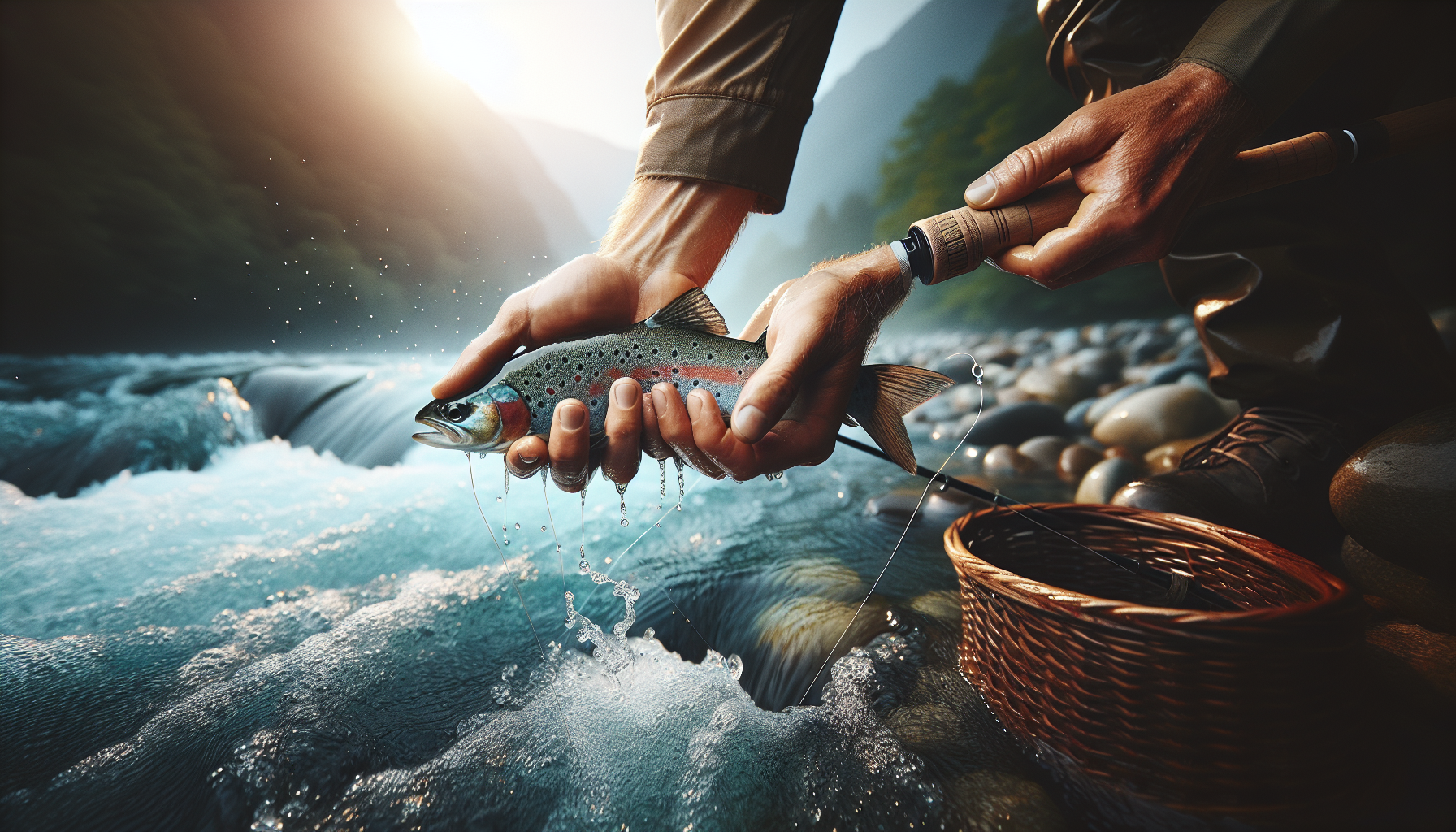
The essentials are straightforward. Use tackle strong enough to land fish quickly. Keep the fish in the water as much as possible. Wet your hands before touching it. Avoid squeezing the body or putting fingers in the gills. Use rubber or knotless landing nets rather than abrasive mesh. Pinch barbs when regulations allow, especially in catch-and-release fisheries. Remove hooks with hemostats or forceps efficiently. If a photo is taken, prepare the camera first, lift briefly if at all, and return the fish immediately. Revive only as much as necessary in current; do not push fish back and forth aggressively.
I have watched community clinics change behavior fast when instructors demonstrate these steps with clarity. Anglers often improve once they see how little extra effort is required. Posting simple handling signs at access points, boat ramps, and shop counters works well because people make decisions in the moment. The most effective message is not guilt. It is cause and effect: shorter fights, less air, cooler water, better survival.
Match Effort to Water Temperature, Flow, and Seasonal Stress
Responsible anglers do not ask only whether fishing is legal; they ask whether conditions support safe angling. Water temperature is the clearest example. Trout and salmonids are coldwater fish. As temperatures rise, dissolved oxygen falls and post-release recovery becomes harder. Many fisheries managers and conservation groups use 68 degrees Fahrenheit as a practical caution point, though thresholds vary by species and local adaptation. Promote the habit of carrying a stream thermometer and checking temperatures before and during a trip, especially in midsummer drought.
Flow matters too. Low water concentrates fish, exposes them to predators, and increases stress. High, muddy water can damage banks when anglers trample soft edges or cross fragile areas. Spawning periods require extra restraint. Wading through redds can crush eggs even if no adult fish are visible. Community education should explain what redds look like: often clean, lighter patches of gravel where fish have cleared sediment. Anglers who learn to recognize them can avoid accidental harm.
Build a local calendar of stress periods and recommended responses. That single resource can become the center of your sustainable practices hub.
| Condition | Risk to Fish or Habitat | Recommended Community Practice |
|---|---|---|
| Water above 68°F for trout | Low oxygen and higher release mortality | Fish early, stop by late morning, promote voluntary afternoon closures |
| Extended low flows | Fish crowding, easier capture, added stress | Reduce effort, avoid repeated targeting of the same runs, share updates publicly |
| Spawning season | Redd disturbance and reproductive loss | Educate on redd identification, avoid spawning areas, respect all closures |
| Muddy banks after floods | Bank erosion and vegetation damage | Use established access points, limit unnecessary wading, postpone group events |
| Didymo or other invasive risk | Spread between watersheds | Clean, drain, dry gear; avoid felt where restricted; use disinfecting protocols |
Use Gear and Access Practices That Minimize Harm
Sustainable fly fishing is shaped by small equipment decisions. Barbless hooks reduce handling time. Heavier tippet can shorten fights and improve survival, even if some anglers prefer finer presentations. Rubber nets protect slime and fins better than old knotted nylon styles. Wading staffs can reduce off-trail scrambling and bank collapse at access points. Polarized glasses help anglers avoid stepping on redds and improve fish identification before casting.
Access habits are just as important. Repeated trampling at informal entry spots widens trails, destabilizes banks, and damages riparian vegetation that shades water and filters runoff. Encourage anglers to use established paths, rotate heavily used reaches, and avoid dragging boats over sensitive gravel bars. On stillwaters and warmwater systems, promoting proper anchor use and shoreline distance can reduce damage to aquatic plants and nesting areas. In urban fisheries, trash removal should be integrated into every event, not treated as a separate cause campaign.
Community leaders should also address gear hygiene. Invasive species and pathogens move on boots, nets, boats, and waders. “Clean, drain, dry” is the baseline message used across North America, and in some areas additional disinfection with hot water or approved solutions is advised. A local fly shop can help by stocking boot brushes, decontamination supplies, and signage. When practical tools are available where anglers already buy flies and leaders, adoption rises.
Build Community Norms Through Clubs, Shops, Guides, and Schools
Lasting change happens when sustainable practices become normal, visible, and socially reinforced. Fly shops, guide services, Trout Unlimited chapters, watershed associations, park staff, and school programs all shape what new anglers think is standard behavior. If beginners repeatedly hear the same message from every source, they accept it as part of fly fishing rather than as an optional add-on.
Start with alignment among local leaders. I have had the best results when guides, club officers, and shop staff agree on a short list of nonnegotiable practices: temperature awareness, proper fish handling, invasive species prevention, redd avoidance, and access respect. Then repeat those principles everywhere. Put them in beginner class materials, guide trip confirmations, event waivers, social posts, and streamside talks. Consistency matters more than clever wording.
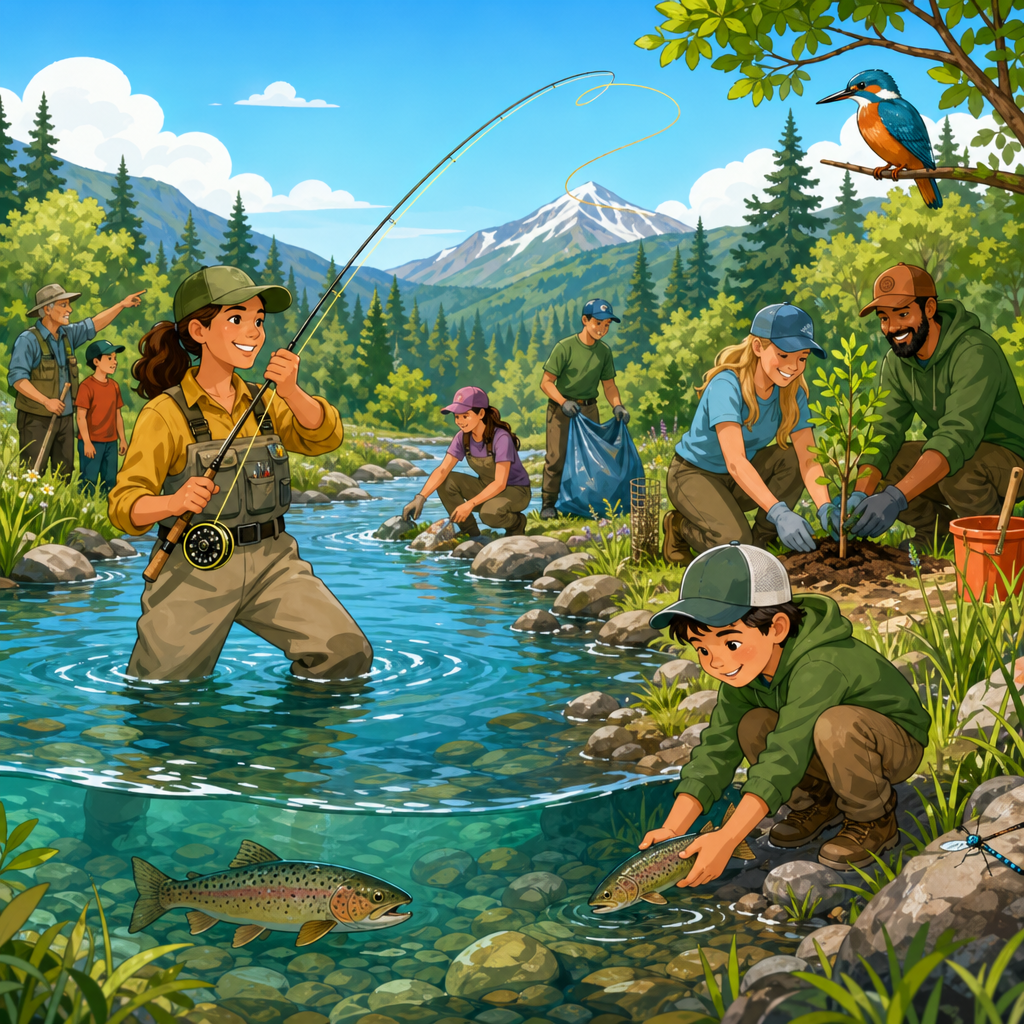
Demonstration events are especially effective. A clinic on catch-and-release, a stream thermometer workshop, or a volunteer day combining river cleanup with ethics instruction gives people a practical entry point. Youth programs deserve special attention because habits form early. If teenagers learn to carry forceps, wet their hands, and leave spawning fish alone, they bring those norms into the community for decades. Landowners should be included too. Sustainable access depends on trust, and trust grows when anglers visibly protect fences, gates, crops, and banks.
Support Habitat Restoration and Science-Based Management
No community can promote sustainable fly fishing only through angler behavior. Fisheries remain healthy when behavior is paired with habitat restoration and support for sound management. Riparian planting, barrier removal, culvert replacement, floodplain reconnection, woody structure projects, and erosion control can all improve fish survival more than any single tackle rule. The right project depends on watershed diagnosis, not guesswork.
Encourage anglers to participate in the institutions that shape those decisions. Attend fisheries meetings. Read management plans. Comment on proposed regulation changes with evidence, not just personal preference. Volunteer for redd counts, stream temperature monitoring, macroinvertebrate sampling, or habitat assessments if your region offers those programs. When anglers contribute useful field observations and respect biologist expertise, management improves and public trust grows.
Be realistic about tradeoffs. Catch-and-release is not zero impact. Stocking can support opportunity but may complicate wild fish goals. Seasonal closures can reduce pressure but hurt business in the short term. Habitat projects can temporarily disturb access while they improve long-term conditions. Sustainable communities discuss these tensions openly. They do not frame every issue as anglers versus agencies or conservation versus recreation. The durable approach is adaptive management: measure conditions, apply the best available strategy, review outcomes, and adjust.
Measure Results and Keep the Hub Page Useful
A strong subtopic hub on sustainable practices should help people act, then return for updates. That means measuring progress and organizing information well. Track practical indicators such as volunteer turnout, number of partner organizations, installed signs, school presentations, cleanup pounds collected, temperature-alert subscribers, or access-site improvements completed. If you can obtain biological indicators from agencies or watershed groups, note trends in summer temperature, habitat quality, native fish observations, or redd counts with proper context.
Keep the page current and connected to deeper resources. Link readers to local regulation summaries, fish handling guides, invasive species protocols, water-temperature dashboards, streamflow pages, restoration calendars, and beginner ethics articles. A hub article works best when it answers the main question fully while guiding readers to the next useful action. That internal structure also helps communities avoid fragmentation, where important information is scattered across social posts and outdated PDFs.
Language matters here too. Avoid slogans with no instructions behind them. Replace “respect the resource” with specific asks: carry a thermometer, stop at 68 degrees, use a rubber net, stay out of redds, clean your gear, join one restoration day per season. People support conservation more reliably when the requested behavior is visible, concrete, and achievable.
Promoting sustainable fly fishing in your community means turning ethics into routine practice. Define sustainability around local water conditions, teach fish handling that reduces mortality, adjust effort during warm water and spawning periods, choose gear and access habits that limit harm, build consistent norms through shops and clubs, and support habitat restoration guided by science. The central benefit is simple: healthier fisheries and stronger public trust, which together protect angling opportunity over the long term.
This sub-pillar hub should function as your community’s practical starting point for sustainable practices. Use it to answer common questions, connect readers to specialized resources, and keep local guidance current as conditions change. If you want real progress, begin with one action this week: publish a short local code of practice, share temperature and flow resources, or organize a clinic on low-impact catch-and-release. Sustainable fly fishing grows when people see exactly what to do and choose to do it together.
Frequently Asked Questions
What does sustainable fly fishing actually mean at the community level?
Sustainable fly fishing at the community level means building a local fishing culture that protects the long-term health of fish, rivers, streams, and access areas while still allowing people to enjoy the sport. It goes beyond individual good intentions and becomes a shared standard for how anglers behave, how clubs teach newcomers, how local shops talk about best practices, and how communities respond to changing water conditions. In practical terms, that includes handling fish properly during catch-and-release, avoiding pressure on spawning fish, reducing fishing during periods of extreme heat or low water, choosing gear that minimizes injury, and preventing the spread of invasive species from one watershed to another.
It also means understanding that sustainability is not only about fish populations. Healthy riparian vegetation, stable streambanks, clean water, insect life, and public access all play a role in keeping a fishery viable. A truly sustainable local approach encourages anglers to care for the entire watershed, not just the fish they target. Communities that promote sustainable fly fishing often support stream cleanups, habitat restoration, respectful river etiquette, science-based regulations, and partnerships with landowners, conservation groups, and fisheries agencies. When everyone works from the same principles, the fishery becomes more resilient and the local angling culture becomes stronger, more responsible, and more welcoming.
How can our community encourage catch-and-release without harming fish?
The most effective way to encourage catch-and-release is to teach that releasing a fish is only beneficial if it is done correctly. Communities can start by promoting simple, consistent handling standards through fly shops, guide services, clubs, social media pages, and signage at popular access points. Anglers should be encouraged to use barbless hooks or pinch barbs down, land fish quickly with appropriately matched tackle, keep fish in the water as much as possible, wet their hands before touching them, and avoid squeezing or dragging them onto rocks, grass, or dry banks. Rubber or fish-friendly nets are another important recommendation because they reduce damage to scales, fins, and protective slime.
Education should also address conditions when catch-and-release becomes less effective, such as during high water temperatures or prolonged fights caused by gear that is too light. In those situations, even fish that swim away may suffer delayed mortality. A community-wide message that emphasizes fish survival rather than just fish release is far more responsible and persuasive. Demonstrations at events, beginner clinics, and short how-to videos can help make these techniques easy to understand. If local leaders model best practices and explain the biological reasons behind them, anglers are much more likely to adopt habits that truly support fish conservation rather than unintentionally causing harm.
What are the best ways to involve local businesses, clubs, and schools in sustainable fly fishing?
The best way to involve community partners is to give each group a practical role that matches its strengths. Fly shops can distribute educational materials, recommend fish-friendly gear, host seminars on seasonal ethics, and share current river condition updates that help anglers make responsible decisions. Guides and outfitters can lead by example on the water by teaching proper fish handling, encouraging restraint during stressful conditions, and explaining why certain areas or species need extra protection at specific times of year. Local clubs can organize volunteer days for stream cleanup, access maintenance, invasive species awareness, and habitat projects, while also creating mentorship programs that teach sustainable habits to new anglers from the start.
Schools and youth programs can be especially powerful partners because they help connect conservation values with hands-on learning. Students can participate in stream monitoring, insect identification, watershed education, native fish projects, and community science efforts that show how healthy fisheries depend on healthy ecosystems. Libraries, parks departments, and community centers can also host talks or workshops that make sustainable fly fishing accessible to families and beginners. The most successful communities frame fly fishing as part recreation, part stewardship. When businesses, educators, and anglers all reinforce the same message, sustainability stops being a niche topic and becomes part of the local identity.
How can we reduce the impact of fly fishing during sensitive seasons or difficult environmental conditions?
Reducing impact starts with recognizing that there are times when the most responsible choice is to fish differently, fish less, or not fish at all. Communities can promote seasonal restraint by educating anglers about spawning periods, low-flow conditions, heat stress, and other factors that make fish more vulnerable. For example, targeting fish on spawning beds can disrupt reproduction even if the fish are released, and fishing during warm summer afternoons can significantly increase mortality in coldwater species such as trout. Sharing clear guidance about when to avoid certain species, reaches, or times of day can make a major difference in fish survival and recovery.
One of the most helpful community actions is to normalize flexibility. Encourage anglers to switch locations, target more resilient species, fish early when water is cooler, or take a break entirely during tough conditions. Local fishing reports, shop newsletters, club announcements, and social channels can be used to spread timely, science-based information rather than simply promoting where the fishing is hottest. Communities can also support temporary voluntary closures, thermal refuge protection, and agency regulations designed to protect stressed fisheries. When anglers understand that restraint is a form of stewardship rather than a loss of opportunity, they are more likely to make decisions that benefit the fishery over the long term.
What practical steps can our community take to prevent invasive species and protect habitat?
Preventing invasive species and protecting habitat should be treated as core parts of sustainable fly fishing, not side issues. Communities can begin with a strong “clean, drain, dry” message for waders, boots, nets, boats, and other gear moved between watersheds. Felt soles, boot treads, and damp gear can transport invasive plants, algae, invertebrates, and pathogens, so anglers should be encouraged to inspect and clean equipment thoroughly after each trip. Posting cleaning protocols at access points, offering gear-care demonstrations, and having retailers stock cleaning supplies are all practical ways to turn awareness into action. If invasive threats are already present in a region, local organizations should work closely with fisheries agencies to share updates and recommended containment measures.
Habitat protection requires both on-the-ground care and community planning. Anglers can help by staying on established trails, avoiding trampling streamside vegetation, packing out trash and discarded tippet, respecting bank restoration areas, and supporting projects that stabilize eroding banks or improve in-stream habitat. Communities can organize river cleanups, tree planting events, and restoration partnerships with landowners and conservation organizations. They can also advocate for policies that protect water quality, maintain stream flows, and preserve public access in ways that reduce damage rather than concentrate it. The most effective approach is to connect everyday angling behavior with broader watershed health. When people understand that invasive species control and habitat protection directly affect fish populations and the future of local fishing, they are much more willing to participate consistently.