Fly fishing in Fiji combines tropical flats, reef edges, and lagoon channels with species that test both skill and tackle, making it one of Oceania’s most intriguing saltwater destinations. For anglers planning a Pacific trip, Fiji matters because it offers access to bluefin trevally, giant trevally, triggerfish, bonefish, milkfish, and occasional permit-like opportunities without the logistical complexity of some more remote atoll systems. I have planned and fished tropical saltwater trips across the region, and Fiji stands out for its blend of fishable habitat, reliable boat support, and island hospitality. As a hub within Oceania fly fishing destinations, this guide explains where to fish, when to go, what species to expect, how to prepare, and how Fiji compares with neighboring options so you can build a smarter itinerary.
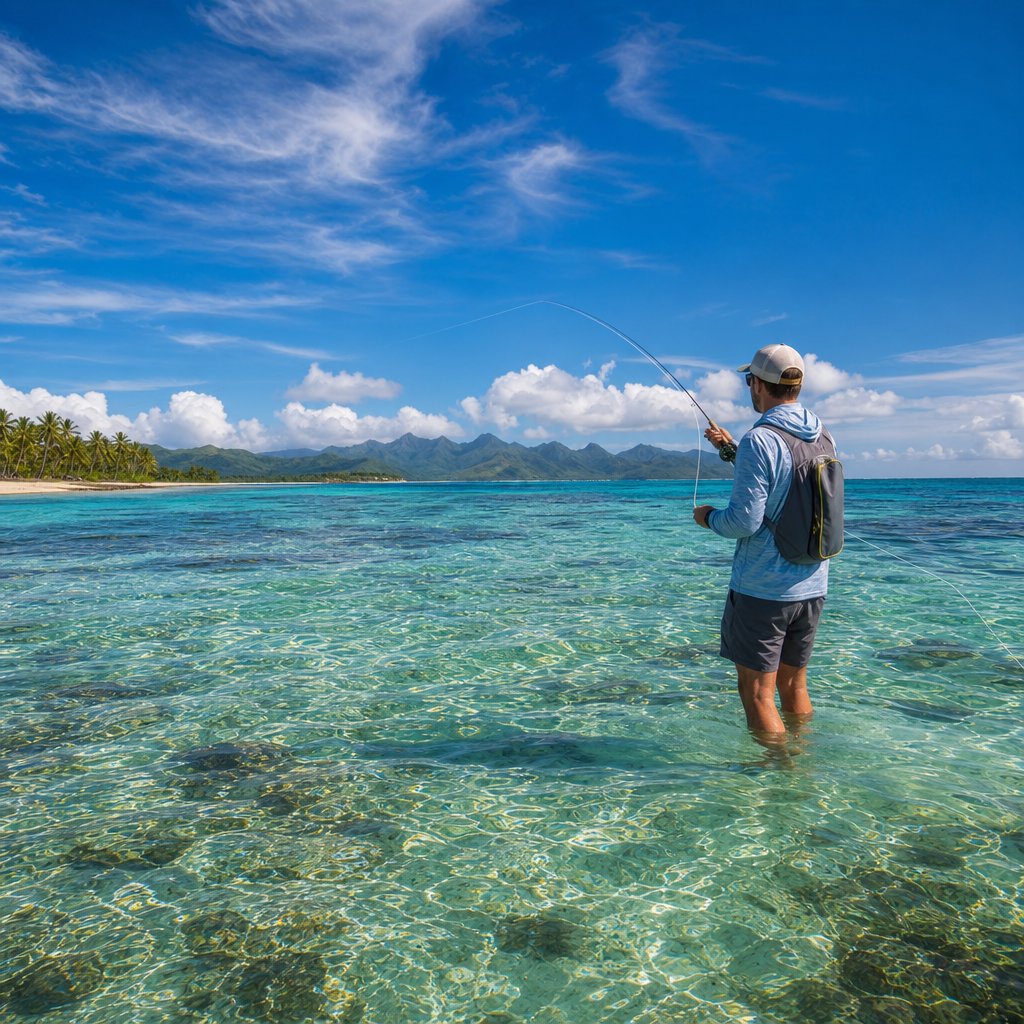
In practical terms, fly fishing in Fiji usually means sight fishing on shallow flats or working current lines along coral structures from skiffs, pangas, or on foot. Flats are broad, hard-bottomed or mixed sand-and-turtle-grass shallows where cruising fish can be spotted visually. Lagoons are protected inner waters surrounded by reef, often calmer and more approachable for wading. Reef edges are drop-offs where predators ambush bait as tidal water pushes through passes and cuts. The best trips align species, tide, and weather: bonefish and triggerfish may tail on low to mid water, while trevally become aggressive around moving current and bait concentrations. Understanding those distinctions is essential because Fiji is not a single fishery; it is a mosaic spread across Viti Levu, Vanua Levu, the Mamanuca chain, the Yasawas, Kadavu, Taveuni, and the outer Lau group.
That diversity is exactly why Fiji deserves a prominent place in any Oceania fly fishing destination plan. Oceania includes highly specialized flats in Aitutaki, bluewater and reef opportunities in French Polynesia, remote options in Kiribati, and Australia’s legendary saltwater estuaries and flats. Fiji sits in the middle of that conversation as a versatile destination with broad appeal. It can work for experienced saltwater anglers chasing giant trevally, but it is also accessible for travelers who want a mixed-family holiday with several guided fishing days. Direct flights from Australia, New Zealand, and the United States make it easier than many Pacific islands, and established resorts can organize boats, transfers, and local guides. The result is a destination that rewards preparation: choose the right island group, fish with the tide, bring durable gear, and you can find world-class visual fishing in a setting most anglers still underestimate.
Premier fly fishing locations in Fiji
The best fly fishing locations in Fiji are defined less by national borders than by habitat and access. Around Viti Levu, the Coral Coast and nearby lagoons provide practical options for traveling anglers based near major resorts. These areas are not always the most remote, but they can produce bluefin trevally, juvenile giant trevally, triggerfish, and reef species on suitable tides. For visitors with limited time, a guided day from the main island is often the most efficient introduction because transfer times are short and weather windows can be used quickly. The tradeoff is pressure and variable water clarity near populated areas, so expectations should be calibrated accordingly.
The Mamanuca and Yasawa islands are among the most talked-about sectors for saltwater fly fishing in Fiji because they combine clear water, wadable flats, and productive reef systems. Anglers staying on island resorts can access lagoon flats at dawn, then switch to boat-based sessions along channels and reef points as the tide fills. I have found these island groups particularly effective for anglers who value variety over a single target species. One morning may involve stalking triggerfish over coral rubble, while the afternoon shifts to casting large baitfish patterns at trevally busting fusiliers along a pass. Clear water improves sight fishing, but footwear and line management become critical because coral heads and broken rock punish carelessness.
Vanua Levu and nearby outer reefs offer a more exploratory style of fishing. Compared with resort-centered day water, these areas can feel less pressured and more dependent on local knowledge. Broad lagoon systems, mangrove-fringed shorelines, and current-fed channels hold mixed species, including stronger shots at larger trevally. The same is true farther afield around Kadavu and Taveuni, where reef structure and tidal movement create genuine bluewater-to-flats crossover opportunities. Kadavu, in particular, attracts anglers interested in combining offshore tuna or mahi opportunities with inshore fly sessions for trevally and reef fish. Taveuni’s rugged geography means less classic wading flat water than some atolls, but excellent boat-based sight fishing can still exist on adjacent reef systems.
| Region | Best For | Typical Species | Style |
|---|---|---|---|
| Viti Levu | Easy access, short trips | Bluefin trevally, triggerfish, reef species | Wading and boat-based lagoon sessions |
| Mamanucas | Clear water, mixed fishing | GTs, bluefin trevally, triggerfish, bonefish | Resort-based day fishing |
| Yasawas | Remote feel, visual fishing | Trevally, triggerfish, reef predators | Lagoon flats and reef channels |
| Vanua Levu | Exploration, less pressure | Trevally, bonefish, milkfish, reef species | Skiff and local-boat access |
| Kadavu and Taveuni | Hybrid inshore-offshore options | GTs, bluefin trevally, tuna bycatch opportunities | Boat-focused fishing around reef edges |
For anglers researching Oceania fly fishing destinations broadly, Fiji works best as a hub for tropical saltwater variety rather than a one-species pilgrimage. If your sole objective is large bonefish numbers, some Pacific atolls may be more consistent. If your dream is giant trevally on fly with daily shots at truly oversized fish, specialized lodges in more remote island chains may offer higher percentages. Fiji’s advantage is balance: enough quality flats and reef water to present real opportunity, enough tourism infrastructure to reduce friction, and enough geographic spread to support return trips focused on different island groups.
Target species and how they behave
The headline species for most anglers fly fishing in Fiji is trevally, especially giant trevally and bluefin trevally. Giant trevally are apex predators that patrol channels, reef edges, and current seams where bait is pinned against structure. On fly, they demand immediate, accurate presentations and aggressive strip speed. A fish that appears calm one second can accelerate violently the next, which is why heavy leaders, tight drag settings, and disciplined clearing technique are non-negotiable. Bluefin trevally are generally more common, often more willing, and visually spectacular in shallow water. They hunt over white sand and coral patches, and a fast-moving baitfish pattern stripped across their line of travel will frequently trigger decisive takes.
Triggerfish are another major reason anglers visit Fiji. They are smart, territorial, and often feed with their tails exposed as they dig into turtle grass, rubble, or sandy potholes. Unlike trevally, triggerfish usually require a precise lead, a fly that lands softly, and a slow, controlled presentation that stays near the bottom. Hooking them is only the beginning because they dive instantly for coral. Strong tippet, sharp hooks, and quick side pressure improve landing odds, but many fish still win. In the Pacific, triggerfish have become a benchmark species for technical saltwater flats anglers, and Fiji gives realistic shots without requiring the remoteness of a dedicated expedition.
Bonefish exist in Fiji, though they are not the singular draw they are in places like the Cook Islands or parts of the Bahamas. Where present, they use classic habitat: shallow sand flats, lagoon edges, and feeding areas exposed on lower tides. They can be spooky in clear, calm conditions, especially where they see local netting or boat traffic. Milkfish are the wildcard. These powerful, algae-feeding fish can be maddeningly selective, often requiring specialized small green flies, floating lines, and exact drifts when they are sipping filamentous material in current. Add parrotfish, barracuda, queenfish, and other reef-associated species, and Fiji becomes a destination where the best anglers stay adaptable rather than fixated.
When to go, tides, weather, and daily strategy
The best time for fly fishing in Fiji generally falls within the drier, cooler season from about May through October, when southeast trade winds can be more predictable and heat stress is lower. That said, excellent fishing also happens in shoulder periods, and some anglers prefer warmer months for increased bait activity and fewer travelers. Cyclone season, typically November through April, introduces more weather risk, humidity, and rain, but not every week is unfishable. The key is understanding that in Fiji, tide and light often matter more than a generic monthly label. A perfect neap-tide morning with high sun can outperform a theoretically ideal season compromised by cloud and wind.
I plan each Fiji fishing day around three variables: visibility, current, and access. Visibility drives sight fishing; if cloud cover is heavy, shift from delicate flats work to reef edges, channels, or blind-casting bait concentrations. Current dictates predator positioning; trevally and queenfish become more predictable near passes and pinch points when water moves with intent. Access determines whether a flat can be waded safely, poled, or approached by casting from a drifting boat. Midday overhead sun is usually the best time for spotting fish on pale bottoms, while early and late periods are often stronger for surface disturbance and bait pushes near reef structure.
Because saltwater fish are opportunistic, the most productive anglers in Fiji do not overcommit to one method. If the tide falls too quickly for a lagoon flat, run to a channel mouth. If wind muddies a western shoreline, fish the lee side of an outer island. If triggerfish vanish on a bright flat, scan deeper edges for bluefin trevally or barracuda. Good local guides make these adjustments naturally. Their value is not only finding fish; it is sequencing the day to match the island, moon phase, and weather pattern.
Gear, flies, guides, and practical travel tips
For most Fiji fly fishing, a 9-weight and 10-weight outfit cover the majority of situations. A 9-weight handles bonefish, smaller trevally, triggerfish, and general flats work, while a 10-weight provides needed authority for larger trevally and windy conditions. Dedicated giant trevally anglers should add a 12-weight with a quality sealed-drag reel carrying at least 250 yards of strong backing. Tropical floating lines are essential for flats, and an intermediate line helps around reef edges and channels. Leaders should be abrasion resistant: 16- to 20-pound for bonefish and triggers in open terrain, 40- to 80-pound shock configurations for trevally depending on fly size and structure.
Fly selection should be compact and functional. For trevally, bring brush flies, deceivers, hollow-tied baitfish patterns, and bulky streamers in white, grey, olive, tan, and black-purple. For triggerfish, crab and shrimp patterns with strong hooks and modest weight are critical; oversized eyes can snag coral or land too hard. Small spawning shrimp, Gotcha-style flies, and lightly weighted flats patterns cover bonefish. Milkfish are specialized enough that it is worth asking local operators what algae or plankton-imitating patterns are currently effective. Hooks should be corrosion resistant and brutally sharp; many missed chances in Fiji are not presentation failures but tackle failures.
Choose guides who specifically understand fly fishing rather than only conventional reef fishing. Ask direct questions: How many days a month do you guide fly anglers? What species are realistic in the season I am visiting? Do you provide rigid bow storage, stripping baskets, and quality eyewear backup? Are your boats set up for line management and casting clearance? Reputable operations answer clearly and avoid promising hero fishing every tide. For travel, pack flats boots with hard soles, sun gloves, long pants, buff, reef-safe sunscreen, pliers, spare fly lines, a minimalist waterproof pack, and a basic first-aid kit. Coral cuts become infected quickly in tropical climates, so immediate cleaning matters.
How Fiji fits the wider Oceania fly fishing map
As a hub for Oceania fly fishing destinations, Fiji occupies a useful middle ground. Australia offers more sheer breadth, from barramundi and threadfin in the north to flats species on the Cape York and Torres Strait frontier, but distances are greater and planning can be more complex. Aitutaki in the Cook Islands is arguably more iconic for large bonefish and technical flats fishing, yet it is narrower in species mix. Christmas Island in Kiribati remains legendary for numbers of bonefish and giant trevally encounters, but travel logistics are less forgiving. French Polynesia delivers remarkable scenery and quality reef species, though costs can rise quickly and access varies island by island.
Fiji, by contrast, can anchor a broader Pacific fishing strategy. An angler based in Australia or New Zealand can add a week in Fiji with relatively simple air connections. A traveler from North America can combine a family resort stay with serious guided fishing days and still feel the trip delivered value beyond the boat. Within a destination-cluster content plan, Fiji naturally links outward to Australia saltwater fly fishing, Cook Islands bonefishing, Kiribati flats expeditions, and French Polynesia reef fly fishing. That is why this page functions as a strong Oceania hub: it introduces the region through a destination that is varied, accessible, and genuinely capable of producing memorable fish.
Fly fishing in Fiji rewards anglers who treat the islands as a network of distinct fisheries rather than a postcard backdrop. The premier locations are the Mamanucas, Yasawas, Vanua Levu, Viti Levu’s accessible lagoon systems, and selected waters around Kadavu and Taveuni. The core species are trevally, triggerfish, bonefish, milkfish, and a rotating cast of reef predators, each demanding different presentations and tackle. Success depends on matching island group, season, tide, and guide expertise, then staying flexible when wind, cloud, or water movement changes the plan.
For anyone exploring fly fishing destinations across Oceania, Fiji deserves serious consideration because it offers variety without overwhelming logistics. You can wade clear flats in the morning, cast baitfish flies at reef edges after lunch, and still return to comfortable lodging each evening. Prepare with durable tropical gear, ask operators detailed questions, and build your itinerary around tides instead of assumptions. If you are mapping your next Pacific adventure, start with Fiji, then use it as the gateway to the wider Oceania fly fishing world.
Frequently Asked Questions
What makes Fiji a standout destination for fly fishing compared with other tropical saltwater fisheries?
Fiji stands out because it offers an unusually varied saltwater fly fishing experience in a relatively accessible Pacific setting. Instead of focusing on only one style of fishing, anglers can move between shallow coral flats, lagoon channels, reef edges, white-sand drop-offs, and protected inner waters, often within the same region or even the same day depending on tides and weather. That diversity creates opportunities to target multiple species with very different behaviors, from fast-moving bluefin trevally and bruising giant trevally to technical triggerfish, selective milkfish, cruising bonefish, and occasional permit-like fish on hard-bottom flats.
Another major advantage is that Fiji can deliver high-quality sight fishing without the extreme logistical complexity of some far-flung atoll destinations. Travel is generally more straightforward, accommodations range from practical lodges to luxury island resorts, and many fisheries are accessible by skiff or even by wading close to inhabited islands. For traveling anglers, that means a trip can be built around serious fishing without requiring expedition-style planning. Fiji also rewards a broad skill set: aggressive stripping presentations for trevally, careful lead angles for triggerfish, delicate placements for bones, and specialized algae or worm patterns for milkfish. For anglers who enjoy solving different saltwater puzzles in one trip, Fiji is one of the most compelling destinations in Oceania.
Which locations in Fiji are best for fly fishing, and what types of water should anglers prioritize?
The best locations in Fiji are generally those with a combination of healthy reef systems, wadable flats, protected lagoons, and channels that funnel bait and moving water. Productive areas are often found around outer island groups, reef-fringed coastlines, and resort zones with access to both inner and outer water. Rather than thinking only in terms of a single “hot spot,” it is more useful to evaluate a region by its mix of habitat. Areas with white or light-colored sand flats are especially valuable for spotting bonefish and cruising trevally. Turtle grass, broken coral, and hard-bottom flats can be excellent for triggerfish and permit-like opportunities. Reef edges and current seams become prime zones for bluefin trevally and giant trevally, particularly on pushing or falling water when bait is concentrated.
Lagoon channels deserve special attention because they often combine visibility, current, and fish movement. These corridors can hold trevally, milkfish, and transient predators moving between deeper water and the flats. Meanwhile, sheltered inner lagoons can be ideal when wind makes outer reef areas difficult to fish. If you are planning a trip, prioritize locations where a guide can give you options for both wading and boat-based sight fishing. That flexibility matters in Fiji because conditions can shift quickly with wind direction, tide height, and cloud cover. A destination with multiple fishable habitats will almost always outperform a beautiful but one-dimensional flat. In practical terms, the best Fiji fly fishing locations are the ones that let you adapt each day instead of forcing you into a single style of fishing regardless of conditions.
What species can fly anglers realistically target in Fiji, and how should tactics change for each?
Fiji offers a strong mix of iconic tropical saltwater species, but success depends on matching tactics to fish behavior rather than treating everything like a generic flats scenario. Bluefin trevally are one of the most consistent and enjoyable targets. They are aggressive, visual, and often willing to chase a well-presented baitfish pattern stripped quickly across a flat edge or current lane. Giant trevally are less common in some areas than bluefin, but they are the true heavy hitters. They demand stout tackle, large flies, and immediate pressure after the eat, especially around coral structure where they can break fish off quickly. Bonefish are available in select systems and are best approached with classic flats techniques: long casts, controlled leads, accurate presentations, and subtle strips with shrimp or small baitfish flies.
Triggerfish are a completely different game and one of Fiji’s most rewarding challenges. They require precise presentations to individual fish feeding on hard-bottom or coral-rubble flats. The key is to place a crab fly where the fish can see it naturally, then avoid moving it too much once the trigger tips down. Milkfish are among the most specialized targets and can be maddeningly selective, often feeding on algae or tiny suspended food items. They usually require dedicated patterns, long leaders, and patience. In some areas, anglers may also encounter permit-like fish or other less predictable flats species, which makes readiness important. The best approach in Fiji is to rig according to your primary target but stay prepared to pivot. A day can begin with bonefish on a sandy flat, turn into a triggerfish stalk over coral patches, and end by throwing large streamers at trevally along a reef edge.
What gear, flies, and leaders are best for fly fishing in Fiji?
A smart Fiji setup usually begins with at least two rods, and serious anglers often carry three. An 8-weight is ideal for bonefish, smaller trevally, and general flats work in lighter wind. A 9-weight is a very versatile all-around rod for bluefin trevally, larger bones, triggerfish in breezy conditions, and mixed-species fishing. A 10- or 11-weight is the safer choice if giant trevally are a realistic target or if you expect to fish large baitfish flies near reef edges. Reels should have strong, smooth drags and enough backing for fast runs in current. Tropical floating lines are standard for most flats and lagoon fishing, but some anglers also carry an intermediate line for deeper edges or windier situations where a fly needs to stay below the chop.
Fly selection should reflect Fiji’s range of habitats. Baitfish patterns in white, tan, olive, blue, and chartreuse are essential for trevally. Crab patterns are mandatory for triggerfish and any permit-like opportunities. Shrimp flies and smaller gotcha-style patterns can work well for bonefish. If milkfish are on the agenda, you need specialized flies that imitate algae or tiny food sources, not just conventional predator patterns. Leaders should be adapted to the species and terrain. For bonefish, many anglers do well with 10- to 12-foot leaders in the 12- to 16-pound range. Trevally often call for shorter, stronger leaders in the 20- to 40-pound class depending on species and structure. Triggerfish leaders need abrasion resistance because coral, rubble, and sharp mouths all increase wear. Polarized sunglasses, quality flats boots, stripping guards, and sun protection are not optional in Fiji; they are part of the core system. Clear vision and safe footing can matter as much as fly choice.
What are the most important practical tips for planning a successful fly fishing trip to Fiji?
The most important planning tip is to build the trip around tides, access, and guiding quality rather than relying only on resort marketing or postcard scenery. In Fiji, fish movement is heavily influenced by water level and current, so a guide who understands local tide timing, how different flats fish on specific stages, and when to shift from lagoons to reef edges is incredibly valuable. Before booking, ask detailed questions about target species, the mix of wading versus skiff fishing, average casting distances, seasonal wind patterns, and how often guides encounter your priority fish. That information tells you far more than generic claims about “world-class flats.” It is also wise to discuss whether the fishery suits beginners, intermediate casters, or experienced saltwater anglers, because some opportunities are forgiving while others are highly technical.
On the fishing side, success in Fiji often comes down to readiness and discipline. Practice quick, accurate casts in the 40- to 70-foot range before your trip, especially with wind coming from different angles. Learn to pick up and re-deliver efficiently because shots at trevally and triggerfish can appear and disappear fast. Listen carefully to guide instructions about clock directions, fish speed, lead distance, and strip tempo. On coral flats, move slowly and watch your footing; noise and sudden movement can ruin opportunities. Be prepared for weather changes and understand that cloud cover can reduce sight fishing quality, which is another reason diverse water options matter. Finally, stay flexible with expectations. Fiji is at its best when approached as a multi-species fishery where each day presents a new puzzle. Anglers who embrace that variety usually enjoy the trip more and often end up discovering that the species they had not initially prioritized becomes the highlight of the entire adventure.