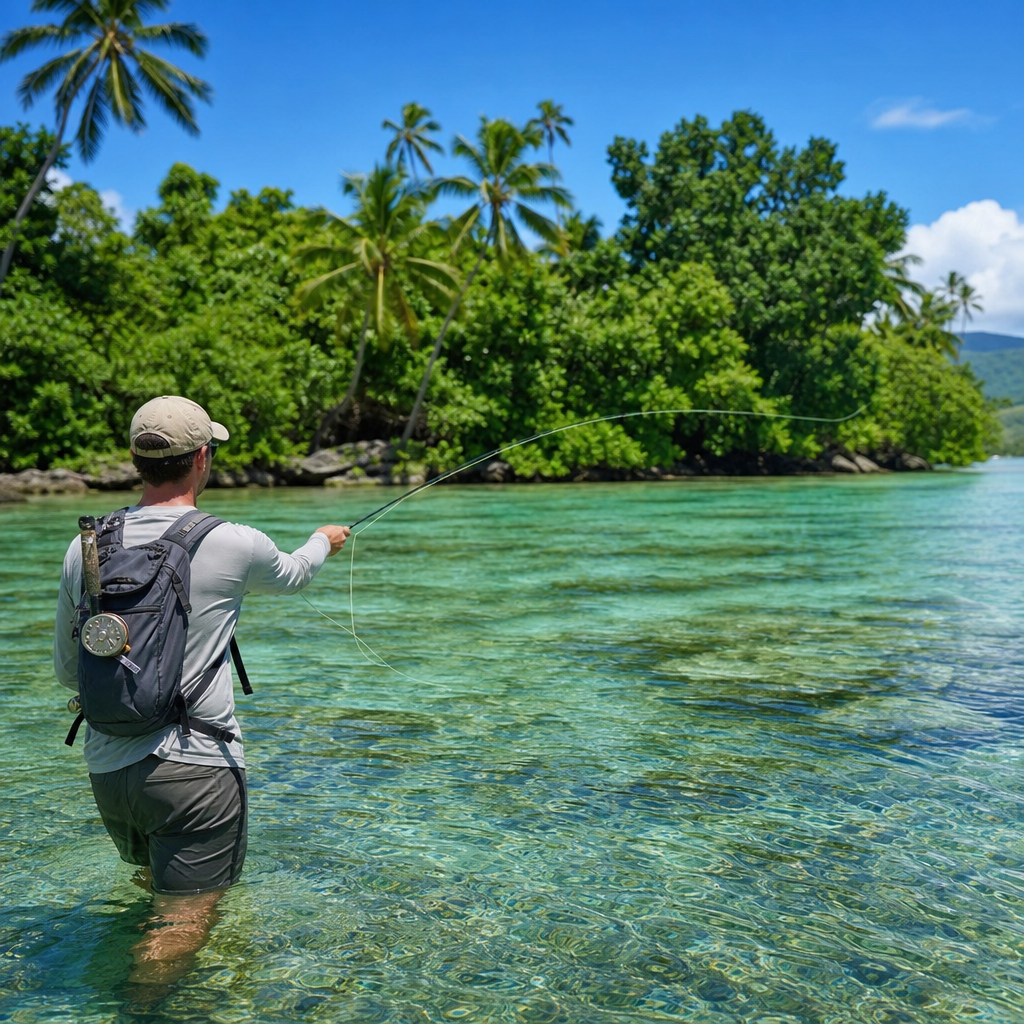
Fly fishing in Vanuatu offers something rare in the Pacific: broad, lightly pressured flats, bluewater drop-offs close to shore, and a mix of species that rewards both technical presentation and opportunistic sight casting. For anglers researching fly fishing in Oceania, Vanuatu deserves hub-level attention because it combines classic tropical flats fishing with reef edges, lagoon channels, and island-specific conditions that differ sharply from Australia, New Zealand, or French Polynesia. In practical terms, that means one destination can produce bonefish-style shots on ankle-deep sand, hard-fighting trevally along coral margins, and offshore teasing opportunities for larger pelagics when weather allows. I have planned and evaluated trips across Pacific fisheries, and Vanuatu consistently stands out for access, variety, and the simple fact that many productive areas still fish with less pressure than better-publicized islands.
At its core, fly fishing in Vanuatu means targeting saltwater species with artificial flies delivered by specialized tackle in tropical marine environments. The main settings are flats, reefs, lagoons, passes, and nearshore bluewater. Key terms matter. A flat is a shallow area of sand, turtle grass, or coral rubble where fish cruise visibly on the tide. A reef edge is the abrupt boundary where shallow coral structure meets deeper water, often concentrating predators. A pass or channel funnels tidal flow between lagoon and open ocean, creating feeding lanes. Sight fishing means spotting the fish first, then making a deliberate cast; blind casting means working likely water when visibility is poor. These distinctions are not academic. In Vanuatu, success depends on matching line choice, fly weight, leader strength, and wading approach to each environment.
Why does this matter within an Oceania fly fishing guide? Because anglers often treat the region as a single tropical category when it is not. Vanuatu sits in Melanesia and differs from the atoll systems of Kiribati or the giant trevally strongholds of the Seychelles-style Indian Ocean model many anglers mentally import. Its islands are volcanic, reef-fringed, and geographically varied. Efate, Espiritu Santo, Tanna, and outer islands each present different combinations of flats, surf lines, estuaries, and current seams. Weather windows, tide range, coral composition, and transport logistics all shape the fishing day. A strong destination strategy therefore starts with understanding where to fish, what species are realistic, and how local conditions affect timing.
Best fly fishing spots in Vanuatu
Efate is the most practical base for many visiting anglers because Port Vila is the main international gateway and the island offers quick access to lagoons, reef flats, and sheltered shorelines. Around Havannah Harbour, inner flats and reef margins can hold bonefish, small trevally, queenfish, and triggerfish, especially on pushing tides. The mix of sand patches and coral heads requires accurate casting and disciplined stripping because fish often appear close and change direction quickly. On Efate’s outer edges, especially where current sweeps along reef points, larger trevally become a realistic target. These are not always giant trevally in the trophy sense, but fish in the ten to twenty kilogram class are possible around structure, and even smaller fish test drag systems brutally in coral country.
Espiritu Santo is arguably the most versatile island for anglers who want both flats and exploratory water. Broad beaches, protected bays, and nearby reef systems create options across wind conditions. Certain sandy flats near lagoon mouths can produce the clearest sight-fishing scenarios in the country, with fish tailing or pushing wakes in shin-deep water. Santo also has riverine influence in some areas, which means bait concentration can improve after moderate rainfall, though heavy runoff reduces visibility. When I map trip plans for multi-day anglers, Santo usually rates highly because it offers more room to adapt. If a windward reef is unfishable, a bay flat or leeward channel may still be productive, which is not true on every Pacific island.
Tanna and several outer islands appeal to anglers willing to trade convenience for lower pressure and stronger exploratory potential. These fisheries are less standardized, and that is exactly their value. Reef passes, surf-exposed points, and little-fished lagoons can hold aggressive trevally, reef species, and seasonal pelagic opportunities. The drawback is logistics. Boat reliability, local transport, and weather contingency planning matter more here than around Port Vila. Yet for experienced traveling anglers, these islands often provide the most rewarding sessions because fish behave less cautiously and shoreline pressure is minimal. Productive water may be obvious to a trained eye: current tongues entering a lagoon, white sand adjacent to coral bommies, or a channel edge where bait gathers at slack-to-flood transition.
Not every promising area should be waded. Coral cuts, sea urchins, surge, and fast-moving tide can turn an attractive flat into a dangerous one. Boat-based approaches often extend reachable water and improve odds on reef edges or channel mouths where predators pin bait. A local guide or experienced captain is especially valuable in Vanuatu because navigation hazards are real and fishable structure changes with tide height. The best spot is rarely just the prettiest flat. It is the place where water clarity, current speed, bottom composition, and fish movement align during a specific tidal window.
Target species and what to expect
Trevally are the headline fish for many anglers, and for good reason. Bluefin trevally are common enough to be realistic targets and are ideal on an 8- to 10-weight outfit. They hunt reef edges, channels, and flats margins, often appearing suddenly behind a hooked fish or charging a fast-stripped baitfish pattern. Giant trevally are present, though they should be approached with honest expectations. Vanuatu can produce them, especially around reef points, current-heavy passes, and areas with concentrated bait, but this is not a numbers fishery for truly giant specimens. Still, even smaller GTs are physically overwhelming on fly gear and demand heavy leaders, locked drags, and immediate side pressure to keep fish from coral.
Bonefish exist in parts of Vanuatu, though they are less consistently documented than in marquee flats destinations such as Aitutaki or Christmas Island. Where populations are established, they reward stealth, soft presentations, and moderate retrieve speeds with small shrimp and crab patterns. Triggerfish, including species that patrol coral-flat intersections, add a technical challenge because they feed with precision and quickly expose poor presentations. Queenfish, barracuda, reef snapper, and emperor species round out the inshore mix. These fish are not always the reason anglers book the trip, but they make Vanuatu exciting because any session can shift from delicate flats fishing to explosive predatory takes within minutes.
Offshore and nearshore bluewater opportunities broaden the destination further. When conditions permit, tease-and-switch tactics can bring species like mahi-mahi, tuna, wahoo, and sailfish into range, though these are highly weather dependent and usually secondary to the inshore program. The key expectation is diversity rather than guaranteed specialization. Vanuatu is strongest as a mixed saltwater fly destination where one week may include flats shots, reef-edge ambushes, and fast offshore windows. Anglers expecting a single-species factory usually do better elsewhere. Anglers who value variety, exploration, and tactical adaptation generally leave impressed.
| Species | Primary Habitat | Recommended Rod | Core Fly Style | Best Tidal/Light Window |
|---|---|---|---|---|
| Bluefin trevally | Reef edges, channels, flats margins | 9-10 weight | Baitfish streamers | Moving tide, early or late light |
| Giant trevally | Passes, reef points, drop-offs | 12 weight | Large baitfish, brush flies | Strong current periods |
| Bonefish | Sand flats, lagoon edges | 7-8 weight | Shrimp and small crabs | Pushing tide with high visibility |
| Triggerfish | Coral-sand transition zones | 8 weight | Crab patterns | Mid-tide on sunny flats |
| Queenfish | Channels, surf edges | 9 weight | Flashy baitfish flies | Current changes and bait activity |
Gear, flies, and line systems that work
A practical Vanuatu setup starts with three rod classes. A 7- or 8-weight covers bonefish, smaller trevally, triggerfish, and general flats work. A 9- or 10-weight is the most useful all-around rod for bluefin trevally, queenfish, and reef-edge baitfish situations. A dedicated 12-weight is the serious tool for giant trevally and heavy structure. Reels must have strong, sealed drags; tropical heat, salt, and long runs punish marginal equipment. Fly lines should be tropical-core models from established manufacturers such as Scientific Anglers, Rio, or Airflo, because standard temperate lines wilt in Pacific heat and lose casting efficiency. Floating lines are essential on flats, while intermediate lines help on reef edges and channels where flies need to track just below surface chop.
Leader construction matters more than many traveling anglers think. For bonefish and triggers, nine- to twelve-foot leaders tapering to 12- or 16-pound fluorocarbon often balance turnover and stealth. For bluefin trevally, I prefer shorter leaders ending in 20- to 30-pound fluorocarbon for abrasion resistance and fast fly turnover in wind. For GTs, the modern standard is brutally simple: heavy butt material, short overall length, and bite or abrasion sections in the 80- to 130-pound range depending on fly size and terrain. Knots must be tested before every session. Coral does not forgive weak crimps, poorly seated loops, or sun-damaged mono.
Fly selection should reflect habitat first, species second. On white sand or pale turtle grass, lightly weighted tan, pink, cream, and olive shrimp patterns work well. Crab flies with strong hook orientation are crucial for triggerfish and tailing flats fish near coral. For trevally, durable baitfish flies in white, grey, chartreuse, black-purple, and blue combinations cover most situations. Brush flies, Deceivers, Semper-style patterns, and bulkheads that push water are effective around current seams. Barbless or debarbed hooks simplify release and reduce injury to both fish and angler, but hook gauge must match target size. Cheap hooks are false economy in Vanuatu. Saltwater species here hit hard, turn fast, and expose any weakness immediately.
Strategies for tides, weather, and presentation
The best fly fishing strategies in Vanuatu revolve around reading the tide. On many flats, the incoming tide is prime because fish push onto newly covered ground to feed. Early flood often brings the cleanest shots as fish enter with purpose and visibility remains good. High tide can be productive near mangrove edges or coral shelves, but fish may spread out and become harder to intercept. Falling tide concentrates movement into channels and drains, which is excellent for trevally and queenfish waiting to ambush bait. Rather than asking for the best time of day in the abstract, anglers should ask which stage of tide puts target fish within fly-casting range on a given flat, reef edge, or pass.
Wind is the constant variable in Oceania, and Vanuatu is no exception. Trade winds can strengthen through the day, so early sessions often provide the easiest flats visibility and most accurate casting conditions. When wind increases, shifting from open flats to sheltered lagoon edges or from delicate crab presentations to more aggressive baitfish retrieves is usually smarter than forcing the original plan. Cloud cover also matters. Bright light helps sight fishing, especially over mixed sand and coral, while overcast conditions favor blind casting structure, current seams, or nervous bait. Polarized glasses with copper or amber lenses generally perform best in varied tropical light, though a second darker lens helps in harsh midday glare.
Presentation is species specific. Bonefish usually respond to measured strips after the fly lands beyond and slightly ahead of the fish’s path. Triggerfish often need a fly placed very precisely, then barely moved so it appears natural on the bottom. Trevally are different. Bluefin may charge a fleeing baitfish, and a faster strip often triggers the eat. GTs usually require commitment: a large profile, an aggressive retrieve, and no hesitation when the fish tracks. One of the most common mistakes I see is anglers slowing down when a big predator appears. In Vanuatu’s reef environments, a decisive retrieve and immediate strip-set are far more effective than a timid presentation followed by a trout-style lift.
Planning a successful Vanuatu fly fishing trip
Trip timing generally favors the drier months, with May through October offering more stable weather, lower humidity, and manageable trade-wind patterns, though exact conditions vary by island and year. Wet-season travel can still fish well, especially if you build flexibility into the itinerary, but heavy rain may reduce lagoon clarity and create transport complications. International access usually runs through Port Vila, and domestic links to outer islands should be treated conservatively: leave buffer time, confirm baggage limits for rod tubes, and keep critical tackle in carry-on where possible. Medical kits, reef-safe sun protection, wading boots with solid puncture resistance, and waterproof phone or chart storage are not optional extras here.
Guides are not mandatory everywhere, but they dramatically improve first-trip outcomes. A good local operator understands access rights, boat channels, tide-specific fish movement, and which flats are worth walking. They also help with species identification and release handling around coral and surf. If you are building this page into a broader Oceania fly fishing research path, use Vanuatu as the destination for anglers who value variety and exploration, then compare it internally with more specialized fisheries elsewhere in the region. The payoff is simple: with the right island, proper tackle, and a tide-led plan, fly fishing in Vanuatu delivers one of Oceania’s most rewarding saltwater adventures. Start by choosing your target species, then match island, season, and guide support to that goal.
Frequently Asked Questions
What makes Vanuatu a standout destination for fly fishing in Oceania?
Vanuatu stands out because it offers an unusually broad range of saltwater fly fishing scenarios within relatively short distances. Anglers can fish hard sand and coral flats for classic sight-casting opportunities, then shift to lagoon channels, reef edges, and steep bluewater drop-offs that sit surprisingly close to shore. That mix is rare. In many Pacific destinations, the fishing experience is more specialized, but in Vanuatu you can move between technical flats presentations and more opportunistic shots at fast-moving pelagics or reef predators depending on tide, wind, and island geography.
Another major advantage is light pressure. Compared with better-known tropical destinations, many Vanuatu flats and reef systems see far fewer dedicated fly anglers. That does not mean the fishing is easy, but it often means fish are less conditioned to repeated presentations. For traveling anglers, that translates into more natural fish behavior, less crowded water, and the ability to explore productive areas without feeling boxed into a small number of famous spots.
Vanuatu also deserves attention because conditions vary sharply from island to island. Some areas favor shallow wading over expansive flats, while others are better suited to boat access, channel edges, reef corners, or surf-washed structure. That diversity rewards anglers who think strategically rather than treating the country as a single fishery. In practical terms, it means success comes from matching your fly selection, leader setup, and daily plan to the specific island, tide stage, and habitat in front of you.
What are the best fly fishing spots in Vanuatu?
The best spots in Vanuatu are usually defined less by a single famous flat and more by a combination of habitat types. Productive areas often include shallow lagoon flats, coral and turtle-grass edges, reef channels that funnel bait and tide movement, and island points where current sweeps close to shore. Around larger islands and outer reef systems, anglers should pay close attention to transitions: where a white sand flat drops into darker coral, where a lagoon drains through a narrow cut, or where calm inside water meets choppier ocean-facing edges. Those transitions consistently hold feeding fish.
Efate is often a practical starting point because it is accessible and gives anglers exposure to multiple environments, including lagoon systems and reef margins. Outer islands and less-developed atolls can be especially appealing for anglers who want less pressure and more exploratory fishing. Areas with broad tidal flats can produce shots at species associated with tropical sight fishing, while reef edges and channels open the door to tougher, more powerful fish that demand fast decisions and strong tackle.
When evaluating any location in Vanuatu, it helps to think in terms of “best conditions” rather than “best destination” in the abstract. A flat that looks perfect at high tide may be far less fishable when water gets too deep or glare becomes unmanageable. Likewise, a channel that seems quiet on slack water can come alive when bait starts moving on the outgoing tide. The most consistently productive anglers focus on spots that combine visibility, current, access, and species potential, then rotate through them based on weather and tidal timing.
What species can you target on fly in Vanuatu, and how should you approach them?
Vanuatu offers a strong mix of flats, reef, and nearshore bluewater species. Depending on where you fish, likely targets can include bonefish, trevally species, triggerfish, queenfish, reef predators, and a range of other tropical game fish that move between flats, channels, and drop-offs. In many cases, the appeal is not just one marquee species but the fact that several very different fish can appear in the same session. You might spend the morning making careful presentations to fish tailing on a flat, then find yourself casting quickly at a cruising predator along a reef edge later in the day.
Approach matters as much as location. On the flats, stealth and precise presentations are critical. Good shots often happen at short to medium distance, and fish may react badly to heavy landings or poor angles. On reef edges and in channels, the game becomes more tactical and often faster paced. Current lines, bait showers, depth changes, and patrol routes become the clues to watch. In those situations, anglers need to be ready with the right fly already tied on, because opportunities can be brief and fish often appear with little warning.
It is also important to adjust expectations by species. Some fish reward patient stalking and subtle strips, while others demand speed, aggression, and stout drag settings. Triggerfish, for example, can be highly visual and technical targets on the flats, while trevally and other predators often call for heavier rods, stronger leaders, and fast, decisive retrieves around structure. The best strategy in Vanuatu is to build a flexible daily plan: target flats species when light and tide are favorable, then shift to channels or reef edges when current, cloud cover, or wind makes sight fishing less reliable.
What gear, flies, and tackle setups work best for fly fishing in Vanuatu?
A versatile tropical saltwater outfit is the foundation. For flats fishing, many anglers are well served by an 8- or 9-weight rod paired with a quality saltwater reel and a tropical floating line that handles heat well. For larger trevally, reef fish, and bluewater-adjacent opportunities, a 10- or even 11-weight can be a smart addition. Vanuatu is one of those destinations where carrying more than one setup pays off, because the fishery changes quickly and conditions can shift from delicate sight casting to brute-force fighting around coral and current.
Leaders and tippet should be matched to both species and terrain. Clear, shallow flats often call for longer leaders and controlled presentations, while reef edges and channels usually justify shorter, stronger leaders built to turn over larger flies and survive abrasive structure. Abrasion resistance matters in Vanuatu. Coral, reef rubble, and hard edges are constant factors, so many anglers lean toward stronger bite sections and check knots frequently throughout the day.
Fly selection should cover shrimp and crab patterns for flats work, along with baitfish and attractor-style streamers for reef and channel fishing. Natural tans, olives, whites, and muted pinks are reliable starting points on the flats, while brighter or more contrast-heavy profiles can work well when targeting aggressive predators in moving water. Weighted flies are useful in channels and along drop-offs, but on shallow flats, too much weight can ruin the presentation. A smart box for Vanuatu includes lightly weighted patterns for skinny water, medium-weight flies for edges and cuts, and durable baitfish patterns that can withstand repeated attacks from hard-fighting fish.
What strategies give visiting anglers the best chance of success in Vanuatu?
The most effective strategy is to plan around light, tide, and mobility. Good light is essential for spotting fish on the flats, so mornings and periods with the sun at a favorable angle are often prime. Tide stage determines not only where fish can travel but also whether a flat is too shallow, too deep, or just right. Rather than committing to one spot all day, successful anglers in Vanuatu stay mobile and fish a sequence of locations: an early flat on pushing water, a channel on stronger flow, and a reef edge when wind or cloud cover makes sight fishing more difficult.
Wading carefully is another major advantage. Many Vanuatu environments are visually open, and fish can detect noise, sudden movement, or sloppy positioning. Slow steps, careful scanning, and disciplined casting angles all matter. On coral flats especially, footwear should be sturdy enough for sharp surfaces, and anglers should move with caution both for safety and to avoid sending pressure waves across shallow water. If fishing from a skiff or local boat, communication is equally important. Clear direction on fish location, distance, and angle can turn half-chances into clean presentations.
Finally, anglers should fish with an exploratory mindset. Vanuatu is not just about repeating a standard tropical flats formula. Its value lies in the combination of habitats and the possibility of adapting throughout the day. If a flat is quiet, check the nearest drain or reef edge. If the wind picks up, work structure where current concentrates bait. If cloud cover ruins visibility, shift from pure sight fishing to likely ambush zones and moving water. Anglers who stay flexible, read water carefully, and match tactics to island-specific conditions usually get the most from Vanuatu’s unique fishery.