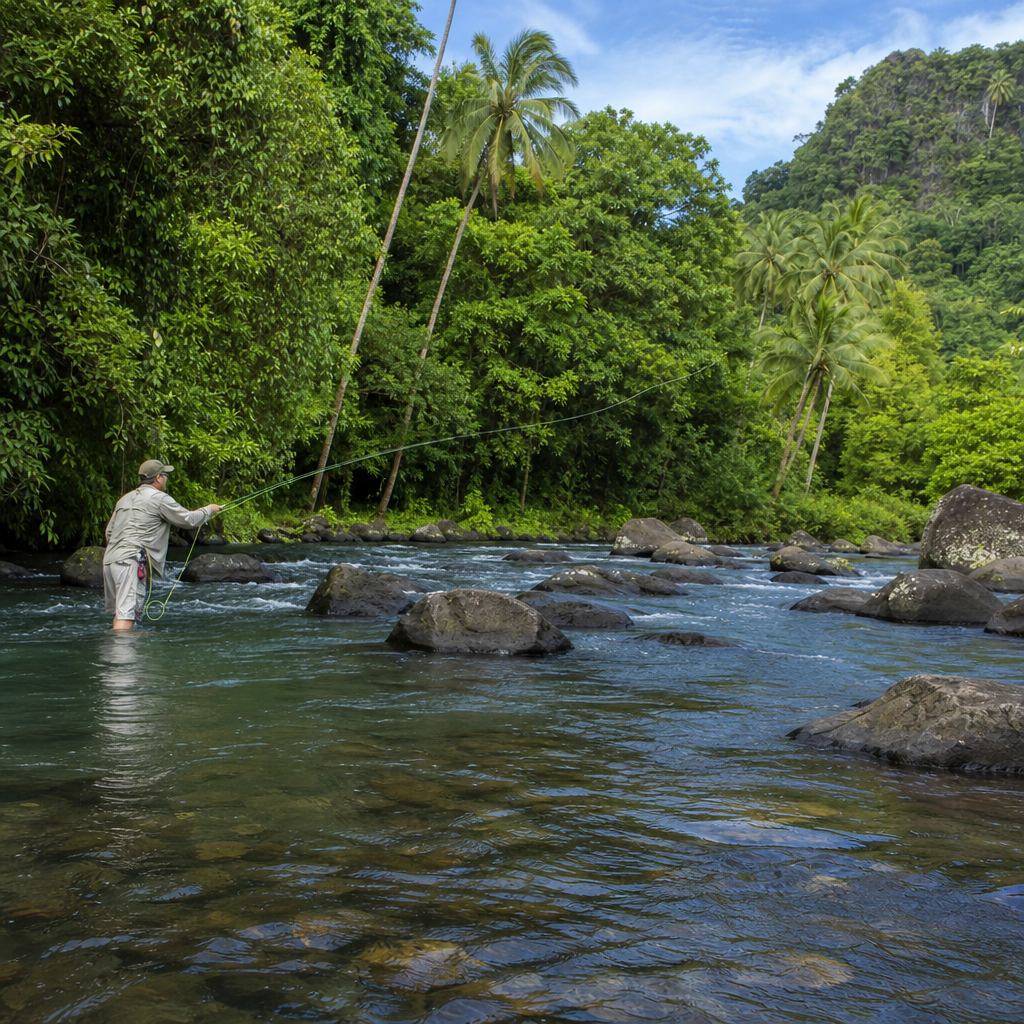
Samoa rewards anglers who want more than postcard scenery. For fly fishing destinations in Oceania, it stands out as a tropical archipelago where reef edges, lagoon channels, river mouths, and bluewater drop-offs sit close together, creating unusual variety within short travel distances. When I evaluate a saltwater fishery, I look first at access, habitat diversity, seasonality, and the range of target species a visiting angler can realistically pursue on fly tackle. Samoa scores well on all four. Its two main islands, Upolu and Savai’i, along with smaller offshore islets, offer warm water, coral structures, tidal flats, and pelagic migration routes that support bonefish, trevally, triggerfish, barracuda, queenfish, and occasional offshore opportunities for tuna and mahi-mahi. That breadth is exactly why Samoa deserves a central place in any serious guide to Oceania fly fishing destinations.
For readers using this page as a planning hub, fly fishing in Samoa means mostly saltwater sight fishing and reef-associated casting rather than classic freshwater trout tactics. Flats fishing refers to stalking shallow, often hard-bottom or sand-bottom areas for species that tail, cruise, or ambush prey in visible water. Reef fishing focuses on coral edges, cuts, and current lines where predatory fish wait for bait. Bluewater fly fishing involves teasing or casting to pelagic species offshore, usually from a boat. Samoa matters because it delivers all three formats in a compact destination with strong cultural identity, relatively uncrowded water, and a climate that allows year-round fishing. It also serves as an excellent gateway for understanding the broader Oceania category, where fisheries are defined by trade winds, tides, coral ecosystems, and logistics as much as by fish species themselves.
As a sub-pillar hub within fly fishing destinations, this article covers Samoa comprehensively while framing how it fits into Oceania travel planning. The practical question most anglers ask is simple: is Samoa worth the flight compared with Christmas Island, Aitutaki, Fiji, or Australia’s tropical flats? The honest answer is that Samoa is not the highest-volume destination for giant trevally or trophy bonefish, and it lacks the deep lodge infrastructure found in more heavily marketed fisheries. What it offers instead is diversity, spontaneity, and room to explore. I have found that anglers who enjoy reading tides, walking mixed bottoms, and adapting to changing conditions often prefer places like Samoa over more scripted destinations. If your ideal trip combines independent travel, authentic local hospitality, and shots at multiple species in visually stunning water, Samoa is one of the most intriguing Oceania fly fishing destinations to research first.
Why Samoa belongs on an Oceania fly fishing shortlist
Samoa belongs on an Oceania fly fishing shortlist because it compresses several productive marine environments into an accessible island nation. Upolu, home to Apia and the main international gateway, gives visiting anglers the easiest base for logistics, day trips, and shoreline access. Savai’i, larger and generally less developed, offers a more remote feel with extensive reef systems and fewer people on the water. Between them, anglers can explore sheltered lagoons during windy periods, fish outer reef edges when conditions settle, and work estuary zones after rain. In practical terms, that means more fishable options during a one-week trip than many travelers expect.
The island structure is particularly important for fly anglers because coral reefs create defined feeding lanes. Incoming tides push bait and crustaceans over reef tops, then current concentrates that food through channels and cuts. Predators know these routes. Bonefish may move onto sandy sections inside lagoons; bluefin trevally and giant trevally patrol edges and ambush points; triggerfish nose over coral rubble and turtle grass; barracuda station near drop-offs. This predictable relationship between tide, structure, and forage is what makes Samoa fishable even for visitors without decades of local knowledge. You still need skill and observation, but the ecosystem offers readable clues.
Samoa also compares favorably within Oceania on trip rhythm and cost control. Anglers do not necessarily need a mothership operation or a highly specialized lodge package to start fishing effectively. A rental car, tide chart, polarized glasses, and a few booked guide days can produce a highly productive itinerary. That independence matters in Oceania, where remote destination costs can escalate quickly. Samoa therefore functions both as a destination in its own right and as an accessible entry point into tropical fly fishing.
Target species and what anglers should expect
The most realistic target list in Samoa starts with trevally. Bluefin trevally are aggressive, fast, and common enough around reef edges to become a trip-defining species. Giant trevally are present, though anglers should keep expectations measured; Samoa can produce genuine opportunities, but it is not a numbers fishery on the scale of the Indian Ocean’s best-known atolls. Smaller GTs, however, are very possible around channels, current seams, and bait-rich reefs. Queenfish, barracuda, and other reef predators add variety and often save the day when conditions make flats species difficult.
Bonefish are part of the Samoa conversation, but they should be approached with nuance. Across Oceania, bonefish distribution varies sharply from island to island depending on bottom type, fishing pressure, and lagoon shape. In Samoa, bonefish exist in suitable habitat, especially sandy lagoon zones and protected flats, but this is not primarily marketed as a pure bonefish destination. Anglers who arrive expecting daily double-digit bonefish shots may be disappointed. Anglers who treat bonefish as one piece of a mixed-species tropical fishery tend to enjoy Samoa much more and often fish more effectively because they stay adaptable.
Triggerfish are another notable possibility. On many Pacific flats, triggers reward patient sight fishing and punish sloppy presentations. They feed close to structure, inspect flies carefully, and dive hard toward coral when hooked. In Samoa, titan and other triggerfish species may appear on reef flats with broken coral, rubble, and small sand pockets. Their presence is part of what makes the destination appealing to experienced saltwater fly anglers who want technical fishing rather than simple volume. Offshore, seasonal runs of skipjack tuna, yellowfin tuna, wahoo, and mahi-mahi can create additional fly opportunities when local boat operators understand teasing and switch tactics.
| Species | Primary Habitat | Typical Fly Approach | Expectation Level in Samoa |
|---|---|---|---|
| Bluefin trevally | Reef edges, channels, current seams | Fast strips with baitfish patterns | Strong target species |
| Giant trevally | Outer reefs, deep cuts, bait-rich drop-offs | Large streamers, heavy tackle, aggressive retrieves | Present but not high-volume |
| Bonefish | Sandy lagoons and protected flats | Small shrimp or crab flies, subtle presentations | Opportunistic target |
| Triggerfish | Coral rubble and mixed reef flats | Accurate crab flies, short strips, quick pressure | Technical specialty species |
| Barracuda and queenfish | Channels, drop-offs, surf lines | Flashy baitfish flies, brisk retrieves | Reliable backup options |
Best areas, seasonal timing, and daily conditions
Upolu is usually the best starting point because most travelers land there and can immediately access fishable water. The south coast has reef structure exposed to ocean energy, while parts of the north and east can provide more protected lagoon options depending on wind direction. Around Apia, convenience is highest, but serious anglers should be willing to drive for cleaner water and less pressured shoreline. Savai’i is worth dedicated time if your priorities are exploration and lower traffic. Its perimeter reef systems, lava-formed coastline, and broader sense of remoteness make it attractive for anglers comfortable with self-directed scouting.
Seasonality in Samoa is shaped less by cold-water changes and more by rainfall, cyclone risk, trade winds, and water clarity. The dry season, generally from May through October, is often preferred because skies are clearer, humidity is lower, and visibility for sight fishing is better. The wet season, roughly November through April, can still fish well, especially early or between weather systems, but runoff may stain estuaries and lagoons after heavy rain. Cyclone season demands flexibility and travel insurance. In tropical saltwater fishing, stable light and manageable wind often matter more than minor water-temperature shifts, and that rule absolutely applies in Samoa.
On a daily basis, tides and wind determine success. Early morning can be excellent along reef edges before glare intensifies, while mid-tide periods often bring the best movement through channels. Strong afternoon onshore wind may shut down some exposed shorelines but improve current concentration in protected areas. I strongly recommend anglers build each fishing day around a tide chart first and transportation second. In Samoa, being at the right cut, flat, or reef corner for a two-hour window matters more than maximizing total hours on the water. Precision beats endurance.
Gear, flies, and techniques that work in Samoa
A practical Samoa fly fishing setup begins with two rods if possible: an 8- or 9-weight for bonefish, smaller trevally, triggerfish, and general flats work, plus a 10- to 12-weight for giant trevally, larger reef predators, and offshore use. Reels should have sealed drags because coral environments combine salt, sand, and sudden long runs. Floating tropical lines cover most lagoon and flats situations, while an intermediate line is valuable for channels, deeper reef edges, and boat-based work. Leaders should be abrasion-resistant and rebuilt frequently. Coral cuts mono faster than many anglers expect.
Fly selection should be compact but specific. For bonefish and triggers, carry spawning shrimp patterns, Gotchas, Crazy Charlies, and small to medium crab flies with weed guards in tan, pink, olive, and muted orange. For trevally and barracuda, baitfish flies such as Clousers, Deceivers, Brush Flies, and synthetic streamers in white, blue, chartreuse, black, and olive are dependable. GT anglers need large-profile patterns tied on extremely strong hooks, including brush heads, poppers, and articulated baitfish imitations. Hook quality is non-negotiable. Cheap hooks straighten quickly against trevally.
Technique in Samoa is about reading mixed habitat. On open sand, longer casts and softer presentations help. Over broken coral, accuracy matters more than distance because fish appear suddenly and windows close fast. Strip speed should match species: steady and restrained for bonefish, measured hops for triggerfish, and fast, committed strips for trevally. When a fish eats near coral, clearing line cleanly and applying side pressure immediately can decide the outcome. Many lost fish in Samoa are not due to poor casting but to delayed pressure after the hook-set. Good fish-handling tools also matter: stripping guards, hard-soled boots, long-nose pliers, and quality polarized lenses in copper or amber are standard, not optional.
Guides, access, travel logistics, and how Samoa fits the Oceania hub
Guiding in Samoa is less standardized than in famous global flats destinations, so research matters. Some operators are excellent watermen with deep local knowledge but limited fly-specific marketing. Others cater mainly to conventional tackle. Before booking, ask direct questions: How often do you guide fly anglers? What species are realistically targeted on fly? Is the plan wading, shore based, boat based, or a mix? Do you understand teasing for pelagics? Can you position shots for right- or left-handed casters? These details separate a productive day from a scenic boat ride.
Independent anglers can do well in Samoa, but they should respect access and safety. Reef walking is physically demanding, and incoming tide can cut off routes that looked simple an hour earlier. Felt soles are a poor choice; sturdy flats boots or reef shoes with protection against coral, urchins, and lava rock are better. Hiring a local guide for at least the first days usually pays off, not only for fishing intelligence but also for understanding village protocols, launch points, and weather-exposed areas. Samoa’s culture values courtesy and local relationships, and anglers who approach access respectfully generally have a smoother experience.
Within the larger Oceania fly fishing destinations landscape, Samoa is best understood as a mixed-species tropical hub rather than a single-species specialist destination. If your priority is giant trevally at the highest possible level, other Pacific and Indian Ocean fisheries may rank above it. If your priority is technical bonefishing alone, certain atolls and lagoon systems are more consistent. But if you want an Oceania trip that combines reef predators, possible flats species, flexible DIY exploration, and rich Polynesian context, Samoa has real strategic value. Use this hub as your starting point for deeper planning around Oceania itineraries, compare island fisheries honestly, and build a trip around tides, habitat, and species mix. Done well, Samoa delivers exactly what the best fly fishing destinations should: memorable water, challenging fish, and a reason to return with better knowledge next time.
Frequently Asked Questions
Why is Samoa considered such a compelling fly fishing destination in Oceania?
Samoa stands out because it offers a rare concentration of fishable saltwater environments within relatively short travel distances. Instead of committing to a single style of fishing for an entire trip, visiting anglers can move between reef edges, lagoon channels, river mouths, shallow flats, and bluewater drop-offs depending on weather, tide, and target species. That habitat diversity is a major advantage for fly fishers, because it creates more options and improves the odds of finding productive water on any given day. In practical terms, Samoa rewards anglers who enjoy reading water, adapting presentations, and pursuing different species rather than focusing on only one fishery type.
Another reason Samoa appeals to experienced and adventurous anglers is that it combines realistic opportunity with a genuine sense of exploration. The islands have the postcard beauty people expect from the South Pacific, but the real value for a fly fisher is functional rather than purely scenic: deep water close to shore, coral structure that concentrates bait, channels that move current, and estuaries that attract predators. Those ingredients support a broad range of species and fishing scenarios, from sight-casting in clear water to stripping flies along current seams at reef passes. For anglers evaluating fly fishing destinations in Oceania, Samoa earns attention because access, variety, and fishable structure all exist in one compact tropical archipelago.
What species can anglers realistically target on fly tackle in Samoa?
Samoa offers a diverse list of potential saltwater targets, and that diversity is one of its strongest selling points. Depending on location, season, and conditions, fly anglers may encounter trevally species, including powerful giant trevally in some areas, along with bluefin trevally and other reef-associated predators. Bonefish may be possible in select environments, while triggerfish, barracuda, queenfish, and various reef species can also enter the equation. Around river mouths and coastal transition zones, anglers may find additional opportunities where bait movement attracts predatory fish. Offshore-adjacent waters near steep drop-offs can open the door to larger pelagic species, although pursuing those on fly often requires specialized conditions, skilled boat handling, and intermediate to advanced casting ability.
The key phrase is “realistically target.” Samoa is exciting not because every species is available every day, but because multiple worthwhile options can exist during a single trip. A visiting angler might spend one session watching reef edges for cruising predators, another working channels on a moving tide, and another exploring calmer lagoon water for fish that respond to smaller baitfish or shrimp patterns. The most consistent success usually comes from matching expectations to the water type and staying flexible. Anglers who arrive prepared for a mixed-species fishery, rather than chasing only one marquee species, often get the most from Samoa’s waters.
When is the best time to plan a fly fishing trip to Samoa?
The best time depends on what you want most from the trip: stable weather, easier travel logistics, clearer water, or a shot at specific species behavior. In tropical fisheries like Samoa, seasonality matters, but not always in the rigid way anglers expect from temperate destinations. Water temperature remains fish-friendly for much of the year, so the more important variables are wind strength, rainfall, cloud cover, swell direction, and tidal timing. Clearer water and manageable wind are especially important for fly fishing because so many productive methods rely on visibility, accurate casts, and the ability to track fish movement over coral, sand, or current seams.
Many anglers prefer periods with more settled weather, because calmer conditions improve access to reef edges, lagoon margins, and channel systems. Heavy rain can reduce water clarity near river mouths and alter fish positioning, while strong wind can limit effective presentation and make wading or boat positioning more difficult. That said, changing conditions can also create opportunity. Moving water after rain may concentrate bait, and overcast skies can make some predators more aggressive in shallower zones. The smartest approach is to plan around broad seasonal stability, then remain adaptable once on the island. If possible, schedule enough days to fish a variety of tides and weather windows rather than relying on a single “perfect” session.
What kind of gear and fly selection works best for Samoa’s fishing environments?
A versatile setup is the best choice because Samoa presents multiple saltwater scenarios in close proximity. For many anglers, an 8-weight or 9-weight outfit serves as a core setup for lagoon channels, reef edges, and medium-sized predators, while a 10-weight or heavier rod can be valuable when targeting larger trevally or casting bigger flies into wind and current. A quality saltwater reel with a smooth drag is essential, especially in coral-rich environments where fish can change direction quickly and punish weak systems. Tropical fly lines, abrasion-resistant leaders, and ample backing are also important, as heat, structure, and fast runs all put pressure on gear. Durable boots or flats footwear are just as critical as the rod and reel because coral, lava rock, and uneven bottoms demand safe footing.
For flies, baitfish patterns are fundamental. Clouser-style flies, deceivers, brush flies, and other streamers that push water or imitate small reef bait can cover a wide range of species. Shrimp and crab patterns are useful in shallower flats-like areas or wherever fish are feeding close to the bottom. Color choice should reflect water clarity and light conditions, with natural tones working well in clear water and brighter or higher-contrast options helping in lower visibility. Strong hooks are non-negotiable in tropical saltwater. The best fly box for Samoa is not overly specialized; it is practical, durable, and built around patterns that can be presented confidently in channels, over reef structure, and along current lines where predators are actively feeding.
Do anglers need a guide in Samoa, or can they explore and fish on their own?
Both approaches can work, but hiring a knowledgeable local guide usually accelerates success and helps visiting anglers understand the fishery far more quickly. Samoa’s appeal lies partly in its range of habitats, yet that same variety can be difficult to unlock without local insight. Reef passes fish differently on certain tides, some lagoons are safer and more productive than others, and access points that look obvious on a map may not be practical on the ground. A guide can help identify fishable windows, choose the right side of an island based on wind and swell, and explain how fish use coral edges, channels, and estuarine water through the day. That local context often makes the difference between simply casting in beautiful water and consistently finding active fish.
Independent exploration is possible for experienced anglers who are comfortable reading tropical water and managing the risks of remote saltwater environments. However, self-guided anglers should be especially careful with tides, coral cuts, surf exposure, and property access. Respect for local communities and coastal areas matters. Even if you prefer fishing independently, it can be worthwhile to book at least a day or two with a guide early in the trip to shorten the learning curve and identify productive patterns. Samoa rewards initiative, but informed initiative is always better. The more clearly you understand access, habitat, and daily conditions, the more productive and enjoyable your fly fishing trip is likely to be.