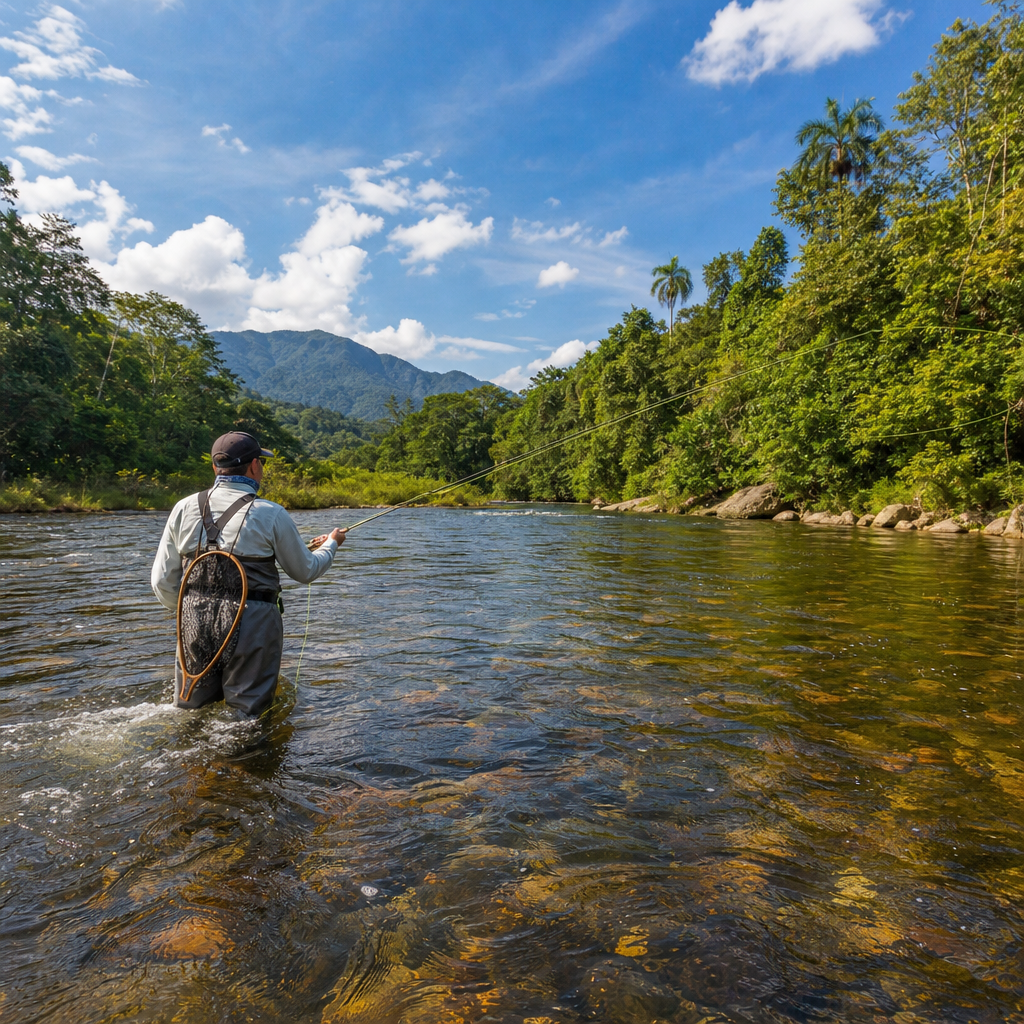
Fly fishing in Brazil rewards anglers who want range, scale, and genuine adventure. Within one country, you can cast to peacock bass in Amazon lagoons, sight-fish for dourado in fast clear rivers, probe jungle tributaries for payara, and explore remote systems where migratory game fish still behave on wild rhythms. For a South America fly fishing hub, Brazil matters because it anchors the continent’s warmwater story. Argentina and Chile dominate trout conversations, but Brazil delivers the tropical and subtropical fisheries that complete any serious regional plan. Understanding Brazil starts with a few key terms. A fly fishing destination is more than a river name; it includes access, water seasonality, target species, and the techniques that match local conditions. A productive trip depends on reading hydrology, choosing flies for structure and forage, and respecting fish handling in heat. I have planned Brazil trips around river levels, not calendar convenience, because ten centimeters of extra water can change everything. When conditions line up, Brazil offers some of the most visual, aggressive, and technically satisfying fly fishing in South America.
Brazil’s geography explains its appeal. The Amazon Basin supplies immense blackwater, clearwater, and whitewater systems, each with different visibility, temperature, and food webs. Farther south and inland, the Pantanal and La Plata drainage create powerful golden dorado opportunities, while coastal and estuarine zones add species many freshwater-focused anglers overlook. The country also has a lodge network that ranges from high-end liveaboards on the Rio Negro to mobile mothership operations and ranch-based programs on southern rivers. For travelers building a broader South America fly fishing itinerary, Brazil works as the warmwater counterpoint to Patagonian trout and as a destination in its own right. The practical value of this hub is simple: it identifies the top Brazilian fly fishing regions, explains what makes each fishery special, and shows which techniques consistently produce fish. If you want one starting point for fly fishing in Brazil and the wider South America destination map, this is it.
Why Brazil Is Essential to a South America Fly Fishing Hub
Brazil belongs at the center of any South America fly fishing hub because it covers species, habitats, and fishing styles unavailable anywhere else on the continent at the same scale. In destination planning, diversity matters. An angler comparing South America options usually asks three questions: what can I catch, when should I go, and how technical is the fishing? Brazil answers all three with unusual breadth. The Amazon alone supports peacock bass, bicuda, payara, piranha, wolf fish, aruanã, and many bycatch species that make every session dynamic. In the south and west, golden dorado provide one of the continent’s top predatory freshwater targets, combining violent takes with fast-water positioning and aerial runs. That mix gives Brazil a unique role among fly fishing destinations.
Brazil also teaches adaptability. On the Rio Negro, low water concentrates bait and predators around creek mouths, sand edges, and flooded timber remnants. On dorado rivers, current seams, rock gardens, and side channels become the primary targets. The tackle and presentations differ, but the underlying discipline is the same: identify forage, speed, oxygen, and ambush structure. That is why many experienced traveling anglers improve faster in Brazil than on more repetitive fisheries. Every day asks for observation and adjustment. From a hub-page perspective, Brazil should link naturally to destination clusters across South America: Amazon jungle fisheries, Pantanal systems, dorado rivers shared with neighboring countries, and salt-influenced coastal options. It is the bridge between tropical fly fishing and the rest of the continent’s more familiar coldwater narrative.
Top Fly Fishing Spots in Brazil
The Rio Negro region is Brazil’s flagship fly destination and one of the world’s best peacock bass fisheries. Operations based around Barcelos and Santa Isabel do Rio Negro target Cichla temensis, often called speckled peacock bass, during low-water windows typically running from late summer into early winter depending on rainfall. The attraction is not only size, though fish over twenty pounds are realistic in strong seasons. It is the visual nature of the fishing. Anglers cast large surface bugs, prop flies, and baitfish patterns to points, lagoons, and submerged wood, then watch fish detonate on top. Tributaries such as the Demeni, Aracá, and Marié have earned strong reputations because blackwater clarity lets fish track flies from distance while low nutrient loads keep weed growth manageable.
The Pantanal and adjacent central-western systems offer a different experience built around golden dorado, pacu, and mixed warmwater species. In practical terms, many trips focus on clear or lightly stained rivers where current creates stable holding water. Dorado use rocks, drop-offs, and narrow channels to ambush baitfish, and fly anglers do best when they fish from a drifting boat with quick, accurate presentations. The upper Paraguay drainage and related waters attract anglers who want less jungle isolation than the far Amazon but still want wild scenery, caiman, capybara, and intense fish behavior. Southern Brazil, especially the Paraná basin and border-influenced systems, expands the dorado picture further. Some fisheries are best known from Argentina and Uruguay, but Brazil’s side of the map is critical for anyone treating South America seriously.
Remote Amazon tributaries deserve separate attention because they can fish very differently from the main Rio Negro corridor. Clearwater systems may hold aggressive peacocks but demand subtler presentations than dark tea-colored water. Faster tributaries can produce payara, whose bony mouths and speed challenge even experienced casters. Smaller creeks and lagoons often hold butterfly peacock bass, wolf fish, and piranha, making them ideal when larger water becomes difficult under changing levels. Brazil’s coastal belt is not the headline destination for most international fly anglers, yet estuaries and flats around mangroves offer snook, jacks, and tarpon in some areas. For a South America hub, that matters: Brazil is not a single iconic river but a layered network of fisheries, each relevant to different travel goals, budgets, and skill levels.
Techniques That Consistently Work in Brazilian Waters
For peacock bass, the most reliable fly fishing technique in Brazil is aggressive structure fishing with large-profile flies. Use an eight- to ten-weight rod, a tropical floating or intermediate line, and short heavy leaders that turn over wind-resistant patterns. Peacock bass are not leader shy in most blackwater situations. They respond to noise, movement, and intrusion. I prefer leaders in the four- to six-foot range built from thirty- to sixty-pound mono or fluorocarbon, depending on cover. Cast tight to wood, grass edges, drains, and shaded banks, then strip hard with pauses. Surface flies such as double prop patterns, divers, and foam-headed baitfish draw explosive takes when fish are active. When they slash and miss, immediately recast to the boil. Many of the biggest fish eat on the second or third shot.
Subsurface tactics become essential when pressure, heat, or falling activity reduces topwater response. Deceivers, Hollow Fleyes, bucktail streamers, and synthetic baitfish patterns in chartreuse, orange, black, white, and peacock-style barred combinations all produce. The key is retrieve speed and directional change. Peacock bass often follow before committing, so a sudden acceleration can trigger the eat. For dorado, the equation shifts. A seven- to nine-weight with a compact sinking head or sink-tip works well in medium rivers, while larger systems may justify heavier rods and faster-sinking setups. Wire bite tippet is non-negotiable because dorado teeth shred standard leader material. Cast across and slightly downstream, allow the fly to sink near current seams or rock faces, then strip fast enough to keep tension while the current animates the pattern.
| Target species | Best water type | Recommended setup | Effective flies | Core retrieve |
|---|---|---|---|---|
| Peacock bass | Blackwater lagoons, creek mouths, timber | 8-10 weight, floating or intermediate line | Prop flies, divers, deceivers | Hard strips with pauses |
| Golden dorado | Current seams, rocks, side channels | 7-9 weight, sink-tip, wire tippet | Streamers, baitfish, flashy profiles | Fast strips under tension |
| Payara | Fast tributaries, deep runs | 9-10 weight, sinking line, shock bite | Long baitfish patterns | Deep swing and strip |
Presentation angle matters as much as fly choice. In Brazil, guides often position boats to give flies the longest productive path through a strike zone, not simply the shortest cast to visible cover. That is especially true for dorado and payara. For peacocks around timber, accuracy still rules, but line management is just as important. Tropical heat softens some coatings, and loose line underfoot costs fish. A stripping basket is uncommon in boats, so disciplined deck control helps more than anglers expect. Hook-setting also needs adjustment. Trout habits lose fish here. Strip-set hard, keep the rod low initially, and clear line before lifting. With dorado, continue pulling through the first impact because many hits are slashing grabs. With peacocks, be ready for a second strike if the first explosion misses.
Seasonality, Access, and Trip Planning
The best time for fly fishing in Brazil depends entirely on region and water level. For Amazon peacock bass, low and stable water is the standard benchmark because falling rivers concentrate fish and improve access to lagoons, beaches, and channels where bait gathers. Most lodges publish historical windows, but those are guides, not guarantees. El Niño, La Niña, and localized rain patterns can move the fishery earlier or later than expected. The practical lesson is to book with operators who can relocate within a basin. Mobile programs on motherships or skiffs often outperform fixed-site trips in variable years because they follow the best water. In dorado country, clarity and manageable flow are more important than a universal month. Shoulder periods can be excellent when temperatures moderate and bait remains active.
Logistics in Brazil are real, and they influence trip quality as much as tackle choice. International visitors often route through São Paulo, Brasília, or Manaus, then continue by domestic flight or charter. Soft-sided bags, spare fly lines, and duplicate pliers, sunglasses, and tropical leaders are worth carrying because replacing specialized gear in remote towns is difficult. Health preparation matters too. Heat stress, hydration, sun exposure, and insect management are routine issues. Long-sleeve technical clothing, sun gloves, buffs, and high-zinc sunscreen are standard, not optional. On Amazon trips, I also recommend sealed storage for cameras and flies because humidity damages both quickly. Travel insurance that covers medical evacuation is sensible when operating far from major infrastructure.
Budgeting should be realistic. Premium Brazilian fly fishing often costs more than first-time travelers expect because remoteness, air transfers, fuel, and guide logistics all add up. That does not mean value is poor. In fact, Brazil can deliver exceptional fishing days when conditions align, but travelers should pay for flexibility, proven guides, and fish care standards rather than just a famous river name. Ask operators about water contingency plans, daily fishing hours, tackle loaner quality, hook policies, and how fish are handled for photographs. Responsible lodges now emphasize short air exposure and in-water revival, especially in warm systems where lactic buildup and low dissolved oxygen can increase post-release mortality. Good planning protects both your investment and the fishery.
How Brazil Fits With Other South America Fly Fishing Destinations
As a sub-pillar under Fly Fishing Destinations, Brazil should be understood in relation to the rest of South America, not in isolation. Anglers usually organize continental travel by species goals. If trout are the priority, Patagonia leads. If the goal is explosive warmwater predation, Brazil becomes indispensable. Many experienced travelers pair a Brazilian peacock bass trip with dorado fishing elsewhere in the region over multiple seasons because the skills complement each other without becoming repetitive. Brazil also broadens the definition of fly fishing in South America. It proves the continent is not just about mayfly hatches and drift boats; it is also about jungle sight-lines, baitfish migrations, violent structure strikes, and technical fish handling in hot climates.
That broader perspective is useful when building internal destination pathways across a site or trip plan. Brazil connects naturally to Amazon conservation, dorado river systems, tropical fly tackle, and South America travel logistics. It also serves different angler profiles. Beginners with solid casting and a willingness to learn can succeed on peacock bass because the feedback is immediate and fish are often aggressive. Advanced anglers appreciate Brazil for the opposite reason: changing water levels, boat positioning, and species-specific leader systems create endless nuance. If your goal is a complete understanding of South America fly fishing destinations, Brazil is not optional. It is the warmwater foundation that makes the regional map whole.
Fly fishing in Brazil stands out because few places combine species diversity, visual takes, wild scale, and technical depth so effectively. The top spots begin with the Rio Negro and its tributaries for peacock bass, expand through central and southern systems for golden dorado, and extend into remote Amazon waters where payara and mixed jungle species add variety. The techniques that work are direct and proven: fish structure aggressively, match lines to depth and current, use strong leaders and appropriate bite protection, and strip-set with authority. Success depends on timing water levels correctly, choosing operators with mobility, and treating logistics as part of the fishing plan rather than an afterthought.
For anyone researching South America fly fishing destinations, Brazil should be one of the first pages bookmarked and one of the first trips considered. It delivers experiences the rest of the continent cannot replicate at the same scale, and it complements colder, more familiar fisheries beautifully. Start by identifying your target species, ideal season, and tolerance for remoteness, then use that framework to narrow the right Brazilian region. If you are building a South America fly fishing shortlist, put Brazil near the top and plan around conditions, not assumptions.
Frequently Asked Questions
What are the best fly fishing destinations in Brazil for different species?
Brazil stands out because it offers several distinct fly fishing environments, and each one is closely tied to a specific game fish. For peacock bass, the Amazon basin is the headline destination, especially the Rio Negro system and its maze of lagoons, backwaters, and flooded structure. These fisheries are famous for explosive topwater eats, aggressive fish behavior, and the chance to target very large peacocks in wild tropical water. If your goal is dourado, many anglers look to clear, fast-flowing river systems in central and southern Brazil where current seams, rocky runs, and bait-rich channels create ideal ambush habitat. Dourado are often called the “river tiger” for good reason, and they reward anglers who like visual fishing, sharp reflexes, and hard-fighting fish in moving water.
For anglers chasing payara, jungle tributaries and more remote northern drainages are the main draw. These fish thrive in current, deeper channels, and turbulent zones where bait gets pushed through, and they are among the most dramatic predators you can target on a fly. Brazil also offers opportunities in lesser-known waters where migratory game fish still follow natural seasonal patterns, giving adventurous anglers access to fisheries that feel genuinely untamed. The best destination depends on whether you want violent surface takes from peacock bass, fast-water stalking for dourado, or technical streamer fishing for toothy, high-speed predators like payara. In practical terms, Brazil is not one fishery but a collection of warmwater fly fishing frontiers spread across enormous and ecologically varied river systems.
When is the best time to go fly fishing in Brazil?
The best time to fly fish in Brazil depends heavily on the region and the species you want to target, because water levels, rainfall, river clarity, and fish positioning all shift dramatically throughout the year. In the Amazon, timing often revolves around falling and low-water periods, when fish become more concentrated and easier to access in lagoons, creek mouths, submerged timber lines, and shoreline structure. During high water, fish may spread far into flooded forest, making them harder to locate consistently. That is why many peacock bass operations plan their prime season around months when rivers have dropped enough to concentrate fish but still provide navigable access to productive habitat.
For dourado and other river predators in clearer, current-driven systems, the most productive windows are often linked to stable water conditions, good visibility, and water temperatures that keep baitfish and predators active. Sudden rain events can color up rivers and change fish behavior quickly, so local timing matters. In remote tropical fisheries, even a trip scheduled in a traditionally productive month can vary from one week to the next depending on current hydrology. The smartest approach is to choose your target species first, then match it to a proven seasonal window with a lodge, outfitter, or local guide who tracks real-time conditions. Brazil rewards good timing, and in such a large country, “best season” is never one-size-fits-all.
What fly fishing techniques work best in Brazil’s warmwater fisheries?
Brazil’s top warmwater fisheries reward anglers who can fish aggressively, cast accurately, and adapt presentation to both habitat and fish mood. For peacock bass, the classic approach is a stripping game built around large streamers, baitfish patterns, and surface flies such as poppers and divers. These fish often hold near timber, weed edges, current breaks, lagoon mouths, and submerged cover, so quick, repeated casts to structure are essential. Retrieve style matters just as much as fly choice. Fast, erratic strips often trigger reaction strikes, while pauses can turn follows into full commitments. Topwater fishing is especially iconic in Brazil because peacocks are willing to attack with shocking violence when conditions line up.
Dourado typically call for a different style. In clear current, you may need to present across seams, swing streamers through likely lies, or strip in ways that imitate fleeing bait in moving water. Accurate placement near rocks, drop-offs, and current transitions is critical, and a solid hook set is important because dourado hit hard and have bony mouths. For payara and other jungle predators, anglers often fish weighted streamers in current-heavy areas, deeper slots, and ambush lanes, sometimes using sink-tip or full-sinking lines to keep flies in the strike zone. Across Brazil, success often comes down to reading water carefully, matching line systems to depth and flow, and staying mentally ready because strikes are sudden, violent, and often visual. It is active fly fishing, not passive drifting, and that is a big part of the country’s appeal.
What gear should I bring for a fly fishing trip in Brazil?
Gear selection in Brazil should match both the species and the physical demands of tropical fishing. For peacock bass, many anglers rely on 8- to 10-weight rods with reels that have strong drags and tropical-rated fly lines that will not wilt in heat. Floating lines are standard for topwater and shallow structure fishing, but intermediate and sinking options can be very useful when fish slide deeper or when conditions call for probing channels and ledges. Leaders are generally shorter and stronger than in trout fishing, and heavy shock material is often used around abrasive cover and hard-charging fish. Flies should include large streamers, poppers, divers, and baitfish patterns tied on strong hooks that can handle repeated violent strikes.
For dourado and payara, the gear conversation becomes even more specialized because of current, depth, and teeth. Strong rods, dependable reels, sinking or sink-tip lines, and abrasion-resistant leader systems are common. Wire or bite tippet may be necessary depending on the species and local guide recommendations. You should also think beyond rod-and-reel gear. Brazil’s tropical environments make sun protection, quick-dry clothing, rain gear, pliers, hook files, stripping guards, and quality eyewear more than convenience items; they are core tools. Because many fisheries are remote, bringing backups is wise: spare lines, extra leaders, duplicate flies, and even a second rod in the same weight class can save a trip. Brazil is hard on tackle in the best possible way, so durable, purpose-built equipment is a real advantage.
Is fly fishing in Brazil suitable for beginners, or is it better for experienced anglers?
Brazil can work for both beginners and experienced anglers, but it tends to be most rewarding for people who are comfortable with active casting, fast retrieves, and high-adrenaline fish. The good news for newer fly anglers is that many of Brazil’s target species are aggressive, which means fish are often willing to chase large flies and react to imperfect presentations. Peacock bass in particular can be a very exciting introduction to warmwater fly fishing because they reward energy, repetition, and willingness to cast at visible structure all day. A beginner who arrives with a decent double haul, some accuracy at practical fishing distances, and a willingness to listen to a guide can absolutely have a memorable trip.
That said, Brazil is not usually a lazy or highly forgiving fishery. Heat, long fishing days, big flies, heavy tackle, and remote conditions can wear people down. Species like dourado and payara add another layer of challenge because they often require more precise presentation, line control, and fish-fighting discipline. Experienced anglers will appreciate the variety of water, the tactical decisions tied to river level and current, and the chance to target powerful fish that expose weaknesses in both technique and gear. For first-timers, preparation makes all the difference. Practice casting larger flies before the trip, get comfortable stripping with purpose, and be ready for fast coaching from guides when fish appear. Brazil does not demand perfection, but it strongly rewards effort, adaptability, and a taste for adventure.