Fly fishing in Argentina combines wild trout rivers, dramatic Andean scenery, and a mature guiding culture that makes the country the anchor destination for South America fly fishing. For anglers planning a regional trip, Argentina matters because it offers the broadest range of fisheries on the continent, from spring creeks in Patagonia to sea-run systems in Tierra del Fuego and golden dorado rivers in the north. I have planned itineraries across these regions, and the same conclusion comes up every season: if you want one country that can introduce you to South America while still rewarding expert anglers, start here.
At its core, fly fishing means presenting an artificial fly with a weighted line rather than a heavy lure. In Argentina, that simple definition expands into several distinct fisheries. Patagonia is best known for rainbow trout, brown trout, brook trout, and landlocked salmon in lakes and freestone rivers. Tierra del Fuego is globally famous for oversized sea-run brown trout. Northern provinces such as Corrientes and Entre Rios offer warmwater sight-fishing and streamer fishing for dorado. Each fishery demands different tackle, timing, and tactics, so understanding regional differences is the key to success.
Argentina also functions as a practical hub page for broader South America fly fishing research. Many travelers compare it with Chile for Patagonian trout, Bolivia for dorado, or Brazil for jungle species, yet Argentina stands out for accessibility, lodge infrastructure, and the density of productive waters. Bariloche, San Martin de los Andes, Junin de los Andes, Esquel, and Rio Grande all have established outfitting networks, reliable transfers, and strong guide traditions. That makes trip planning simpler, especially for visiting anglers balancing budget, travel days, and the desire to fish multiple river types in one journey.
Why does this matter beyond convenience? Because the best fly fishing destinations are not only scenic; they offer repeatable opportunity. Argentina delivers that through sound fisheries management in many provinces, catch-and-release culture on premium waters, and a long season that generally runs from November through April in trout country. Water types vary enough that wind, runoff, or low flows on one river often can be solved by moving to another. For anglers building a South America fly fishing shortlist, Argentina belongs at the center because it provides variety, scale, and a high ceiling for both numbers and trophy fish.
Patagonia: the core of Argentina trout fishing
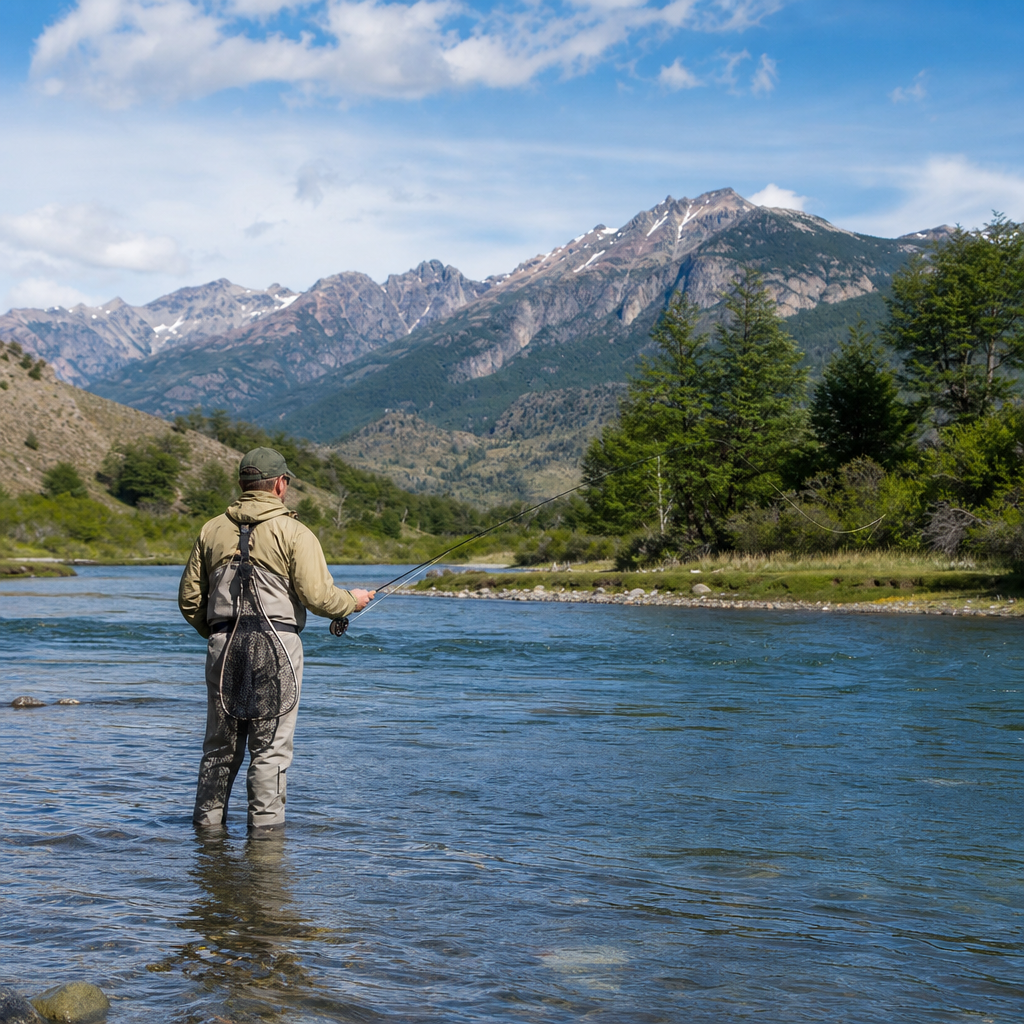
When most anglers search for fly fishing in Argentina, they are really searching for Patagonia. This region spans Neuquen, Rio Negro, Chubut, Santa Cruz, and parts of Tierra del Fuego, and it contains the country’s most iconic trout waters. In practical terms, Patagonia offers three main experiences: drift-boat fishing on broad rivers, wade fishing on spring creeks and smaller streams, and stillwater fishing on large glacial lakes. The Limay, Chimehuin, Malleo, Collon Cura, Alumine, and Rio Pico area rivers are the names that come up most often, and with good reason. They are productive, accessible, and supported by highly skilled local guides.
The Limay River is a classic big-water fishery where strong brown and rainbow trout hold on weed lines, drop-offs, and current seams. It rewards precise nymphing and streamer work from a drift boat, especially when wind limits dry-fly visibility. The Chimehuin, near Junin de los Andes, is more technical and famous for hatches, defined runs, and trout that respond to careful presentation. The Malleo is one of my favorite recommendation points for skilled dry-fly anglers because clear water, structured banks, and steady insect activity create textbook opportunities. On smaller meadow streams in northern Patagonia, stealth matters more than distance, and long leaders often outperform aggressive casts.
Hatches drive much of the trout calendar. Argentine Patagonia is known for mayflies, caddis, stoneflies, and midges, but the practical pattern selection is narrower than many first-time visitors assume. Guides consistently lean on attractor dries, caddis adults, parachute-style mayfly imitations, bead-head nymphs, Patagonian dragonfly nymphs on lake edges, and streamers in black, olive, and white. During windy periods, terrestrials become important. Beetles and hopper-style patterns can save a day on rivers where trout slide tight to grassy banks. Matching exact entomology helps on technical water, yet good drifts and angle control usually matter more than perfect imitation.
Patagonia also serves as the launch point for comparing South America destinations. Chile shares many of the same latitudes and has outstanding waters around Coyhaique and Puerto Aysen, but Argentina generally offers more established road access, more drift-boat rivers, and a larger network of classic trout lodges. For many traveling anglers, that means easier logistics and more flexible itineraries. If your goal is a sub-pillar hub for South America, Patagonia in Argentina is the benchmark against which trout fishing elsewhere on the continent is measured.
Tierra del Fuego and northern dorado water
Tierra del Fuego deserves its own category because sea-run brown trout are a different game entirely. The Rio Grande is the headline river, and its reputation is justified. These fish are migratory, heavy, and often caught under difficult wind conditions, which is why the river attracts experienced two-handed casters from around the world. Average fish are substantial by any trout standard, and true trophies are realistic. The common approach uses Spey or switch rods, strong leaders, and large nymphs or streamers swung slowly through traveling lanes. Success depends on casting discipline, line control, and fishing every inch of the swing rather than rushing through a pool.
At the opposite end of the country, dorado water introduces a warmwater dimension many anglers do not expect from Argentina. In Corrientes, on systems such as the Parana marshes and the Ibera-influenced fisheries, golden dorado attack baitfish patterns with explosive speed. They are not trout, and that changes everything. Leaders require wire or heavy bite tippet, flies are larger and more durable, hook sets must be hard, and strip control matters more than dead-drift finesse. Dorado trips often mix sight-fishing in clear side channels with blind casting to structure, grass edges, and current breaks. This fishery places Argentina in direct conversation with Bolivia, where dorado in freestone systems are famous, but Argentina wins on overall travel convenience.
| Region | Primary Species | Best Season | Typical Tactics |
|---|---|---|---|
| Neuquen and Rio Negro | Brown, rainbow, brook trout | November-April | Dries, nymphs, streamers from wade or drift boat |
| Tierra del Fuego | Sea-run brown trout | January-March | Swinging streamers and nymphs with Spey or switch tackle |
| Corrientes and Parana basin | Golden dorado | Year-round with seasonal peaks | Large streamers, strip presentations, wire bite protection |
| Santa Cruz lakes and rivers | Large resident trout | December-March | Streamer fishing, sight-fishing, lake-edge nymphing |
For South America fly fishing planning, these contrasts are useful. Argentina is not one-dimensional. A traveler can split time between classic Patagonian trout and warmwater predators, or focus on one specialty fishery with world-class support. That range is the country’s greatest advantage as a regional hub.
Best timing, tackle, and trip planning
The best time for fly fishing in Argentina depends on the species and region, but the trout season in Patagonia generally opens in spring and runs into autumn, roughly November through April. Early season often means colder water, fewer crowds, and stronger flows, which can favor nymphs and streamers. Mid-summer brings terrestrial fishing, long daylight, and reliable access, though wind can intensify. Late season often produces aggressive pre-spawn browns, especially on rivers with larger migratory components. For the Rio Grande, prime weeks usually center on January through March, while dorado can be targeted across much of the year depending on water levels and local weather patterns.
Tackle should match the fishery, not the brochure photos. For Patagonian trout, a 5-weight or 6-weight rod covers most dry-fly and nymph situations, while a 7-weight is useful for streamers and windy lake edges. Floating lines do most of the work, but sink-tip systems are valuable on larger rivers and lakes. In Tierra del Fuego, many lodges recommend 6- to 8-weight single-hand rods or switch and Spey outfits in the 6- to 8-weight class, paired with Skagit-style heads, intermediate tips, and strong reel drag systems. Dorado anglers typically carry 8- to 10-weight rods, tropical lines, abrasion-resistant leaders, and hooks that will not open under violent strikes.
Travel logistics are straightforward by South American standards. International visitors usually enter through Buenos Aires, then connect to Bariloche, Chapelco for San Martin de los Andes, Esquel, El Calafate, or Rio Grande depending on the program. Domestic flights save time, but baggage planning matters because waders, boots, and rod tubes can create extra airline fees. Licenses are province-specific in parts of Patagonia, and regulations change, so always confirm current rules on seasons, catch limits, fly-only stretches, and guide requirements. Reputable lodges handle much of this, but independent anglers need to verify details before arrival.
Guides are worth the cost on a first visit because they solve three things immediately: access, local rotation, and tactical adjustment. On rivers affected by wind, water temperature, or angling pressure, a good guide changes beats, fly size, and presentation angle long before most visiting anglers realize the pattern has shifted. That efficiency is often the difference between a scenic trip and a productive one. If budget matters, consider a mixed plan with several guided days at the start followed by self-guided fishing once you understand access points, productive water types, and local etiquette.
How to fish successfully and choose the right base
Success in Argentina usually comes from reading water correctly and adapting to local conditions rather than chasing secret flies. In Patagonia, trout position according to current speed, oxygen, cover, and food concentration. On clear rivers, fish often hold where gravel transitions into weed beds or where cutbanks provide shade. During hatches, they may rise in soft seams that many anglers walk past because the water looks too slow. On windy afternoons, banks exposed to terrestrial fallout can be far more productive than obvious mid-river riffles. I have seen visiting anglers insist on long heroic casts when a short, accurate drift along a grass edge was the answer all day.
Choosing the right base town or lodge shapes the entire trip. Bariloche works well for anglers who want a blend of lakes, float fisheries, and comfortable town services. San Martin de los Andes and Junin de los Andes sit near some of the most famous rivers in the north of Patagonia and are excellent for first-time visitors who want concentrated access. Esquel opens the door to Chubut waters and a somewhat less trafficked feel. Rio Grande is the obvious base for sea-run browns, while Corrientes anchors dorado programs. For a South America fly fishing hub article, this is the practical takeaway: pick a base based on target species and fishing style, not on postcard scenery alone.
There are tradeoffs. Peak-season lodge programs offer polished service, prime access, and strong guiding, but they cost more and require advance booking. DIY travel lowers cost and can be deeply rewarding, yet private access, changing regulations, and long transfer times complicate the picture. Wading-only anglers should ask detailed questions before booking because some celebrated rivers are at their best from a drift boat. Likewise, photographers who value landscapes as much as catch rates may prefer mixed itineraries that include lake fishing, whereas anglers chasing one truly large trout may want fewer locations and more time on one proven system.
Argentina remains the most complete answer for South America fly fishing because it delivers diversity without sacrificing quality. You can fish delicate dry-fly water, swing for sea-run trout, or throw big streamers at dorado, all within one national framework supported by experienced outfitters and proven infrastructure. Start with Patagonia if trout are the priority, add Tierra del Fuego for a trophy challenge, and look north for warmwater excitement if you want contrast. The smart next step is simple: define your target species, match it to the right Argentine region, and build your itinerary around season, access, and the style of fishing you most want to master.
Frequently Asked Questions
What makes Argentina one of the best fly fishing destinations in South America?
Argentina stands out because it offers an unusually wide range of high-quality fly fishing in a single country. Anglers can target wild trout in classic Patagonian rivers, sight-fish to selective fish on spring creeks, swing flies for sea-run trout in Tierra del Fuego, and pursue hard-fighting golden dorado in the warmer northern provinces. Few destinations combine that variety with such dramatic scenery, reliable guiding infrastructure, and a long-established lodge culture designed specifically for traveling fly anglers.
Another major reason Argentina matters is accessibility across multiple fisheries. Instead of building an entire South America itinerary around one species or one watershed, anglers can choose a trip that matches season, skill level, and fishing style. You can spend one week floating broad freestone rivers near Bariloche, then shift to more technical wade fishing around San Martin de los Andes, or commit to a sea trout-focused trip farther south. For many travelers, that flexibility makes Argentina the anchor destination for a broader regional fly fishing plan.
Just as important, the country rewards both first-time visitors and highly experienced anglers. Beginners can work with excellent guides on productive waters where instruction is part of the experience, while advanced anglers can focus on specific techniques such as dry-fly presentations, streamer fishing for large browns, or two-handed tactics on sea-run systems. That combination of diversity, fish quality, logistics, and guiding expertise is what keeps Argentina at the top of the list for serious fly fishing travel.
Where are the premier fly fishing locations in Argentina?
The best-known fly fishing region is Patagonia, especially around Bariloche, Junin de los Andes, and San Martin de los Andes. These areas offer a mix of famous rivers, lakes, and spring creeks, with healthy populations of brown, rainbow, and brook trout. Rivers such as the Malleo, Chimehuin, Collon Cura, Limay, and Alumine are widely regarded as core destinations because they provide different water types and fishing styles, from drifting large western-style rivers to stalking trout in clear, technical channels.
Tierra del Fuego is another premier location, especially for anglers focused on sea-run brown trout. This far-southern region has earned an international reputation for producing large migratory fish in windswept, open river systems. It is not the easiest fishery in the country, but for experienced anglers who enjoy swinging flies, stripping streamers, and covering water in demanding conditions, it can be one of the most memorable destinations anywhere in the world.
In northern Argentina, the focus shifts from trout to golden dorado. Fisheries in provinces such as Corrientes offer a completely different experience, often involving warm weather, jungle or wetland landscapes, aggressive takes, and powerful fish that attack large streamers and surface flies. This region is ideal for anglers who want variety beyond Patagonia and who appreciate fast-paced fishing with a strong visual element. Together, Patagonia, Tierra del Fuego, and the dorado waters of the north form the core of Argentina’s premier fly fishing map.
When is the best time to go fly fishing in Argentina?
The best time depends on where you are going and what species you want to target. For most Patagonian trout fishing, the primary season runs during the Southern Hemisphere spring through autumn, generally from November into April. Early season often brings cool water, active fish, and less pressure in some areas, while midsummer can produce excellent dry-fly fishing, terrestrial action, and long fishing days. Late season is often favored by anglers looking for larger browns, streamer opportunities, and more aggressive pre-spawn behavior in certain systems.
Tierra del Fuego sea trout trips usually have a more defined peak timing, often centered on the warmer part of the season when fresh fish are in the system and river conditions are favorable. Because these fisheries can be technical and weather-driven, timing matters more than it might on a general trout trip in northern Patagonia. If sea-run browns are your primary goal, it is worth planning around the historical peak windows recommended by local outfitters rather than simply choosing dates based on convenience.
For golden dorado in northern Argentina, the ideal period can vary by river system, rainfall, and water temperature. In many cases, shoulder seasons or stable warm-weather periods fish especially well, but local conditions matter enormously. The best approach is to decide first whether your priority is Patagonian trout, sea-run browns, or dorado, then match your dates to that fishery. Argentina is not a one-season destination; it is a country where timing should be tailored to your target species and preferred style of fishing.
Do I need a guide for fly fishing in Argentina, and what should I expect from the guiding culture?
You do not always need a guide, but hiring one is often the smartest decision, especially on a first trip. Argentina has a mature guiding culture, and that is one of its biggest strengths as a destination. Professional guides can shorten the learning curve dramatically by choosing the right rivers for current conditions, adjusting tactics throughout the day, and helping visiting anglers understand access, regulations, hatches, and local fish behavior. On a trip where travel time is limited, good guiding often translates directly into better fishing and a smoother overall experience.
In Patagonia, many guides work both float and wade trips, so they can tailor the day to your skill level and goals. A float trip may cover more water and provide steady opportunities, while a wade-focused day can be better for technical dry-fly fishing or smaller, intimate streams. In Tierra del Fuego, guides are particularly important because sea trout tactics, holding water, and presentation angles can be highly specialized. In dorado country, guides also play a major role in boat positioning, fly selection, and helping anglers manage fast, close-range shots to aggressive fish.
You should expect a professional but personable approach from established operations. Good guides in Argentina are typically strong teachers, not just boat drivers or fish spotters. They can help with casting, line control, fly changes, reading water, and adapting to weather or wind. Many lodges also build the entire schedule around fishing efficiency, from transfers and meals to tackle prep and daily strategy. For anglers investing in international travel, that level of structure and local expertise is a major advantage and one of the reasons Argentina continues to set the standard for South America fly fishing.
What gear, techniques, and practical tips should I keep in mind for a fly fishing trip to Argentina?
The right gear depends on the region, but versatility is key. For Patagonian trout, a 5-weight or 6-weight outfit covers much of the fishing, especially for dry flies, nymphs, and smaller streamers. If you plan to throw larger streamers for bigger browns or fish heavy wind, a 6-weight or 7-weight becomes more useful. In Tierra del Fuego, many anglers bring 7-weight or 8-weight rods, often including two-handed setups for swinging flies. For golden dorado, stronger rods, durable reels, stout leaders, and flies tied on heavy hooks are standard because these fish hit hard and fight aggressively.
Technique matters as much as equipment. In Patagonia, success often comes from matching your approach to the water type: dead-drift nymphing in riffles, careful dry-fly presentations on spring creeks, or streamer fishing along banks, structure, and drop-offs for larger trout. In sea trout fisheries, line control, angle of presentation, and disciplined water coverage are critical. For dorado, quick, accurate casts and active retrieves usually matter more than delicate presentation. If you can cast well in wind, manage line efficiently, and adapt your tempo, you will be in much better shape across all Argentine fisheries.
On the practical side, pack for variable weather, especially in Patagonia and Tierra del Fuego, where conditions can shift quickly. Layering systems, quality rain gear, polarized sunglasses, and dependable wading gear are essential. Bring more flies and leaders than you think you will need, and ask your outfitter for a current packing list before departure. It is also wise to confirm licensing requirements, internal travel logistics, baggage limits for rods and waders, and whether your lodge provides boats, terminal tackle, or loaner equipment. The more organized you are before arrival, the more time you can spend focused on the fishing rather than solving preventable problems on the ground.