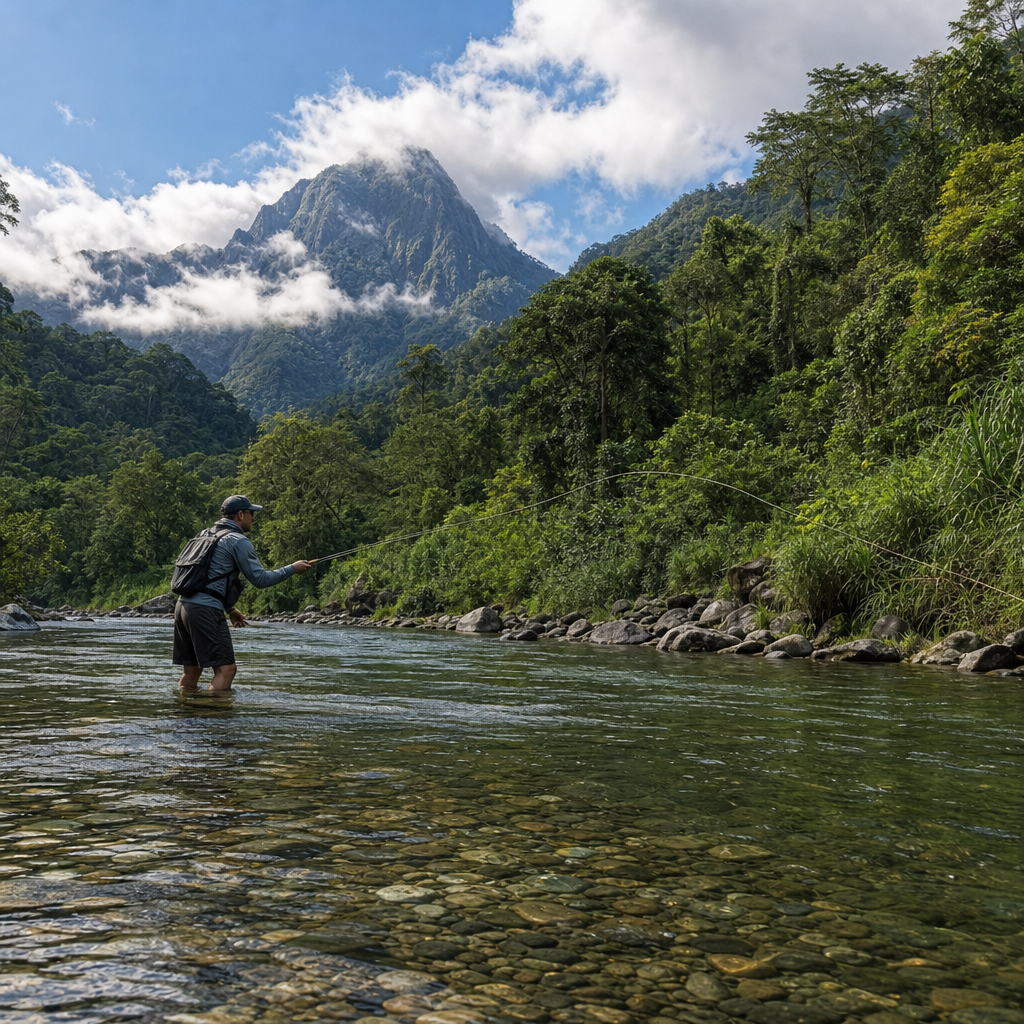
Papua New Guinea is one of the least explored frontiers in global angling, and for serious travelers seeking remote fly fishing destinations in Oceania, it offers a combination that is increasingly rare: wild water, low pressure, and genuine biodiversity. When anglers talk about Papua New Guinea fly fishing, they usually mean sight casting in jungle-lined rivers, probing estuaries for aggressive saltwater species, or exploring coastal flats and lagoons where reef systems meet mangroves. In practice, the country supports all three. That range matters because Papua New Guinea is not a single fishery but a collection of distinct environments spread across a rugged mainland and hundreds of islands.
I have found that many visitors arrive with a vague idea that the country is “remote and fish-rich” but little understanding of how its fisheries actually work. Papua New Guinea occupies the eastern half of New Guinea and sits within the Coral Triangle, one of the most biologically diverse marine regions on Earth. Inland, steep watersheds, heavy rainfall, floodplain systems, and largely intact forest create habitat for species that are difficult to target elsewhere. Along the coast, nutrient-rich estuaries, sheltered bays, reef edges, and tidal flats support powerful predators that respond well to fly presentations. For anglers building an Oceania itinerary, this makes Papua New Guinea a strategic hub rather than a side note.
The term fly fishing destinations can be misleading here unless it is defined carefully. In New Zealand, a destination may mean a named trout river with marked access points and detailed hatch charts. In Papua New Guinea, a destination often means a province, drainage, bay, island group, or lodge zone where logistics, tides, weather, and local knowledge shape the outcome more than any single beat of water. Success depends on understanding seasonality, transport by small boat or bush plane, and the split between freshwater, brackish, and bluewater opportunities. That is exactly why the country deserves comprehensive coverage within the wider Oceania fly fishing conversation.
It matters for another reason too: much of the broader fly fishing media still focuses on Australia’s barramundi waters, New Zealand trout streams, and a small set of famous Pacific flats. Papua New Guinea expands the map. It gives traveling anglers access to iconic species such as barramundi, black bass, giant trevally, queenfish, mangrove jack, and milkfish, while also offering unusual combinations like jungle river fishing one day and reef-edge casting the next. For destination planners, outfitters, and experienced anglers comparing Oceania fly fishing options, Papua New Guinea stands out because the fishing remains relatively uncrowded and culturally distinctive, yet demands more preparation than better-known fisheries.
Why Papua New Guinea matters within Oceania fly fishing
Papua New Guinea sits at a crossroads of Melanesian geography, tropical hydrology, and marine diversity, which gives it unusual importance as a fly fishing hub for Oceania. Australia offers scale and infrastructure. New Zealand offers technical trout fishing. French Polynesia and Christmas Island are known for flats species. Papua New Guinea bridges these categories. It has tropical freshwater systems with apex predators, estuarine networks ideal for streamer fishing, and saltwater habitats ranging from mangrove creeks to offshore drop-offs. For anglers researching fly fishing destinations in Oceania, this breadth makes it one of the few places where multiple styles can be combined in a single trip.
The country is especially strong for anglers who prioritize wild fisheries over polished access. Much of the appeal lies in the fact that many waters are still lightly fished by fly anglers. Conventional tackle has long been used by local communities and visiting sport fishers, but dedicated fly effort remains limited in many regions. That low pressure can translate into aggressive fish behavior, particularly in estuaries and nearshore saltwater zones. It also means visitors should not expect the same infrastructure found in mature destination markets. Transfer times can be long, weather can disrupt plans, and tackle redundancy is essential. In my experience, anglers who understand that tradeoff usually rate Papua New Guinea among the most memorable destinations in the region.
From a hub perspective, Papua New Guinea also helps organize the wider Oceania topic into clear subcategories. Travelers comparing destinations generally ask the same questions: Which species define each region? Is the fishery freshwater or saltwater? How technical is the casting? What time of year is best? How remote are the lodges? Papua New Guinea provides strong examples across all of those categories, so it works well as a central reference point when planning broader Pacific trips or deciding whether to focus on tropical predatory fish instead of classic trout or bonefish programs.
Key fly fishing regions and target species
The mainland south coast and Gulf region are best known internationally for barramundi and Papua black bass. Barramundi thrive in tidal rivers, lagoons, and estuarine channels where bait accumulates along snags, current seams, and drains. Black bass, a powerful native species often compared to a jungle version of largemouth bass with far more brute force, are associated with timber, deep structure, and dark freshwater or lightly brackish systems. These fish reward accurate casting and immediate pressure after the take. If you hesitate, they bury the leader in roots or timber quickly.
On the northern and island coasts, saltwater opportunities expand. Giant trevally patrol reef edges and current lines, queenfish hunt bait schools in open water and over flats, and mangrove jack attack flies around rock bars, mangrove undercuts, and jetty structure. In some areas, anglers also encounter bluefin trevally, golden trevally, longtail tuna, Spanish mackerel, and various reef species. Milkfish are a specialized target in select marine environments, usually requiring algae-style presentations, fine leader management, and patience. They are not a beginner species, but they add serious depth to a destination portfolio.
The following overview helps place Papua New Guinea within the larger network of fly fishing destinations across Oceania.
| Region | Main Water Type | Primary Species | Fishing Style | Best Fit |
|---|---|---|---|---|
| Gulf and south coast rivers | Freshwater and estuary | Barramundi, black bass | Structure casting with large baitfish flies | Anglers seeking jungle predator fishing |
| Northern mainland estuaries | Brackish creeks and river mouths | Barramundi, mangrove jack, queenfish | Tide-based boat fishing | Travelers wanting mixed species days |
| Island reefs and lagoons | Flats, reefs, bluewater edges | Giant trevally, bluefin trevally, milkfish | Sight casting and fast retrieve saltwater work | Experienced saltwater fly anglers |
| Bays and nearshore coast | Coastal pelagic water | Queenfish, tuna, mackerel | Bait school casting from skiffs | Anglers adding variety to reef trips |
These categories are useful, but they overlap in the field. A single lodge area may include jungle creeks, estuary mouths, and reef channels within practical running distance. That flexibility is one reason Papua New Guinea can function as a sub-pillar hub inside the Oceania fly fishing topic: it reflects the region’s range in one country.
Techniques, tackle, and planning realities
For barramundi and black bass, nine- or ten-weight rods are standard, with tropical floating lines and aggressive intermediate lines covering most situations. Leaders need abrasion resistance more than delicacy; many guides favor short, strong butt sections and shock tippets from 40 to 80 pounds depending on cover. Flies are usually tied on heavy-gauge hooks with weed guards optional, using profiles that push water and stay visible in tannic or dirty conditions. Black, purple, olive, and white all produce, but local water color matters more than color theory. Strip speed and fly placement are critical. Most eats come tight to timber, drains, or ambush points, not in open water.
Saltwater setups are broader. An eight-weight may cover smaller trevally, queenfish, and general flats work, but many experienced travelers carry a ten- and twelve-weight because giant trevally demand lifting power, line control, and serious drag pressure. Reels should have sealed drags and substantial backing capacity. Tropical heat, coral, and high-speed runs punish weak systems immediately. Good stripping baskets, rigid fly storage, and corrosion management are not luxuries here. They are part of baseline trip preparation.
Trip timing depends on rainfall, river height, and local wind patterns more than on a simple national season. Papua New Guinea has monsoonal and regional weather variation, so anglers should evaluate province-level conditions rather than relying on generalized monthly charts. In many areas, shoulder periods around major wet-season peaks provide the best mix of fishability and feeding activity. Tides also shape the day. Estuary sessions often revolve around run-out water, creek mouth movement, and bait concentration, while flats and reef opportunities may depend on flood depth, current speed, and sun angle for spotting fish.
Logistics deserve blunt honesty. Domestic flights can be limited, baggage restrictions matter, and weather delays are real. Medical access in remote areas is not comparable to Australia or New Zealand, so travel insurance with evacuation coverage is essential. Gear duplication matters because there may be no practical replacement for a broken rod tip, failed line, or rusted fly box. I advise anglers to treat Papua New Guinea as an expeditionary destination with lodge support, not as a casual weekender. That mindset improves both safety and success.
How to choose the right Papua New Guinea destination
The best Papua New Guinea fly fishing destination depends first on species priority. If the trip revolves around barramundi or black bass, focus on mainland river and estuary programs with guides who understand water level changes and structure-based boat positioning. If the goal is giant trevally, queenfish, and reef species, choose island or coastal operations with strong marine access, reliable skiffs, and local knowledge of tides and coral structure. Mixed programs are attractive, but anglers should verify whether the operation truly fishes both systems well or simply lists them in marketing copy.
Second, match the destination to your casting profile. Some fisheries reward repeated short, accurate shots into heavy cover. Others demand long double-hauls into wind, quick shots at moving fish, or constant blind casting with heavy flies. That difference is not trivial. I have seen excellent trout anglers struggle with tropical boat positioning, fast line pickups, and the physical pace of saltwater sight fishing. When planning, ask specific questions: average casting distance, fly size, line density, fighting pressure, and how many shots per day are realistic. Good outfitters answer these directly.
Finally, consider the broader Oceania itinerary. Papua New Guinea pairs well with Australia for anglers chasing barramundi comparisons, and it complements Pacific flats trips by adding structure-oriented predator fishing. As the hub page for Oceania within fly fishing destinations, it should guide readers outward: compare reef-heavy island programs with Polynesian flats, compare jungle rivers with northern Australia, and compare overall trip intensity with New Zealand’s more access-friendly model. If Papua New Guinea fits your goals, book with experienced local operators, prepare thoroughly, and approach the country with patience. The reward is a rare kind of fishing travel: diverse, demanding, and still genuinely wild.
Papua New Guinea earns its place near the top of any serious list of fly fishing destinations in Oceania because it offers range that few countries can match. Jungle rivers, brackish creeks, mangrove shorelines, lagoon edges, reefs, and nearshore pelagic water can all be part of the same planning conversation. That variety supports an equally impressive species list, from barramundi and black bass to giant trevally, queenfish, mangrove jack, tuna, and specialized targets such as milkfish. For anglers who want a destination that goes beyond the standard Pacific itinerary, Papua New Guinea delivers both diversity and difficulty in equal measure.
The key takeaway is simple: this is not a plug-and-play destination, but that is exactly its strength. Anglers who understand tides, weather windows, tackle demands, and remote logistics can access lightly pressured fisheries with genuine adventure value. As a hub for Oceania fly fishing, Papua New Guinea helps frame the entire region by showing how freshwater predator fishing, estuary work, and tropical saltwater sight casting can intersect. Use this page as your starting point, then narrow your plan by species, season, and region. If wild water and serious fish are your priority, move Papua New Guinea to the top of your shortlist today.
Frequently Asked Questions
What makes Papua New Guinea such a unique fly fishing destination?
Papua New Guinea stands out because it combines true wilderness, extremely light angling pressure, and a remarkable mix of freshwater, estuarine, and saltwater environments in one country. For fly anglers, that means the experience is not just about catching fish; it is about exploring ecosystems that still feel largely untouched. In many parts of the world, productive fisheries are well known, heavily trafficked, and increasingly predictable. Papua New Guinea is different. Here, jungle rivers, mangrove-lined estuaries, coastal flats, lagoons, and reef edges can all be part of the same broader fishing journey, giving anglers access to a diversity of water types that is rare on a global scale.
Another major draw is the sense of discovery. In Papua New Guinea, anglers are often fishing waters that receive very little fly fishing attention compared with famous destinations in Australia, New Zealand, or the Indian Ocean. Sight casting opportunities in clear shallows, structure-based fishing in estuaries, and exploratory sessions along remote coastlines all appeal to anglers who value adventure as much as results. The country’s biodiversity also adds to the appeal, with species behavior shaped by dynamic tropical conditions, tidal movements, and complex habitats where reefs, river mouths, and mangroves overlap.
For serious travelers, Papua New Guinea offers something increasingly hard to find: a destination where the fishing still feels raw, authentic, and exploratory. It is not usually marketed as a polished, high-volume fishery. Instead, it attracts anglers who want wild scenery, genuine remoteness, and the possibility of encountering fish in places where few fly lines have ever landed.
What types of fly fishing environments can anglers expect in Papua New Guinea?
One of the most compelling aspects of Papua New Guinea fly fishing is the variety of fishable water. Anglers may encounter jungle-lined rivers where accurate presentations and stealth matter, especially when sight fishing to fish holding near current seams, submerged timber, or shaded banks. These inland and lower-river systems often demand adaptable techniques, because water clarity, flow, and structure can change quickly with rainfall and seasonal conditions. The visual setting is a major part of the experience as well, with dense vegetation, birdlife, and isolated surroundings creating a true frontier atmosphere.
Estuaries are another defining environment. These transition zones, where freshwater meets the sea, are among the most productive and versatile fisheries in the country. Mangrove edges, tidal creeks, mud banks, and current funnels can all hold aggressive predatory species. For fly anglers, estuarine fishing in Papua New Guinea often rewards those who understand tides, bait movement, and ambush structure. These areas can be especially exciting because fish may feed explosively and often use cover, current lines, and drop-offs to their advantage.
Along the coast, flats and lagoons provide a different style of fishing, often centered on spotting fish in shallow water and making quick, accurate casts. Where reef systems meet sand, turtle grass, or mangrove margins, the habitat becomes even more interesting. These mixed coastal zones can support a wide range of target species and demand both tropical flats tactics and saltwater versatility. In short, Papua New Guinea is not defined by a single fishery type. Its appeal comes from the way freshwater, brackish, and marine systems intersect, offering fly anglers multiple styles of fishing within a relatively concentrated region.
What species can fly anglers target in Papua New Guinea?
Species opportunities in Papua New Guinea vary by region, habitat, and season, but the broad appeal lies in the chance to pursue aggressive tropical fish across several environments. In estuaries and coastal systems, anglers often focus on hard-fighting saltwater and brackish-water predators that respond well to baitfish patterns, poppers, and other high-energy presentations. These fish are typically structure-oriented, powerful, and well suited to anglers who enjoy fast retrieves, explosive takes, and the possibility of a fish changing direction instantly around mangroves, timber, or reef edges.
On the flats and in lagoons, the emphasis may shift toward sight fishing, where success depends on spotting movement, reading water depth and light, and presenting flies cleanly to cruising or tailing fish. This style is especially rewarding for anglers who enjoy the visual side of fly fishing and the technical challenge of making accurate casts in wind, glare, or current. Depending on the exact location, fish behavior can range from cautious and selective to highly aggressive, particularly where bait concentrations or tidal flow trigger feeding activity.
Freshwater and lower-river species add another dimension. In these environments, anglers may encounter fish that require a more nuanced approach, including careful line control, mends, and fly placement around current breaks or submerged structure. Because many areas remain lightly explored from a fly fishing perspective, part of the attraction is that the species list may feel less standardized than in more developed fisheries. Rather than traveling solely for one famous target, many anglers come to Papua New Guinea for the broader opportunity to fish diverse habitats for multiple tropical species in wild, lightly pressured settings.
When is the best time to plan a fly fishing trip to Papua New Guinea?
The best time to fish in Papua New Guinea depends heavily on the region you plan to visit and whether you are targeting rivers, estuaries, or coastal saltwater environments. In general, anglers should think less in terms of a single nationwide “perfect season” and more in terms of local weather patterns, rainfall, water clarity, and tidal conditions. Tropical systems can change quickly, and rain can dramatically affect river levels, visibility, and accessibility. In freshwater and jungle river settings, lower and clearer water often improves sight fishing and presentation, while in estuarine and coastal areas, stable weather and fishable tides can be just as important as the calendar month.
Dryer periods are often preferred for travel logistics and more predictable fishing conditions, but that does not mean other times of year are unproductive. Some species feed aggressively during periods of water movement, bait migration, or seasonal transitions. Saltwater anglers in particular should pay close attention to moon phases, tide ranges, and prevailing winds, as these factors can influence both where fish hold and how effectively they can be approached on fly gear. In remote destinations, practical considerations such as transport reliability, access to lodges or motherships, and local guiding knowledge are just as important as theoretical peak seasons.
The smartest approach is to match your expectations to the fishery. If your priority is sight fishing, ask about water clarity, sunlight angles, and wind. If you are more interested in estuarine or exploratory fishing, ask how tides and rainfall shape day-to-day opportunities. Because Papua New Guinea is still relatively niche in the international angling world, working with operators or guides who have current local knowledge is often the key to timing a trip well and maximizing productive water time.
What should anglers know before booking a fly fishing trip to Papua New Guinea?
Preparation is essential, because Papua New Guinea is not a casual plug-and-play destination in the way some mainstream fly fishing locations are. Its biggest strengths, remoteness and low fishing pressure, also mean that logistics can be more complex. Anglers should research internal travel connections, baggage limits for rods and gear, accommodation standards in remote areas, and the level of guiding support available at the specific destination they are considering. In many cases, the quality of a trip depends on local expertise, boats suited to the terrain, and realistic expectations about weather, access, and daily travel times between fishing areas.
From a tackle perspective, versatility matters. Because anglers may move between rivers, estuaries, and coastal zones, it is wise to bring setups that cover different line classes and presentation styles. Tropical fly lines, durable leaders, abrasion-resistant tippets, and flies suited to baitfish, crustaceans, and surface action are commonly important. Clothing and gear should be chosen with heat, humidity, sun exposure, and sudden rain in mind. Good footwear, sun protection, waterproof storage, and a disciplined approach to equipment maintenance are especially valuable in remote tropical conditions where salt, mud, and moisture are constant factors.
It is also important to approach the destination with cultural awareness and a spirit of flexibility. Papua New Guinea is not just an adventure fishery; it is a country with diverse local communities, languages, and customs. Responsible travel means respecting local protocols, understanding that some fishing access may involve customary land or water rights, and working with operators who engage ethically with nearby communities. Anglers who arrive prepared, adaptable, and respectful tend to have the best experience. They not only fish more effectively, but also gain a deeper appreciation for why Papua New Guinea remains one of the most compelling and least explored fly fishing frontiers in Oceania.