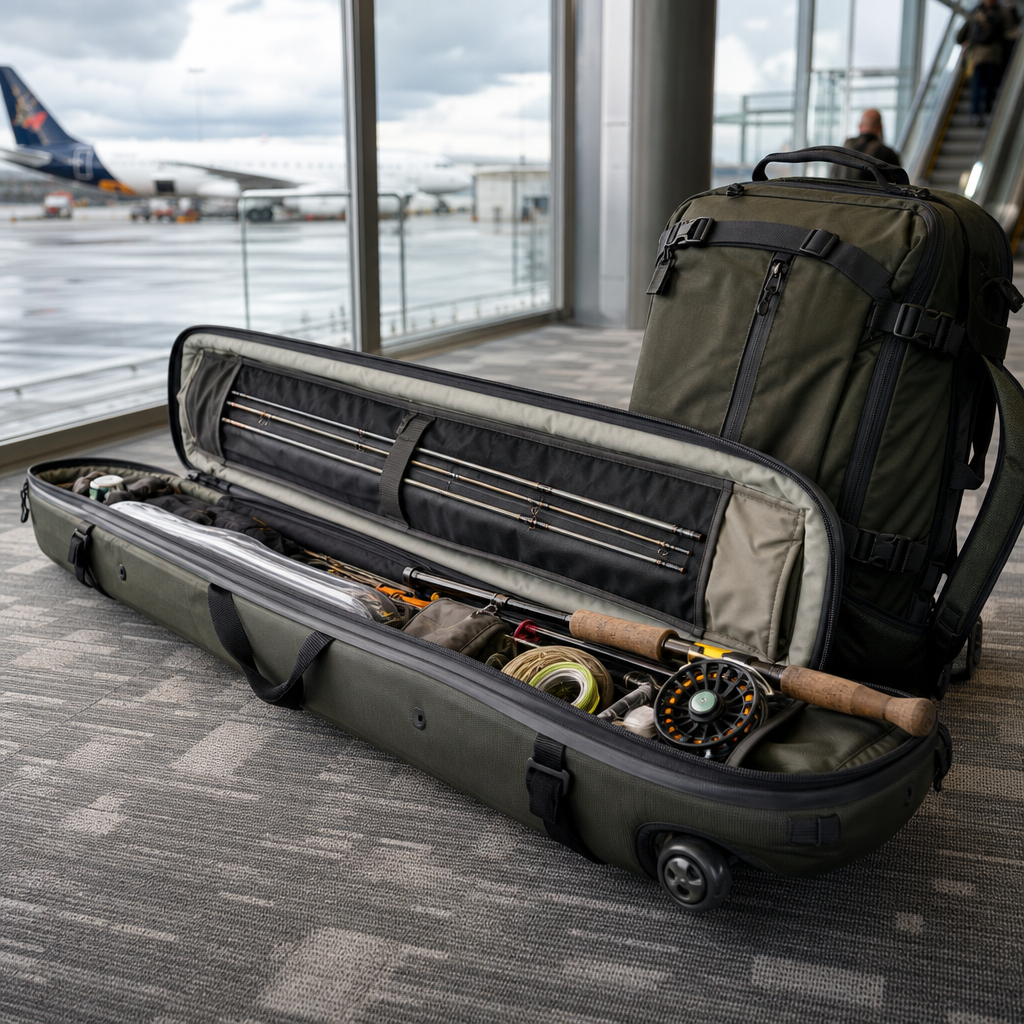
Transporting fly fishing gear internationally requires more than packing a rod tube and hoping airline staff handle it gently. It means understanding baggage rules, customs requirements, country-specific biosecurity laws, and the practical realities of moving specialized equipment through airports, border inspections, lodges, charter boats, and remote transfers. For anglers planning a destination trip, this matters because damaged rods, confiscated flies, delayed waders, or undeclared reels can turn an expensive week on the water into a logistical mess. International travel with fly fishing gear is easiest when you treat the trip as both an outdoor expedition and a regulated cross-border shipment. That approach reduces cost, prevents avoidable losses, and protects your ability to fish immediately on arrival.
In practical terms, fly fishing gear includes rods, reels, fly lines, leaders, flies, waders, boots, packs, tools, nets, electronics, and sometimes regulated animal-based materials such as feathers or fur used in fly tying. International transport means carrying or shipping those items across at least one national border, usually under airline and customs control, and often under agricultural inspection as well. I have learned through destination travel to Patagonia, Iceland, Canada, and the Caribbean that the gear itself is only half the problem; the real challenge is matching each item to the right transport method. A premium reel may belong in your carry-on, while boots and waders usually travel better in checked baggage, and rod strategy depends on airline size limits and connection risk.
This hub article explains how to transport fly fishing gear internationally from planning through arrival, with a focus on minimizing damage, delays, fees, and compliance problems. It covers airline baggage rules, smart packing systems, customs documentation, cleaning standards for invasive-species control, security screening, batteries and tools, insurance, and what to do when your luggage does not arrive. Because this is a sub-pillar page within a broader fly fishing destinations resource, it is designed to help you build a repeatable travel process you can apply whether you are chasing trout in New Zealand, salmon in Norway, bonefish in Belize, or taimen in Mongolia. If you want one principle to remember, it is simple: separate essential fishing items from bulky items, document everything, and pack for inspection rather than secrecy.
Plan Around Airline Rules Before You Book
The best time to solve gear transport problems is before buying the ticket. Airlines vary widely on what counts as standard checked baggage, oversize sporting equipment, or prohibited carry-on items. A four-piece fly rod in a compact tube often fits in carry-on length rules on some carriers, but not on all, and regional aircraft create another layer of risk because overhead bins and closet space are limited. Many anglers assume a rod tube is automatically accepted because it is sporting equipment. In reality, acceptance depends on dimensions, route, staff discretion, and whether you are boarding a narrow-body or regional jet. Always read the operating carrier’s baggage page, not just the booking site summary, because codeshare flights often apply the rules of the first or most significant carrier.
I recommend building an airline-specific packing plan with three categories: must-carry, safe-to-check, and never-pack. Must-carry items are expensive, trip-critical, or hard to replace fast, such as reels, fly lines, leaders, prescription eyewear, medications, travel documents, and one versatile rod if carry-on rules clearly allow it. Safe-to-check items usually include waders, boots, landing nets, outerwear, and nonessential backup tackle. Never-pack items depend on local rules but often include loose fuel, large knives in carry-on, and materials restricted by customs or wildlife regulation. If your itinerary includes tight connections, multiple carriers, or remote final transfers, simplify aggressively. A direct long-haul flight with one checked duffel and one rod case is easier to manage than two checked bags, a carry-on roller, a rod tube, and a personal item through three terminals.
Travel insurance and baggage protection also belong in the booking stage, not the packing stage. Standard airline liability for checked baggage is limited and rarely reflects the value of premium fly gear from brands such as Sage, Scott, G. Loomis, Hatch, Abel, or Simms. Review your homeowner, renter, or dedicated sporting equipment policy and confirm whether international transit, guides, boats, and hotel storage are covered. Photograph serial numbers and keep digital receipts in cloud storage. If you need proof during a claim or customs inspection, a searchable phone folder saves time and arguments. Before departure, print the airline baggage policy, especially if it explicitly lists fishing equipment, because front-line staff do not always interpret sporting gear consistently at the counter.
Pack Rods, Reels, Flies, and Clothing for Inspection and Impact
Good packing protects gear from both mechanical damage and inspection handling. For rods, use a hard tube with a secure cap, internal dividers when possible, and your name, phone number, and destination lodge or hotel label on the outside and inside. If the tube goes inside a larger duffel, pad both ends with clothing to reduce shock. If it travels separately, tape over threaded caps lightly so they do not loosen in transit, but do not make the case difficult for inspectors to open. Reels should travel in padded reel cases inside your carry-on because they combine high value with compact size. Remove lines only if needed for space; otherwise, leave each reel rigged and labeled so setup on arrival is fast and mistakes are less likely after a long travel day.
Flies, leaders, tippet, and tools require more thought than many anglers expect. Flies are generally permitted, but security decisions can vary, especially with large saltwater patterns, weighted flies, and sharp hooks. I have found it safest to carry a minimal, clearly organized fly box in hand luggage and place the larger supply in checked baggage. Hemostats, nippers, forceps, hook sharpeners, and multitools should almost always go in checked luggage unless you have confirmed the specific item is allowed. Waders and boots should be dried completely, then packed in a ventilated bag inside a waterproof duffel or hard-sided suitcase. Include one full fishing day of essential clothing in your carry-on, especially socks, base layers, and sun protection, because delayed checked bags are common on international itineraries with domestic connections.
| Gear item | Best transport method | Why |
|---|---|---|
| Primary reel and fly lines | Carry-on | High value, compact, difficult to replace quickly |
| Four-piece rod | Carry-on if allowed; otherwise hard checked tube | Fragile item affected by airline size rules |
| Waders and boots | Checked baggage | Bulky, lower theft risk, must be cleaned and dried |
| Large fly boxes and tools | Checked baggage | Sharp items may trigger security concerns |
| One-day clothing and documents | Carry-on | Supports fishing if checked bag is delayed |
Use packing cubes or labeled dry bags by function rather than by item type alone. For example, create one bag for “arrival essentials” with a reel, fly box, leaders, sunglasses, permit copy, and sun gloves. Build another for “wet wading kit” or “cold weather layers.” This system matters in international travel because you will often repack between flights, ferries, bush planes, and vehicles. It also helps when customs opens your luggage: organized gear is more likely to be repacked correctly than a loose pile of expensive tackle. If you are moving through wet climates or boats, place passports and paper permits in a waterproof pouch separate from your tackle. Anglers focus on rod breakage, but lost documents stop a trip faster than damaged gear.
Understand Customs, Biosecurity, and Wildlife Material Restrictions
Customs compliance is where international fly fishing travel becomes destination-specific. Most countries allow personal sporting equipment for temporary use, but that does not remove your duty to declare items when required or to prove they are for personal travel rather than resale. A simple gear list with approximate values, serial numbers for reels and electronics, and country of origin can speed inspections. In the United States, frequent travelers sometimes use Customs and Border Protection Form 4457 to document ownership of high-value items before departure, reducing problems on re-entry. Other countries have comparable temporary admission or proof-of-ownership processes. If you are carrying several premium reels, cameras, or drone equipment alongside fishing gear, documentation becomes even more important because your luggage can look commercial.
Biosecurity rules are increasingly strict, and anglers should take them seriously. New Zealand is the best-known example: used waders, boots, nets, and tents are closely inspected because felt soles, mud, and organic residue can carry invasive species and pathogens. Iceland, Chile, Argentina, and parts of Canada also pay close attention to equipment that has contacted freshwater systems. The standard is not “mostly clean.” It is visibly clean, fully dry, and free of plant matter, mud, and odor. I scrub boots before departure, disinfect gear when required using destination-approved methods, and pack items so inspectors can access them without emptying the entire bag. If a country bans felt-soled boots, do not assume an old pair “just for the lodge” will slip through. Rules are enforced at the border and sometimes by outfitters who can refuse use on the water.
Animal-based fly tying materials require extra caution. Many flies contain feathers, fur, or exotic materials that are legal in one market and restricted in another. CITES-listed species, certain bird feathers, untreated natural materials, and souvenirs incorporating wildlife products can create serious import issues. Commercially sold flies from reputable manufacturers are generally lower risk than loose tying materials, but that is not a guarantee. If you tie your own flies with jungle cock substitutes, pheasant, marabou, rabbit, deer hair, or synthetic materials, keep them in standard fly boxes and avoid transporting undeclared bulk skins or capes unless you understand the import rules fully. When in doubt, bring only finished flies, retain retail packaging where available, and ask the outfitter or embassy about destination restrictions before travel.
Manage Security Screening, Batteries, and In-Transit Risks
Airport security is easier when your gear is easy to interpret. Keep reels, lines, and electronic accessories together in one section of your carry-on so you can present them clearly if asked. Lithium batteries for headlamps, GPS units, action cameras, or power banks usually must travel in carry-on baggage under airline safety rules, with terminals protected from short circuit. Spare batteries loose in checked baggage are a common violation. If you travel with a heated vest or electric boot dryer for cold destinations, verify watt-hour limits and battery removability. Screening officers are not fishing specialists, so clear organization matters. A neat bag with labeled pouches usually gets less scrutiny than a cluttered tackle mess full of metal tools, hooks, cables, and unidentified electronics.
Transit risk is highest during connections, gate checks, and ground transfers. If your rod is accepted as carry-on on the first flight, that does not guarantee acceptance on a smaller connecting aircraft. Be prepared with a backup plan: a crush-resistant tube, a soft sleeve to fit the tube into a checked duffel if necessary, and enough time at the gate to discuss options calmly. For checked bags, use durable tags and a Bluetooth tracker such as Apple AirTag or Tile, understanding that trackers help locate baggage but do not replace formal lost-bag reports. On arrival in remote fishing destinations, the last leg may be a charter plane, skiff, horse pack, or truck on rough roads. Recheck all closures before leaving the main airport. I have seen more damage happen on lodge transfer vehicles than on long-haul flights because gear was lashed loosely or stacked under heavier cargo.
One overlooked safeguard is strategic redundancy. International fly fishing trips often justify carrying one backup rod, extra fly line, duplicate leaders, and a second pair of sunglasses, but not duplicate everything. Replaceability should guide redundancy. A common 9-foot 5-weight rod may be available near trout destinations, while a specific tropical intermediate line, left-hand saltwater reel setup, or large-foot wading boots in uncommon sizes may be impossible to source quickly. Ask your destination outfitter what can realistically be borrowed or purchased nearby. Good lodges often maintain loaner rods and flies, but remote operations may have limited inventory. Pack the items that would otherwise cost you fishing days, not the items that merely improve convenience.
Prepare for Arrival, Delays, and Return Travel
The arrival phase determines whether planning translates into fishing time. Before departure, send your lodge, guide, or hotel a copy of your itinerary, baggage summary, and any delayed-arrival contingency plan. If your checked gear is late, you want someone on the ground who already knows your boot size, rod weight, and first fishing day. At the airport, report delayed baggage before leaving the arrivals area and obtain a written file reference. Trackers can tell you where a bag may be, but the airline report starts the recovery and compensation process. Keep receipts for emergency replacement items. Some airlines reimburse essentials, and some travel policies require prompt documentation. If customs or agriculture officers inspect your gear on arrival, answer directly and do not joke about bait, animals, or undeclared goods. Clear, calm cooperation speeds release.
Return travel deserves the same discipline as outbound packing. Wet gear packed in a rush can trigger inspection issues, mildew, and odor problems on the next border crossing. Rinse and dry equipment as thoroughly as conditions allow, especially boots, gravel guards, and nets. Separate used clothing from clean gear, and recheck any local permit requirements for transporting fish products, shells, antlers, or handmade tackle souvenirs. If you purchased reels, flies, or apparel abroad, keep receipts accessible because duty thresholds vary by country. For anglers building a repeatable system, the smartest habit is a post-trip audit: note what was inspected, what was questioned, which bag arrangement worked, and what you never used. That log turns each trip into a better template for the next destination.
Transporting fly fishing gear internationally is ultimately a matter of systems, not luck. Book with baggage rules in mind, carry the items that would ruin the trip if lost, check the bulky items that travel safely, clean everything to biosecurity standards, and document ownership and value before you leave home. When you do that, customs interviews get shorter, airport screening gets smoother, and your first day on the water starts with assembled rods instead of missing luggage claims. Use this article as your hub for international fly fishing travel planning, then build a destination-specific checklist for each country, airline, and species. A little preparation protects expensive gear, preserves fishing time, and lets you focus on the reason you traveled in the first place: making the next cast count.
Frequently Asked Questions
What is the safest way to pack fly fishing gear for international air travel?
The safest approach is to pack fly fishing gear in layers, with the most fragile and hardest-to-replace items getting the most protection. Rods should travel in a rigid rod tube with internal padding so the sections cannot slide or rattle. Reels should be removed from rods, placed in padded cases, and then packed inside carry-on luggage if airline rules allow. Leaders, fly lines, tippet spools, and small tools should be organized in zip pouches or hard tackle boxes so they do not become loose, crushed, or tangled during transit. Waders and boots should be cleaned, dried, and packed in sealed bags to protect other items and to avoid biosecurity issues at arrival.
It also helps to divide gear strategically between checked and carry-on bags. Keep mission-critical items such as prescription glasses, one reel, one line setup, travel documents, licenses, and a basic selection of flies with you in case checked baggage is delayed. If you are checking rods, use a durable outer duffel or suitcase when possible so the tube is less exposed to impact during baggage handling. Label every case clearly with your name, phone number, email, and destination lodging information. For international trips involving multiple transfers, bush flights, boats, or vehicle shuttles, assume your equipment will be loaded and unloaded many times. Good packing is not just about surviving one flight; it is about protecting gear through the entire travel chain.
Can I bring fly rods, reels, flies, and fishing tools in my carry-on bag?
Sometimes, but you should never assume. Airline cabin rules, airport security screening standards, and local enforcement practices vary by country and even by airport. Multi-piece fly rods in a compact tube are often accepted as carry-on if they fit cabin size limits, but some airlines count rod tubes as a separate item and others may force gate-checking on full flights. Reels are generally less controversial, though lines and backing can attract extra inspection. Flies, nippers, forceps, pliers, hook sharpeners, and scissors create the biggest inconsistency because they contain sharp points or blades. An item that passes security in one country may be confiscated on the return leg in another.
The practical rule is to verify policy at three levels before departure: your airline, the airport security authority, and the arrival or transit country if you will re-clear security there. If there is any doubt, place sharp tools and larger fly boxes in checked luggage. Many experienced anglers carry a minimal setup onboard, such as one rod if permitted, one reel, travel documents, medications, and a small non-problematic fly selection, while checking the rest. That way, even if a checked bag is delayed, the trip is not ruined. If you decide to carry on expensive gear, be prepared for inspection and pack it neatly so officers can review it quickly without damaging delicate items.
Do I need to declare fly fishing gear at customs when traveling internationally?
In many cases, yes, especially if the gear is valuable, newly purchased, or subject to temporary import rules. Customs concerns are not limited to commercial goods. Expensive reels, rods, electronics, and camera equipment associated with fishing trips can trigger questions about ownership, value, and whether the items are being imported for sale. To avoid problems, travel with proof that the gear was owned before departure, such as receipts, photos with date records, insurance schedules, or a gear inventory listing serial numbers and approximate values. Some travelers also complete outbound customs documentation for high-value equipment before leaving their home country so they can show that the same items are returning.
On arrival, always answer customs questions honestly and review the destination country’s rules on sporting equipment, duty thresholds, and temporary importation. If you are carrying large quantities of flies, spare lines, multiple reels, or new packaged gear, customs officers may reasonably ask whether the equipment is for personal use, guiding, or resale. The same applies if you are entering for a hosted trip, competition, or lodge-based expedition. A clear, organized declaration is far better than having undeclared gear discovered during inspection. Customs penalties, delays, or confiscation often result from incomplete paperwork rather than from the gear itself.
Why do biosecurity and cleaning rules matter when transporting waders, boots, and flies overseas?
Biosecurity matters because many countries strictly regulate fishing equipment that may carry mud, plant material, microorganisms, or invasive species from foreign waterways. Felt soles, in particular, can draw extra scrutiny or may be restricted outright in some destinations because they retain moisture and organic debris. Used waders, boots, nets, and wading staffs can all become problems if they appear dirty, damp, or contaminated. Even fly boxes and landing nets may be inspected if they show obvious residue from prior use. Border officers in countries with strong environmental protections take this seriously, and anglers are often surprised by how detailed the inspection can be.
The best practice is to clean and dry everything thoroughly well before departure. Scrub boots, rinse waders, vacuum gear bags, remove sand and plant matter, and allow all equipment to dry completely. If you use disinfectant treatments recommended for angling gear, follow product and destination guidance carefully. Pack cleaned items in separate bags so they stay dry and visibly free of debris. Research the destination’s rules on felt soles, organic tying materials, and used outdoor equipment before you travel. A few minutes of preparation can prevent hours of inspection, mandatory cleaning at the border, or outright refusal of entry for certain items.
What should I do if my fly fishing gear is delayed, damaged, or confiscated during international travel?
Start by documenting everything immediately. If baggage is delayed or damaged, report it before leaving the airport and obtain a written claim reference from the airline. Take photos of damaged rod tubes, crushed reels, broken cases, and torn luggage tags. If the loss involves high-value gear, notify your travel insurer or specialized equipment insurer as soon as possible and keep all receipts for emergency replacement purchases. This is where a pre-trip inventory becomes invaluable. A simple list of rods, reels, lines, boots, and accessories, along with photos and serial numbers, makes claims faster and more credible.
If gear is confiscated or held by customs or security, stay calm and ask for the specific legal basis, the itemized list of retained goods, and any available appeal or retrieval process. In some situations, officers may allow voluntary surrender of a prohibited item while permitting the rest of the gear to continue. In others, items are detained pending review. The best defense is preparation: know the rules in advance, pack ambiguous items in checked baggage, and avoid carrying anything that could be interpreted as restricted biological material or prohibited tools. For destination trips to remote lodges or charter operations, it is also smart to coordinate with your outfitter ahead of time. Many can loan rods, reels, boots, or terminal tackle if your baggage is delayed, which can save an entire fishing program while your claim is being resolved.