International fly fishing combines technical angling skill with border crossings, remote logistics, unfamiliar medical systems, and changing environmental risks. Health and safety tips for international fly fishing are not just a packing checklist; they are the practices that protect your body, your gear, and your trip investment when you travel to fish in places such as Patagonia, British Columbia, Iceland, New Zealand, the Seychelles, or the Amazon. In practical terms, health covers prevention, fitness, hydration, food and water hygiene, medications, vaccinations, insect protection, and emergency response. Safety includes travel documentation, transportation planning, weather awareness, river hazards, boating protocols, wading judgment, local regulations, communications, and insurance.
I have planned and fished trips where a missed transfer, a swollen ankle, or a forgotten prescription became a bigger problem than difficult casting. International fishing magnifies small mistakes because replacement gear may be unavailable, rescue may be delayed, and local advice may be shaped by conditions you do not yet understand. A trout river in Chile can involve long gravel-road drives and cold glacial currents. A saltwater flat in Belize may require sun exposure management, boat discipline, and vigilance around coral cuts or stingrays. A jungle destination can add mosquitoes, heat stress, and language barriers. The common thread is simple: successful travel anglers prepare for preventable problems before they step on the plane.
This hub article explains the core tips for international travel through a fly fishing lens. It defines what to prepare before departure, what to carry, how to manage personal health during transit and on the water, and how to respond when conditions change. It also highlights where travelers should go deeper with destination-specific planning, because no universal checklist can fully replace local knowledge. If you want more days fishing, fewer avoidable disruptions, and better decisions in unfamiliar water, start with these principles and build every trip around them.
Plan health protection before you book
The safest international fishing trips start months before departure. First, review entry rules, passport validity, visa requirements, and any customs restrictions related to rods, reels, flies, medications, or outdoor equipment. Many countries require six months of passport validity beyond travel dates, and some demand proof of onward travel or lodging. For anglers, the bigger issue is often medications. Keep all prescription drugs in original labeled containers and carry a copy of the prescription plus the generic drug name, because brand names vary widely across countries.
Medical preparation should be destination specific. A trip to Iceland and a trip to Guyana do not carry the same risks. Check guidance from the Centers for Disease Control and Prevention, the World Health Organization, and your national foreign travel advisory service. Ask a travel clinic about routine vaccines, hepatitis A and B, typhoid, tetanus boosters, and any region-specific concerns such as yellow fever or malaria prevention. I always recommend anglers schedule this visit early; some vaccines require multiple doses, and malaria drugs may need to start before arrival. If you have asthma, severe allergies, diabetes, heart disease, or prior clotting issues, ask your doctor to review your itinerary in detail, including long-haul flights and remote lodge access.
Insurance is another nonnegotiable layer. Standard travel insurance often excludes hazardous activities, medical evacuation, or expensive sporting equipment. Read the wording. Look for emergency evacuation coverage, trip interruption, baggage delay, and coverage for guided fishing from boats or while wading. If your destination involves floatplanes, helicopters, skiffs, or wilderness lodges, verify that rescue and transport are included. Save the policy number digitally and on paper, and make sure your travel partner knows where it is.
Build a travel system for documents, gear, and critical backups
International fly fishing trips fail when essential items are split across checked bags without redundancy. The rule I use is simple: anything that would stop the trip goes in carry-on luggage. That list usually includes passport, wallet, phone, medications, glasses, travel insurance details, one change of clothes, charging cables, reels, a fly box suited to day one, and at least one multi-piece rod if airline policy allows it. Some carriers accept rod tubes in overhead bins; others do not, so verify dimensions before travel. If you must check rods, use a crush-resistant case and tag it clearly.
A strong backup system matters more than bringing excess gear. Duplicate leaders, tippet spools, polarized sunglasses, line-cleaning supplies, and waterproof phone charging options solve more real problems than an extra dozen fly patterns. Make digital copies of your passport, itinerary, licenses, and emergency contacts in secure cloud storage and on your phone. Add printed copies in a waterproof pouch. In remote airports, dead batteries and weak signal are common, and paper still works.
For money, split your resources. Carry two cards stored separately, some local currency, and a backup payment method. Notify your bank of travel dates so transactions are not blocked. If your route includes multiple domestic connections after the international leg, pad the itinerary. Weather delays, customs lines, and baggage transfer problems regularly affect anglers carrying oversize luggage and outdoor gear.
| Travel element | Best practice | Why it matters for anglers |
|---|---|---|
| Passport and visa | Carry originals plus digital and paper copies | Remote lodges and charter operators may need ID confirmation |
| Medications | Pack in carry-on with prescriptions | Checked bag delays can create immediate medical risk |
| Rods and reels | Verify airline policy and protect in hard cases | Replacement tackle may be impossible to source locally |
| Insurance | Confirm evacuation and fishing activity coverage | River injuries often require transport, not just clinic visits |
| Cash and cards | Split and store separately | Small towns, tips, and license purchases may not accept cards |
Manage flight fatigue, hydration, and food safety
Long travel days reduce judgment before you ever step into the river. Jet lag, dehydration, poor sleep, and alcohol compound balance problems and reaction time. On international fly fishing trips, anglers often arrive and want to fish immediately, but the first day is when I see the most preventable stumbles, forgotten wading belts, and bad crossing decisions. During flights, drink water consistently, limit alcohol, and stand up regularly. On trips over four hours, especially after age forty or if you have risk factors for blood clots, compression socks are a sensible precaution worth discussing with your doctor.
Food and water safety also deserve disciplined attention. In many fishing destinations, the issue is not the lodge kitchen but transit days, roadside stops, airport food, and tap water uncertainty. Use sealed bottled water where potable water is questionable, avoid ice unless you know the source, and be careful with raw foods, shellfish, and buffet items that sit unrefrigerated. Pack oral rehydration salts and an antidiarrheal recommended by your clinician. A mild stomach illness can still ruin three days of fishing if dehydration sets in under sun and wind.
Sleep is a safety tool, not a luxury. If you cross multiple time zones, shift your schedule ahead of departure when possible, get daylight exposure after arrival, and avoid using sedating medications casually. Some sleep aids can leave you groggy during early boat runs or slippery walks in the dark. If your first fishing day follows a red-eye flight, lower your ambitions. Fish conservatively, let the guide set pace, and treat that session as an acclimation day.
Prevent common on-the-water injuries
The most frequent international fly fishing injuries are not dramatic animal encounters; they are slips, hook punctures, sunburn, dehydration, sprains, and lacerations to hands and feet. Prevention starts with clothing and pace. Wear a wading belt every time you enter moving water in chest waders. Use boots matched to the riverbed and legal local standards, since some destinations restrict felt soles because of invasive species concerns. Studded rubber often outperforms plain rubber on algae-slick rock, but studs are less comfortable on boats and hard surfaces, so match the boot to the itinerary.
Wading safety depends on decision-making more than confidence. Cross only where you can see the bottom, keep your stance wide, shuffle rather than step high in fast current, and unbuckle pack straps so you can ditch weight quickly if you fall. Guides often know where the river changed after recent rain, dam releases, or snowmelt. Listen closely. On one early-season trip, a crossing that looked routine at dawn became risky by afternoon because upstream melt increased flow. The anglers who treated the morning line as permanent were the ones who struggled.
Hooks and knives cause many avoidable incidents. Crimp barbs when practical, wear glasses at all times, and create space between anglers during casting. If a hook penetrates deeply near the eye, face, hand tendon, or a joint, do not attempt field removal with the usual line-yank technique. Stabilize it, control bleeding, and seek medical care. Carry waterproof dressings, antiseptic wipes, blister treatment, tweezers, and medical tape. On saltwater trips, clean cuts aggressively because warm marine environments increase infection risk.
Respect climate, altitude, insects, and wildlife
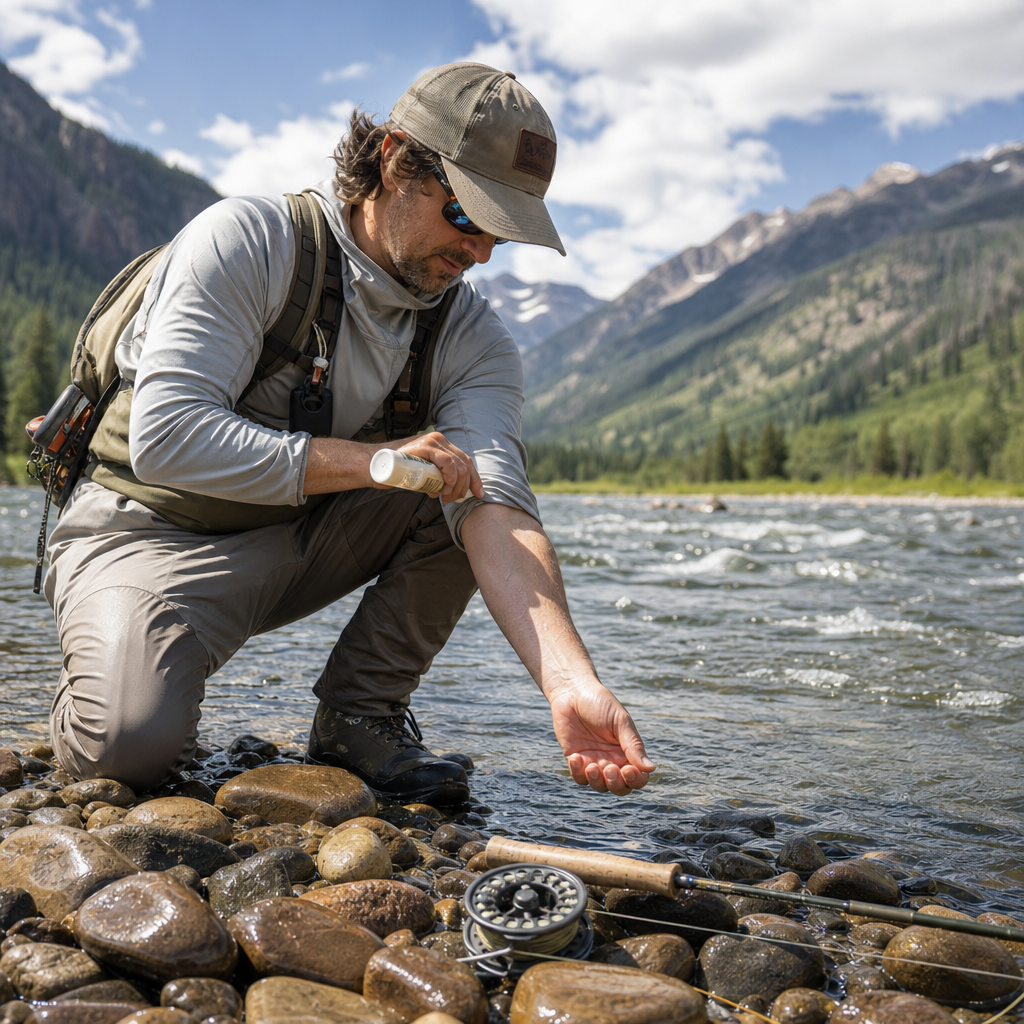
Environmental stressors vary sharply by destination, and they affect fishing performance as much as health. Sun exposure is the most underestimated issue I see among traveling anglers. Water reflects ultraviolet radiation, and wind can hide how much exposure you are getting. Use broad-spectrum sunscreen, a brimmed cap, UPF clothing, a neck gaiter, and quality polarized glasses. Reapply sunscreen on boat days and after heavy sweating. Severe sunburn on day two can effectively end a week-long trip by making wader use, shoulder casting, and sleep miserable.
Cold exposure matters in northern or shoulder-season fisheries. Even in summer, glacial rivers and open boats can create hypothermia risk after immersion or prolonged rain. Dress in layers that still insulate when damp, carry a waterproof shell, and keep a dry bag with spare gloves and socks. In contrast, tropical fisheries demand heat management. Fish early and late where possible, add electrolytes during long skiff days, and know early signs of heat exhaustion: headache, weakness, nausea, heavy sweating, and irritability.
Altitude adds another layer in destinations such as the Andes or high-elevation trout systems. Ascend gradually when possible, hydrate well, reduce alcohol, and take persistent headache, dizziness, or shortness of breath seriously. Insect protection is equally practical. Mosquitoes, sand flies, and ticks are not just annoyances; they carry disease and can distract you when wading or casting. Use permethrin-treated clothing where appropriate, apply repellent to exposed skin, and inspect daily for ticks in grassy or wooded terrain. Wildlife risks should be addressed without drama. Learn local protocols for bears, crocodilians, snakes, stingrays, or monkeys that raid gear and food, and follow guide instruction exactly.
Use local knowledge, communications, and emergency planning
The best health and safety tips for international fly fishing rely on humility. Local guides understand river gradients, weather windows, access points, and emergency realities far better than visiting anglers. Ask direct questions on day one: Where is the nearest clinic? Is there cell coverage? What weather change ends the session? Which crossings are never worth attempting? What species or habitat hazards require special handling? Good guides appreciate anglers who take these questions seriously because it reduces pressure for risky decisions when the fishing turns on.
Communication plans should be set before leaving the lodge or vehicle. In many remote fisheries, cell service is unreliable or absent. Satellite messengers such as Garmin inReach or ZOLEO can provide check-ins and SOS capability, but only if batteries are charged and contacts are programmed. Share your daily plan with someone not on the water, including expected return time, access route, and boat tail number if relevant. If you rent a vehicle internationally, understand local driving laws, fuel availability, and road conditions. Much of the danger on fishing trips occurs on dark roads, not rivers.
Finally, treat regulations and biosecurity as safety issues, not paperwork. Clean and dry gear to prevent spreading invasive organisms, declare items honestly at customs, and follow catch-and-release rules, boating limits, and private access boundaries. Responsible anglers protect fisheries and reduce conflict with landowners, outfitters, and enforcement officers. Before every trip, build a simple written plan covering medical needs, gear backups, communication devices, weather thresholds, and evacuation steps. That planning creates freedom on the water. You fish with more confidence, respond faster when something changes, and preserve what international travel is supposed to deliver: memorable days in remarkable places. Use this hub as your baseline, then customize it for each destination, season, and style of fly fishing before you go.
Frequently Asked Questions
What health preparations should I make before an international fly fishing trip?
Start planning your health precautions several weeks before departure, not a few days before your flight. International fly fishing often takes you into remote watersheds, small towns, island lodges, or jungle regions where medical care may be limited, delayed, or very different from what you are used to at home. A pre-trip visit with your primary care provider or a travel medicine clinic is one of the smartest steps you can take. Ask about destination-specific vaccines, routine immunization updates, prescription refills, and whether you need medications for risks such as traveler’s diarrhea, altitude issues, motion sickness, or malaria, depending on where you are going. If you have allergies, asthma, diabetes, heart conditions, or any ongoing medical issue, discuss how local climate, strenuous wading, long travel days, and remote access could affect your condition.
Bring all prescription medications in their original labeled containers and pack them in your carry-on, not checked baggage. It is also wise to carry a written list of medications, dosages, allergies, blood type if known, and emergency contacts. If you use items like EpiPens, inhalers, insulin, CPAP equipment, or orthopedic supports, bring extras when possible. For many destinations, clean drinking water, food handling, sun intensity, and insect exposure may be bigger health threats than the fishing itself, so prepare accordingly with water treatment options, oral rehydration salts, sunscreen, insect repellent, and a basic first-aid kit. Good preparation is about reducing preventable problems before they can disrupt a costly and carefully planned trip.
What should be in a health and safety kit for international fly fishing?
A strong travel kit should be built around the realities of fly fishing: hooks, knives, slippery rocks, long sun exposure, changing weather, and delayed access to care. At a minimum, pack adhesive bandages, sterile gauze, medical tape, blister treatment, antiseptic wipes, antibiotic ointment, tweezers, small trauma shears, pain relievers, anti-inflammatory medication if appropriate for you, antihistamines, anti-diarrheal medicine, oral rehydration packets, and any personal prescriptions. Add wound-closure strips, a compression bandage, a finger splint, and waterproof dressings because cuts, punctures, and sprains are common when traveling with rods, wading gear, and sharp flies. If you are headed somewhere remote, include a compact emergency blanket, electrolyte tablets, and a whistle.
For fishing-specific safety, carry polarized sunglasses to protect your eyes from errant casts and glare, a wide-brim hat, high-SPF sunscreen, lip balm with SPF, and insect repellent suited to the destination. In tropical or jungle environments, long-sleeve sun shirts, buff-style face coverings, and lightweight gloves can reduce both UV exposure and insect bites. In cold destinations, hand warmers and dry storage bags matter because hypothermia often begins with wet hands, soaked layers, and wind. You should also think beyond medical items: a waterproof phone case, headlamp, power bank, map or offline navigation app, and local emergency numbers can be just as important as bandages. The best kit is compact enough to carry every day and complete enough to stabilize a problem until you can get proper help.
How can I stay safe while wading, boating, and fishing in unfamiliar water?
Unfamiliar water is one of the biggest safety variables in international fly fishing because every destination behaves differently. A river in Patagonia may look wadable but have powerful glacial push; a flat in the Seychelles may hide sharp coral and fast tides; a New Zealand freestone stream can rise quickly after weather changes upstream. Never assume your home-water experience translates directly to a new fishery. Ask guides detailed questions about current speed, bottom composition, tides, water releases, weather shifts, crossing points, and local hazards before you step in. Wear a properly fitted wading belt, use a wading staff when conditions warrant it, and move more slowly than you think you need to. If the bottom is slick, uneven, or invisible, back off rather than forcing a crossing that could turn into a fall, injury, or lost gear.
Boat safety matters just as much. Wear a personal flotation device when required and whenever conditions justify it, especially in skiffs, rafts, drift boats, and remote motorized craft. Keep hooks secured when boats are moving, and stay aware of fly lines around feet, cleats, and equipment. Weather changes can be dramatic in coastal, alpine, and northern destinations, so monitor forecasts and respect guide decisions about delaying or ending a session. If you are fishing without a guide, tell someone exactly where you are going and when you expect to return. Simple habits save trips: step carefully on docks and rocks, avoid fishing alone in isolated areas when possible, and never let excitement about a hatch or a tailing fish override basic judgment. Most serious angling accidents happen when people rush, overestimate stability, or ignore changing conditions.
What are the most important environmental and wildlife risks to plan for?
The health and safety risks of international fly fishing often come from the environment around the water rather than the fish themselves. Sun exposure is a major issue in places such as New Zealand, high-latitude summer fisheries, tropical flats, and open glacial rivers, where reflection off water increases UV intensity. Apply sunscreen before you start fishing, reapply regularly, and protect exposed skin with technical clothing instead of relying on lotion alone. Heat illness is another common concern in tropical and subtropical fisheries, so drink consistently, replace electrolytes, and recognize early signs such as headache, nausea, dizziness, and unusual fatigue. In cold-weather destinations, the opposite danger is hypothermia. Wet waders, wind, and prolonged exposure can cool you faster than expected, even when temperatures seem manageable.
Wildlife and natural hazards vary widely by region. In bear country, learn food storage rules, carry bear spray if locally recommended and legally allowed, and maintain awareness near brush, carcasses, and salmon streams. In tropical regions, insects may pose risks through bites, allergic reactions, or disease transmission, making repellent, proper clothing, and lodge-level prevention measures essential. On saltwater flats, coral cuts, stingrays, sea urchins, and strong tidal movement require protective footwear and careful foot placement. In jungle or backcountry environments, storms, flash flooding, rough roads, and communication gaps can create compound risks quickly. The key is to treat each destination as its own safety system. Study the local conditions in advance, follow local guidance closely, and assume that what is routine for residents may still be unfamiliar and risky for visiting anglers.
How do I protect my trip investment if a health or safety problem interrupts travel or fishing?
Protecting your trip investment starts with understanding that health and safety failures are often financial failures too. International fly fishing trips can involve nonrefundable flights, charter legs, lodge deposits, guide days, gear fees, and baggage costs. A twisted knee, lost medication, flight delay, storm disruption, or emergency evacuation can quickly become expensive. Purchase travel insurance that matches the actual realities of the trip, not just a generic policy. Read the details for medical coverage, emergency evacuation, trip interruption, delayed baggage, and coverage for remote activities or guided angling. If you are going somewhere with expensive evacuation logistics, such as a jungle fishery, island operation, or far northern lodge, verify that evacuation coverage limits are high enough to be meaningful.
It is also important to protect documents, communications, and gear. Keep digital and paper copies of your passport, visa information, insurance policy, prescriptions, outfitter contacts, and emergency numbers. Split critical items between bags, and carry essentials like medications, one change of clothing, sunglasses, and basic fishing necessities in your carry-on when possible. Use rod cases, waterproof duffels, and luggage trackers if you have them. Before departure, confirm baggage rules for rods, reels, flies, wading boots, and lithium batteries, because international and regional carriers may differ. Finally, build flexibility into your mindset and itinerary. The safest angler is often the one who is willing to adjust plans early rather than push through illness, dangerous weather, or fatigue. Good decisions protect not only your health but the time, money, and effort you invested in getting to the water in the first place.