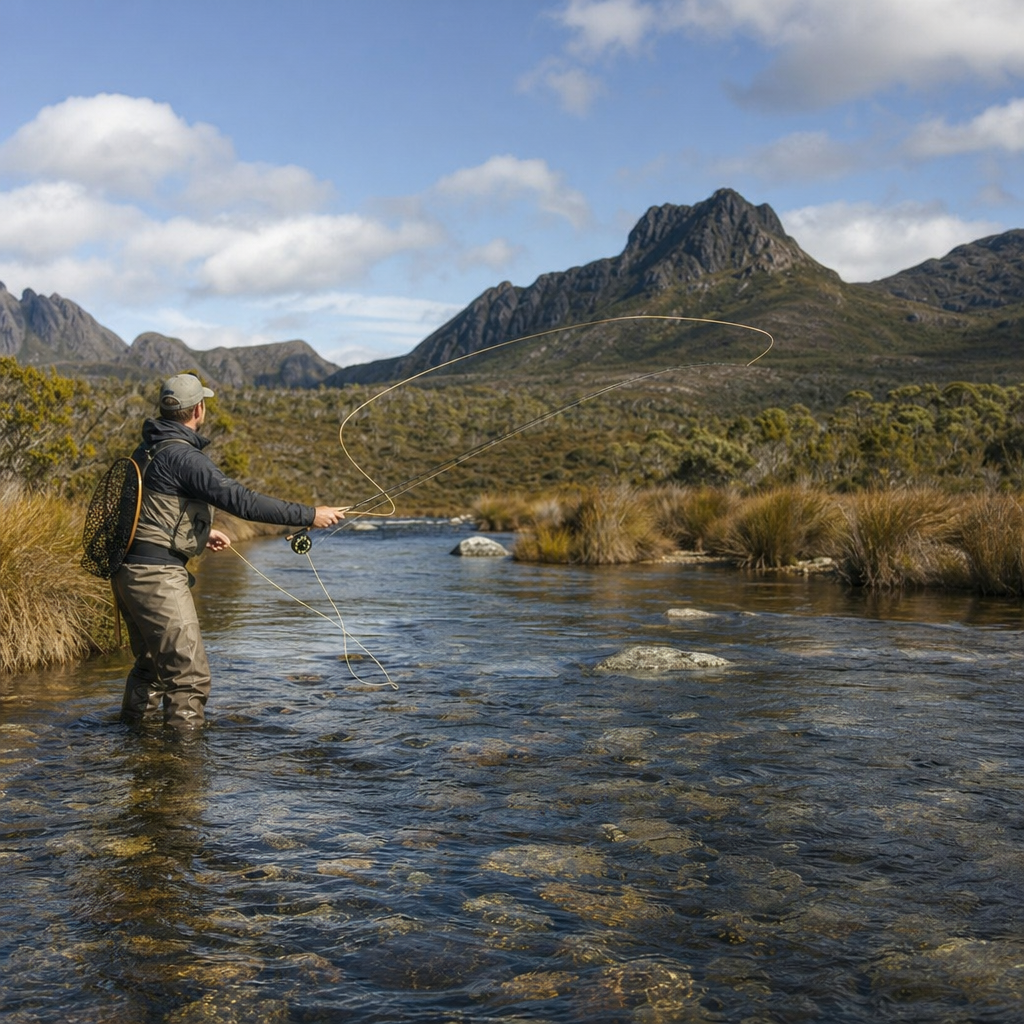
Fly fishing in Tasmania combines sight-fishing on clear highland lakes, technical river work, and coastal opportunities within one compact island, making it one of Oceania’s most complete trout destinations. Tasmania is Australia’s southern island state, and for fly anglers it is defined by wild brown trout, reliable mayfly and terrestrial action, extensive public access, and a long tradition of catch-and-release fishing on waters managed by Inland Fisheries Service regulations. When anglers talk about Tasmania as a destination, they usually mean two linked experiences: stalking trout on wind-laned lakes and polaroiding fish in ankle-deep margins, then shifting to rivers where presentation, drag control, and hatch timing matter just as much. I have fished these waters in changing mountain weather, and the appeal is not abstract. You can begin a morning on a Central Highlands lagoon, watch gum beetles blow onto the surface by noon, and finish the day prospecting a freestone river with nymphs or small wet flies.
As a hub for fly fishing destinations in Oceania, Tasmania matters because it sets the benchmark against which many southern hemisphere trout fisheries are judged. New Zealand is often better known internationally, but Tasmania offers a distinct advantage: extraordinary variety within short driving distances, a dense network of fisheries, and a culture built around fly methods rather than purely boat-based trolling or gear fishing. Key terms help frame the island. Highland lakes are shallow or medium-depth waters across the Central Plateau where weather and food sources drive trout movement. Tailwaters are river sections influenced by dam releases, often giving stable temperatures and productive insect life. Polaroiding means spotting individual trout with polarized glasses and casting to them, a skill central to Tasmanian lake fishing. Understanding these terms is practical, because success here depends less on casting far and more on reading food, wind, light, and fish behavior accurately.
For travelers researching Oceania fly fishing, Tasmania also works as a strategic starting point. The island is accessible from mainland Australia, has well-developed roads, guided options, and a season that generally runs from early spring through late autumn, though exact opening and closing dates depend on specific waters and annual regulations. That means visiting anglers can build a broader Oceania itinerary around it, then continue into other destination pages on New Zealand’s South Island, New South Wales trout streams, or alpine fisheries in Victoria. Still, Tasmania deserves more than a stopover. Its best waters consistently produce large wild browns, and its techniques reward observation over luck. If you understand where to go, when to go, and how to match the island’s main food sources, Tasmania can deliver some of the most visual and technically satisfying fly fishing in the region.
Why Tasmania stands out in Oceania
Tasmania stands out because it concentrates several trout fisheries into one landscape: fertile lowland rivers, infertile but fish-rich highland lakes, flood margins, marshes, and estuaries where sea-run fish occasionally appear. Brown trout dominate and were introduced in the nineteenth century, but they have adapted so successfully that many waters now feel functionally wild. In practical terms, the island produces fish that are strong, wary, and tuned to seasonal food events. That combination creates a destination where method matters. Blindly covering water can work, but consistent anglers build days around wind direction, cloud cover, water level, and insect or terrestrial availability.
The Central Highlands are the core of the reputation. Places such as Great Lake, Arthurs Lake, Little Pine Lagoon, Penstock Lagoon, and Lake Augusta offer large areas of wadable shoreline, productive weed beds, and weather-driven feeding patterns that can turn on fast. Rivers add another dimension. The South Esk, Meander, Mersey, Macquarie, and sections of the Tyenna each demand cleaner drifts and tighter line control than many lakes. This variety is why guides can still adapt when weather changes. If bright sun kills lake-edge sight-fishing at midday, a nearby river may fish better under the same conditions.
Compared with many Oceania destinations, Tasmania is also unusually democratic. Private access exists, especially on some famous fisheries, but public water is abundant. Boat fishing helps on larger lakes, yet a traveling angler on foot can still fish extremely well. That matters for visitors planning a destination trip without transporting a craft. In my experience, the best Tasmanian days often happen on foot anyway, because the island’s great strength is not only covering water; it is finding individual trout in edges, slicks, gutters, and flooded grass where accurate presentations count most.
Top fly fishing spots in Tasmania
Arthurs Lake is one of the island’s iconic waters and often the first name experienced anglers mention. It is a broad, shallow highland lake famous for wind lanes, dun hatches, midge activity, tailing trout, and excellent wet-fly fishing. The Western Lakes area, by contrast, is not one lake but a vast network of remote waters scattered across the plateau. Reaching them often requires hiking, sound navigation, and weather awareness, but the reward is classic sight-fishing to trout in clear water with minimal pressure. Great Lake offers scale, strong fish, and productive bays, while Little Pine Lagoon is legendary for mayfly and evening spinner activity. Penstock Lagoon, though comparatively small, has earned outsized status because of prolific hatches and technical dry-fly opportunities.
For river anglers, the South Esk system deserves serious attention. Its varied sections support nymphing, dry-dropper work, and evening rises. The Meander River is one of Tasmania’s most reliable dry-fly streams, particularly when terrestrial food and summer caddis activity bring fish up. The Mersey can fish brilliantly after levels settle, and the Tyenna offers close-range pocket water and overhanging cover where precise casts are essential. Lowland streams are often overlooked by first-time visitors who focus only on famous lakes, yet these rivers can rescue a trip during difficult lake weather or when strong winds make shoreline stalking inefficient.
| Water | Type | Best known for | Most effective techniques |
|---|---|---|---|
| Arthurs Lake | Highland lake | Shoreline browns, mayfly, wind lanes | Wet flies, dry fly during hatches, nymphs under indicator |
| Little Pine Lagoon | Lagoon | Mayfly duns and spinners, evening rises | CDC dries, shuttlecock emergers, slim nymphs |
| Penstock Lagoon | Shallow lagoon | Dense insect life, technical surface feeding | Small dries, buzzer patterns, stealthy wading |
| Great Lake | Large lake | Big fish, broad bays, changeable weather | Loch-style wets, streamer searches, edge polaroiding |
| South Esk | River | Mixed hatch fishing and nymphing | Euro nymphing, dry-dropper, evening dry fly |
| Meander River | River | Clear runs and dependable summer surface action | Terrestrial dries, small nymphs, reach casts |
If you want one area that captures the essence of Tasmania, choose the Central Highlands and base yourself within reach of multiple lakes. If you want a balanced trip, split time between the Highlands and a river district such as the north or midlands. That structure gives you options, and options are essential on an island where weather drives feeding behavior as strongly as any hatch chart.
Core techniques that work consistently
The most productive Tasmanian techniques are not complicated, but they demand discipline. First is lake-edge polaroiding. You walk slowly, keep the sun at a useful angle, scan for shapes, movement, or the subtle white flash of a turning trout, then cast well ahead of the fish. Accuracy beats distance. A nine-foot leader tapered to around 4X or 5X is a common starting point, but in calm clear conditions I often lengthen that leader and scale down fly size. Beetle patterns, small nymphs, and sparse wet flies all have roles depending on what fish are eating.
Second is fishing the wind correctly. In Tasmania, wind is not simply an inconvenience. It concentrates food, forms slicks, pushes beetles and duns into lanes, and positions trout predictably. On lakes like Arthurs or Great Lake, the windward shore can be alive with feeding fish. On other days, an eddy line or sheltered bay holds calmer water where trout sip emergers. Learning to read these microenvironments is one of the fastest ways to improve. I have seen visiting anglers avoid rough shorelines, then discover that the “uncomfortable” bank held nearly all the active fish.
Third is matching seasonal food rather than obsessing over exact imitation. Tasmania’s trout key on mayflies, midge, caddis, scud, snails, galaxia, frogs, and especially terrestrials such as gum beetles. During beetle falls, a simple black foam or deer-hair beetle can outperform more elegant dry flies because profile and placement matter most. During mayfly periods, however, fish can become selective on stage and silhouette. Then a low-riding dun, shuttlecock emerger, or spinner imitation becomes critical. River techniques follow the same logic. Pocket water favors weighted nymphs and short drifts; smoother glides reward fine tippet, slack-line casts, and careful drag management.
Best seasons, weather, and daily timing
Tasmania’s trout season usually begins in spring and runs through late autumn, but the best timing depends on where and how you fish. Early season often brings aggressive fish in lakes and flood-prone margins, with nymphs, wets, and larger searching flies producing well in cool water. As temperatures rise into summer, terrestrial fishing improves, river dry-fly windows lengthen, and sight-fishing becomes more consistent when light and wind align. Late summer and early autumn can be outstanding for beetles, evening falls, and settled river conditions, though low water may increase fish wariness.
Weather is a decisive variable. Cold fronts can shut down surface activity in one hour and trigger subsurface feeding in the next. Bright overhead sun helps sight-fishing in clear shallow lakes, but too much calm can make trout exceptionally spooky. Light ripple is often ideal because it breaks the surface and gives the angler cover. On rivers, overcast skies can extend daytime rises, especially during mayfly or caddis activity, while hot afternoons often push the best action toward evening. The mistake many visitors make is booking fixed expectations around one hatch. Tasmania rewards flexible anglers who carry dry flies, nymphs, wets, and streamers every day.
Daily timing matters as much as season. Early morning can be slow on some lakes until breeze or light stimulates movement. Midday can be excellent for polaroiding when the sun angle improves. Evening often belongs to spinner falls, caddis, and cruising trout in the margins. If I had to simplify it for a first visit, I would say this: fish lakes when light helps you see and wind helps fish feed, then fish rivers in the late afternoon into dusk when surface activity builds.
Gear, planning, and common mistakes
A five- or six-weight rod covers most Tasmanian fishing, with a medium-fast action useful for turning over longer leaders in wind. For rivers, many anglers also carry a four-weight for delicate dry-fly work, while dedicated lake fishers may add a seven-weight for larger wets or streamer fishing from a boat. Floating lines do most of the work. A clear intermediate can help in specific lake situations, but it is not mandatory for a first trip. Waders are strongly recommended even in summer because weather changes quickly and productive water is often accessed by slow shoreline walking. Polarized glasses are essential, not optional.
Fly selection should center on confidence patterns rather than giant boxes. Carry mayfly duns and spinners in several sizes, black beetles, possum emergers, caddis dries, slim pheasant-tail style nymphs, midge pupa, small Woolly Buggers, and traditional Tasmanian wet flies. Local fly shops in towns such as Launceston, Hobart, or highland service areas are worth visiting because they provide current advice on levels, beetle activity, and access. Regulations must be checked before every trip. Tasmania uses licensing and water-specific rules, and some fisheries have seasonal restrictions, bag limits, or method requirements.
The most common mistakes are moving too fast, dressing too visibly, and casting at water instead of fish behavior. On lakes, anglers often step into the margin immediately and push fish away. Stay back, scan first, and enter only when necessary. On rivers, many fish are missed because drifts are too short or line control is sloppy. Finally, do not underestimate logistics. Fuel, weatherproof clothing, maps, and a flexible route matter on the plateau, where conditions can shift from calm sunshine to sleet quickly. Plan carefully, fish observantly, and Tasmania will show why it remains the cornerstone trout destination within Oceania.
Fly fishing in Tasmania rewards anglers who value watercraft as much as casting. The island’s strength is not one famous hatch or one celebrated river; it is the combination of diverse fisheries, wild trout, strong public access, and techniques that keep you actively engaged with changing conditions. From polaroiding browns on a highland edge to matching evening spinners on a river glide, nearly every day asks you to read food, weather, and fish position carefully, then respond with a deliberate presentation.
For anyone exploring fly fishing destinations across Oceania, Tasmania deserves to be treated as a primary trip, not a backup to somewhere else. It offers the breadth needed for a hub destination and the depth needed for repeat visits. Start with the Central Highlands, add at least one river system, carry a flexible fly box, and build each day around wind, light, and seasonal food. Then use this page as your launch point into the wider Oceania destination network, where Tasmania remains the standard for technical, visual, and consistently rewarding trout fishing.
Frequently Asked Questions
What makes Tasmania such a special fly fishing destination compared with other trout fisheries?
Tasmania stands out because it offers an unusual range of trout fishing experiences within a relatively compact island. In a single trip, anglers can move from clear highland lakes where sight-fishing is the main game, to technical river systems that demand precise drifts, and even to estuaries and coastal margins where trout and other species can present opportunistic fly targets. That variety is paired with a strong population of wild brown trout, which are famous for being selective, powerful, and highly rewarding to catch on fly. For many anglers, Tasmania’s real appeal is that it combines the visual excitement of spotting fish in shallow water with the finesse of matching hatches and the strategic challenge of reading weather, light, and wind.
Another major factor is the island’s long-established fly fishing culture. Tasmania has a deep tradition of lake fishing, dun hatches, and terrestrial-based dry fly action, especially during the warmer months when beetles, hoppers, and other land-based insects become important. Public access is also a significant advantage. Many well-known lakes, lagoons, and river beats are available to visiting anglers, and management through Inland Fisheries Service regulations helps protect fish stocks and maintain the quality of the experience. Add in dramatic scenery, relatively low fishing pressure compared with many global trout hotspots, and a season that consistently rewards well-prepared anglers, and it becomes clear why Tasmania is often regarded as one of Oceania’s premier trout destinations.
What are the top fly fishing spots in Tasmania for trout?
Tasmania has a number of standout fisheries, and the best choice depends on whether you prefer lakes, rivers, or a mix of both. The Central Highlands are the heart of Tasmania’s lake fishing reputation, with places such as Great Lake, Arthurs Lake, Little Pine Lagoon, Penstock Lagoon, and Woods Lake regularly mentioned among the most productive and iconic waters. These fisheries are especially well known for polaroiding, where anglers use good light and clear conditions to visually locate cruising trout in shallow margins. Arthurs Lake has a legendary status for good reason, offering productive shorelines, flood edges in the right conditions, and strong terrestrial action. Little Pine Lagoon is another classic, often associated with mayfly hatches and excellent dry fly opportunities.
River anglers are equally well served. The Mersey, Meander, South Esk, Macquarie, and sections of the Tyenna and Huon systems can all provide excellent fly fishing, though each requires a slightly different approach. Freestone streams can reward stealth and accurate short casts, while larger rivers often demand a stronger understanding of flow lines, insect activity, and fish holding water. In addition to these better-known waters, Tasmania has many smaller streams, backwaters, and lesser-publicized lakes that can fish superbly when seasonal conditions line up. For visiting anglers, one of the smartest strategies is to combine a highland lake base with a few exploratory river sessions, allowing you to take advantage of both classic sight-fishing conditions and hatch-driven moving-water opportunities.
When is the best time of year to go fly fishing in Tasmania, and what hatches or conditions should anglers watch for?
The Tasmanian trout season generally runs through the warmer part of the year, and timing your trip can make a major difference to the style of fishing you encounter. Early season can be excellent when fish are active after winter and levels are favorable in both lakes and rivers. As spring transitions into summer, anglers often begin to see more consistent dry fly opportunities, particularly when mayflies start appearing and fish feed confidently in calm bays, slicks, and river seams. Summer is one of the most popular periods because long daylight hours, stable weather windows, and strong terrestrial activity can produce classic Tasmanian dry fly fishing. Beetles, hoppers, and ants all become important food sources, especially on windy days when insects are blown onto the water.
Late summer and early autumn can also be outstanding, particularly for experienced anglers who understand how to adjust to lower water, wary fish, and highly specific feeding periods. During this time, lake edge fishing may remain productive in the right light, while river trout can become more selective and demand finer presentation. In terms of conditions, anglers should pay close attention to wind direction, cloud cover, water clarity, and temperature. In Tasmania, wind is not always a problem; often it is part of the opportunity, concentrating food along shorelines and activating fish in ways that calm conditions may not. Mayfly hatches, spinner falls, and terrestrial events can all create memorable sessions, but success often comes from being flexible rather than fixated on a single hatch. The anglers who do best usually match their location and technique to the day’s weather rather than forcing a preferred method.
What fly fishing techniques work best in Tasmania’s lakes and rivers?
Tasmania rewards a versatile fly angler. On highland lakes, one of the signature methods is sight-fishing to cruising trout in shallow water. This usually involves wearing quality polarized glasses, moving slowly along shorelines, and scanning carefully for fish shapes, shadows, wakes, or subtle movement over sand, weed, or dark bottom. Once a fish is spotted, presentation becomes everything. Accurate casts, soft landings, and placing the fly on a believable path matter more than distance. Dry flies, nymphs, and small wet patterns can all be effective depending on what the fish are doing. During mayfly activity, dun and emerger patterns can be deadly, while on breezier days beetle and hopper imitations often draw aggressive takes close to shore.
On rivers, the approach becomes more technical and drift-oriented. Dry-dropper rigs, small nymphs under an indicator, upstream dry fly presentations, and lightly weighted subsurface patterns all have their place. The best river anglers focus on line control, drag-free drift, and stealth. Tasmanian trout are wild fish and often hold in predictable but sensitive lies, such as undercut banks, current seams, pocket water, and tailouts. Poor wading, lining fish, or sloppy mends can quickly shut down opportunities. In some situations, streamer fishing can also be productive, especially when targeting larger trout in lakes, inflows, or discolored water. Overall, the key technique in Tasmania is adaptation: use sight-fishing when visibility is good, switch to hatch-matching when insects are active, and do not hesitate to fish subsurface when trout stop looking up.
What should visiting anglers know about access, regulations, and planning a successful Tasmania fly fishing trip?
Preparation matters a great deal in Tasmania because the island’s variety is one of its biggest strengths. Visiting anglers should begin by checking current Inland Fisheries Service regulations, including licensing requirements, seasonal openings, permitted methods, and any water-specific rules. Regulations can vary by fishery, and staying compliant is an important part of preserving Tasmania’s strong catch-and-release ethos and overall fishery quality. It is also wise to confirm access points, road conditions, and whether a particular lake or river stretch is best fished on foot, by boat, or as a wading destination. Tasmania has extensive public access by regional standards, but practical access still depends on weather, terrain, and local infrastructure.
From a trip-planning perspective, flexibility is probably the single most valuable asset. Rather than locking yourself into one water, it is better to build an itinerary that allows for changing wind, light, and water levels. A lake that is difficult one day can become exceptional the next if the breeze shifts or cloud cover improves visibility. Likewise, a river that is too low or bright at midday may fish far better in the morning or evening. Pack for variable weather, including layers, rain protection, and gear suited to both bright highland sun and sudden cold fronts. In terms of tackle, most anglers are well served by a 5- or 6-weight outfit for general use, with floating lines covering a large share of situations. Finally, if it is your first visit, hiring a local guide for at least part of the trip can dramatically shorten the learning curve. Local knowledge on timing, access, fly selection, and daily conditions often turns a good Tasmanian trip into a great one.