Fly fishing in Canada combines vast cold-water habitat, migratory fish runs, and a culture of conservation that makes the country one of the strongest destinations in North America for anglers who want both variety and scale. In practical terms, fly fishing means using the weight of a specialized fly line to cast an artificial fly that imitates aquatic insects, baitfish, crustaceans, or other prey. Canada matters because it holds thousands of fishable rivers, spring creeks, freestone systems, glacial lakes, and tidal estuaries spread across British Columbia, Alberta, Yukon, Ontario, Quebec, Labrador, and the Atlantic provinces. I have planned trips, hired guides, and fished enough of these waters to know that success here depends less on luck than on matching region, season, target species, and presentation. For anyone researching fly fishing destinations in North America, Canada deserves hub-page status because it offers iconic Pacific salmon rivers, world-class trout streams, remote pike lakes, Atlantic salmon water, and dependable stillwater opportunities in one country.
The key species drive the experience. Trout usually means rainbow, brown, brook, cutthroat, bull trout, and lake trout depending on province and watershed. Salmon can mean Chinook, coho, sockeye, pink, chum, and Atlantic salmon, each with distinct timing and tactics. Add Arctic grayling, northern pike, musky, smallmouth bass, and char, and Canada becomes less a single destination than a continent-sized portfolio of fisheries. Regulations are equally important. Most productive Canadian fisheries are managed with strict seasons, classified waters, single-barbless-hook rules, retention limits, and invasive species controls. Understanding those rules is part of fishing well. This guide explains where to go, when to go, and which techniques consistently work, with a North America lens that helps travelers compare western rivers, northern wilderness trips, central stillwaters, and eastern salmon systems before choosing the right Canadian fly fishing trip.
Why Canada stands out among North America fly fishing destinations
Canada stands out because of sheer habitat diversity and because many watersheds remain lightly developed compared with heavily pressured fisheries farther south. In British Columbia alone, anglers can swing intruders for steelhead on broad coastal rivers, dead-drift stonefly nymphs to wild rainbow trout in the Elk River drainage, or strip leeches on productive Interior stillwaters. Alberta adds famous tailwaters and freestones such as the Bow River, Oldman system, and Crowsnest watershed, where trout grow large on dense invertebrate populations. Yukon and the Northwest Territories deliver true wilderness fishing for grayling, lake trout, pike, and char, often accessed by floatplane or long road logistics. In eastern Canada, Quebec, New Brunswick, Nova Scotia, Newfoundland and Labrador preserve the Atlantic salmon tradition, where etiquette, pool rotation, and low-impact presentation matter as much as casting distance.
For North American trip planning, Canada also offers a range of access models. Some fisheries are roadside and easy to DIY; others are lodge-based and expensive but logistically efficient. A day on the Bow River near Calgary can fit into a city trip. A week on the Dean, Bulkley, Restigouche, Bonaventure, or a Labrador salmon camp requires advance booking, budget planning, and often guide rotation. That spread is useful for readers building a broader fly fishing destinations shortlist across North America. Canada can serve the beginner seeking trout on forgiving summer water, the intermediate angler wanting a salmon or steelhead benchmark trip, and the veteran chasing a once-in-a-lifetime char or giant pike experience in the North.
Top fly fishing spots in Canada by region
British Columbia is the flagship province for many anglers, and for good reason. The Skeena system is legendary for steelhead and salmon, with tributaries such as the Bulkley, Kispiox, and Morice producing powerful fish in dramatic settings. Vancouver Island offers winter and summer steelhead plus sea-run cutthroat opportunities. In the Kootenays, the Elk River is one of the best dry-fly trout fisheries in North America, known for strong hatches of caddis, mayflies, and stoneflies. Alberta’s Bow River, flowing through Calgary, is a blue-ribbon trout stream where drift boats cover productive banks, side channels, and weed beds for large brown and rainbow trout. The Crowsnest area provides classic walk-and-wade freestone fishing with excellent terrestrial action in summer.
Farther north, Yukon’s rivers and lakes produce Arctic grayling willing to rise to attractors, plus northern pike that crush oversized streamers in shallow weedy bays. Great Bear and Great Slave-adjacent systems are bucket-list fisheries for giant lake trout and pike. In Ontario and Manitoba, fly anglers often focus on brook trout in shield-country rivers, lake-run fish in Nipigon-adjacent waters, and remote pike or smallmouth bass trips. Quebec’s Gaspé Peninsula, especially the Bonaventure, is famous for sight-fishing to Atlantic salmon in clear water, while the Restigouche system on the Quebec–New Brunswick border remains one of the continent’s historic salmon rivers. Newfoundland and Labrador offer prolific brook trout and Atlantic salmon options, and Labrador camps can deliver true isolation. If you are comparing North America fly fishing destinations, these Canadian regions cover nearly every major cold-water style on the continent.
| Region | Signature waters | Main species | Best timing | Typical approach |
|---|---|---|---|---|
| British Columbia | Skeena tributaries, Elk River, Vancouver Island rivers | Steelhead, salmon, rainbow, cutthroat, bull trout | July to October; winter on select island rivers | Spey swinging, nymphing, dry-fly trout fishing |
| Alberta | Bow River, Crowsnest, Oldman tributaries | Brown trout, rainbow trout, cutthroat | June to October | Drift boat nymphing, streamer fishing, hopper-dropper rigs |
| Yukon and North | Remote lakes and rivers | Grayling, pike, lake trout, char | June to August | Topwater dries, large streamers, stillwater stripping |
| Quebec and Atlantic Canada | Bonaventure, Restigouche, Miramichi, Labrador rivers | Atlantic salmon, brook trout | June to September | Classic wet flies, bombers, hitch tubes, pool rotation |
Best seasons, hatches, and migration windows
Timing is the difference between a scenic trip and a productive one. In western Canada, runoff usually dictates early summer conditions. Snowpack in British Columbia and Alberta often pushes rivers high and colored through late spring into June, although tailwaters and some spring creeks remain fishable. By late June and July, trout fishing stabilizes, and summer hatches become reliable. On the Elk, I look for golden stoneflies, caddis, PMDs, and terrestrials. On Alberta freestones, hoppers, ants, and beetles become critical from mid-summer through early fall, especially during warm afternoons with wind pushing bankside food into the water. Fall is prime for streamer fishing, aggressive pre-spawn trout behavior, and major salmon and steelhead windows on many western rivers.
Pacific salmon timing varies by watershed and species, but broad patterns help. Chinook often arrive first, followed by sockeye, pink, chum, and coho depending on system and latitude. Steelhead windows can overlap salmon runs, which matters because eggs and flesh then become key food sources for resident trout and char. In Atlantic Canada, water temperature and river height strongly influence salmon movement and angler success. Low, clear water may demand tiny flies and delicate presentations, while rain can freshen runs overnight. For brook trout, late spring and early fall are often excellent. In the North, the season is shorter but intense: once ice is out and insect life builds, grayling rise freely and pike hunt shallow structure. Always check provincial regulations and local river reports, because open seasons and classified beats can change access more than weather does.
Core fly fishing techniques that work across Canada
If you want a compact answer to how to fly fish Canada effectively, master four techniques: dead-drift nymphing, dry-fly presentation, streamer fishing, and swung-fly methods. Dead-drift nymphing catches trout almost everywhere because fish feed subsurface for most of the year. On the Bow River, guides commonly run a two-fly setup under an indicator with enough split shot to reach the strike zone quickly, then adjust depth every few drifts. The principle is simple: your flies must move at the same speed as the current near the bottom. Any unnatural drag reduces takes. Euro-style tight-line methods also work in pocket water and shallow riffles, especially in Alberta and British Columbia tributaries where contact and strike detection matter.
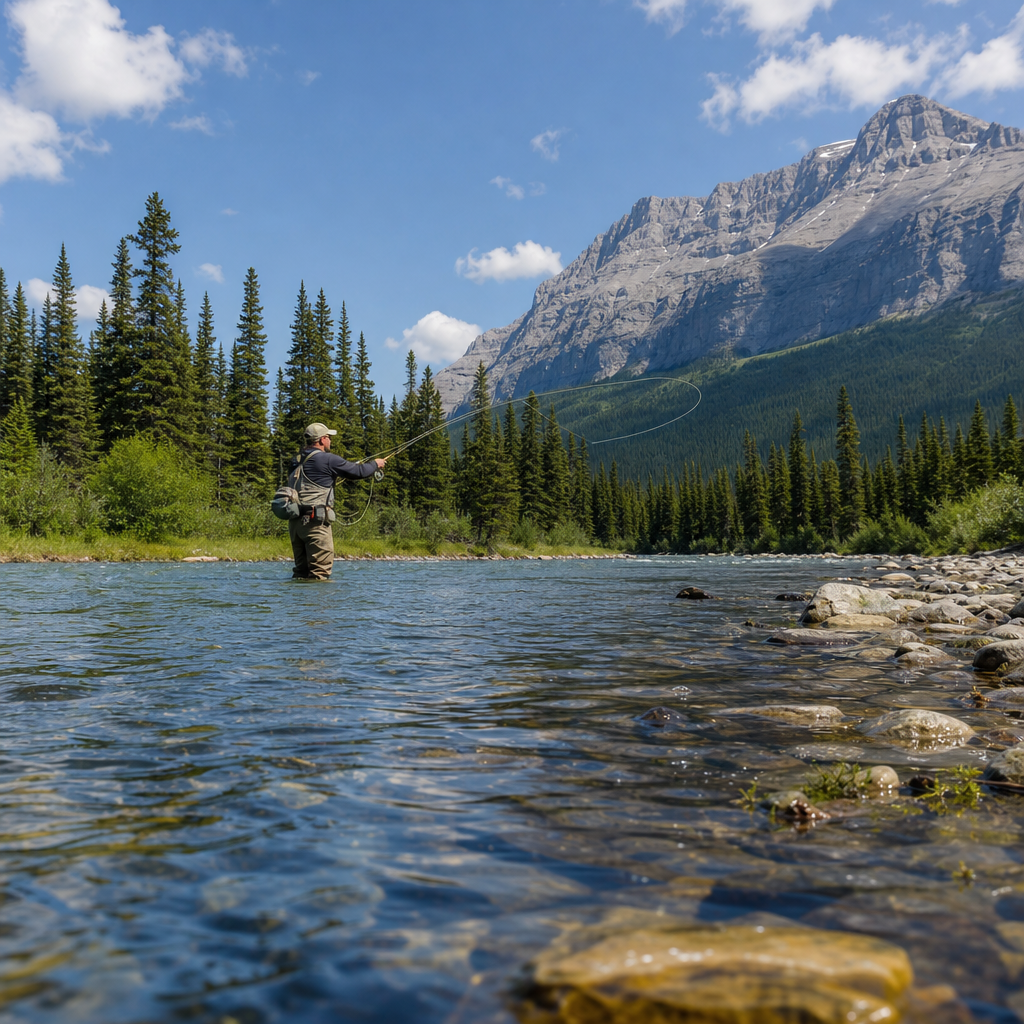
Dry-fly fishing is the most visual technique and often the reason anglers dream about Canada. Matching the hatch means identifying what insects are emerging and fishing a fly of similar size, profile, and behavior. During caddis activity on the Elk or a grayling rise in Yukon, a well-presented dry can outperform anything else. Streamer fishing becomes essential when targeting bull trout, large browns, pike, and char. Use short, deliberate strips in cold water and faster, erratic movement when fish are active. For steelhead and Atlantic salmon, swung flies remain the classic method. Spey and switch rods allow controlled broadside presentations across current seams, where the fly slows and lifts at the hang-down. That final change in angle often triggers the grab. Canada rewards anglers who can switch methods as conditions change rather than forcing one style all day.
Gear selection, wading, and planning for remote water
Canada’s scale demands practical gear choices. For trout, a 9-foot 5-weight covers most dry-fly and light nymphing situations, while a 6-weight is better on windy western rivers and for larger indicators or small streamers. A 7-weight handles big trout, light salmon work, and many pike situations. For steelhead and Atlantic salmon, single-hand 7- to 9-weights still have a place, but two-hand rods dominate because they cast heavy tips and larger flies efficiently with less fatigue. Lines matter as much as rods. A floating line with interchangeable sink tips is versatile for salmonids, while stillwater anglers should carry intermediate and type-specific sinking lines for chironomid, leech, or baitfish presentations. In many northern pike fisheries, wire or heavy fluorocarbon bite protection is non-negotiable.
Wading safety is not optional on Canadian rivers. Glacial systems run cold, push hard, and change quickly after rain or snowmelt. Felt soles are restricted in some areas because of invasive species concerns, so many anglers now rely on rubber soles with studs. A wading staff helps in boulder gardens and broad tailouts. For remote trips, logistics should be treated like part of the fishing plan. Satellite communication devices, bear spray where legal and appropriate, layered clothing, and dry-bag organization are standard. I also advise anglers to study access points before arrival, not at the riverbank with fading light. Many of the best Canadian fly fishing destinations are productive precisely because they are remote or regulated, so transport, licensing, guide requirements, and weather contingencies deserve the same attention as fly boxes.
Conservation, etiquette, and how to choose the right Canadian trip
The best Canadian fisheries stay productive because management and angler behavior matter. Wild steelhead and Atlantic salmon populations face real pressure from warming water, habitat change, interception issues, and variable ocean survival. That is why catch-and-release rules, temperature closures, hook restrictions, and beat systems are more than bureaucracy. They protect fish during vulnerable periods. Good etiquette also improves everyone’s experience. On salmon rivers, do not step into a pool above another angler or cut through a rotation. On trout water, avoid low-holing someone working downstream, keep fish wet during release, and skip hero shots when water temperatures are high. Disinfect boots and gear when moving between watersheds to reduce the spread of whirling disease, didymo, and other aquatic threats.
Choosing the right trip starts with honesty about goals, mobility, and budget. If your priority is numbers and accessibility, Alberta trout or British Columbia Interior stillwaters may be the smart first choice. If you want iconic anadromous fish and are willing to invest, Skeena steelhead or Gaspé salmon trips deliver history and challenge. Families often do well in lodge settings where boats, meals, and local knowledge reduce friction. Skilled DIY anglers can save money on roadside systems but must research regulations carefully. As you explore more fly fishing destinations across North America, use Canada as both benchmark and base camp. It offers technical trout fishing, migratory fish prestige, and northern wilderness in one map. Start with the species and season that excite you most, book early, and fish these waters with the care they require.
Frequently Asked Questions
What makes Canada such a top destination for fly fishing?
Canada stands out for fly fishing because it offers an unusual combination of scale, diversity, and habitat quality. Across the country, anglers can find everything from small trout streams and spring creeks to massive salmon rivers, glacial systems, mountain lakes, and remote northern waters. That range means one trip can focus on technical dry-fly fishing for trout, while another may target Atlantic salmon, Pacific salmon, steelhead, Arctic char, grayling, or pike on large streamers. Few places in North America offer that much variety within a single national landscape.
Another major advantage is the health and abundance of cold-water ecosystems. Canada’s long winters, protected watersheds, and vast undeveloped regions help support strong fisheries in many provinces and territories. In practical terms, that translates into cleaner water, productive insect life, and migratory fish runs that still attract serious fly anglers from around the world. Many destinations are also managed with conservation in mind, including catch-and-release rules, seasonal closures, barbless hook requirements, and limited-access beats in some high-value fisheries.
Just as important, Canada rewards different skill levels. Beginners can find accessible trout rivers, stocked lakes, and guided float trips, while experienced anglers can pursue challenging species in technically demanding water. Whether someone wants a roadside day trip in British Columbia, a lodge-based Atlantic salmon week in Newfoundland and Labrador, or a wilderness expedition in the Yukon or Nunavut, Canada has the geography and angling culture to support it.
What are some of the best fly fishing spots in Canada?
Canada has excellent fly fishing from coast to coast, but a few regions are especially well known. In British Columbia, the Dean, Skeena, Bulkley, and Elk River systems are famous for steelhead, salmon, and trout. The province is often considered one of the premier fly fishing destinations in the world because it combines strong wild fish populations with a huge range of waters, from technical dry-fly rivers to large, powerful migratory systems where Spey casting is common.
In Alberta, the Bow River near Calgary is a standout tailwater fishery known for strong trout numbers and consistent dry-fly and nymph opportunities. Nearby mountain streams and foothill rivers also offer excellent walk-and-wade fishing. In Saskatchewan and Manitoba, the focus often shifts toward northern pike, lake trout, grayling, and stillwater opportunities, especially in remote lodge settings where fly anglers can target aggressive fish in lightly pressured water.
Eastern Canada is equally important. New Brunswick, Quebec, Nova Scotia, and Newfoundland and Labrador are central to Atlantic salmon fly fishing culture. Rivers such as the Miramichi and Restigouche are iconic, while Newfoundland and Labrador also provide trout, salmon, and char opportunities in rugged settings. In the north, the Yukon and Northwest Territories offer a more expedition-style experience, with species like Arctic grayling, lake trout, northern pike, and char available in remote waters that see limited angling pressure.
The “best” spot really depends on the species, season, and style of fishing you want. If you prefer dry flies for trout, a spring or summer trip to western trout water may be ideal. If you want migratory fish and larger rivers, salmon and steelhead destinations are better choices. The smartest approach is to match the trip to your target species, timing, and comfort with remote travel.
Which fish species can you catch while fly fishing in Canada?
Canada supports an impressive list of fly rod species, which is one reason the country appeals to anglers with different interests. Trout are among the most common targets, including rainbow, brown, brook, cutthroat, and lake trout depending on the province and watershed. Brook trout are especially popular in eastern Canada and parts of central Canada, while western provinces are known for strong rainbow and cutthroat fisheries. Lake trout can also be taken on flies, especially in northern lakes and during periods when fish move into reachable depths.
Salmon and steelhead are another major draw. On the Pacific side, anglers may encounter Chinook, coho, sockeye, chum, and pink salmon, along with steelhead in select rivers. In eastern Canada, Atlantic salmon are the classic fly fishing prize, often pursued with traditional wet flies, bombers, or modern presentation methods depending on river conditions. These migratory fish often require specialized tactics, heavier tackle, and a good understanding of seasonal runs.
Beyond trout and salmon, Canada is also excellent for Arctic grayling, northern pike, Arctic char, smallmouth bass in some southern waters, and even carp in select warm-water fisheries. Grayling are well known for rising eagerly to dry flies, while pike can be explosive on large streamers and poppers. Char occupy a special place for many anglers because they combine cold-water beauty with a remote, adventure-oriented setting. This variety gives fly fishers the chance to pursue delicate surface takes one day and aggressive predator strikes the next.
What fly fishing techniques work best in Canadian rivers and lakes?
The best technique depends on the fish species, water type, season, and temperature, but a few core methods consistently produce across Canada. In trout rivers, dry-fly fishing is highly effective during insect hatches, especially when mayflies, caddis, or stoneflies are active. Matching the hatch matters, but so does presentation. A natural drift, proper leader length, and drag-free float are often more important than exact imitation. In many Canadian freestone and tailwater fisheries, nymphing is the most reliable approach when fish are feeding below the surface. Indicator rigs, tight-line methods, and weighted patterns can all be productive depending on depth and current speed.
Streamer fishing plays a major role as well, especially for larger trout, char, bull trout, pike, and salmonids feeding on baitfish. In high water, stained conditions, or colder temperatures, streamers can trigger aggressive strikes when dry flies are ignored. Lakes and stillwaters often call for different tactics, including slow retrieves with chironomid patterns, leeches, baitfish imitations, and balanced flies suspended under indicators. Boat positioning, depth control, and retrieve speed become especially important in stillwater fly fishing.
For salmon and steelhead, swinging flies is one of the classic Canadian techniques. This often involves casting across current and allowing the fly to arc through a holding lie, either with a single-hand rod or a two-handed Spey setup. Spey casting is particularly useful on larger rivers because it manages heavy sink tips and larger flies efficiently while reducing the need for a full backcast. In practical terms, anglers should expect to adapt constantly. Water levels, temperature, clarity, insect activity, and fish behavior can shift quickly, and successful fly fishers adjust fly size, depth, presentation angle, and retrieve until they find the pattern.
When is the best time to go fly fishing in Canada, and what should anglers plan for?
The best time to fly fish in Canada varies widely by region and species. In many trout areas, late spring through early fall offers the broadest window, with summer bringing major hatches and comfortable access. However, spring runoff can make western rivers high and off-color for periods, so timing is important. Early summer may be excellent on some tailwaters and lakes, while midsummer can be ideal in mountain regions once flows stabilize. Fall is often a favorite for serious anglers because temperatures cool, fish feed aggressively, and crowds may thin out.
For salmon and steelhead, timing is even more specific. Different rivers receive different runs, and success often depends on arriving during the right migration window. Atlantic salmon seasons in eastern Canada can peak at different times depending on water levels and river systems, while Pacific salmon and steelhead opportunities in the west are closely tied to run timing, rainfall, and river conditions. In the far north, the season is shorter but can be exceptional during the ice-free months, when long daylight hours and relatively light pressure create excellent fishing opportunities.
Planning should include more than just dates. Anglers need to research licensing requirements, provincial regulations, protected waters, catch-and-release rules, and any species-specific restrictions. Wading gear should match the climate, and in many regions that means quality breathable waders, layers for rapidly changing weather, and rain protection. Polarized glasses, insect repellent, and a careful approach to safety are also essential, especially in remote areas with cold water, wildlife, and limited services. Hiring a local guide can be one of the best investments, particularly on unfamiliar salmon and steelhead rivers, because local knowledge helps with access, timing, fly selection, and fish handling practices that support conservation.