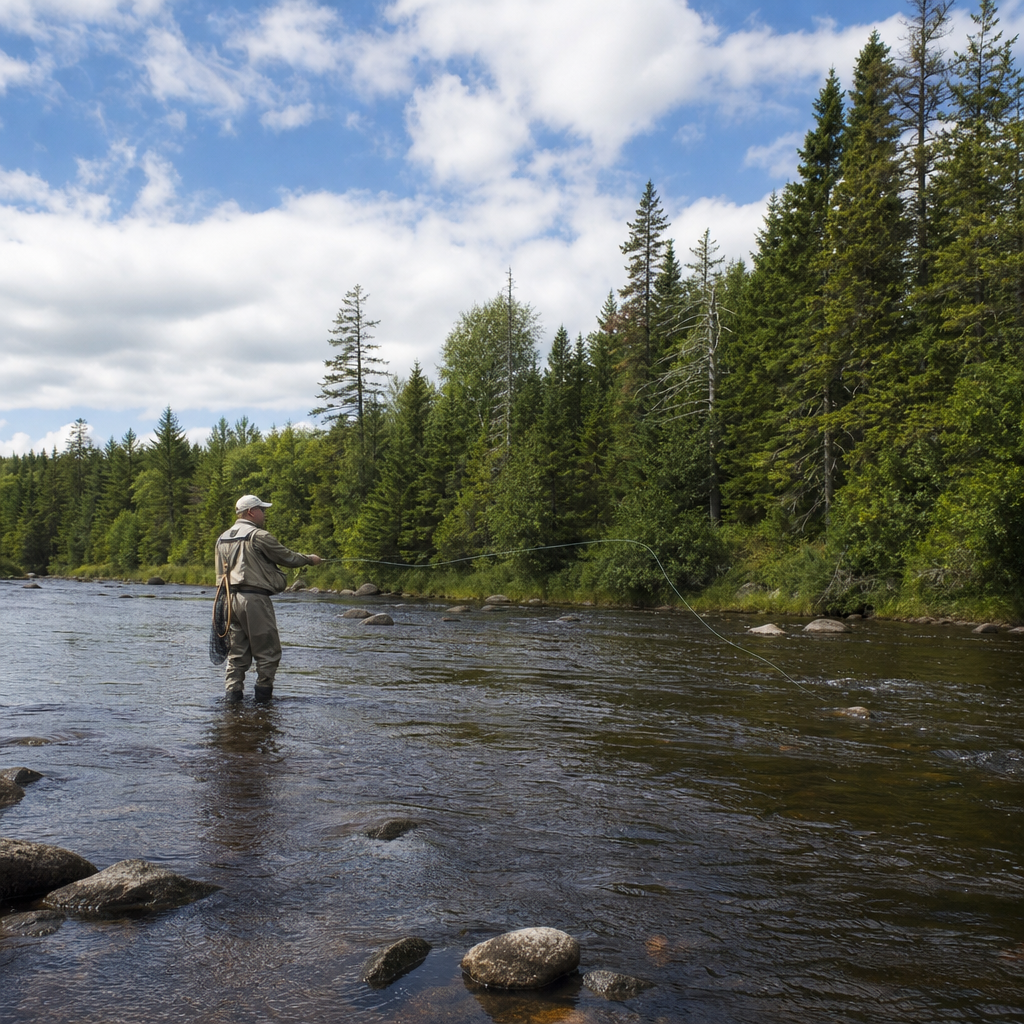
Fly fishing in Nova Scotia rewards anglers with cold, oxygen-rich rivers, long Atlantic tides, and a mix of wild brook trout, landlocked salmon, brown trout, striped bass, and the province’s iconic Atlantic salmon. As a North America fly fishing destination, Nova Scotia stands out because it compresses remarkable variety into a relatively compact map: freestone streams in the Highlands, tannin-stained lakes in the interior, tidal estuaries on both coasts, and salmon rivers that have shaped angling culture for generations. When I help anglers plan trips here, I define the province in practical terms rather than romantic ones. Nova Scotia is a place where access, timing, local regulations, and weather shifts matter as much as fly choice. Understanding those variables is the difference between a scenic drive and a productive week on the water.
Fly fishing means presenting artificial flies with a weighted line and leader system designed for delicate placement, natural drift, or controlled movement. In Nova Scotia, that broad definition covers dry-fly brook trout fishing on small streams, swinging wet flies for Atlantic salmon, stripping baitfish imitations for striped bass, and chironomid or leech patterns on lakes. The term destination matters too. A true fly fishing destination is not just a body of water with fish; it is a region where species diversity, public access, season length, local services, and repeatable success create a dependable travel experience. Nova Scotia earns that label because it offers multiple fisheries within a few hours of Halifax, plus enough regional character that Cape Breton feels meaningfully different from the South Shore or the Northumberland coast.
For anglers researching fly fishing in North America, Nova Scotia is important because it fills a specific niche between famous western trout states and the better-known Atlantic salmon waters of Newfoundland, Labrador, and New Brunswick. It delivers maritime scenery and classic salmon tradition, but it also gives traveling anglers realistic options when salmon conservation measures limit retention or specific rivers close temporarily. In practice, that means you can build a trip around several species instead of relying on one run. If river levels are too low for salmon, brook trout streams, warmwater lakes, and tidal striped bass often remain viable. That flexibility makes the province an excellent hub within the broader Fly Fishing Destinations landscape and a smart starting point for anglers comparing eastern Canadian fisheries.
Nova Scotia also matters because it forces disciplined planning. Water temperatures can rise quickly in summer. Atlantic salmon management is tightly regulated and conservation-driven. Brook trout opportunities range from tiny brushy streams to larger rivers where stealth and short casts matter more than distance. Coastal striper fishing depends on tides, bait movement, and access points that fish best during narrow feeding windows. After years of fishing and mapping itineraries here, I have found that successful visitors ask five questions first: which species is in season, what are the current regulations, how have recent rains affected flows, what part of the province minimizes driving, and what backup water is nearby if primary plans fail. Answer those clearly, and Nova Scotia becomes one of the most rewarding places in North America to fish a fly rod.
Why Nova Scotia Belongs on a North America Fly Fishing List
Nova Scotia deserves a place on any serious North America fly fishing list because it offers unusual diversity per travel mile. From Halifax, anglers can reach striped bass estuaries, stocked and wild trout rivers, and stillwater fisheries without committing to day-long transfers. Cape Breton adds a more remote feel, with the Margaree system as the headline river, while mainland waters provide a broader spread of mixed-species options. This matters for destination planning because multi-day trips improve when anglers can adapt. On the same trip, I have shifted from streamer fishing a lake for brook trout during bright midday conditions to swinging traditional salmon flies in evening light, then finished the week on a tidal striper flat. Few eastern provinces provide that range so efficiently.
The province’s seasonality also creates strategic advantages. Spring runoff energizes brook trout streams and stocked trout waters. Early summer can be excellent for trout and sea-run opportunities where available, while warmer months push many anglers toward dawn, dusk, stillwaters, or salt. Late summer and autumn bring stronger striped bass fishing in many coastal systems and renewed interest in salmon rivers when conditions improve. In plain terms, Nova Scotia rarely offers only one answer. It offers a menu. That is why this province works well as a hub page under Fly Fishing Destinations: it introduces traveling anglers to Atlantic Canada while connecting naturally to wider North America trip planning focused on species, timing, and regional style.
Best Regions and Rivers for Fly Fishing in Nova Scotia
The Margaree River in Cape Breton is the province’s most recognized fly fishing river, and that reputation is earned. It is best known for Atlantic salmon, but it also supports trout fishing in sections and seasons where regulations allow. The river’s broad gravel runs, named pools, and established local guiding culture make it approachable for visitors. On salmon water like the Margaree, success usually comes from reading current seams, covering water methodically, and matching presentation speed to temperature and flow rather than obsessing over constant fly changes. Traditional hairwing patterns, tube flies, and simple wet flies all produce when fished at the right depth and angle.
Mainland anglers should pay close attention to the LaHave, St. Mary’s, East River systems, and numerous South Shore lakes and streams. Some are best approached as mixed-opportunity fisheries rather than single-species destinations. The St. Mary’s has long salmon history, but conditions and management can change access and expectations quickly, so current notices are essential. The LaHave drainage includes trout water that rewards light tackle, careful wading, and short leaders under canopy. On the Northumberland side, estuaries and beaches can produce excellent striped bass action when sand eels, gaspereau, or other bait concentrate fish. In these waters, a six- to eight-weight rod, intermediate line, and sparse Clouser Minnows, Deceivers, or sand eel patterns cover most situations effectively.
| Region | Primary Species | Best Timing | Typical Approach |
|---|---|---|---|
| Cape Breton/Margaree | Atlantic salmon, brook trout | Late spring through fall, conditions dependent | Swing wet flies, cover pools, hire local guidance |
| South Shore | Brook trout, brown trout, salmon in select systems | Spring and early summer | Small-stream tactics, dries, nymphs, light streamers |
| Northumberland Coast | Striped bass, estuary trout in select waters | Summer through fall | Tide-based salt presentations with baitfish flies |
| Interior Lakes | Brook trout, brown trout, perch, smallmouth in some waters | Ice-out through early summer, fall | Stillwater retrieves, chironomids, leeches, damsels |
For anglers building a longer North America fly fishing trip, Cape Breton deserves special attention because it pairs fishing with travel appeal. The Cabot Trail, Highlands scenery, and lodge infrastructure make it easy to combine guided and self-directed days. That combination is valuable for visiting anglers unfamiliar with Atlantic salmon etiquette, pool rotation, or local access norms. One guided day on a major river often saves two or three days of trial and error.
Species, Seasons, and Tactics That Actually Work
Brook trout are the most reliable entry point for many visitors. Nova Scotia’s brookies range from eager stream fish in pocket water to larger lake-run or stillwater fish that demand more deliberate tactics. In smaller streams, I favor short rods in the seven- to eight-foot range, leaders of seven to nine feet, and flies such as Royal Wulffs, Elk Hair Caddis, small Woolly Buggers, and simple bead-head nymphs. The key is not technical complexity; it is approach. Stay low, fish upstream, and treat every undercut, plunge, and shaded seam as holding water. Many anglers overcast these streams. Accurate ten- to twenty-foot presentations catch more fish than heroic line speed.
Atlantic salmon require a different mindset. On Nova Scotia salmon rivers, especially when water is low and clear, the angler’s job is to present a fly that passes broadside through the fish’s window at the right speed. A dead drift is rarely the standard play. Instead, controlled swings, mends that regulate tension, and subtle fly selection matter more. Classic patterns still work because they profile well and move cleanly, not because they are nostalgic. Sizes often shrink in low water, and sink tips should be used with restraint. Many visitors fish too deep and too fast. When salmon are present but unresponsive, a lighter tip and smaller fly often outperform an aggressive setup.
Striped bass are the province’s most dynamic warm-season fly target. In tidal Nova Scotia, current is the structure. Fish stack where moving water funnels bait around bars, bridge shadows, creek mouths, and estuary ledges. A stripping basket helps from shore, especially where eelgrass or cobble grabs running line. I usually recommend a seven- to nine-weight outfit, 16- to 20-pound fluorocarbon, and flies tied sparsely enough to cast in wind. White, olive, chartreuse, and tan cover most bait profiles. The biggest mistake I see is anglers fishing slack water because it is comfortable to stand there. Productive striper sessions usually happen when current is moving and bait is compressed.
Stillwater fishing gets less attention than it should. Across mainland Nova Scotia and Cape Breton, ponds and lakes can provide excellent trout fishing, particularly in spring and fall. Chironomids under indicators, black or olive leeches on slow retrieves, and searching with intermediate lines can be highly effective. If a cold front slows river action, a sheltered lake may become the best option. That versatility is one reason experienced trip planners keep both river and stillwater gear in the vehicle.
Gear, Access, and Regulations for a Smooth Trip
If you want one practical answer to what gear to bring for fly fishing in Nova Scotia, pack by species rather than by destination name. A four- or five-weight handles most brook trout streams and smaller rivers. A six-weight is ideal for larger trout rivers and many stillwaters. For striped bass, an eight-weight is the safest all-around choice, with a spare spool carrying floating, intermediate, or sink-tip options depending on access and depth. Salmon anglers typically bring seven- to nine-weight single-hand or switch setups, matched to river size and presentation style. Breathable waders are useful most of the season, but studded boots should be checked against local rules and boat use policies.
Licensing and regulations are not a formality here; they are part of the fishing strategy. Nova Scotia’s inland fishing rules can change by management area, species, season, and river condition. Atlantic salmon regulations in particular may include retention bans, mandatory release, gear restrictions, or closures tied to conservation concerns. Review provincial notices before every trip, not just during planning. I also advise anglers to confirm whether specific waters are crown land access points, private property crossings, or guide-associated beats. Respectful access keeps fisheries open. For current information, provincial resources and local guide services are the most reliable starting points.
Travel logistics are straightforward if you build around geography. Halifax is the natural entry point, with rental cars, major accommodations, and easy access to mainland rivers and coastal striper areas. For Cape Breton-focused trips, many anglers overnight near Baddeck, Inverness, or Margaree Forks to reduce driving and improve dawn and dusk fishing windows. Distances on the map can look short, but two-lane roads, weather, and animal crossings slow travel. Plan fewer rivers per day than you think you can cover. Fishing time beats windshield time almost every trip.
How to Plan a Better Nova Scotia Fly Fishing Itinerary
The best Nova Scotia fly fishing itineraries are species-flexible, weather-aware, and regionally tight. Instead of trying to sample the entire province in one week, choose one anchor fishery and two backups within ninety minutes. For example, a Cape Breton itinerary might center on the Margaree, add a brook trout stream for low-water afternoons, and keep one stillwater option for wind-protected fishing. A mainland itinerary might combine a South Shore trout river, a nearby lake, and one evening striper session timed to an evening tide. This structure protects your trip from the province’s biggest variables: low water, high water, warm water, and wind.
As a North America hub page, this article should also help you connect Nova Scotia to broader destination research. If your priority is classic Atlantic salmon culture, compare Nova Scotia with New Brunswick’s Miramichi system and Newfoundland’s west-coast rivers. If your focus is brook trout, weigh Nova Scotia against Labrador, Maine, and Quebec, paying attention to average fish size, access style, and season. If you want mixed-species travel with trout and saltwater in one week, Nova Scotia becomes especially compelling because few destinations let you pivot so quickly between inland and coastal fly fishing. The key takeaway is simple: define the trip by desired experience first, then match the province’s regions to that goal.
Nova Scotia earns its place among the best fly fishing destinations in North America because it offers variety without sacrificing identity. You can fish salmon water with deep tradition, hunt native brook trout in intimate streams, cast to striped bass in tidewater, and still build a practical travel plan around one airport and manageable drives. That combination is rare. It makes the province ideal for anglers who want options, scenery, and authentic maritime fishing culture rather than a single famous river and little else.
The most successful trips here share the same habits: check regulations repeatedly, watch water and temperature conditions, pack for more than one species, and use local knowledge where it matters most. One guide day on a major salmon or striper system can reshape the rest of your week. One flexible backup plan can save a trip when weather shifts. Those are not minor details; they are how experienced anglers turn Nova Scotia from a hopeful destination into a dependable one.
If you are exploring fly fishing destinations across North America, put Nova Scotia near the top of your list and build your itinerary around season, species, and region. Start with the water that matches your main goal, add one backup fishery, and fish the province on its terms. Do that, and Nova Scotia will give you far more than a postcard view. It will give you a trip worth repeating year after year.
Frequently Asked Questions
What makes Nova Scotia such a unique fly fishing destination?
Nova Scotia offers an unusually wide range of fly fishing opportunities within a relatively compact province, which is a major part of its appeal. In a single trip, anglers can move from cold, boulder-strewn Highland streams to quiet inland lakes, then finish the day along a tidal estuary or coastal river. That variety supports an impressive mix of species, including wild brook trout, brown trout, landlocked salmon, striped bass, and the province’s most storied fish, Atlantic salmon. The water itself is part of the draw: many rivers are cold and oxygen-rich, lake systems can be highly productive, and long Atlantic tidal cycles create dynamic opportunities in estuaries and near river mouths.
Another reason Nova Scotia stands out is that the fishing is deeply tied to landscape and season. Freestone rivers in the Cape Breton Highlands fish very differently than tannin-stained interior waters or broad salmon rivers in other parts of the province. That means anglers can tailor trips around preferred species, techniques, and scenery without spending huge amounts of time driving. For traveling fly fishers, it is one of those rare destinations where diversity, accessibility, and authentic angling culture all overlap. Whether you enjoy technical trout fishing, tide-influenced striped bass sessions, or the tradition and challenge of Atlantic salmon water, Nova Scotia delivers a distinctly Atlantic Canadian experience.
What species can you target on the fly in Nova Scotia, and when are they most active?
Nova Scotia fly anglers can pursue several highly desirable species, and timing matters because each fishery follows its own seasonal rhythm. Brook trout are among the most widespread and popular targets, especially in smaller rivers, streams, and lakes. They are often most active in spring and early summer when water temperatures are ideal and insect activity is strong, though fall can also be excellent in many systems. Brown trout are available in select waters and can provide terrific fishing, particularly during low-light periods and in shoulder seasons when larger fish feed more confidently. Landlocked salmon add another exciting freshwater option, especially in lakes and connected rivers where smelt and baitfish are present.
Striped bass have become a major attraction in parts of Nova Scotia, particularly in estuaries, tidal rivers, and coastal zones where bait concentrates on moving water. Their activity often peaks from late spring into summer and early fall, with tide phase playing a huge role in success. Atlantic salmon are the province’s iconic species and carry both cultural significance and a strong conservation focus. Depending on the river, salmon runs and regulations vary, so anglers should always check current management rules before planning a trip. In practical terms, many visiting anglers build an itinerary around brook trout and striped bass for consistent action, then add salmon or landlocked salmon opportunities where conditions and regulations allow. The best overall approach is to match your species choice to the season, water temperature, and river flow.
What flies and tackle work best for fly fishing in Nova Scotia?
A versatile setup is usually the smartest choice because Nova Scotia waters can change quickly and the province supports such a broad mix of species. For brook trout, brown trout, and landlocked salmon in rivers and lakes, a 4- to 6-weight rod covers a lot of situations well. Floating lines handle most dry-fly and nymph fishing, while sink-tip or intermediate lines can be very useful on lakes, deeper pools, or when streamer fishing. For striped bass, many anglers prefer a 7- to 9-weight rod with an intermediate or sinking line, especially in estuaries where current, wind, and larger flies are common. Atlantic salmon tackle depends on river size and regulation, but single-hand rods and lighter double-hand setups can both be appropriate depending on the water being fished.
Fly selection should reflect both insects and forage. In trout water, proven patterns often include mayfly dries, caddis imitations, small streamers, soft hackles, and practical nymphs such as Hare’s Ears, Pheasant Tails, and attractor-style patterns. For brook trout in particular, small streamers and traditional wet flies can be surprisingly effective, especially in stained or broken water. In lakes and landlocked salmon fisheries, baitfish patterns, smelt imitations, and leech flies are important. For striped bass, Clousers, Deceivers, sand eel patterns, crab or shrimp imitations, and other baitfish flies are staples, with color choice often adjusted to water clarity and available forage. On salmon rivers, classic low-water flies, hair-wing patterns, and regionally favored traditional salmon flies all have a place. Whatever species you target, bring leaders and tippet suited to both delicate presentations and stronger fish, because conditions can shift fast with weather, rain, and tide.
Where are some of the best places to fly fish in Nova Scotia?
Some of the province’s most memorable fly fishing is found in Cape Breton, where the Highlands are home to cold, fast streams and rivers that hold wild brook trout and, in certain systems, salmon. This region appeals to anglers who like moving water, dramatic scenery, and fisheries shaped by elevation, rain, and seasonal flow changes. Interior lakes and connected waters elsewhere in Nova Scotia can also be excellent, especially for brook trout and landlocked salmon, and they often reward anglers willing to fish from canoes, small boats, or shorelines during low-light windows. These tannin-stained lakes may look challenging at first, but they can be extremely productive once you locate likely structure, inflows, or bait concentrations.
Estuaries and tidal rivers on both the Northumberland Strait side and the Bay of Fundy side offer a very different but equally compelling experience, particularly for striped bass. Here, current seams, bait movement, and tide timing matter as much as fly choice. For anglers interested in Atlantic salmon, several recognized salmon rivers across the province have long histories and distinct personalities, but access, run strength, and regulations vary significantly. Because Nova Scotia compresses so much variety into a small geographic area, the best destination really depends on your goals. If you want classic small-stream trout fishing, head toward colder upland waters. If you want powerful fish in moving salt-influenced current, focus on estuaries. If the tradition and challenge of salmon fishing are your priority, build your trip around a river with suitable conditions, legal access, and up-to-date regulations. Local fly shops, guides, and provincial resources are especially valuable when narrowing down where to fish on any given week.
What should anglers know about regulations, access, and trip planning before fly fishing in Nova Scotia?
Preparation is essential because Nova Scotia fisheries are diverse, conditions are changeable, and regulations can be species- and water-specific. The first step is to review the current provincial regulations carefully, including seasons, licensing requirements, gear restrictions, retention rules, and any special management areas. This is especially important for Atlantic salmon, where conservation measures are often strict and can change based on river conditions and stock status. Some waters may be catch-and-release only, fly-fishing only, or closed during certain times. Even for trout and striped bass, it is unwise to assume one rule applies everywhere. Checking official updates right before your trip is a smart habit.
Access planning matters just as much as legal compliance. While Nova Scotia has many fishable waters, access points can range from obvious roadside pools to less marked trails, bridge crossings, or launch sites. Respect for private property is critical, and anglers should always confirm whether a stretch is publicly accessible or crosses private land. Hiring a local guide can save substantial time, especially if you are new to the province or targeting a species with a narrow timing window. Weather also deserves close attention. Rain can raise and color rivers quickly, while warm spells can affect trout activity and responsible fish handling. On tidal water, understanding the timing and strength of the tide is often the difference between an average outing and an excellent one. Finally, pack for variable coastal and inland conditions: layered clothing, wading gear suited to cold water, insect protection, and a flexible fly selection will all help. Nova Scotia rewards anglers who arrive informed, adaptable, and respectful of both the fish and the waters they depend on.