How to educate others about sustainable fly fishing starts with understanding that sustainability is not a slogan or a single rule. It is a practical approach to protecting fish, water, habitat, and access while still enjoying the sport. In fly fishing, sustainable practices include minimizing fish stress, preventing invasive species spread, respecting seasonal closures, using appropriate gear, handling fish correctly, and supporting habitat conservation. When you teach these ideas well, you do more than improve individual behavior on one river. You help shape a fishing culture that can keep wild fisheries healthy for decades.
I have found that many anglers want to do the right thing, but they often receive fragmented advice. One person says to pinch barbs. Another focuses on catch-and-release. A guide mentions stream temperatures. A local shop talks about cleaning boots. Each point matters, yet education becomes far more effective when these actions are connected into a clear framework. Sustainable fly fishing means making decisions that reduce avoidable harm to fish populations and aquatic ecosystems while preserving fair access for future anglers. That definition gives beginners and experienced fishers a usable standard for judging their choices.
This topic matters because fly fishing depends on ecological quality more directly than many outdoor sports. Healthy trout, salmon, bass, and saltwater species require functioning habitat, adequate dissolved oxygen, clean water, intact spawning areas, and responsible harvest rules. According to agencies such as the U.S. Fish and Wildlife Service, NOAA Fisheries, and state wildlife departments, fisheries decline when habitat loss, warming water, poor handling practices, overharvest, and invasive species pressure overlap. Education is the bridge between regulation and real behavior. Laws set the floor, but informed anglers raise the standard on the water.
As a hub within conservation and ethics, this guide covers the core sustainable practices you should teach, the reasons behind them, and the most effective ways to teach them in clubs, guide trips, classes, schools, shops, and online communities. The goal is not moralizing. It is helping people understand cause and effect. When anglers see how a warm-water fight increases lactic acid buildup, or how felt soles can transport invasives, or why redds should never be stepped on, they are much more likely to change behavior and explain it accurately to others.
Define sustainable fly fishing in practical terms
If you want people to adopt sustainable fly fishing practices, begin with a definition they can use immediately: fish in ways that protect the long-term health of fish populations, aquatic habitat, and public trust resources. That means every lesson should link an action to an outcome. For example, using heavier tippet when conditions allow shortens fight time, which lowers exhaustion and post-release mortality. Keeping fish in the water protects slime coating and gill function. Respecting private property and access rules preserves relationships that keep rivers open. These are not abstract ethics. They are operational choices.
It also helps to explain that sustainability includes more than catch-and-release. Harvest can be sustainable in some fisheries when it aligns with local regulations and biological goals. In other waters, especially fragile wild trout systems, even careful release becomes questionable during high temperatures or low flows. Teach students to read management context. A put-and-take stocked fishery, a spring creek with wild browns, and a steelhead river under pressure should not be treated as identical. Good education replaces rigid slogans with informed judgment based on species, season, and place.
Teach fish handling and catch-and-release with precision
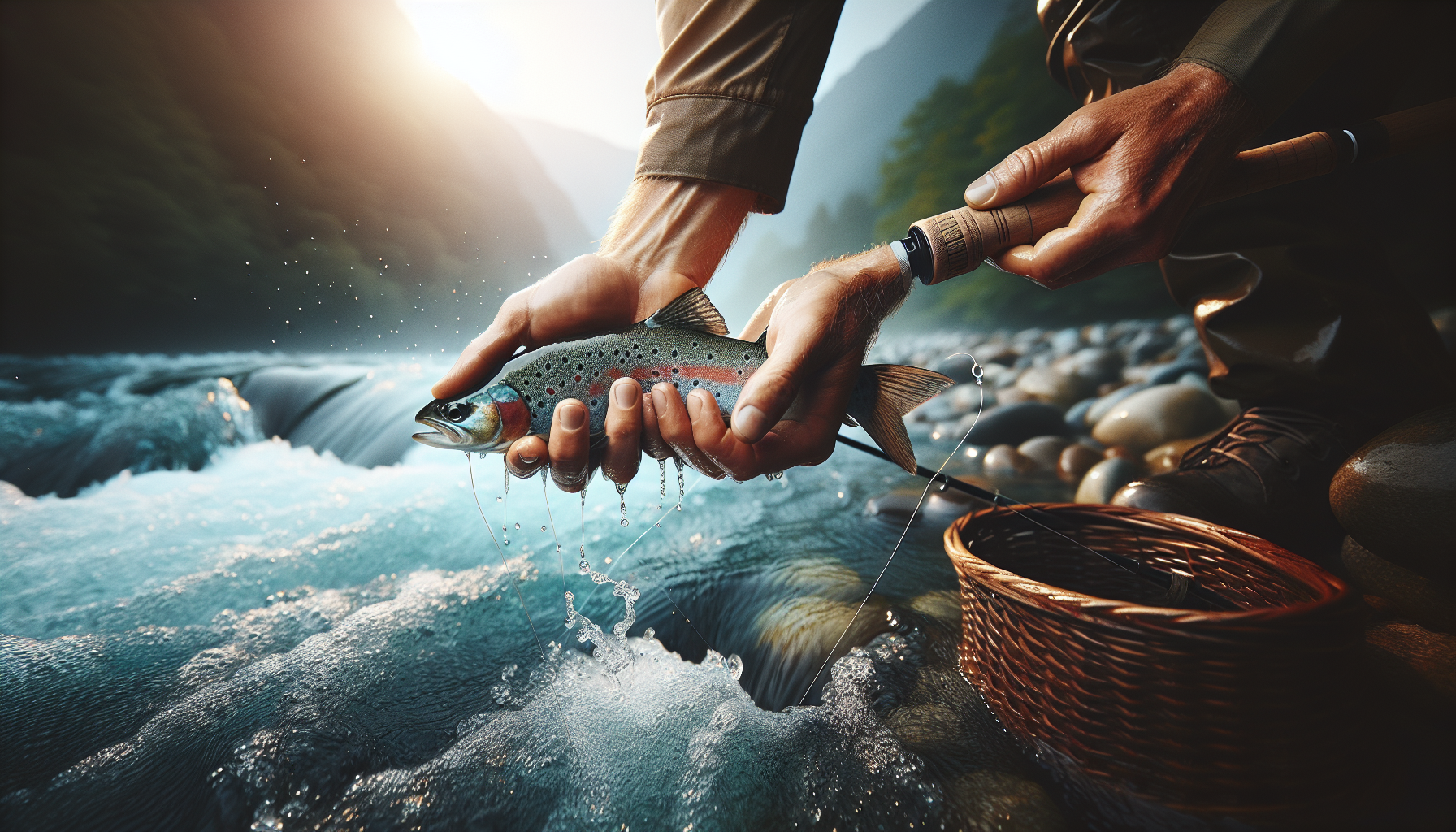
The most teachable sustainable practice is fish handling because anglers can apply it instantly. Start with the essentials. Land fish quickly with tackle matched to the species and current. Use rubber or knotless landing nets that reduce fin damage and scale loss. Wet your hands before touching a fish. Avoid squeezing the abdomen or inserting fingers into the gills. Keep the fish submerged as much as possible, and if a photo is taken, make it fast and controlled. A useful standard is “net, unhook, photo if necessary, release” in one sequence measured in seconds, not minutes.
Explain why these steps matter. Fish rely on a protective mucus layer that helps guard against infection. Air exposure disrupts recovery, especially after an intense fight. Research on salmonids has repeatedly shown higher mortality when air exposure is added to exhaustive exercise, particularly in warm conditions. I have seen anglers change their approach immediately once they understand that a dramatic hero shot may cost a fish its recovery. Showing the biology behind the practice makes the lesson stick better than simply saying, “Be gentle.”
Hook choice is another practical teaching point. Barbless hooks or pinched barbs speed release and reduce tissue damage. Circle hooks are less common in traditional fly fishing, but for some bait-fly hybrid situations or warmwater species, hook design still matters. When fish are deeply hooked, teach anglers that cutting the leader close can be better than forcing extraction. You should also address when not to target fish at all. During spawning, fish on redds are vulnerable, and repeatedly disturbing them can reduce reproductive success. Sustainable education includes restraint, not just better technique.
Use water temperature, flow, and season as teaching tools
Many anglers learn regulations but never learn environmental thresholds, and that is a major educational gap. Fish stress is not constant. It changes with water temperature, dissolved oxygen, flow, and migration or spawning timing. Trout are the clearest example. As water warms, dissolved oxygen declines and recovery from exercise becomes harder. Many guides and biologists use 68 degrees Fahrenheit as a caution point for trout, with stricter limits or complete voluntary closures above that depending on species and local conditions. Education should emphasize that these are decision triggers, not trivia.
Show people how to monitor conditions with river gauges, agency advisories, and simple stream thermometers. USGS streamflow data, state natural resource websites, and local fly shop reports all help anglers decide whether a trip is responsible. In late summer, teach the practice of fishing early, targeting cooler tributaries only where allowed and not already stressed, or switching to warmwater fisheries such as bass and carp. In spring, explain how high flows can increase handling difficulty and wading damage. In fall, discuss spawning closures and the importance of avoiding visible redds, which often appear as clean, light gravel patches.
When people understand that sustainability is dynamic, they stop treating every fishing day as equally appropriate. That mindset is critical. A river that was fine last month may be unsuitable after a heat wave. A run that produced fish last year may now contain active spawners. Teaching environmental awareness makes anglers more adaptable and usually more observant overall, which improves both conservation outcomes and fishing success.
Prevent invasive species and habitat damage
One of the most overlooked sustainable practices is biosecurity. Aquatic invasive species such as didymo, New Zealand mudsnails, zebra mussels, and whirling disease pathogens can spread on boots, nets, boats, waders, and other gear. The simple message is clean, drain, and dry, but effective education goes further by specifying how. Remove visible debris, scrub equipment, drain all water from boats and containers, and dry gear thoroughly before entering a new watershed. Where recommended by local agencies, use approved disinfection methods. Felt soles, once popular for traction, have been restricted in some places because they retain moisture and organisms more readily than many rubber alternatives.
Habitat damage deserves equal attention. New anglers often do not realize how easily stream banks, side channels, and spawning areas are disturbed. Trampling vegetation accelerates erosion. Repeatedly crossing shallow gravel can crush eggs in redds. Anchoring in sensitive seagrass beds harms nursery habitat in saltwater systems. I teach people to enter and exit at durable access points, avoid unnecessary bank scrambling, and spread out use rather than forming obvious social trails. Sustainable fly fishing includes moving through the environment lightly, not just handling fish carefully.
| Practice | Why it matters | How to teach it |
|---|---|---|
| Clean, drain, dry gear | Reduces spread of invasive species and pathogens | Demonstrate post-trip gear checks and drying routines |
| Avoid stepping on redds | Protects eggs and spawning habitat | Show photos of redds and identify them streamside |
| Use durable access points | Limits erosion and vegetation loss | Point out formal trails and explain bank stability |
| Choose rubber nets | Reduces fin abrasion and handling damage | Compare net materials during clinics or shop classes |
Explain gear choices that support sustainable practices
Gear is never neutral. The wrong setup can lengthen fights, increase break-offs, and normalize poor handling. The right setup makes sustainable behavior easier. Teach anglers to match rod weight, reel drag, leader strength, and fly size to the species and conditions. For trout in tight streams, that may mean a shorter fight and a compact rubber net. For carp or salmon, it may mean stronger tippet and disciplined side pressure to land fish efficiently. Overspecialized ultralight setups can be fun, but they are not always ethical when they turn routine catches into prolonged battles.
Talk about wading gear, too. Studded boots improve safety in some rivers but can damage drift boats and certain surfaces, so context matters. Polarized glasses are a safety tool as much as a fishing aid because they help anglers identify depth changes, weed beds, and redds. Forceps, nippers, and line management tools reduce fumbling during release. In saltwater, corrosion-resistant gear and careful drag maintenance matter because a seized reel can overextend the fight. Good sustainable education shows that conservation is often built into preparation before the first cast.
Build an effective teaching approach in clubs, shops, and guide settings
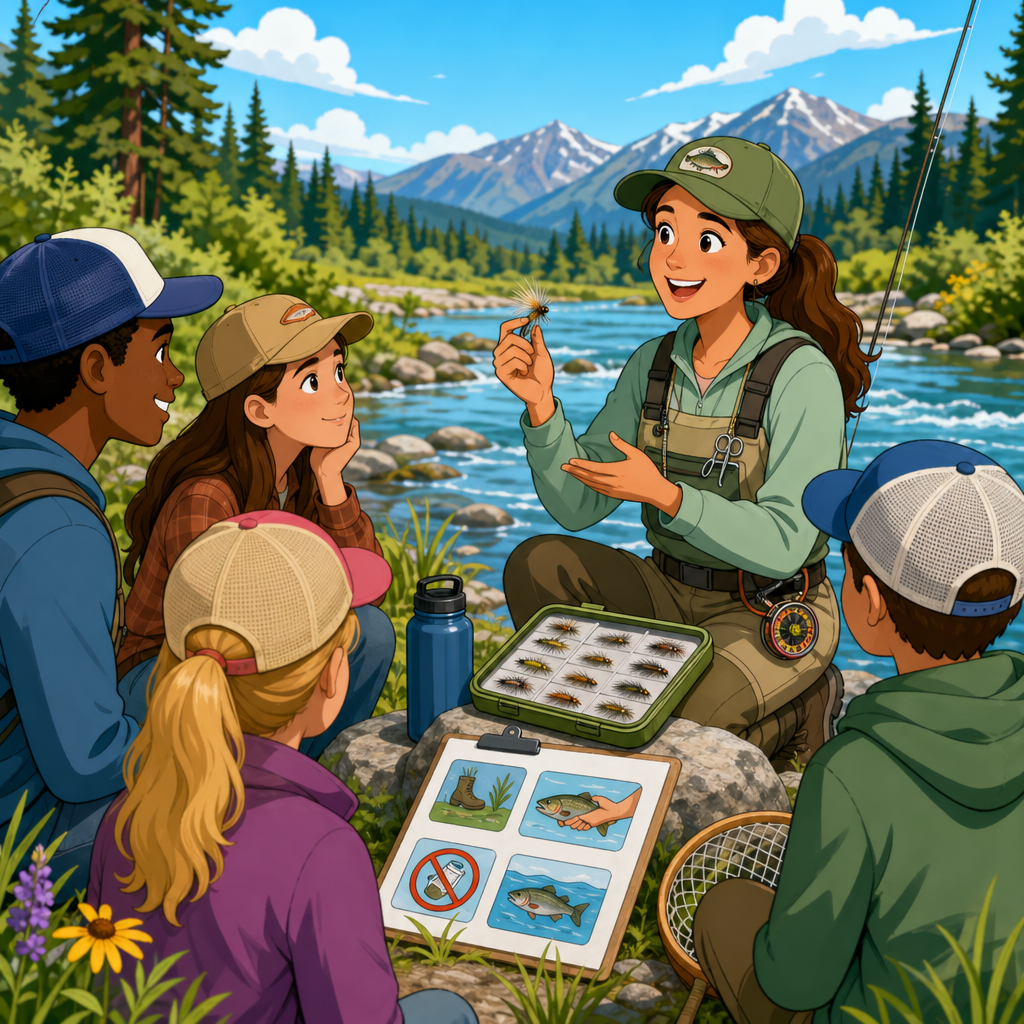
The best way to educate others about sustainable fly fishing is to teach in layers. Start with one or two high-impact practices, explain the science briefly, demonstrate the skill, and then reinforce it during the outing or lesson. In guide work, I have seen far better results from correcting fish handling in real time than from delivering a long ethics lecture at the truck. In fly shops, short signage near nets, boots, and thermometers can shape buying decisions. In clubs, a seasonal calendar that highlights heat stress, spawning windows, and invasive species alerts keeps conservation tied to current conditions.
Use positive language without becoming vague. “Here is how to release this fish safely” works better than public shaming. At the same time, avoid false softness when a practice is clearly harmful. Playing trout in 70-degree water for photos is not a harmless personal choice. It raises mortality risk. Stepping on redds is not a minor mistake. It can destroy future fish. Effective educators are calm, specific, and confident. They explain tradeoffs, answer questions directly, and model the standard themselves every time.
Digital education matters as much as streamside instruction. Articles, river reports, newsletters, and social posts should answer practical questions clearly: When is water too warm? How do you identify a redd? Why choose barbless hooks? What should you do with used tippet? This hub should connect readers to deeper resources on catch-and-release, invasive species prevention, ethical fish photography, fly fishing in low-water conditions, and conservation volunteering. When related topics are linked together, readers build a complete understanding instead of collecting isolated tips.
Create a culture of stewardship beyond the catch
Sustainable fly fishing education becomes durable when it expands beyond technique into stewardship. Encourage people to participate in stream cleanups, habitat restoration days, citizen science, and local conservation groups such as Trout Unlimited, Backcountry Hunters & Anglers, Native Fish Society, bonefish and tarpon groups, or watershed councils relevant to their region. These organizations translate concern into measurable work: barrier removal, culvert replacement, riparian planting, water policy advocacy, and population monitoring. Once anglers contribute time or money to restoration, they usually become more careful and persuasive educators themselves.
Finally, remind people that ethical angling includes humility. No one gets every decision right, and conditions change fast. The sustainable standard is to keep learning, adapt when evidence changes, and put the resource first when uncertainty is high. That is the central lesson to pass on. Teach people the biological reasons behind best practices, show them exactly how to act on the water, and connect them to broader conservation work. If you do that consistently, you will not just educate better anglers. You will help protect the fisheries and habitats that make fly fishing possible. Share these principles on your next trip, in your local club, or through your own teaching, and make sustainable practices the norm rather than the exception.
Frequently Asked Questions
What does sustainable fly fishing actually mean, and how can I explain it clearly to beginners?
Sustainable fly fishing means practicing the sport in a way that protects fish populations, water quality, habitat, and public access over the long term. When explaining it to beginners, it helps to avoid making it sound like a vague philosophy or a list of restrictions. Instead, describe it as a practical way to enjoy fishing responsibly so that rivers, lakes, and fisheries remain healthy for future seasons and future anglers. In simple terms, sustainable fly fishing is about reducing unnecessary harm, following local regulations, and making choices that support the health of the entire ecosystem.
A clear way to teach this is to break it into a few memorable principles: protect the fish, protect the water, protect the habitat, and respect the rules. Protecting the fish includes using appropriate tackle, landing fish quickly, and handling them carefully. Protecting the water means cleaning gear to prevent invasive species and avoiding pollution or bank damage. Protecting habitat includes respecting spawning areas, staying on established paths, and supporting conservation work. Respecting the rules means following closures, limits, and access guidelines that are designed to keep fisheries healthy.
It also helps to remind beginners that sustainability is not about perfection. It is about awareness and better decision-making. Many new anglers are eager to do the right thing, but they may not know why certain practices matter. If you explain the reason behind each action, such as how warmer water increases fish stress or how felt soles and wet gear can spread invasive organisms, the lessons become much easier to understand and remember. Good education around sustainable fly fishing is most effective when it connects everyday behavior on the water to real ecological outcomes.
What are the most important sustainable fly fishing practices to teach first?
The best place to start is with the practices that have the biggest immediate impact on fish survival and habitat protection. First, teach proper fish handling. This includes wetting hands before touching a fish, keeping the fish in the water as much as possible, avoiding squeezing its body, and releasing it quickly. If the fish is deeply exhausted, anglers should take extra care during revival and recognize that in some conditions, especially warm water, targeting fish at all may not be responsible. These are foundational skills because they directly affect whether released fish recover successfully.
Next, teach anglers how gear choice influences fish stress. Using tackle that is too light can prolong the fight and increase exhaustion, especially with larger fish or stronger current. Barbless hooks or pinched barbs can reduce injury and make release faster and cleaner. Rubber landing nets are another useful tool because they are gentler on slime coating and fins than abrasive net materials. These are practical points that beginners can adopt immediately, and they often make them more confident and effective anglers at the same time.
Another essential topic is preventing the spread of invasive species and fish diseases. Anglers should clean, drain, and dry boots, waders, nets, and boats when moving between waters. This is one of the most overlooked areas of sustainable fishing education, yet it has major consequences for ecosystems. Along with this, teach the importance of observing seasonal closures, respecting spawning zones, and understanding water temperature conditions. Fishing pressure during vulnerable periods can cause disproportionate damage even if all other techniques are careful. When people learn to recognize these conditions and adjust their plans, they begin to understand that sustainability is based on judgment as much as technique.
How can I teach catch-and-release in a way that is ethical, realistic, and easy for others to follow?
Teaching catch-and-release well means presenting it as a skill set rather than a slogan. Many anglers assume that simply letting a fish go is enough, but ethical catch-and-release depends on how the fish is fought, landed, handled, and released. A useful approach is to walk people through the full sequence before they ever hook a fish: use strong enough tackle for the species, keep the fight short, prepare release tools in advance, minimize air exposure, and return the fish to the water promptly. This makes the process feel structured and manageable instead of abstract.
Demonstration is especially effective. Show people how to keep a fish in the water while removing the hook, how to support it gently without clamping down, and how to position it facing into gentle current if revival is needed. Explain that a fish’s slime coating protects it from infection, which is why dry hands, rough surfaces, and excessive contact can be harmful. Also explain that photographs should be quick and never prioritized over the fish’s condition. If someone wants a picture, they should have the camera ready beforehand and lift the fish only briefly, if at all.
It is also important to teach that catch-and-release is not automatically harmless under every circumstance. In high water temperatures, during spawning periods, or after very long fights, the stress on fish can be severe. This is where realistic education matters. Responsible anglers sometimes choose not to fish, switch species, fish at cooler times of day, or avoid certain waters entirely. Teaching that kind of restraint is part of teaching true sustainability. It shows others that ethics in fly fishing are not only about what happens after the hookset, but also about deciding when conditions make catch-and-release less responsible in the first place.
How do I help others understand why regulations, closures, and local guidelines are such an important part of sustainable fly fishing?
One of the most effective ways to explain regulations is to show that they are not arbitrary barriers to enjoyment. They are management tools designed to protect fisheries during vulnerable times and under specific conditions. Seasonal closures may protect spawning fish. Gear restrictions may reduce deep hooking or improve survival rates in catch-and-release fisheries. Access rules may prevent erosion, habitat degradation, or conflicts with landowners. When people understand the biological or social reason behind a rule, they are far more likely to respect it and teach it to others.
You can also explain that local conditions vary widely, which is why anglers should never assume the same practices apply everywhere. A river with cold, stable flows may support fishing differently than a small stream under summer heat stress. Certain species are more vulnerable during migration or spawning periods. Some waters are recovering from wildfire, drought, flooding, or habitat loss. Local regulations reflect these realities. Teaching anglers to check current rules before every trip, rather than relying on memory or old advice, is one of the simplest and most important habits you can encourage.
Beyond legal compliance, respecting closures and guidelines helps protect the reputation and future of the sport. Fisheries managers, conservation groups, private landowners, and the public all notice how anglers behave. When fly fishers consistently follow rules, avoid sensitive areas, and treat access points responsibly, it strengthens trust and supports continued access. In that sense, regulations are not just about avoiding fines. They are part of a larger culture of stewardship. Helping others see that connection can turn rule-following from a reluctant obligation into an active expression of care for the resource.
What is the best way to encourage a lasting culture of conservation and stewardship in the fly fishing community?
The strongest conservation culture is built through example, conversation, and repetition. People are far more likely to adopt sustainable habits when they see experienced anglers modeling them naturally on the water. That means demonstrating good fish handling, avoiding harmful behavior without being performative, packing out trash, cleaning gear, respecting other anglers, and speaking positively about conservation as part of the fishing experience rather than as an inconvenience. Quiet consistency often teaches more effectively than lectures.
At the same time, clear and respectful conversation matters. When educating others, an authoritative tone should be paired with humility and practicality. Instead of correcting people harshly, explain the benefit of a better practice. For example, rather than simply saying, “Don’t hold fish like that,” explain how proper support reduces injury and improves survival. Rather than just warning against moving between waters with wet gear, explain how invasive species can permanently alter fisheries and habitat. People respond better when they understand both the action and the reason behind it.
Long-term stewardship also grows when anglers are connected to conservation beyond the individual fishing trip. Encourage others to support habitat restoration projects, local watershed groups, stream cleanups, advocacy organizations, and science-based fisheries management. Teach them that sustainable fly fishing is not only about what happens at the moment of release. It includes protecting riparian habitat, supporting clean water policy, maintaining ethical access, and helping communities care for fisheries over time. When people see themselves not just as recreationists but as caretakers of a shared resource, sustainable practices become part of their identity. That is how education turns into culture, and how culture helps protect the future of fly fishing.