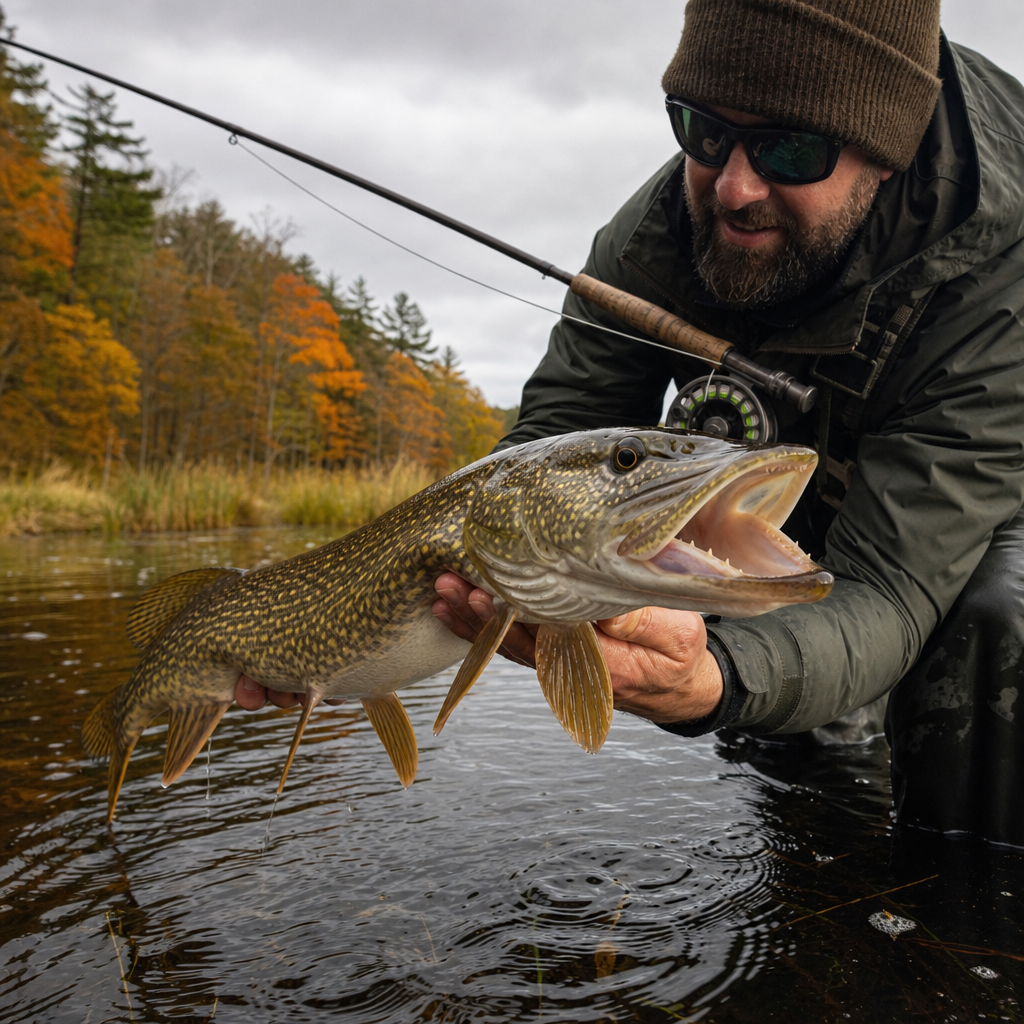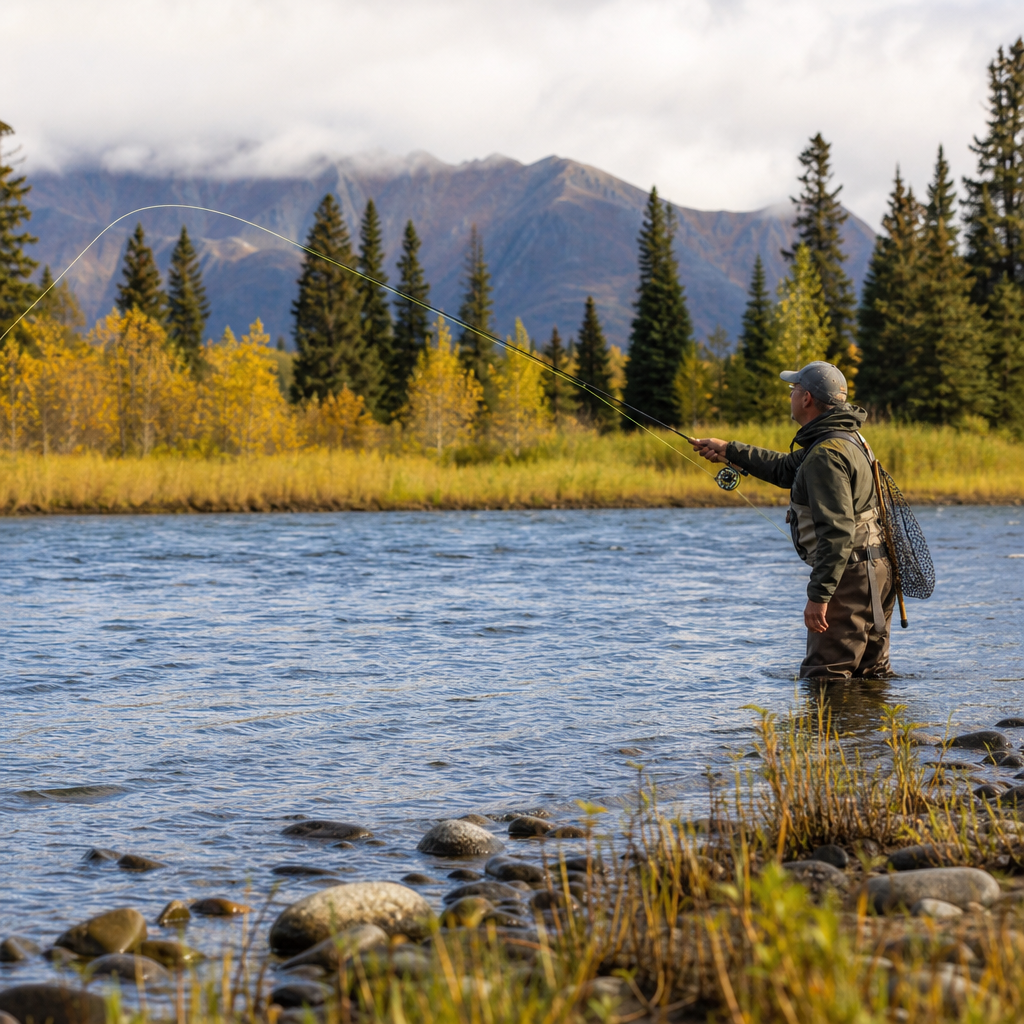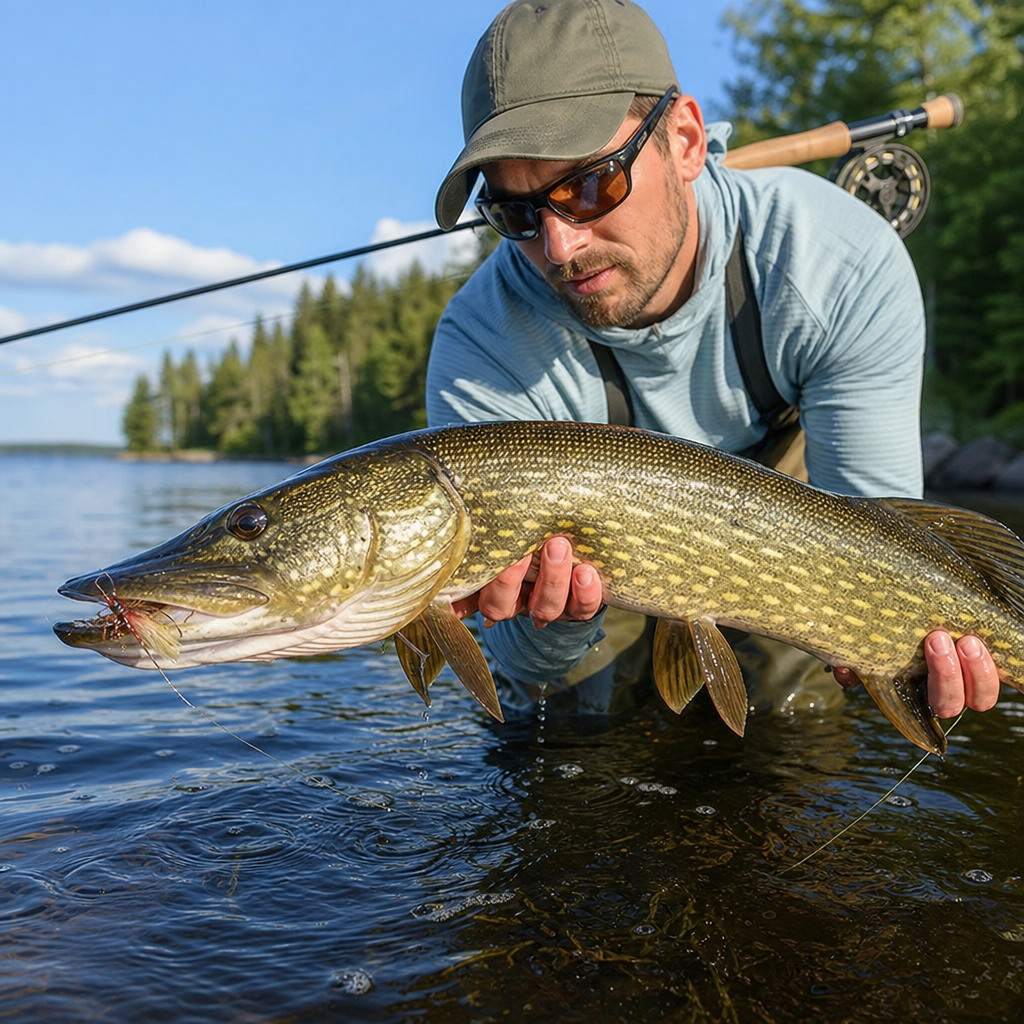
Fly fishing for pike in summer is one of the most visual, aggressive, and rewarding forms of freshwater angling, but it demands a different approach than spring or fall. Summer fly fishing for pike means targeting northern pike during warm-water periods by matching location, timing, fly design, and presentation to fish behavior shaped by rising temperatures, weed growth, forage movement, and oxygen levels. I have spent many hot months chasing pike across natural lakes, shallow bays, slow rivers, and weedy reservoirs, and the same lesson repeats everywhere: summer fish are catchable, but only when you stop fishing where they were in May and start fishing where the conditions keep them comfortable and ready to feed.
Pike are apex ambush predators built for short bursts, broad sideways attacks, and holding near cover where prey has to pass within range. In summer, that cover usually becomes more defined rather than less. Weed lines sharpen, lily pad fields expand, baitfish concentrate, and low-light feeding windows become more important. Water temperature is the key variable. Northern pike generally handle cool to moderately warm water well, but as temperatures climb into the upper range of their comfort zone, they shift toward deeper edges, current influence, shade, windblown structure, or windows of the day when heat stress is reduced. If you understand that movement, summer fly fishing becomes systematic instead of random.
This article serves as a hub for summer fly fishing within the broader seasons and conditions topic, with pike as the focus. It covers where fish set up, what tackle solves common problems, how to fish different summer structures, and how to protect pike during warm conditions. It also answers the practical questions anglers usually ask first: when are pike most active in summer, what flies work best, how do you strip them, and how should you handle them after the fight? The goal is simple: help you find fish faster, fish more efficiently, and keep a tough warm-season predator in good condition after release.
How Summer Changes Pike Behavior
The biggest mistake anglers make in summer is assuming pike are simply “in the weeds.” They are often around weeds, but the productive water is more specific: outside cabbage edges, holes inside healthy vegetation, reed transitions, current seams entering bays, and shaded drop-offs near forage. Weed health matters. Fresh green weeds produce oxygen and attract perch, bluegills, shiners, and juvenile game fish. Dying brown weeds do the opposite. On many lakes I start by eliminating stagnant mats and searching for the brightest, crispest vegetation I can find on the best available contour.
Light and temperature compress feeding windows. Early morning, the last two hours of daylight, overcast afternoons, and windy periods often outperform the flat, bright middle of the day. That does not mean midday fishing is pointless. It means your target areas should shift. During high sun, pike commonly slide to the deeper side of structure, tuck under pad edges, sit beneath overhanging brush, or suspend just off bait. In rivers, they may hold in softer water adjacent to current, where oxygen remains higher and prey gets pushed to them. In natural lakes, a subtle inside turn on a weed edge can outfish a long straight bank because it funnels forage and gives pike a compact ambush station.
Forage also changes through summer. Perch, suckers, shiners, roach, juvenile panfish, and even small bass often dominate pike diets depending on the waterbody. Matching that general profile matters more than achieving exact imitation. In clear systems, long baitfish patterns in olive, white, yellow, and natural perch tones usually produce. In stained water, black, chartreuse, orange accents, and strong silhouettes gain importance. Pike are not delicate eaters, but summer water clarity and sun angle can make contrast and visibility decisive.
Tackle That Solves Summer Problems
Summer pike fly fishing is easier when your gear is chosen for big flies, weeds, and hard-fighting fish rather than for general freshwater use. An 8-weight can work for smaller fish and moderate flies, but a 9-weight is the more versatile choice, and a 10-weight makes repeated casting of oversized deer-hair heads or water-pushing synthetics less punishing. I prefer a fast-action rod with enough backbone to turn fish quickly, especially in warm water where prolonged fights are a handling issue, not just a sporting one.
A large-arbor reel with a dependable drag matters less for long runs than for control at boatside and quick line recovery. The fly line matters more. For shallow flats and pad fields, a weight-forward floating line is standard. For weed edges in six to twelve feet, an intermediate line is often the most efficient tool because it keeps contact without plunging into vegetation. For deeper breaks or suspended fish, a short, aggressive sink-tip can be useful, but in summer I still spend most of my time with floating and intermediate setups because they cover the most consistent structure.
Leaders for pike are short and purposeful. A common setup is four to six feet of stout monofilament or fluorocarbon terminating in a bite tippet. For the bite section, knotable wire in the 20- to 40-pound class or heavy fluorocarbon around 60 to 80 pounds are common solutions. Wire is the safer default against sharp teeth, especially with flies likely to be inhaled. Heavy fluorocarbon can work and offers slightly cleaner turnover, but it should be checked constantly for abrasion. Hooks should be strong, chemically sharpened, and sized to the fly profile rather than the fly length alone, because modern synthetic materials can create large silhouettes without excessive weight.
Where to Look First on Lakes and Rivers
If I had one hour on an unfamiliar summer lake, I would begin on windblown weed edges near a flat that transitions into deeper water. Wind pushes plankton, bait, and oxygen-rich surface water, and pike routinely use that advantage. The first spots to check are outside cabbage lines in eight to twelve feet, reed points, saddle areas between bays, and pad fields with adjacent channels. In clear lakes, fish may sit slightly deeper during bright conditions, then move shallow to feed. In darker lakes, they may stay shallower longer because light penetration is lower.
River pike are more position-oriented than many anglers expect. They are commonly found in slow backwaters, eddies below weed beds, creek mouths, and side channels with a mix of cover and current access. Summer rivers can be excellent because moving water moderates temperature and boosts oxygen. Focus on places where current delivers prey but the pike can hold without expending much energy. A logjam beside a soft seam or a weed wall just off the main push can be perfect.
| Summer Situation | Best Pike Location | Why It Works |
|---|---|---|
| Bright, hot midday on a clear lake | Outside weed edge in 8 to 12 feet | Cooler water, nearby forage, reduced light stress |
| Early morning in a shallow bay | Inside weed pockets and pad lanes | Pike move shallow to ambush active baitfish |
| Windy afternoon | Windblown reed points and cabbage turns | Wind concentrates food and masks angler presence |
| Stained reservoir with sparse vegetation | Timber edges and drop-offs near bait | Hard cover replaces weeds as the ambush structure |
| Slow summer river | Backwater mouths and soft current seams | Oxygen access and easy feeding lanes combine |
Electronics help, but they do not replace observation. Watch for nervous bait, swirls under pads, perch flickering over weed tops, and isolated white patches where pike have recently blasted prey. Polarized glasses are essential. So is a willingness to leave unproductive water quickly. Summer fish often group around the best combination of cover, forage, and temperature. Once you find one quality zone, similar nearby spots usually hold more fish.
Best Summer Pike Flies and How to Present Them
The best summer pike flies do three things well: they cast without becoming unmanageable, they shed weeds reasonably cleanly, and they maintain a broad profile in the water. Large deceiver-style patterns, hollow-tied baitfish, bunny strip flies, flash-enhanced synthetics, and deer-hair divers all have a place. For searching, I rely heavily on six- to eight-inch baitfish flies in olive-white, black-orange, firetiger, and perch-inspired blends. For low light or stained water, black remains a top producer because it throws a strong silhouette. For calm clear conditions, more natural colors and less flash usually look better.
Presentation is where most summer days are won. Pike do not always want a fast burn. In fact, a medium pull-pause retrieve is often the baseline because it lets the fly surge, stall, and hang in the strike zone. Over weeds, use longer strips to keep the fly moving above the cover, then kill it beside holes or edge transitions. Along deep weed lines, cast parallel when possible and vary cadence every few casts. In pad lanes, accurate placement matters more than distance. Put the fly into the opening, strip twice, stop, and be ready.
One detail I learned the hard way is that figure-eighting at the boat matters for pike almost as much as it does for muskie. Summer fish frequently follow in clear water, especially on bright days when they inspect before striking. Speed up slightly as the fly nears the boat, keep the line tight, and move directly into broad underwater turns. Many fish eat there. If you lift early, you will miss some of the easiest opportunities of the day.
Timing, Weather, and Daily Strategy
Summer pike activity rises and falls with conditions more sharply than many anglers realize. Stable weather with moderate wind can be excellent, but sudden cloud cover before a front often produces the most aggressive feeding of the day. Light rain, chop on the surface, and a falling barometer can all improve confidence and positioning. By contrast, flat calm, intense sun, and heat can shrink the active window. That does not mean fish stop feeding entirely; it means you should narrow your focus to shade, depth changes, and the best weed edges instead of covering endless shallow water.
A practical daily plan starts shallow at dawn, transitions to edge water by midmorning, checks windblown structure through the afternoon, and returns to flats, pad fields, or backwater lanes toward evening. If water temperatures are unusually high, shorten the sessions and prioritize early and late periods. Surface temperatures in the upper 70s Fahrenheit can already change pike behavior noticeably, and once temperatures push higher, stress and recovery become real concerns. Exact tolerances vary by system, depth, and oxygen availability, but responsible anglers adjust before conditions become extreme.
Landing, Handling, and Warm-Water Fish Care
Summer fly fishing for pike is not complete without fish care. Pike are durable predators, but warm water reduces dissolved oxygen and lengthens recovery. Fight fish firmly, keep tools ready, and minimize time out of the water. A large rubber-coated net is the best control system I know. It supports the fish, reduces tangling compared with knotted mesh, and creates a calm place for hook removal. Long pliers, hook cutters, jaw spreaders used carefully, and a clear unhooking routine save both fish and angler from preventable damage.
If a fish is deeply hooked, cut the fly rather than forcing an extraction that tears tissue. Support large pike horizontally with two hands, never by the jaw alone. Photos should be quick. In hot conditions, I often keep the fish in the net in the water, remove the hook, lift for a brief shot if the fish is strong, and release immediately. If it needs recovery, hold it upright facing gentle current or move it slowly beside the boat until it kicks away. That discipline matters as much as fly choice.
Summer pike reward anglers who read conditions precisely. Find healthy weeds, follow the forage, use tackle built for big flies, and match retrieve speed to the fish’s mood rather than to habit. Start with low-light windows, then shift to edges, shade, and windblown structure as the day brightens. Keep a floating and intermediate setup ready, fish every cast with a deliberate pause, and finish with a strong boatside move because followers often commit late. Most of all, respect water temperature and handle every fish efficiently.
As a hub for summer fly fishing under seasons and conditions, this page gives you the framework for the rest of the subtopic: location, presentation, timing, and fish care. Use it to plan your next outing, then build deeper on related tactics for lakes, rivers, topwater patterns, and warm-water catch-and-release decisions. When summer pike fishing feels difficult, the answer is usually not more casting. It is better observation. Pick one promising edge, fish it thoroughly, and let the conditions tell you where the next strike will come from.
Frequently Asked Questions
What are the best places to look for pike on the fly during summer?
In summer, pike location shifts are driven by water temperature, oxygen, shade, weed development, and the movement of baitfish, so the best areas are rarely random. Early in the season and during mild mornings, pike often use shallow weedy bays, reed edges, pad fields, and dark-bottom flats where perch, bluegill, roach, and young-of-year baitfish gather. As the day warms, many fish slide to the outside weedline, deeper cabbage beds, submerged points, channel edges, current seams, and any structure that combines cover with more stable water conditions. In natural lakes, one of the most reliable patterns is fishing the transition zone where a lush weed flat drops into deeper water. In slow rivers, pike often hold near slack-water pockets, back eddies, weed mats, and cutbanks adjacent to current where food gets funneled past them without requiring much effort.
Shade and access to ambush cover matter a lot in midsummer. Overhanging trees, docks, boat lanes through weeds, inflow areas, springs, narrows, and windblown shorelines can all concentrate bait and create feeding windows. Wind is especially important because it pushes forage into specific sections of a lake and can activate fish that seem inactive elsewhere. Rather than blindly covering water, focus on spots that offer three things at once: prey, concealment, and nearby comfort water. That might be a thick cabbage edge in eight feet next to a twelve-foot basin, a bulrush line beside a channel, or a river weed bed near a deeper outside bend. Summer pike are still opportunistic and aggressive, but they are more efficient than careless, so the most productive water is usually where they can ambush prey without staying in the hottest, least oxygenated shallows all day.
What time of day is best for fly fishing for pike in hot summer weather?
The best summer windows are usually early morning, late evening, and any period when weather reduces light intensity or cools the surface layer. Pike are cold-water tolerant predators living in a warm-water seasonal environment, so prolonged midday heat often makes them less willing to chase in shallow water. Dawn is often excellent because overnight cooling can improve shallow-zone conditions and pull baitfish back onto flats and weed edges. Evening can be just as good or better, especially after the sun drops low and bait starts moving again. On overcast, windy, or rainy days, the bite may last much longer because lower light and surface disturbance make pike more confident and active.
That said, midday is not automatically a lost cause. It often becomes a matter of adjustment rather than quitting. When the sun is high, shift attention from the skinny water to deeper weedlines, shaded banks, current-influenced areas, and spots with better oxygen. Fish more methodically, make repeated casts to high-percentage ambush lanes, and slow your presentation if follows are common but eats are not. Summer pike can feed in short, distinct windows, so it pays to stay observant. A light wind picking up, cloud cover moving in, or bait suddenly flickering on a weed edge can signal an immediate change. If you want the highest odds, build your day around low-light periods, but remain flexible enough to capitalize on short daytime feeding bursts when conditions improve.
What fly patterns and sizes work best for summer pike?
Summer pike flies should match both the available forage and the way fish are willing to feed in warm conditions. In most waters, large streamers from about six to ten inches are the core producers, but size should be adjusted to the situation. Bigger flies are excellent when pike are keying on perch, juvenile panfish, suckers, or larger baitfish, especially around thick weeds or in stained water where profile matters. Medium-sized flies can be better during tough conditions, on heavily pressured fish, or when bait is smaller. Hollow-tied synthetic streamers, bucktail patterns, articulated baitfish, flash-enhanced deceivers, and broad-profile pike flies that push water all have a place. Color often depends on water clarity and forage base: white, chartreuse, yellow, black, olive, firetiger-style combinations, and perch-inspired patterns are all consistent performers.
In heavy summer weed growth, weedless or semi-weedless designs become especially valuable because they allow you to fish where pike actually live rather than around the edges of the best cover. Flies with good movement at slow speeds are often ideal in hot weather, since fish may not want to sprint long distances to eat. Materials that breathe on the pause can make a major difference. It is also smart to carry both high-visibility attractor patterns and more natural profiles. Some days pike want a loud, flashy target ripped over weed tops; on others they respond better to a slimmer baitfish pattern crawled along a drop-off. A practical summer box should cover shallow and deep applications, bright and natural colors, and both aggressive and subtle actions.
How should I present the fly to get more strikes from summer pike?
Presentation is often the difference between simply seeing follows and actually getting eats. Summer pike frequently track a fly before deciding, so your retrieve should create a believable target while also triggering a reaction. In shallow weeds, a steady strip-pause cadence works well because it lets the fly surge forward and then hover or flutter, imitating a wounded baitfish. Around thicker cover, short sharp strips can force a pike to commit before the fly exits the strike zone. On deeper edges or during high heat, a slower retrieve with longer pauses often produces better than nonstop speed, especially if your fly has enough bulk and movement to remain alive when barely moving. If a fish follows but does not eat, do not lift the fly out casually. Speed up slightly, change direction with a broad turn, or go into a boatside figure-eight or oval motion. Many pike eat right at the end.
Angle matters as much as retrieve style. Whenever possible, cast so the fly travels along the weed edge, across points, or through ambush lanes rather than straight at the fish’s suspected position. This keeps the fly in the strike zone longer. Cover water efficiently but thoroughly: one cast over the top, one along the edge, one into the pockets, and one out toward deeper water can reveal exactly where active fish are holding. In summer, pike often relate tightly to a very specific band of depth or cover, and once you identify that pattern, catch rates climb fast. If fish are following repeatedly without committing, change one variable at a time: fly size, color contrast, retrieve speed, pause length, or depth. Small adjustments often convert curious followers into committed strikers.
What tackle and leader setup is best for fly fishing for pike in summer?
A strong, practical pike setup makes summer fishing more efficient and much safer for the fish. Most anglers do best with an 8- to 10-weight rod, with a 9-weight being an especially versatile choice for throwing big wind-resistant flies, managing hard strikes, and controlling fish around weeds. A reel with a dependable drag is helpful, though pike are not usually fought like blistering saltwater species; the bigger value is durability and line control. Floating lines handle a lot of summer situations, particularly over weed flats, lily edges, reed lines, and shallow bays. An intermediate or sink-tip line becomes useful when fish shift to outer weed edges, deeper pockets, channels, or drop-offs during bright, hot conditions. Having both line types available allows you to cover the full summer range effectively.
Your leader should be short, stout, and built for turnover. Many anglers use a simple setup of heavy mono or fluorocarbon butt material attached to a bite tippet. The bite section is not optional. Pike have sharp teeth, and fishing without proper bite protection leads to bitten-off flies and lost fish. Knotable wire, coated wire, or very heavy fluorocarbon specifically chosen for pike applications are common options, though many experienced anglers prefer wire for maximum reliability. Keep tools ready as well: long pliers, jaw spreaders if you use them confidently, a quality net, and hook cutters for difficult removals. Summer water can already stress fish, so efficient landing and release matter. Balanced tackle, proper bite protection, and release tools are not just conveniences; they are part of fishing for pike responsibly and effectively in the warm months.