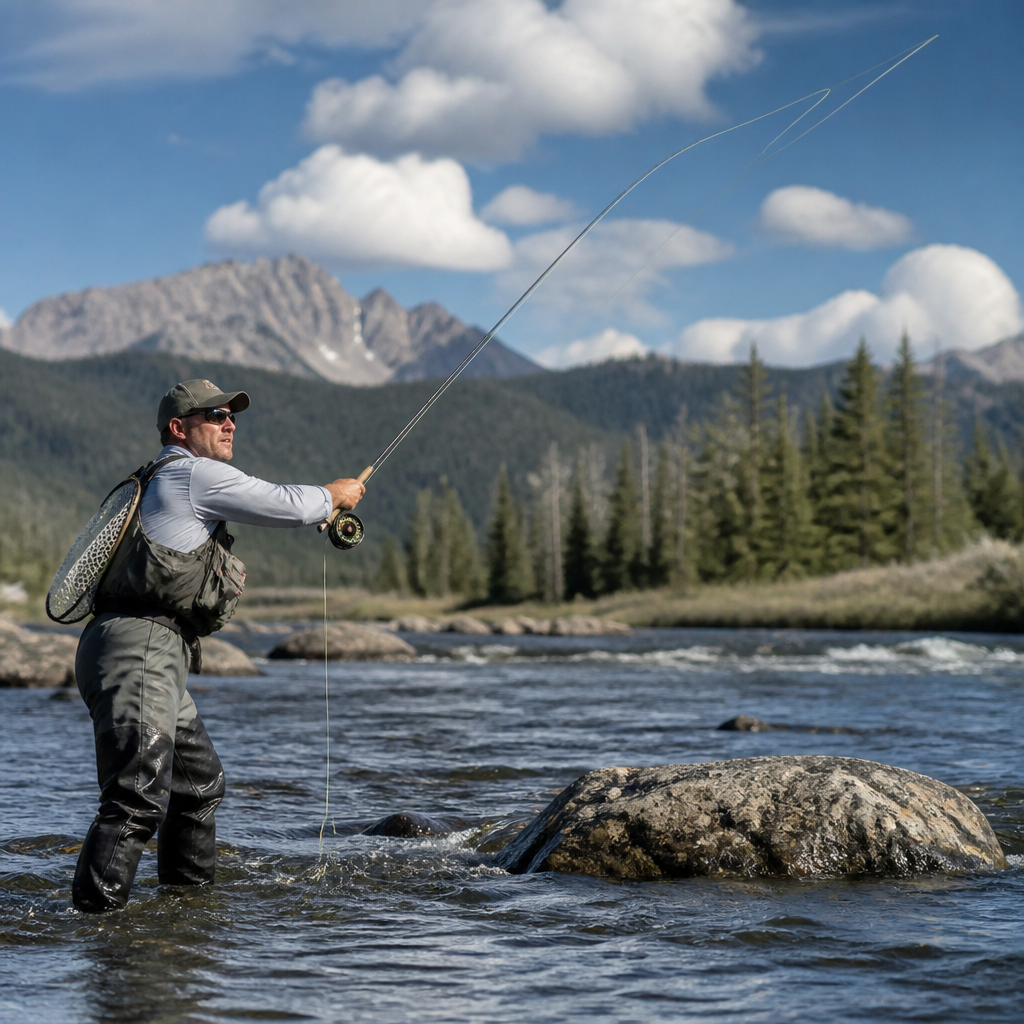
Advanced dry fly fishing techniques separate anglers who occasionally fool rising trout from those who consistently convert selective surface feeders into landed fish. Dry fly fishing means presenting a floating artificial fly that imitates an insect or terrestrial drifting on or in the surface film, while advanced technique refers to the refined control of approach, drift, timing, fly choice, and line management required when trout inspect every detail. I have spent enough dawns crouched behind streamside grass, changing tippet with numb fingers and watching fish reject nearly perfect drifts, to know that success rarely comes from luck. It comes from reading current seams, understanding insect behavior, and presenting a fly so naturally that the fish accepts it without hesitation.
This matters because dry fly fishing is the most visual form of trout angling and often the most technical. A trout rising steadily may look easy, yet that fish is usually evaluating speed, angle, profile, size, silhouette, and micro-drag within a feeding lane measured in inches. On pressured rivers, a single flash of fly line or a poor first cast can end the opportunity. On freestone streams, conflicting currents can pull a fly unnaturally in less than a second. On spring creeks and tailwaters, the hatch may be dense enough that trout ignore ninety percent of what drifts overhead. Learning advanced dry fly fishing techniques improves catch rates, but more importantly, it teaches precision, observation, and disciplined decision-making that carry into every other fly fishing method.
At hub level, dry fly fishing includes several connected skills: matching mayflies, caddis, midges, terrestrials, and stoneflies; selecting leader length and tippet diameter; choosing upstream, down-and-across, or reach-cast presentations; managing drag; recognizing feeding rhythms; and setting the hook without breaking fine tippet. The best anglers build these elements into a repeatable process. They start with stream position, identify the fish’s exact lane, note rise form, estimate insect stage, choose the simplest effective pattern, and make the first drift the best drift. If you want to improve on technical rivers, this guide covers the core methods, common mistakes, and practical adjustments that make advanced dry fly fishing work in real water.
Read the rise, the water, and the insect before you cast
The first advanced technique is restraint. Before casting, watch the fish long enough to answer three questions: where is it feeding, what is it eating, and how often is it rising? Many missed opportunities begin when anglers cast at a ring rather than the fish’s feeding lane. A rise ring often appears downstream of the trout’s actual position because the fish drops back after eating. I look for rhythm over at least three rises and use a fixed reference point such as a rock, bubble seam, or shadow edge. If the fish rises every eight seconds tight to a foam line, the fly must drift through that lane at the fish’s eye level, not merely near the last ring.
Rise forms reveal a great deal. A confident head-and-tail rise usually suggests duns, cripples, or terrestrials riding high. A subtle porpoise often points to emergers in the film. Splashy takes can indicate caddis skittering, but not always; stockers and aggressive cutthroat may slash at standard dries. Matching the rise to the food source prevents the common error of presenting a high-floating parachute when fish are actually taking trapped emergers. On technical spring creeks, I have seen trout ignore perfect dun imitations for twenty minutes, then eat a sparse CDC emerger immediately because the naturals were struggling in the surface film.
Current analysis matters just as much as entomology. Trout hold where they can conserve energy and intercept food: seam edges, inside bends, depressions behind rocks, and slick tailouts with defined conveyor belts. The challenge for dry fly presentation is that your fly, leader, and fly line may each land in different current speeds. Fast current acting on thicker fly line creates instant drag even if the fly itself appears free. That is why expert anglers mentally map not just the trout’s lane but every current band between rod tip and fly. A fish in soft water beneath a faster surface tongue often demands a reach cast, extra slack, or a different angle entirely.
Master drag-free presentation with positioning, slack, and controlled casts
Drag-free drift is the central requirement in advanced dry fly fishing. Trout accept a floating imitation because it behaves like food carried by current, not because the pattern is artistically tied. Positioning solves more drag problems than heroic mending. Whenever possible, move your feet to create a favorable angle before changing flies or casting harder. A slight step upstream can align rod, leader, and feeding lane so the fly drifts first and the line follows. Kneeling or approaching from below also reduces visual detection. On clear rivers, keeping a low profile matters as much as line control; trout often spook from body movement before the cast begins.
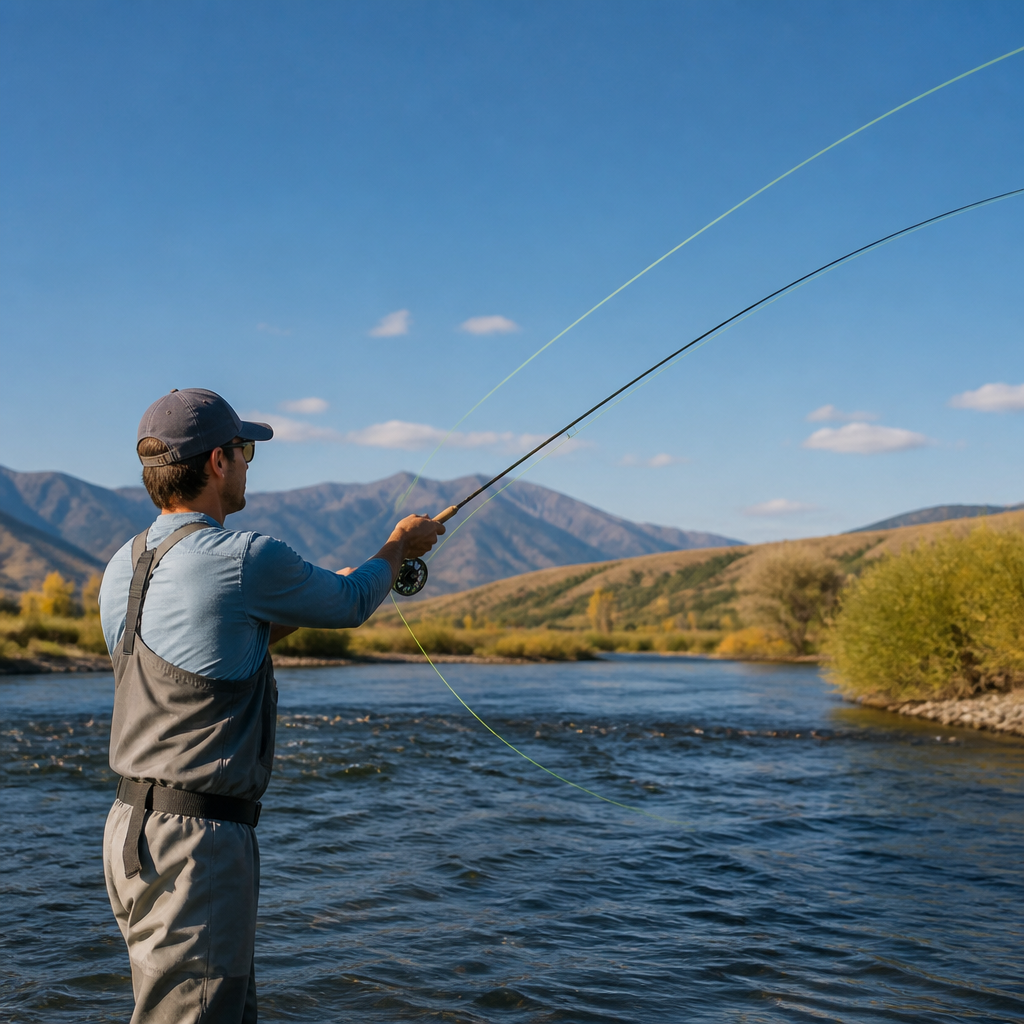
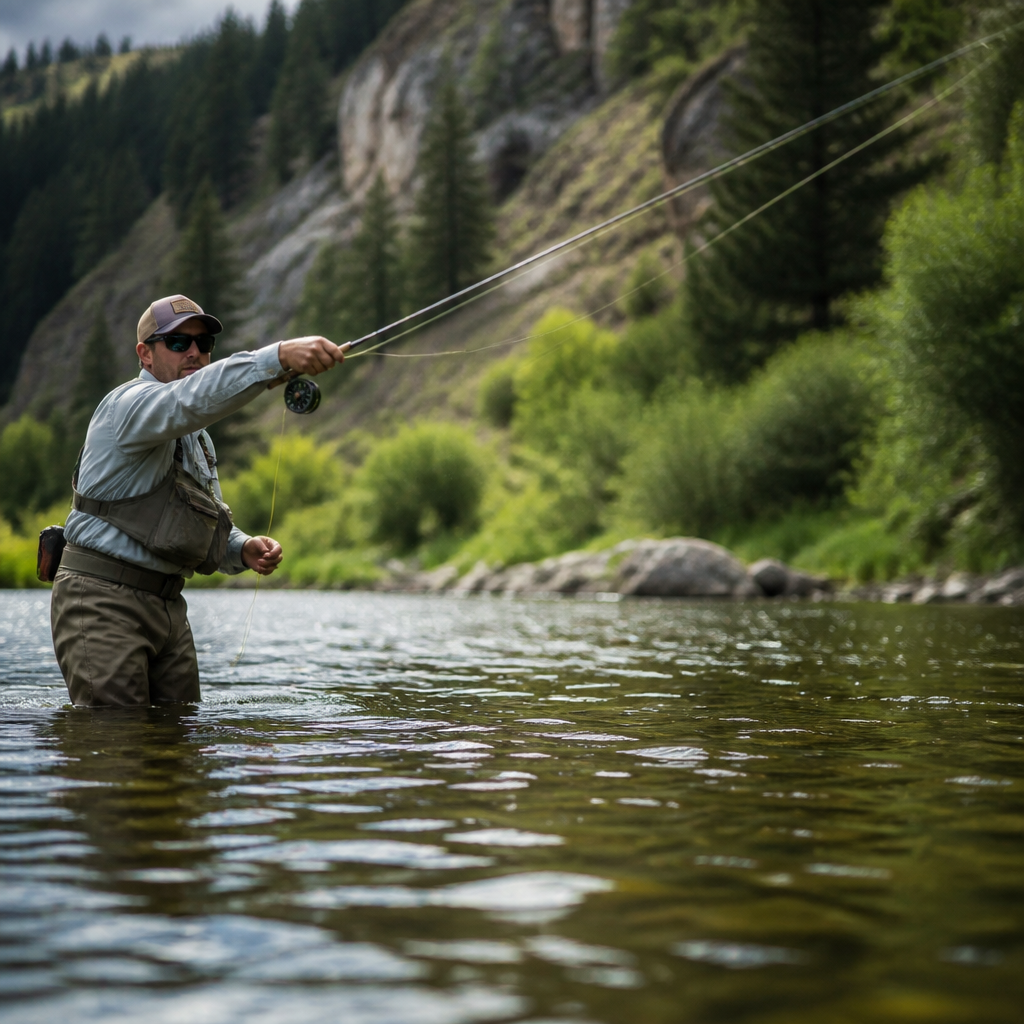
Slack management starts in the air. The reach cast remains the most useful advanced dry fly cast because it places controlled slack upstream or downstream during turnover, buying time before currents tighten the system. An upstream reach is ideal when faster current lies between you and the fish. A downstream reach helps when the fish is across-stream and the near current is slower. The parachute cast, pile cast, and wiggle cast all add slack in different ways. I use a high stop and slight underpower on short technical casts so leader and tippet fall in soft S-curves rather than straightening completely.
After the fly lands, mending must be subtle. Big aerial mends after the line is on the water can pull the fly or throw a shadow over the fish. On short drifts, a micro-mend with only the leader butt or the first few feet of fly line is often enough. Rod tip height is another overlooked control. Holding the rod high reduces line on the water and delays drag, especially in pocket water. Lowering the tip in flat water prevents leader lift and unnatural skating. Advanced anglers are constantly adjusting tip position by inches, not feet, to preserve natural drift without moving the fly.
| Problem | Likely cause | Best adjustment |
|---|---|---|
| Fly drags immediately | Fly line lands in faster current than the fly | Use an upstream reach cast and start from a better angle |
| Fly lands well but pulls at the end | Leader straightens fully and current tension builds | Add slack with a parachute or wiggle cast |
| Fish refuses at close range | Micro-drag, tippet flash, or leader over the fish | Lengthen tippet, downsize fly, and cast farther above the target |
| Trout spooks before the drift | Visible approach, false casting overhead, or line flash | Approach lower, reduce false casts, and keep line off the fish’s window |
Choose flies by stage, profile, and visibility, not by pattern name alone
Advanced fly selection begins with insect stage. Trout do not eat Latin names; they key on size, shape, color tone, and behavior. During a mayfly hatch, for example, fish may ignore fully upright duns and feed on cripples that sit low with trailing shucks. During caddis activity, dead-drifted adults can work early, but fish often respond better to slight movement late in the hatch. On midge fisheries, a size 22 or 24 dry can be correct, but an adult cluster or Griffith’s Gnat may outproduce single-adult patterns because trout see grouped insects more easily. Pattern names matter less than what the fly communicates on the water.
Profile is the first sorting mechanism. In flat light or riffled surfaces, I favor flies with visible posts or contrasting wings that I can track without applying excessive floatant to the hackle and body. In smooth spring creek water, less is usually more. Sparse CDC duns, no-hackle patterns, and comparaduns produce because they land lightly and match the low-floating posture of real insects. For terrestrials, foam is practical, but not every bank fish wants a high-riding hopper. Beetles, ants, and small cinnamon ants often outperform large attractors because they are common and easy for trout to eat without expending energy.
Hook choice and dressing density affect both hookup rate and drift quality. Fine-wire dry fly hooks preserve buoyancy and penetration on light tippet. Heavy overdressed flies can twist leaders, land hard, and sit unnaturally high. On selective fish, I often trim hackle underneath or choose patterns tied specifically for flush-floating posture. Floatant strategy also matters. Powder desiccant revives CDC and fine dubbing; gel floatant belongs on hackle and hair, not on CDC fibers that it can mat. Fishing the same fly too long is another hidden error. Once a dry accumulates fish slime or mineral sheen, it may stop floating or track unnaturally even if it still looks acceptable to the angler.
Refine leaders, tippet, and hookset timing for selective trout
Leader design is a performance tool, not an afterthought. Standard 9-foot 4X leaders catch fish, but advanced dry fly fishing often improves dramatically with longer, finer systems that separate fly from line and land with less disturbance. On smooth water, I commonly fish 12- to 15-foot leaders with extended tippet sections. The exact formula matters less than turnover balance. If the butt is too limp, turnover collapses. If the terminal section is too abrupt, presentation becomes kicky and drag appears faster. Nylon usually remains the best tippet for dries because it floats better than fluorocarbon and offers more forgiving stretch on light hooksets.
Tippet diameter should match both fly size and fish behavior. The old rule of dividing fly size by three gives a workable starting point, but current, water clarity, and rise confidence matter more. A size 18 mayfish imitation on 5X may be fine in broken water and hopeless on a spring creek where trout inspect the fly for two feet. Going from 5X to 6X often changes drift quality more than fly pattern changes because thinner tippet creates less surface disturbance. That said, ultrafine tippet adds tradeoffs: slower landing times, more wind knots, and higher break-off risk if you rush the fight or strike too hard.
Hookset timing with dry flies is frequently misunderstood. Most anglers strike too quickly at the visual splash. Trout usually turn down after eating, and setting on the rise form alone pulls the fly away. The better cue is the disappearance of the fly or the tightening of line as the fish closes its mouth and turns. I teach anglers to lift smoothly with the line hand maintaining light contact, not snap the rod tip skyward. This matters especially with downstream presentations, where the fish may hook itself if you simply come tight. A measured set protects 6X or 7X tippet and keeps tiny hooks pinned in the corner rather than tearing free.
Adapt dry fly tactics to hatches, terrestrials, and difficult conditions
Conditions dictate technique. During heavy hatches, trout can become more selective, not less, because abundance allows refusal. In blanket mayfly events, target fish feeding in defined lanes and present slightly upstream of the natural concentration rather than directly into the thickest cluster. Your fly needs separation. During sparse hatches, cover water with prospecting dries such as attractor patterns, small stimulators, or high-floating parachutes, especially in pocket water where fish have less inspection time. In evening spinner falls, switch to spent-wing patterns and lengthen leaders; drag in slick tails is brutally obvious, and fish often feed in inches of calm water at fading light.
Terrestrial season rewards bank-oriented casting and patience. Wind often delivers ants, beetles, and hoppers tight to grassy edges, undercuts, and overhanging branches. The advanced move is not simply dropping a large hopper near shore, but matching the dominant terrestrial and controlling slack so the fly drifts inches from the structure without dragging. On Western rivers in late summer, a size 16 beetle can outfish a size 8 hopper all afternoon because trout see dozens of small naturals every day. In meadow streams, ant falls after hot weather or thunderstorms can trigger intense surface feeding that continues well after obvious insects disappear.
Difficult conditions require specific responses. In wind, shorten the cast, open the loop slightly, and fish more visible, aerodynamic patterns. In bright low water, lengthen leaders, reduce false casts, and focus on the first presentation. In broken pocket water, accuracy and quick line control matter more than delicate perfection; short drifts with high rod tip and frequent repositioning catch fish efficiently. If fish refuse repeatedly, change only one variable at a time: angle, distance above the fish, fly stage, tippet diameter, then pattern. That disciplined sequence prevents random switching and helps you learn exactly what the trout rejected. Put these methods into practice on your next outing, then build from this dry fly fishing hub into your hatch, rigging, and presentation articles.
Frequently Asked Questions
What really makes dry fly fishing “advanced” compared with basic surface presentations?
Advanced dry fly fishing goes far beyond simply casting a floating fly to a rising trout. At the basic level, an angler sees a rise, delivers a fly somewhere nearby, and hopes the fish accepts it. At the advanced level, every variable is managed intentionally: approach angle, body position, leader design, cast shape, slack placement, fly silhouette, drift speed, timing, and hook-set control. The difference is not usually the fly alone. It is the ability to make the fly behave exactly like the natural food source while keeping the leader and line from warning the fish.
Selective trout, especially on clear and pressured water, inspect the surface film with surprising precision. They often reject patterns that are the right size and color if the fly rides too high, drifts too fast, lands too hard, or is preceded by leader flash. Advanced technique is about solving those problems before the cast ever happens. That means reading the feeding lane, identifying current seams between you and the fish, choosing whether to cast upstream, up-and-across, or from the side, and building in the right amount of slack so the fly drifts naturally for the few feet that matter most.
Another hallmark of advanced dry fly fishing is discipline. Skilled anglers do not rush shots. They watch rise rhythm, identify the trout’s exact window of feeding, and wait for a percentage cast rather than a hopeful one. They also understand that presentation often outweighs pattern changes. If a fish refuses repeatedly, the first questions should be about drag, angle, profile, and tippet visibility, not just “What fly should I tie on next?” In practice, advanced dry fly fishing is a game of precision, stealth, and control, where the goal is not merely to show a trout a fly, but to show it the one believable drift it cannot refuse.
How do you get a drag-free drift when fishing to selective rising trout?
A drag-free drift is the central requirement of advanced dry fly fishing because trout are extraordinarily sensitive to anything that moves unnaturally across the surface. To achieve it consistently, you must think beyond the fly and evaluate the entire system: the current under the fly, the currents under the leader and fly line, and how those currents begin influencing the drift the moment the cast lands. If the fish sits in soft water and your line lands in faster current, drag can begin instantly even though the fly looked perfect in the air.
The first step is proper positioning. Whenever possible, place yourself so the least amount of conflicting current lies between you and the trout. Often that means approaching from downstream and slightly off to the side, but not always. On complex water, a cross-current or side approach may create a better drift than a textbook downstream presentation. The key is to reduce the number of current seams pulling on your line before the fly reaches the fish.
The second step is building slack into the cast on purpose. This is where advanced anglers separate themselves. Instead of firing a tight loop directly at the fish, they use reach casts, parachute casts, pile casts, wiggle casts, or aerial mends to introduce controlled slack. That slack buys the fly time to drift naturally before tension from the line catches up. The right cast depends on water type. A reach cast is excellent when you need to reposition line upstream or downstream immediately after delivery. A parachute or pile cast helps when the fish is close and the drift lane is short. A wiggle cast can be useful on flat currents where micro-slack keeps the fly free of drag for a few critical feet.
Line management after the cast matters just as much. Advanced anglers mend early, subtly, and only as much as needed. Large, late mends often move the fly and ruin the drift. If you are fishing at medium distance, lifting small sections of line off conflicting currents can preserve the drift without disturbing the fly. Rod tip angle is also important. Holding the rod high may keep line off the water in pocket water, while lowering the tip can reduce micro-drag on smooth glides. In close-range technical fishing, even a few inches of extra fly line on the water can make the difference between an eat and a refusal.
Finally, learn to recognize hidden drag. Sometimes the fly itself looks natural, but the leader leaves a wake, the tippet straightens too quickly, or the fly twitches at the end of the drift. Trout often reject at that exact moment. Watch the fish as closely as the fly. If it rises and turns away at the last instant, suspect subtle drag before you blame the pattern. In advanced dry fly fishing, a drag-free drift is rarely an accident. It is designed, delivered, and protected from cast to finish.
How important are fly selection and leader setup when trout are feeding on the surface but refusing everything?
Fly selection and leader setup are both critical, but they matter most when they support the correct presentation. Refusing trout are telling you that something is wrong, and the mistake could be the imitation, the profile, the stage of insect you are imitating, the way the fly sits in the film, or the visibility and behavior of the leader. Advanced anglers diagnose these refusals systematically rather than changing flies at random.
Start by identifying what the trout are actually eating. Many anglers assume a hatch means fish are taking fully emerged duns, but selective trout often key on cripples, emergers, spent adults, or even terrestrials mixed into the drift. If trout are rising softly with little splash, they may be taking insects in or just under the film rather than cleanly off the top. In that situation, a high-floating dry may be less effective than a low-riding pattern with a visible post. Likewise, if fish are feeding confidently on tiny mayflies, an attractor dry that worked earlier may now look oversized and suspicious.
Size usually matters before color, and silhouette often matters before fine detail. A fly that matches the approximate length, footprint, and posture of the natural insect will outperform a beautifully tied pattern in the wrong size. On flat water, the underside view is what the trout sees most clearly, so hackle density, body slimness, wing angle, and how deeply the fly sits can all influence acceptance. This is why advanced dry fly anglers carry multiple versions of the same insect: high-riding duns, comparaduns, parachutes, cripple patterns, spent-wing patterns, and flush emergers.
Leader setup is equally important because it controls both stealth and drift quality. A leader that is too short or too stiff can slap down, straighten too violently, and transmit drag quickly. A longer, finer leader usually lands softer and allows more natural movement, particularly on slow, clear water. Tippet diameter should be fine enough to avoid disturbing the drift, but not so light that it prevents effective turnover or risks unnecessary break-offs. Many technical situations call for longer leaders and finer tippet, but the best setup is always the one that lets you present the fly accurately and naturally.
If trout are refusing despite apparently good casts, pay close attention to how the leader lands relative to the fish. Sometimes the fish is not rejecting the fly at all; it is seeing the tippet first, or it notices a hinge in the leader that causes unnatural movement. In highly technical situations, a small leader adjustment can matter as much as a fly change. The advanced approach is to match the food source, then fine-tune the leader so that the imitation arrives softly, drifts cleanly, and looks unconnected to danger.
What is the best way to approach rising trout without putting them down?
The best approach begins long before you cast. Advanced dry fly fishing rewards restraint, observation, and quiet movement more than aggressive wading. Rising trout, especially in low clear water, are often more vulnerable to being spooked by vibration, pressure waves, sudden silhouettes, or careless line flash than by the fly itself. If you move too quickly into position, you may ruin the opportunity before the first cast is made.
Start by stopping well outside the fish’s likely awareness zone and studying the rise form. Confirm the trout’s exact location, feeding lane, and rhythm. Many missed chances happen because anglers cast to the last rise ring instead of the fish’s true lie. Watch where the trout returns after feeding. Note whether it is sliding side to side, holding in one seam, or moving between current lanes. This observation tells you not only where to cast, but where you can stand without being seen.
Approach from downstream whenever practical because trout naturally face into the current. Stay low, move slowly, and use bankside cover, broken water, rocks, grass, and shadows to hide your outline. Avoid unnecessary false casting over the fish, and be mindful of sun angle. A moving shadow crossing the water can end the game instantly. In shallow margins, step carefully. Heavy footfalls transmit vibration through the streambed, and on calm days that can alert fish surprisingly far away.
Wading is often overused. One of the most advanced decisions you can make is not to wade if you do not need to. Bank presentations are frequently quieter and provide a better angle. If you must enter the water, do it downstream and out of the trout’s lane, then pause to let the disturbance settle. It is also wise to plan your casting lane before moving. Position yourself where your best