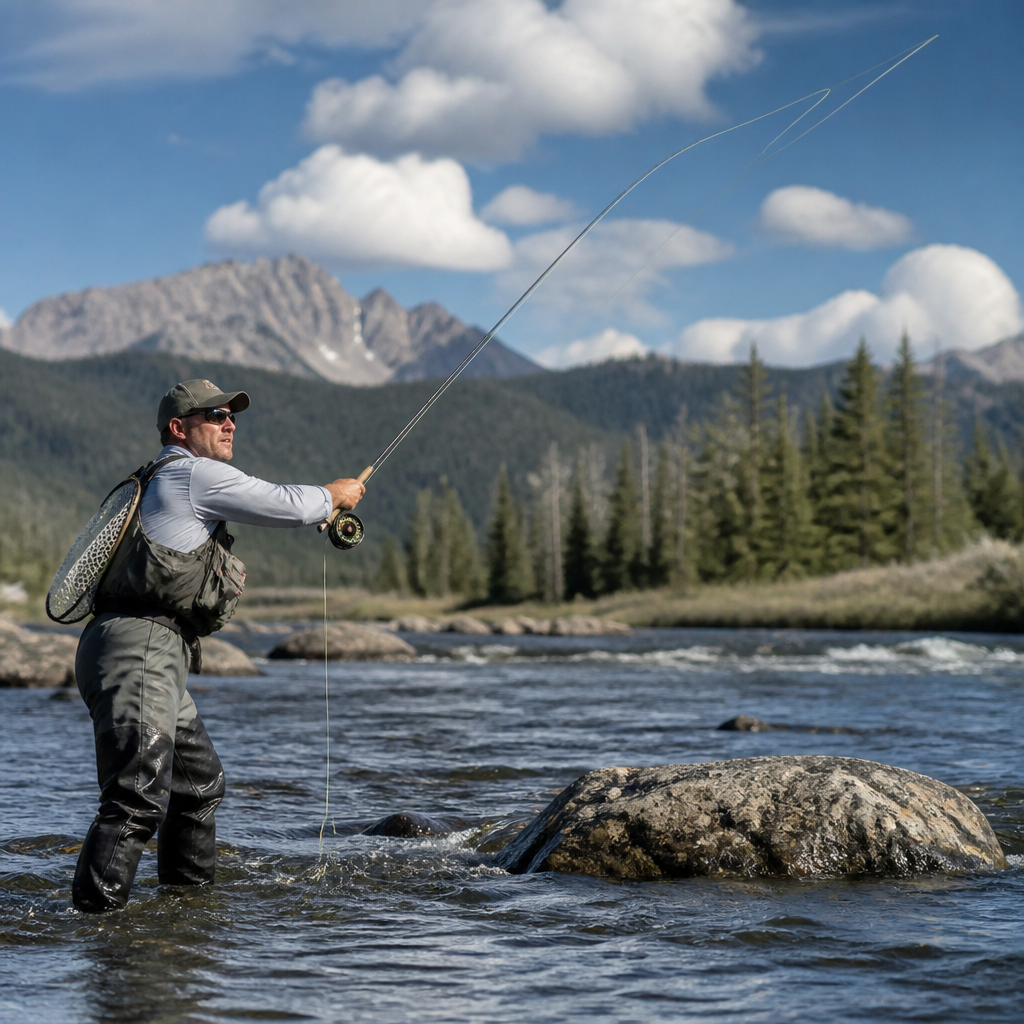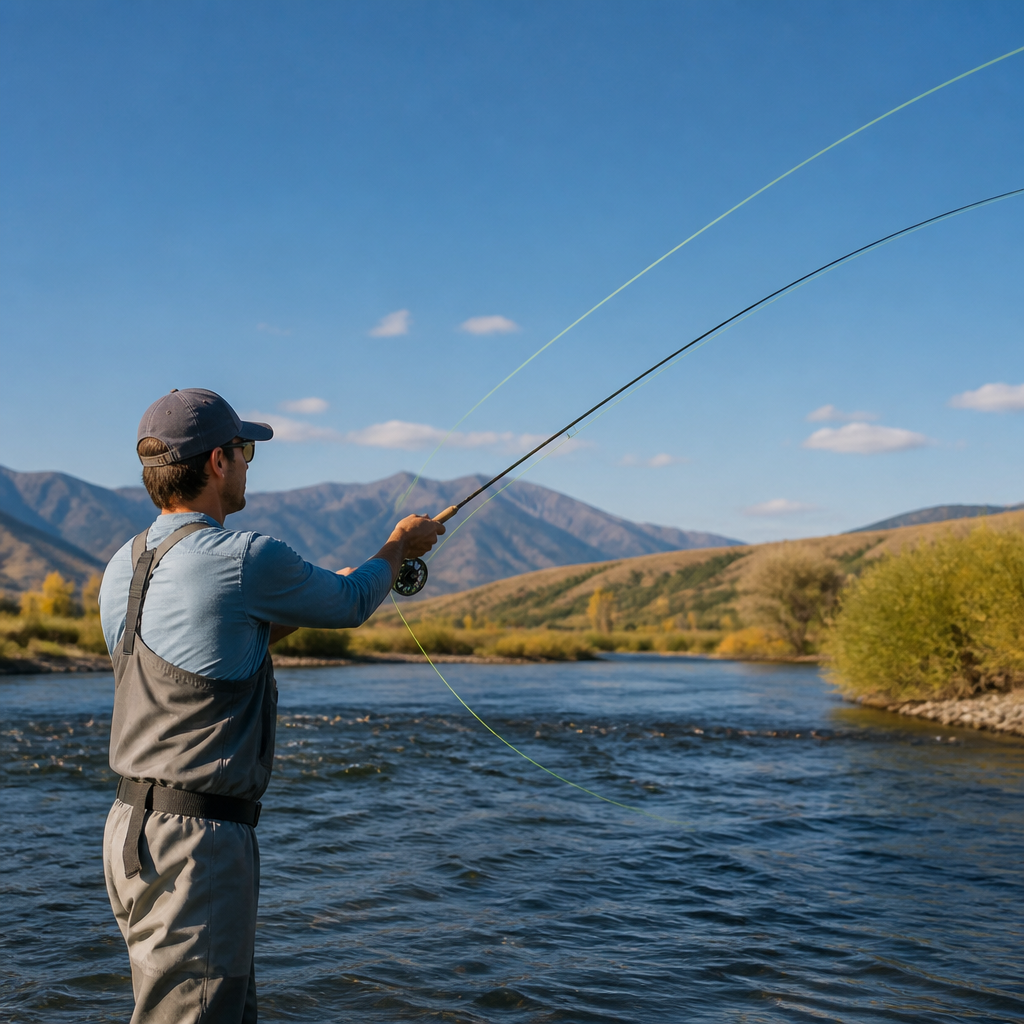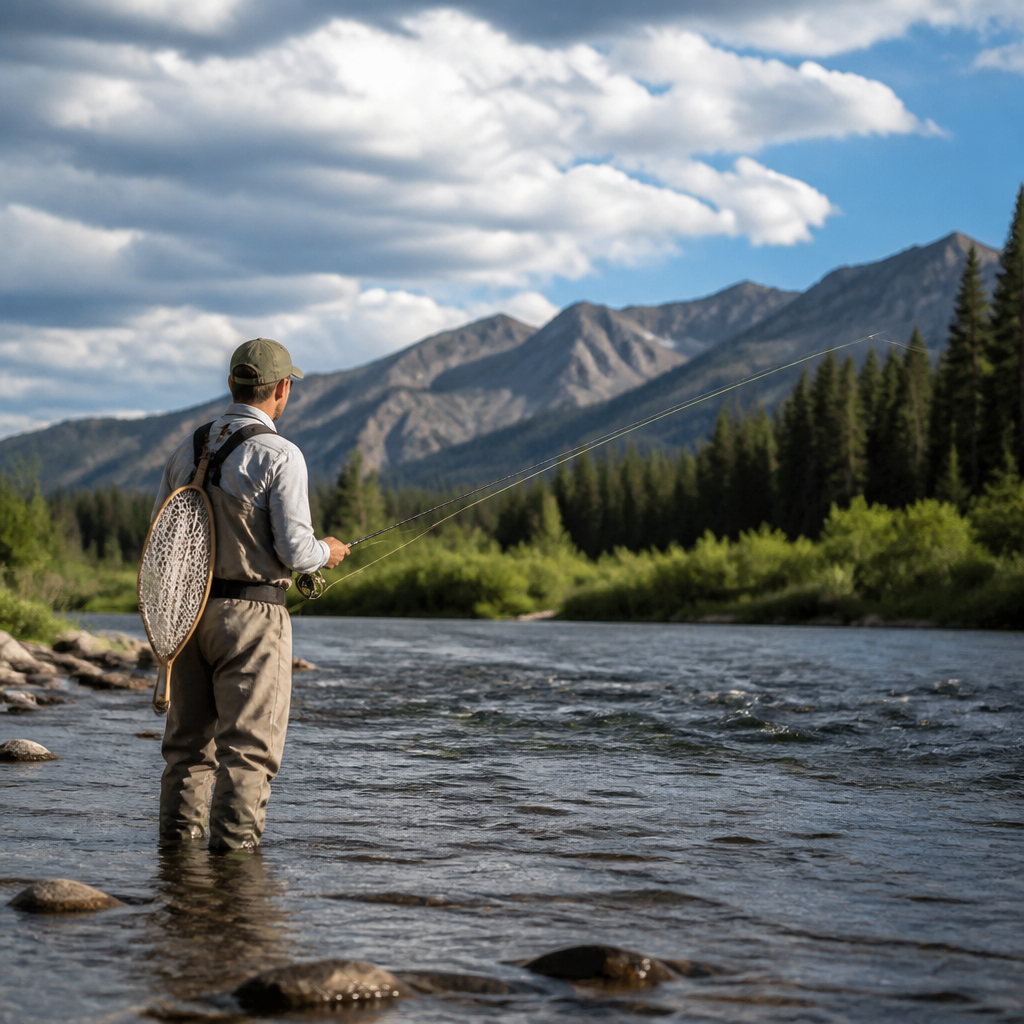
Fly fishing with tenkara strips the sport to its essential elements: a rod, a fixed line, a fly, and refined technique. Originating in Japan and now firmly established among trout anglers worldwide, tenkara is often described as minimalist fly fishing, but that phrase only captures the gear. In practice, it is a precise, highly tactical method for presenting a fly with exceptional control at short to moderate range. I have used tenkara on headwater creeks, tight rhododendron tunnels, alpine streams, and low-gradient meadow water, and its strengths become obvious whenever clean drifts and exact placement matter more than long casts.
Tenkara uses a telescopic rod, usually between 10 and 14 feet, paired with a fixed-length line attached directly to the rod tip. There is no reel, so line management, casting mechanics, and fish fighting differ from conventional western fly fishing. The basic objective remains familiar: place the fly naturally, control drag, detect takes, and land fish efficiently. What changes is how directly the angler manipulates the line and fly. Because more line can be kept off the water, tenkara excels at dead drifts, controlled pulses, and short-line presentations that reduce conflicting currents.
As a hub within specialized fly fishing techniques, this article covers the foundations every angler needs before moving deeper into individual methods. It explains core tackle choices, casting mechanics, fly presentation, stream positioning, and fish-fighting strategy, while also showing where tenkara fits among related niche approaches. If you are deciding whether tenkara is practical, the short answer is yes: it is highly effective in small to medium streams, productive on trout, char, panfish, and even small bass, and especially useful where overhanging brush limits backcasts. Its limitations are real, but understanding them is part of fishing it well.
What makes tenkara important is not novelty. It teaches line control better than many more complex systems. Anglers quickly see how current seams, rod angle, line sag, and casting tempo influence drift quality. Those lessons transfer directly to western nymphing, dry-fly work, and other specialized methods. For that reason, tenkara is both a standalone discipline and a gateway to better fly presentation across the sport.
Understanding tenkara gear and setup
The standard tenkara outfit is simple, but the details matter. Most rods are carbon fiber telescopic models that collapse to a compact length for hiking. Common lengths are 11, 12, and 13 feet, with longer rods offering better reach and line control while shorter rods handle tighter canopy and smaller streams. Action is often described using ratios such as 5:5, 6:4, or 7:3, indicating where the rod flexes. A softer 5:5 rod bends deeper and protects light tippets well; a 7:3 rod is crisper, recovers faster, and is usually easier for beginners to cast accurately in wind.
Lines fall into two main categories: level line and tapered furled line. Level fluorocarbon line is light, visible, and efficient for keeping line off the water. Many experienced anglers prefer it because it creates less sag and transmits subtle manipulations better. Furled lines turn over easily and can feel intuitive for anglers transitioning from western fly fishing, though they may create more surface contact. Typical tenkara line length is roughly the same as rod length, sometimes slightly longer. Add 3 to 5 feet of tippet, usually 4X to 6X for trout.
Accessory choices should stay disciplined. A line spool or lightweight line holder prevents tangles. Forceps, nippers, floatant if fishing dries, and a compact net are practical additions. Wading staff, sling pack, and chest pack choices depend on water type, but tenkara rewards traveling light. One reason many backcountry anglers adopt it is packability: a collapsed rod can fit inside a daypack, reducing snagging during approaches through brush or scree fields.
Fly selection is broader than many newcomers expect. Traditional Japanese kebari patterns, often reverse-hackle soft hackles, remain effective because they are intended to suggest life rather than imitate a single insect exactly. In practice, western dries, nymphs, sakasa kebari, small streamers, and terrestrial patterns all work. I routinely carry size 12 to 16 soft hackles, elk hair caddis, pheasant tail variants, killer bugs, and small woolly buggers when fishing tenkara. The method does not force one fly style; it emphasizes presentation first.
Core casting mechanics and line control
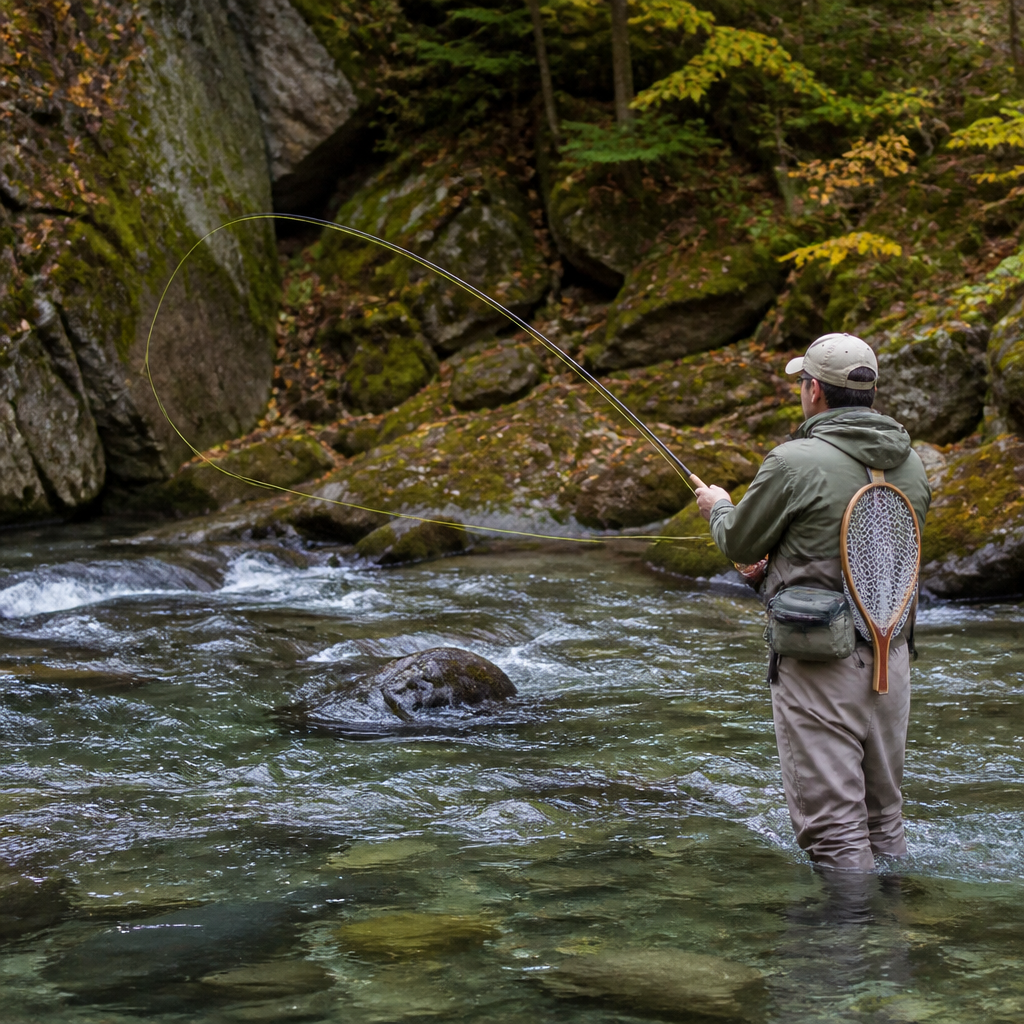
Tenkara casting is compact and efficient. The rod loads with a short, smooth stroke, usually driven more by forearm and wrist restraint than broad shoulder motion. The basic cast resembles an overhead fly cast but in abbreviated form: lift, pause, and deliver. The backcast should stop high enough to keep line from dropping behind you, and the forward cast should stop crisply around eye level or slightly above, allowing the line to unroll toward the target. Powering too hard creates tailing loops and collapsing turnover. Most beginners improve immediately when they slow down and let the rod do the work.
Line control is the defining skill. Because the rod is long relative to the amount of line on the water, anglers can hold nearly all line off conflicting currents. This is often called a tight-line or off-water presentation, though the fly should still drift naturally. The benefit is direct contact without excessive drag. In pocket water, that means dapping a fly through micro-lanes one seam at a time. In smoother currents, it means tracking the drift with the rod tip to preserve a drag-free path. Strike detection often comes through line hesitation, a visual twitch in the sighter section, or simply an unnatural stop.
Wind and casting angle deserve special attention. Tenkara is less forgiving in strong wind than reel-based systems because the line is fixed. A shorter line, a slightly heavier level line, and a sidearm presentation can help. Positioning also matters; moving one step upstream or to the side often solves what brute force cannot. On brushy streams, bow-and-arrow casts and pendulum casts become valuable specialized tools. The bow-and-arrow cast uses rod bend to sling the fly under overhangs where no backcast exists, while the pendulum cast swings the line outward and forward in tight corridors.
| Technique | Best Use | Main Advantage | Common Mistake |
|---|---|---|---|
| Standard overhead cast | Open lanes on small to medium streams | Accurate turnover with minimal effort | Using too much force |
| Bow-and-arrow cast | Heavy canopy, undercut banks, tight pockets | Reaches fishable water without backcast room | Overdrawing the rod and snapping off flies |
| Pendulum cast | Narrow corridors and side openings | Uses line momentum in confined spaces | Poor timing on the forward release |
| Pulse manipulation | Soft hackles and kebari in current seams | Adds life while maintaining control | Overworking the fly unnaturally |
Presentation techniques for different water types
The most effective tenkara presentations change with current structure. In pocket water, fish hold in short feeding lanes behind rocks, ledges, and plunge pools. Here, tenkara shines because the angler can make repeated short drifts with almost no false casting. Target each pocket individually, keep only the tippet and fly touching water, and lead the drift with a high rod tip. Takes are usually quick. If nothing happens after two or three clean passes, move to the next seam. Covering water efficiently is part of the method.
In riffles and runs, use line elevation to minimize drag and maintain contact. A sakasa kebari or soft hackle can be dead drifted, lightly pulsed, or allowed to rise at the end of the drift. That rise often triggers fish, especially in broken water where emerging insects are common. On spring creeks and meadow streams, stealth becomes more important because longer rods can silhouette the angler. Approach low, cast from farther back, and use finer tippets. In these settings, tenkara can still be excellent, but exaggerated rod movement will spook fish in glassy water.
Pools require realism and restraint. Because fixed-line range is limited, you must often fish the near and mid sections thoroughly before stepping closer. Dry flies work well when trout are feeding on top, particularly in eddies and soft shoulders where drag can be controlled. Weighted nymphs are possible, but heavily weighted rigs expose one of tenkara’s tradeoffs: deep water and fast currents can be harder to probe efficiently without split shot or longer drifts. Some anglers adapt by using lightly weighted flies and approaching from better angles rather than trying to force depth from a poor position.
Seasonal tactics matter. In early spring, slower presentations with nymphs or subdued soft hackles often outperform skittering or aggressive pulses. During summer, terrestrial flies such as ants, beetles, and small hoppers become strong options on meadow creeks. In autumn, trout may respond well to slightly larger unweighted streamers twitched across tailouts. Winter tenkara is possible, but cold fingers, ice in rod sections, and slower fish make it more technical than many anglers expect.
Hooking, fighting, and landing fish on a fixed line
Hook sets in tenkara are compact. Because there is direct connection to the fly, a short lift or firm wrist set is usually enough. Long, sweeping strikes tend to break tippet or catapult small fish. Once hooked, keep the rod high and let its full flex protect the leader. The absence of a reel means fish control comes from angle, pressure, and footwork. On modest trout streams, this is an advantage: fish can be guided quickly away from logs or boulders before they build momentum.
Problems arise when anglers underestimate leverage. A 13-foot rod applies pressure efficiently, but it should not be pointed straight up under maximum load. Side pressure is safer and more effective, especially when steering a fish out of fast current. If a stronger fish runs downstream, follow when possible rather than trying to stop it at a bad angle. I have landed fish well above the nominal comfort range of light tenkara rods by moving my feet early, keeping the fish in softer water, and netting decisively once it tires.
Landing techniques are part of responsible fish handling. Use a rubber-mesh net when possible, wet your hands, and keep the fish in the water during release. Barbless hooks simplify unhooking and reduce handling time. Tippet choice should match expected fish size and fly style; going too light creates unnecessary break-offs and prolongs fights. In small-stream trout fishing, 5X is a useful default, while 6X may be warranted for selective fish in clear water and 4X for larger flies, heavier current, or mixed species water with bass and panfish.
Where tenkara fits within specialized fly fishing strategies
Tenkara is best understood as one specialized technique within a broader system of fly fishing strategies. It overlaps with dry-dropper tactics, upstream nymphing, tight-line contact methods, and soft-hackle swinging, yet it remains distinct because the fixed line changes both strengths and constraints. Compared with western fly fishing, tenkara generally offers superior short-range line control, faster setup, and fewer variables to manage. In exchange, it gives up long-distance reach, rapid depth adjustment, and the fish-fighting cushion a reel provides on larger water.
That tradeoff makes tenkara an outstanding choice for blue-line streams, mountain tributaries, brook trout creeks, and any water where casting lanes are small and fishable drifts are short. It is less ideal on broad rivers that demand mending at distance, stillwaters where fish cruise beyond fixed-line range, or big tailwaters where heavier flies and long drifts dominate. Some modern rods blur the categories by handling keiryu tactics or weighted flies better, but the core principle remains: fish tenkara where precision matters more than reach.
As a sub-pillar hub for specialized techniques, this topic naturally connects to focused articles on kebari patterns, bow-and-arrow casting, tenkara for small streams, tenkara versus western nymphing, seasonal tenkara strategies, and fixed-line fish fighting. Those deeper subjects build on the fundamentals covered here. Start with clean casting, controlled drifts, and accurate water reading; then expand into more technical presentations and species-specific adaptations.
Fly fishing with tenkara rewards anglers who value control, mobility, and deliberate presentation. Its basic system is easy to learn, but fishing it well requires attention to line sag, current speed, casting tempo, and approach angle. That is precisely why it improves overall fly fishing skill. By removing the reel and excess line, tenkara exposes the mechanics of a good drift more clearly than almost any other method.
The key takeaways are straightforward. Choose a rod length that matches stream size, pair it with an appropriate level or furled line, and keep your setup simple. Learn a smooth overhead cast, then add bow-and-arrow and pendulum casts for confined water. Present the fly differently in pockets, riffles, runs, and pools rather than using one drift everywhere. Fight fish with side pressure and footwork, not brute force. Most importantly, fish tenkara where it was built to excel: close, complex moving water that rewards precision.
For anglers exploring specialized techniques and strategies, tenkara is more than a minimalist curiosity. It is a practical, highly effective method with clear applications and transferable lessons. Put together a simple outfit, pick a small stream, and spend a day focusing on placement and drift quality. The results will sharpen your tenkara skills and improve every other form of fly fishing you practice.
Frequently Asked Questions
What is tenkara fly fishing, and how is it different from Western fly fishing?
Tenkara is a traditional Japanese style of fly fishing built around simplicity and precision. Instead of using a reel, weighted fly line, and a broad assortment of tackle, tenkara relies on a long, telescoping rod, a fixed line attached directly to the rod tip, a tippet section, and a fly. That stripped-down system removes many variables and puts the focus squarely on presentation, line control, and reading the water. For many anglers, that is the real appeal: tenkara reduces gear complexity while sharpening technique.
The biggest practical difference between tenkara and Western fly fishing is the fixed-line setup. In Western systems, the reel stores line and allows long casts, mending at distance, and fish-fighting off the reel. In tenkara, your reach is defined by the combined length of the rod and line. That makes it especially effective at short to moderate range, where controlled drifts and subtle manipulations matter most. Because much of the line can be held off the water, anglers gain excellent drag control and can keep a fly in a precise seam longer than many newcomers expect.
Tenkara also tends to encourage a more tactical, intimate style of fishing. It excels on small streams, mountain creeks, pocket water, and brushy corridors where accurate casts and efficient movement are more important than long-distance line management. That said, it is not limited to tiny water. With the right rod, line, and fish-fighting discipline, tenkara works very well on medium rivers and alpine streams too. The method is minimalist in gear, but highly nuanced in practice.
What gear do I need to get started with tenkara?
One of the best things about tenkara is that the starter kit is refreshingly straightforward. At minimum, you need a tenkara rod, a fixed line, tippet, and flies. Most beginner rods fall in the 11- to 13-foot range and are designed to cover a wide variety of trout water. A rod around 12 feet is often the most versatile choice because it offers enough reach for line control without feeling unwieldy on tighter streams. Rod action matters as well, but beginners generally do well with an all-around rod that balances casting ease and fish-handling ability.
For line, most anglers start with either a level fluorocarbon line or a furled line. Level lines are popular because they are light, sensitive, and especially good for keeping line off the water. Furled lines are often easier for beginners to cast because they turn over more smoothly and feel a bit more intuitive at first. To that line, you add a section of tippet, usually in the 4X to 6X range depending on fly size, water clarity, and expected fish size. Simplicity is the point, so there is no need to carry an overwhelming amount of terminal tackle.
As for flies, tenkara is less about carrying hundreds of exact imitations and more about fishing a small number of proven patterns well. Traditional kebari patterns are common, but standard soft hackles, sakasa kebari, and simple nymphs or dry flies can all be effective. Beyond the rod-and-line system, you will still want basic stream essentials such as nippers, forceps, floatant if you are fishing dries, and a landing net. If you are wading, safe footwear and careful stream movement matter just as much as your tackle. The beauty of tenkara is that you can carry everything you need in a very small kit and spend more time concentrating on fish and water.
How do you cast a tenkara rod effectively?
A good tenkara cast is compact, efficient, and driven more by timing than by force. The rod does much of the work. Rather than making wide, powerful fly-casting motions, tenkara anglers use a controlled overhead casting stroke that is crisp and relatively short. The goal is to load the rod smoothly on the back cast and then stop it cleanly on the forward cast so the line unrolls and the fly lands with purpose. If you try to overpower the cast, the line often collapses or kicks unpredictably.
Beginners usually do best by focusing on a narrow casting arc and a firm stop at about the one o’clock position on the forward cast. A slight pause on the back cast gives the line time to straighten before moving forward again. Because the rod is long and the line is light, subtle movements are amplified. That means small corrections in tempo and tracking can make a big difference. In tight mountain streams or under overhanging brush, anglers often rely on abbreviated casts, bow-and-arrow casts, or simple dapping presentations to place the fly accurately without snagging vegetation.
Perhaps the most important casting concept in tenkara is not distance but line management. An effective cast should position the fly in a way that allows you to keep as much line off the water as possible. That elevated line reduces drag and helps maintain a natural drift. Over time, experienced anglers learn to cast not just to a spot, but to a current seam, pocket, foam line, or feeding lane. In that sense, casting and presentation are inseparable in tenkara. Accuracy, line angle, and drift quality matter far more than heroic length.
What are the most important tenkara techniques for catching trout?
The foundation of successful tenkara fishing is controlled presentation. The long rod allows you to hold line off the water and guide the fly through likely trout lies with minimal drag, which is a major advantage in pocket water, plunge pools, seams, and small current tongues. A dead drift is often the starting point: cast slightly upstream or up-and-across, keep a tight but not unnatural connection, and let the fly move naturally with the current. Because the line is fixed and direct, subtle takes can register quickly, but it is important to stay relaxed and avoid pulling the fly unnaturally.
Another highly effective approach is the slightly animated drift. Tenkara flies, especially soft-hackled and reverse-hackle patterns, can come alive with small pulses, lifts, or pauses. These movements imitate emerging insects, struggling aquatic life, or simply trigger a fish’s reflex. In many streams, trout respond extremely well to a fly that drifts naturally for part of the presentation and then suddenly rises or twitches at the end. That is one reason tenkara is often described as a method of manipulation as much as imitation. The angler has close control over the fly and can make it behave with intention.
Targeting structure efficiently is also a core tenkara skill. Rather than blindly covering water, skilled anglers break a stream into individual high-probability lies: the soft cushion behind a boulder, the slot beside a log, the head of a pool, the seam where fast and slow water meet. They make a few precise drifts, then move on. This disciplined, high-percentage style suits tenkara perfectly. On small and medium trout streams, that combination of reach, stealth, and controlled drift can be remarkably effective. The method rewards anglers who fish thoughtfully, stay mobile, and pay close attention to current speed, depth, and fish holding positions.
Is tenkara only useful on small streams, or can it be used in bigger water too?
Tenkara is famous for its effectiveness on headwater creeks and tight, overgrown trout streams, and that reputation is well earned. The long rod and fixed line make it ideal for high sticking pockets, dropping flies into tiny lanes, and reaching across currents without laying much line on the water. In confined environments such as rhododendron tunnels, brush-lined brook trout streams, and steep mountain tributaries, tenkara often feels purpose-built. It turns difficult little pieces of water into highly manageable and very fishable terrain.
But tenkara is not limited to tiny streams. It can be excellent on larger rivers, meadow creeks, and alpine waters as long as the angler understands its range and tactical strengths. On broader water, tenkara works best where fish are within controlled casting distance and where line elevation still provides an advantage. Edges, riffles, side channels, pocket water, and near-bank seams are especially well suited to the method. Many anglers also use tenkara very effectively in lakes and ponds for cruising fish in close or around structure, though that requires adjusting expectations about distance and presentation.
The key is matching the tool to the water. Tenkara is not designed to replace every Western fly-fishing situation, especially those that require repeated long casts, deep nymphing with heavy rigs, or playing large fish on a reel in broad current. However, within its intended range, it is exceptionally capable. In fact, many anglers discover that streams they once considered too awkward, too brushy, or too technical become much easier to fish with a tenkara rod. Used intelligently, tenkara is far more versatile than the minimalist label suggests.