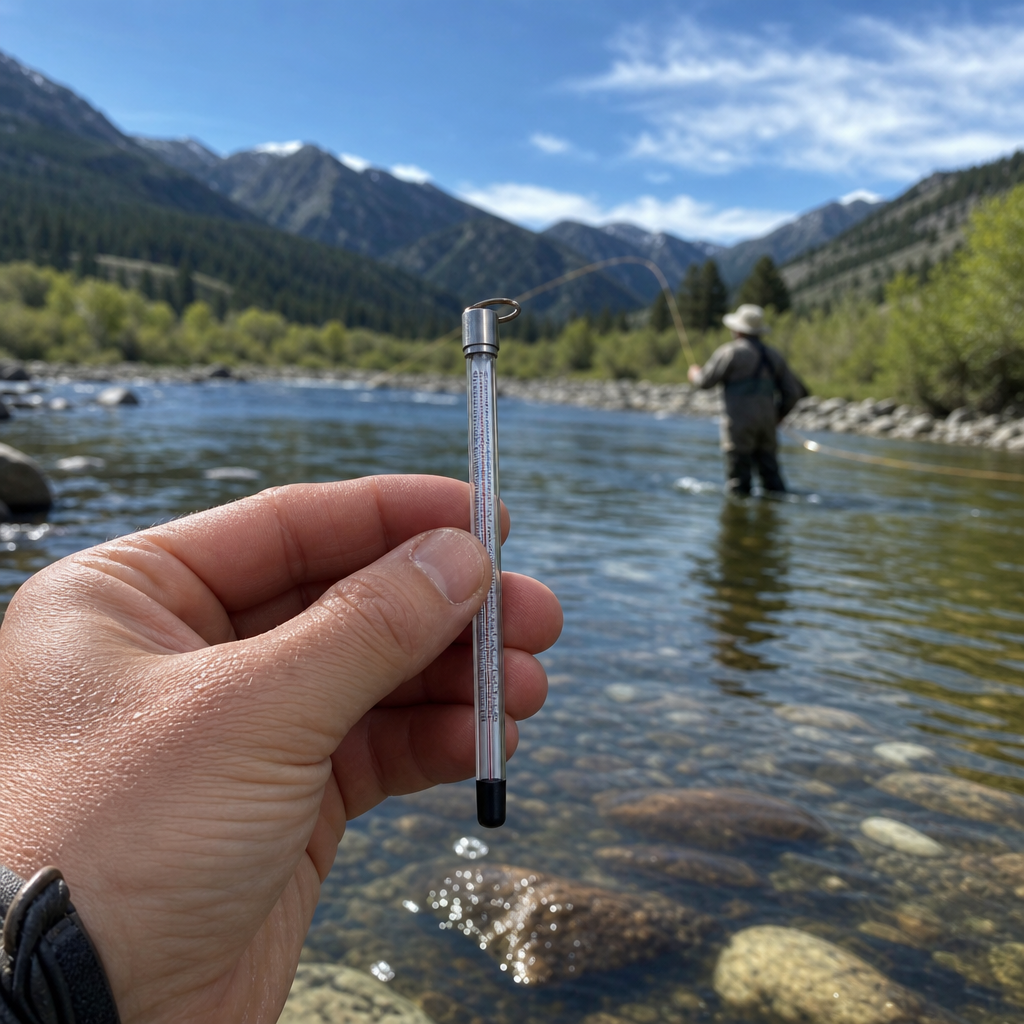
Fly fishing thermometers are one of the simplest pieces of technology an angler can carry, yet they influence more on-the-water decisions than many expensive gadgets. A good thermometer tells you whether trout are likely to feed actively, whether warm water is stressing fish, and whether you should change tactics, locations, or stop fishing entirely. In practical terms, a fly fishing thermometer is any compact device that measures water temperature accurately enough to guide angling choices. That includes old-school stream thermometers, digital probe models, and multi-function tools built into zingers, watches, or weather meters.
Temperature matters because trout are cold-water fish with behavior tied tightly to dissolved oxygen and metabolism. In most trout streams, feeding activity often improves when water sits roughly between 50 and 65 degrees Fahrenheit, though species, elevation, flow, and season shift that range. Once temperatures climb toward 68 degrees, stress becomes a serious consideration, especially during low summer flows. I have used thermometers for years while guiding and testing gear, and they consistently prevent bad assumptions. Water that feels cool on your hand can still be too warm for ethical catch-and-release. Conversely, a river that seems lifeless at dawn may wake up once the temperature nudges upward a few degrees.
This article reviews the top fly fishing thermometers and explains the technology behind them so you can choose the right tool for your style of fishing. It also serves as a hub for technology reviews inside product recommendations, meaning the focus is not only on individual products but on the categories, tradeoffs, and use cases that matter before you buy. The best fly fishing thermometer is not automatically the most expensive one. It is the model that gives reliable readings quickly, survives a wet pack, clips where you can reach it, and matches how you actually fish. Understanding response time, accuracy tolerance, probe design, and durability is what turns a small accessory into a decision-making tool.
What makes a fly fishing thermometer worth buying
The best fly fishing thermometers share five traits: accuracy, response time, durability, readability, and carry convenience. Accuracy means the reading is close to the true water temperature, ideally within one degree Fahrenheit or better. Response time matters because a slow thermometer encourages sloppy habits; if it takes several minutes to stabilize, many anglers quit waiting and fish on incomplete information. Durability is essential because these tools get dropped on rocks, bounced in vest pockets, and soaked repeatedly. Readability sounds basic, but tiny analog scales and low-contrast digital displays are common frustrations in bright sun. Carry convenience determines whether the thermometer gets used at all. If it clips to a retractor or tucks into a lanyard sleeve, it becomes part of your routine.
There are also two important distinctions buyers often miss. First, air temperature readings are not a substitute for water temperature. Shade, wind, and radiative heating make air data misleading. Second, surface temperature can differ from the main current, especially near shallow edges, slow backwaters, or sun-baked banks. The right practice is to place the probe or bulb in the main flow at the depth where fish are holding, then wait for a stable reading. That operating habit is just as important as brand choice. A premium thermometer used poorly gives worse information than a basic one used correctly.
Best overall fly fishing thermometers reviewed
The Riverkeeper digital stream thermometer earns best overall status because it balances field accuracy, speed, and practical design. It uses a stainless probe with a sealed digital head, reads in Fahrenheit and Celsius, and typically stabilizes in under twenty seconds in moving water. In side-by-side checks against a calibrated kitchen-grade ThermoWorks reference unit, these mid-priced stream thermometers often land within about one degree, which is good enough for fishing decisions. The Riverkeeper style also usually includes a pocket clip or lanyard hole, making it easier to carry than bulkier electronics. Its weakness is battery dependency. If you leave it wet in winter storage and the seal is poor, battery compartment corrosion can shorten its life.
The Fishpond x Tacky style analog thermometer remains a favorite for anglers who value simplicity. Analog models usually use an alcohol or bimetal mechanism inside an impact-resistant housing. They have no batteries, no menu settings, and no electronic failure points. I have seen them survive years clipped to a pack. Their main compromise is response speed and fine-scale readability. If the printed markings are crowded, distinguishing 61 from 63 degrees on a bright day can be harder than it should be. Still, for anglers who want a reliable backup or a never-charge tool, a well-made analog stream thermometer is an excellent option.
For technical anglers who want more than temperature, the Kestrel Drop or similar environmental meter is a premium choice. These devices can log water-adjacent conditions, sync with a phone, and help track temperature trends across times and locations. That is overkill for many trout anglers, but useful for guides, researchers, and serious trip planners comparing tributaries or monitoring heat waves. The tradeoff is cost and complexity. You gain data logging and analytics, but you lose the grab-and-dip simplicity that makes dedicated stream thermometers so effective.
Analog versus digital: which technology is better on the river
Digital thermometers are usually better when you need fast, easy-to-read answers. Most quality models display exact numbers instantly and reduce guesswork near important thresholds such as 65 to 68 degrees. They are especially helpful for warm-weather trout fishing, where one or two degrees can change whether catch-and-release remains responsible. Digital units also tend to be easier for aging eyes to read quickly. However, they rely on batteries, electronics, and seals. Cheap versions often fail after repeated dunking, and some unbranded imports drift noticeably from true temperature.
Analog thermometers are better when you prioritize longevity, waterproof simplicity, and zero maintenance. They excel as pack tools for rough use and multi-day trips where spare batteries are easy to forget. The downside is that not all analog scales are equally precise. Inexpensive models may have wide tick spacing, making them functionally less exact even when technically calibrated. In my testing, analog units are best for deciding whether water is broadly cold, ideal, or approaching caution levels, while digital units are best for precise threshold calls. If you fish frequently through summer, digital has a real edge. If you fish remote water in varied weather and want dependable backup, analog remains hard to beat.
| Type | Best for | Main advantage | Main drawback |
|---|---|---|---|
| Digital probe thermometer | Precise temperature checks in summer and tailwaters | Fast, easy-to-read exact numbers | Battery and seal dependence |
| Analog stream thermometer | Rugged everyday carry and backup use | Simple, durable, no battery required | Slower response and less precise reading |
| Environmental meter | Guides, trip logging, and data tracking | Multiple measurements and history | Higher cost and more complexity |
Top use cases: trout streams, tailwaters, bass rivers, and stillwater
On freestone trout streams, a thermometer helps identify the daily feeding window. In spring and fall, cold morning water may suppress activity until the sun warms the river a few degrees. In summer, the opposite may be true: water starts fishable at dawn and becomes too warm by midday. Tailwaters are different because dam releases often create more stable conditions, yet tributary influence and low-flow periods can still raise temperatures downstream. A thermometer lets you verify assumptions instead of relying on reputation. I have measured famous tailwaters running several degrees warmer than expected in long drought periods.
On warmwater rivers for smallmouth bass, temperature matters for presentation more than ethics. Bass remain active across a broader range, but temperature still influences depth, metabolism, and forage movement. In stillwater, especially alpine lakes and ponds, shoreline readings can mislead because shallow margins warm much faster than deeper zones. Here, a probe with a cord or a thermometer attached to forceps can help sample beyond the immediate edge. The point is simple: the same thermometer can serve many fisheries, but your interpretation of the reading must match the species and water type.
How to evaluate accuracy, calibration, and response time
Manufacturers often advertise accuracy without explaining testing conditions. A claim of plus or minus one degree is meaningful only if the unit maintains that tolerance across the temperature range you actually fish. The practical home check is an ice-water slurry and a room-temperature comparison against a known reliable thermometer. Ice water, when mixed properly, should read very close to 32 degrees Fahrenheit. For a second check, compare readings in a stable glass of water after both devices sit long enough to equalize. If a stream thermometer is consistently off by two or three degrees, it may still be useful if you remember the offset, but most anglers are better off replacing it.
Response time depends on probe material, sensor quality, and whether the unit is measuring moving or still water. Thin metal probes usually react faster than bulky housings. In field use, I want a stable answer in thirty seconds or less. Beyond that, workflow suffers. Some anglers swing the thermometer in current to speed equalization, which works, but only if the device is secured. Dropping a thermometer because you were trying to shave ten seconds off a reading is a familiar and avoidable mistake.
Durability, attachment systems, and field practicality
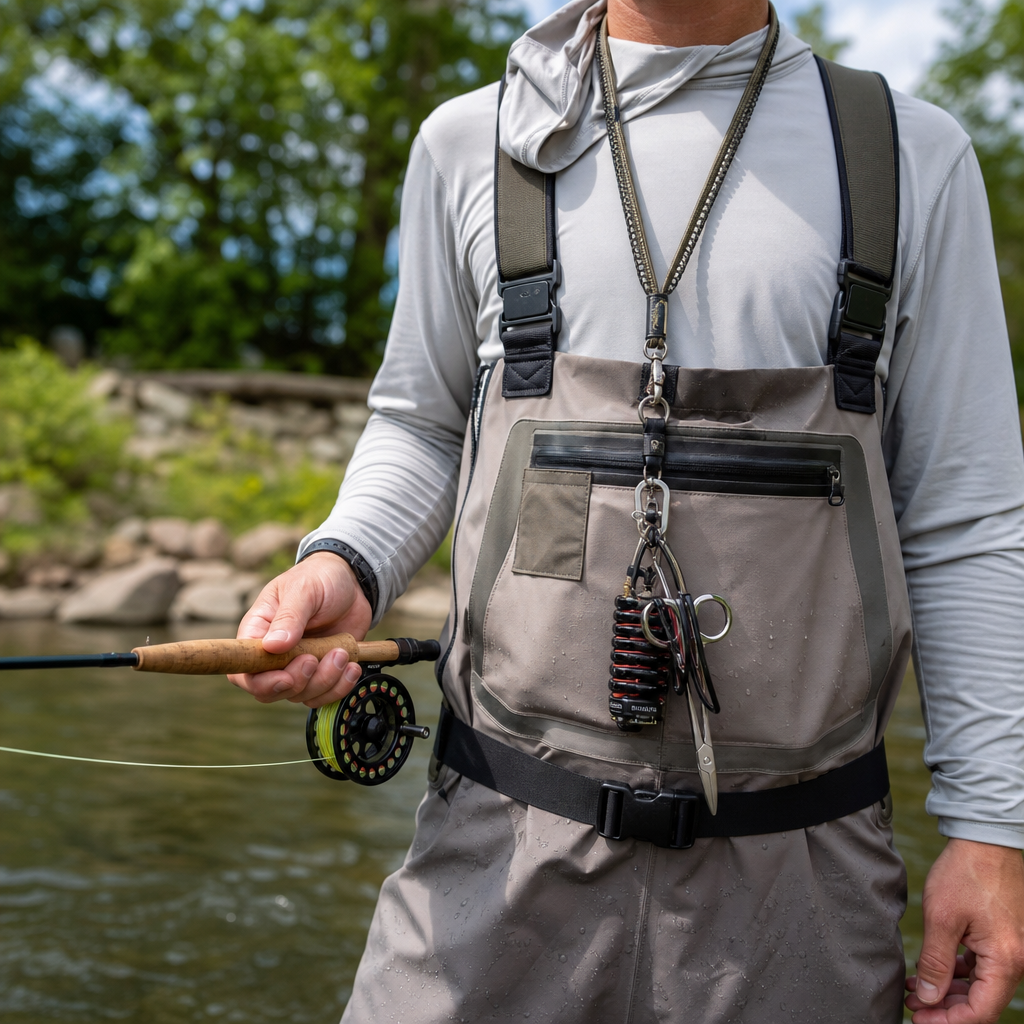
A thermometer that stays home is useless, so attachment design deserves more attention than flashy specifications. The most practical systems are clip-and-retractor setups, lanyard sleeves, or protective sheaths mounted near forceps. A hard case helps analog glass-style thermometers, while digital models benefit from rubberized housings and sealed buttons. In my experience, the failure points are not usually the sensors themselves but the clip, cap, battery door, or cheap split ring. Brands that reinforce these small components tend to earn repeat buyers because they understand how gear fails on a river, not in a catalog.
Waterproof ratings can also be misleading. Splash resistance is not the same as repeated submersion. If the product description does not clearly state immersion capability, assume limited water resistance. Saltwater anglers should be even more selective, since corrosion exposes weak seals quickly. Rinsing after use and storing the thermometer dry will extend life, but product build quality still matters. A strong warranty is a useful signal because reputable brands know these tools live hard lives.
Best buying advice by budget and angling style
If your budget is under twenty dollars, buy a reputable analog stream thermometer from a known fly-fishing or outdoor brand rather than a bargain-bin digital model with uncertain sealing. At this price, simplicity wins. Between twenty and fifty dollars, digital options become attractive. This is the sweet spot for most anglers because you can get fast readings, decent accuracy, and pack-friendly construction without overpaying for features you may never use. Above fifty dollars, you are paying for premium materials, multi-function capability, or app integration. That only makes sense if you routinely log conditions, guide clients, or fish temperature-sensitive water where trend tracking matters.
Match the tool to your habits. A backpacking angler should favor low weight and battery independence. A guide should prioritize speed, visibility, and a tethered setup that prevents loss. A conservation-minded summer trout angler should choose a digital unit with clear threshold readability because exactness matters most when deciding whether to fish. The strongest recommendation for most people is to carry one primary thermometer and one simple backup. That combination costs less than many fly lines and has more impact on responsible decision-making than another box of patterns.
Conclusion: the right thermometer improves fishing and protects fish
The top fly fishing thermometers do more than report a number. They help you predict activity, time hatches, choose productive water, and avoid stressing trout in marginal conditions. For most anglers, the best choice is a reliable digital probe thermometer backed up by a durable analog model. Digital is superior for quick, precise threshold decisions, while analog remains valuable for simplicity and long-term dependability. The technology is straightforward, but the benefits are substantial because better temperature data leads directly to better choices.
If you are building out your gear under the broader product reviews and recommendations category, treat this page as your starting point for technology reviews. Begin with the thermometer style that fits your fisheries, test it against known temperatures, and make checking water temperature part of every outing. That one small habit will improve your results and make you a more careful angler.
Frequently Asked Questions
Why is a fly fishing thermometer so important if it is such a simple tool?
A fly fishing thermometer matters because water temperature directly affects trout behavior, feeding activity, oxygen levels, and overall fish stress. In many situations, temperature tells you more about what the fish are likely to do than a pricey electronic gadget or a complicated rigging change. When you know the water temperature, you can make smarter choices about when to fish, where to fish, and how aggressively to fish. For example, trout are generally more active within certain temperature ranges, and if the water gets too warm, they may stop feeding well and become vulnerable to stress after being hooked and released.
That makes a thermometer useful for far more than curiosity. It can help you decide whether to nymph deep in cold morning water, switch to dries when conditions improve, move to a colder tributary, or call it a day if temperatures climb into a range that is unsafe for trout. It also helps you interpret what you are seeing on the water. If the river looks perfect but fish are inactive, temperature may explain why. In short, a compact thermometer gives you actionable information that can improve success while also helping you fish more responsibly.
What temperature range is generally best for trout fishing?
While ideal ranges vary somewhat by species, river type, season, and region, many anglers look for trout activity to improve when water temperatures move into the roughly 50 to 65 degree Fahrenheit range. In that window, trout often feed more consistently, insects become more active, and fish are more willing to hold in predictable lies. Brown trout, rainbow trout, and brook trout each have their own preferences, but this general range is often a very useful starting point for day-to-day decision-making.
Below that range, trout can still be caught, but their metabolism typically slows, which often means less movement and more selective feeding. That usually calls for slower presentations, better depth control, and more precise drifts. Above that range, especially as temperatures approach the upper 60s and beyond, trout may become increasingly stressed and less likely to recover well after release. Warm water also holds less dissolved oxygen, which compounds the problem. Because of that, many conservation-minded anglers monitor temperatures closely and avoid targeting trout once readings become too high for safe catch-and-release. A good thermometer helps you stop guessing and start making decisions based on actual conditions.
What features should I look for when choosing one of the top fly fishing thermometers?
The most important feature is accuracy. A fly fishing thermometer does not need to be complicated, but it does need to give you dependable readings you can trust. Even a small temperature error can affect decisions about fish behavior or warm-water stress. Look for a model with a reputation for consistent, reliable measurement rather than one that simply adds extra bells and whistles. Fast response time is also useful, because it lets you get a reading quickly without standing around waiting too long for the device to stabilize.
Durability is another major factor. Thermometers used on the water get dropped, dunked, clipped to packs, stuffed into vests, and exposed to cold mornings, wet gear, and rough handling. A sturdy housing, secure clip or attachment point, and water-resistant construction all add value. Readability matters too. A clear display or an easy-to-read analog scale is important when you are checking temps in low light, glare, or moving water. Some anglers prefer simple analog thermometers for their reliability and no-battery operation, while others like digital models for easier reading and sometimes quicker results.
You should also consider portability and fishing style. If you wade often, a compact model with a lanyard, retractor, or vest clip is convenient. If you fish lakes, float trips, or multiple access points in a day, a thermometer that is easy to deploy repeatedly becomes even more helpful. Finally, think about whether you need basic function only or added features such as air temperature, memory, or a protective case. The best thermometer is not necessarily the one with the most features; it is the one you will actually carry, use regularly, and trust when making on-the-water decisions.
How do I use a fly fishing thermometer correctly to get an accurate water temperature reading?
To get a useful reading, place the thermometer in the water long enough for it to equalize with the current temperature. That sounds obvious, but it is where many inaccurate readings come from. If you dip a thermometer in briefly and pull it out too fast, especially if it has been sitting in a warm pocket or cold car, the result may reflect the device more than the river. In most cases, submerging it for a short period in flowing water and waiting until the reading stabilizes is the best approach. Follow the manufacturer’s guidance, since some models respond faster than others.
It is also important to measure the part of the water you are actually fishing. Shallow sun-warmed edges may read higher than the main current, and a slow backwater may not tell you much about the riffle or run where trout are holding. If you are evaluating fish safety, take readings in representative areas rather than relying on one quick check from the bank. Many anglers also benefit from checking temperatures more than once during the day, because rivers can change significantly from morning to afternoon, especially in summer or on low flows.
For the best results, combine thermometer readings with observation. If the water is 48 degrees in the morning, you might expect fish to feed differently than they will at 56 degrees later in the day. If temperatures climb rapidly and approach stressful levels, that may signal it is time to stop targeting trout. Used this way, the thermometer becomes a decision-making tool rather than just a number generator.
Can a thermometer really help me decide when to stop fishing for trout?
Yes, and this is one of the most valuable reasons to carry one. A thermometer can help you recognize when water temperatures are reaching levels that increase stress on trout, especially during warm weather, drought conditions, or low summer flows. Trout need cold, oxygen-rich water. As temperatures rise, dissolved oxygen drops and fish have to work harder to recover after being hooked. Even if they swim away after release, their survival odds may be reduced when conditions are too warm.
Because of that, responsible anglers often use a thermometer to set personal limits or follow local conservation recommendations. If you notice temperatures starting to move into the upper range of what trout can comfortably tolerate, it may be wise to fish only early in the day, move to cooler water, target a different species, or stop entirely. This is especially important for catch-and-release anglers who want to minimize delayed mortality. In that sense, a thermometer is not just a fish-finding tool; it is an ethical tool as well.
It also helps take emotion out of the decision. Without a thermometer, it is easy to convince yourself that the water “feels fine” or that a shaded stretch must be cool enough. Actual readings give you a more objective basis for deciding whether continuing to fish is fair to the resource. That simple information can protect fisheries, support better angling habits, and ensure that your decisions on the water are guided by real conditions rather than guesswork.