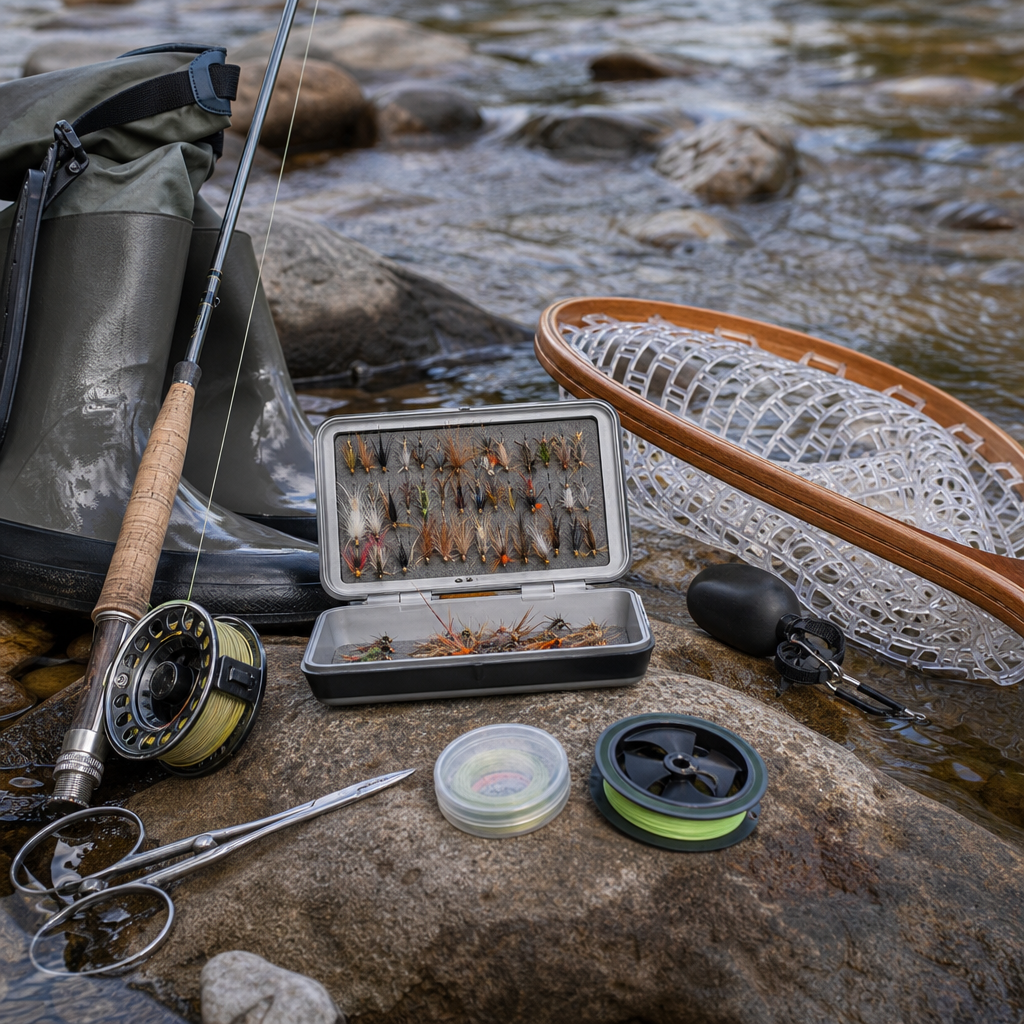
Choosing the best fly fishing nets is not a cosmetic gear decision; it affects landing success, fish safety, wading efficiency, and how confidently you fish in moving water. In fly fishing, a net is the final control point between a hard-earned hookup and a lost fish, which is why experienced anglers treat it as essential equipment rather than an accessory. A good net helps you cradle trout, bass, panfish, or steelhead without excessive handling, reduces break-offs at the leader, and makes quick catch-and-release far easier. It also protects flies, tippet, and your own balance, especially when you are fighting fish one-handed in current.
When anglers search for fly fishing net reviews, they are usually trying to answer a few practical questions: What size net do I need, what basket material is safest, which handle style works for my water, and which brands actually deliver durability in the field? After years of testing landing nets on small mountain creeks, drift boats, stillwaters, and large tailwaters, I have found that the best choice depends less on branding than on matching net design to species, fish size, and how you move. A tenkara angler on brushy streams needs something very different from a boat angler targeting big western trout.
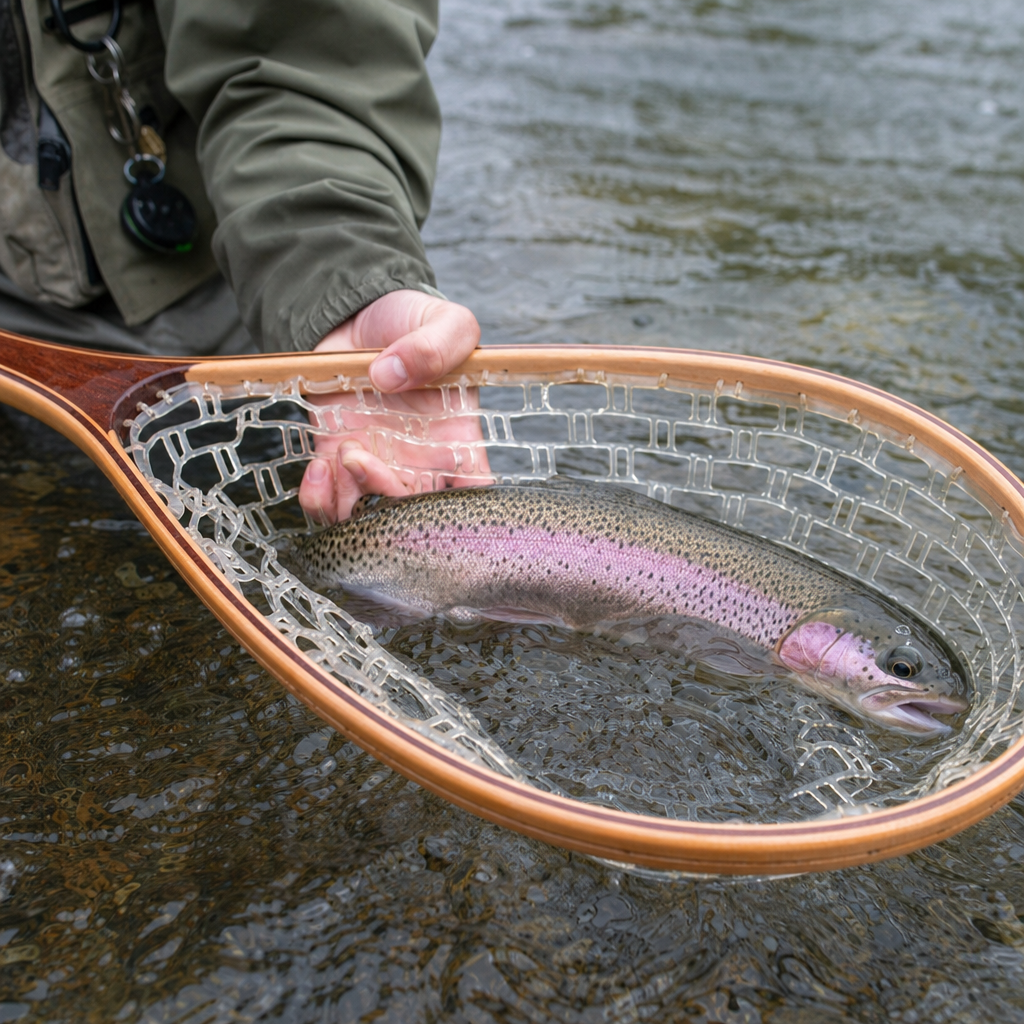
For this gear reviews hub, the key terms matter. The hoop is the frame around the basket. The basket, often called the bag, is the netting that contains the fish. The handle determines reach, leverage, and portability. Rubber or silicone baskets are generally best for trout because they reduce fin abrasion, slime loss, and hook tangles compared with old knotted nylon. Catch-and-release net design refers to combinations of bag depth, basket texture, and frame shape intended to minimize fish stress. Magnetic net release systems, belt clips, and back-mounted carry options affect access and convenience, which in practice determine whether you actually use the net correctly.
This article serves as a hub for gear reviews within the broader product reviews and recommendations category, so it covers the main net types, buying criteria, top product recommendations, and the mistakes to avoid before you explore more specialized reviews. If you want one takeaway early, it is this: the best fly fishing net is the smallest fish-safe net that still lands your target species consistently and stays accessible every time you need it. That balance between fish care, reach, and carry comfort separates smart purchases from disappointing ones.
What Makes a Fly Fishing Net Worth Buying
The best fly fishing nets solve three problems at once: they land fish efficiently, protect the fish during handling, and fit the way you fish. In practice, that means frame shape, basket material, bag depth, and handle length all matter more than decorative wood grain or trendy branding. I have used premium handmade nets that looked beautiful yet performed poorly because the basket was too shallow, and I have used simple utilitarian nets that worked flawlessly season after season because every design choice supported the task.
Frame shape influences control. Teardrop nets are common for trout because they track well through current and fit comfortably behind the angler’s back. Wider bow-shaped or oval frames provide more margin when netting larger fish beside a boat. Handle length matters most when your fish are at awkward angles. A short handle is ideal for wading and brushy approach paths; a longer handle gives leverage from float tubes, drift boats, and high banks. Basket depth should be deep enough to secure fish without creating a heavy, waterlogged drag.
Material choice is equally important. Rubber and silicone baskets are the standard recommendation for modern catch-and-release because they are smoother on scales and dramatically less prone to tangled hooks. Wooden frames remain popular because they float, look classic, and feel warm in cold conditions. Aluminum frames often weigh less for the strength offered and stand up well to hard use. Carbon composite options exist too, particularly in boat-focused nets where stiffness and low overall weight are priorities.
The most reliable buying test is simple: picture where the net rides, how quickly you can deploy it, and what your average fish actually looks like. If you fish eighteen-inch trout from knee-deep riffles, a compact trout net is enough. If you regularly encounter twenty-four-inch fish in strong current, undersizing becomes a landing liability.
Best Fly Fishing Nets by Use Case
Different water demands different net designs, so broad “best overall” claims only go so far. The smartest recommendations come from matching common fishing scenarios to net features. The table below summarizes what consistently works in the field.
| Use case | Best net style | Why it works | Typical tradeoff |
|---|---|---|---|
| Small-stream trout | Compact wooden or aluminum teardrop with rubber bag | Easy back carry, quick under overhanging brush, enough basket for 8 to 16 inch fish | Limited capacity for larger fish |
| All-around river trout | Medium trout net with deeper silicone basket | Best balance of portability and fish control for 12 to 22 inch trout | Slightly bulkier while hiking |
| Boat or float tube fishing | Long-handle net with large hoop | Extended reach around gunwales and safer landing beside craft | Awkward for wading and back carry |
| Stillwater and bass | Large hoop rubber net | Helps with wide runs, heavier fish, and treble-hook management | Added weight and wind resistance |
| Steelhead or salmon | Oversized deep-bag landing net | Controls strong fish without repeated scoops | Too large for general trout use |
For small streams, Fishpond’s Nomad Emerger, Rising’s Brookie, and compact handmade wood nets from makers like Brodin are commonly strong choices. They keep weight low and remain accessible in dense cover. For all-around trout work, many anglers settle on a medium Nomad, Fishpond Mid-Length, or Frabill trout model with a clear rubber basket. These are the nets I recommend most often because they cover the broadest range of river situations without becoming cumbersome.
Boat anglers should look at longer-handle options from Fishpond, Frabill, Ranger, or YakAttack-oriented models, depending on whether the craft is a drift boat, raft, or kayak. For bass and warmwater fly fishing, a larger hoop matters more than tradition because fish often surge boatside and flies may carry bigger hooks. Steelhead and salmon require a dedicated approach; trying to land them with a trout net wastes time and increases stress on the fish.
Top Recommended Brands and Models
Several brands consistently stand out in fly fishing net reviews because they match materials, ergonomics, and fish handling better than generic options. Fishpond remains one of the most widely trusted names. Its Nomad series uses carbon fiber and fiberglass composite construction, which keeps the frame light, buoyant, and highly resistant to weather. In my use, Nomad nets hold up particularly well for anglers who fish hard and travel often. The clear rubber bags also tangle fewer flies than darker, stickier compounds found on budget nets.
Brodin is the classic premium recommendation. Their wooden trout nets are beautifully finished, but the value is not just aesthetics. Quality wood frames float well, feel balanced in hand, and often pair with fish-friendly baskets sized intelligently for trout fishing. They are ideal for anglers who prioritize tradition and craftsmanship without sacrificing on-water function. The main drawback is cost; handmade wood nets are rarely budget purchases.
Rising offers durable aluminum nets built in the United States and has earned a loyal following among guides and western river anglers. These nets are known for toughness, practical geometry, and straightforward fishability. If you are rough on gear, scramble over rocks, or fish from rafts, Rising nets deserve serious consideration. Frabill is another dependable option, often overlooked by fly anglers because of its broad freshwater reputation, but many of its rubber-coated landing nets are excellent values for boat and stillwater use.
At the budget end, brands sold through large retailers can work if they check the fundamentals: fish-safe basket, secure yoke, and sensible dimensions. Cheap knotted nylon bags, brittle plastic frames, and poorly attached magnetic systems are where low-cost nets fail. A budget net is acceptable; a fish-unfriendly net is not. As a hub for gear reviews, this is the central lesson that carries across every model-specific article: construction quality matters, but design suitability matters more.
How to Choose Size, Material, and Carry System
Net size should match your realistic upper-end fish, not your average fish alone. For trout under sixteen inches, a compact basket usually works. For rivers where twenty-inch fish are common, move to a medium hoop with more depth. If your net is too small, you chase the fish with repeated scoops, prolonging the fight and raising the odds of tippet failure. If it is too large, you leave it in the car, which defeats the purpose.
Basket material should be rubber or silicone for most fly fishing. Clear baskets are especially useful because they are less visible underwater and may reduce fish panic at the moment of netting. They also make photography cleaner. Silicone often feels slightly softer and resists odor and sun damage well, while molded rubber can be extremely durable. Both are better than old-school knotted mesh for catch-and-release. Depth is the next decision. Shallow baskets suit quick handling of smaller fish; deeper baskets create a temporary in-water holding pen for larger trout while you unhook them.
Carry systems are underestimated. Back-mounted magnetic releases are the standard because they keep the handle centered and accessible. Fishpond, Loon, and several accessory brands make strong magnetic release systems rated for meaningful weight. Retraction cords add security but should not interfere with fast deployment. Belt carry can be better for kayak anglers or anyone who dislikes upper-back snagging in brush. Vest loops, sling packs, and backpack D-rings all change how a net rides, so test the setup at home with a loaded pack before hitting the river.
Weight and buoyancy influence fatigue. Heavier aluminum can feel sturdy but may bounce or pull awkwardly on a vest. Wood typically floats well, a real advantage if a magnet fails. Composite frames combine low weight with high rigidity, making them among the best choices for frequent anglers. The right answer depends on whether your priority is tradition, abuse resistance, minimal weight, or value.
Common Mistakes and Final Buying Advice
The most common mistake anglers make is buying by appearance first and dimensions second. A handsome net that cannot comfortably accept your target fish is a poor tool. The second mistake is using abrasive or knotted nylon bags for trout and then wondering why hooks snarl and fish thrash. Third is ignoring carry comfort. I have watched anglers leave excellent nets clipped to packs because the setup snagged every branch on a small stream approach. Accessibility is part of performance.
Another frequent issue is overbuying. Not every trout angler needs an oversized guide net. Large nets are harder to manage while wading, slower to deploy, and more likely to catch current. Conversely, anglers chasing big tailwater trout, carp on the fly, or steelhead often underbuy because compact trout nets look cleaner and lighter in the shop. Match your water honestly. Think about current speed, bank height, fish length, and whether you fish solo. Solo anglers benefit from slightly more reach and basket depth because there is no partner to assist at the boatside or in heavy flow.
The best fly fishing nets combine fish safety, practical dimensions, and dependable carry. For most trout anglers, that means a medium teardrop frame with a clear rubber or silicone basket and a secure magnetic release. If you want premium composite performance, start with Fishpond’s Nomad line. If you want handcrafted tradition, look closely at Brodin. If you want rugged utility, Rising and Frabill are strong bets. Budget buyers should focus on basket material and attachment quality before anything else.
As the hub for gear reviews in this subtopic, this page gives you the decision framework that makes every detailed review more useful. Start by defining your fishing style, target fish, and carry preference, then compare net size, material, and deployment system against those needs. Buy the net you will actually carry on every trip, and you will land fish faster, handle them more responsibly, and fish with noticeably more control. Use that framework now to narrow your shortlist and choose a net built for your water.
Frequently Asked Questions
What should I look for when choosing the best fly fishing net?
The best fly fishing net is the one that matches how and where you fish, not just the one that looks good in photos. Start with size and species. Trout and panfish anglers can usually get away with a compact net that is easy to carry and quick to deploy, while anglers targeting larger bass, carp, or steelhead need a deeper basket and a wider hoop for better control at the end of the fight. Handle length also matters. A short handle is ideal for wading small streams because it stays out of the way, while a longer handle gives you more reach from a drift boat, float tube, or steep bank.
Next, pay close attention to net bag material. Rubber and silicone bags are widely preferred in modern fly fishing because they are gentler on fish, less likely to remove protective slime, and far less prone to snagging hooks than old-style knotted nylon. That means quicker releases, less frustration, and less damage to both fish and flies. Weight is another major factor. If you spend all day walking, climbing banks, or covering pocket water, a heavy net becomes annoying fast. Lightweight composite, aluminum, and wood-frame nets all have their place, but comfort and balance matter more than style alone.
Finally, think about how the net integrates with your setup. Many anglers carry a net on a magnetic release attached to the back of a vest or pack, so the net should be secure but easy to grab one-handed. Durability, frame strength, and overall shape are also important. A quality fly fishing net should help you land fish efficiently, protect the catch, and stay manageable in current. In other words, the best choice is one that improves landing success, fish safety, and on-the-water confidence every time you hook up.
Are rubber nets better than nylon nets for fly fishing?
For most fly anglers, yes, rubber or silicone nets are generally better than traditional nylon nets. The biggest reason is fish safety. A rubber net bag is much gentler on trout, bass, and other species because it supports the fish without scraping off as much of the protective slime coating. That slime layer is critical to fish health, especially if you practice catch and release. Rubber also tends to cradle fish more cleanly, which reduces excessive twisting and thrashing while you remove the hook.
Another major advantage is reduced hook tangling. Anyone who has buried a barbless nymph, treble hook, or streamer deep into an old nylon bag knows how frustrating that can be. Rubber bags are much less likely to catch hooks, so they save time and reduce chaos during the most critical part of the fight. That makes them especially valuable in moving water, where a few lost seconds can mean a thrown hook, a broken tippet, or a fish slipping away before you gain control.
That said, nylon nets are not automatically useless. Some are lighter, less expensive, and still serviceable for certain situations. But for anglers who care about fish handling, quick releases, and day-to-day practicality, rubber nets are the better all-around option. They may weigh a little more depending on the design, but the trade-off is worth it for most fly fishing applications. If you are comparing nets for trout, steelhead, or warmwater species, a fish-friendly rubber bag should be high on your priority list.
What size fly fishing net do I need for trout, bass, or steelhead?
Net size should be based on the average fish you expect to land and the type of water you fish most often. For small-stream trout fishing, a compact net with a modest hoop and shallow-to-medium bag is usually the smartest choice. It is lighter, easier to carry on your back, and much less awkward in brushy terrain or tight pocket water. A small trout net is ideal when fish are measured in inches rather than pounds, and when quick access matters more than maximum capacity.
For larger trout, smallmouth bass, and general-purpose river fishing, many anglers prefer a mid-sized net. This is often the most versatile category because it offers enough basket depth and hoop width to control stronger fish without becoming bulky. If your fishing spans streams, tailwaters, ponds, and moderate rivers, a medium-sized fly fishing net is often the best compromise between portability and fish-handling capability. It gives you more room for bigger fish while still remaining practical for wading.
Steelhead, salmon, carp, and larger bass call for a bigger net with a deeper bag and stronger frame. These fish are heavier, more powerful, and often landed in current, which means a small net can create unnecessary stress on both fish and angler. Trying to shoehorn a large fish into an undersized net often leads to poor control, broken leaders, and longer fight times. The key is to choose a net large enough to safely cradle the fish, but not so oversized that it becomes cumbersome during the rest of the day. A well-sized net makes landings smoother, faster, and much more controlled.
How do I carry a fly fishing net while wading?
The most common and effective way to carry a fly fishing net while wading is on the back of a vest or pack using a magnetic release, clip, or lanyard system. This keeps the net secure, centered, and out of the way while you cast, hike, and manage line. A good magnetic net release allows you to pull the net free with one hand when a fish is ready, then reattach it quickly after the release. For many anglers, this is the best balance of accessibility and convenience.
Another option is a belt-mounted system, which can work well with shorter-handled nets, especially for anglers who prefer chest packs or minimal gear. The downside is that a belt carry can interfere with wading comfort, especially in deeper water or when scrambling over rocks and logs. Boat anglers, meanwhile, may prefer a longer-handled net stored nearby rather than attached to the body. The right method depends on whether you are fishing small streams on foot, larger rivers, float trips, or stillwater from a craft.
No matter how you carry it, the net should be easy to reach without forcing awkward movements at the end of a fight. That final moment is where many fish are lost. If your net is hard to access, gets tangled in clothing, or swings around while walking, it becomes more of a liability than an advantage. The goal is to keep the net available but unobtrusive, so when a fish comes within range, you can land it quickly, protect the fish, and stay balanced in moving water.
Why is a fly fishing net considered essential gear instead of just an accessory?
A fly fishing net is essential because it directly affects your ability to finish the fight cleanly and efficiently. In fly fishing, especially with light tippet and barbless hooks, the landing phase is often the most vulnerable moment. You may do everything right during the cast, drift, and hook set, only to lose the fish boatside or at your feet because you lack control. A net gives you that control. It shortens the final struggle, reduces sudden runs at close range, and helps prevent break-offs when a fish makes one last surge.
It is also essential from a fish-care standpoint. A good net lets you cradle the fish in the water, minimize handling, and remove the hook more quickly. That matters for catch-and-release anglers targeting trout, bass, and steelhead alike. Without a net, anglers often resort to beaching fish, grabbing them awkwardly, or overplaying them until they are exhausted. None of those outcomes is ideal for fish health. A fish-friendly net supports better conservation and more responsible handling in real-world fishing conditions.
Beyond fish safety, a net improves confidence and efficiency. When you know you have the right landing tool within reach, you can fight fish more calmly and make better decisions in current, around structure, or from unstable footing. Experienced anglers understand that a net is not about convenience alone. It is the final control point between a hard-earned hookup and a successful release or capture. That is why serious fly fishers treat the net as core equipment, right alongside the rod, reel, line, and leader.