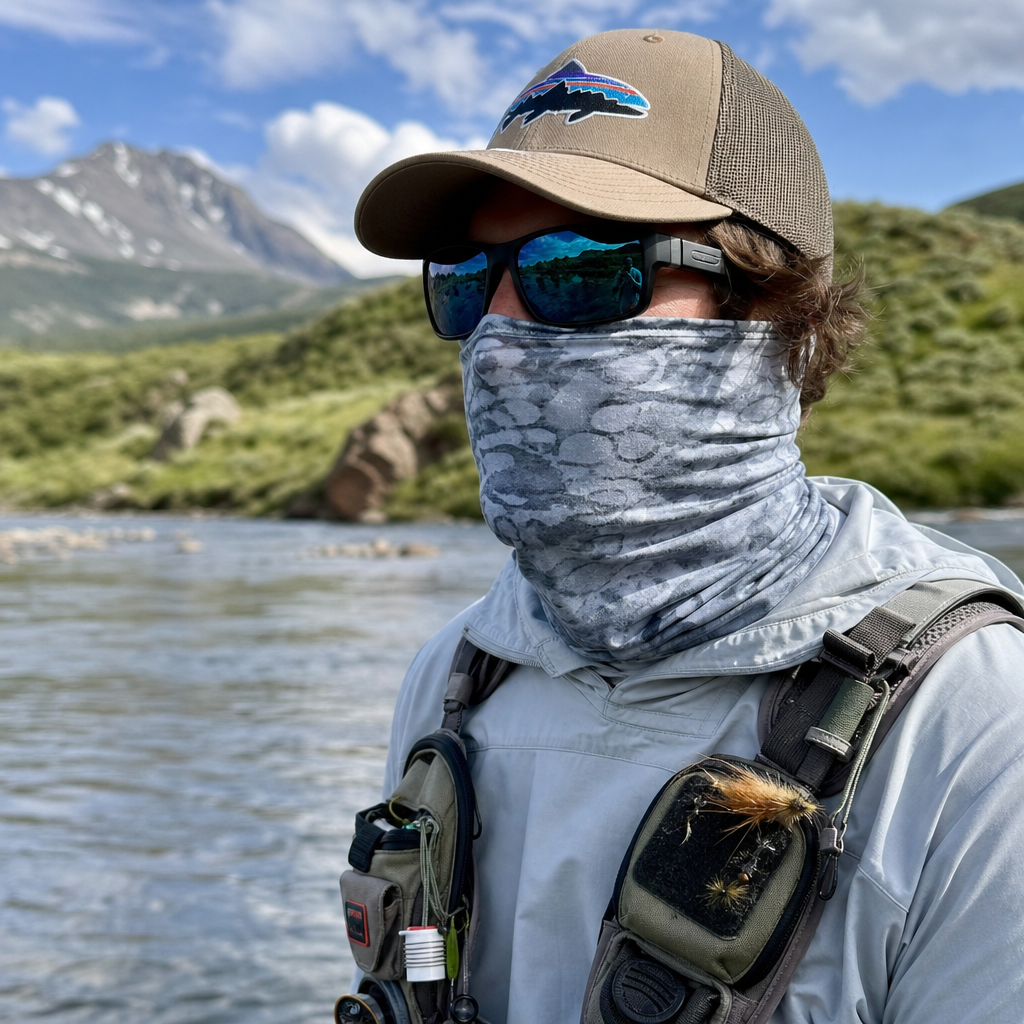
Fly fishing neck gaiters are one of the few clothing accessories that affect comfort, sun safety, bug protection, and time on the water all at once. In this review of the top fly fishing neck gaiters, I am treating the category the way serious anglers actually use it: as performance gear, not just a thin tube of fabric tossed into a vest pocket. A neck gaiter, sometimes called a sun sleeve for the face or a fishing buff, is a stretch fabric tube worn around the neck, lower face, ears, and head to shield skin from ultraviolet exposure, wind, cold mornings, drifting spray, and insects. For fly anglers, that matters because long days on open rivers, skiffs, flats, reservoirs, and tailwaters mean constant exposure. Good fly fishing clothing reviews should explain not only what a product is made from, but how it performs after repeated casting, wading, rowing, hiking, and sweating. This hub page does that while also helping readers understand how neck gaiters fit into broader clothing reviews, including layering systems, shirts, hats, gloves, and sun protection strategies.
After testing gaiters in hot trout summers, windy spring float trips, and saltwater sessions where glare reflects off every surface, I have found that the best models balance breathability, coverage, stretch recovery, and odor control. A poor gaiter feels clammy, fogs sunglasses, slips off the nose, or gets abrasive when wet. A great one disappears while you fish. This article reviews the top options, explains what separates premium fabrics from budget copies, and outlines which gaiters work best for trout, bass, saltwater, and cold-weather fly fishing. It also serves as the central clothing reviews guide for this section, so if you are comparing apparel systems rather than a single accessory, start here and use these criteria across every garment you buy.
What Makes a Fly Fishing Neck Gaiter Worth Buying
The most important performance factor is fabric construction. Most quality fly fishing neck gaiters use polyester microfiber, recycled polyester blends, nylon-elastane mixes, merino wool, or hybrid knits. Polyester dominates because it dries fast, resists shrinking, and takes sublimated prints well. Merino performs exceptionally in cool weather because it regulates temperature and resists odor naturally, but it dries slower and usually costs more. Elastane adds recovery so the gaiter keeps shape after being pulled over a hat or face repeatedly. Fabric weight matters too. Ultralight gaiters around 125 to 150 gsm breathe well in heat, while midweight and fleece-backed options are better for late fall, winter steelhead, or boat rides in cold wind.
UPF claims deserve scrutiny. Many respected fishing brands rate their gaiters at UPF 30 to UPF 50+, but the number is only meaningful when the fabric remains stretched within normal use and dry enough to maintain density. Darker colors can help, though not always; construction matters more than dye alone. Moisture management is another critical criterion. On a humid July float, a gaiter that traps breath becomes uncomfortable fast, especially if you wear polarized sunglasses. Laser-cut vent panels, mesh zones around the mouth, and slightly structured face shaping can reduce condensation, but heavily perforated fabrics may sacrifice bug protection and some sun coverage. The right choice depends on where and how you fish.
Top Fly Fishing Neck Gaiters Reviewed
Among mainstream choices, Simms, BUFF, Huk, AFTCO, and Patagonia consistently produce the strongest field options. Simms SunGaiter and BugStopper SunGaiter models are standouts for freshwater anglers because the cut is generous, the seam placement is comfortable under a collar, and the fabrics usually remain wearable through repeated wash cycles. On Western trout rivers, I have worn Simms gaiters through long rowing days and found the face coverage stable even when turning my head constantly to track banks, bugs, and rising fish. The BugStopper version adds insect-repellent treatment, which matters during still evenings around soft edges, marshy launches, and wooded warmwater streams where midges and mosquitoes can make concentration difficult.
BUFF remains one of the benchmark names in the category for a reason. Its Original EcoStretch line is versatile, packable, and easy to wear in multiple configurations, while the CoolNet UV line is better for hot weather because it is lighter and more breathable. BUFF products are often the gateway item for anglers new to neck gaiters, but they are not entry-level in performance. The better BUFF models handle all-day sun well and stay comfortable under wide-brim hats. Their main limitation for some fly fishers is facial structure: because they are simple tubes, they may slide lower on narrow faces or direct exhaled moisture upward into lenses more than articulated competitors do.
Patagonia’s sun gaiters are typically excellent for anglers who prioritize soft hand feel, recycled materials, and understated styling. They are usually not the cheapest option, but stitching quality and fabric comfort are strong. AFTCO’s Adapt and Samurai-style face protection pieces appeal to saltwater and inshore anglers who want cooling fabric and solid coverage while poling or running open bays. Huk offers broad availability and aggressive prints, and some of its options perform surprisingly well for the price, though consistency across model lines is not always as strong as with premium specialists.
| Brand and Model | Best Use | Key Strength | Main Tradeoff |
|---|---|---|---|
| Simms SunGaiter | All-around trout fishing | Balanced fit, comfort, dependable coverage | Not the coolest in extreme humidity |
| Simms BugStopper SunGaiter | Bug-heavy rivers and lakes | Added insect defense with solid sun protection | Treatment may matter less in windy open water |
| BUFF CoolNet UV | Hot-weather versatility | Breathable, light, easy to pack | Less structured over nose and cheeks |
| Patagonia Sun Mask | Comfort-focused premium wear | Soft fabric and refined construction | Higher price |
| AFTCO Adapt | Saltwater and boat fishing | Cooling feel and strong open-water coverage | Style may be less versatile off the water |
If you want the shortest buying answer, start with Simms for freshwater versatility, BUFF CoolNet UV for heat, Patagonia for premium comfort, and AFTCO for saltwater. Those are the products I recommend most often because they solve distinct fishing problems clearly rather than trying to be universal. No single gaiter is best for every season, and anglers who fish often should own at least two: one ultralight summer model and one heavier cool-weather option.
Best Neck Gaiters by Fishing Scenario
For trout anglers on freestone rivers and tailwaters, breathability and low-bulk layering matter most. You are often hiking short distances, changing elevation, and alternating between shade and direct sun. A lightweight polyester gaiter with UPF 50+, smooth flatlock seams, and enough stretch to sit under a cap without pressure points is ideal. Simms and Patagonia perform especially well here because they integrate cleanly with technical shirts and wading jackets. If you wear a sling pack or high-collar sun hoodie, test whether the gaiter bunches at the neckline. Excess bulk becomes irritating after a full day of casting and rowing.
For saltwater flats fishing, sun reflection is the real enemy. UV reaches your face from above and below, and a loose gaiter can leave the ears and jawline exposed when wind picks up. In that setting, I prefer slightly longer cuts with secure face coverage and fast drying fabric that does not feel heavy after spray. AFTCO, Huk, and some Simms tropical-weight options are strong choices. Pale colors can feel cooler, but fit matters more than color if the fabric is engineered properly. On skiffs, anglers also need a gaiter that pairs well with a hood and does not collapse when wet with sweat and salt.
For warmwater bass, carp, and kayak fishing, versatility becomes more important than absolute sun rating. You may use the gaiter around the neck in the morning, over the face when paddling into wind, and as a headband during the afternoon. BUFF-style tubular designs excel because they convert easily. For winter trout, Great Lakes tributaries, and steelhead, switch to merino or fleece-lined pieces. These are not ideal for midsummer UV use, but they dramatically improve comfort during long runs in a drift boat or while standing in cold wind. The mistake many anglers make is buying one gaiter and expecting four-season performance. Specialized use almost always beats compromise.
How to Judge Fit, Breathability, and Long-Term Comfort
Fit is more technical than many product pages suggest. Length determines whether the gaiter seals the gap between shirt collar and jaw when you look down to strip line or release fish. Width determines whether it stays in place without feeling constrictive. A gaiter that is too tight presses on the bridge of the nose and drives exhaled air toward sunglasses. Too loose, and it falls each time you speak or turn your head. The best brands use enough elastane to recover shape after dozens of wears, but not so much compression that the fabric feels hot. If you have a larger head or beard, this matters even more, because marginally sized tubes quickly become frustrating.
Breathability should be evaluated in motion, not in a living room. I test by rowing hard for ten minutes, then wearing the gaiter over nose and mouth while walking or wading. Weak fabrics get damp and stay damp. Better fabrics move sweat outward and dry fast enough that the inside never feels swampy. If sunglasses fog repeatedly, the issue is usually a combination of poor venting and poor fit rather than thickness alone. Some anglers solve this by lowering the gaiter beneath the nose, but that defeats the purpose during peak sun. Look for contouring, mesh mouth panels, or a fabric that sits slightly off the lips while still sealing around the cheeks.
Long-term comfort comes from seam placement, softness, and odor resistance. Flatlock or bonded seams reduce chafing around the ears and neck. Brushed synthetics feel better than slick cheap microfiber after several hours. Antimicrobial treatments can help with smell, but they vary in durability; Polygiene is one of the more recognized systems, while merino naturally resists odor without added chemistry. Wash durability also matters. Inferior prints crack, stretch weakens, and collars curl after repeated laundering. Clothing reviews should always address this because a gaiter that feels good on day one but degrades after a month is not actually a value.
How Neck Gaiters Fit Into the Bigger Clothing Reviews Picture
Because this page sits within product reviews and recommendations as a clothing reviews hub, neck gaiters should be judged as part of an integrated system. The most effective fly fishing clothing works in layers: sun hoodie or technical shirt next to skin, neck gaiter for face and neck protection, cap or brimmed hat for shade, lightweight gloves for hands, and a shell or insulating piece added only when weather shifts. I have seen anglers spend heavily on premium waders and boots while ignoring sun-exposed skin on the face, neck, and ears. That is backwards. The small accessories often determine whether a long day remains comfortable and safe.
Use the same review standards across all clothing categories. Start with environment: alpine trout, humid Southern bass water, tropical flats, or winter steelhead. Then assess fabric purpose, mobility, moisture management, seam design, durability, and care requirements. Brand reputation matters, but category specialization matters more. Simms has deep credibility in technical fishing apparel. Patagonia brings material quality and responsible manufacturing. BUFF understands multifunctional headwear at a global scale. Those strengths should inform your buying decisions across related articles in this subtopic, whether you are comparing sun shirts, rain jackets, wading socks, or fishing gloves. If you build your clothing system intentionally, a neck gaiter becomes a high-value piece rather than an afterthought.
The best fly fishing neck gaiter is the one that matches your water, weather, and tolerance for heat, not the one with the loudest print or biggest discount. For most freshwater anglers, Simms offers the most dependable all-around performance. For intense summer heat, BUFF CoolNet UV remains one of the smartest buys. For premium comfort and refined construction, Patagonia is easy to recommend. For open-water salt and inshore use, AFTCO deserves serious consideration. Across every option, focus on fabric quality, UPF protection, breathability under exertion, fit over the nose and ears, and how well the gaiter integrates with the rest of your clothing system.
This review also establishes the framework for the broader clothing reviews section. Evaluate fishing apparel by real use conditions, not marketing claims. Ask what problem the garment solves, how it behaves after sweat and wash cycles, and whether it improves time on the water enough to justify the cost. Neck gaiters pass that test more often than almost any low-cost accessory because they deliver protection and comfort immediately. If you are building or upgrading your fly fishing kit, start with a proven gaiter, then use the same standards to compare shirts, hats, layers, and outerwear across the rest of this clothing reviews hub today.
Frequently Asked Questions
What should I look for when choosing the best fly fishing neck gaiter?
The best fly fishing neck gaiter should be judged like any other piece of technical fishing apparel: by how well it performs during long hours on the water. The first thing to look at is fabric quality. A good gaiter should offer reliable UPF sun protection, dry quickly, breathe well in hot conditions, and still feel comfortable when pulled over the nose, cheeks, and ears. Lightweight materials are excellent for summer trout streams, flats fishing, and bright open water, but they should not feel so thin that they become transparent, saggy, or ineffective under direct sun.
Fit is just as important. A neck gaiter should stretch enough to stay in place without feeling restrictive. If it constantly slides down off the nose or loosens around the neck after getting wet, it becomes more annoying than useful. Serious anglers also pay attention to seam placement, because poorly placed seams can rub against the ears, nose, or back of the neck during all-day wear. A clean, low-profile construction usually feels better under a hat and sunglasses.
Beyond fit and fabric, consider how you actually fish. If you spend time on windy rivers, open lakes, or saltwater flats, a gaiter with strong face coverage and cooling comfort matters more than a basic tube of fabric. If bugs are part of your fishing season, a gaiter that covers the neck and ears well can make a major difference in comfort. In a top fly fishing neck gaiter review, the strongest options are the ones that balance breathability, coverage, durability, and all-day wearability rather than focusing on just color or brand name.
Do fly fishing neck gaiters really help with sun protection?
Yes, a quality fly fishing neck gaiter can make a substantial difference in sun protection, especially in the places anglers most often miss with sunscreen. The neck, jawline, ears, lower face, and even the scalp around the hat line are all areas that get hammered by reflected light off the water. Even on cooler or partly cloudy days, those zones can take on a lot of UV exposure during a full day of casting, rowing, or wading. A gaiter adds a consistent physical barrier that does not sweat off or require reapplication the way sunscreen does.
That said, not all gaiters offer the same level of protection. The best ones are made with fabrics specifically designed for UV resistance, often with a stated UPF rating. A lightweight gaiter can still provide very strong protection if the material is engineered correctly, but overly thin, worn-out, or poorly made options may not perform as well over time. This is one reason a review of the top fly fishing neck gaiters should look beyond marketing and evaluate real-world coverage, fabric density, and comfort in bright conditions.
For many anglers, a neck gaiter becomes one of the most effective sun-protection tools they own because it covers skin that is otherwise difficult to protect. Paired with a broad-brim or trucker-style fishing hat, polarized sunglasses, and proper fishing clothing, it helps create a complete system. If you spend long hours on exposed water, a good gaiter is not just an accessory; it is one of the smartest and easiest ways to reduce cumulative sun exposure.
Are neck gaiters breathable enough for hot-weather fly fishing?
In most cases, yes, but breathability depends heavily on the fabric and construction. A high-quality fly fishing neck gaiter should allow enough airflow and moisture release to stay comfortable during summer conditions while still offering meaningful coverage. The best warm-weather models use lightweight synthetic blends that wick sweat, dry quickly, and avoid that clammy, suffocating feeling cheaper fabrics often create. When a gaiter is well designed, it can actually feel cooler than leaving your neck and face exposed, especially under direct sun.
That cooling effect comes from a combination of shade and evaporation. By shielding the skin from direct sunlight, the gaiter reduces heat load on the face and neck. At the same time, moisture-wicking fabric helps sweat spread and evaporate more efficiently. Some anglers are surprised that wearing more coverage can feel better in the heat, but on bright rivers and stillwater environments, that extra layer often improves comfort rather than hurting it.
The caveat is that not every gaiter is ideal for every climate. Heavier, double-layered, or fleece-lined options may be better for cold mornings or shoulder-season fishing, but they can feel too warm in midsummer. If your fishing is mostly in high heat and full sun, prioritize ultralight, breathable materials with a smooth fit under hats and eyewear. In a review of the top fly fishing neck gaiters, breathability should always be weighed against coverage and durability, because the most breathable model is only useful if anglers are willing to keep it on all day.
Can a fly fishing neck gaiter help with bugs, wind, and overall comfort on the water?
Absolutely. One reason fly fishing neck gaiters are so valuable is that they solve several comfort problems at once. In buggy conditions, they provide a simple barrier against mosquitoes, gnats, midges, and other insects that target the neck, ears, and lower face. Even partial coverage in those areas can dramatically reduce distraction and irritation, which matters when you are trying to spot subtle takes, tie precise knots, or make accurate presentations.
They are also surprisingly useful in wind. A neck gaiter can cut the sting of cold early-morning air during a boat run, reduce sunburn risk on windy days when you do not notice exposure building, and help keep the neck warm during changing weather. On drift boats, skiffs, and open water, that extra protection often translates directly into longer comfort and better focus. Instead of constantly adjusting collars, applying more bug spray, or dealing with windburn, anglers can keep fishing.
Overall comfort is where the best gaiters separate themselves from average ones. A good model should feel soft against the skin, stay put without constant adjustment, and transition easily between neck coverage and full face coverage. It should work with a hat, sunglasses, and rain shell without bunching or rubbing. When a neck gaiter disappears into your system and quietly handles sun, bugs, breeze, and sweat, it becomes one of those pieces of gear you end up using far more than expected.
How should I wear and care for a fly fishing neck gaiter to get the best performance?
To get the best performance from a fly fishing neck gaiter, wear it as part of your overall fishing clothing system rather than as an afterthought. In bright conditions, most anglers wear it around the neck at minimum and then pull it up over the chin, mouth, ears, and nose when exposure increases. It should sit comfortably beneath your sunglasses and under or around your hat without creating pressure points. On cooler runs or windy mornings, you may wear it lower as a neck seal, while in intense sun or heavy bug conditions, full face and ear coverage is often the smartest approach.
Fit matters during use. If the gaiter is twisted, bunched, or stretched unevenly, it will feel less comfortable and protect less effectively. It helps to smooth the fabric around the neck and align any seams away from sensitive areas before starting the day. Many anglers also keep more than one gaiter on hand: a lighter option for peak summer and a slightly heavier or more insulated version for cold-weather fishing. That approach makes the gear more versatile and ensures better comfort across seasons.
As for care, follow the manufacturer’s washing instructions and avoid habits that break down technical fabrics. In general, washing in cold water with mild detergent and air drying helps preserve stretch, softness, and UPF performance longer than harsh heat or heavy fabric softeners. Rinse salt, sunscreen buildup, bug spray residue, and fish slime out regularly, because those can affect comfort and odor over time. With proper care, a quality neck gaiter should remain an effective piece of fishing gear for many trips rather than becoming a stretched-out, stale-smelling backup stuffed in a vest pocket.