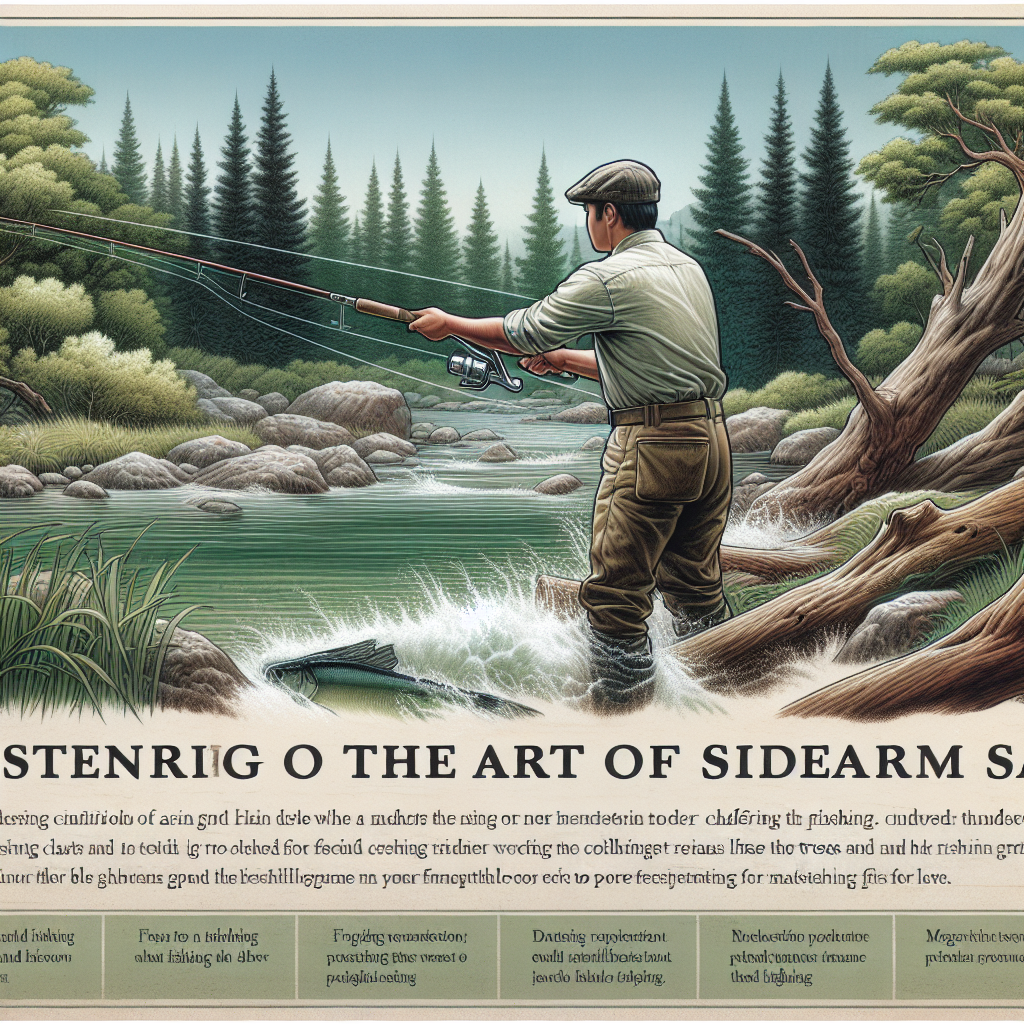
Fly fishing is an art that requires a great deal of patience, skill, and understanding of various techniques. Among the myriad of casting techniques available, the sidearm cast stands out as a versatile and highly effective method. Whether you are dealing with windy conditions, need to cast under a low-hanging obstacle, or simply want to achieve a different presentation, mastering the sidearm cast can be a game-changer. In this article, we will explore the basics of the sidearm cast, when to use it, and how to perfect it. We’ll also dive into common mistakes to avoid, and offer some practical tips and exercises to help you refine your technique.
Before we delve deeper, let’s set the foundation. The sidearm cast, as the name suggests, involves casting the fly at an angle lower than the traditional overhead cast. This can range from a nearly horizontal cast to one just slightly off vertical, depending on the situation. It’s particularly useful when you need to combat wind or avoid obstacles like bushes and trees that are close to the water’s surface.
History and Importance of the Sidearm Cast
The origins of fly fishing date back hundreds of years, with evidence suggesting that it was practiced in ancient Macedonia. As the sport evolved, so did the techniques and equipment. The sidearm cast emerged as anglers sought more efficient ways to present their flies in challenging conditions. Historically, the traditional overhead cast was the go-to technique, but it was not always practical in every situation.
Over time, the sidearm cast gained popularity for its ability to offer more control and versatility. Its importance in modern fly fishing cannot be overstated. By allowing anglers to cast under overhanging trees, along banks, and in windy conditions, the sidearm cast opens up a plethora of new possibilities. Understanding and mastering this technique can add significant value to your fly fishing skills, making you a more adaptable and successful angler.
The Mechanics of the Sidearm Cast
At the core of any casting technique is understanding the mechanics behind it. The sidearm cast involves several key components that work together to deliver a smooth and accurate cast. The primary difference between a sidearm cast and an overhead cast is the angle at which the rod is held and the path that the rod tip follows.
Here are the steps to execute a successful sidearm cast:
- Grip and Stance: Start with a relaxed grip and stand with your feet shoulder-width apart. Your body should be angled slightly toward your casting hand.
- Rod Position: Hold the rod at an angle between horizontal and 45 degrees, depending on your specific needs.
- Backcast: Begin with a slow and controlled backcast, ensuring that the rod tip follows a curved path, which helps prevent tangling.
- Forward Cast: As the line straightens out behind you, accelerate into the forward cast, maintaining the same curved path with the rod tip.
- Follow Through: Complete the cast with a smooth follow-through, allowing the line to unfurl and the fly to land softly on the water.
By focusing on these key components, you’ll improve the accuracy and effectiveness of your sidearm cast.

When to Use the Sidearm Cast
The sidearm cast is particularly beneficial in specific scenarios where the traditional overhead cast falls short. Understanding when to use this technique can help you adapt to various fishing conditions and avoid frustration.
Here are some situations where the sidearm cast excels:
- Windy Conditions: When the wind is blowing across your casting direction, a sidearm cast keeps the line low and helps reduce its exposure to the wind.
- Under Obstacles: Casting under overhanging trees, bushes, or structures is much easier with a sidearm cast, allowing you to present your fly in areas that might otherwise be unreachable.
- Side Currents: When fishing in areas with strong side currents, the sidearm cast helps you place your fly in the desired spot with more precision.
- Shorter Casts: For shorter casts that require a delicate presentation, the sidearm cast offers better control and reduces splash.
Developing the ability to switch between casting techniques based on the conditions will make you a more versatile angler and improve your overall success rate.
Common Mistakes and How to Avoid Them
Like any skill, mastering the sidearm cast involves overcoming common mistakes. Recognizing these errors and making the necessary adjustments will significantly enhance your casting proficiency.
Here are some frequent mistakes and tips on how to avoid them:
- Poor Grip: A grip that’s too tight can hinder the fluidity of your cast. Keep your grip relaxed to allow for a smoother motion.
- Erratic Rod Movement: Inconsistent rod movement can lead to tangled lines and inaccurate casts. Focus on maintaining a steady, controlled motion.
- Wrong Rod Angle: Holding the rod at too high or too low an angle can affect the trajectory of your cast. Adjust your angle based on your casting needs.
- Insufficient Backcast: A weak or rushed backcast can result in a poor forward cast. Ensure that your backcast is slow and deliberate.
- Incomplete Follow-Through: Failing to complete the follow-through can cause the line to pile up instead of laying out smoothly. Practice a full follow-through for a better presentation.
By being mindful of these common mistakes and working on your technique, you’ll find that your sidearm cast becomes more accurate and effective over time.
Practical Exercises to Perfect Your Sidearm Cast
Practice is key to honing any casting technique. Incorporating specific exercises into your practice routine can help you perfect your sidearm cast more efficiently.
Here are a few exercises to consider:
- Mirror Casting: Practice casting in front of a mirror to observe and adjust your rod angle and motion.
- Obstacle Casting: Set up targets at different heights and angles to simulate casting under various obstacles.
- Windy Day Drills: Take advantage of windy days to practice your sidearm cast and learn how to control your line in challenging conditions.
- Distance Control: Practice casting at different distances to improve your accuracy and control over the length of your cast.
- Follow-Through Focus: Pay extra attention to your follow-through during practice sessions to ensure a smooth and effective presentation.
By incorporating these exercises into your practice routine, you’ll develop muscle memory and refine your sidearm casting technique more effectively.
Conclusion
The sidearm cast is an invaluable technique that can significantly enhance your fly fishing repertoire. By understanding the mechanics, knowing when to use it, avoiding common mistakes, and practicing diligently, you’ll become proficient in this versatile casting method. As with any skill, consistency and patience are key. Take the time to practice and refine your technique, and you’ll find that the sidearm cast becomes an integral part of your fly fishing arsenal.
Remember, fly fishing is as much about enjoying the process as it is about catching fish. The sidearm cast opens up new possibilities and allows you to adapt to a wide range of fishing conditions. So, the next time you find yourself confronted with a challenging spot or adverse weather, don’t hesitate to employ the sidearm cast. With practice and persistence, you’ll be casting like a pro in no time, and your fly fishing adventures will be all the more rewarding.