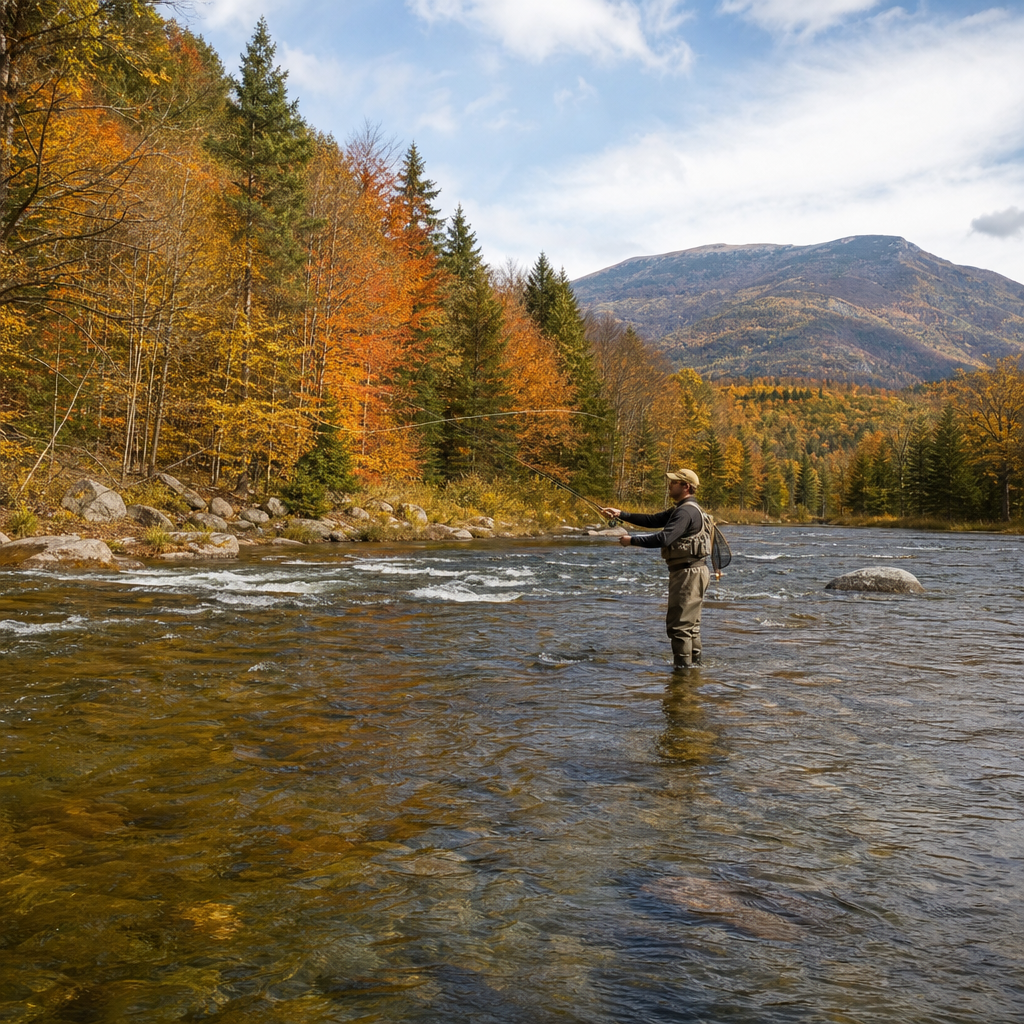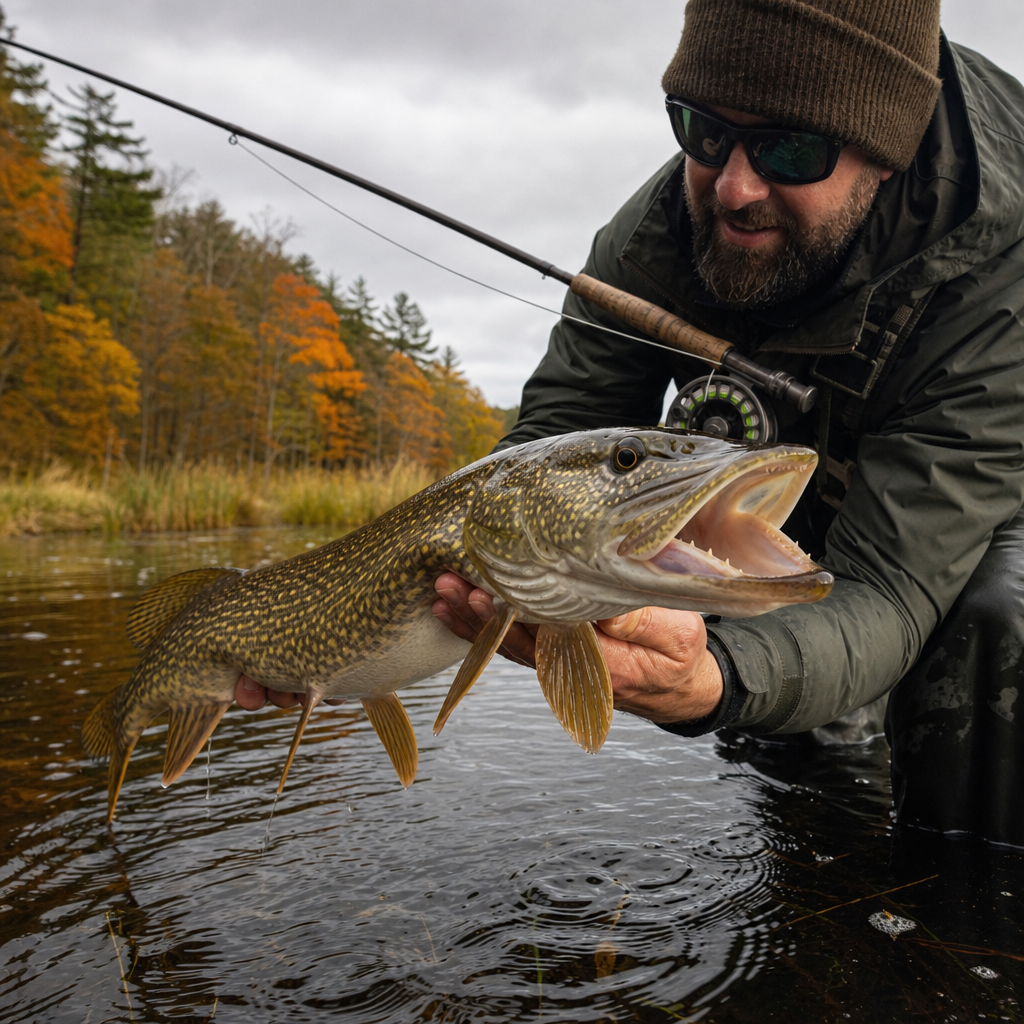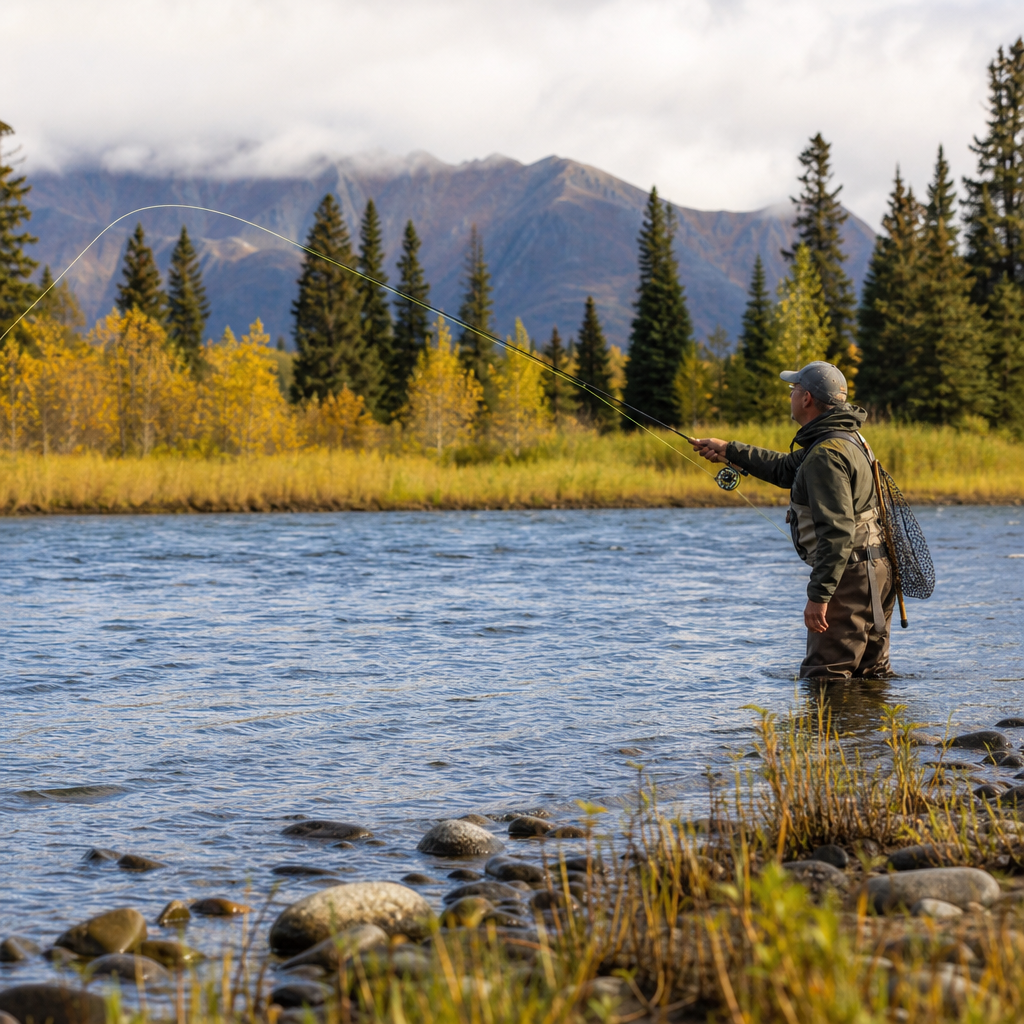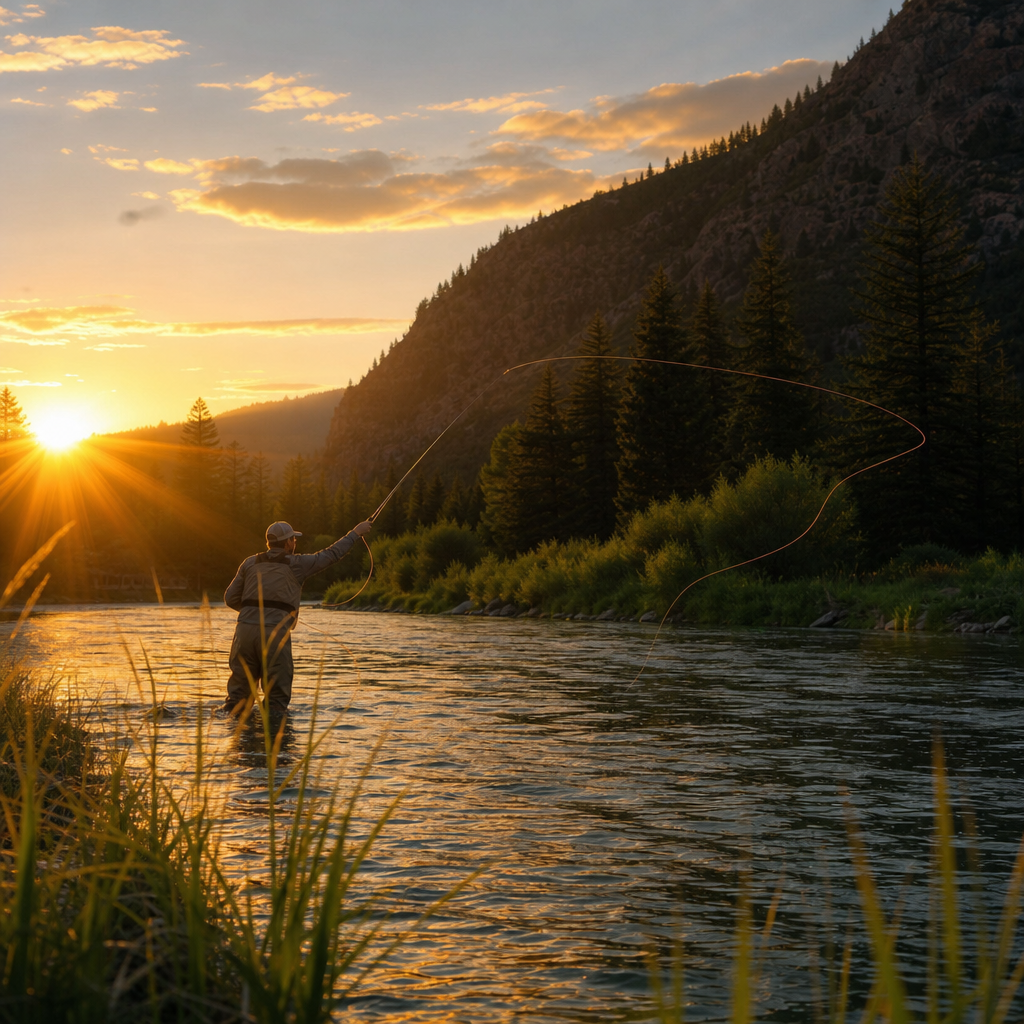
Fly fishing during golden hour gives anglers one of the most consistent windows for feeding activity, comfortable light, and precise presentation, which is why time of day deserves its own place within any serious seasons and conditions strategy. In practical terms, golden hour refers to the period shortly after sunrise and the period shortly before sunset, when the sun sits low, shadows lengthen, glare softens, and water temperatures often move into a range that encourages trout, bass, carp, and many warmwater species to feed. I have planned entire trips around these windows because they routinely compress the best parts of a day into ninety focused minutes: visible rises, active insects, less boat traffic, and fish willing to move farther for a fly.
Time of day matters in fly fishing because fish do not feed evenly across twenty four hours. Their behavior shifts with light penetration, oxygen levels, water temperature, current speed, insect emergence timing, predator pressure, and angling pressure. A bright midsummer noon can push trout under cutbanks or into deeper riffle seams, while the same water at first light may show confident surface feeding. On tailwaters, stable flows can make morning and evening hatches remarkably predictable. On stillwaters, low angle light often pulls cruising fish into the shallows. Understanding these patterns turns golden hour from a romantic idea into a repeatable tactical advantage.
As the hub page for time of day, this guide explains what changes at sunrise and sunset, how fish react, how to choose water, flies, and tackle, and how to adjust for season, weather, and species. It also sets a framework you can apply before branching into more specific approaches such as dawn trout fishing, evening dry fly tactics, night transitions, and midday fallback plans. The central lesson is simple: success during golden hour comes from matching low light conditions with deliberate positioning, accurate observation, and efficient decisions. If you know where fish slide, when food becomes available, and how changing light affects your drift, you can make these short sessions highly productive.
Why Golden Hour Triggers Fish Activity
Golden hour improves fly fishing because it aligns several favorable conditions at once. Low sun reduces overhead glare and direct exposure, making fish feel safer in water they might avoid under bright light. Temperatures are also in transition. Summer mornings begin cool and often raise insect activity as the air and surface film warm. Summer evenings reverse the pressure of the day, with banks cooling, terrestrials dropping, and trout reappearing in softer edges after hiding from sun and heat. In spring and fall, these same periods can concentrate midge, mayfly, and caddis movement, especially when overnight temperatures or afternoon warmth push insects into a narrow emergence band.
From experience on freestone trout rivers, the most important change is often fish position rather than appetite alone. At noon, fish may hold tight to depth, structure, or shade. During golden hour, they commonly shift into feeding lanes with softer current and easier interception angles. On rivers, that means the inside seam below a riffle, a slick beside pocket water, or the tailout where drifting insects gather. On lakes, it often means the first drop off, weed edges, shoals, or mud flats where damsels, chironomids, baitfish, and callibaetis become available. The fish are not necessarily feeding harder everywhere; they are feeding in more reachable places.
Golden hour also helps anglers see useful clues. Although low light can reduce depth perception, it often improves your ability to detect rises, swirls, bait movement, and surface texture changes that reveal current seams. Polarized glasses still matter, but the lower angle of sunlight can make side scanning more effective than looking straight down. On technical water, that visibility edge matters. I often catch more fish in the first thirty minutes of evening not because I cast more flies, but because I can finally identify the lane fish are actually using instead of guessing from a glare blown surface.
Reading Water and Positioning for Low-Light Windows
The best water during golden hour is usually water that offers food concentration, security, and an efficient feeding path. On trout streams, start with riffle corners, pool heads, foam lines, undercut banks, current seams beside midstream boulders, and tailouts with depth nearby. As light drops, trout often slide from heavy cover into transitional lies where current delivers food without requiring much energy. A shallow flat with no nearby depth can still produce, but it is less reliable than a flat linked to a channel, cutbank, or trough. Fish want a quick retreat route, especially while the light is still changing.
Positioning matters as much as fly choice. At dawn, approach from downstream whenever possible and avoid skyline exposure, because low angle light can silhouette you dramatically. In the evening, think about where your shadow falls across the water. I have watched selective fish stop feeding the instant an angler stepped into the final patch of sunlight above them. Keep wading to a minimum, use bank cover, and set up before the main feeding push starts. If fish begin rising while you are still moving through the run, you are already late. The best golden hour anglers are stationary observers first and casters second.
Stillwater positioning follows the same principle with different landmarks. Focus on shoals that taper into deeper water, the downwind side of points where food accumulates, the edge of weed beds, and bays that warm early in the morning. During evening calm, look for subtle porpoising or dimples that reveal trout cruising within a rod length or two of shore. On warmwater ponds, bass often pin bait against reeds or shallow timber during sunset. In each case, place yourself where you can cover both the shallow feeding shelf and the adjacent deeper escape water without moving constantly.
Fly Selection, Presentation, and the Right Tackle
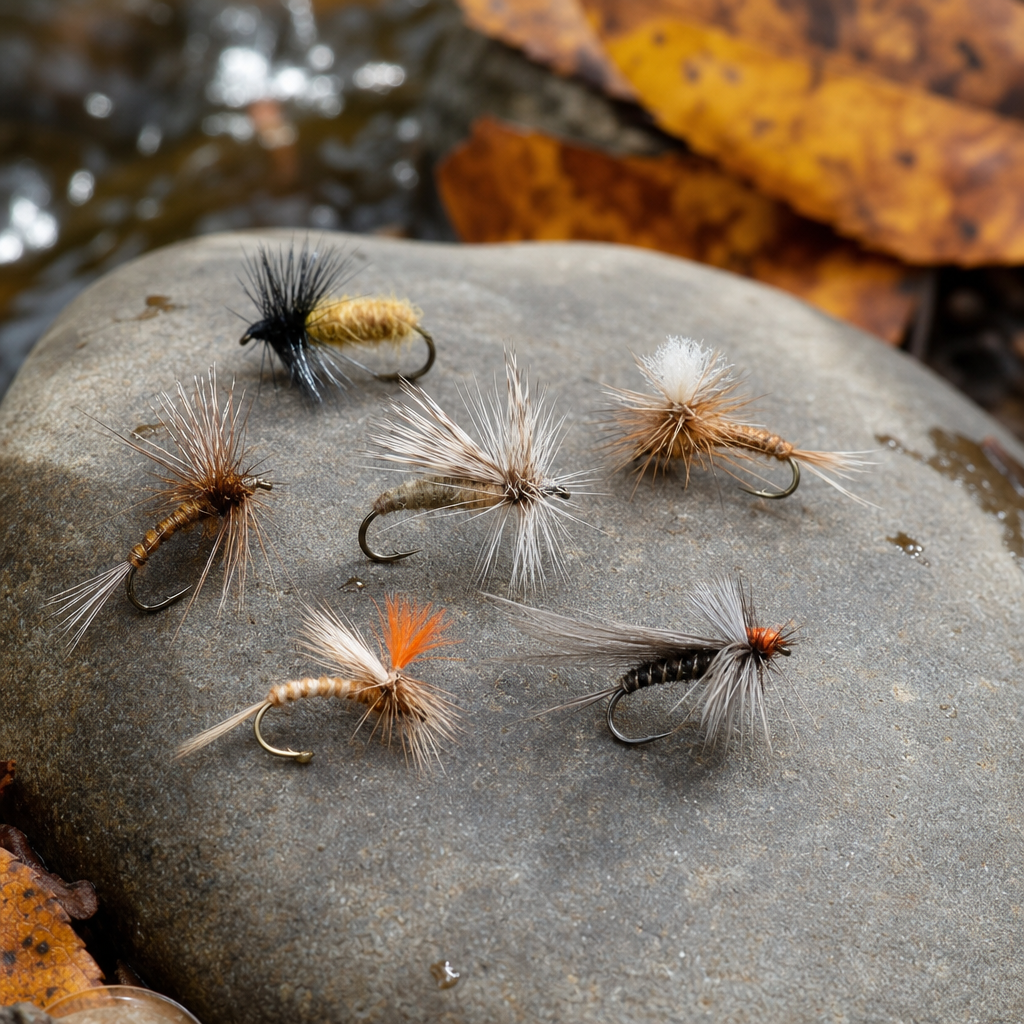
Golden hour fly selection should reflect what food becomes easiest for fish to capture in low light. Early morning often favors emergers, midges, small mayflies, and attractor nymphs drifted through transition water before surface feeding fully starts. Evening sessions frequently call for caddis, spinner falls, ant and beetle patterns, baitfish imitations, or larger searching dries that fish can locate quickly. Size and profile matter more than perfect color matching once the light drops, which is why parachute dries, comparaduns, soft hackles, and lightly weighted streamers consistently outperform overcomplicated patterns in these periods.
Presentation changes with the clock. In first light, dead drifts and subtle swings often produce because fish are feeding with confidence but not yet recklessly. As the evening progresses, trout may slash at skittering caddis, chase stripped streamers, or sip spent mayflies in glassy tails. Covering water efficiently is essential because the best activity may last only forty five minutes. I typically rig to preserve options: a nine foot leader tapered to 4X or 5X for dry flies, a dropper if the hatch is uncertain, and a second spool or rod with an intermediate or sink tip line when I expect streamer opportunities at dusk.
| Golden Hour Situation | Most Effective Approach | Recommended Fly Types | Key Tackle Notes |
|---|---|---|---|
| Cold dawn on a trout river | Start subsurface, then switch to surface if rises appear | Pheasant Tail, Zebra Midge, soft hackle emerger | 9 foot 5X leader, light split shot only if current demands |
| Summer evening caddis activity | Dead drift first, then skate or twitch near the bank | Elk Hair Caddis, X Caddis, caddis pupa | Floating line, 4X or 5X, high floating dry dressing |
| Stillwater sunset cruiser patrol | Slow hand twist retrieve along weed edges | Chironomid pupa, damsel nymph, small leech | Intermediate line, long leader for clear calm conditions |
| Warmwater pond at dusk | Target ambush cover with strips and pauses | Deceiver, popper, woolly bugger | 6 to 8 weight, stout tippet for weeds and larger fish |
Tackle should support accuracy, not just distance. A moderate or fast action 4 to 6 weight covers most trout golden hour work, while a 6 to 8 weight is better for bass, larger streamers, and windy stillwater. Bring a headlamp, but do not use it carelessly; white light on the water can kill your night vision and spook fish in close. Fluorocarbon excels for subsurface dawn presentations, while nylon remains preferable for dries because it floats better. Check your leader before every session. Low light hides wind knots, and a single weak point can waste the only big fish that feeds before dark.
Adjusting for Season, Weather, and Species
Golden hour is not identical year round. In summer, dawn is often stronger than late morning because cooler water and higher oxygen encourage movement before heat builds. Evening can be excellent too, particularly on rivers with caddis, tricos, or terrestrial input, but on very warm water trout may remain stressed until temperatures fall significantly. A stream thermometer is not optional. If trout water is pushing into the high sixties Fahrenheit, shorten the session, fish the coolest hours only, and stop entirely when temperatures become unsafe. Responsible timing is part of effective timing.
Spring and fall create broader opportunity. In spring, warming afternoons can outperform mornings, yet the evening transition still gathers fish into softer lies where hatches consolidate. In fall, lower light supports streamer fishing and larger predatory behavior, especially from brown trout staging near structure. Winter golden hour is shorter and often more subtle, but low sun can still improve midge and small mayfly feeding if water temperatures rise even a degree or two. On tailwaters below dams, stable temperatures flatten some seasonal extremes, which is why hatch charts and local flow reports are invaluable planning tools.
Weather can magnify or mute the effect. Cloud cover effectively extends golden hour by reducing intensity across the day, especially when paired with a light breeze. A hard bluebird evening after a bright summer day often delays feeding until the final sliver of light. Before thunderstorms, pressure changes and wind can ignite short aggressive windows, particularly for bass and streamer eats. Species also matter. Trout respond strongly to insect timing and security. Smallmouth bass exploit shade lines and bait movement. Carp may tail confidently on warm shallow flats at sunrise, then become maddeningly selective once the sun climbs. Matching species behavior to time of day keeps expectations realistic.
Mistakes That Cost Fish During Golden Hour
The biggest mistake is arriving when the window starts instead of arriving early enough to observe and prepare. Golden hour rewards anglers who have already tied knots, chosen water, and noted insect activity before fish begin moving. Second is fishing too fast. Because the period is short, many anglers rush casts, change flies constantly, or wade through prime holding water. The better approach is to make a few high quality presentations into likely lanes, watch for feedback, and adjust with purpose. Low light is not a license for sloppy drifts; in fact, calm evening water often exposes drag more clearly than rough midday current.
Another common error is assuming surface action is mandatory. Some of my best dawn sessions have come on unweighted soft hackles swung below a riffle while everyone else waited for visible rises. Likewise, streamer fishing at dusk can outperform dry flies when baitfish are active and larger trout are hunting. Gear neglect is another preventable problem. Weak batteries, missing floatant, tangled leaders, and forgotten glasses become bigger issues when time is limited. Finally, anglers often stay too long in dead water because the light feels promising. If a prime seam, flat, or bank gives no signs after a disciplined rotation, move. Golden hour is brief; indecision is expensive.
Fly fishing during golden hour succeeds because it combines fish biology, insect timing, water reading, and disciplined preparation into one highly predictable opportunity. The low sun of sunrise and sunset changes where fish hold, what food they can intercept efficiently, and how safely they feed. For anglers, those same periods improve access to shallow lanes, visible surface clues, and concentrated activity that can transform an ordinary outing into the best session of the day. Whether you fish rivers, lakes, or ponds, the core pattern stays consistent: identify transition water near security, arrive early, observe carefully, and match your fly and presentation to the specific feeding mode in front of you.
As the central guide for the time of day topic, this page gives you the framework to make better decisions across seasons and species. Use mornings when temperatures, oxygen, and calm conditions favor early feeding. Use evenings when hatches, terrestrials, and reduced light draw fish back into reachable water. Let weather, season, and water type refine the plan rather than replace it. Most importantly, treat golden hour as a strategic window, not just a scenic one. Keep notes on start times, insect activity, light angle, and productive lies, and your results will become more consistent from trip to trip.
If you want more fish from shorter outings, build your schedule around golden hour and practice one adjustment at a time. Start with water selection, then improve positioning, then refine your first fly choice. That simple process will make every low light session sharper and more productive.
Frequently Asked Questions
What makes golden hour so productive for fly fishing?
Golden hour is productive because several favorable conditions come together at once. During the first hour or so after sunrise and the last hour before sunset, the sun sits low in the sky, which reduces harsh glare on the water, lengthens shadows, and often makes fish feel more secure about moving into feeding lanes. In many rivers, lakes, and ponds, this softer light helps trout, bass, carp, and panfish leave deeper or more protected holding areas and feed more actively along seams, banks, weed edges, and shallow flats. Water temperature can also be a major factor. In warm weather, the early morning window may bring cooler, better-oxygenated conditions, while the evening window can coincide with insects becoming more active and fish shifting into a more aggressive feeding mode.
From an angler’s perspective, golden hour also improves presentation and observation. Softer light can make it easier to track drifts, see surface disturbances, and spot subtle takes that get washed out under bright midday sun. Fish are often less wary during these low-light periods, especially in clear water where overhead brightness normally pushes them deeper. That does not mean every golden hour is automatically excellent, but it does mean this time of day consistently stacks the odds in your favor. When paired with the right fly choice, a quiet approach, and accurate casting, golden hour becomes one of the most reliable windows for quality fly fishing.
Which fish species respond best during golden hour, and how should tactics change for each?
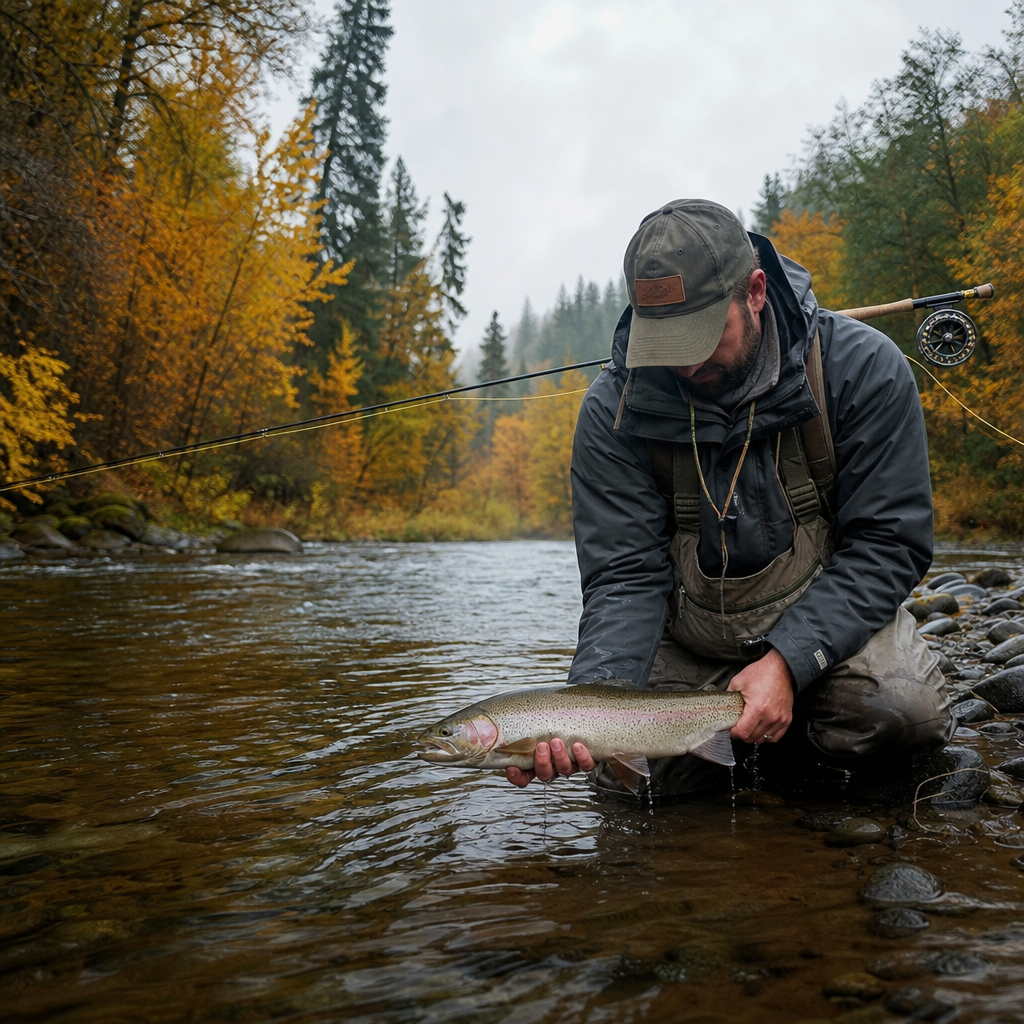
Golden hour benefits a wide range of species, but the way you fish it should match the habits of your target. Trout are classic golden-hour feeders because they often become more willing to rise, slide into softer water near current seams, and patrol shallower runs when light levels drop. For trout, this is often the time to focus on dry flies during hatches, emergers in the film, or lightly weighted nymphs drifted naturally through feeding lanes. In the evening especially, watch for dimples, splashy rises, or concentrated bug activity that signal fish have shifted from opportunistic feeding to selective feeding.
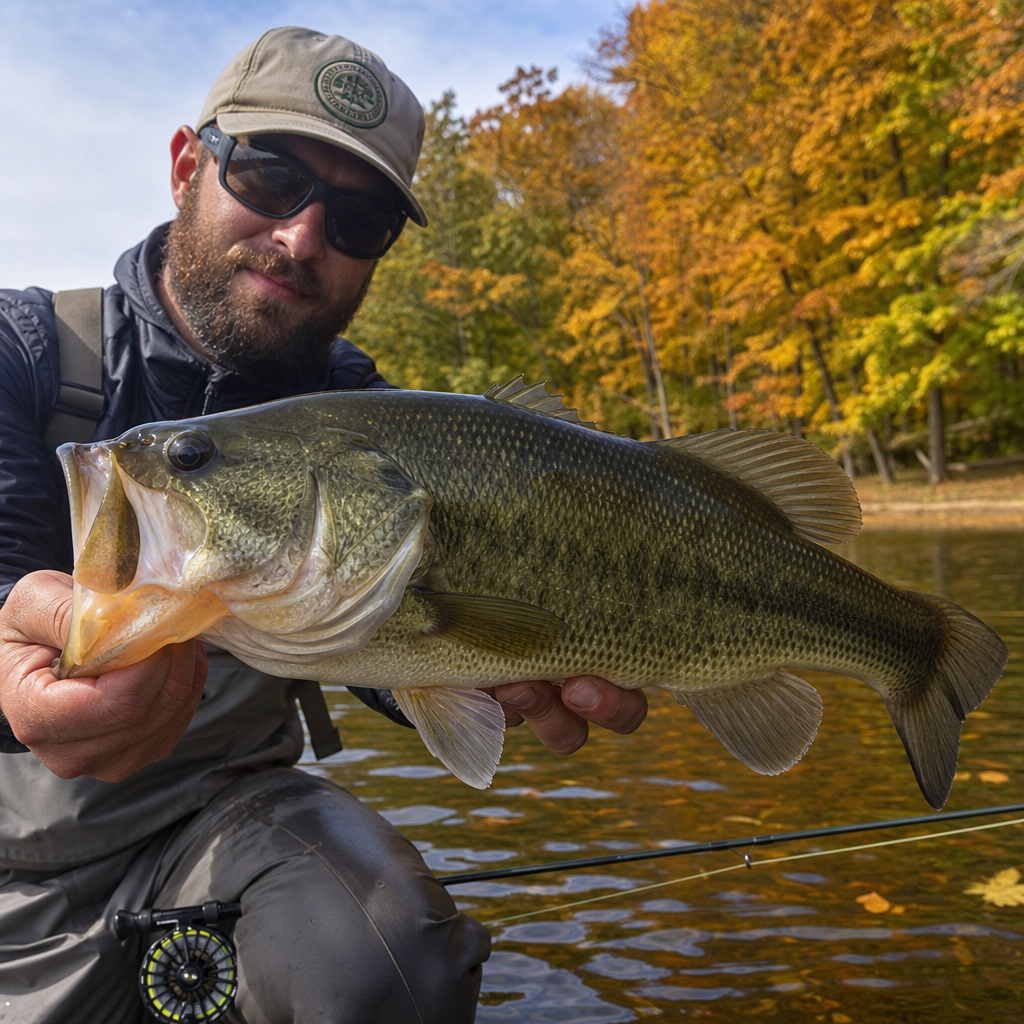
Bass often take advantage of low light to push baitfish, frogs, and larger prey toward banks, wood, weed lines, and drop-offs. That makes golden hour a prime time for streamers, deer-hair poppers, gurglers, and other flies that create movement and profile. Carp can also become more approachable in softer light, especially in calm flats where bright overhead sun would otherwise make them skittish. During golden hour, sight-fishing to carp may be easier if surface glare is reduced, and smaller nymphs, damselfly patterns, and carp-specific flies can be presented more calmly to cruising fish. Panfish and smaller warmwater species also feed actively at this time, often around cover and near the surface. The key across species is to recognize that golden hour is not a single tactic period. It is a timing advantage, and you still need to fish the structure, forage, and behavior patterns that matter to the species in front of you.
What flies work best during golden hour?
The best flies for golden hour are usually the ones that match the food source fish are already looking for while also staying visible and convincing in lower light. For trout streams, that often means carrying a flexible lineup of dry flies, emergers, soft hackles, and lightly weighted nymphs. If insects are active, fish may key on mayflies, caddis, midges, or terrestrials, especially near sunset. In the morning, subsurface patterns can be highly effective before surface feeding fully develops. Soft hackles are especially useful during golden hour because they imitate emerging insects and can be swung, drifted, or lifted through the water column with subtle movement.
For bass and other warmwater species, golden hour is an excellent time for streamers and topwater flies. Patterns with strong silhouettes, natural baitfish profiles, or just enough disturbance to get noticed can be deadly in low light. Darker flies often create a better silhouette against the sky when fish are looking upward, while olive, black, brown, and white remain dependable baitfish or buggy colors. If you are fishing stillwater, leeches, damselfly nymphs, and small baitfish patterns are strong options, particularly along weed edges and shelves. The most important principle is not to overcomplicate it. Start by asking whether fish are feeding on the surface, in the film, or below it, then choose flies that match that level and move naturally through the zone. Golden hour rewards confidence and adjustment more than constant fly changing.
How should I adjust my presentation and approach during golden hour?
Presentation matters just as much during golden hour as it does at any other time, and in some situations it matters even more because fish may be feeding more actively but still remain alert to unnatural movement. A quiet approach is essential. Even in lower light, trout and carp in shallow water can spook from heavy footfalls, poor wading angles, or abrupt false casting overhead. Use the softer light to your advantage by approaching from downstream when appropriate, staying off the skyline, and positioning yourself so your line and leader do not cross directly over fish before the fly does. If glare is reduced, you may be able to read current seams and subtle fish movement more clearly, which helps you plan a better first cast.
Your drift or retrieve should match the species and the moment. For trout, dead-drifted dries and nymphs usually need to remain drag-free through the feeding lane, while emergers and soft hackles can benefit from a slight lift or swing at the end of the drift. For bass, a more animated retrieve with pauses, strips, or surface pops may trigger strikes during fading light. In stillwater, long leaders, controlled retrieves, and careful line management become critical because fish often cruise methodically at dawn and dusk. Also remember that casting accuracy becomes increasingly important when fish move tight to banks, structure, or narrow current seams. Golden hour often creates short but high-quality feeding windows, so efficient presentations and strong situational awareness can make the difference between a few random casts and a truly productive session.
Is sunrise or sunset better for fly fishing during golden hour?
Neither is universally better; each has distinct advantages, and the better choice depends on season, water type, weather, and species behavior. Sunrise often shines during hot weather because overnight cooling can lower water temperatures, increase fish comfort, and create a calm, low-pressure start before recreational traffic and wind build. On heavily pressured waters, early morning also gives anglers a stealth advantage because fish have not yet seen as much commotion. Trout in particular may feed confidently in the first light, especially in summer when midday heat and bright sun suppress activity later on.
Sunset, on the other hand, is often the more dramatic feeding window because many aquatic insects become active late in the day and fish know they have a limited period to take advantage of concentrated food. Evening hatches can be dense, and warmwater species like bass frequently use the fading light to move shallow and hunt more aggressively. Sunset can also extend beyond the visible golden glow, with the period just after the sun drops below the horizon sometimes producing outstanding action. The practical answer is to test both whenever possible. If water temperatures are high, lean toward sunrise. If hatch activity is building or baitfish are pushing shallow late, prioritize sunset. The best anglers treat golden hour as a pattern to study, not a fixed rule, and they let current conditions tell them which window is stronger on a given day.