Slovenia is one of Europe’s most rewarding fly fishing destinations because it packs alpine rivers, spring creeks, karst systems, and Adriatic-draining waters into a compact country that is easy to travel and surprisingly diverse to fish. For anglers planning a Europe fly fishing trip, Slovenia often becomes the gateway destination: accessible, scenic, tightly regulated, and rich in distinctive trout and grayling water. I have fished and planned trips across the region, and Slovenia consistently stands out for its combination of fish quality, river protection, and practical logistics. In a continental context, it matters even more. Europe offers famous chalkstreams in England, technical limestone rivers in the Balkans, glacier-fed systems in the Alps, and large freestone rivers across Scandinavia and Central Europe. Slovenia sits at the intersection of several of those traditions. That makes it an ideal hub page within the broader Europe fly fishing destinations topic.
Understanding Slovenia’s value starts with a few key terms. A freestone river is primarily shaped by runoff and seasonal snowmelt, so flows and clarity can change quickly. A spring creek is more stable, often clearer, and usually demands finer presentation. A tailwater flows below a dam and tends to hold consistent temperatures and insect life. In Slovenia, most visiting anglers focus on trout and grayling water managed by local fishing clubs, called ribiške družine, which lease and protect beats through permit systems. These clubs are central to how fly fishing works in the country. They stock selectively where appropriate, preserve wild reaches elsewhere, maintain access, and enforce rules on hooks, harvest, and methods. For traveling anglers, that means you are not just choosing a river; you are choosing a management culture.
Why does that matter for anglers researching Europe? Because destination quality is not only about beautiful water. It is about fish populations, pressure, access, regulations, hatches, local guiding, and whether a river can still fish well after heavy rain or summer heat. Slovenia scores highly on all of those factors. You can fish the Soča basin for marble trout, the Sava Bohinjka for mixed dry-fly and nymphing, the Unica for technical spring-creek challenges, and the Krka for gentler lowland fishing, all within a few hours. That variety mirrors the wider European fly fishing landscape in miniature. If you are comparing Slovenia with Austria, Bosnia and Herzegovina, Croatia, Italy, or Montenegro, this guide explains where Slovenia excels, where it is demanding, and how to use it as a starting point for exploring Europe’s best fly fishing destinations.
Why Slovenia matters within Europe’s fly fishing map
Slovenia belongs near the top of any serious Europe fly fishing shortlist because it offers uncommon species, disciplined management, and a rare density of fishable rivers. Most European destination planning starts with a broad question: do you want iconic scenery, easier access, large fish, technical dry-fly water, or species you cannot easily catch elsewhere? Slovenia answers yes to most of those at once. The country is especially famous for marble trout, a native Salmo marmoratus with striking vermiculated patterns and a conservation story tied directly to river management. Anglers also target brown trout, rainbow trout in some waters, grayling, and occasionally huchen in selected systems. That range gives Slovenia more breadth than many single-country destinations.
Geography is the other reason Slovenia functions so well as a European hub. The Julian Alps feed cold rivers through the northwest, while central and southern karst systems produce stable limestone flows. You can base near Bled, Bohinj, Kobarid, Tolmin, or Ljubljana and reach multiple fisheries quickly. Compared with larger countries, drive times are short, border crossings to neighboring fisheries are realistic, and changes in weather patterns are easier to manage. On one trip, I have moved from colored alpine water in the Soča valley to clearer Sava or karst options without losing a fishing day. That flexibility is valuable in Europe, where rainfall and snowmelt can affect river choice dramatically.
Slovenia also represents the European model of localized fishery stewardship at its best. Instead of one national lodge culture dominating access, many waters are run by clubs with specific permit structures, beat limits, and conservation priorities. That can feel unfamiliar to anglers used to broader public access, but it often results in well-protected fish and controlled pressure. For destination research, this is important: Slovenia is not just beautiful; it is functional. It rewards anglers who plan carefully, respect rules, and match river type to skill level.
The standout rivers and what each one offers
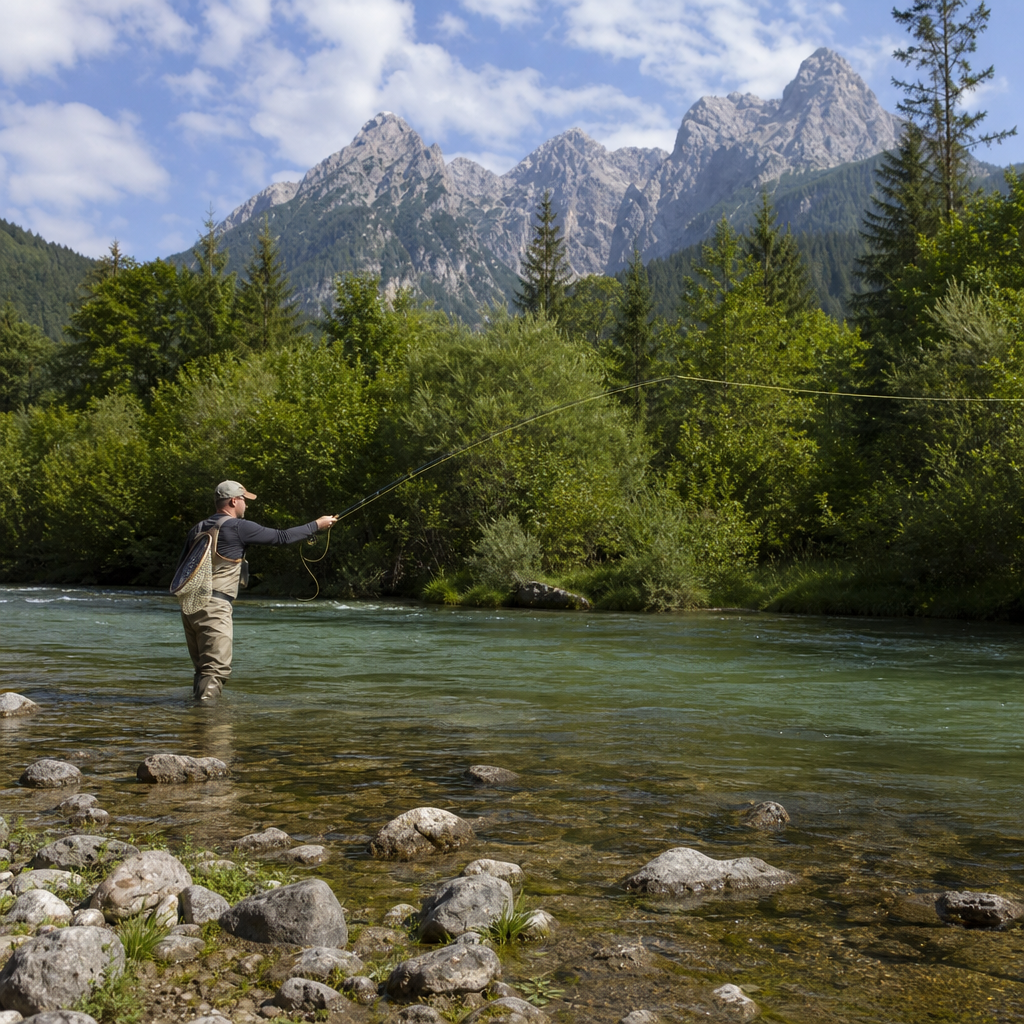
The Soča river is Slovenia’s international flagship. Its luminous blue-green water and dramatic valley make it one of Europe’s most recognizable trout rivers, but its real draw is the marble trout. The upper Soča and tributaries such as the Lepena and Koritnica are visually stunning and technically demanding. Fish often hold in powerful pocket water, deep emerald runs, and seams that require accurate drifts with weighted nymphs or compact streamers. When conditions align, dry-fly fishing can be excellent, but many visitors underestimate how much the river’s size, clarity, and current speed challenge presentation. This is not just a scenic river; it is a serious fishery.
The Sava Bohinjka is a more versatile option and one of the best all-around trout rivers in Europe for mixed methods. Flowing from Lake Bohinj through classic riffle-run water, it supports mayfly and caddis activity, productive nymphing, and realistic dry-fly opportunities through the season. It is often the river I recommend first to anglers visiting Slovenia for the first time because it is approachable without being simplistic. Nearby waters, including the Radovna and parts of the Sava Dolinka, extend the menu. If the Soča is iconic and specialized, the Sava basin is broad-shouldered and practical.
The Unica is entirely different: a karst river and spring-creek-style challenge where long leaders, precise drifts, and careful fish spotting matter. It is famous for large, selective trout and grayling, especially during calm conditions and clear flows. The river can be moody, with fish that inspect flies closely and refuse poor presentations. Yet that exact difficulty is why experienced anglers rank it among Europe’s most memorable technical rivers. The Krka, meanwhile, offers a softer lowland character with accessible banks and quality trout water in a slower setting. Rivers such as the Idrijca and Bača add still more variety, especially for anglers who want less famous but highly fishable beats.
| River | Best Known For | Primary Challenge | Ideal Angler Type |
|---|---|---|---|
| Soča | Marble trout, alpine scenery | Powerful currents and demanding presentation | Experienced trout anglers |
| Sava Bohinjka | Versatility, strong hatches, mixed methods | Reading changing water types | First-time Slovenia visitors |
| Unica | Technical sight fishing, selective trout and grayling | Fine tippet and exact drifts | Advanced dry-fly anglers |
| Krka | Calmer lowland fishing, accessible beats | Slower water stealth | Intermediate anglers and relaxed trips |
Species, seasons, and the techniques that work
Most Slovenia fly fishing trips revolve around trout, but not all trout fishing here is the same. Marble trout are the headline species because they are both beautiful and place-specific. In many waters, anglers also encounter brown trout, and some fisheries include rainbow trout through historical stocking or mixed management. Grayling are another major attraction, especially in the Sava and selected karst systems. Understanding species behavior helps you choose the right river. Marble trout often reward aggressive streamer presentations in structure-heavy water, while grayling and educated browns in clearer systems frequently demand precise nymphing or refined dry-fly drifts.
The main season generally runs from spring into autumn, though exact opening and closing dates vary by fishery and species rules. Late spring and early summer are often prime because flows stabilize, insect life becomes more reliable, and fish feed actively after colder months. June can be exceptional on many rivers, but it also draws traveling anglers. Summer offers long days and terrestrial opportunities, yet low clear water can make fish especially selective and daytime fishing slower. Early autumn is one of the most underrated windows in Slovenia. Crowds thin, light softens, and larger trout often feed with more purpose before winter. The tradeoff is that weather becomes less predictable.
Technique should follow water type, not trend. European nymphing styles are effective in Slovenia because many rivers feature complex currents, depth changes, and fish holding close to the bottom. Short-line presentations with controlled contact can outperform indicator rigs in pocket water and faster seams. On flatter glides and spring-creek sections, dry-dropper or single-dry approaches are often better. Streamers are indispensable on certain waters, especially when hunting larger marble trout or covering water after rain. Bring patterns for mayflies, caddis, stoneflies, and terrestrials, but also remember that profile, depth, and drift frequently matter more than exact imitation. In my experience, anglers who arrive with a rigid method struggle; anglers who adapt to each valley fish far better.
Planning a successful trip: permits, guides, tackle, and travel logistics
Planning is where Slovenia’s reputation for quality becomes tangible. Unlike some European destinations where broad access is straightforward, Slovenia usually requires river-specific permits from local clubs or authorized shops. These permits may distinguish between catch-and-release beats, trophy beats, general sections, or fly-fishing-only zones. Read the rules closely. Hook restrictions, maximum numbers of anglers, and time windows can differ from one beat to the next. The upside is clear: pressure stays manageable, and fishery quality remains high. For many first-time visitors, booking permits in advance is essential, especially on the Soča and more famous Sava beats during peak months.
Hiring a guide is often worth the cost, not because the fishing is impossible alone, but because local knowledge saves time and mistakes. A good Slovenia guide understands not just access points and fly selection, but also which river will stay clear after overnight rain, when a club is rotating pressure, and how fish respond to local hatches. That kind of information can turn a difficult trip into a productive one. If you are building a Europe itinerary, a guide for the first one or two days in Slovenia is a smart way to accelerate the rest of the journey, especially if you plan to continue into Austria, Croatia, Italy, or Bosnia and Herzegovina afterward.
A practical tackle setup includes a 9-foot 4- or 5-weight for general trout fishing, a 3-weight for technical dry-fly work on smaller or calmer water, and a 6-weight if you intend to throw streamers for large marble trout. Waders are useful through much of the season, though wet wading can work in summer. Felt soles are restricted or discouraged in some places due to invasive-species concerns, so check local rules and use modern rubber soles with studs where appropriate. Bases such as Bohinj, Bled, Tolmin, and Kobarid all work well, while Ljubljana is useful for anglers combining fishing with broader travel. Distances are short by European standards, airports are manageable, and the country is one of the easiest in the region for independent anglers to navigate.
How Slovenia compares with other Europe fly fishing destinations
Within Europe, Slovenia is best understood as a high-quality, all-round trout destination rather than a place defined by a single famous river. Austria offers larger alpine tourism infrastructure and many excellent rivers, but Slovenia often feels more intimate and less commercial. Bosnia and Herzegovina provides extraordinary wild fisheries, including renowned grayling and huchen waters, yet logistics can be more variable. Croatia has notable limestone and karst rivers, especially near the Slovenian border, but the overall density of famous fly fisheries is lower. Northern Italy brings exceptional alpine fishing too, particularly in South Tyrol and Friuli, though access systems and crowd patterns differ by region.
Slovenia’s strongest competitive advantages are concentration, conservation culture, and species uniqueness. Few places in Europe let you target marble trout in such a well-developed destination framework. Few also let you move so quickly between freestone alpine water and technical karst rivers. For anglers with one week, Slovenia can deliver more variety with less transit time than many larger countries. That is why it works so well as a sub-pillar hub inside the broader Europe fly fishing destinations category. It is both a standalone trip and a strategic launching point for cross-border itineraries.
There are limitations. Peak-season permits can sell out. Some rivers are less beginner-friendly than promotional photos suggest. Weather can change river conditions quickly, especially in alpine basins. And because regulations are localized, visitors must pay attention rather than assuming one national rulebook fits every fishery. None of these are reasons to avoid Slovenia. They are reasons it rewards informed anglers. If you want a Europe fly fishing destination that balances natural beauty, technical depth, and efficient travel, Slovenia deserves a central place on your shortlist.
Exploring Slovenia’s fly fishing destinations means discovering a country that captures the best qualities of European trout angling in a compact, highly fishable format. It offers marquee water like the Soča, versatile rivers like the Sava Bohinjka, technical tests like the Unica, and enough supporting fisheries to build an entire multi-day itinerary around changing conditions and personal goals. Just as importantly, it shows how strong local management improves the angling experience. Permits, beat structures, and club oversight are not bureaucratic obstacles; they are part of why Slovenia’s rivers continue to fish well and attract international respect.
For anglers researching Europe as a whole, Slovenia is more than another pin on the map. It is one of the clearest examples of what makes a destination worth traveling for: species diversity, river variety, serious conservation, and manageable logistics. Whether your goal is a first European fly fishing trip, a marble trout quest, or a broader circuit that includes neighboring countries, Slovenia provides the right mix of challenge and access. Use this page as your hub, then build outward into the rest of Europe’s fly fishing destinations with Slovenia as the benchmark. Start by choosing your river style, booking permits early, and matching the season to the experience you want.
Frequently Asked Questions
Why is Slovenia considered such a standout fly fishing destination in Europe?
Slovenia stands out because it offers an unusual amount of fishing variety in a very compact, easy-to-travel country. In a relatively short drive, anglers can move from clear alpine rivers to fertile grayling water, from intimate spring creeks to dramatic karst systems, and from Danube-draining waters to rivers that eventually flow toward the Adriatic. Few European destinations make it so practical to experience multiple fisheries and multiple styles of fly fishing within a single trip. That variety matters, especially for visiting anglers who want more than one type of water and more than one type of challenge.
Another major reason Slovenia earns such a strong reputation is the quality of its management. Fishing is tightly regulated, beats are often well defined, permits are structured, and many waters are protected in ways that preserve both fish populations and the overall angling experience. That tends to create a more orderly, lower-pressure environment than anglers expect in such beautiful and well-known rivers. Add in scenic mountain valleys, clean water, a strong local fishing culture, and a realistic ability to combine fishing with comfortable travel logistics, and Slovenia becomes one of the most rewarding gateway destinations for a Europe fly fishing trip.
What kinds of rivers and fish can anglers expect when exploring Slovenia’s fly fishing destinations?
One of Slovenia’s biggest strengths is diversity. Anglers will find freestone alpine rivers with cold, oxygen-rich flows, gentler meadow sections that favor technical dry-fly presentations, spring-fed systems with stable water conditions, and karst-influenced rivers known for remarkable clarity and unique color. This range means you can plan a trip around your preferred style of fishing, whether that is nymphing pocket water, stalking risers on smooth glides, fishing terrestrials in summer, or targeting larger trout in highly visual conditions.
The headline species are trout and grayling, with the marble trout being especially iconic. Slovenia is one of the few places where anglers can pursue waters associated with this distinctive native fish, and that alone gives the country a special place on the European fly fishing map. Brown trout are widespread and can be excellent, rainbow trout are present in some fisheries, and grayling opportunities can be very good on the right rivers. The exact species mix and fishing style depend heavily on the region and fishery, which is why trip planning matters. Some waters are best known for numbers and accessibility, while others are about scenery, challenge, and the possibility of encountering exceptional fish in technical conditions.
When is the best time to plan a fly fishing trip to Slovenia?
The best time depends on what you want from the trip, but most anglers focus on the main fishing season from spring through autumn. Late spring and early summer are especially attractive because flows are often healthy, insect activity can be excellent, and the landscape is at its most vivid. This is a great period for anglers who want a balance of nymphing, dry-fly opportunities, and active fish. That said, spring conditions can still be shaped by snowmelt and changing water levels in alpine catchments, so flexibility is important.
Summer can be outstanding, particularly in higher-elevation rivers and clear systems where terrestrial fishing, evening rises, and sight fishing become part of the appeal. The tradeoff is that some lower or more popular waters may fish differently during heat, low water, or peak travel periods. Early autumn is another excellent window, often combining fewer crowds, beautiful conditions, and engaged fish before the season closes on many waters. The smartest approach is not to ask for one universal “best month,” but to match the season to your goals: larger water versus intimate water, dry flies versus nymphs, iconic rivers versus less-pressured alternatives, and sightseeing-focused travel versus dedicated fishing days.
Do you need guides, permits, or advance planning to fish in Slovenia?
Yes, and advance planning is one of the reasons trips to Slovenia go smoothly when done properly. Most waters require permits, and access is typically managed by local fishing clubs or organizations that oversee specific beats. Those permit systems are part of what keeps the fishing high quality, but they also mean anglers should not assume they can simply arrive and fish anywhere. Popular sections can sell out, special-regulation waters may have stricter rules, and different rivers may have different daily permit structures, catch-and-release requirements, hook restrictions, or seasonal limits.
Hiring a guide is not mandatory, but it is often one of the best decisions a visiting angler can make, especially on a first trip. A good local guide helps decode permits, regulations, productive beats, river conditions, and current tactics. They also save time, which is valuable in a destination with so many options packed into a small area. Even experienced anglers benefit because Slovenian rivers can be deceptively technical, with demanding visibility, selective fish, and changing conditions. If you prefer to fish independently, it is still wise to book permits early, confirm regulations in advance, and build a flexible itinerary that allows you to shift between waters depending on weather and flow levels.
How should anglers choose where to fish in Slovenia if it’s their first visit?
The best first-trip strategy is to choose based on fishing style, not just famous river names. Some anglers want the classic turquoise alpine-river experience, some want technical dry-fly fishing for trout and grayling, and others are drawn by the idea of pursuing marble trout in storied waters. Slovenia can accommodate all of those goals, but not every river delivers the same experience. A smart itinerary usually combines one or two signature fisheries with one or two less obvious options that provide contrast, flexibility, and often a more relaxed pace.
It also helps to think in terms of travel efficiency. Because Slovenia is compact, anglers can base themselves strategically and sample multiple systems without losing entire days to transfers. That is one of the country’s biggest advantages over larger European fishing destinations. For a first visit, I generally recommend building a plan around realistic daily drives, the season, and current water conditions rather than trying to chase too many famous beats. Slovenia rewards anglers who stay adaptable. If one river is high, clear alternatives may still fish well nearby. If one valley is busy, another may offer a very different and equally memorable day. The country’s real strength is not just having a few beautiful rivers, but how much genuine variety it offers within such a manageable footprint.