Fly fishing in Poland rewards anglers with cold mountain rivers, prolific hatches, and a surprising range of waters that make the country one of Europe’s most underrated trout and grayling destinations. In this Europe-focused hub for fly fishing destinations, Poland deserves close attention because it combines accessible travel, strong local traditions, and rivers that still feel wild. Fly fishing means presenting an artificial fly with a weighted or unweighted line rather than a sinker-heavy spinning setup, allowing delicate drifts for species such as brown trout, rainbow trout, grayling, and, in selected waters, huchen. Poland matters on the European fly fishing map because its fisheries span the Carpathian foothills, Sudetes streams, Pomeranian lakes, and lowland rivers managed under distinct regional rules. I have fished and researched these waters with local clubs, guides, and permit offices, and the pattern is consistent: anglers who arrive prepared for regulations, seasonal variation, and river character usually fish well. Those who show up assuming a single national rulebook often waste valuable time. This guide explains where to go, what makes each region productive, when conditions peak, which tackle choices actually work, and how to navigate permits and etiquette so your fly fishing in Poland trip fits smoothly into a wider European angling itinerary.
Why Poland stands out for fly fishing in Europe
Poland is not marketed as aggressively as Slovenia, Iceland, or Austria, yet that lower profile is part of its appeal. Rivers are generally less crowded, guiding costs are often lower than in Western Europe, and several fisheries hold robust populations of wild fish rather than heavily stocked put-and-take trout. The core of Polish fly fishing is the kraina pstrąga i lipienia, the “trout and grayling zone,” a classification used by the Polish Angling Association and regional fishery managers to describe colder, oxygen-rich waters suited to salmonids. For a traveling angler, that term matters because it signals where fly methods are most established and where local regulations may include lure restrictions, seasonal closures, and barbless-hook expectations. Compared with many European destinations, Poland offers strong diversity within manageable travel distances. You can fish freestone mountain water in the south, technical spring-influenced reaches in foothill valleys, or broad grayling rivers farther north. It is also a practical base for a Europe itinerary because Kraków, Wrocław, Katowice, and Rzeszów provide straightforward access to productive waters within two hours by car.
Premier fly fishing spots in Poland
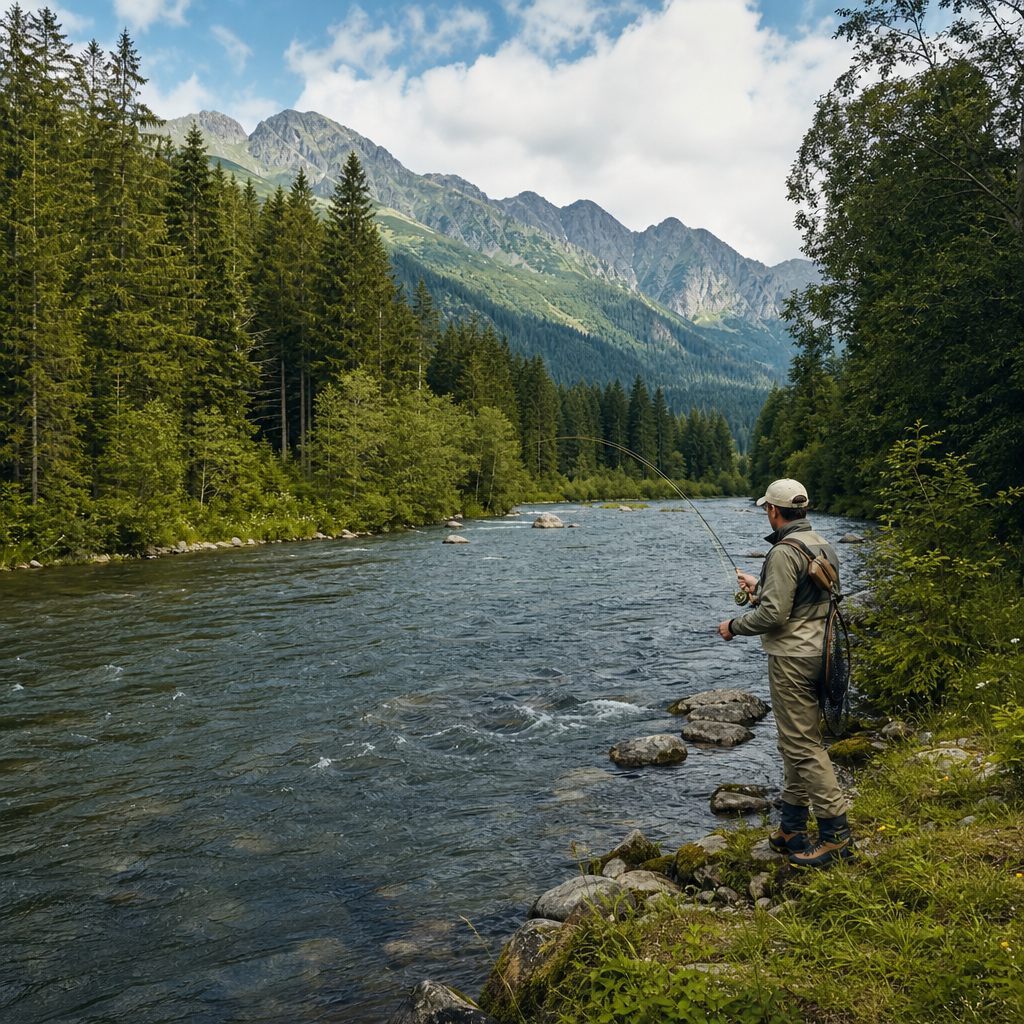
The best fly fishing spots in Poland are concentrated in the south and southwest, with several additional waters worth adding for a broader Europe trip. The Dunajec is the headline river. Flowing through the Pieniny region, it offers classic riffle-run-pool structure, strong grayling water, and trout habitat enhanced by cold releases in some reaches. Sections below Czorsztyn can fish well during warmer periods because water temperatures remain stable. The San, especially the upper tailwater sections near Zwierzyń and Lesko, is another premier destination. Many experienced anglers consider it Poland’s most technical river for grayling and selective trout. On calm days, fish inspect emergers and tiny dry flies with the same caution you see on famous Central European chalk and tailwaters. The Bóbr in the southwest, along with selected reaches of the Nysa Kłodzka and Kwisa, gives anglers in Lower Silesia quality trout and grayling water with less international attention. In the Tatra and Podhale area, the Białka, Czarny Dunajec, and Raba present faster pocket water and nymphing opportunities, though flows can change quickly after rain. Northern and western regions also matter. The Drawa system and selected Pomeranian rivers support trout and sea trout connections, while some stillwaters offer rewarding fly fishing for stocked rainbows and predator species.
| River | Region | Key Species | Best Tactics | Why It Stands Out |
|---|---|---|---|---|
| Dunajec | Małopolska / Pieniny | Grayling, brown trout | Euro nymphing, dry-dropper, small dries | Reliable flows, famous scenery, technical yet accessible |
| San | Podkarpackie / Bieszczady | Grayling, brown trout, occasional huchen in system | Long-leader nymphing, emergers, fine tippet dry fly | Poland’s signature tailwater-style salmonid fishery |
| Bóbr | Lower Silesia | Trout, grayling | Indicator nymphing, streamers, caddis dries | Underrated river with varied pocket water and runs |
| Raba | Małopolska | Brown trout, grayling | Short-line nymphing, terrestrial patterns | Convenient from Kraków and productive in shoulder seasons |
| Drawa | Pomerania / West Pomerania | Trout, migratory fish in connected waters | Swinging wets, nymphs, streamers | Adds northern diversity to a Poland fly fishing tour |
Best seasons, hatches, and daily timing
The best time for fly fishing in Poland depends on region, river type, and target species, but the broad prime window runs from late April through October. Early spring can be excellent on tailwater-influenced sections like the San, where water temperatures rise more gradually and fish feed steadily on subsurface insects. May and June often bring the most balanced conditions across southern Poland: moderate flows, active caddis and mayfly hatches, and enough daylight to fish early and late. Summer is more variable. Freestone streams in the Carpathians can become low and clear during heat, making dawn and dusk sessions essential, while sudden thunderstorms can blow out rivers overnight. On the other hand, cooler tailwaters may continue producing through midday. Autumn is a favorite among experienced local anglers because crowds thin, grayling feed aggressively before winter, and terrestrial patterns still work on warmer afternoons. As in much of Europe, insect life changes by river. Blue-winged olive types, caddis, pale mayfly species, and midge activity dominate many technical situations. On faster mountain streams, fish often respond less to exact entomological matching than to drift quality and depth control. Daily timing matters. In summer I plan around three windows: first light, the hour around any observed hatch, and the final two hours before dark, when large trout move from cover and dry-fly opportunities improve markedly.
Tactics, fly patterns, and tackle that consistently work
If you want a versatile setup for fly fishing in Poland, carry a 9-foot 4-weight or 5-weight rod for dry flies and light nymphing, plus a 10-foot 3-weight or 4-weight for modern tight-line methods. That combination covers most trout and grayling situations on the Dunajec, San, and Bóbr. In practice, Polish rivers reward contact nymphing more consistently than romantic dry-fly expectations suggest. Tungsten perdigons, slim pheasant tail variants, caddis pupa imitations, pink-scollar anchor flies, and small jig nymphs in sizes 14 to 20 are dependable starting points. For grayling, subtle profile usually beats flash when water is clear. For trout in broken water, a slightly heavier anchor nymph and a second natural-colored dropper help maintain depth through pocket water. Dry flies matter most during evening rises and over flat glides where selective fish expose poor drag instantly. Carry CDC olives, elk-hair caddis, comparaduns, klinkhåmer-style emergers, and small ant patterns. Streamers are useful after rain, during autumn, or whenever larger trout sit tight to structure. Regulations and fish behavior often favor single hooks, and barbless is the sensible default even where not mandated. Waders should match season: breathable chest waders for spring through autumn, but add felt alternatives only where legal and safe because many anglers now prefer rubber soles with studs to reduce invasive transfer between European waters.
Permits, regulations, and local etiquette
The most common mistake foreign anglers make in Poland is assuming one permit covers every river. It does not. Access is fragmented among regional districts of the Polish Angling Association, private fisheries, and club-managed sections. Before fishing, verify four points: the district permit, the specific water included, the accepted methods, and the retention or catch-and-release rules. Some renowned stretches require separate day tickets, and special sections may restrict hook types, mandate no-kill practice, or prohibit wading in spawning periods. National seasons and local exceptions can differ, especially for grayling and huchen, so check current regulations rather than relying on old forum advice. Carry printed or offline copies because mobile coverage in mountain valleys is uneven. Local etiquette is straightforward and worth respecting. Greet anglers when approaching, ask before entering a run someone is working, and give far more space than you might on a stocked stillwater. Many Polish fly anglers fish methodically from tail to head of a pool. Cutting in above them is noticed immediately and judged poorly. Catch handling standards are improving fast across Europe, and in Poland the best fisheries increasingly expect quick releases, wet hands, and minimal fish exposure. Hiring a local guide for one day is often money well spent because guides not only read water but also simplify permits, current closures, and access roads that are easy to miss on mapping apps.
Planning a Poland trip within a broader Europe fly fishing itinerary
Poland works exceptionally well as part of a Europe fly fishing circuit because it connects affordable logistics with genuinely high-quality water. A practical route is Kraków to the Dunajec and Raba, then east to the San, or west toward Lower Silesia for the Bóbr and neighboring rivers. That format lets you sample contrasting water types without domestic flights. International travelers often compare Poland with nearby Slovenia, the Czech Republic, Slovakia, Austria, or Bosnia and Herzegovina. Poland generally offers lower day-ticket and lodging costs than Slovenia or Austria, while delivering similarly technical grayling and trout fishing on its best rivers. Its tradeoff is consistency of visitor information: some districts have excellent websites, while others require phone calls, local tackle shops, or guide assistance. Base yourself near Lesko for the San, Szczawnica or Nowy Targ for southern rivers, and Jelenia Góra for Lower Silesia. Renting a car is the simplest option because dawn starts and dispersed access points make public transport limiting. Pack for weather swings. In the same week, you may face frosty mountain mornings, strong sun at midday, and heavy rain that colors a freestone river by evening. As a hub destination within Europe, Poland is valuable not just for standalone fishing quality but for variety, affordability, and the chance to fish serious salmonid water without the pressure common on famous marquee rivers.
Fly fishing in Poland is most rewarding when treated as a serious European destination rather than a secondary add-on. The country offers premier waters like the Dunajec, San, Bóbr, Raba, and Drawa, each with distinct character, tactics, and seasonal strengths. The central lesson is simple: match the river type, season, and local rules, and Poland will fish far better than its modest international profile suggests. Bring adaptable tackle, expect nymphing to do much of the work, stay ready for selective dry-fly moments, and verify permits before you travel. For anglers building a Europe itinerary, Poland adds technical grayling water, scenic mountain rivers, and better value than many better-known destinations. Start with one region, book a guide for your first day, and use this hub as the foundation for exploring the rest of Europe’s fly fishing destinations.
Frequently Asked Questions
What are the best places for fly fishing in Poland?
Poland offers an impressively varied fly fishing scene, but the country’s standout destinations are generally its southern mountain rivers and selected foothill waters. The Dunajec is one of the best-known names, especially for anglers targeting trout and grayling in scenic surroundings that combine reliable insect life with classic riffle-run-pool structure. The San River is another premier destination and is often mentioned among the finest fly fishing rivers in Central Europe. It is particularly respected for its grayling fishing, long glides, clear water, and stretches that reward technical presentation. The Poprad, Białka, and smaller Carpathian tributaries also attract serious fly anglers looking for wild-feeling water, pocket water, and less pressured beats.
Beyond the south, Poland also has opportunities in tailwaters, lowland rivers, and selected stillwaters, but for traditional fly fishing focused on trout and grayling, the mountain and submontane regions are the strongest draw. These waters are appealing not only because of the fish populations, but because they offer the kind of habitat fly anglers look for: oxygen-rich currents, clean gravel beds, healthy hatches, and enough river character to fish with dries, nymphs, and small streamers depending on conditions. For visiting anglers, the best approach is usually to narrow your search by species, preferred techniques, and time of year. If you want classic dry-fly and nymph fishing for trout and grayling, southern Poland is where most itineraries begin.
What species can you catch fly fishing in Poland?
The primary fly fishing targets in Poland are brown trout and European grayling, and these are the species most anglers travel for. Brown trout are found in many of the country’s cold, clean rivers and streams, especially in the south. Depending on the river, you may encounter anything from modest wild fish in tight, technical water to larger trout in broader systems where presentation, stealth, and reading the current become especially important. Grayling are equally important in Poland’s fly fishing reputation. On the right river, they provide elegant, consistent sport and often respond well to nymphing and dry flies during suitable hatch periods.
Some waters may also produce rainbow trout where stocking programs exist, and in certain larger rivers or connected systems, anglers may encounter other species willing to take a fly under the right conditions. However, Poland’s identity as a fly fishing destination is built much more around trout-and-grayling water than around warmwater fly fishing. That matters because it shapes everything from tackle selection to timing. Visitors should think in terms of insect-driven feeding windows, wading-oriented river fishing, and light to medium fly rods rather than heavy predator setups. If your goal is classic European river fly fishing with a strong chance at wild or semi-wild trout and quality grayling, Poland fits that profile extremely well.
When is the best time of year to go fly fishing in Poland?
The best time depends on the species, the river type, and the tactics you prefer, but late spring through early autumn is the core fly fishing season in Poland. Late spring often brings excellent conditions as rivers stabilize after early snowmelt or spring runoff, insect activity increases, and trout begin feeding more confidently on both subsurface patterns and surface flies. Summer can be outstanding, especially in the mornings and evenings, with productive hatches and strong dry-fly potential on the right waters. Grayling fishing is often especially consistent during summer and into early autumn, when clearer water and steady flows can create ideal technical fishing.
Autumn is favored by many experienced anglers because fish can be aggressive, river traffic may ease, and cool conditions often suit both fish and fishermen. That said, mountain rivers can be highly sensitive to weather, including rain events that quickly raise and color the water. The “best” week is therefore not just about the month, but about recent conditions. If you are planning a dedicated trip, it is smart to build flexibility into your schedule and monitor local water levels, weather, and hatch reports. It is also essential to verify local fishing calendars, protected periods, and section-specific regulations before traveling, because open seasons can vary by species and water. In practical terms, many visiting anglers find May through September the most reliable window, with June, July, and early autumn often offering the broadest range of successful techniques.
What gear and fly patterns should you bring for fly fishing in Poland?
For most Polish trout and grayling rivers, a 4-weight or 5-weight fly rod is the most versatile choice. A rod in the 8.5- to 9-foot range handles dry flies, nymphs, and light streamers well, and gives you enough reach for mending on medium-sized rivers. If you plan to focus heavily on European nymphing, some anglers prefer a longer, lighter specialized rod, but a standard all-around trout setup is enough for many trips. Floating lines are the mainstay, since a large percentage of effective river fishing in Poland involves dry flies, indicator nymphing, tight-line methods, or shallow streamer work. Bring quality leaders and tippet in a practical range, including fine diameters for selective grayling and clearer water conditions.
In terms of flies, confidence patterns should include a broad mix of mayfly, caddis, and midge imitations, along with small attractors and naturalistic nymphs. Pheasant tails, hare’s ears, perdigons, caddis pupa patterns, and slim grayling nymphs are consistently useful starting points. For dry-fly fishing, parachute patterns, emergers, caddis adults, and small mayfly imitations cover a lot of situations. Small streamers can also be effective when water is up, slightly colored, or when targeting larger trout. Waders and sturdy boots are highly recommended because many of the best rivers involve active wading over cobble, uneven bottoms, and quick current transitions. Polarized glasses, layered clothing, rain protection, and a compact net should also be considered essential. The biggest mistake visitors make is overcomplicating the box; in Poland, success often comes less from exotic patterns and more from good drifts, careful approach, and matching river conditions.
Do you need a permit or guide for fly fishing in Poland?
Yes, in most cases you will need the appropriate permit or license to fish legally in Poland, and understanding the local system before you arrive is extremely important. Access is not always handled through a single nationwide visitor process in the simple way some anglers expect. Different waters may be administered by different authorities, clubs, or fisheries organizations, and rules can vary by river section. Catch limits, tackle restrictions, fly-only stretches, no-kill regulations, and seasonal protections may all differ from one place to another. Because of that, anglers should confirm the exact rules for the specific water they intend to fish rather than relying on general assumptions.
Hiring a guide is not strictly necessary, but it is often a very smart decision, especially for international visitors. A knowledgeable local guide can help you navigate permits, identify the most productive beats for current conditions, explain local etiquette, and shorten the learning curve on unfamiliar water. This is particularly valuable on technical rivers such as the San, where reading the water, understanding fish behavior, and choosing the right presentation can make a dramatic difference. Guides also help with practical matters such as access points, wading safety, and current hatch information. If you are experienced and comfortable doing your own planning, you can certainly organize a successful trip independently, but if your time is limited or you want the best possible introduction to Poland’s premier fisheries, a guide is often one of the best investments you can make.