Choosing the best fly fishing hats for all seasons is not a style decision alone; it is a practical gear choice that affects vision, heat management, skin protection, and comfort through long days on moving water. In fly fishing, a hat does more than shade your eyes. It reduces glare while you track drifts, protects your face and ears from ultraviolet exposure, keeps rain off prescription lenses and polarized sunglasses, and helps regulate temperature in conditions that can change by the hour. I have tested hats on freestone rivers, spring creeks, lakes, and salt flats, and the difference between a good hat and the wrong hat becomes obvious within the first hour. The right design disappears into the background and lets you focus on reading seams, mending line, and spotting subtle takes.
For anglers browsing clothing reviews, hats are one of the most overlooked categories because they look simple. In reality, fly fishing hats vary by brim geometry, crown height, ventilation, fabric weight, water resistance, retention systems, and seasonal layering compatibility. A winter beanie that works under a hood is useless in midsummer sun. A broad-brimmed boonie that excels on alpine lakes can feel unstable in heavy wind or awkward during tight brush casting. Technical trucker caps, sun hoodies with integrated hoods, waterproof caps, and insulated ear-flap models each solve different problems. This hub article explains how to choose among them, which features matter most, and what types perform best in spring, summer, fall, and winter so you can make a smart buying decision and build out the rest of your clothing system with confidence.
What Makes a Great Fly Fishing Hat
The best fly fishing hat balances four jobs: sun protection, visibility, weather resistance, and all-day comfort. Start with protection. Dermatologists and the Skin Cancer Foundation consistently emphasize broad-spectrum sun defense, and on water you get direct ultraviolet exposure from above plus reflected light from the surface below. That is why brim size matters. A cap with a short bill protects the eyes but leaves ears and neck exposed. A boonie or full-brim hat adds meaningful coverage for cheeks, ears, and the back of the neck, especially during high-angle summer sun. Fabrics with a UPF rating of 30 or 50 provide more consistent protection than ordinary cotton, particularly when wet.
Visibility is the second job, and it is more technical than most buyers realize. The underside of the brim should be dark to reduce bounce light into the eyes. I strongly prefer black or charcoal undersides because they improve contrast when you are watching a dry fly drift across broken currents. Crown shape matters too. A low-profile cap can reduce wind lift, while a structured front panel may interfere less with sunglasses. Weather resistance comes next. DWR-treated nylon sheds light rain and dries quickly after wading mishaps. Waxed cotton and waterproof laminates hold up in sustained precipitation, but they usually breathe less. Finally, comfort depends on weight, sweat management, and fit. A hat that traps heat or develops pressure points will be removed, and removed hats provide zero protection.
Best Hat Styles by Season and Fishing Conditions
No single model dominates every month, so the smartest approach is to match the hat style to the season and the water you fish most. In summer, lightweight sun hats and technical caps lead because heat and ultraviolet exposure are the primary concerns. On Western tailwaters, warmwater rivers, and stillwaters with little shade, I rely on wide-brim synthetic hats with mesh ventilation and a chin cord. They protect ears and neck without becoming soggy. For flats fishing or float trips where exposure is relentless, pairing a cap with a sun hoodie or neck gaiter is often more practical than relying on one oversized hat. Brands such as Simms, Patagonia, Buff, Columbia, and Sunday Afternoons have built strong reputations here because their warm-weather hats focus on UPF fabrics, moisture-wicking sweatbands, and packable constructions.
Spring and fall are transitional seasons, and this is where hybrid hats earn their keep. Temperatures can begin near freezing and climb quickly by midday. I often choose a technical baseball cap with a water-resistant shell because it works with layers, sheds drizzle, and does not overheat once hiking begins. If wind is strong, especially on larger rivers and lakes, a low-crown cap or a brimmed hat with a secure retention strap performs better than floppy broad-brim designs. In winter, insulation and compatibility with hoods matter most. Fleece beanies, merino wool caps, and insulated hats with ear coverage keep heat in without obstructing casting. For steelhead or trout fishing in sleet, a waterproof billed cap under a jacket hood is one of the most effective cold-weather setups I have used because it preserves peripheral vision better than a thick beanie alone.
| Season | Best Hat Type | Key Features | Best Use Case |
|---|---|---|---|
| Spring | Water-resistant technical cap | DWR shell, dark underbill, adjustable fit | Variable weather, hiking access, light rain |
| Summer | UPF wide-brim sun hat | 3-inch brim, venting, chin strap, quick-dry fabric | Open rivers, lakes, drift boats, salt flats |
| Fall | Hybrid cap or brimmed softshell hat | Wind resistance, moderate warmth, secure retention | Breezy tailwaters, changing temperatures |
| Winter | Insulated beanie or billed waterproof cap | Fleece or merino, ear coverage, hood compatibility | Steelhead, trout, cold rain, snow |
Materials, Construction, and Performance Details
Material selection determines how a hat behaves after hours of casting, rowing, hiking, and standing in reflected heat. Nylon is the dominant technical fabric because it is light, abrasion resistant, and quick drying. Polyester dries quickly too and often resists fading well, but some polyester hats feel hotter against the scalp. Cotton looks classic, yet it absorbs sweat and rain, dries slowly, and loses comfort in both heat and cold. Wool and merino perform best in cold seasons because they insulate when damp and manage odor better than synthetics. Fleece adds warmth with low weight, though it can become bulky under a hood. In my own use, the best all-around three-season hats have been nylon or nylon-blend models with laser-cut vents or mesh side panels plus a soft absorbent sweatband.
Construction details matter just as much as fabric. Stitching around the brim affects stiffness and how well the hat holds its shape in wind. Foam-backed trucker fronts can be comfortable, but they age poorly if crushed repeatedly in packs. A brim measuring roughly 2.75 to 3 inches offers strong sun coverage without excessively blocking upward line tracking. Crown ventilation should be positioned to release heat while keeping insects and debris out. Adjustable closures also vary in quality. Snapbacks are simple but less precise than hook-and-loop tabs or low-profile buckles. A chin strap is essential on boats, in gusty canyons, and during deep wading. If a brand offers a floating brim or buoyant insert, that is a useful feature rather than a gimmick; I have seen more than one expensive hat disappear downstream after a missed landing net move.
How to Choose the Right Fit and Match It to Your Clothing System
The best fly fishing hat is the one that integrates with the rest of your clothing instead of competing with it. Start with head shape and fit. Many anglers buy a hat based only on appearance, then discover pressure on the temples after two hours. If you wear sunglasses all day, make sure the hat does not pinch the frames against the sides of your head. If you often pull up a rain hood, avoid tall crowns and oversized rear adjustments that bunch underneath shell fabric. In summer, the combination I recommend most often is a ventilated hat, polarized sunglasses, a lightweight neck gaiter, and a UPF sun shirt. This system spreads protection across multiple pieces so the hat can remain lighter and more comfortable while still covering critical areas.
Color also affects performance. Lighter exterior colors reflect more heat, while darker underbrims reduce glare. I generally avoid bright white tops in dirty environments because they show staining quickly from sunscreen, fish slime, and sweat. Neutral grays, tans, and muted olives age better and pair well with technical outerwear. Fit should be snug enough to stay put in wind but not so tight that it causes a headache. If you fish in shoulder seasons, consider whether the hat can layer over a thin beanie or under a hood. This hub article sits within clothing reviews because hats do not exist in isolation. They work alongside waders, rain jackets, insulation, gloves, and eyewear. A strong hat review should always discuss compatibility with those neighboring pieces of the system.
Top Hat Categories and What to Buy for Different Anglers
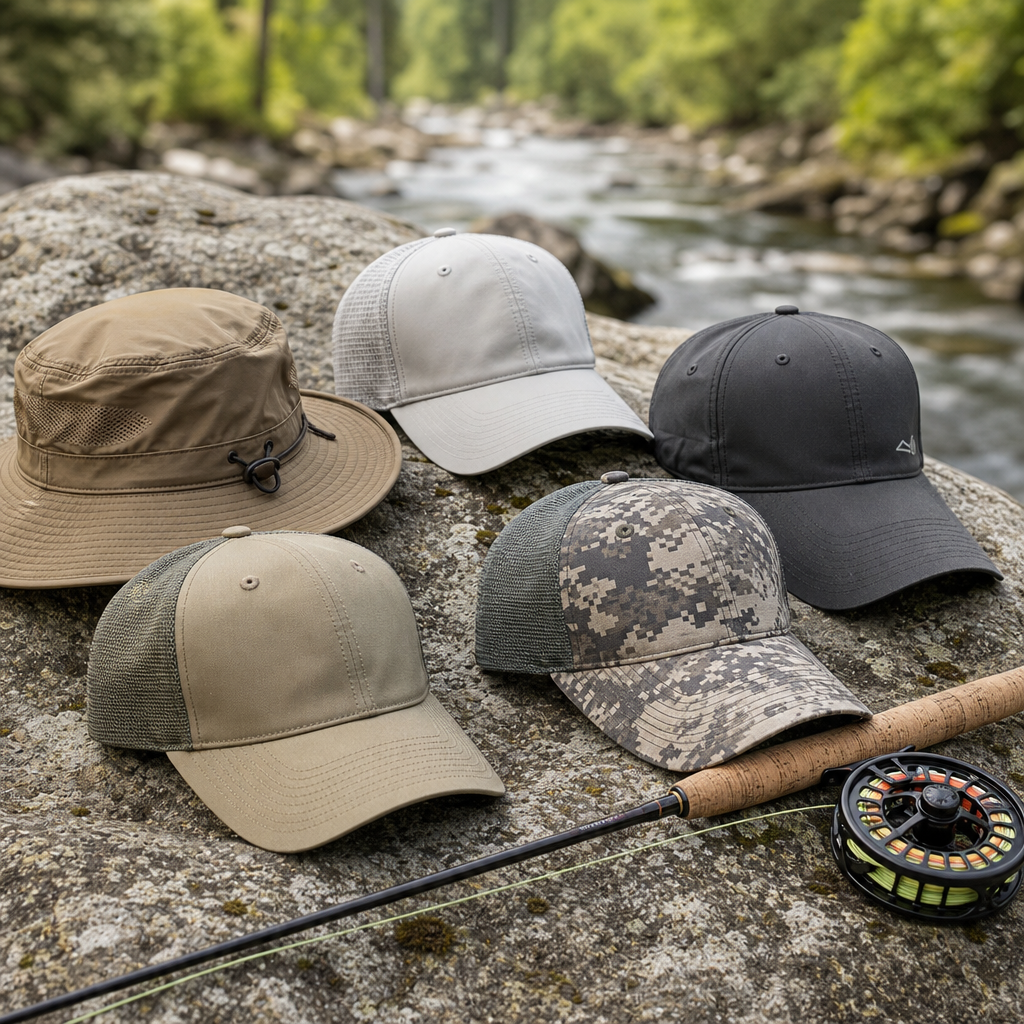
For anglers who want a simple answer, there are five reliable categories. First is the technical fishing cap. This is the easiest daily option and suits most trout anglers who fish mixed conditions, especially if they already use a sun hoodie or buff for neck coverage. Look for a dark underbill, non-absorbent shell fabric, and an absorbent sweatband. Second is the wide-brim sun hat. This is the best choice for consistent summer exposure, drift boat fishing, and stillwaters where shade is limited. Third is the waterproof billed cap, which shines during rain because it keeps water off glasses while fitting neatly under a hood. Fourth is the insulated beanie or ear-flap hat for winter. Fifth is the packable travel hat, useful for anglers who hike, bushwhack, or fly to destinations and need crush resistance.
Specific brand lines have earned trust for good reasons. Simms Solar Sombrero-style hats are common because they pair reliable sun coverage with fishing-specific details. Patagonia’s technical caps and sun pieces generally use durable recycled synthetics and thoughtful fits. Sunday Afternoons remains one of the strongest specialists in brimmed sun protection, especially for anglers prioritizing UPF and ventilation. Outdoor Research consistently builds weather-capable caps and brimmed models that handle alpine wind and rain well. Buff is best known for neck gaiters, yet its headwear works effectively inside a full sun-protection setup. The right purchase depends on where and how you fish. If most of your days are short evening trout sessions under tree cover, a technical cap may be enough. If you spend eight hours on open water in July, a full-brim sun hat is the smarter and safer tool.
Care, Longevity, and Common Buying Mistakes
A quality fly fishing hat should last several seasons, but only if you maintain it properly. Salt, sweat, sunscreen, and insect repellent break down fabrics and coatings over time. After saltwater use, rinse hats in fresh water and air dry them away from direct heat. Avoid crushing structured brims in the back of a truck, where heat can warp plastic inserts. Wash technical hats gently by hand with mild soap rather than aggressive detergents that strip DWR finishes. If the hat has a water-repellent treatment, refresh it periodically with a product compatible with technical apparel. Merino and wool hats need even gentler care, and they should never be dried on high heat. A clean sweatband matters for comfort and odor control more than most anglers think.
The most common buying mistakes are predictable. Many anglers underbuy sun protection, choosing a trendy cap when a brimmed hat is clearly the better match for their fishery. Others overbuy bulk, selecting heavy waterproof hats that become clammy in mild weather. Another mistake is ignoring retention features until the first windy boat run. Some buyers also focus on brand reputation while overlooking fit, which is the most personal variable of all. Product reviews are useful only when they explain context: air temperature, exposure level, wind, layering, and whether the angler wore glasses or a hood. Use that same practical lens when shopping. Measure performance on the water, not in the mirror.
The best fly fishing hats for all seasons solve specific problems rather than trying to be everything at once. Summer demands UPF coverage, ventilation, and glare control. Spring and fall call for adaptable hats that handle changing temperatures, wind, and light rain without overheating. Winter requires insulation, ear coverage, and compatibility with hoods and waterproof shells. Across every season, the winning details remain consistent: a secure fit, a dark underbrim, quick-drying or weather-appropriate materials, and comfort that lasts through a full day on the water. When you evaluate hats through those criteria, the category becomes much easier to navigate.
As a hub for clothing reviews, this page should help you narrow the field and identify which subcategory deserves deeper research next. Start by matching your hat to your primary fishery and season, then make sure it integrates with your sunglasses, rain jacket, sun shirt, and cold-weather layers. If you fish year-round, build a small rotation instead of forcing one compromise hat into every trip. Choose one technical cap, one true summer sun hat, and one winter option, and you will cover nearly every condition effectively. Use this guide as your baseline, then compare individual product reviews with those standards in mind before you buy.
Frequently Asked Questions
What features should I look for in a fly fishing hat that works in every season?
The best all-season fly fishing hat should solve several problems at once: glare reduction, sun protection, weather resistance, and comfort over long hours on the water. Start with brim design. A full brim offers broad coverage for your face, ears, and neck, which is especially useful in summer and at high elevation, while a structured cap-style brim can be excellent for visibility and casting comfort. Material matters just as much. Lightweight, quick-drying synthetics such as nylon or polyester perform well across seasons because they shed water, dry fast after rain or spray, and resist becoming heavy when wet. Breathability is another major factor. Mesh panels, laser-cut vents, or moisture-wicking sweatbands help manage heat during warm months without making the hat unusable in cooler weather.
For true year-round performance, look for UPF-rated fabric, a dark underbrim to cut reflected glare, and a secure fit system such as an adjustable strap or drawcord. Wind is often underestimated in fly fishing, and a great hat that blows off during every gust quickly becomes a poor one. In colder conditions, compatibility with a hood, neck gaiter, or light beanie also matters. Many anglers benefit from hats with packable construction, water-resistant coatings, and enough structure to maintain shape without feeling stiff. The ideal choice is one you can wear comfortably from chilly morning starts to bright afternoon sun, with enough versatility to handle sudden shifts in temperature, cloud cover, and precipitation.
Are wide-brim hats better than baseball caps for fly fishing?
Wide-brim hats are often better for maximum protection, but they are not automatically better for every angler or every condition. Their biggest advantage is coverage. A wide brim shades the forehead, cheeks, ears, and often part of the neck, reducing UV exposure during long days on open rivers, lakes, and flats where sunlight reflects off the water. That extra shade also improves comfort and can reduce fatigue, especially in summer. Many anglers also find that a wide-brim design helps during light rain by keeping water off glasses and polarized lenses, which is a real benefit when you need clear vision to track flies, watch indicators, or spot subtle takes.
That said, baseball caps remain popular for good reason. They are lighter, simpler, and often more secure in wind. They also pair easily with buffs, hoods, and layering systems, which can make them more versatile in shoulder seasons and winter. Some fly anglers prefer caps because they interfere less with casting, peripheral vision, or the collar of a rain jacket. The best option depends on where and how you fish. If you spend a lot of time under strong sun with little natural shade, a wide-brim hat is hard to beat. If you fish in changing weather, tight banks, windy valleys, or colder conditions where layering is important, a cap may be the more practical choice. For many anglers, the smartest setup is owning both and using each where it performs best.
How important is UPF sun protection in a fly fishing hat?
UPF protection is extremely important because fly fishing combines long exposure times with intense reflected light. Even on cool or cloudy days, ultraviolet radiation can be significant, and the water amplifies exposure by bouncing light upward toward the face and underside of the chin. A hat with a high UPF rating adds a measurable layer of defense beyond simple shade. This matters most on ears, scalp, forehead, and neck, where repeated sun exposure can lead to burns, skin damage, and long-term health risk. For anglers who fish frequently, especially in summer, on tailwaters, alpine streams, or saltwater flats, a UPF-rated hat is not an optional luxury. It is part of basic protective gear.
Still, UPF should be viewed as one part of a complete system rather than a standalone solution. Coverage is just as important as fabric rating. A cap made from high-UPF material will still leave ears and neck exposed unless it is paired with a sun gaiter or neck flap. A wide-brim hat with UPF fabric can offer more complete protection, but only if it fits well and stays on in wind. The most effective strategy is to combine a quality hat with polarized sunglasses, sunscreen on exposed skin, and lightweight protective clothing. In practical terms, choosing a fly fishing hat with reliable UPF performance helps you fish longer, more comfortably, and with less cumulative damage from the sun over the course of an entire season.
What hat materials perform best for hot weather, rain, and cold conditions?
For all-season use, synthetic performance fabrics are usually the best overall choice. Nylon and polyester dominate quality fly fishing hats because they dry quickly, resist absorbing excess water, and remain relatively light after rain or splashing. In hot weather, these materials work especially well when combined with ventilation panels, moisture-wicking sweatbands, and light-colored outer fabric that reflects heat. The best warm-weather hats feel airy without becoming flimsy, and they move perspiration away from your skin so the hat does not feel saturated by midday. Cotton, by comparison, is often less ideal for technical fishing use because it holds moisture, dries slowly, and can become heavy or uncomfortable over a long day.
In rainy conditions, water-resistant synthetics and treated fabrics are the most practical. They help the hat maintain shape, keep water from dripping directly onto your glasses, and avoid that cold, soggy feel that comes from absorbed moisture. For colder weather, material choice shifts slightly toward insulation and layering compatibility. Fleece-lined caps, wool blends, insulated ear-cover designs, or simply a standard cap worn over a thin beanie can work very well. The key is not necessarily finding one heavy winter hat, but selecting a versatile shell-style fishing hat that can adapt to changing temperatures. A quick-drying, weather-resistant hat with enough room to layer underneath often outperforms a specialized single-season option because it gives you flexibility from spring runoff to late fall and even mild winter fishing days.
How should a fly fishing hat fit for comfort and performance on the water?
Fit is one of the most overlooked parts of choosing a fly fishing hat, yet it has a direct impact on comfort, visibility, and usefulness. A good hat should feel secure without creating pressure points on the forehead or temples. If it is too loose, it will shift in wind, slip when you look down to tie knots, or bounce while hiking riverbanks. If it is too tight, it can become uncomfortable within an hour and may trap heat excessively. The best fit allows stable wear through casting, wading, and boat movement while still feeling natural enough that you forget you are wearing it. Adjustable closures, chin cords, and flexible sizing systems are especially helpful because they let you fine-tune the fit based on weather, hairstyle, or whether you are wearing a hood or beanie underneath.
Performance fit also means the hat should work with the rest of your gear. It should not interfere with polarized sunglasses, jacket collars, hoods, or neck gaiters. The brim should provide useful shade without blocking your upward line of sight during casts or making it harder to track bugs and drifts. In windy environments, a retention strap can be just as important as the hat itself. Many anglers also appreciate hats that are light enough for all-day wear but structured enough to stay off the face when wet. In the end, the right fit supports concentration. When your hat manages glare, stays put, and remains comfortable from first light to the last few casts, it becomes a real tool rather than just another accessory.