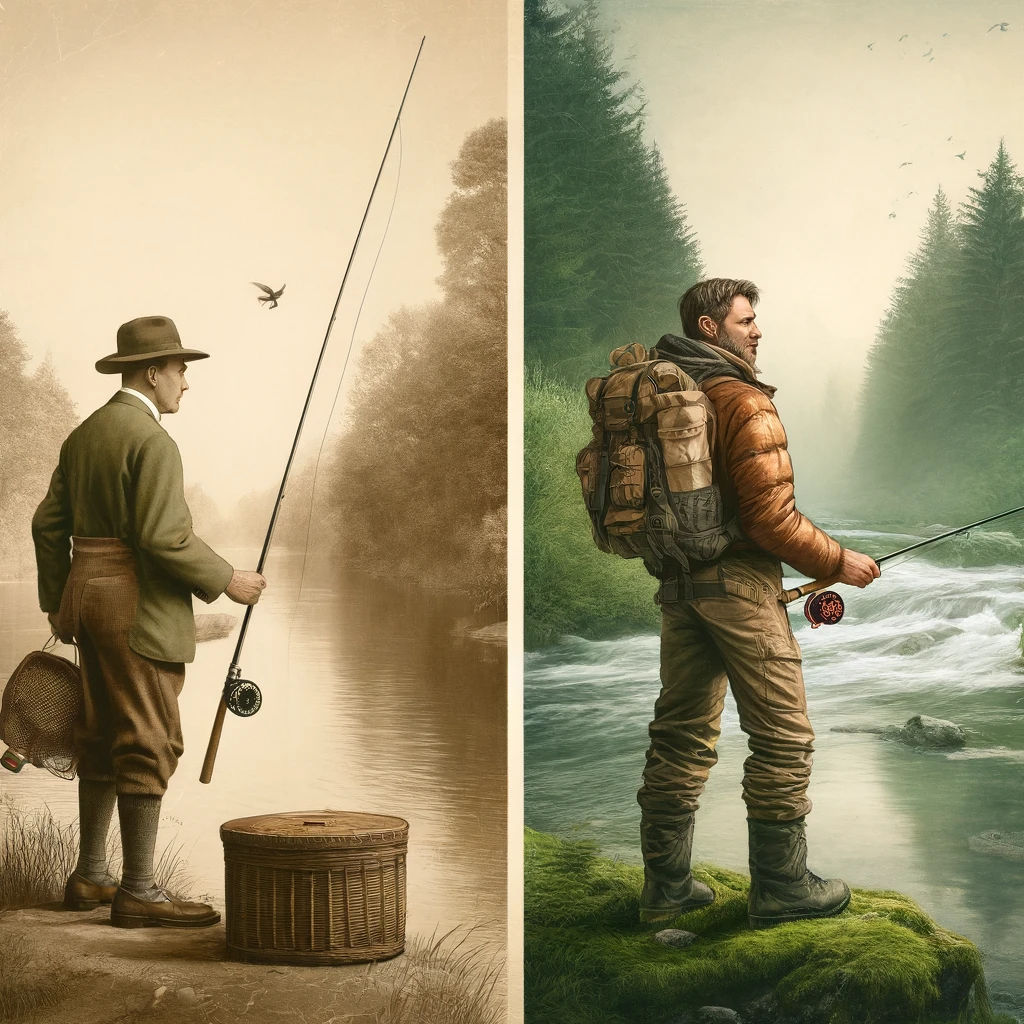
Fly fishing and habitat restoration projects are deeply connected because healthy rivers, resilient fish populations, and productive angling opportunities depend on the same ecological foundations. Fly fishing is the method of presenting lightweight artificial flies with a specialized weighted line, while habitat restoration is the planned repair of degraded streams, wetlands, riparian corridors, and floodplains so they function more like natural systems. I have spent enough time on trout water to see the contrast clearly: on rivers with stable banks, cool summer flows, complex insect life, and connected spawning habitat, fish hold in predictable lies and survive seasonal stress; on damaged reaches, even skilled anglers struggle because the water itself is failing. That link matters to anglers, land managers, and local communities alike. Restored habitat improves wild fish recruitment, buffers drought and heat, reduces sedimentation, and often creates more consistent fishing through the season. It also strengthens watershed resilience under pressure from development, water withdrawals, invasive species, and climate change. For anyone searching for practical conservation that produces visible results, habitat restoration is one of the most effective tools available.
At its core, stream habitat restoration focuses on physical process, not cosmetic improvement. A river is not repaired simply by adding a few rocks or planting grass near the bank. Effective projects address channel form, flow regime, riparian vegetation, substrate quality, water temperature, floodplain connectivity, and passage barriers. In trout and salmon systems, the details matter: spawning gravels must remain clean enough for oxygen to reach eggs; juvenile fish need shallow margins and overhead cover; adult fish need depth, velocity shelters, and thermal refuge. Aquatic insects, which drive much of fly fishing success, respond to the same conditions. Mayflies, caddisflies, and stoneflies thrive where dissolved oxygen is high, sediment is controlled, and habitat diversity exists across riffles, runs, pools, and side channels. That is why habitat work has become a central concern for many fishing clubs, trout organizations, guides, and watershed groups. It is not separate from angling culture. It is the long-term infrastructure behind every good hatch, every wild fish encounter, and every river that can sustain use without losing its ecological integrity.
Why habitat restoration matters to fly fishing
Habitat restoration matters to fly fishing because fish abundance, fish size structure, insect productivity, and seasonal access all depend on watershed health. In practical terms, anglers notice restoration first through better water. A reach with stabilized riparian cover stays cooler in summer because trees shade the channel and reduce solar heating. Root systems also trap sediment before it enters the stream. Less fine sediment means cleaner gravels, improved macroinvertebrate habitat, and clearer holding water. On several restored tailwater tributaries I have fished, trout shifted from sparse, bank-hugging behavior to more distributed feeding once riffle quality improved and undercut banks redeveloped. That is a direct angling outcome of ecological repair.
Restoration also increases habitat complexity, which is a technical term for the variety of depths, velocities, cover types, and channel features available within a reach. Complexity supports more fish because different life stages need different conditions. Fry use quiet margins, larger trout occupy depth and current seams, and spawning adults seek specific gravel sizes and flow velocities. When channels are straightened or overgrazed, they often become wide, shallow, warm, and simplified. The result is fewer refuge areas during floods, heat events, and winter anchor ice. Rebuilding wood loading, meander pattern, side channels, and floodplain access helps reverse that trend. For fly anglers, complex habitat usually means more defined feeding lanes, better drift opportunities, and stronger population resilience after high water or drought.
There is also a social and economic case. According to widely cited U.S. Fish and Wildlife Service and American Sportfishing Association data, recreational fishing contributes billions to local and regional economies through travel, lodging, gear, food, and guiding. Communities built around trout streams, steelhead rivers, or warmwater fisheries benefit when restoration improves catch quality and prolongs viable seasons. Habitat work can therefore support both conservation and rural business. That dual value is why many restoration grants combine ecological metrics with public access, outreach, and long-term stewardship.
What habitat restoration projects actually involve
People often imagine restoration as a one-day volunteer event, but most successful projects move through assessment, design, permitting, construction, and monitoring. The first step is diagnosis. Practitioners evaluate bank erosion rates, substrate embeddedness, temperature trends, channel incision, riparian condition, fish passage issues, and land-use pressures upstream. Tools such as pebble counts, longitudinal profiles, cross-section surveys, thermal loggers, electrofishing data, and macroinvertebrate sampling help define the real limiting factors. If a stream is too warm because irrigation withdrawals reduce summer flow, adding in-stream boulders alone will not solve the problem. Good projects target causes, not symptoms.
Design follows process-based principles. In many modern stream restoration efforts, teams use approaches informed by fluvial geomorphology, hydraulic modeling, and reference reach analysis. They ask how the stream would store sediment, access its floodplain, recruit wood, and maintain habitat if natural processes were functioning correctly. Then they select interventions such as riparian planting, livestock exclusion fencing, culvert replacement, beaver dam analogs, engineered log jams, grade control structures, side-channel reconnection, and wetland rewatering. The best designs are specific to watershed type. A spring creek, freestone stream, and coastal salmon river each require different solutions.
| Restoration action | Main problem addressed | Benefit for fish and anglers |
|---|---|---|
| Riparian tree planting | High summer temperatures and weak banks | Cooler water, less erosion, more terrestrial insect input |
| Culvert replacement | Blocked fish passage | Access to spawning and rearing habitat upstream |
| Engineered log jams | Channel simplification | Deeper pools, cover, velocity refuge, better holding water |
| Floodplain reconnection | Incised channels and flashy flows | Improved juvenile habitat and reduced peak flow stress |
| Livestock exclusion fencing | Bank trampling and sediment input | Cleaner gravels, stronger riparian recovery, better insect habitat |
Construction is only one phase, and it must be timed carefully to avoid spawning periods, migration windows, and high-flow risk. Permits may involve agencies overseeing wetlands, fisheries, water quality, and endangered species. After construction, monitoring determines whether the project actually works. That includes photo points, vegetation survival, pool frequency, juvenile fish density, temperature reduction, and sediment transport observations. In my experience, the projects that hold up best are the ones with five- to ten-year maintenance and monitoring plans, because channels continue adjusting after crews leave.
Common restoration strategies on trout and salmon rivers
On coldwater fisheries, several strategies appear repeatedly because they address the most common limiting factors. Riparian restoration is foundational. Planting willows, cottonwoods, alders, or native shrubs creates shade, bank strength, and organic input. Over time, mature riparian zones also recruit large wood to the channel, which is one of the most valuable natural habitat-forming materials in rivers. Large wood creates scour pools, cover, and hydraulic diversity. Historically, many streams were cleared of wood under the mistaken belief that tidy channels were healthier. Modern fisheries science shows the opposite in many systems.
Barrier removal is another high-impact strategy. Undersized culverts, perched road crossings, and obsolete diversion structures can block access to miles of upstream habitat. Replacing them with fish-friendly spans or roughened channels can reopen spawning and rearing areas almost immediately. This is especially important for migratory trout, salmon, and steelhead, but resident trout also benefit when seasonal movements become possible. Agencies such as NOAA Fisheries, state fish and wildlife departments, and watershed councils frequently prioritize these projects because their biological return can be substantial relative to cost.
Floodplain reconnection has become increasingly important as managers respond to climate variability. When rivers can spread into side channels, wetlands, and off-channel alcoves during high flow, they slow water, store sediment more naturally, and create nursery habitat for juvenile fish. Those areas also retain moisture later into dry periods. In the West, process-based restoration using beaver dam analogs or post-assisted log structures has gained attention for raising local water tables and improving valley-bottom complexity. These methods are not appropriate everywhere, but in the right setting they can restore hydrologic function more effectively than heavily armored channel work.
Water quality improvements matter just as much as physical structure. Nutrient loading, low dissolved oxygen, pesticide runoff, and chronic sedimentation can collapse insect communities before fish populations visibly decline. Because fly fishing depends on aquatic food webs, not just fish stocking or catch-and-release rules, restoration must address upstream land management. Agricultural best management practices, stormwater retrofits, septic upgrades, and coordinated instream flow protections often do more for a fishery than isolated in-channel manipulation.
How restored habitat changes the fishing experience
Anglers usually ask a straightforward question: will habitat restoration actually improve fishing? The honest answer is yes, but not always immediately and not always in the same way. Some outcomes are fast. Remove a passage barrier and fish may occupy new habitat during the next migration cycle. Fence cattle from a damaged spring creek and banks can begin stabilizing within a few seasons. Replace a failing culvert or reconnect a side channel, and juvenile fish numbers may increase quickly. Other benefits take years. Shade from riparian planting may not significantly lower summer temperatures until trees mature. Rebuilt wood regimes and self-sustaining channel complexity can take multiple runoff cycles to fully develop.
When improvement does occur, anglers notice several consistent changes. Fish distribution becomes less concentrated in a few deep survival pools and more spread across quality holding water. Insect hatches often become more diverse where substrate and water quality recover. Wild fish condition improves when forage, cover, and thermal refuge align. On rivers I have revisited after restoration, the biggest difference was often not just more trout, but more age classes of trout. Seeing juveniles, intermediates, and larger adults in the same reach is a strong sign that habitat is supporting complete life cycles rather than merely concentrating transient fish.
There are tradeoffs during implementation. Access can be temporarily restricted. Disturbed banks may look rough before vegetation establishes. Fresh structures can fish awkwardly until flows sort them naturally. Some anglers resist change when a familiar run is reconfigured. Still, if the project is well designed and monitored, short-term inconvenience is usually outweighed by long-term ecological gain. That is an important point for anyone evaluating restoration solely by how the river looks in the first month after construction.
How anglers can support effective restoration projects
Fly anglers are unusually well positioned to support habitat restoration because they spend time on the water, notice change across seasons, and often belong to organizations already connected to conservation. The most effective first step is to support groups doing science-based watershed work rather than symbolic cleanup alone. Trout Unlimited, local watershed councils, salmon recovery groups, state conservation districts, and land trusts often run projects with measurable goals tied to fish passage, riparian recovery, or flow protection. Volunteer days matter, but sustained funding and public support matter more.
Anglers can also improve project outcomes by reporting observations responsibly. Repeatedly seeing stranded juveniles below a diversion, chronic bank collapse near an access point, or unusually warm water in a spring-fed side channel can provide useful local intelligence when shared with biologists or watershed staff. Citizen science programs that log water temperature, insect emergence, or fish sightings can complement formal monitoring when data quality standards are clear. I have seen local knowledge help agencies prioritize problem culverts and illegal withdrawals faster than desktop mapping alone.
Behavior on the water is part of restoration too. Respecting seasonal closures, avoiding redd trampling, cleaning gear to prevent invasive species spread, and supporting access easements that reduce bank damage all contribute to habitat integrity. So does voting and advocacy. River restoration depends on public policy around water allocation, forestry, agriculture, transportation infrastructure, and land development. If anglers want durable improvements, they need to care about watershed governance as much as fly selection. The simple takeaway is this: fish better water tomorrow by helping repair the processes that produce it today. Join a local restoration effort, learn the watershed issues on your home river, and turn your interest in fly fishing into long-term habitat stewardship.
Frequently Asked Questions
How are fly fishing and habitat restoration projects connected?
Fly fishing and habitat restoration are connected at the most practical level: better habitat creates better fishing. Trout, salmon, and other game fish need cold, clean water, stable stream channels, healthy insect life, cover from predators, and access to spawning and rearing areas. When those conditions are present, fish populations tend to be more resilient, age classes are more balanced, and angling opportunities improve over time. That means the quality of a fly fishing experience is often a direct reflection of the health of the watershed.
Habitat restoration works to repair the systems that fish depend on. This can include replanting streambanks with native vegetation, reconnecting floodplains, replacing barriers that block fish passage, adding large wood for cover and channel complexity, restoring wetlands, or reducing erosion and sediment inputs. For fly anglers, these changes matter because they influence water temperature, insect production, holding water, spawning success, and seasonal fish movement. In other words, restoration is not separate from fishing; it supports the very ecological processes that make rivers fishable in the first place.
Experienced anglers often notice this relationship quickly on the water. A stream with undercut banks, diverse current seams, shaded runs, gravel suitable for spawning, and abundant aquatic insects usually offers more consistent fishing than a simplified, overheated, or eroded channel. Habitat restoration aims to bring degraded waters back toward that more functional condition. For anyone who spends time fly fishing, supporting restoration is really an investment in the long-term future of the resource.
What types of habitat restoration projects most directly improve fly fishing opportunities?
Several restoration approaches can have a very direct impact on fishing quality, especially in coldwater systems. Riparian restoration is one of the most important. Planting native trees, shrubs, and grasses along streambanks helps shade the water, reduce summer temperatures, stabilize banks, filter runoff, and contribute terrestrial insects to the food web. Over time, healthy riparian corridors also provide wood recruitment to streams, which creates depth, cover, and channel complexity that fish use throughout the year.
In-stream habitat work can also make a major difference when it is done carefully and based on sound science. Adding large woody material, restoring natural pool-riffle structure, reconnecting side channels, and improving spawning gravels can create holding water, refuge during high flows, and nursery habitat for juvenile fish. Barrier removal is another high-value project. Replacing undersized culverts or removing obsolete dams can reopen miles of habitat, allowing fish to reach spawning tributaries, thermal refuges, and seasonal feeding areas that were previously inaccessible.
Floodplain and wetland restoration may be less obvious to some anglers, but they are often just as important. Reconnected floodplains can slow high water, recharge groundwater, and improve summer base flows. Wetlands help store water, filter sediment, and moderate hydrology across seasons. These functions support healthier aquatic insect communities and more stable fish habitat. The result is often a river that fishes better not just in one stretch, but across the entire watershed. The best projects usually address process rather than appearance, meaning they restore how the river functions instead of simply trying to make it look better.
How long does it take to see results from a habitat restoration project?
The timeline varies widely depending on the type of project, the condition of the river before work began, watershed scale, fish species involved, and whether limiting factors outside the project area still remain. Some changes can be visible almost immediately. For example, replacing a perched culvert with a fish-friendly crossing may reopen habitat as soon as fish are able to move upstream. Similarly, adding large wood or reconnecting a side channel can quickly create new cover and hydraulic diversity that fish begin using within weeks or months.
Other benefits take much longer. Riparian plantings may need years before they provide meaningful shade, bank strength, and organic input. Floodplain reconnection and wetland recovery can also take time to reshape hydrology, rebuild soils, and influence water temperatures and summer flows. Fish populations themselves may respond gradually, especially if reproduction, migration, or overwinter survival has been impaired for a long period. In some systems, it may take several generations before the full biological benefits become clear.
That said, restoration should be evaluated with realistic expectations. A well-designed project is rarely a quick fix, and healthy watersheds are built over time. Anglers sometimes expect an immediate jump in catch rates, but restoration success is better measured through indicators such as increased juvenile fish survival, better spawning access, cooler water, improved insect diversity, and more stable channel structure. Those are the conditions that support durable fishing quality. Patience is part of the process, but when restoration is done thoughtfully and monitored properly, the long-term payoff can be substantial.
Can fly anglers contribute to habitat restoration even if they are not scientists or land managers?
Absolutely. In fact, fly anglers are often some of the most effective advocates for river restoration because they spend time on the water, notice changes across seasons, and care deeply about fish and access. One of the simplest ways to contribute is by supporting credible local conservation groups, watershed councils, trout and salmon organizations, land trusts, and community restoration partnerships. Donations, volunteer labor, and attendance at public meetings all help move projects forward.
Anglers can also help by participating in stream cleanups, riparian planting days, monitoring programs, and citizen science efforts where appropriate. Many restoration initiatives rely on volunteers to plant native vegetation, remove invasive species, document habitat conditions, or assist with educational outreach. Even when hands-on work is limited, informed advocacy matters. Speaking up for fish-friendly road crossings, water quality protections, responsible land use, and science-based fisheries management can influence decisions that shape river health for decades.
Just as important, anglers can practice stewardship through everyday behavior. Respecting spawning areas, handling fish carefully, avoiding trampling fragile streambanks, cleaning gear to prevent the spread of invasive species, and following seasonal closures all reduce pressure on recovering systems. Sharing what you observe on the water with local biologists or restoration groups can also be useful, especially when it helps identify erosion problems, blocked passage, warming trends, or habitat damage. You do not need to be a restoration engineer to make a meaningful contribution. Consistent, informed engagement from the angling community can have a real impact.
Why does habitat restoration matter for the future of trout fishing?
Habitat restoration matters because trout fisheries cannot remain strong if the underlying ecosystems are unraveling. Trout are especially sensitive to water temperature, sediment, flow changes, and habitat fragmentation. When streams lose riparian shade, when floodplains are disconnected, when spawning tributaries are blocked, or when runoff degrades water quality, trout populations become more vulnerable. That often shows up first as reduced recruitment, smaller fish, fewer holdover adults, more seasonal stress, and less consistent fishing. Over time, those pressures can fundamentally change a fishery.
Restoration helps build resilience into trout waters at a time when many rivers face compounding challenges from development, altered hydrology, drought, wildfire, and warming temperatures. Reconnected floodplains can buffer flows. Healthy riparian corridors can cool water and stabilize banks. Improved passage can give trout access to cold tributaries and spawning habitat. Complex channels with wood, depth, and cover offer refuge during heat, ice, or high water. These are not cosmetic improvements; they are survival mechanisms for fish populations living in increasingly variable conditions.
For fly anglers, the future of trout fishing depends on more than hatches, technique, or access. It depends on whether rivers and streams can still function as living systems. Habitat restoration is one of the clearest ways to protect that future because it addresses root causes rather than symptoms. If anglers want healthy wild fish, reliable insect life, and productive water for the next generation, restoration is not optional background work. It is central to the long-term sustainability of the sport.