Sustainable fly fishing abroad demands more than packing the right rods and booking a dream river. It means traveling in ways that protect fisheries, respect local communities, and reduce the ecological footprint of every cast. In practical terms, sustainable fly fishing practices abroad combine low-impact angling, responsible international travel, and compliance with local conservation rules. For anglers planning destination trips, this matters because many of the world’s best fisheries are fragile, tightly regulated, or deeply connected to Indigenous stewardship and rural livelihoods. I have seen the difference firsthand: one group arrives informed, disinfects gear, hires local guides, and leaves a river healthier economically and biologically; another treats the destination as disposable and creates avoidable harm. This hub article explains the essential tips for international travel, from research and packing to fish handling, biosecurity, lodging choices, and post-trip accountability, so you can fish globally without undermining the places that make the experience possible.
Research regulations, seasons, and fishery pressure before you book
The first rule of sustainable fly fishing travel is simple: know the fishery before you go. International anglers often focus on species and scenery, but sustainability starts with regulatory research. Check licensing requirements, closed seasons, daily limits, gear restrictions, and catch-and-release rules through the destination’s fisheries authority, park service, or recognized angling association. In Patagonia, for example, some rivers require barbless hooks and prohibit felt soles because of invasive species concerns. In parts of New Zealand, anglers must understand backcountry access rules, didymo prevention protocols, and seasonal closures designed to protect spawning fish. In Iceland and Argentina, private beats and rotating access systems can reduce crowding and distribute pressure, but only if visitors respect them.
Look beyond the legal minimum. Ask whether the destination has heat-related restrictions, salmonid redd closures, or voluntary no-fishing windows during low flows. Water temperature matters more than many traveling anglers realize. Trout and salmon experience rising mortality when fought and handled in warm water, and some jurisdictions close fisheries when temperatures exceed safe thresholds. The U.S. Environmental Protection Agency, Fisheries Management Scotland, and many regional agencies publish temperature guidance that can help anglers understand stress risk, even when traveling elsewhere. If your target river is in drought or flood, postponing a trip can be the most sustainable choice.
Fishery pressure is another planning factor. A famous river may be legal to fish and still be suffering from excessive angler density, boat traffic, and social media-driven concentration on a few access points. Spread your effort by considering lesser-known beats, shoulder-season dates, or destinations with permit caps and science-based management. Responsible travel is not just about where fish are abundant today; it is about whether your spending supports systems that keep populations resilient over time.
Choose operators, guides, and lodges that prove their conservation claims
The outfitter you hire shapes your environmental impact more than any single piece of gear. A sustainable fly fishing lodge or guide service should be able to explain its fish handling standards, waste practices, local hiring model, and conservation partnerships in clear terms. Ask direct questions before paying a deposit. Do guides carry knotless rubber nets? Do they limit photo time and keep fish submerged? Are motors maintained to reduce leaks and emissions? Is staff sourced locally at fair wages? Does the lodge support habitat restoration, anti-poaching patrols, or community access programs?
I pay close attention to whether operators can provide specifics rather than slogans. Good examples include lodges in Belize that brief guests on bonefish flats etiquette, maintain no-wake zones near turtle grass, and coordinate with local marine reserves. In Chile and Argentina, stronger programs often support catch monitoring and invasive species education while partnering with local communities on access and land stewardship. In Mongolia, taimen-focused operations with strict catch-and-release rules and single-hook policies have helped demonstrate that living fish generate more long-term value than extractive use.
Certifications can help, but they are not enough on their own. Look for alignment with recognized tourism and environmental standards such as GSTC-informed policies, Leave No Trace principles, and destination-specific fishery regulations. Read independent trip reports carefully. If every photo shows exhausted fish held high above the water, the operation is telling you more than its website copy ever will. Your booking decision is a conservation vote and an economic signal. Spend where sustainability is measurable.
Pack for low impact: durable gear, biosecurity, and airline efficiency
Packing sustainably for international fly fishing means reducing waste, preventing species transfer, and minimizing avoidable emissions tied to baggage and replacement purchases. Durable gear matters. A well-made rod tube, repair kit, and layered clothing system prevent last-minute local purchases of disposable items. Refillable water bottles, compact food containers, and rechargeable headlamps cut single-use plastic during transfers and remote camp stays. If your destination requires frequent airline hops on small aircraft, lighter and modular luggage also reduces logistical strain and can help you avoid excess baggage fees that encourage awkward repacking and waste.
Biosecurity deserves special attention because traveling anglers can spread invasive organisms between watersheds. Didymo, whirling disease pathogens, New Zealand mud snails, and other hitchhikers can survive in damp boots, nets, waders, and wading staffs. Many jurisdictions now discourage or ban felt-soled boots because they retain moisture and organic material. The safest routine is clean, drain, dry. Wash visible debris from all equipment, disinfect with approved solutions when required, and fully dry gear before departure and between fisheries. New Zealand’s Check, Clean, Dry guidance is one of the clearest models in the world and worth following everywhere, not only there.
The table below summarizes practical packing priorities for sustainable international travel.
| Travel item or choice | Sustainable best practice | Why it matters abroad |
|---|---|---|
| Wading boots | Use rubber soles, clean thoroughly, dry completely | Reduces invasive species transfer and meets local rules in many fisheries |
| Terminal tackle | Carry barbless hooks or pinch barbs before fishing | Speeds releases, lowers handling injury, and fits common regulations |
| Water bottle and food kit | Bring reusable bottle, mug, utensils, and containers | Cuts plastic waste in lodges, airports, and remote camps |
| Clothing system | Pack repairable technical layers instead of cheap extras | Improves longevity and reduces destination-side replacement purchases |
| Gear disinfection supplies | Use approved cleaner, trash bags, and drying plan | Protects fisheries when moving between countries or watersheds |
| Flights and transfers | Choose fewer connections and longer stays when possible | Lowers travel footprint per fishing day and reduces lost-gear risk |
Travel logistics that reduce carbon, waste, and unnecessary disturbance
International fly fishing will never be impact free, especially when long-haul flights are involved, so the goal is reduction, not perfection. The most effective strategy is usually to travel less often but stay longer. A ten-day trip generally has a lower emissions burden per day fished than two separate five-day trips requiring duplicate flights and transfers. When possible, choose direct routes, shared ground transport, and lodges close to the fishery rather than helicopter-heavy itineraries. In remote regions such as Alaska, Kamchatka, or southern Chile, some aviation is unavoidable, but travelers can still reduce impact by consolidating baggage, avoiding unnecessary side trips, and selecting operators that plan logistics efficiently.
Waste management is the second logistical issue. Rural destinations often have limited recycling infrastructure, and camps may rely on flown-in supplies. Pack out monofilament, tippet clippings, hook packets, and batteries. A simple zip pouch for used leaders and soft plastics prevents litter that is hard to remove later. If you smoke, carry a secure butt container; cigarette filters are common riverbank waste worldwide. On multi-day floats, ask how human waste is managed and whether graywater practices protect side channels and spawning habitat.
Noise and wildlife disturbance also count. Low passes by drones, careless beach approaches on flats skiffs, and repeated anchoring in sensitive shallows can disrupt birds, turtles, and juvenile fish. In saltwater destinations such as the Seychelles or Belize, experienced guides poling quietly over flats usually create far less disturbance than poorly handled motors. Sustainability is often the sum of small operational choices repeated every day.
Fish handling abroad: the universal standards that protect survival
Once you are on the water, the most important sustainable fly fishing practice is careful fish handling. This is where conservation intentions become visible. Use tackle appropriate for the species and current so fish can be landed quickly. Fighting a large trout on an ultralight setup for sport may look romantic, but prolonged exhaustion increases post-release mortality. For species such as Atlantic salmon, taimen, permit, or golden dorado, guide-recommended rod weights and strong tippet are not about machismo; they are about ending the fight before physiological stress becomes severe.
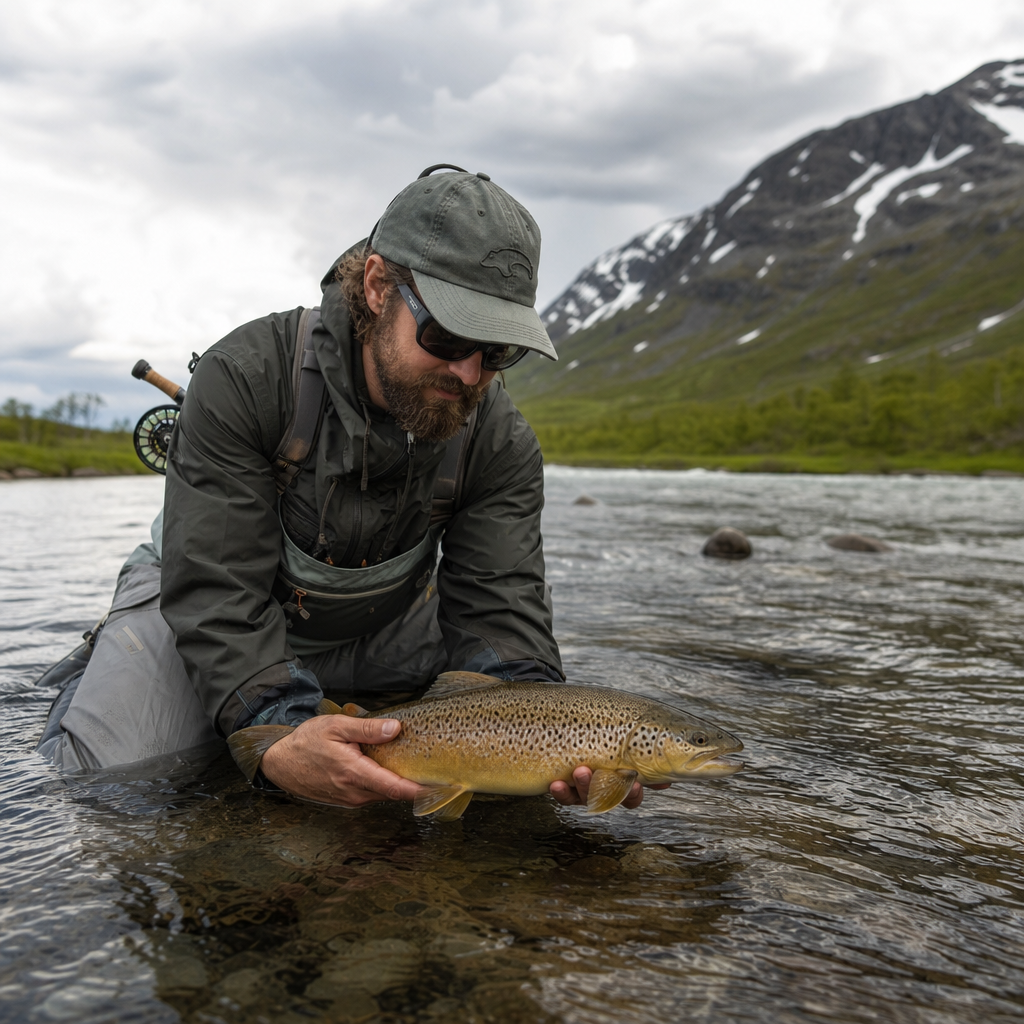
Keep fish in the water whenever possible. Wet your hands, use knotless rubber nets, and avoid squeezing the body or touching the gills. If a photo is appropriate, prepare the camera first, lift the fish briefly, and support it horizontally. In warm water, skip photos altogether. Scientific guidance from agencies including Trout Unlimited, Keep Fish Wet, and many state and national fisheries departments consistently emphasizes reduced air exposure, shorter fight time, and minimal handling as key factors in release survival. These principles apply whether you are releasing grayling in Scandinavia or bonefish on Caribbean flats.
Hook choice matters too. Barbless single hooks generally penetrate well, release faster, and reduce tissue damage. In some destinations, trebles are banned or strongly discouraged for this reason. Revive fish facing into gentle current only as long as needed; overhandling at boatside can do more harm than good. Watch for signs of distress such as rolling, inability to maintain posture, or delayed kick-off. If conditions are poor, stop fishing. The fishery does not owe us another cast.
Respect culture, access, and local economies in every destination
Sustainability is social as well as ecological. Many international fly fishing destinations exist within landscapes shaped by Indigenous governance, communal land tenure, private stewardship, or long-standing local use rights. Anglers who ignore these realities create conflict quickly. Before arrival, learn who manages the water, who owns access corridors, and whether cultural protocols apply. In parts of Canada, New Zealand, and northern Scandinavia, Indigenous communities have legal and moral authority over fisheries and surrounding lands. Respect for local rules is not a courtesy add-on; it is central to ethical travel.
Economic behavior matters too. Hiring local guides, staying in locally owned lodging when feasible, and purchasing services from community businesses can help ensure the fishery’s value is felt where the resource exists. I have watched this work well in destinations where guiding provides a stronger incentive for habitat protection than short-term extractive alternatives. Conversely, all-inclusive trips that import labor, food, and management from outside the region may leave only a thin economic benefit on the ground. Ask operators what percentage of staff are local and whether training pathways exist for residents.
Access etiquette is equally important. Close gates, stay on designated paths, avoid blocking roads with rental vehicles, and never assume that a social media pin grants permission. On crowded international rivers, rotate through runs, communicate with other anglers, and follow local stepping-down traditions. Good manners reduce pressure, preserve access, and make visiting anglers welcome in places that could easily decide they have had enough of tourism.
Build a trip plan that leaves a destination better than you found it
The best international anglers treat each trip as a stewardship project, not just a vacation. That starts with a written plan. Set personal rules before departure: no fishing above a chosen water temperature, no hero shots that require extended air exposure, no felt soles, no disposable water bottles, and no booking operators that cannot explain conservation practices. Keep a small log of water conditions, species encountered, invasive species checks, and any conservation concerns you observe. Shared responsibly with guides or local organizations, those notes can support better management.
Consider giving back directly. Many destinations have river trusts, hatchery reform groups, anti-netting campaigns, or habitat restoration programs that rely on visiting anglers for funding and visibility. Donations are useful, but so is responsible storytelling after the trip. When you publish photos, avoid revealing fragile locations that cannot handle sudden crowds. Credit local guides, mention access rules, and explain why certain practices, such as resting fish in hot weather or pinching barbs, are nonnegotiable. The way anglers talk about destinations shapes the behavior of the next wave of visitors.
This hub page should guide every future trip under the broader fly fishing destinations category: research the fishery, choose proven operators, pack with biosecurity in mind, cut waste and emissions where you can, handle fish to maximize survival, and respect the people whose waters you are privileged to visit. Sustainable fly fishing practices abroad are not complicated, but they do require discipline. Start using these standards on your next international trip, and use them to evaluate every guide, lodge, and destination article you read next.
Frequently Asked Questions
What does sustainable fly fishing abroad actually mean in practice?
Sustainable fly fishing abroad means making decisions before, during, and after a trip that protect fish populations, preserve habitat, and respect the people who depend on those waters. In practice, it starts with choosing destinations, lodges, guides, and outfitters that follow local conservation rules rather than treating regulations as optional. It also means understanding seasonal closures, catch-and-release requirements, gear restrictions, invasive species precautions, and access rules well before you arrive. A sustainable angler does not assume that what is acceptable at home is appropriate in another country. Every fishery has its own ecological pressures, cultural expectations, and legal framework.
On the water, sustainable fly fishing involves low-impact handling, careful wading, and tackle choices that reduce harm to fish. Using barbless hooks where required or advisable, landing fish quickly with appropriately strong tippet, keeping fish wet, minimizing air exposure, and avoiding targeting species during spawning stress are all part of the equation. Equally important is staying out of fragile bankside vegetation, preventing erosion by entering and exiting rivers carefully, and cleaning boots, waders, and gear to avoid transporting invasive organisms between watersheds. Sustainability is not just about releasing fish; it is about reducing cumulative pressure on the entire ecosystem.
Abroad, the definition also expands beyond angling technique to include travel behavior. That includes reducing waste, limiting single-use plastics, supporting local businesses, respecting Indigenous and community-managed waters, and being mindful of the carbon impact of international travel. Anglers can offset some of that impact by staying longer rather than taking multiple short flights, choosing operators with clear environmental policies, and contributing to local conservation initiatives. In short, sustainable fly fishing abroad is a full-trip mindset: fish responsibly, travel thoughtfully, and leave the destination ecologically and socially better supported because you visited.
How can I reduce my environmental impact when traveling internationally for a fly fishing trip?
Reducing environmental impact begins with trip planning. One of the most effective steps is to prioritize fewer, longer trips rather than several short destination flights, since aviation often represents the largest share of a fishing trip’s footprint. When possible, choose direct routes, use public transportation or shared transfers once you arrive, and pack efficiently to reduce unnecessary weight. While no trip can be impact-free, thoughtful logistics can significantly lower emissions and resource use compared with convenience-first travel decisions.
Your choice of lodging and outfitter also matters. Look for operators that employ local guides, dispose of waste responsibly, reduce energy and water use, avoid damaging shoreline development, and actively support fishery management or habitat restoration. A good outfitter should be able to explain how it handles fuel use, boat traffic, sanitation, fish handling standards, and community relationships. If a lodge markets itself as eco-friendly but cannot describe specific practices, that is a sign to ask harder questions. Sustainable travel is measurable through behavior, not branding alone.
Personal habits make a difference too. Bring reusable water bottles, food containers, and travel utensils to cut down on disposable waste in remote areas where recycling may be limited or nonexistent. Use reef-safe or environmentally considerate sunscreens and insect repellents when relevant, avoid leaving tippet clippings or packaging behind, and clean and dry gear thoroughly before and after the trip to prevent the spread of invasive species and pathogens. If boats are part of the program, choose operations that limit unnecessary runs and respect no-wake zones and sensitive wildlife areas.
Finally, consider the broader impact of your spending. Hiring local guides, eating locally, tipping fairly, and paying legal access fees can strengthen the economic value of healthy fisheries for nearby communities. That creates incentives for long-term protection rather than short-term extraction. Sustainable fly fishing abroad is not only about minimizing harm; it is also about making sure the benefits of your visit reinforce conservation and local stewardship.
Why is following local fishing regulations and customs so important when fishing abroad?
Following local regulations is essential because fisheries management is highly specific to species, river systems, climate, fishing pressure, and local conservation priorities. Rules on seasons, permits, bait and fly restrictions, catch limits, hook types, and access are usually designed to protect vulnerable life stages and maintain fish populations over time. Ignoring them can damage fisheries directly, but it can also undermine management systems that local communities, governments, and conservation groups have spent years building. Even seemingly small violations, such as fishing closed water or entering restricted spawning habitat, can have outsized ecological consequences in sensitive destinations.
Customs matter just as much as written law. In many countries, fishing access is shaped by local traditions, private stewardship, Indigenous rights, or community agreements that may not be obvious to visiting anglers. Respecting who controls access, where you can walk, how photographs should be handled, and whether certain species or areas carry cultural significance is part of ethical fishing. An angler who behaves respectfully helps preserve trust between visiting fishermen and local hosts. One who does not can create tension that harms future access and weakens support for tourism-based conservation.
There is also a practical reason to take regulations seriously: local guides and authorities often know conditions that visitors do not. Water temperatures, disease outbreaks, low-flow stress, spawning migrations, and temporary closures may require more caution than standard rulebooks suggest. The best anglers abroad listen closely, ask questions, and adapt. If a guide says a run should be rested, fish should remain in the water for photos, or afternoon fishing should stop due to heat stress, that is not just local preference; it is often a conservation response based on real-time conditions.
In short, compliance shows respect for the fishery and for the people who protect it. It turns a destination angler from a mere visitor into a responsible participant in the long-term health of the river. That attitude is central to sustainable fly fishing practices abroad.
What are the best catch-and-release practices for protecting fish in international destinations?
Effective catch-and-release starts long before the hook-up. Use tackle that matches the size and strength of the fish you may encounter so you can land them quickly without exhausting them unnecessarily. Long fights can lead to high post-release mortality, especially in warm water or in fisheries where fish already face stress from migration, spawning, or low oxygen conditions. Barbless hooks are often the best choice because they simplify release and reduce tissue damage. A rubberized landing net, if permitted, also helps protect slime coating and fins.
Once a fish is hooked, the goal is control, speed, and minimal handling. Keep the fish in the water as much as possible, wet your hands before touching it, avoid squeezing the body or gills, and never drag a fish onto dry rocks, sand, or hot boat decks. If a photo is taken, prepare the camera first, lift the fish only briefly, and return it to the water immediately. In many fisheries, the most sustainable photo is one taken with the fish partially submerged. That may be less dramatic than a grip-and-grin shot, but it is far better for the animal.
Conditions matter. Catch-and-release is not automatically sustainable under all circumstances. High water temperatures, very low flows, or post-spawn exhaustion can make even carefully handled releases risky. In such cases, the responsible choice may be to shorten sessions, fish early, target hardier species, or stop fishing entirely. This is especially important abroad, where local fish may face environmental pressures unfamiliar to visiting anglers. Asking guides about temperature thresholds and stress periods is a smart habit.
Finally, release quality is influenced by angler discipline. Avoid overplaying fish for sport, crushing barbs properly, carrying the right tools for quick hook removal, and knowing when not to fish are all hallmarks of responsible catch-and-release. The real measure of success is not how many fish were brought to hand, but how many were released in strong condition with a high chance of survival.
How can I support local communities and conservation efforts through a sustainable fly fishing trip abroad?
The most direct way to support communities is to make sure more of your travel budget stays in the destination. That means booking with locally rooted outfitters when possible, hiring local guides, staying in accommodations that employ nearby residents, and purchasing supplies, meals, and services from local businesses rather than relying entirely on imported tourism infrastructure. When fishing generates visible economic value for residents, healthy rivers and intact fish habitat become more worth protecting than short-term alternatives such as overharvest, pollution, or destructive development.
It is also important to understand who has a stake in the fishery. In some places, waters are managed by village associations, Indigenous groups, landowners, or regional conservation bodies. Paying access fees willingly, following local protocols, and asking permission rather than assuming access are practical ways to show respect. Fair tipping, courteous conduct, and interest in local knowledge also go a long way. Sustainable travel is relational, not just environmental. People are more likely to welcome visiting anglers when those anglers treat them as partners rather than service providers standing in the background of the trip.
Conservation support can be financial, educational, and behavioral. Consider donating to reputable local watershed groups, fishery trusts, or habitat restoration programs connected to the destination. Choose lodges and guides who can demonstrate actual conservation involvement, such as sponsoring anti-poaching patrols, supporting scientific monitoring, restoring riparian areas, or funding community water projects. Some of the most sustainable operators are deeply engaged in