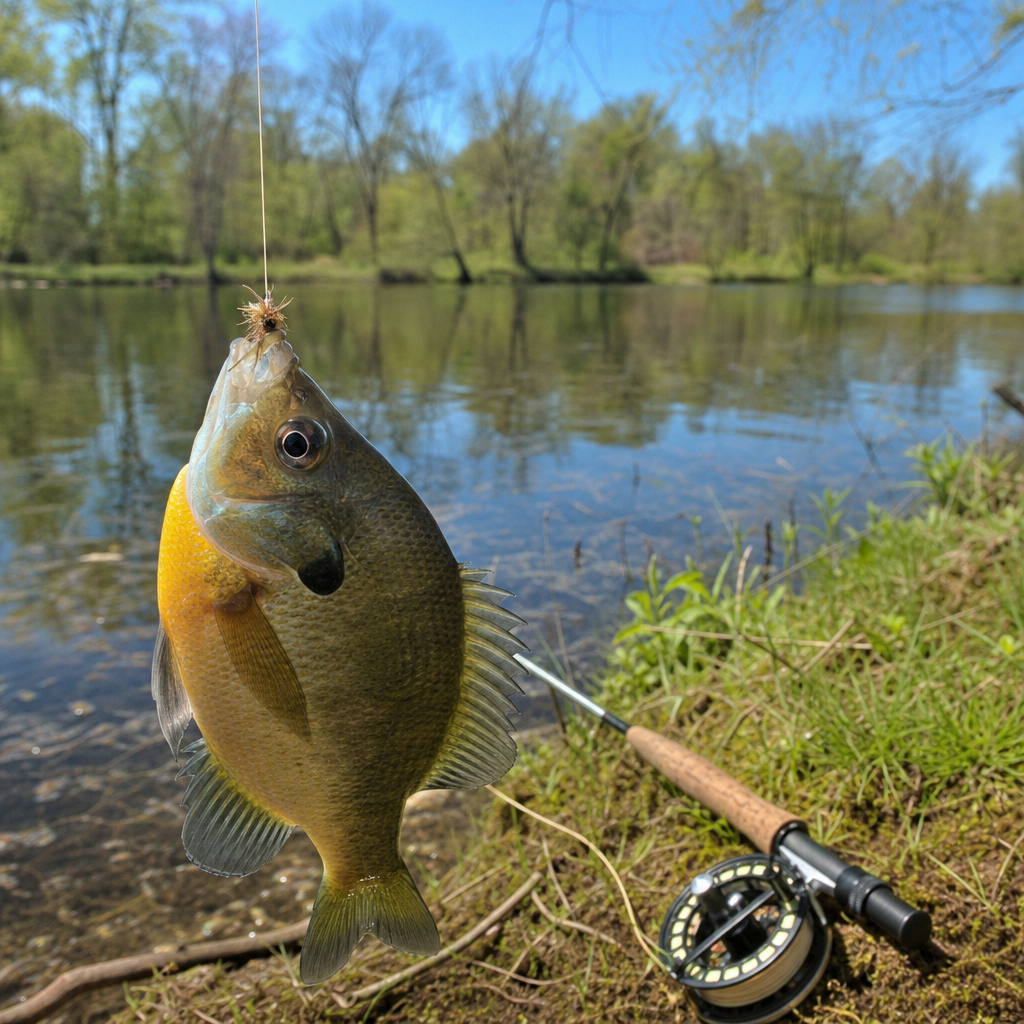
Spring fly fishing for panfish is one of the most reliable ways to shake off winter and catch fish consistently, because bluegill, crappie, and perch move shallow, feed aggressively, and respond well to simple fly tactics. In practical terms, spring fly fishing means targeting fish during warming water, lengthening daylight, and pre-spawn to post-spawn transitions, when location changes quickly and presentation matters more than distance. Panfish include several species, but in most lakes, ponds, and slow rivers, the core spring targets are bluegill, redear sunfish, black crappie, white crappie, yellow perch, and occasionally pumpkinseed. I have spent many early seasons walking thawed pond banks, watching water temperature climb a few degrees, and seeing entire shorelines come alive as insect activity, emerging vegetation, and baitfish draw panfish into accessible water. That combination makes spring an ideal season for beginners, families, and experienced fly anglers who want numbers, variety, and clear feedback on technique.
The appeal goes beyond easy catching. Spring panfish teach core fly fishing skills in a forgiving setting: reading water temperature, finding structure, matching forage, controlling depth, and adjusting retrieve speed. A six-inch bluegill inhaling a size 10 woolly bugger under a floating line may not sound dramatic, but it reveals exactly how fish position around weed edges, wood, docks, and dark-bottom coves. Crappie suspended near brush piles teach strike detection and leader control. Perch cruising emerging grass show how productive a slow hand-twist retrieve can be when fish are keyed on nymphs or tiny minnows. Because these fish often school, one correct decision can produce repeated action, which accelerates learning faster than many trout or bass scenarios.
Spring also matters because conditions are dynamic. A sunny afternoon can pull bluegill into two feet of water, while a cold front pushes them back to the first drop or adjacent cover. Water in the upper 40s often holds crappie staging near creek channels and timber; water in the mid-50s to low 60s usually pushes more fish shallow; stable temperatures in the 60s trigger spawning activity for many panfish depending on region. Understanding those shifts is the difference between random casting and deliberate fishing. As the hub for spring fly fishing, this article explains the seasonal patterns, tackle, flies, retrieves, access points, and decision-making framework that make panfish such a productive option.
Why Panfish Shine During Spring Fly Fishing
Panfish are active during a season when many gamefish are still inconsistent. Their metabolism rises quickly with modest warming, and many species gather in predictable areas before and during the spawn. In ponds, this usually means north-facing banks, dark-bottom flats, protected coves, inflow areas, and shoreline cover that absorbs heat. In reservoirs, look for secondary pockets, marinas, standing timber, riprap transitions, and creek arms with stained water that warms faster than the main lake. In rivers and backwaters, spring panfish favor slack edges, side channels, submerged wood, and floodplain ponds protected from heavy current. The shared principle is simple: find the warmest stable water with food and nearby cover.
Bluegill are especially dependable because they often move shallow in waves rather than all at once. If one bedding area is empty, another nearby cove may already have fish sliding up. Crappie are more temperature sensitive and often suspend before committing to the bank, but that staging behavior is ideal for fly anglers using indicators, intermediate lines, or lightly weighted flies. Yellow perch can be overlooked, yet they often stack along emerging weeds and soft-bottom flats where chironomids, mayfly nymphs, and minnows are abundant. These habits create frequent overlap: a single shoreline stretch may hold bluegill cruising the edge, crappie over brush in four to eight feet, and perch slightly deeper along grass.
Another reason spring panfish excel is accessibility. You do not need a technical drift boat, premium electronics, or long runs across open water. A float tube, kayak, jon boat, or simply a pair of boots and a warm afternoon can be enough. In many public waters, the best spring panfish spots are within casting distance of bank anglers because the fish are using shallow habitat by design. That accessibility makes this style of fishing highly repeatable. You can return to the same pond weekly, track how fish shift with temperature and weather, and build a practical seasonal map that improves every year.
Seasonal Timing, Water Temperature, and Fish Location
The most useful spring fly fishing question is not “What fly should I use?” but “Where are the fish today relative to last week?” Panfish move with warming trends, overnight lows, wind direction, and water color. I rely heavily on a thermometer, because two or three degrees can reposition fish dramatically. In early spring, when water is roughly 45 to 52 degrees, crappie commonly hold on the first breakline near spawning coves, along brush, timber, or dock posts. Bluegill may still be near deeper wintering areas but begin sliding onto dark-bottom banks in the afternoon. Perch often roam soft-bottom flats adjacent to deeper water, especially where fresh weed growth is just starting.
As temperatures move into the mid-50s and low 60s, panfish become easier to pattern. Crappie stage in tighter schools and frequently suspend at a specific depth. Bluegill and redear use warming pockets, reed edges, old lily pad stems, and wood. On calm sunny days, it is common to find them in one to four feet of water late in the afternoon even if the morning bite was deeper. Once spawning begins, fish can be very shallow, but not every individual moves up simultaneously. The biggest mistake I see is fishing only the obvious shoreline beds and ignoring the nearby staging water, where less pressured fish often hold.
Weather changes matter. A stable warming trend generally improves shallow activity. A sharp cold front usually slows the bite and pulls fish slightly deeper or tighter to cover rather than sending them back to winter depths. Wind can help by pushing warm surface water and plankton into a bank, which attracts insects and bait and concentrates fish. Muddy inflow can be excellent if it raises temperature and delivers food, but extremely dirty water may require darker flies, more vibration, and slower presentations. The key is to think in zones: spawning shallows, adjacent staging water, and the nearest security depth. Panfish usually cycle among those three areas throughout spring.
Tackle, Lines, and Leader Setups That Work
A balanced panfish outfit keeps casting easy and protects light tippets while still handling weighted flies. For most situations, a 3- to 5-weight rod between 8 and 9 feet is ideal. A 4-weight is my most versatile choice for ponds and small lakes, while a 5-weight helps on windy reservoirs or when throwing larger streamers and indicator rigs. Reels matter less than on trout streams, but a smooth drag and decent line management are still valuable when fishing from a tube or kayak. Floating lines cover most spring panfish fishing because much of the action happens from just under the surface to about six feet deep.
There are, however, times when a clear intermediate line is the better tool. Crappie staging over brush in six to ten feet, perch following weedline contours, or fish refusing an indicator often respond to a slow-sinking presentation that stays level through the strike zone. Leaders can stay simple. A 7.5- to 9-foot tapered leader ending in 4X or 5X works for unweighted wets, poppers, and nymphs. For small streamers and lightly weighted flies around wood, 3X or 4X is more practical. If I am fishing two flies under an indicator, I shorten the leader enough to turn the rig over cleanly and place split shot only when needed. Too much weight kills natural movement and hangs up in cover.
| Situation | Rod and Line | Leader | Best Fly Types |
|---|---|---|---|
| Shallow bluegill on warming banks | 3- or 4-weight floating line | 9 ft 5X | Soft hackles, nymphs, small poppers |
| Crappie over brush or docks | 4- or 5-weight floating or intermediate | 7.5 ft 4X | Minnow streamers, balanced leeches, tiny jigs |
| Perch along emerging weeds | 4-weight floating or intermediate | 9 ft 4X or 5X | Chironomids, damsel nymphs, baitfish patterns |
| Windy reservoir banks | 5-weight floating line | 7.5 ft 3X or 4X | Woolly buggers, beadheads, heavier wets |
Best Spring Flies for Bluegill, Crappie, and Perch
The best spring flies for panfish are not complicated. They imitate three broad food categories: insects, small baitfish, and general movement. For insects, small beadhead nymphs, pheasant tails, hare’s ears, chironomids, soft hackles, and spider patterns produce steadily. Bluegill in particular respond well to a size 10 to 14 soft hackle or a small rubber-leg nymph moved slowly through warming shallows. Perch often favor slim nymphs and chironomid-style flies when they are grubbing along soft bottoms or cruising sparse grass. These patterns are effective because spring panfish often feed opportunistically rather than selectively; profile, depth, and pace matter more than exact imitation.
For baitfish, small clouser-style minnows, marabou streamers, woolly buggers, craft fur minnows, and balanced leeches are proven options. Crappie especially key on compact minnow shapes in white, chartreuse, olive, black, and combinations of those colors. In stained water, black and chartreuse remains one of the most consistent spring combinations I have used. In clearer ponds, olive over white or tan works better when fish are feeding on young-of-year forage or translucent minnows. A woolly bugger in size 8 or 10 may catch all three major panfish groups in the same session, which is why it remains a foundational fly in spring boxes.
Surface flies earn attention later in spring, but they are not just a summer game. During warm, calm afternoons, bluegill will readily take small foam spiders, tiny hard poppers, and deer hair bugs near reeds, flooded grass, and wood. The mistake is overworking them. A subtle twitch and long pause often outfishes aggressive popping when water is still cool. If one species deserves a dedicated spring fly category, it is redear sunfish, where present. Redear frequently feed on bottom-oriented prey such as snails and nymphs, so small weighted flies fished slowly along the substrate can be far better than topwater. Matching feeding position is more important than matching a hatch.
Presentation, Retrieve Speed, and Depth Control
Depth control is the central skill in spring panfish fly fishing. Most poor days are not caused by the wrong pattern but by fishing above or below the active zone. Start by establishing a depth range. In a shallow pond pocket, fish might be suspended only a foot down over three feet of water by late afternoon. Around brush, crappie may hold exactly five feet deep over eight feet. Use countdowns with sinking lines, adjustable indicators with floating lines, and deliberate retrieve lengths to repeat productive presentations. Once you catch one fish, note not just the fly but also where in the retrieve the strike occurred and how deep the fly was traveling.
Retrieve speed should generally be slower than many anglers expect. In early spring, a hand-twist retrieve, short strips with pauses, or a barely moving indicator rig usually outperforms fast stripping. Bluegill often eat on the pause. Crappie commonly inhale a fly as it pendulums down beside a dock post or stalls over submerged brush. Perch will follow for several feet before committing if the fly stays near their level and moves steadily. When fish are active during a warm spell, adding a few sharper strips can trigger reaction bites, but speed changes should be intentional rather than constant. Controlled movement catches more spring panfish than frantic motion.
Presentation angle matters too. Bank anglers often do best casting parallel to shore, especially along reed lines, retaining walls, overhanging brush, and weed edges. That keeps the fly in productive water longer than repeated casts straight out and back. From a boat or tube, quartering across a flat and retrieving toward deeper water can intercept fish sliding between feeding and staging zones. Around docks or laydowns, place the fly beside vertical structure and let it drop naturally before moving it. Many spring panfish, especially crappie, are cover-oriented and vertical in their positioning. Giving the fly a controlled descent can be more important than the retrieve that follows.
Where to Fish in Ponds, Lakes, Reservoirs, and Rivers
The best spring panfish water shares several physical traits: warmth, protection, food, and nearby depth. In small ponds, start with the north and northwest shorelines because they often receive more sun and less cold wind. Dark bottoms absorb heat faster than bright sand, and even a few emerging weeds can attract insects and conceal fry. Fallen trees, culvert inflows, dock corners, and old cattail edges are high-value targets because they combine cover with temperature advantage. I have seen tiny municipal ponds fish better than famous reservoirs in spring simply because their shallow basins warm quickly and concentrate fish in easy reach.
Natural lakes and reservoirs require a little more map reading. Protected coves, marinas, backs of creek arms, riprap near shallow flats, and brush-lined secondary points all deserve attention. If the lake is dropping or still cold, focus on the first available depth outside the spawning pocket rather than the extreme back end. Side-imaging and forward-facing sonar can certainly locate crappie schools, but they are not mandatory. A contour map, a thermometer, and visible clues such as bait flickers, emerging vegetation, and bird activity often narrow the search effectively. In reservoirs with stained tributaries, the warmest colored water is frequently the most productive provided oxygen and visibility remain reasonable.
Slow rivers, oxbows, canals, and backwaters can be outstanding in spring because they warm faster than the main current. Seek eddies, marinas, dead-end sloughs, beaver ponds, and flooded timber off the main channel. In these environments, current seams are less important than slack-water habitat with depth nearby. Panfish avoid fighting heavy spring flow whenever possible. Water that appears almost still, especially near woody cover and last year’s vegetation, often holds schools. If river levels are fluctuating, fish the stable edge areas where water clarity and temperature remain consistent. Stability is often more important than absolute warmth in moving-water systems.
Common Mistakes, Ethical Harvest, and Building a Spring Pattern
The biggest spring mistake is moving too fast mentally and physically. Anglers often cover plenty of water but do not truly test depths, pauses, or adjacent zones before leaving. Another common error is assuming all shallow fish are spawning and visible. Many of the best crappie and larger bluegill hold just outside obvious beds, especially after pressure or weather changes. Oversized flies can also reduce catches. A panfish will eat a big streamer at times, but size 8 to 14 patterns usually fit spring forage better and cast more accurately on light tackle. Finally, many anglers fish only afternoons. Morning can be slower, yet overcast days and warming nights can create excellent early action.
Harvest deserves attention because spring concentrations make panfish vulnerable. Keeping a modest meal can be compatible with healthy fisheries, but removing large numbers of the biggest fish from bedding areas can reduce quality, especially in small ponds. Regulations vary by state, and some waters have specific size or creel rules for crappie and sunfish. I favor selective harvest: keep a few mid-sized fish where populations support it, release the largest breeders, and handle shallow fish gently with wet hands and barbless or pinched-barb hooks when possible. Ethical choices preserve the very accessibility that makes spring panfish special.
To build a repeatable spring pattern, record date, water temperature, weather trend, clarity, productive depth, and fly choice after each outing. Within one season, you will see patterns emerge: which bank warms first, when crappie stage on a certain dock line, how bluegill respond to a south wind, and when perch shift from mud flats to weed edges. Those notes turn casual success into dependable strategy. Spring fly fishing for panfish is fun because the action is frequent, but it becomes truly productive when you connect seasonal cues to precise decisions. Start with one local water, fish it through the warming cycle, and let the fish teach you the season.
Frequently Asked Questions
Why is spring such a productive time for fly fishing for panfish?
Spring is productive because panfish become far more active as water temperatures rise, daylight increases, and spawning cycles begin. Bluegill, crappie, and perch spend much of the cold season in deeper, more stable water, but in spring they start moving toward shallower areas to feed and prepare for spawning. That migration concentrates fish in places that are easier to reach with a fly rod, including shorelines, coves, creek mouths, weed edges, and flats with dark bottoms that warm quickly. In many lakes and ponds, this creates a short but very dependable window when fish are both accessible and willing to eat.
Another reason spring stands out is that panfish often feed aggressively during pre-spawn and recovery periods. They are not just present in the shallows; they are actively looking for insects, small baitfish, and other easy meals. That makes simple, proven fly patterns highly effective, and it reduces the need for long casts or complicated presentations. If you can place a small fly near the right cover and retrieve it naturally, you are often in business. For anglers eager to get back on the water after winter, spring panfish offer one of the most consistent and enjoyable forms of fly fishing available.
Where should I look for bluegill, crappie, and perch in the spring?
Start by thinking about water temperature, sunlight, and nearby access to deeper water. In spring, panfish rarely scatter randomly. They usually stage and move in waves, using transition zones as conditions improve. Good early-season targets include north-facing banks that get the most sun, shallow coves protected from cold wind, channels leading into spawning bays, flooded brush, dock edges, emerging weeds, and the edges of drop-offs near flats. Dark-bottom areas are especially important because they absorb heat and warm faster than cleaner or lighter bottoms.
Species behavior matters too. Bluegill often relate to cover such as reeds, brush, docks, and weed lines once the shallows begin warming. Crappie commonly suspend around timber, brush piles, marinas, submerged stake beds, and channel edges before sliding shallower. Perch tend to roam more, but they still use weed edges, sandy flats, and basin-to-flat transitions during spring feeding movements. A key point is that fish location can change quickly from week to week, or even day to day, depending on weather. A cold front may push fish slightly deeper or tighter to cover, while a warm, calm afternoon may pull them right up into skinny water. If one area looks perfect but feels empty, adjust depth before changing lakes. Often the fish are nearby, just a little farther out or slightly less active than expected.
What fly patterns and tackle work best for spring panfish?
You do not need overly technical gear to catch spring panfish consistently. A light fly rod in the 3- to 5-weight range is ideal for most situations because it casts small flies easily and makes even modest fish fun to catch. Floating lines cover the majority of spring scenarios, especially in ponds, shallow coves, and near visible cover. Leaders can be simple and practical; a 7.5- to 9-foot leader tapered to around 4X or 5X is a strong all-around choice. If fish are deeper or wind makes contact difficult, adding a small indicator or using lightly weighted flies can help you stay in the strike zone longer.
As for flies, spring panfish are famously willing, but they still show preferences based on depth, mood, and available forage. Productive staples include small Woolly Buggers, beadhead nymphs, spider patterns, soft hackles, marabou jigs tied on fly hooks, small Clousers, and foam bugs once fish are fully committed to the surface. Bluegill often respond well to rubber-leg spiders, popping bugs, and nymphs fished slowly around cover. Crappie frequently favor small streamers or minnow-like patterns presented with pauses, especially when they are suspending. Perch often eat nymphs and small baitfish imitations worked near bottom or along weed edges. Color matters less than many anglers think, but black, olive, chartreuse, white, and combinations of those shades remain dependable starting points. Keep the fly size modest, focus on depth control, and let the fish tell you whether they want a subtle bug, a flashy baitfish imitation, or a surface offering.
What is the best presentation for panfish in spring?
The best presentation is usually a controlled, slower retrieve that keeps the fly in front of fish rather than racing it through the area. Spring panfish often feed aggressively, but that does not always mean fast. In cool water, a short-strip retrieve with pauses is often the most effective method because it gives fish time to track and commit. A marabou or soft-hackle fly can look especially alive with very little movement, which is why simple patterns continue to outperform complicated ones. If fish are around bedding cover, weed edges, or brush, cast past the target, let the fly settle, and work it back through the strike zone with gentle strips and occasional stops.
Depth control is more important than casting distance in most spring situations. If fish are high in the water column on a warm afternoon, an unweighted fly under a floating line may be perfect. If they drop slightly after a cold night, a beadhead nymph, small sinking leader, or a pause to let the fly sink can make all the difference. Under an indicator, nymphs and small streamers can be deadly when fish are holding at a consistent depth. Surface flies also become excellent as temperatures stabilize, especially for bluegill around calm banks and protected pockets. In every case, watch for subtle takes. Panfish often eat with just a slight twitch, hesitation, or tightening of the line, and anglers who stay alert through the pause usually catch more fish.
How do changing spring weather conditions affect panfish fly fishing, and how should I adjust?
Spring weather is the main variable that can turn a great bite into a slow one, but it rarely makes fish disappear entirely. Warm, stable weather usually pushes panfish shallower, increases feeding activity, and expands the hours when fish are catchable on the fly. After several mild days, expect more fish around emerging weeds, dark-bottom flats, shallow brush, and shoreline cover. Calm afternoons can be especially good because sun exposure continues warming the upper layer of water, drawing insects and active bait into the same areas panfish want to use.
Cold fronts, strong wind, and sudden temperature drops typically make fish less aggressive and pull them slightly off the bank or tighter to cover. When that happens, anglers should not assume the pattern is over. Instead, back off a little and fish the first break, the outside weed edge, the end of a dock, or the mouth of a cove rather than the extreme shallows. Slow the retrieve, use a slightly smaller or more natural fly, and give fish more time to inspect it. Wind can also be helpful if it pushes warmer surface water and food into one shoreline, but heavy wind may require shorter casts, heavier flies, or fishing protected banks for better control. The biggest adjustment is mental: spring panfish move often, and the anglers who treat each outing as a search for the day’s depth, cover, and speed usually do best. Once you find the right combination, action can be fast and consistent.