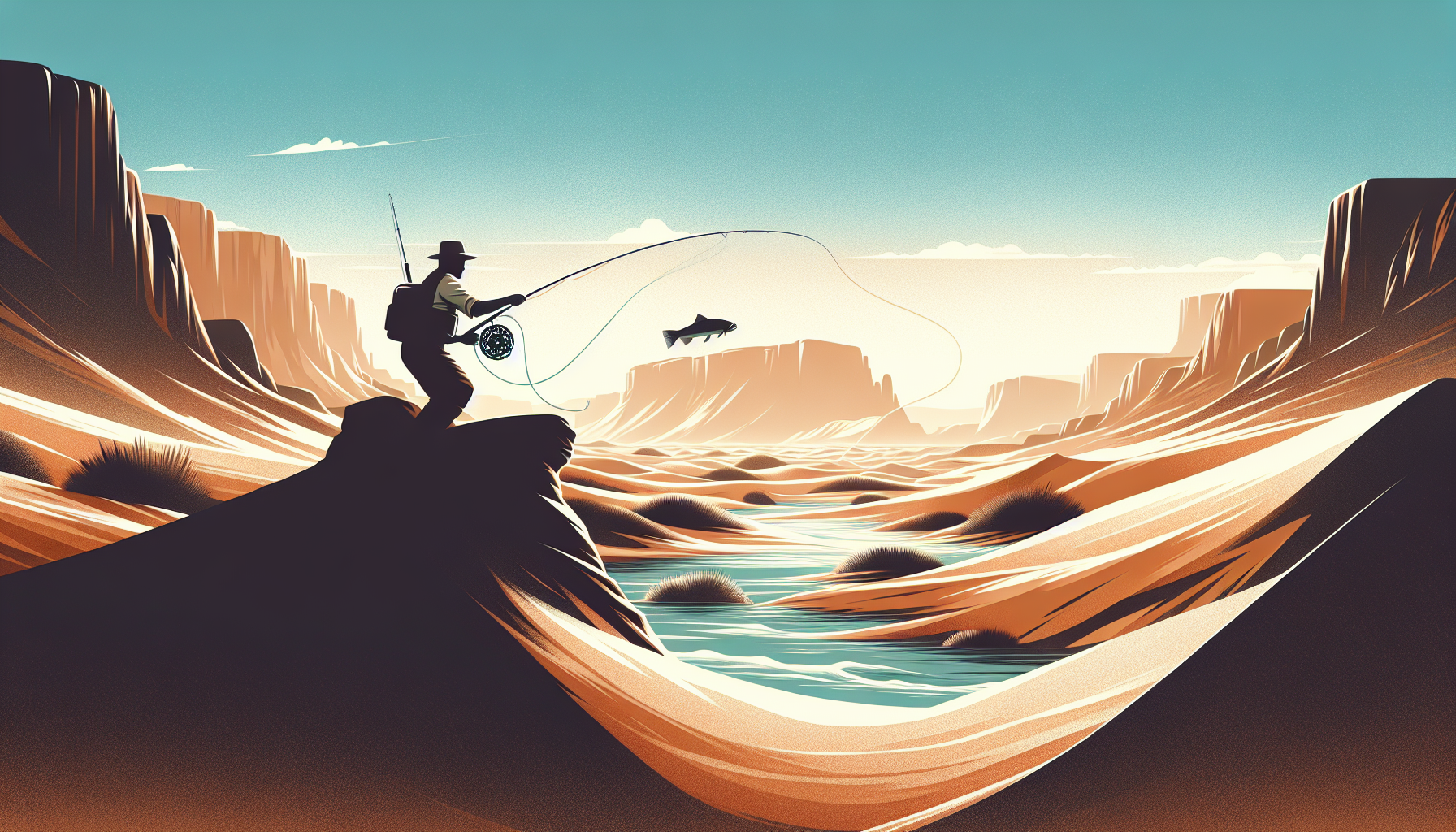
Fly fishing in the desert sounds contradictory until you spend enough seasons on Southwestern tailwaters, spring creeks, and canyon reservoirs to see how much life survives where water is scarce. In practical terms, desert fly fishing means targeting trout, bass, carp, and panfish in arid landscapes shaped by extreme heat, fluctuating flows, alkaline chemistry, and long distances between access points. Adventure fly fishing adds another layer: remote travel, variable conditions, technical problem solving, and a stronger emphasis on self-sufficiency than many anglers expect. As a sub-pillar within Fly Fishing Destinations, this guide explains how desert systems work, which tactics consistently produce fish, and how to plan trips that are rewarding rather than risky.
The biggest misconception I encounter is that desert fishing is only a winter tailwater game. In reality, productive desert angling spans regulated rivers below dams, high-desert spring systems, warmwater ponds, and reservoirs where tributary mouths and flooded structure create excellent opportunities. The challenge is that fish behavior is compressed around temperature, dissolved oxygen, shade, and current refuges far more tightly than in cooler mountain environments. A ten-degree change in water temperature can completely alter feeding windows. Afternoon monsoon runoff can turn clarity from two feet to two inches. Wind, silt, and access logistics matter as much as hatch charts. That is why desert fly fishing rewards anglers who read water scientifically, travel lightly, and adapt quickly. If you are building an Adventure Fly Fishing knowledge base, this is the page that connects strategy, gear, fish behavior, and destination planning into one working framework.
What makes desert fly fishing different
Desert fisheries are defined by limitation, and limitation creates concentration. Because reliable cold water is uncommon, fish stack around springs, dam releases, undercut shade lines, deep pools, and oxygen-rich inflows. On the San Juan River in New Mexico, for example, consistent releases from Navajo Dam create one of the West’s most dependable trout fisheries despite the surrounding high desert. On Arizona’s Lee Valley reservoirs and Nevada’s warmwater impoundments, bass and carp often cruise predictable edges where current, temperature, and food intersect. In other words, the barren-looking landscape can actually simplify the puzzle once you know which variables matter most.
From experience, the key differences are environmental stability and angler error tolerance. In a humid freestone stream, a poor approach might still produce because fish have many feeding lanes and ample cover. In a desert river at low flow, one heavy footstep on a clay bank, one sloppy false cast over a flat, or one late afternoon push into bathtub-warm water can shut the window instantly. Fish in these systems often feed aggressively during narrow periods, then slide into survival mode. Successful anglers therefore think in terms of windows, not all-day consistency. Early morning shade, short midge emergences, dam release pulses, and evening terrestrial falls become central planning anchors rather than nice bonuses.
Desert conditions also change fly presentation. Fine sediment, submerged weeds, hard mineral banks, and broad slicks make drag more visible. At the same time, warmwater desert species often tolerate stronger movement than trout do. This means your tactics should be species-specific instead of “general fly fishing.” Trout on a tailwater may demand 6X tippet, tiny midges, and depth control measured in inches. Carp on a saltgrass flat may reward a slow-strip crayfish pattern dropped three feet ahead of a moving fish. Largemouth bass around flooded mesquite may crush a deer-hair diver stripped hard at dawn. The common thread is precision under harsh conditions.
Best desert waters and species to target
The best desert fly fishing destinations usually fall into four categories: tailwaters, spring creeks, reservoirs, and urban or agricultural canals where legal access exists. Tailwaters are often the most reliable because dams moderate temperature and flow. The San Juan, the Green below Flaming Gorge, and stretches of the Lower Owens show how engineered flow can support excellent trout populations in dry country. Spring creeks in parts of Nevada, Utah, and eastern Oregon can be even more technical, with dense weed growth, clear water, and selective fish. These are classic Adventure Fly Fishing destinations because success requires careful timing, stealth, and local knowledge rather than simply covering miles.
Reservoirs and their tributary zones are equally important, especially for anglers who define adventure more broadly than trout. Desert reservoirs in Arizona, New Mexico, California, and Texas can produce largemouth, smallmouth, striped bass, carp, and panfish on fly tackle. During spring pre-spawn periods, bass move into warmer coves and flooded brush. Carp tail on mud flats after stable weather. Stripers push bait to the surface when wind and current pin shad against points. If you only pack trout gear, you miss much of what desert fisheries offer. A true hub on Adventure Fly Fishing should recognize that species diversity is one of the desert’s biggest strengths.
Choosing the target species should match the water’s thermal profile. Trout generally perform best in cold tailwaters and spring-fed reaches where summer temperatures remain suitable. Bass and carp thrive where water warms, oxygen remains adequate, and food is abundant. Catfish and panfish can save difficult days, especially in lower-light periods. I advise anglers to build itineraries around a primary species and a backup species rather than forcing one game plan. If a midday trout bite fades as temperatures rise, shifting to carp in the lower basin or bass in shaded structure can turn a frustrating day into a productive one.
| Water type | Common species | Best conditions | Core fly approach |
|---|---|---|---|
| Tailwater river | Trout | Stable releases, cool water, low light | Midges, scuds, small nymph rigs, technical dries |
| Spring creek | Trout | Clear flows, insect activity, careful approach | Sight fishing, long leaders, precise drifts |
| Desert reservoir | Bass, stripers, carp | Wind lanes, warming trends, bait movement | Streamers, poppers, crayfish and baitfish patterns |
| Shallow flat or canal | Carp, panfish | Sun for visibility, moderate clarity, light wind | Lead-and-drop presentations, slow strips, sight casting |
Essential gear for harsh, remote conditions
Desert fly fishing punishes weak preparation more than almost any other destination style. My baseline outfit for trout is a fast-action 9-foot 5-weight with a dependable large-arbor reel, a floating line, and leaders from 9 to 12 feet tapering to 4X through 6X. For bass and carp, I carry a 6-weight or 7-weight with weight-forward floating and intermediate lines. In reservoirs where stripers or deeper bass are possible, a sinking line becomes necessary. None of that is unusual. What matters in the desert is redundancy and durability: extra leaders, spare tippet spools, multiple polarized lenses, reel cleaning cloths, sunscreen that does not degrade fly line coatings, and hydration capacity that exceeds what feels necessary at the truck.
Clothing and wading choices deserve the same attention as rods and flies. Lightweight sun hoodies, neck gaiters, fingerless gloves, and broad-brim hats are standard because reflected heat off rock and water accelerates fatigue. Wet wading often makes more sense than waders in summer, but desert rivers can hide sharp volcanic rock, broken glass near urban access, and abrasive silt ledges, so durable boots still matter. I also recommend carrying a thermometer, a small first-aid kit, a map downloaded offline, and a headlamp even for day trips. Remote access roads wash out, distances are deceptive, and cell service is often unreliable.
Fly selection should be compact but intentional. For trout, carry midges, scuds, sowbugs, caddis pupae, mayfly nymphs, terrestrials, and a few attractor dries. On famous tailwaters, size matters; zebra midges in sizes 18 to 24 and scuds in gray, tan, and olive routinely outperform larger patterns. For bass and carp, include crayfish, leeches, baitfish streamers, damselfly nymphs, woolly buggers, and surface bugs. Weed guards are worth using around flooded brush and rocky banks. The goal is not a giant fly box. It is a system matched to known food sources and common presentations.
Reading desert water and timing the bite
If you want a direct answer to how to find fish in the desert, start by locating the coldest, most oxygenated, and most protected water available for the time of day. That may be a deep seam below a riffle, a spring inflow entering a reservoir arm, the shadow line under a canyon wall, or the first drop-off outside a weed bed. In tailwaters, fish often hold where current delivers food efficiently without forcing constant movement. In reservoirs, they shift with light, wind, and bait. In spring creeks, they patrol narrow lanes and feed selectively where weeds funnel invertebrates. These patterns are not random. They are driven by energy economics, and understanding that principle speeds up every decision you make.
Timing matters as much as location. Desert trout commonly feed best during morning and evening when temperatures are lower and direct sun is less intense. Midday can still produce on midge or scud rigs in deep slots, but surface activity often compresses into shorter periods than visitors expect. Conversely, bass may become aggressive at dawn on banks with overnight cooling, then slide deep or tight to cover once light intensifies. Carp can be best after a stable warming trend when they move shallow to feed confidently. Monsoon storms can help or hurt depending on intensity: a little cloud cover and inflow can trigger activity, while heavy runoff can erase visibility and push fish off flats.
Watch for subtle indicators that many anglers ignore. Swallows and bats signal insect availability. Foam lines reveal current convergence. A single carp mudding in a cove may indicate a whole group just beyond visibility. On tailwaters, if drifting moss starts increasing, release patterns may be changing upstream. Wind deserves special attention. In reservoirs, wind is not just an inconvenience; it positions plankton, then baitfish, then predators. Some of my best desert striper and bass sessions happened on blown points other anglers avoided because casting felt awkward. Learning to cast safely into crosswinds is therefore a practical fishing skill, not just a casting exercise.
Presentation strategies that consistently work
For trout, dead drift remains the foundation, but desert trout frequently require more depth control and less micro-drag than anglers use on mountain streams. I fish longer leaders, lighter indicators, and split shot adjusted one increment at a time rather than all at once. On the San Juan and similar systems, tiny errors in weight placement can mean the difference between ticking bottom occasionally and sailing above the fish all morning. When fish are suspended in softer seams, a short-line nymphing approach can outperform standard indicator rigs because it keeps more line off conflicting currents. During terrestrial periods, especially along grassy banks and under tamarisk, accurate drifts with ants, beetles, and hoppers produce fish that ignore subsurface rigs.
For bass and carp, the decisive factor is usually angle and speed. Bass around brush often want a fly that enters quietly, then moves with enough authority to trigger a reaction. I prefer compact baitfish streamers, craw patterns, and poppers worked on clear lines or floating lines depending on depth and cover. Carp are more exacting. Present the fly too close and they spook; too far and they never notice it. The best lead is often two to four feet ahead of a moving fish, then a slow strip or tiny hop as the fish nears. If the carp tips, flares, or pauses, do not trout set. Strip set firmly and keep the rod low until the hook is buried.
In all desert water, simplify false casting and prioritize line management. Wind, brush, and uneven banks punish complicated motions. Roll casts, water hauls, and one-backcast deliveries are more useful than elegant but fragile loops. I also stress fishing the conditions you have, not the picture you expected. If glare prevents spotting carp by midday, switch to bass structure or deeper trout lanes. If tailwater fish refuse dries but keep flashing on emergers, fish the film with a soft hackle instead of forcing a hatch match. Adaptation is the signature technique of Adventure Fly Fishing, and the desert rewards it immediately.
Safety, ethics, and trip planning for adventure fly fishing
Adventure fly fishing in the desert is as much logistics as casting. Heat illness, dehydration, flash floods, poor roads, and limited services are real hazards, not dramatic talking points. I plan water, fuel, and daylight conservatively, then add margin. In summer, that means beginning early, protecting skin aggressively, and leaving any drainage immediately if thunderstorms threaten upstream. Desert storms can dump miles away and still create dangerous surges where you are standing. Always check dam release schedules, weather radar, land status, and local regulations. Many productive waters cross tribal, private, or restricted land, and access rules are not optional.
Ethics also matter because desert fisheries are less resilient than they appear. Warm water stress can make catch-and-release mortality rise quickly, especially for trout. If temperatures approach the upper safe range, stop targeting them and switch species or locations. Minimize air exposure, pinch barbs where practical, and fight fish efficiently with appropriate tackle. Respect fragile banks, cryptobiotic soil, and riparian vegetation. Those details protect the habitat that keeps desert waters fishable. As you explore more Fly Fishing Destinations, use this hub as a planning baseline, then branch into destination-specific guides for rivers, reservoirs, and seasonal tactics. The main benefit of learning desert strategy is confidence: once you understand water, temperature, access, and presentation, seemingly barren landscapes open into some of the most memorable fisheries in the American West. Start with one well-researched trip, fish early, stay adaptable, and let the desert teach you how precise fly fishing can become.
Frequently Asked Questions
What makes fly fishing in the desert different from fishing in more traditional trout country?
Desert fly fishing is defined as much by water scarcity and environmental extremes as by the fish themselves. Unlike classic mountain fisheries where cold, stable flows are more predictable, desert systems often operate on tight margins. Tailwaters may swing with dam releases, spring creeks can be surprisingly fertile but fragile, and canyon reservoirs may fish differently from one cove to the next depending on wind, temperature, and water level. In these environments, success comes from understanding how fish respond to heat, light, oxygen levels, and fluctuating flows rather than simply matching a hatch in ideal conditions.
Another major difference is access and logistics. In the desert, anglers frequently deal with long drives between access points, rough roads, limited shade, and fewer support services. A short mistake in planning can turn into a serious problem when the nearest water, fuel, or cell signal is miles away. That means desert fly anglers need to think like both fishermen and backcountry travelers. Extra drinking water, sun protection, emergency gear, and a realistic timeline are not optional details; they are part of the fishing strategy.
Fish behavior also tends to be more concentrated and situational. Because quality habitat is limited, trout, bass, carp, and panfish often stack in specific zones where current, depth, temperature, and cover line up correctly. Instead of wandering water at random, experienced desert anglers focus on seams below releases, shaded undercuts, spring inflows, weed edges, submerged structure, and any pocket that offers thermal refuge. The result is a style of fly fishing that rewards observation, adaptation, and efficiency. When you find the right water in the desert, the action can be exceptional, but the margin for error is usually smaller than in more forgiving fisheries.
Which species are most commonly targeted when fly fishing in desert environments, and how should tactics change for each?
Desert fly fishing often includes a wider mix of species than many anglers expect. Trout are common in Southwestern tailwaters and select spring creeks where cold, managed releases or dependable groundwater keep temperatures within a livable range. In those waters, nymphing with small mayfly, midge, caddis, and scud patterns is often the most consistent approach, especially during bright days and clear flows. Dry-fly opportunities do happen, sometimes spectacularly, but they are often tied to narrow feeding windows early and late in the day or to specific insect events. On desert trout water, stealth matters. Fish frequently hold in clear, flat currents where they get a long look at the fly.
Bass, especially largemouth and smallmouth, are another cornerstone species in canyon reservoirs, desert rivers, and warmwater impoundments. These fish respond well to streamers, baitfish imitations, craw patterns, and topwater bugs depending on season and light conditions. Early mornings, evenings, and windy periods can be particularly productive because they lower visibility and push prey into predictable areas. Smallmouth often relate to rock, current breaks, and transition zones, while largemouth favor weed edges, flooded brush, and calmer backwaters. For bass, stripping technique, pause timing, and covering water efficiently are more important than fine tippet or exact hatch matching.
Carp are one of the true technical prizes of desert fly fishing. In shallow flats, backwaters, and reservoir margins, they can offer a level of challenge comparable to saltwater sight fishing. Successful carp tactics depend on spotting actively feeding fish, leading them with a realistic fly, and making short, controlled strips that imitate natural movement without alarming the fish. Patterns such as damsel nymphs, crayfish, dragonfly nymphs, worms, and small leech-style flies are reliable starting points. Panfish may seem less glamorous, but in many desert waters they provide steady action and are ideal for learning local conditions, especially when fish are holding around weed lines, docks, or flooded cover. The key across all species is to let the habitat dictate the method. Desert anglers do best when they stop thinking in terms of one target fish and start treating each water body as its own system.
What fly patterns, rigging setups, and presentation techniques work best in desert tailwaters, spring creeks, and reservoirs?
In desert tailwaters and spring creeks, confidence often starts with a compact but versatile selection of flies. Small nymphs usually carry the load: midges, pheasant tails, zebra midges, RS2-style patterns, caddis larvae, sowbugs, scuds, and baetis imitations are all proven staples. Because these waters can be fertile and clear, fish often key on size, profile, and drift quality more than on flashy materials. A two-fly nymph rig under an indicator remains one of the most effective setups, especially when adjusted carefully for changing depths and currents. Euro-style tight-line methods can also be deadly in deeper seams, pocket water, and runs where direct contact improves strike detection.
For dry-fly fishing, carry small parachute mayflies, midge clusters, caddis adults, terrestrials, and attractor patterns suited to the season. Desert landscapes produce plenty of windblown food, so ants, beetles, and hoppers can be especially important near grassy banks, tamarisk edges, and undercut shorelines. Presentation should be deliberate and drag-free. Long leaders, fine tippet, and careful positioning matter because fish in these systems often feed in calm water with excellent visibility. If trout refuse the dry, adding a small dropper below the surface can turn inspection into commitment.
Reservoir and warmwater setups are different. Floating lines cover a lot of bass and panfish scenarios, especially with streamers, poppers, foam bugs, and baitfish flies around shallow structure. Sink-tip or intermediate lines become useful when fish slide deeper along ledges, points, and submerged timber. For carp, longer leaders and lightly weighted flies help maintain a natural sink rate in skinny water. The most important presentation principle across all desert fisheries is control. In rivers, that means drift and depth. In stillwaters, that means retrieve speed, pause length, and keeping the fly in the strike zone. Desert fish often live in concentrated, efficient feeding lanes, so the angler who can repeatedly show the fly at the right depth and angle will usually outperform the angler who simply casts more often.
How do weather, heat, and water conditions affect desert fly fishing, and when is the best time to fish?
Weather and water conditions shape desert fly fishing more dramatically than many newcomers expect. Extreme heat can raise water temperatures quickly, reduce dissolved oxygen, and compress feeding windows into the coolest parts of the day. In practical terms, that often means sunrise through mid-morning and the final hour or two of evening are the most productive periods in summer, particularly on warmwater lakes, low desert rivers, and shallower impoundments. Midday can still fish well on deep tailwaters or spring-fed systems, but in many places it becomes less about feeding activity and more about fish survival. Responsible anglers monitor temperatures and avoid targeting stressed trout when water gets too warm.
Wind is another defining factor. In reservoirs, wind can improve fishing by pushing plankton, baitfish, and surface food into shorelines and points, which in turn concentrates bass, panfish, and carp. At the same time, it can make boat control, casting accuracy, and line management difficult. Learning to use the wind rather than fight it is a major desert skill. Fish the windblown side when it is safe and practical, shorten casting strokes, and choose flies that remain visible and track well in chop.
Flow changes also matter, especially on tailwaters. Dam releases can reposition trout, change depth instantly, and alter how fish hold in seams or along shelves. After a sudden increase, fish often move to softer edges, transitional current, and newly flooded feeding lanes. In low, clear conditions, they may become selective and wary. Seasonal timing varies by water type, but spring and fall are often the most forgiving windows because temperatures are moderate and fish can feed longer throughout the day. Summer can be excellent if you start early and fish the right water, while winter on desert tailwaters can be surprisingly productive thanks to stable flows and active midges and baetis. The common thread is simple: in the desert, conditions change fish behavior quickly, so the best anglers pay constant attention to temperature, flow, cloud cover, and wind direction rather than relying on a fixed plan.
What safety, travel, and planning considerations are essential for adventure fly fishing in remote desert areas?
Remote desert fly fishing demands serious planning because mistakes become harder to correct the farther you get from pavement and people. The first priority is water and heat management. Bring more drinking water than you think you need, along with electrolytes, sun-protective clothing, a broad-brimmed hat, sunscreen, and a realistic understanding of how fast dehydration can set in. Heat exhaustion can sneak up on anglers who are focused on the fishing, especially when dry air masks sweat loss. Build breaks into the day, seek shade when possible, and recognize that shortening a trip is often the smartest move, not a failure.
Navigation and communication are equally important. Cell service is often unreliable in canyon country, along reservoir backroads, and near isolated river corridors. Download offline maps before leaving, carry a paper backup when