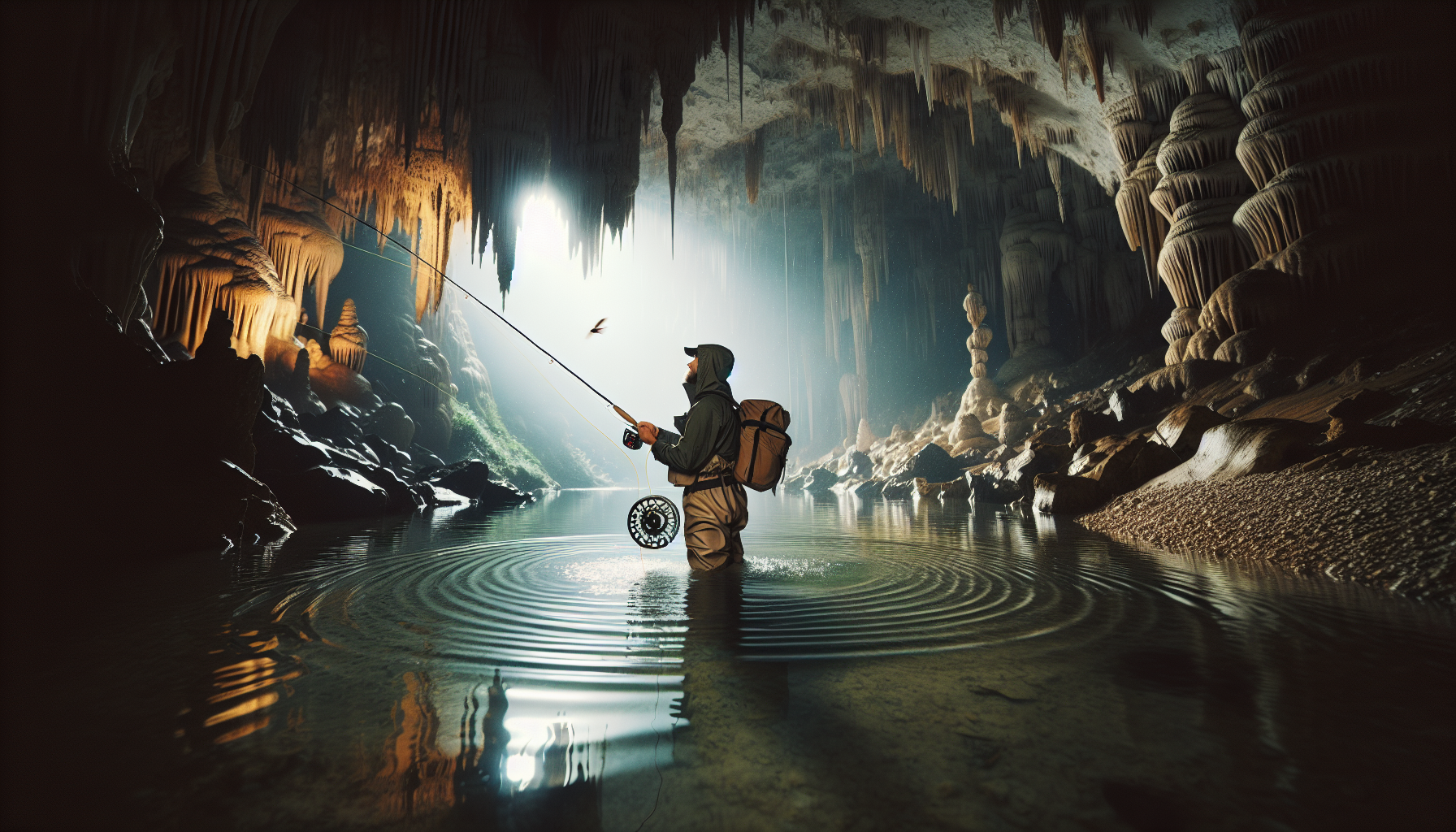
Fly fishing in caves combines technical angling, route finding, and close-quarters observation in a way few other fly fishing destinations can match. In adventure fly fishing, the setting matters as much as the species, and caves create one of the most unusual environments an angler can enter. The phrase refers to pursuing fish with artificial flies in caverns, sinkholes, lava tubes, spring caves, and grotto systems where water flows underground or partially underground. In practice, that can mean casting at the mouth of a karst spring creek, drifting nymphs through a limestone chamber, or sight fishing in clear subterranean pools lit only by headlamps and reflected daylight.
I have planned and fished cave-adjacent water in limestone regions where access, safety, and fish behavior mattered more than distance or hatch charts. That experience changes how you think about tackle and decision making. Standard trout tactics still apply, but cave environments compress every variable: light is limited, footing is unstable, currents are hard to read, and fish often hold in very specific oxygen-rich seams. For anglers researching adventure fly fishing, this hub article explains what cave fly fishing is, where it fits within the broader category, which destinations and species are realistic, and how to approach safety, gear, ethics, and trip planning with professional discipline.
This topic matters because searchers looking for extreme or unusual fly fishing experiences usually want more than inspiration. They want direct answers: Is cave fly fishing real, legal, safe, and productive? Which fish live in or near caves? What gear works in confined spaces? How do you avoid damaging fragile ecosystems? Those are the right questions. Cave systems are ecologically sensitive, and they reward careful anglers who understand hydrology, conservation rules, and presentation adjustments. As a sub-pillar under fly fishing destinations, adventure fly fishing includes caves, canyons, jungle rivers, glacier runoff, saltwater flats by skiff, and expedition-style backcountry water. Cave fishing is the most niche branch, but it is also the clearest example of why destination choice, risk management, and environmental awareness define this category.
At its best, fly fishing in caves delivers three benefits at once: novelty, technical challenge, and genuine immersion in place. At its worst, it becomes a reckless photo opportunity. The difference is preparation. Anglers who treat cave water like a specialized destination rather than a stunt are far more likely to find fish, protect habitat, and come home with a story worth repeating.
What Fly Fishing in Caves Really Involves
Most cave fly fishing happens in transitional water, not in pitch-black chambers deep underground. The most practical scenarios are spring cave mouths, subterranean rivers with navigable ledges, cenotes connected to cave systems, and lava-tube streams where daylight still reaches the water. Fish need oxygen, food, and stable conditions, so the most reliable holding zones are often near inflows, outflows, skylights, or sections where groundwater mixes with surface current. In other words, cave fly fishing is usually about reading cave-influenced water rather than wandering blindly into darkness.
Common target species depend on region. In limestone trout country, anglers may encounter wild brown trout or rainbow trout holding near spring-fed cave outlets where water temperature stays consistent through summer and winter. In tropical systems, cave-connected pools may hold tarpon, snook, cichlids, or juvenile jacks. In Mexico’s Yucatán, some anglers fish cenotes and sinkhole networks where migratory tarpon move through brackish and freshwater connections. In parts of the Ozarks and Appalachians, cave-fed creeks hold trout because groundwater keeps flows cold and clear. Some cave systems also host highly specialized blind fish species that must never be targeted; local regulations and conservation designations are essential to check before planning a trip.
The appeal is not simply rarity. Cave environments often produce highly stable water temperatures, which can concentrate fish during heat waves, cold snaps, or drought. I have seen spring cave outlets fish well on days when nearby freestone streams ran warm and slow. The fish were not magical; they were simply using the most dependable water available. That predictability is a major reason cave-influenced fisheries matter within adventure fly fishing.
Best Cave-Linked Destinations for Adventure Fly Fishing
The strongest destinations combine legal access, stable fish populations, and guide knowledge. Mexico is a leading example because the Yucatán Peninsula offers cenotes, mangrove channels, and cave-linked juvenile tarpon habitat. These fisheries demand short accurate casts, durable leaders, and comfort with low-light sight fishing. Slovenia, Croatia, and Bosnia also deserve attention where karst landscapes create underground flow, spring creeks, and limestone channels that support trout and grayling in dramatic terrain. In the United States, cave-fed fisheries appear in Missouri, Arkansas, Tennessee, Kentucky, and parts of Texas, although direct cave access varies widely and many productive areas are actually spring branches and resurgence pools rather than interior caverns.
New Zealand and Iceland fit the adventure fly fishing mindset too, even when the water is more lava tube or spring vent than classic cave. Icelandic spring creeks fed by porous volcanic geology maintain extraordinary clarity and stable temperatures, while New Zealand’s limestone regions can create hidden pools and underground passages near trout streams. The destination lesson is simple: follow geology. Karst terrain, volcanic tubes, and spring systems are better predictors than the word cave itself.
| Destination type | Typical species | Why anglers go | Main constraint |
|---|---|---|---|
| Karst spring cave outlets | Brown trout, rainbow trout, grayling | Cold stable flows and technical sight fishing | Restricted access and fragile habitat |
| Cenotes and sinkholes | Juvenile tarpon, snook, cichlids | Unusual visuals and cave-connected migration routes | Safety, permits, and local guidance |
| Lava tube streams | Trout, char | Consistent temperature and unique structure | Limited casting space |
| Resurgence pools and spring branches | Trout, panfish, bass by region | Most accessible version of cave-influenced water | Heavy fishing pressure |
For a hub page under fly fishing destinations, these locations also point readers to adjacent subtopics. If cave fishing interests you, you will likely also explore backcountry trout expeditions, jungle fly fishing, saltwater juvenile tarpon systems, and spring creek tactics. That internal relationship matters because adventure fly fishing is best understood as a spectrum of specialized environments, not a single technique.
Gear, Rigging, and Presentation in Tight Water
The best cave fly fishing gear emphasizes control over distance. In most situations, a 7- to 8.5-foot rod is more practical than a longer rod because ceilings, walls, and overhangs punish wide casting arcs. For trout, a 3- to 5-weight rod handles short drifts and light tippets well. For juvenile tarpon or snook in cenotes, a fast 7- to 9-weight with a compact line performs better when you need to shoot quickly under roots or rock shelves. I prefer weight-forward lines with aggressive front tapers because they load fast in minimal backcast room.
Leaders should be shorter than your standard open-river setup. In cave chambers and spring mouths, turnover matters more than delicacy once fish are already accustomed to dim light and broken current. A 7.5-foot trout leader with fluorocarbon tippet is often enough. For warmwater or salt-influenced cave systems, abrasion resistance becomes critical because limestone, barnacles, and submerged branches destroy light material quickly. Carry spare headlamps, dry bags, studded boots where legal, fingerless gloves for grip, and a waterproof chest pack instead of a bulky vest that catches on rock.
Fly selection follows available food, but patterns that create silhouette outperform overly intricate ties in low light. Woolly Buggers, baitfish streamers, leeches, shrimp patterns, and beadhead nymphs all produce because they are easy for fish to track. In clear cave-fed trout water, small scuds, sowbugs, and midge larvae can be essential, especially below springs with rich aquatic invertebrate populations. I have consistently done better by reducing false casts, opening loops, and using bow-and-arrow casts, roll casts, and water-loaded deliveries rather than forcing textbook overhead mechanics into confined space.
Safety, Access, and Conservation Rules
The first rule is direct: never enter a cave fishery alone, and never assume a fishable chamber is a safe chamber. Cave systems flood fast, disorient visitors, and contain hazards that standard river anglers do not routinely face, including loose rock, bad air in rare enclosed sections, vertical drops, and complete loss of natural light. A personal flotation device may be appropriate in deeper systems. A helmet is often smarter than another fly box. Local outfitters, caving clubs, park authorities, and fisheries agencies are the best sources for current access information.
Legal access is complex because many cave entrances lie on private land or within protected reserves. In the United States, some spring systems are public while the cave itself is closed to protect bat colonies, archaeological resources, or endangered species. In Mexico and parts of the Caribbean, cenotes may be managed by private owners, ejidos, or tour operators, each with different rules. Responsible anglers verify permits, seasonal closures, and species protections before arrival. That is not bureaucracy; it is part of fishing this environment correctly.
Conservation is even more important. Cave ecosystems are nutrient-poor and slow to recover from disturbance. Sunscreen, bug spray, discarded tippet, felt soles carrying invasives, and careless wading can all have outsized effects. Decontamination protocols used to prevent the spread of invasive organisms and fish pathogens should be standard. If a system contains endemic cave fauna, treat the entire area as sensitive habitat first and a fishing venue second. The most trustworthy adventure fly fishing advice is sometimes to stay out of a specific cave entirely.
How to Plan a Successful Cave Fly Fishing Trip
Start by deciding whether you want true cave exposure or simply cave-influenced water. For most anglers, spring creeks, resurgence pools, and cenote margins offer the best balance of safety and fishability. Then match the destination to a realistic species goal. If you want trout, focus on cold karst systems and guide services familiar with spring-fed fisheries. If you want juvenile tarpon in visually striking water, look at Yucatán operations that specifically mention cave channels and sinkhole structure. A general fly fishing guide is not enough; you want someone who understands access windows, lighting conditions, and emergency procedures.
Season matters because rainfall can transform a manageable cave-linked fishery into an unsafe one. Always ask about recent precipitation, water clarity, and flash-flood risk. Pack lighter than you think, but bring redundancy for essentials: lights, leaders, waterproof communication, and first-aid supplies. Build the itinerary around conservative timing, with turnaround points and check-ins. If you are creating a wider fly fishing destinations plan, pair a cave-focused day with nearby flats, spring creek, or backcountry options so weather does not ruin the entire trip.
Cave fly fishing is unique and exciting because it strips the sport down to observation, precision, and judgment. The best anglers in these places are not the ones making the longest cast; they are the ones reading geology, respecting limits, and presenting a fly exactly where stable water and available food intersect. As the hub for adventure fly fishing, this guide shows where cave systems fit: they are specialized destinations that demand preparation but deliver unmatched atmosphere and technical reward. If you want your next fly fishing trip to feel genuinely different, start by researching legal cave-linked waters, hire a local expert, and build your plan around safety and habitat protection.
Frequently Asked Questions
What is fly fishing in caves, and how is it different from traditional fly fishing?
Fly fishing in caves is the practice of targeting fish with artificial flies in underground or partially underground environments such as caverns, spring caves, sinkholes, lava tubes, grotto systems, and other enclosed waterways. Unlike traditional river, lake, or coastal fly fishing, cave angling adds a major environmental dimension: limited light, tight casting lanes, uneven footing, and complex water flow. In many cases, success depends just as much on route finding, stealth, and observation as it does on fly selection and presentation.
The biggest difference is that cave environments compress everything. Casting space is reduced, backcasts may be impossible, fish may hold in shadow lines or narrow current seams, and an angler often has to work with short, precise presentations instead of long elegant loops. Water in caves can also be exceptionally clear, cold, and stable, especially in spring-fed systems, which means fish may be highly sensitive to movement and vibration. At the same time, some cave-influenced fisheries are dark and nutrient-limited, creating a very different food web from what anglers see in open water.
Another important distinction is that cave fly fishing is often as much an exploration activity as a fishing trip. Anglers must pay close attention to entry and exit routes, changing water levels, rock surfaces, and conservation concerns. Because of that, the experience tends to appeal to people who enjoy adventure fishing, technical problem solving, and unusual settings. It is less about covering miles of water and more about carefully reading a small, complex environment where every pool, ledge, and flow transition matters.
What kinds of fish can be caught while fly fishing in caves?
The species available depend heavily on the specific cave system and the waters connected to it. In spring caves and underground streams tied to surface rivers, anglers may encounter trout, panfish, bass, cichlids, or other freshwater species that move in and out of cave-influenced habitat. In karst regions, sinkholes and spring outflows can hold fish that use the cooler, oxygen-rich water as refuge. In tropical and subtropical areas, some cave systems may connect to unique local species adapted to low light and stable temperatures.
In some places, the most interesting fish are not fully cave-adapted species but ordinary game fish behaving differently because of the environment. Fish holding in underground pools often position themselves near current funnels, drip zones, rock shelves, and entrances where food washes in. These fish may feed opportunistically on small insects, crustaceans, baitfish, or anything carried through the system. That makes fly choice less about matching a classic hatch and more about imitating the limited prey items actually available in that enclosed setting.
There are also cave-associated species and highly specialized fish in certain regions that may be protected, sensitive, or unsuitable for angling. That is why identification and local regulations matter so much. In many cave environments, the ethical approach is to target only legal, resilient species in waters clearly open to fishing, while avoiding fragile endemic fish and habitats. Before fishing any cave or subterranean system, anglers should verify access, species status, and conservation rules with local authorities or fishery managers.
What gear and techniques work best for fly fishing in caves?
Compact, controllable gear usually performs best. A shorter fly rod is often easier to manage in tight quarters because it helps with roll casts, bow-and-arrow casts, dapping, and short-line presentations where a full backcast is not possible. Rod weights vary by target species, but many anglers prefer balanced outfits that allow delicate placement and accurate short-range control rather than maximum casting distance. A simple reel setup and a fly line suited to close work are typically more useful than specialized long-distance gear.
Leaders are often shorter than what anglers might use in open water, especially where overhead clearance is limited and precision matters more than reach. Fly selection should reflect the cave’s food sources and water character. Small nymphs, streamers, scuds, wet flies, and simple attractor patterns are often productive, particularly in systems where drifting aquatic life, minnows, or crustaceans are more important than surface insects. In places where fish feed near the entrance or in partial daylight, dry flies can work, but subsurface patterns are usually the safer starting point.
Technique is where cave fishing becomes especially distinct. Roll casts, water-loaded casts, sidearm flicks, and short pendulum-style presentations are often more practical than standard overhead casting. Many successful anglers focus on controlled drifts through narrow current tongues, short strips near rock edges, and careful fly placement in small pockets where fish can hold out of the flow. Slow movement is essential. Sound carries differently underground, and fish in clear cave water can react quickly to silhouettes, lights, and footfalls. Wading staffs, helmets in appropriate environments, reliable lighting, grippy footwear, and waterproof packs are not optional extras in many cave settings; they are part of the core safety gear.
Is fly fishing in caves safe, and what precautions should anglers take?
Fly fishing in caves can be safe only when approached conservatively, legally, and with a strong respect for environmental hazards. Underground and semi-underground spaces introduce risks that do not exist, or do not exist to the same degree, in normal fishing locations. Slick rocks, sudden drop-offs, unstable footing, cold water, low ceilings, restricted passages, poor visibility, and the possibility of rapidly changing water levels all require serious attention. Even a relatively accessible spring cave or grotto can become dangerous if an angler treats it like an ordinary shoreline outing.
The most important precaution is to never enter a cave fishery casually. Research the site in advance, confirm public access and fishing legality, check weather and upstream water conditions, and understand whether the system is prone to flash flooding or rising flow. Bring dependable primary and backup lights, wear a helmet where overhead rock is a concern, use footwear with excellent traction, and avoid fishing alone whenever possible. If solo travel cannot be avoided, leave a detailed trip plan with someone reliable and stick to conservative turnaround times.
Just as important is knowing when not to go. If water is stained, rising, or moving faster than expected, if the route is unfamiliar, or if the cave requires technical caving skills beyond basic walking access, the responsible decision is to turn back. Many cave systems also contain sensitive wildlife such as bats or rare aquatic organisms, and disturbing them can be both harmful and illegal. Safe cave fly fishing means staying in appropriate, permitted areas, avoiding unnecessary contact with the environment, and recognizing that no fish is worth pushing into a hazardous situation.
Are there ethical and conservation concerns specific to cave fly fishing?
Yes, and they are significant. Cave and spring-cave ecosystems are often fragile, highly localized, and slow to recover from disturbance. Water quality can be exceptionally important because many underground systems are connected to aquifers, springs, and specialized biological communities. Sediment kicked up by careless wading, damage to rock formations, litter, chemical contamination, or repeated disturbance to fish and wildlife can have outsized effects in these environments. What looks rugged on the surface may actually be ecologically delicate.
Responsible cave fly fishing starts with strict adherence to access rules and fish regulations, but it goes further than that. Anglers should minimize contact with the environment, avoid trampling shallow spawning or nursery areas, pack out everything, and use cautious catch-and-release practices where appropriate. Barbless hooks, short fight times, wet hands, and keeping fish in the water during release are all especially useful in confined settings where fish may already be under environmental stress. It is also wise to avoid fishing during sensitive seasonal periods if local managers identify spawning windows or wildlife concerns.
There is also a broader ethical issue: not every fishable-looking cave should be fished. Some places are better appreciated as natural features rather than angling destinations, particularly where rare species or vulnerable habitats are present. Good judgment means recognizing the difference between a legal, resilient cave-influenced fishery and a sensitive system that should be left alone. The best cave anglers are not just adventurous; they are disciplined stewards who understand that protecting access and habitat is what keeps this unusual style of fly fishing possible for the future.