South Korea has become one of Asia’s most rewarding fly fishing destinations, combining accessible rivers, mountain streams, warmwater lakes, and a travel infrastructure that makes multi-region angling surprisingly efficient. For anglers building a serious Asia fly fishing plan, South Korea deserves hub-page status because it offers trout in cool headwaters, bass and snakehead in stillwater systems, seasonal coastal opportunities, and a dense network of roads and rail lines that let visitors fish very different environments on a single trip. In practical terms, fly fishing in South Korea means targeting species such as rainbow trout, brown trout in limited waters, native lenok relatives in select cold systems, bass, carp, and saltwater species depending on season and location. It also means understanding local realities: much of the best fishing is regulated, weather shifts quickly with the monsoon and winter cold, and success often depends on matching destination choice to time of year. I have found that anglers who treat Korea as a quick side trip usually miss its real value, while those who map regions, river types, and seasonal windows discover one of East Asia’s most varied fly fishing landscapes.
What makes South Korea especially important within the broader Asia category is its balance of wild scenery and logistical ease. Japan offers famous mountain streams, Mongolia is iconic for taimen, and Bhutan carries strong mystique, but South Korea sits in a useful middle ground: easier than remote expedition fisheries, more diverse than many urbanized destinations, and rich in regional contrast. Gangwon-do delivers steep freestone water, central provinces provide reservoir and river systems suited to warmwater fly fishing, and southern regions extend the season with milder temperatures. For readers using this article as a hub, the key idea is simple: South Korea is not a single fishery but a compact collection of fisheries. Knowing where to go, when to go, what species to expect, and how local regulations shape access is the difference between an average trip and an excellent one.
Why South Korea Stands Out in Asia
Among Asia fly fishing destinations, South Korea stands out because distance between fisheries is short relative to the variety available. From Seoul, an angler can reach trout water in the east or northeast in a matter of hours, then pivot to bass lakes or lower river carp fishing on another day without needing domestic flights. The country’s geography explains this range. The Taebaek Mountains influence eastern drainage patterns and sustain colder headwaters, while major river systems such as the Han, Nakdong, Geum, and Yeongsan shape central and southern freshwater opportunities. Reservoir development, common across the peninsula, has also created extensive stillwater habitat that warmwater fly anglers can use effectively.
Another reason Korea matters is the maturity of its outdoor culture. Tackle shops are common, domestic anglers are highly knowledgeable, and catch-and-release is increasingly understood in fly-focused circles even where broader fishing culture may remain harvest-oriented. In my experience, visiting anglers often underestimate how helpful local fly clubs and guides can be. A single day with a regional guide around Pyeongchang, Inje, or parts of Gangwon-do can cut the learning curve dramatically because water levels, access points, and hatches change faster than many English-language resources reflect. As a hub for Asia content, this matters: South Korea rewards independent travel, but it rewards informed planning even more.
Top Fly Fishing Regions and Signature Waters
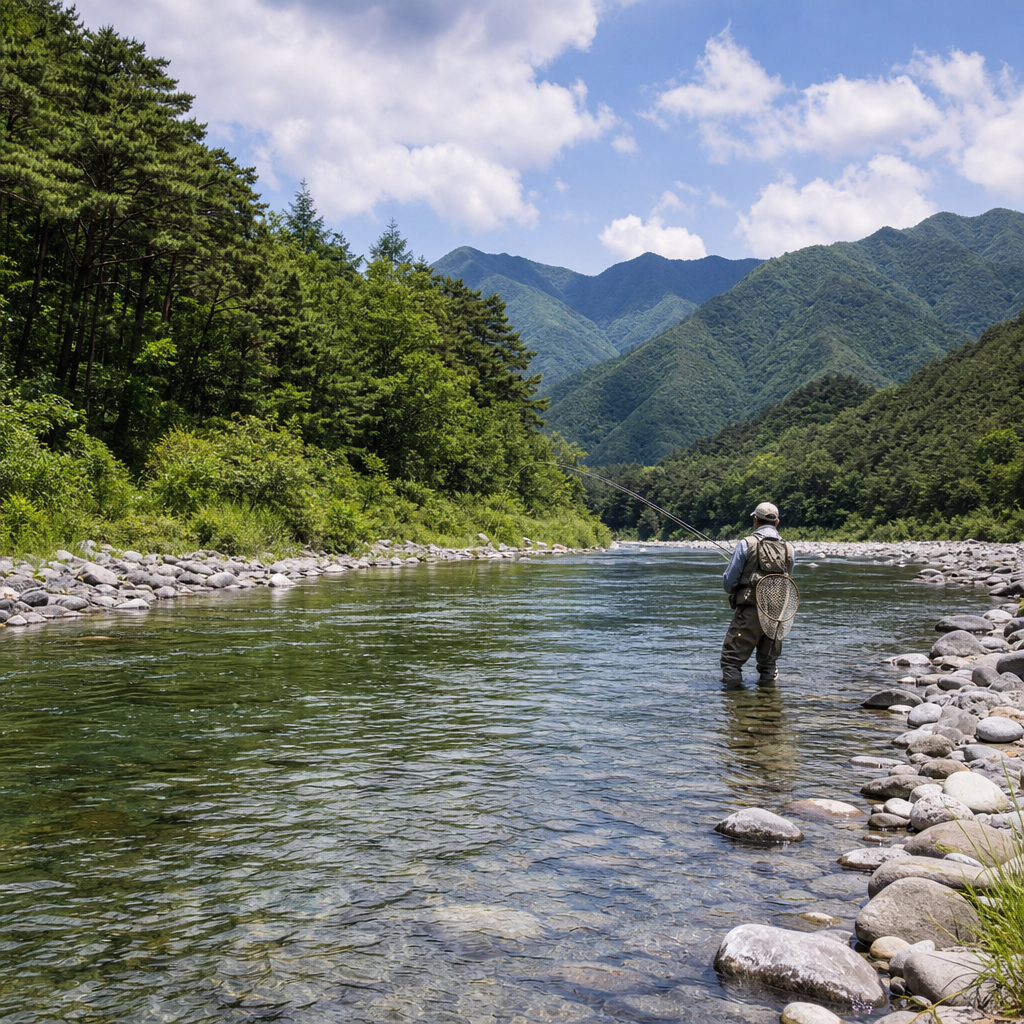
Gangwon-do is the center of most conversations about trout fly fishing in South Korea. Its mountain valleys, cooler water, and relatively less urban character make it the closest thing Korea has to a classic trout province. Streams around Inje, Hongcheon, Pyeongchang, and upper reaches feeding the North Han system are frequently discussed by experienced local anglers. These waters vary from pocket water and riffle runs to moderate freestone stretches where nymphing and dry-dropper setups both work. During spring, olive and caddis activity can produce surface feeding windows, while summer demands early starts because rising temperatures and rainfall can change conditions quickly. In autumn, lower light, cooler water, and reduced insect pressure often create some of the most pleasant trout fishing of the year.
Gyeonggi-do and the greater Seoul corridor are less romantic but more practical, especially for travelers with limited time. Sections of the Han River system and nearby tributaries can offer accessible fishing, though expectations must be calibrated carefully because urban pressure, water management, and seasonal fluctuations affect quality. These areas are better thought of as convenience fisheries than wilderness destinations. They are useful for a short session before heading east, or for anglers interested in carp and warmwater species where sight fishing opportunities appear in slower margins. Carp on a fly rod in these systems can be highly technical, often requiring long leaders, subtle presentations, and small nymph or bread-imitative patterns.
Chungcheong provinces and interior reservoirs open the door to a different style of Korean fly fishing. Here the focus often shifts from trout to largemouth bass, bluegill, and carp. Reservoir edges with weed growth, submerged structure, and inflowing creeks are ideal for streamers, deer-hair poppers, and small baitfish patterns. I have seen visiting trout specialists change their view of Korea completely after a productive bass session at dawn, when fish push bait into shallow cover and aggressive takes come on short, accurate casts. Warmwater fishing in Korea deserves more attention in any Asia hub because it broadens the destination beyond its mountain-stream identity.
Southern regions, including parts of Gyeongsang and Jeolla, benefit from a longer shoulder season. Winters are still cold, but milder conditions can keep some fisheries viable when high mountain streams are less inviting. The Nakdong River basin and connected stillwaters support carp and bass opportunities, and estuarine areas can be interesting for adventurous anglers looking to mix freshwater and light saltwater tactics. Jeju Island is sometimes discussed for travel appeal more than fly fishing reputation, yet it can complement a broader itinerary with coastal casting for pelagic or reef-associated species when weather lines up. It is not the country’s core fly destination, but for anglers building a multi-species Asia trip, it adds range.
| Region | Best Known For | Peak Seasons | Typical Fly Approaches |
|---|---|---|---|
| Gangwon-do | Mountain trout streams | Spring, autumn | Nymphs, dry-dropper rigs, attractor dries, small streamers |
| Greater Seoul/Gyeonggi | Accessible rivers, carp, short sessions | Late spring to autumn | Sight-fishing nymphs, small streamers, terrestrials |
| Chungcheong interior | Reservoir bass and carp | Late spring, summer dawns, early autumn | Poppers, baitfish streamers, crayfish patterns |
| Southern provinces | Longer warmwater season | Spring through autumn | Streamers, surface bugs, subsurface carp flies |
Target Species, Tactics, and Seasonal Timing
Rainbow trout are the species most visiting fly anglers expect, and in managed or stocked contexts they are often the most realistic target. In colder rivers and special waters, trout behavior follows familiar patterns: fish hold in oxygenated seams, feed actively during insect emergence, and respond well to weighted nymphs in deeper slots when surface activity is absent. Standard Korean trout boxes should include pheasant tails, hare’s ears, caddis larvae, small stonefly nymphs, sakasa kebari-inspired soft hackles, elk hair caddis, Adams variants, and compact streamers in olive or black. Because many streams are modest in size, rods in the 3- to 5-weight range are ideal, with longer leaders and fine tippet often outperforming heavier setups.
Warmwater species deserve equal billing. Largemouth bass are established in many impoundments and slow systems, and they are highly compatible with fly techniques. Early and late in the day, foam poppers, divers, and deer-hair bugs can be excellent. As sun rises, weighted baitfish patterns around drop-offs, weed edges, and submerged timber become more effective. Carp are among the most challenging and overlooked targets in South Korea. They often tail in shallow margins, cruise mud flats, or hold along reed lines, and they reject sloppy casts immediately. Small olive nymphs, worm patterns, and unweighted shrimp-like flies can work when delivered softly several feet ahead of the fish. Hooking one is only the beginning; landing carp from urban banks or steep reservoir edges is a test of tackle control and footwork.
Seasonality is critical. Spring is broadly the best all-around period because water temperatures stabilize, insect life increases, and fish feed aggressively after winter. In high-country trout streams, April through June often offers the most balanced conditions before summer heat and monsoon rains complicate access. Summer can still be productive, especially at elevation or around dawn on reservoirs, but Korea’s jangma rainy season can raise flows rapidly, stain water, and make wading unsafe. Autumn is excellent for both trout and bass, with cooler mornings, lower humidity, and more comfortable travel conditions. Winter is the specialist’s season: some stocked fisheries remain possible, and dedicated anglers can target cold-water fish slowly, but this is not the ideal window for a first fly fishing trip to South Korea.
Access, Regulations, and Trip Planning Basics
The most common practical question is whether foreign anglers can easily fish independently in South Korea. Usually, yes, but with caveats. Public access exists, especially along rivers and reservoirs, yet local rules can vary by water body, municipality, or management authority. Some stocked trout fisheries operate under private or semi-private systems with entrance fees, tackle restrictions, or designated sections. National park zones and protected habitats may limit fishing entirely. The safest approach is to confirm current rules through local outfitters, guides, tackle shops, or municipal notices rather than relying on old blog posts. Regulations in Asia can change without much English documentation, and Korea is no exception.
Transportation is a major advantage. The KTX high-speed rail network, intercity buses, and excellent road infrastructure mean anglers can base in Seoul and still reach productive water. That said, a rental car becomes much more valuable for serious fishing, especially when moving between small tributaries, reservoirs, and access pullouts. I generally recommend Seoul only as an arrival base. For trout-focused trips, spending nights closer to Gangwon-do saves time and gets you on the water during the most important early and late windows. For warmwater itineraries, staying near a target reservoir or river system is even more important because the best fishing often lasts only a few hours around light changes.
Gear planning should reflect Korea’s terrain. Wading boots with strong grip matter because many streams have slick rock and algae. A compact rain shell is essential from late spring through summer. For trout, a 9-foot 4-weight covers most situations, while a 5- or 6-weight handles bass, carp, and windy reservoirs better. Polarized glasses are non-negotiable for spotting fish and reading currents. If you are traveling across Asia, South Korea is a good destination to keep your setup simple: one trout rod, one warmwater rod, a chest pack, and layered clothing are usually sufficient.
How South Korea Fits a Broader Asia Fly Fishing Itinerary
As a sub-pillar hub under Fly Fishing Destinations in Asia, South Korea works best when framed as the region’s most efficient mixed-style destination. It may not replace Mongolia for giant taimen, Japan for heritage stream culture, or the Himalayas for expedition appeal, but it offers one of the most practical combinations of species variety, road access, safety, and travel convenience anywhere in Asia. That is why many experienced anglers use Korea either as an introduction to Asian fly fishing or as a strategic stop between more specialized trips elsewhere in the region.
The strongest itineraries match Korean regions to personal goals. If your priority is classic trout scenery, focus on Gangwon-do with spring or autumn timing. If you want technical sight fishing and urban accessibility, build days around the Han system and carp water near the capital. If you prefer aggressive takes and easier numbers, choose central and southern reservoirs for bass from late spring into early autumn. Anglers with two weeks can combine mountain freestones, reservoirs, and a coastal day, creating a multi-species trip that would require far more internal travel in larger Asian countries. That compact diversity is South Korea’s defining advantage.
South Korea’s fly fishing destinations reward anglers who plan by region, season, and species rather than chasing a single famous river. The country offers excellent mountain trout water in Gangwon-do, highly practical warmwater fishing in central and southern reservoirs, and enough transport infrastructure to connect those experiences smoothly. As part of a broader Asia fly fishing strategy, Korea stands out for variety without excessive complexity. Start with your target species, pick the season that supports them best, and use this hub as the foundation for deeper regional guides. If you are mapping your next Asia fly fishing trip, put South Korea near the top of the list and build from there.
Frequently Asked Questions
What makes South Korea a standout fly fishing destination in Asia?
South Korea stands out because it delivers unusual variety in a relatively compact, easy-to-navigate country. Anglers can fish cool mountain headwaters for trout, move into larger rivers and reservoirs for warmwater species like bass, and even add selective seasonal coastal opportunities without the long overland transfers common in other parts of Asia. That mix is important for traveling fly fishers who want multiple fisheries in one trip rather than committing to a single region or species.
Another major advantage is infrastructure. South Korea’s highways, secondary roads, rail network, and urban transit systems make multi-stop fishing itineraries practical. It is entirely realistic to base in one city, fish a nearby stream in the morning, and relocate to another province with minimal logistical friction. For visiting anglers, that means more time on the water and less time dealing with unreliable transport or difficult internal travel planning.
The country also appeals to different skill levels. Experienced fly fishers can seek technical pocket water, wary trout in clear streams, or warmwater species that reward thoughtful presentation. At the same time, newer anglers can find accessible water, guide support in selected areas, and manageable day-trip options from major population centers. Add in strong food culture, safe travel conditions, and four distinct seasons, and South Korea becomes not just a good fishing destination, but a highly efficient one for anglers building a broader Asia fly fishing itinerary.
What species can fly anglers target in South Korea, and what types of water hold them?
South Korea offers more diversity than many first-time visitors expect. In cooler upland environments, trout are the headline species for many fly anglers. These fish are generally associated with mountain streams, forested headwaters, and clear, oxygen-rich rivers where water temperatures stay suitable through the season. The exact character of the fishing can vary from tight, small-stream pocket water to broader runs and riffles that allow more classic dry-dropper, nymphing, or light streamer tactics.
Warmwater fishing is another important part of the picture. Lakes, reservoirs, and slower river systems can produce largemouth bass, and in the right settings anglers may also encounter species such as snakehead. These fisheries often shine during warmer months when surface activity, structure-oriented feeding, and low-light windows create exciting fly opportunities. Depending on the waterbody, effective approaches may include poppers, baitfish patterns, divers, and subsurface streamers worked around vegetation, rock edges, submerged timber, or drop-offs.
There are also seasonal coastal and estuarine possibilities that expand South Korea’s appeal beyond inland fishing. These opportunities are often more time-sensitive and condition-dependent than freshwater trips, but they can be worthwhile for anglers who want to diversify a travel plan. As with any destination, local knowledge matters. Species availability, stocking practices in some waters, regional regulations, and seasonal movement patterns can all influence where to fish and when. For that reason, anglers who want the most productive trip usually do best by matching target species to season and region rather than trying to force one style of fishing across the entire country.
When is the best time to go fly fishing in South Korea?
The best time depends on the species and water type you want to fish, but in general spring and autumn are especially attractive for many visiting anglers. During these shoulder seasons, water temperatures are often favorable, weather is more comfortable, and both trout and warmwater species can be active. Spring can bring strong fishing as streams wake up, insect activity builds, and fish feed more consistently after winter. Autumn is equally appealing because cooler air and water often improve daytime fishing windows, while scenery in the mountains can be exceptional.
Summer can still be productive, particularly in higher-elevation streams where trout water remains cool enough, or in warmwater lakes and reservoirs where bass-oriented fishing becomes a major focus. However, anglers need to plan around heat, humidity, and regional rainfall patterns. Monsoon-season weather can affect river clarity, flows, and overall safety, especially in smaller drainages or steep mountain catchments. Flexible scheduling becomes important at that time of year, and having backup stillwater or alternate regional options can make a big difference.
Winter is more specialized but not irrelevant. Some waters remain fishable, particularly in milder regions or where local conditions permit, though cold temperatures can narrow the most productive windows. For most international visitors looking for a balanced, multi-style experience, late spring through early summer and then early autumn through late autumn are often the smartest windows. Those periods give the best combination of active fish, manageable travel conditions, and the chance to sample several different fisheries in one trip.
How should travelers plan a multi-region fly fishing trip around South Korea?
The key is to think in terms of fishing zones rather than trying to cover every corner of the country. Because South Korea is compact and well connected, a smart trip usually combines two or three complementary regions instead of constantly moving every day. For example, an angler might devote part of the trip to mountain trout water, then shift to a reservoir or lowland system for warmwater fishing. That structure creates variety without turning the trip into a nonstop transit schedule.
Base selection matters. Staying near a major city or transportation hub can simplify both arrival logistics and access to nearby fisheries. South Korea’s road and rail systems make it possible to use urban centers as jumping-off points while still reaching productive water within a reasonable timeframe. Renting a car adds the most flexibility, especially for remote stream access and pre-dawn starts, but some itineraries can be built around rail and taxis if the target waters are established and close to towns.
It is also wise to build in contingency planning. Weather can change stream conditions quickly, especially in mountainous areas, and some fisheries will fish better at different times of day or under different seasonal patterns. A practical itinerary includes alternative waters: one clear stream option, one larger river, and one stillwater backup if possible. Visitors should also confirm local regulations, licensing needs, access norms, and whether certain waters are best approached with a guide. In a country where travel is efficient, the anglers who plan best are usually the ones who stay flexible and let conditions determine the daily schedule.
What gear and tactics work best for fly fishing in South Korea?
A versatile outfit is the best starting point because South Korea supports several distinct fishing styles. For trout in mountain streams and smaller rivers, lightweight rods in the 3- to 5-weight range are usually ideal, paired with floating lines and leaders suited to delicate presentations. Dry flies, nymphs, small attractor patterns, and compact streamers all have a place depending on water clarity, current speed, and fish behavior. In tighter streams, short accurate casts, high-stick drifts, and careful wading matter as much as fly choice.
For bass, snakehead, and other warmwater opportunities, anglers should step up in power. A 6- to 8-weight setup is often more appropriate, especially when casting larger streamers, deer-hair bugs, poppers, or patterns around heavy cover. Floating lines will handle much of the topwater and shallow work, while sink-tip or intermediate options can help in deeper reservoirs and drop-off zones. Polarized glasses, appropriate footwear, and a compact layering system are all useful because conditions can shift quickly between mountain mornings, warm afternoons, and reservoir wind.
Tactically, stealth and adaptability are crucial. Clear streams reward quiet approaches, precise drifts, and attention to current seams, plunge pools, and undercut structure. Stillwater and warmwater systems often favor low-light periods, shoreline structure, weed edges, and baitfish-oriented presentations. Seasonal awareness is equally important: spring may reward searching patterns and active prospecting, summer may require early starts and elevation changes, and autumn can bring aggressive feeding windows. Anglers who arrive with a broad fly selection, a plan for multiple water types, and a willingness to adjust throughout the day tend to get the most out of South Korea’s remarkably varied fisheries.