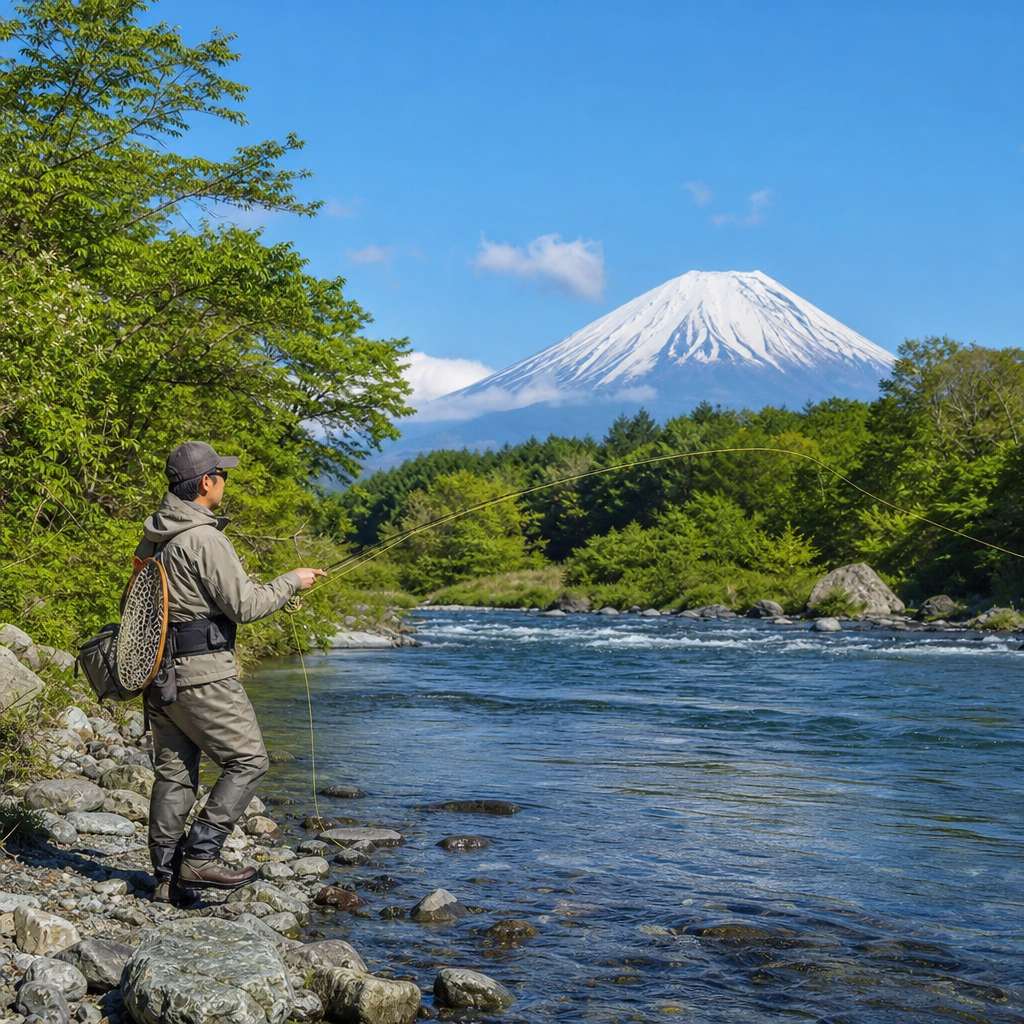
Fly fishing in Japan rewards anglers with remarkable variety, from cold mountain headwaters full of native char to broad northern rivers where salmonids run through open valleys. For travelers exploring fly fishing destinations in Asia, Japan deserves special attention because it combines healthy upland fisheries, meticulous river culture, excellent transport, and clear seasonal structure. I have fished Japanese streams in both crowded and remote settings, and the defining feature is consistency: rules are posted, access points are usually clear, local tackle shops know current conditions, and even small waters can hold beautifully marked fish. That makes Japan one of the most approachable countries in Asia for a fly angler who wants quality fishing without guesswork.
In practical terms, fly fishing in Japan centers on trout, char, and salmon species found in managed rivers, wild mountain systems, spring creeks, lakes, and reservoirs. Key species include yamame, the landlocked form of masu salmon; amago, the red-spotted southern relative of yamame; iwana, broadly grouped char that occupy colder headwaters; rainbow trout in stocked and established fisheries; brown trout in some regions; and, in Hokkaido especially, larger migratory and lake-run fish. Japanese anglers also maintain a strong fixed-line tradition through tenkara and keiryu, but western-style fly fishing with rod, reel, and line is well established, particularly in destination rivers and private areas. Understanding that mix matters because tactics, etiquette, and water choice change depending on whether you fish a tiny mountain stream, a pay-managed beat, or a broad freestone river.
Japan matters as an Asian fly fishing hub for three reasons. First, geography creates range. Hokkaido offers cool summers and expansive rivers that feel closer to Alaska or Scandinavia than to densely populated East Asia. Honshu delivers technical mountain fishing, spring-fed rivers, and accessible trout streams within reach of major cities. Central and southern prefectures provide amago water, pocket water, and longer shoulder seasons. Second, infrastructure lowers friction. The rail network, domestic flights, rental cars, and compact lodgings let anglers cover serious ground quickly. Third, fishing culture rewards preparation and courtesy. Licenses are straightforward, catch-and-release zones are increasingly common, and many local clubs work hard on habitat and stocking. If you want a base for a broader Asia fly fishing plan, Japan is one of the easiest places to build confidence, learn regional techniques, and then branch into neighboring destinations.
Best regions for fly fishing in Japan
The premier region is Hokkaido, Japan’s northern island and the strongest answer for anglers searching for trophy potential, cool-weather comfort, and visually dramatic rivers. Waters near Niseko, Furano, Daisetsuzan, Shiretoko, and eastern lake districts produce excellent fishing for rainbow trout, brown trout, white-spotted char, and seasonal salmonids depending on regulations. Large systems such as the Shiribetsu River are famous for drifting and wading, while smaller tributaries offer technical dry-fly action in summer. Hokkaido’s advantages are not only fish size but also space and water volume. Rivers stay cooler, hatches can be stronger, and weather windows during June through September are generally favorable. On trips I have planned for visiting anglers, Hokkaido is the first recommendation when the goal is the classic destination experience rather than a short urban-side outing.
Central Honshu is the most versatile region for anglers who want mountain scenery and broad access. Nagano, Yamanashi, Gifu, and Gunma hold many of the country’s better-known trout waters, including tributaries tied to the Japanese Alps. Rivers around Hakuba and Kamikochi are admired for clear currents, gravel structure, and mixed hatches, while spring creeks and tailwaters in other valleys can fish well through warmer periods. This is also where many anglers first encounter the contrast between wild headwaters and highly managed areas. In one day, you can fish a tight, boulder-strewn stream for iwana in the morning and move to a controlled-access trout area in the afternoon to test fine tippet and precise presentation. For a hub page on Asia, this region shows why Japan is so valuable: you get multiple fishery styles within a small travel radius.
Tohoku in northern Honshu is often underrated. Prefectures such as Akita, Iwate, and Aomori offer less internationally publicized water but strong potential for yamame, char, and stocked trout in rivers with lower tourist pressure. The appeal here is balance. You still have reliable transport, local inns, and permit systems, yet the angling feels less packaged. In practical terms, Tohoku suits return visitors who have sampled Hokkaido or central Honshu and now want quieter water. Southern Honshu, Shikoku, and Kyushu are less associated with mainstream fly fishing itineraries, but they matter for amago and smaller stream fishing. These areas shine in spring, before summer heat peaks, and reward anglers who enjoy stealth, high-gradient water, and short accurate casts over pure size goals.
| Region | Best For | Main Species | Prime Season |
|---|---|---|---|
| Hokkaido | Big rivers, trophy potential, cool summers | Rainbow trout, brown trout, char, salmonids | June to September |
| Central Honshu | Mountain streams, mixed access, varied techniques | Yamame, iwana, rainbow trout | April to July, September to October |
| Tohoku | Lower pressure, scenic rivers, local atmosphere | Yamame, char, stocked trout | May to July, September |
| Shikoku and Kyushu | Small-stream angling, amago water, spring trips | Amago, char, trout in managed areas | March to May |
Top species, seasons, and what to expect
Most visiting anglers ask a simple question: what fish will I actually catch in Japan? The most common answer is yamame, iwana, rainbow trout, and in some waters brown trout. Yamame are elegant, streamlined fish with parr marks and a reputation for fast, selective takes in clear current. Amago, found farther south and west, resemble yamame but show distinct red spotting. Iwana are char, usually occupying colder, smaller, higher sections where undercut roots, plunge pools, and shaded pocket water dominate. Rainbows appear in managed areas and some naturalized systems and often provide the most forgiving fishing for visitors. Browns are less widespread but notable in parts of Hokkaido. The practical takeaway is that species distribution follows water temperature and river scale. If you want native-style mountain fishing, look high and cold. If you want bigger fish and easier logistics, fish broader managed or mixed rivers.
The season is shaped by snowmelt, summer rain, and regional opening dates. In many trout streams, the season begins around March or April and runs into September, though exact rules vary by prefecture and river association. Early spring favors lower and mid-elevation water before high mountain streams stabilize. Late spring and early summer often bring the best mix of active fish, comfortable flows, and dependable insect life. During Japan’s hot midsummer, Hokkaido becomes especially attractive because water temperatures remain suitable for trout through much of the day. In central Honshu, summer success usually means starting early, targeting shaded pocket water, or moving higher upstream. Autumn can be excellent where regulations allow, but spawning concerns and local closures make rule-checking essential. I never advise anglers to assume broad national norms in Japan; river-specific confirmation is part of proper trip planning.
Expect technical fishing more often than sheer numbers. Japanese trout streams are frequently clear, compact, and heavily structured, so drag-free drift matters. In mountain tributaries, a short rod, accurate reach cast, and quick line control beat long heroic casts every time. Hatches vary by river, but caddis, mayflies, stoneflies, terrestrial insects, and small attractor patterns all have roles. In headwaters, kebari-inspired soft hackles and simple dry flies can be more effective than oversized Western hatch matches. In larger Hokkaido rivers, streamers, nymph rigs, and larger dries all come into play. Good days can be very good, but weather and angling pressure can shut fish down quickly. That is normal. Japan rewards anglers who adapt river by river instead of clinging to a single method.
How to plan a successful Japan fly fishing trip
Trip planning starts with choosing between independent travel and a guided approach. Independent travel works well in Japan because the country is safe, maps are accurate, and many access roads are maintained. However, guides add major value in three cases: when regulations are complex, when you need private or hard-to-read access, and when time is limited. In Hokkaido especially, a good guide can accelerate the learning curve on large rivers, drift-boat sections, and local insect timing. In central Honshu, guides are useful for matching river choice to weather and runoff. I usually suggest first-time visitors book at least one guided day early in the trip, then fish solo afterward using what they learned about access, fly selection, and etiquette.
Licensing is usually handled through local fishery cooperatives, tackle shops, convenience points, or river-side vendors. Day permits and season permits are common, and prices are generally reasonable by international standards. Managed areas, often called catch-and-release zones or private fisheries, may have separate fees and stricter rules on hook type or harvest. Read signs carefully. Japan is orderly, but the system is decentralized, so methods legal on one river may be restricted on another. Barbless hook requirements, bait bans, seasonal closures, and species-specific protections are all possible. Carry cash in rural areas, keep permits accessible, and photograph posted regulations with your phone. That simple habit has saved confusion more than once when signs appeared only in Japanese farther upstream.
Gear should match compact streams and frequent movement. For most Honshu mountain fishing, a 7.5- to 9-foot 3- or 4-weight rod covers dry flies, light nymphing, and small streamers. For Hokkaido rivers, a 5-weight is the most useful all-around choice, with a 6-weight reasonable for larger fish and wind. Floating lines handle most situations. Pack 9- to 12-foot leaders, 5X to 7X tippet for clear technical water, polarized glasses, felt alternatives or sticky rubber soles suitable for local rules, and a compact rain layer. Wading staffs are useful after rain because Japanese rivers can rise fast. If you want to sample local tradition, a tenkara setup is ideal for tight tributaries, but western fly gear remains fully practical across premier destinations.
Techniques, etiquette, and common mistakes
The most effective techniques in Japan are built around stealth and control. Approach from downstream when possible, keep a low profile, and fish close before far. Many first-time visitors overestimate casting distance and underestimate fish visibility in clear water. In pocket water for iwana or amago, short-line drifts with high rod angles often outperform standard overhead casting. On broader rivers, dead-drift nymphing with modest weight and small indicators works well, but avoid splashy presentations. Dry-fly fishing can be excellent during caddis or mayfly activity, especially on overcast days. Streamers have a place in Hokkaido and in larger pools after rain, though they are less central in tiny mountain systems. The pattern across all techniques is precision. One clean drift through the feeding lane matters more than repeated casts over the same fish.
Etiquette is a serious part of successful fly fishing in Japan. Give generous space, greet anglers, and never assume you can step into water another person is working. In managed beats, ask staff or local anglers how the rotation works before starting. Pack out every scrap of tippet and respect private land, farm edges, and narrow village roads. Noise matters more than many travelers expect; quiet movement is appreciated both by fish and by residents living beside the stream. If you photograph fish, keep them in the water as much as possible and handle native species carefully. Catch-and-release is growing, but harvest traditions still exist in some areas, so the right approach is to follow local rules while practicing restraint and respect.
The most common mistakes are predictable. Anglers arrive with gear that is too heavy, too many large flies, and too little awareness of local season timing. They focus only on famous rivers and miss excellent tributaries nearby. They underestimate the need for permits, translation help, and a backup plan for rain. Another mistake is treating Japan as a single fishery rather than a set of regional systems. Hokkaido tactics do not automatically transfer to a tiny amago stream in Shikoku. Build the trip around region, species, and season, then refine tackle and expectations accordingly. If you do that, Japan becomes not just one of the best fly fishing destinations in Asia, but one of the most satisfying places anywhere to improve as an angler.
Japan stands out in Asia because it offers high-quality trout and char fishing across multiple climates, river types, and skill levels. Hokkaido leads for classic destination fishing and larger water, central Honshu excels in variety and accessibility, Tohoku rewards anglers seeking quieter rivers, and southern regions add distinctive amago opportunities. Success depends on matching season to region, carrying the right permits, and fishing with precision in clear water. Those are manageable demands, and the payoff is substantial: beautiful fish, efficient logistics, and a river culture that values order and stewardship.
For anglers building an Asia fly fishing plan, this page should be the starting point. Use it to choose your region, then go deeper into specific river guides, species pages, and seasonal planning resources within your destination research. If Japan is on your shortlist, commit to a focused itinerary, respect local rules, and fish a mix of managed and wild water. You will come home with more than photographs. You will leave with sharper technique, stronger judgment, and a clear sense of why fly fishing in Japan belongs near the top of any serious destination list.
Frequently Asked Questions
What are the best regions in Japan for fly fishing?
Japan offers excellent fly fishing across several distinct regions, and the best choice depends on the species, scenery, and style of water you want to fish. Hokkaido is often considered the premier destination for many visiting anglers because it has broader rivers, cooler summer temperatures, and strong populations of trout, char, and migratory salmonids. Its open valleys and less densely developed landscapes give it a very different feel from the tighter mountain streams found farther south. For anglers who enjoy covering larger water with streamers, nymphs, or dry flies during active hatches, Hokkaido is hard to beat.
Honshu also deserves serious attention, especially in central and northern mountain regions such as Nagano, Gifu, Tochigi, Gunma, and parts of Tohoku. These areas are known for clear headwaters, beautiful forested valleys, and classic pocket water holding yamame and iwana, the iconic native trout and char of Japan. These streams reward careful presentation, short accurate casts, and a stealthy approach. In many cases, they are easier to access than anglers expect thanks to Japan’s road network and public transport connections, although a rental car is still the most efficient option for reaching more remote valleys.
If your goal is variety, a multi-region trip can be especially rewarding. You might fish technical mountain water in the Japanese Alps area, then move north to larger Hokkaido rivers for a completely different experience. The key point is that Japan is not a one-note fly fishing destination. It combines intimate upland streams, productive freestone rivers, and seasonally important migratory fisheries, all supported by a fishing culture that values clean water, local rules, and consistent management.
Which fish species can you catch fly fishing in Japan?
Japan’s fly fishing appeal comes largely from its range of salmonids. The two species many anglers most want to catch are yamame and iwana. Yamame are beautifully marked trout, often compared with other Pacific salmonids, and they are especially associated with clear flowing streams in Honshu. Iwana, a char, are often found in colder, higher, more rugged water and are prized for both their appearance and the wild settings they inhabit. Together, these fish define much of traditional Japanese mountain fly fishing.
In addition to native fish, anglers can also target stocked and naturalized trout in many waters, including rainbow trout and brown trout. These species are common in some managed rivers and can provide excellent sport, particularly where larger fish are present and where insect activity supports reliable dry-fly fishing. In Hokkaido, anglers may also encounter Dolly Varden char and other salmonid species depending on the river system and the season. Some northern waters are also known for sea-run or migratory fish, though regulations can be strict and vary significantly by location.
It is important to understand that species availability changes with elevation, water temperature, and local management. A small alpine tributary may hold only char, while a mid-elevation river may support both char and trout, and a larger downstream reach may offer stocked fish or seasonal runs. For visiting anglers, this variety is part of the attraction. Japan lets you fish tiny, precise mountain water for native fish one day and move to broader, more powerful river systems the next, all within a country that makes travel relatively straightforward.
When is the best time of year to go fly fishing in Japan?
The best time to fly fish in Japan depends on where you are going and what kind of fishing you prefer, but in general the main freshwater season runs from spring into autumn. Early spring can be excellent once streams begin to warm and fish become more active after winter. This is often a favorite period for anglers who enjoy uncrowded rivers and are comfortable adapting to variable weather and water conditions. Snowmelt can affect some headwaters, especially in mountain areas, so river choice matters.
Late spring through early summer is one of the most reliable windows in much of the country. Insect activity improves, water levels often stabilize, and both native species and stocked trout respond well to dry flies and nymphs. This is an especially attractive period in Honshu mountain streams, where the combination of fresh green valleys, cool water, and active fish creates classic fly fishing conditions. Summer itself can still be productive, but lower elevations may become warm, so anglers often focus on higher headwaters or head north to Hokkaido, where cooler conditions can sustain better fishing.
Autumn is another outstanding season, particularly for scenery and for anglers who enjoy crisp weather and more aggressive fish behavior before winter. In Hokkaido, fall can be particularly memorable. However, seasonal regulations are essential to check because many Japanese fisheries have strict opening and closing dates, and some areas may close earlier than visitors expect. The most practical advice is to plan your trip around local river calendars rather than assuming a nationwide season. Japan’s fisheries are well organized, but rules are specific, and success often comes from matching the timing to the region rather than relying on a general date range.
Do you need a fishing license or special permits to fly fish in Japan?
Yes, in most cases you will need to pay for fishing access, though the system may differ from what international anglers are used to. Many rivers in Japan are managed by local fishery cooperatives, and anglers typically purchase a day ticket or season pass for a defined stretch or watershed. These permits are often available from tackle shops, local stores, river-side vendors, accommodation operators, or occasionally through self-pay boxes and posted instructions near access points. The exact process depends on the area, so it is wise to research each river in advance rather than assuming one permit covers multiple fisheries.
Regulations may include species protections, bait restrictions, seasonal closures, catch limits, tackle rules, and no-fishing zones. Some streams allow only certain methods, while others may contain protected native fish populations where retention is prohibited or where special conservation guidelines apply. In heavily managed areas, there can also be distinctions between C&R sections and stocked sections. If you do not read Japanese, preparation becomes even more important. Many popular destinations now provide at least basic guidance online, and local guides or tackle shops can help interpret the rules.
The good news is that Japan’s system generally reflects a strong culture of stewardship and order. Once you understand who manages the water and where to buy the proper permit, the process is usually straightforward. Always carry proof of payment, follow posted signage, and be respectful if approached by local wardens or cooperative members. That respect goes a long way in Japan, and anglers who make the effort to follow local rules usually find the experience smooth, welcoming, and very well organized.
What gear and techniques work best for fly fishing in Japanese rivers and streams?
A versatile setup for Japan usually starts with matching your tackle to the size of the water. For small to medium mountain streams, a 3- to 4-weight rod in the 7.5- to 9-foot range is ideal for precise casts, short drifts, and delicate presentations. On broader rivers, especially in Hokkaido, a 5- or 6-weight may be more practical, particularly if you plan to throw larger dry flies, weighted nymphs, or streamers in windy conditions. Floating lines cover most situations, though leaders and tippet should be adapted carefully because Japanese waters are often clear and fish can be selective.
Presentation matters at least as much as fly choice. In tight headwater streams, high-stick nymphing, short-line dry fly work, and controlled drifts through plunge pools and seams are consistently effective. Fish in these environments are often opportunistic, but the water is so clear that careless movement can ruin a pool before you make a cast. Stealth, careful wading, and reading pocket water are essential. On larger rivers, anglers may need longer casts, more line control, and a broader approach that includes searching with attractor dries, prospecting with nymph rigs, or swinging and stripping streamers when targeting larger trout or char.
As for flies, compact attractor patterns, sakasa kebari-inspired presentations in some settings, standard mayfly and caddis dries, small nymphs, and simple streamers all have a place. Japan’s rivers can reward minimalism, so do not assume you need an enormous fly box. More important is carrying patterns that suit the water type and season, along with quality waders or wet-wading gear, dependable wading footwear, and a compact pack for moving efficiently through steep terrain. Finally, one of the best techniques in Japan is adapting to local rhythm: fish methodically, stay observant, and let the water tell you whether the day calls for delicate dry-fly work in a headwater pocket or a more mobile search approach on a bigger northern river.