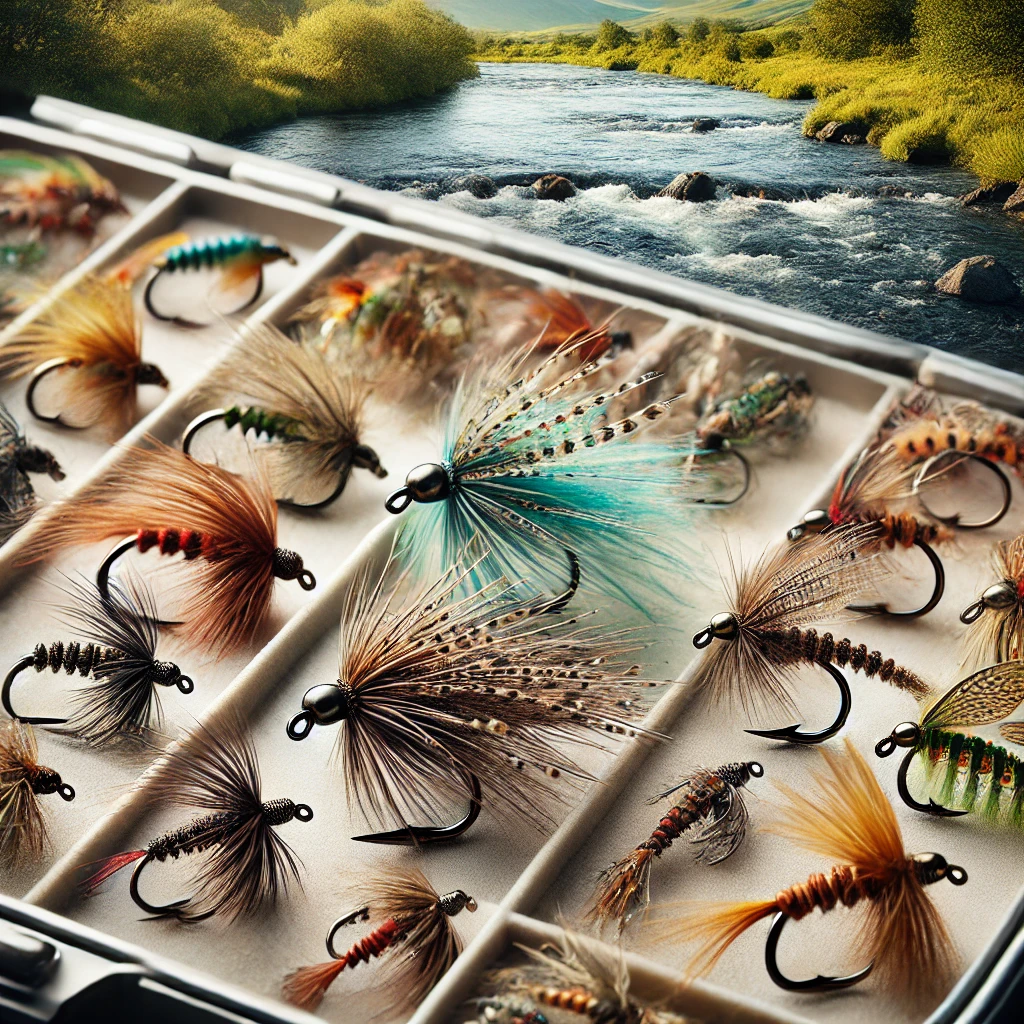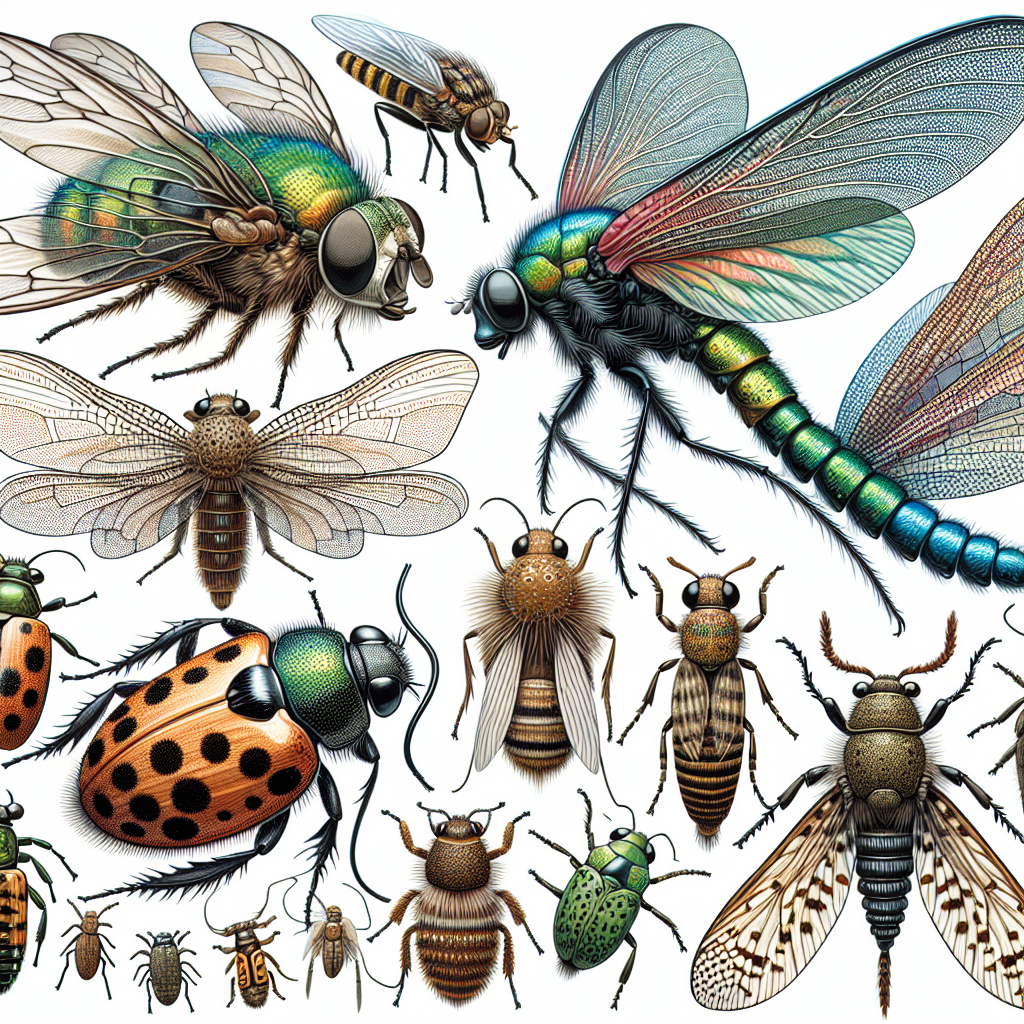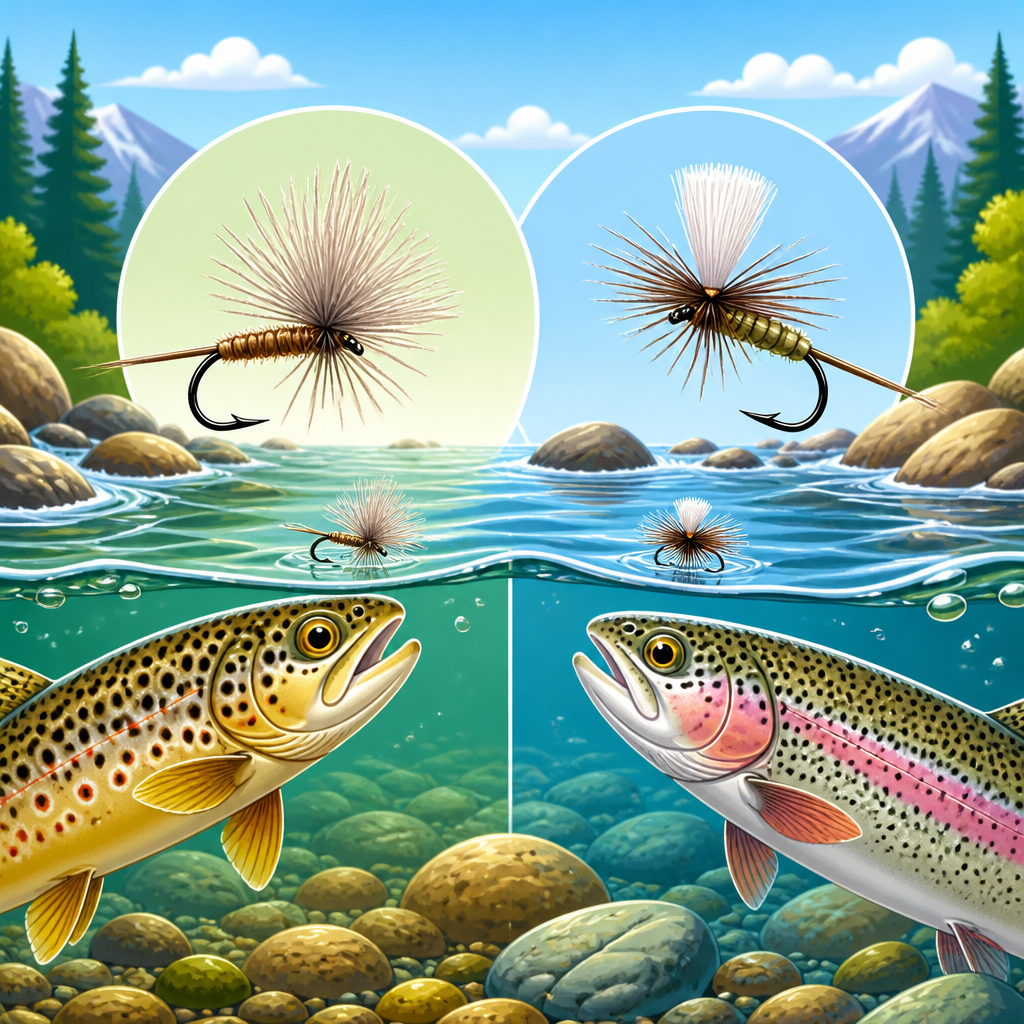
Selective trout punish vague thinking, and few choices reveal that faster than deciding between CDC emergers and parachute dry flies. Within the broader world of fly patterns and tying, these two categories sit at the center of the “types of flies” conversation because they solve the most common problem on trout water: matching exactly where, how, and when a natural insect is vulnerable. I have leaned on both across spring creeks, freestone rivers, and stillwaters, and the difference between a confident take and a refusal often came down to profile, posture, and drift rather than color alone.
A CDC emerger is a fly tied with cul de canard feather, usually designed to sit low in or just under the surface film, imitating an insect struggling to hatch. A parachute dry fly is a floating adult imitation built around a horizontal hackle wrapped around an upright post, which helps the fly land flat, ride visibly, and present a realistic footprint. Both can imitate mayflies, midges, caddis, and other aquatic insects, but they do so at different stages of emergence and with different levels of buoyancy, visibility, and disturbance.
This distinction matters because selective trout usually key on one stage of the hatch, not the entire insect family. During a Baetis hatch, for example, trout may ignore fully formed duns and sip only crippled emergers trapped in the film. On another day, especially in rougher currents, the same fish may rise more confidently to a parachute Adams because it is easier to see, floats higher, and drifts longer without sinking. Anglers who understand these differences can choose patterns by insect behavior, water type, and feeding lane instead of cycling randomly through boxes.
As a hub within fly patterns and tying, this guide explains where CDC emergers and parachute dry flies fit among the major types of flies, how each style works, when each outperforms the other, and what tying and fishing details actually influence results. The goal is not to crown one winner. It is to help you build a more useful trout fly selection and make faster, more accurate decisions when fish get selective.
Where These Patterns Fit Within the Main Types of Flies
Most trout flies fall into a few functional groups: nymphs, emergers, dry flies, wet flies, streamers, terrestrials, and egg patterns. CDC emergers belong primarily to the emerger category, though some crossover into soft hackles or stillborn dun imitations. Parachute dry flies sit squarely in the dry fly family, especially adult mayfly patterns, but the parachute design can also support attractors and spent-wing imitations. Understanding this classification is useful because trout often switch feeding depth by inches, and inches matter.
In practical terms, nymphs imitate subsurface insects before hatch time; emergers imitate insects ascending or breaking through the film; dry flies imitate fully emerged adults riding or departing from the water. When trout feed just below the meniscus, they commonly reject high-floating dries and prefer low-riding CDC patterns. When they are taking adults cleanly from the top, a parachute dry becomes the more efficient tool. That is why these two fly types are often compared directly: they represent neighboring feeding windows that trout distinguish sharply.
As a sub-pillar page under fly patterns and tying, this topic also points naturally to related pattern families. If you build a complete trout box, you usually want beadhead nymphs for pre-hatch feeding, CDC emergers for film feeders, parachute dries for duns and searching, elk hair caddis for skittering adults, and streamers for baitfish or aggression. The better your internal organization by fly type, the faster you can respond to a refusal with a meaningful adjustment instead of a guess.
What Makes CDC Emergers So Effective
CDC, short for cul de canard, comes from feathers near a duck’s preen gland. The fibers are naturally mobile, trap air well, and create life without much bulk. In an emerger, CDC can form a wing tuft, thorax collar, trailing shuck support, or entire body on sparse patterns such as the F-Fly, Shuttlecock emerger, or CDC loop-wing emerger. The key advantage is not simply flotation. It is surface integration. CDC lets a fly sit flush or half-submerged in a way that looks convincingly helpless.
That matters because many selective trout feed on insects at their easiest moment to capture. An emerging mayfly is vulnerable while shuck-bound, unable to lift off, and often trapped in current seams. On difficult tailwaters like the Delaware or Missouri, I have watched fish refuse neat high-riding dries repeatedly, then eat a size 20 CDC emerger on the next drift once the pattern settled into the film. The fish were not being mysterious. They were feeding on the stage that offered the highest reward for the least effort.
CDC emergers also excel in flat or technical water because they land softly and create minimal micro-drag if tied sparsely. Their downside is durability and maintenance. Trout slime, false casting, and fish teeth collapse CDC fibers and reduce flotation, so desiccant powder and amadou patches are useful. Silicone gels can work, but many anglers avoid over-treating CDC because it can mat fibers. In riffled water, a low-riding emerger can become hard to track, which is why many experienced anglers pair one behind a visible dry in a dry-dropper or duo rig.
Why Parachute Dry Flies Remain Essential
Parachute dry flies are enduring standards because the design solves several fishing problems at once. The upright post gives anglers a visual reference; the horizontal hackle spreads weight across the surface; and the body can be tailored to imitate nearly any mayfly species. A parachute Adams, Purple Haze, parachute BWO, or PMD parachute can cover a remarkable amount of trout fishing because the silhouette is generic enough to suggest many duns while remaining stable in mixed currents.
Compared with CDC emergers, parachute patterns usually float higher and longer, especially when tied with dry-fly hackle from quality genetic capes such as Whiting or Metz. They are better in broken water, pocket water, and situations where visibility matters. If you cannot see your fly, you cannot control drift or detect subtle eats. For guides and anglers fishing at distance, the parachute post is not a luxury. It is a strike indicator built into the imitation.
Parachutes are also easier for many tyers to standardize. Hook shank proportions are clear, post materials vary predictably from calf body hair to poly yarn and foam, and hackle sizing follows established dry-fly rules. Their main limitation appears when trout key on insects stuck in the film. Even a well-tied parachute can look too buoyant in those moments. Fish that are sipping with barely visible dimples often prefer cripples, emergers, or spent patterns. Still, for prospecting during uncertain hatches, few flies are more versatile than a parachute dry.
CDC Emerger vs. Parachute Dry Fly: Which Should You Fish First?
The right first choice depends on what the trout are telling you through rise form, current type, and insect stage. Splashy rises in riffles often favor parachute dries because fish are taking adults confidently from the surface. Slow, deliberate head-and-tail rises in slicks often point toward emergers. If naturals are drifting with shucks attached, choose CDC. If duns are riding high and escaping quickly, choose a parachute. The decision is observational before it is tactical.
| Condition | CDC Emerger | Parachute Dry Fly |
|---|---|---|
| Flat water, selective trout | Best for film-feeding fish and subtle takes | Useful if adults are clearly riding high |
| Broken water or pocket water | Can be hard to track and easy to drown | Usually the better first choice |
| Hatch with stuck or crippled insects | Excellent match | Often too buoyant |
| Searching without obvious hatch clues | Effective but less visible | Best all-around searching option |
| Low light or long drifts | Difficult to see without support fly | Post improves visibility and drift control |
When I am unsure, I usually start with the pattern that best matches the rise form, then adjust only one variable at a time. If a trout inspects and refuses a parachute Adams during a mayfly hatch, the most efficient next move is often a CDC emerger in the same size and color family, not a random attractor. That kind of pattern progression keeps your testing grounded in insect stage rather than superstition.
Matching Insects, Water Types, and Trout Behavior
Mayflies create the clearest comparison, but these pattern categories extend beyond mayflies. Blue-winged olives, PMDs, and Tricos frequently reward CDC emergers because those insects can struggle in the film, especially during cool, damp, or windy conditions. Hendricksons and March Browns often allow a parachute dry to shine when larger adults ride visibly and fish take with confidence. Midges are another strong emerger game. On winter tailwaters, a sparse CDC midge emerger can outfish conventional dries by a wide margin because trout target tiny trapped pupae at the surface.
Caddis complicate the picture. Many caddis adults bounce and skitter, making elk hair caddis or CDC caddis adults natural choices, yet during emergence trout may still key on low-riding transitional forms. In lakes, chironomid and buzzer-style emergers can be deadly just under the film, while visible parachute-style adults become more relevant during calm evening midge hatches. Water type matters as much as insect species. Spring creeks reward precision and low-profile patterns; freestones often reward buoyancy and visibility; tailwaters may require both within the same hour.
Selective trout are energy economists. They feed where current delivers insects efficiently and choose stages that maximize calories while minimizing movement. Emergers often fit that equation best because they drift helplessly. Adult dries become more important when trout can station under concentrated emergence lanes and pick off floating duns with little effort. If you train yourself to think in terms of energy and vulnerability, fly choice becomes more objective and refusals make more sense.
Tying Considerations, Materials, and Common Mistakes
For tyers, the CDC emerger versus parachute dry comparison is also about construction philosophy. A good CDC emerger is sparse. Too much dubbing, oversized wings, or heavy wire ruins the pattern’s ability to settle naturally into the film. Hooks such as the Tiemco 2487, Hanak H130BL, or Fulling Mill grub-style emerger hooks help create the curved abdomen and low posture many patterns need. Fine thread, slim dubbed thoraxes, trailing shucks of Z-Lon or Antron, and small CDC tips usually outperform bulky dressings.
Parachute dry flies demand proportion and thread control. The post must be secure, hackle density must match hook size, and tails need enough stiffness to support the fly without causing twist. Standard dry hooks like the TMC 100 or Firehole 419 work across many patterns. Common mistakes include over-hackling, using posts that are too thick, and crowding the eye, which interferes with clean tippet knots. On tiny sizes, synthetic post material often outperforms calf hair because it remains visible without adding excessive weight.
Durability differs as well. CDC patterns are delicate by nature, while parachute dries tolerate more fish and false casting. That does not mean one is better tied than the other; it reflects intended function. For anglers building a balanced fly box, a smart ratio is usually more parachute dries for coverage and visibility, with targeted CDC emergers in key hatch sizes such as 18 to 22 for Baetis, PMDs, and midges. That mix covers the majority of selective trout scenarios efficiently.
How to Fish Both Patterns for Better Hookups
Presentation determines whether either fly works. CDC emergers need drag-free drifts and controlled slack because they fish in the film where micro-drag is instantly visible to trout. Longer leaders, finer tippet, and reach casts help. I often fish them on 5X to 7X, depending on size and water clarity, and I avoid excessive false casting because each stroke degrades CDC performance. A downstream or down-and-across presentation can be especially effective for trout feeding in soft seams because it lets the fly arrive first without leader flash.
Parachute dries allow a broader range of presentations. Upstream dead drifts remain standard, but they also handle short skates, twitches, and hopper-dropper support roles better than most CDC emergers. Because they are more visible, anglers tend to react faster, which can cause premature hook sets. With selective trout, wait for the fish to close its mouth or for the fly to disappear decisively. Another advantage is line control: a visible parachute lets you mend more confidently and monitor drift through conflicting currents.
The simplest improvement many anglers can make is to carry both patterns in matching sizes and shades, then switch based on evidence. If trout refuse a parachute after close inspections, go lower in the film. If you keep losing sight of a CDC emerger in riffles, move higher and more visible. That progression is practical, repeatable, and grounded in how trout actually feed. Build your box around that logic, and your “types of flies” selection becomes far more than a collection of patterns. It becomes a system. Review your hatch staples, tie a few proven versions of each, and fish them with intent on your next trout day.
Frequently Asked Questions
What is the main difference between CDC emergers and parachute dry flies when targeting selective trout?
The main difference is where each fly sits in or on the surface film and what stage of the insect it imitates. CDC emergers are designed to represent an insect that is still trapped in the meniscus, partially emerged, or struggling just below or flush in the film. That makes them especially convincing when trout are feeding on vulnerable insects that have not yet fully escaped the water. Parachute dry flies, by contrast, are built to ride higher and more visibly, imitating duns, cripples, or adults that are sitting on top of the surface. In practical terms, a CDC emerger often looks subtler, lower, and more alive, while a parachute offers better visibility and buoyancy for the angler.
Selective trout often key less on the exact species name and more on the exact stage of emergence. That is why this choice matters so much. If fish are sipping quietly with only dimples showing, they are often taking emergers in or just under the film, and a CDC pattern can outperform a high-floating dry by a wide margin. If trout are confidently taking insects off the top and you can see heads or backs break the surface more assertively, a parachute dry fly becomes a better tool. In other words, CDC emergers win when trout are focused on vulnerability and subtlety, while parachute dry flies shine when trout are feeding on fully available insects on the surface and when you need drift control and visibility.
When should you choose a CDC emerger over a parachute dry fly for picky trout?
You should choose a CDC emerger when trout are refusing standard dries, feeding rhythmically but softly, or showing a clear preference for insects in transition rather than fully emerged adults. This happens often during difficult hatches on spring creeks, smooth tailouts, and flat glides where trout get a long look at the fly. CDC has a natural softness and mobility that is difficult to duplicate with synthetic materials. It traps tiny air bubbles, breathes in the current, and suggests life without exaggeration. That understated look is exactly what selective trout often demand when they have seen dozens of high-floating, overdressed patterns drift over them.
CDC emergers are also a strong choice during sparse hatches, during the early phase of a hatch, and anytime naturals are struggling in the film. If you notice trout feeding but not chasing, refusing at the last second, or bulging just under the surface, those are classic signals that an emerger should come out first. They are particularly effective in clear, slow water where profile and posture matter more than attractor qualities. The tradeoff is that CDC emergers can be harder to see and may require better leader control and closer attention to the drift. But when trout are selective, that lower, more vulnerable footprint often matters far more than convenience.
In what situations do parachute dry flies outperform CDC emergers?
Parachute dry flies outperform CDC emergers when visibility, floatation, and a clean surface presentation are more important than a low-in-the-film imitation. Fast riffles, broken pocket water, freestone currents, and situations with mixed currents are classic parachute water. The parachute post makes the fly easier to track, and the hackle helps it land upright and ride consistently. That matters because in rougher water, trout generally have less time to inspect a pattern, so a stable, visible dry often catches as many or more fish than a nuanced emerger.
Parachutes also excel later in a hatch when more insects are fully emerged and riding the surface, or when trout are taking duns rather than trapped emergers. They are ideal if you need to make repeated drifts, support a dropper, or fish at longer range. Many anglers also do better with parachutes in technical conditions simply because they can monitor the fly more accurately and set the hook at the right moment. If you are missing takes on tiny CDC patterns because you cannot see them, a parachute may immediately improve your success rate. For selective trout, exact imitation still matters, but presentation and strike detection matter too, and that is where a well-chosen parachute can be the more effective option.
How do water type, hatch stage, and trout feeding behavior affect the choice between these two fly styles?
Water type, hatch stage, and feeding behavior should drive the decision more than habit or preference. On spring creeks and calm slicks, trout usually inspect flies carefully, so the lower-sitting, impressionistic realism of a CDC emerger often gets the advantage. On freestone rivers with chop, seams, and conflicting currents, a parachute dry fly is frequently more practical because it stays visible, floats through turbulence, and remains fishable over a longer drift. Stillwaters can go either way: if trout are cruising and sipping trapped insects from the film, CDC emergers are deadly; if they are taking adults confidently from the top, a parachute can be easier to present and track.
Hatch stage is just as important. Early in a hatch, many naturals are ascending, trapped, or struggling to break free, which strongly favors emergers. During the peak, trout may continue feeding on emergers because they are easier to capture than duns, even when plenty of adults are visible. Later, when more insects are riding cleanly on the surface, a parachute may better match what fish expect to see. Feeding behavior ties it all together. Splashy rises can indicate chasing adults or opportunistic feeding, while quiet sips, nose pokes, and subtle bulges often point to emergers. The best anglers read all three factors together: the kind of water, the stage of the hatch, and the form of the rise. That combination tells you far more than fly labels ever will.
What presentation and fly-selection tips help you catch more selective trout with CDC emergers and parachute dry flies?
With both styles, the first rule is to match attitude before appearance. Trout can forgive a slight color or size mismatch more easily than they forgive a fly riding at the wrong level or moving unnaturally. For CDC emergers, prioritize a dead-drift with minimal drag and avoid over-false-casting, which can waterlog delicate materials or twist fine leaders. Longer leaders, finer tippet, and thoughtful positioning usually matter more with CDC patterns because they are most effective in situations where trout are inspecting carefully. A light application of floatant to the leader and not the CDC itself can help the fly stay in the film rather than unnaturally high on top. Many anglers ruin a good emerger by overdressing it and making it behave like a standard dry.
For parachute dry flies, choose a size and silhouette that closely matches the naturals, but take advantage of the pattern’s visibility and stability. Use it where you need line control, longer drifts, or a pattern that lands upright every time. Dress hackle and post appropriately, and maintain enough floatation to keep the fly performing without turning it into an unrealistic cork. If trout inspect and refuse a parachute repeatedly, drop down a size, reduce micro-drag, or switch immediately to a CDC emerger that sits lower. If they eat confidently but you are not seeing the fly well, stay with the parachute because strike detection is part of effective presentation. The most consistent results come from carrying both categories in comparable sizes and hatch colors, then changing based on what trout tell you rather than what you hoped would work. On selective fish, that flexibility is often the difference between a frustrating hatch and a memorable one.