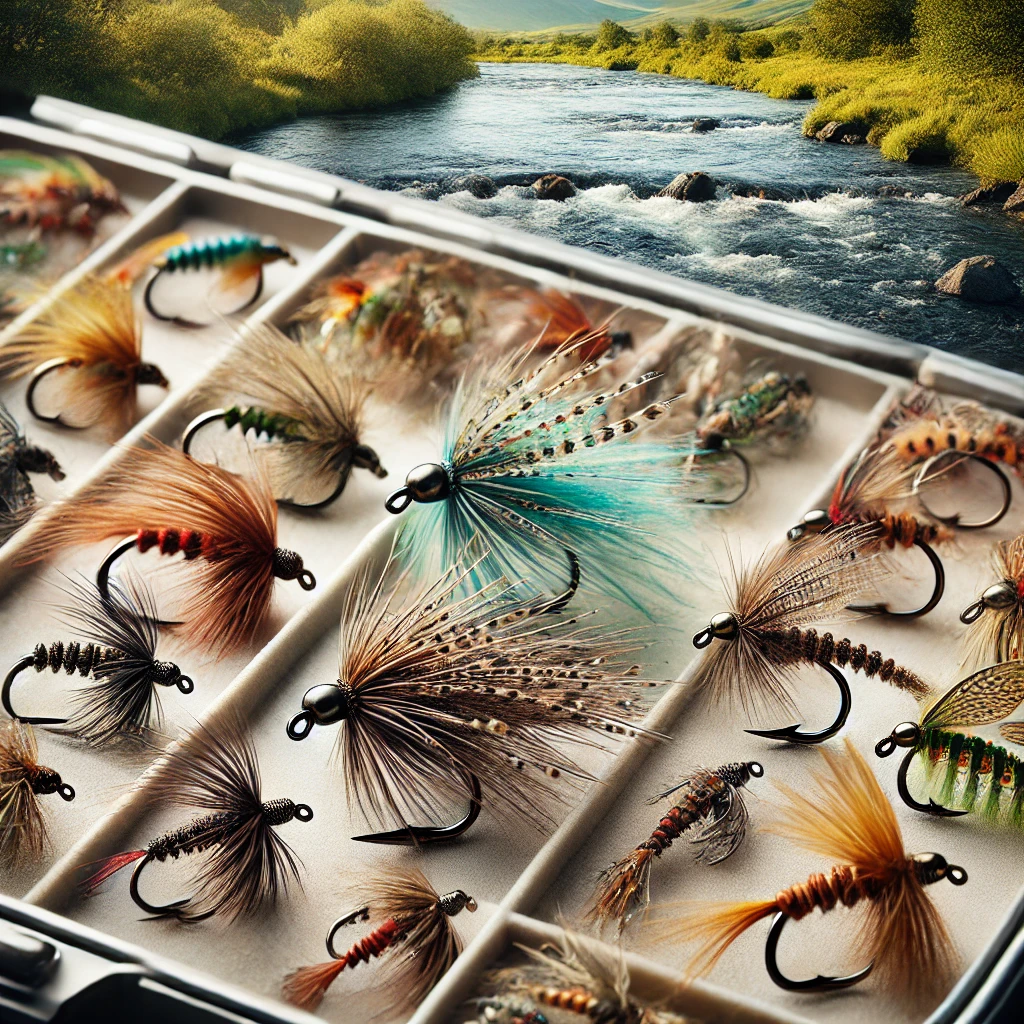
Choosing between baitfish and sculpin streamers starts with silhouette, because trout, bass, and other predatory fish usually identify prey by shape, posture, and movement before they ever inspect color or fine detail. In fly fishing, a streamer is an artificial fly designed to imitate larger forage such as minnows, juvenile trout, leeches, crayfish, or bottom-dwelling bait. A silhouette is the visual outline a fish sees from below, from the side, or in low light when contrast matters more than realism. I have learned on rivers from the Yellowstone drainage to small Appalachian freestones that the right profile often matters more than the exact pattern name. You can fish an expertly tied fly in the wrong shape and get ignored all day, then switch to a different outline and immediately move fish. For anglers building a practical fly box, understanding baitfish versus sculpin streamers is one of the most useful decisions in the broader category of types of flies. Dry flies, nymphs, emergers, wet flies, terrestrials, and streamers all solve different feeding problems, but streamers uniquely trigger predatory behavior. This hub article explains how these two major streamer silhouettes differ, when each excels, and how to connect that choice to water type, forage base, season, and retrieve. It also gives you a framework for selecting patterns, lines, and tying materials so your streamer fishing becomes more intentional and more consistent.
Why silhouette matters more than pattern name
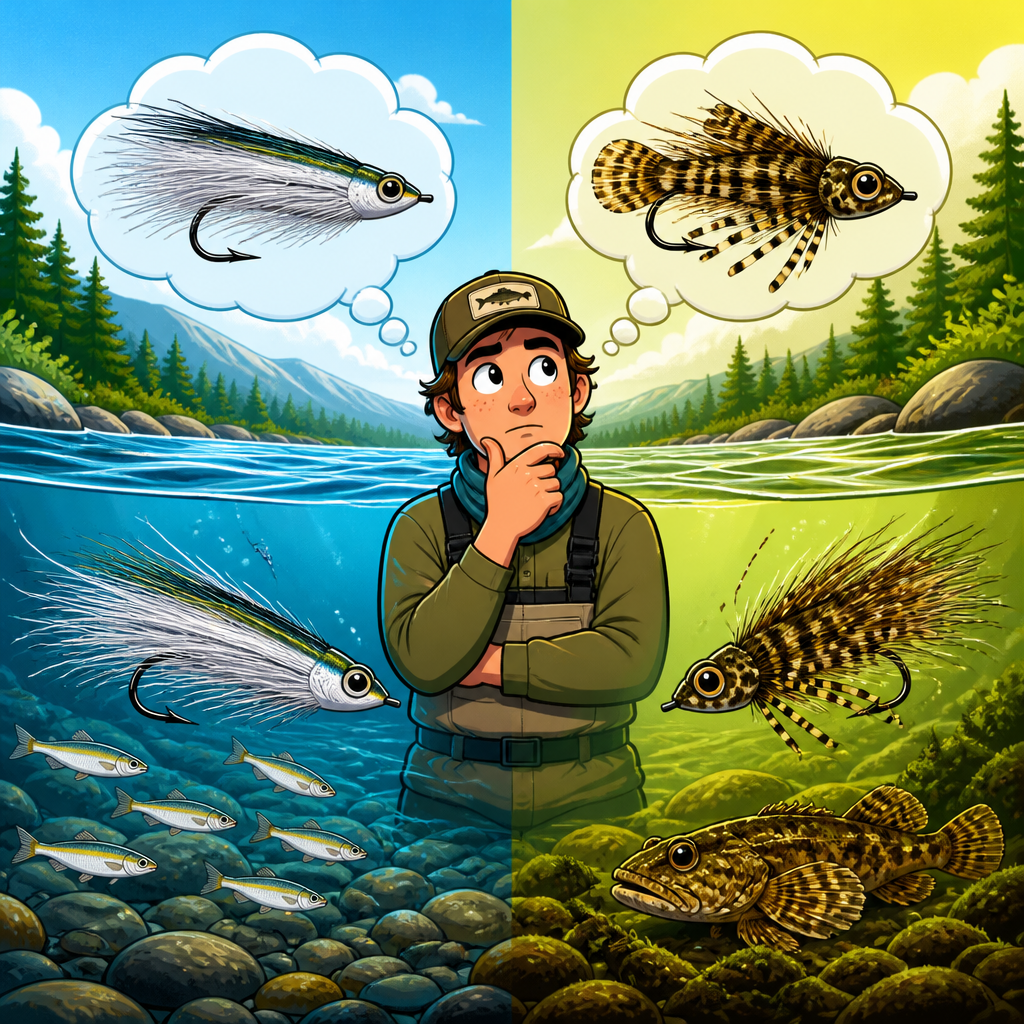
Many anglers organize streamer boxes by famous patterns: Woolly Bugger, Zonker, Circus Peanut, Muddler, Sculpzilla, Clouser Minnow, Game Changer, or Sparkle Minnow. Fish do not care about those names. They react to proportions and behavior. A baitfish streamer usually presents a longer, narrower profile with a defined head and tapering tail, suggesting a minnow, dace, shiner, juvenile sucker, or trout fry. A sculpin streamer presents a compact, broad-headed, bottom-heavy profile with a large pectoral area and short tail, suggesting a fish that hugs the substrate and darts in short bursts. Those outlines create different visual signals.
In clear water, a trout holding under a cutbank has time to inspect shape and track the fly’s path. In stained runoff, that same fish may only get a split second to key on contrast. In both situations, profile remains central. I have seen browns refuse long, flashy baitfish patterns in pocket water where sculpins were common, then crush a squat deer-hair-head streamer swung close to the rocks. The reverse also happens on tailwaters full of threadfin shad or juvenile trout, where a broad sculpin shape looks wrong in midwater and a slim baitfish pattern gets eaten immediately.
This is why silhouette sits at the center of streamer selection within the larger “types of flies” conversation. Dry flies imitate surface insects, nymphs represent subsurface aquatic life, and terrestrials copy land insects. Streamers, however, often succeed by conveying prey identity in one impression. The fish asks, “What is that?” and “Can I catch it?” Shape answers both questions fast.
Baitfish streamers: what they imitate and when they shine
Baitfish streamers imitate forage that lives or drifts in the water column. Depending on your fishery, that can mean sculpin-sized dace, emerald shiners, smelt, shad, alewives, juvenile whitefish, anchovy-like fry, or baby trout. Most baitfish patterns share a horizontal orientation, a clear nose-to-tail taper, and some suggestion of translucence or flash. Materials commonly include bucktail, marabou, schlappen, EP fibers, craft fur, arctic fox, Flashabou, and synthetic heads. Patterns such as the Clouser Minnow, Lefty’s Deceiver, Sparkle Minnow, Hollow Fleye, and articulated Game Changer are all baitfish-first designs.
These flies shine when predators are feeding up in the water column or targeting mobile schools. On lakes and reservoirs, bass and trout often push bait to points, weed edges, or shoals. In rivers, baitfish become especially important below dams, in tailwaters with stocked rainbows, and in systems with shiners or chubs. Long, slim streamers also excel during warm months when metabolism is high and fish are willing to chase. If you see follows without commitment, a baitfish silhouette can be ideal because it communicates vulnerability through length, tail motion, and directional escape.
The retrieve usually supports that profile. Baitfish patterns respond well to strips that imitate a fleeing minnow: strip-strip-pause, varied burst retrieves, or broad downstream swings with sudden acceleration. A pause matters because many baitfish flies breathe and suspend, giving the predator a clean target. In my own fishing, olive-white, gray-white, and black-silver baitfish patterns have been the first choice whenever I spot fish suspended off structure rather than pinned to the bottom.
Sculpin streamers: bottom-oriented profile, pulse, and attitude
Sculpin streamers imitate one of the most calorically valuable prey items in trout rivers. Real sculpins are short, thick, broad-headed fish with oversized pectoral fins, mottled camouflage, and a habit of living on the bottom around rocks, ledges, and woody cover. They are poor long-distance swimmers compared with open-water minnows, but they make explosive short darts. That matters because predators expect sculpins to behave differently. A convincing sculpin streamer therefore needs bulk in front, downward orientation, and a compact outline that pushes water.
Classic examples include the Muddler Minnow in its sculpin role, Zoo Cougar, Sculpzilla, NearNuff Sculpin, Sex Dungeon, and many conehead rabbit-strip variations. Deer hair, spun heads, wool heads, sculpin helmets, zonker strips, barred rubber legs, and weighted underbodies all help create the broad front end. The best sculpin streamers do not merely look thick in your hand; they maintain that impression underwater and near the substrate.
Sculpin profiles dominate in freestone rivers, boulder gardens, undercut banks, and deep runs where big trout sit close to cover. They also excel in cold water, at dawn, in low light, and whenever fish want a larger meal with minimal pursuit. Because the natural prey is bottom associated, your presentation usually needs to be deeper and slower than with a baitfish fly. Short strips, rod-tip pops, and crawl-pause retrieves often outfish a fast chase retrieve. When I guide anglers into heavy bankside structure, the pattern that consistently produces decisive eats is usually a dark olive, tan, or black sculpin silhouette worked close enough to tick rock.
How to match silhouette to water, forage, and fish position
The easiest way to choose between baitfish and sculpin streamers is to work through three questions. First, what forage actually exists? Second, where are the predators holding? Third, how are they likely to intercept prey today? Local knowledge matters here more than general internet advice. Turn rocks, check stomach pump data where legal and ethical, watch seine samples from biologists, and pay attention to what bait jumps or flashes in the shallows. If the river has abundant mottled bottom fish and little visible pelagic forage, sculpin should start high in your rotation. If the system is known for shiners, fry, or stocked trout, baitfish patterns deserve priority.
Fish position often settles the question. Predators suspended in eddies, cruising lake margins, or feeding along current seams usually respond better to a horizontal baitfish shape. Predators buried under logs, tucked beside boulders, or stationed in deep slots often prefer a descending, broad-fronted sculpin shape. Water speed also influences the choice. Narrow baitfish flies cut through current and maintain tracking on faster strips. Sculpin flies with broad heads can plane, dive, and hover, giving you more control in pocket water and during swing-and-drop presentations.
| Condition | Choose Baitfish Streamer | Choose Sculpin Streamer |
|---|---|---|
| Forage base | Shiners, fry, smelt, shad, juvenile trout | Sculpins, bullheads, bottom fish |
| Fish position | Suspended, cruising, chasing in midwater | Holding tight to bottom, wood, rock, banks |
| Best retrieve | Long strips, burst-pause, fleeing action | Short hops, crawl, drop, bottom contact |
| Typical profile | Long, slim, tapered | Short, broad head, compact |
| Light and water clarity | Clear water, visible flash, open lanes | Low light, stained water, heavy cover |
This framework keeps the decision practical. You are not choosing your favorite streamer pattern; you are choosing the most believable silhouette for the feeding lane the fish is using.
Design variables: size, weight, materials, and color
Silhouette does not exist apart from construction. Size, weighting, material choice, and color all reinforce or weaken the intended outline. For baitfish streamers, length often matters more than bulk. A three- to five-inch pattern covers many trout situations, while six inches and above enters dedicated trophy trout, pike, striped bass, or musky territory. Synthetics such as EP fibers and SF Blend can build a large profile with minimal water retention, making big flies easier to cast. Bucktail provides stability and taper. Articulation increases swimming realism, especially in patterns meant to mimic juvenile fish.
Sculpin streamers rely more on front-loaded mass and shape retention. Coneheads, lead or tungsten dumbbell eyes, and weighted wire underbodies help the fly dive and ride hook point up. Rabbit strips create unmatched motion at slow speed, but they absorb water and can become difficult on light rods. Deer hair pushes water and suggests a broad skull, yet it requires trimming skill and occasional floatant management if trapped air changes sink behavior. In my tying bench notes, the most effective sculpin flies are not always the prettiest. They are the ones that keep a blunt, living outline after thirty casts and repeated fish.
Color supports silhouette by controlling contrast. Olive, black, brown, tan, and white cover most situations. In clear rivers, olive-white baitfish and olive-brown sculpins are foundational. In off-color water, black often produces the strongest outline because it creates a clean contrast window. Flash should match the forage. Too much flash on a sculpin can undermine realism, while too little on a shiner imitation can make the fly seem inert. Remember that fish often perceive brightness and contrast before hue, especially in depth or dirty water.
Presentation and tackle: making the silhouette believable
The correct silhouette fails if the presentation contradicts the prey. This is where line system, leader length, and rod choice matter. Baitfish streamers are often best on floating lines with sink-tip leaders, intermediate lines, or full intermediates that keep the fly level and let it swim naturally. Sculpin streamers frequently benefit from sink tips in the 3 to 7 inches-per-second range or short, dense heads that bring the fly into the bottom third of the water column quickly. A seven-weight is a sweet spot for many trout streamer anglers because it handles wind, weighted flies, and larger fish without sacrificing control.
Leader design should be simple. Streamer leaders are usually shorter and stouter than dry-fly leaders. For baitfish, a 4- to 6-foot leader of 0X to 2X fluorocarbon or nylon often turns over well and preserves movement. For sculpins, many anglers shorten further to 3 to 4 feet to improve sink rate and contact. Knots matter because heavily weighted flies produce shock. I trust non-slip mono loops for many streamers because they free the fly to swim, though some broad-headed patterns track better on a snug clinch or improved clinch knot.
Presentation angle is just as important as hardware. Cast across and slightly down when you want a baitfish to appear to flee with the current, then animate it with strips. Cast upstream or quartering upstream when you want a sculpin to tumble, settle, and dart along structure. The best streamer anglers I know are not simply casting farther; they are choosing lanes where the silhouette appears where natural prey should be.
How this fits into the broader types of flies hub
As a hub page in the Fly Patterns and Tying topic, this comparison helps clarify where streamers sit among the main types of flies. Dry flies imitate adult insects on the surface. Nymphs imitate aquatic immature insects below the film. Emergers target insects transitioning through the surface. Wet flies suggest drowned adults or ascending insects. Terrestrials imitate land-based prey such as ants, beetles, and hoppers. Streamers represent larger food items and often trigger predation rather than selective sipping. Within streamers, baitfish and sculpin silhouettes form two foundational branches that influence pattern design, tying strategy, and fishing method.
If you are building internal structure for your own learning, this page should connect naturally to pattern-specific resources on Woolly Buggers, Clousers, Muddlers, articulated streamers, baitfish flies for bass, and sculpin flies for trout. It should also lead into articles on streamer lines, sink tips, articulated tying methods, deer-hair trimming, and matching forage by watershed. That is because “types of flies” is not just a classification exercise. It is a decision framework. The more clearly you understand each category’s job, the faster you can solve on-water problems.
The central lesson is simple. Choose baitfish streamers when prey is slender, mobile, and in the water column. Choose sculpin streamers when prey is broad-headed, bottom-oriented, and close to cover. Then support that silhouette with the right depth, line, retrieve, and color contrast. Anglers often overfocus on pattern brands or social media favorites, but fish respond to believable shape first. If you want more consistent streamer results, organize your fly box by silhouette and intended behavior rather than by pattern fame. Start with a small, disciplined selection of proven baitfish and sculpin profiles, fish them where their natural counterparts live, and let the water tell you which outline the predators trust today.
Frequently Asked Questions
What is the main silhouette difference between baitfish and sculpin streamers?
The biggest difference is overall profile. Baitfish streamers usually have a longer, narrower, more streamlined silhouette that suggests minnows, shiners, dace, juvenile trout, or other open-water forage. They often appear sleek from the side, with a defined head and tapering body that implies steady swimming and forward movement. Sculpin streamers, by contrast, are built around a short, broad, bottom-heavy silhouette. They typically feature a wide head, bulky front end, and a body that looks compact rather than elongated. That shape matters because fish often recognize prey first by outline, especially in stained water, low light, or when they only get a split-second look.
In practical terms, a baitfish silhouette says “swimming forage in the water column,” while a sculpin silhouette says “bottom-oriented meal trying to scoot, dart, or hide.” Predators respond differently to those signals. Trout and bass that are feeding on suspended or cruising bait may key on the slim, horizontal shape of a baitfish pattern. Fish holding near rocks, ledges, seams, and banks often react more aggressively to the squat, head-heavy profile of a sculpin imitation. When you choose between the two, think less about exact fly name and more about what outline the fish are conditioned to attack in that piece of water.
Why does silhouette matter more than color when choosing a streamer?
Silhouette often matters more because predatory fish usually identify prey by shape, posture, and movement before they ever study finer details. In many real fishing conditions, fish do not get a perfect, well-lit look at a fly. They may see it from below against the sky, from the side in broken current, or in dim water where contrast is stronger than hue. In those situations, the outline of the fly becomes the clearest piece of information available. A convincing silhouette can trigger a strike even if the color is only roughly correct, while a perfect color on the wrong profile may be ignored.
This is especially true with streamer fishing because streamers represent larger prey items that predators often attack on instinct and opportunity. A trout tucked behind a boulder or a bass stationed along a drop-off may only have a moment to decide whether the passing shape resembles vulnerable forage. If the fly presents the right visual footprint for the fish’s feeding lane and mood, it stands out as something edible. Color still has value, particularly in clear water or on highly pressured fish, but it usually refines the presentation rather than defining it. Start with the correct silhouette, then use color and flash as supporting adjustments.
When should I choose a baitfish streamer over a sculpin pattern?
Choose a baitfish streamer when the forage base and fish behavior point to prey that swims in the water column or along current seams with a more horizontal, fluid posture. This often applies in lakes, tailwaters, bigger rivers, reservoirs, and streams where trout, bass, pike, walleye, or other predators feed on minnows, shad, shiners, dace, smelt, or juvenile gamefish. A baitfish silhouette is also a smart choice when you see chasing behavior, surface dimples from fleeing bait, fish suspended off structure, or predators corralling forage in softer current. In these scenarios, the longer, slimmer outline looks natural and helps communicate “moving target” rather than “bottom sculpin.”
Baitfish streamers are also a strong option when you want a more versatile retrieve. They can be stripped steadily, swung across current, paused and twitched, or fished on sinking lines to imitate wounded bait. If fish are feeding upward or outward instead of glued to the bottom, a baitfish profile often gives a more believable signal. Even in rivers known for sculpins, there are many times when trout switch to juvenile trout, suckers, dace, or seasonal baitfish. If your fly needs to cover water, track cleanly, and suggest prey moving with purpose, a baitfish streamer is usually the better silhouette.
When is a sculpin streamer the better choice?
Sculpin streamers shine when fish are feeding close to the bottom and looking for a dense, high-calorie meal that lives around rocks, ledges, wood, and undercut banks. Sculpins and similar bottom-dwelling forage do not move like baitfish. They tend to hop, flare, scoot, and settle. Their broad head and thick front section create a distinctive profile that predators recognize as vulnerable, especially in streams and rivers with rocky substrate. If you are targeting larger trout in pocket water, deep runs, boulder gardens, or cutbanks, a sculpin silhouette often makes immediate sense because it matches where those fish hunt and the prey they expect to see there.
A sculpin pattern is also a smart pick when you want your fly to fish deep, displace water, and produce a stronger target in low visibility. The wider head and bulky outline can make the fly easier for fish to track in broken current or off-color water. It can also trigger territorial or opportunistic strikes from predators holding tight to cover. If your retrieve involves short strips, bottom contact, dead stops, and sudden bursts rather than long, smooth swimming action, the sculpin profile usually looks more convincing. In short, when the prey should appear bottom-bound, compact, and erratic, choose sculpin.
How can I match streamer silhouette to water conditions, fish position, and retrieve style?
Start by reading where the fish are likely feeding. If predators are suspended, cruising edges, holding in softer mid-column lanes, or chasing visible forage, lean toward a baitfish silhouette. If they are pinned to structure, hugging the bottom, or set up in ambush positions near rocks and ledges, a sculpin profile is often more appropriate. Next, evaluate water clarity and light. In clear water and bright conditions, fish may inspect longer, so a clean, natural profile matters even more. In stained water, dusk, dawn, or heavy chop, choose the silhouette that creates the strongest and most believable outline for the prey type you want to suggest.
Then connect the silhouette to how you plan to move the fly. A baitfish streamer typically pairs well with longer strips, smooth swings, pauses, and wounded-fish glides. A sculpin streamer usually looks best with short pops, bottom-bouncing presentations, and stop-start retrieves that make the fly dive, flare, and stall. Finally, think about the fish’s feeding mood. Aggressive fish may eat either profile if it enters the strike zone correctly, but selective fish often reveal a preference for one shape over the other. If you are getting follows without commitment, changing silhouette can be more effective than just changing color. That is the key principle: pick the outline that best matches the prey’s body shape, position in the water, and style of movement, then fine-tune the rest from there.