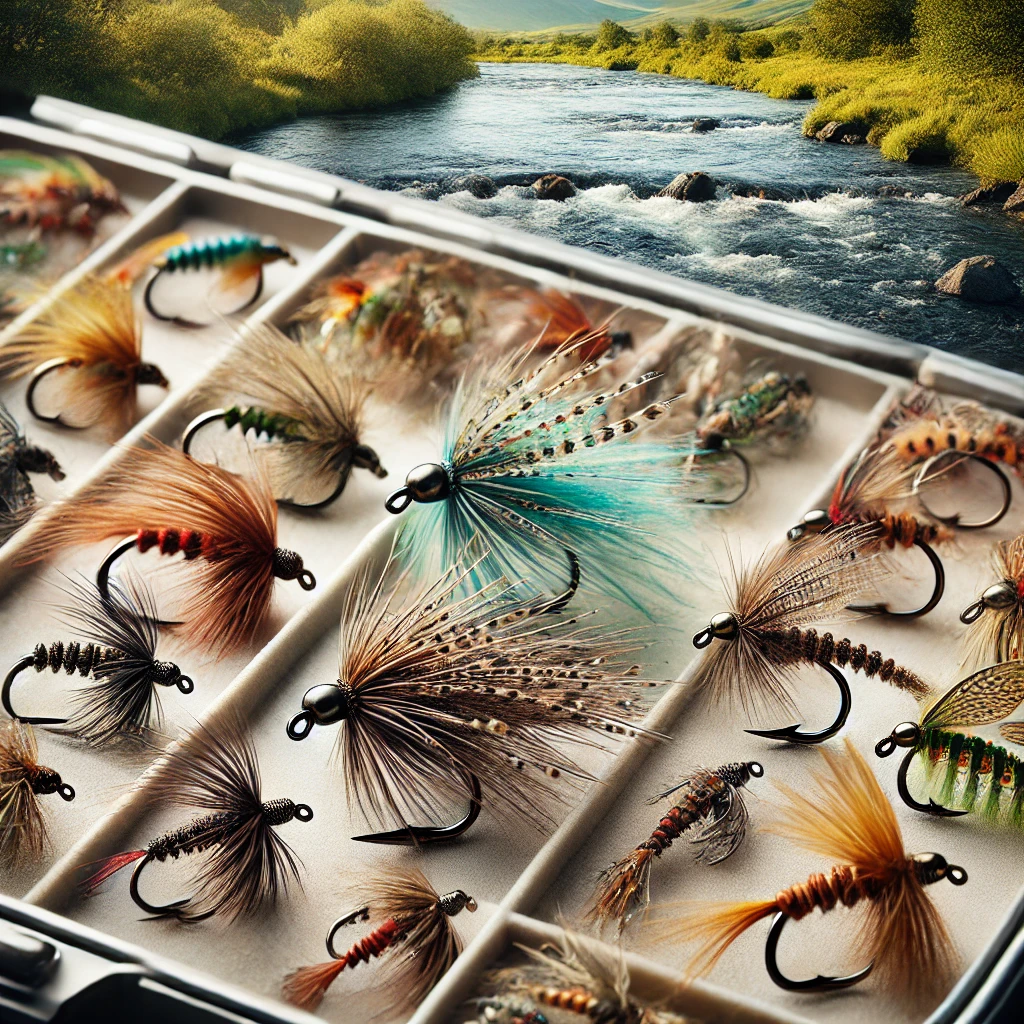
A perdigon nymph is a slim, hard-bodied subsurface fly designed to reach feeding trout fast, stay near the bottom, and imitate the compact aquatic insects fish eat in moving water. In practical terms, it is one of the most efficient modern euro nymph patterns because every material choice serves one purpose: maximum sink rate with minimum drag. I have fished and tied perdigons on pocket water, tailwaters, and competition-style beats where a fly that drops six inches faster can decide whether you touch fish or blank. That is why anglers ask not only what a perdigon nymph is, but why it sinks so quickly, when to use it, and how it fits among the many types of flies used in fly fishing.
The word perdigon comes from Spanish and translates to “pellet,” a useful clue to the pattern’s shape and function. Traditional nymphs often use buggy dubbing, soft hackle, legs, and bulk to suggest life. A perdigon does the opposite. It uses a smooth thread body, sparse tail or no tail at all, a tungsten bead, and a thin coat of UV resin that creates a glossy shell. The profile becomes dense, tapered, and hydrodynamic. Less water resistance means a faster drop, better contact, and more direct drifts in current seams. For trout feeding near the streambed, those details matter more than visual complexity.
This article serves as a hub for the broader “types of flies” topic within fly patterns and tying. If you are comparing dry flies, wet flies, streamers, emergers, and nymphs, the perdigon belongs firmly in the nymph category, but it also represents a larger shift in pattern design. Many classic flies were built to suggest movement and general form. Modern tactical flies, especially in competitive river fishing, are often engineered around depth control, presentation speed, and strike detection. Understanding the perdigon helps you understand how contemporary fly design works, and it provides a useful lens for evaluating other fly types by purpose rather than tradition alone.
Why does this matter to most anglers, not just competition specialists? Because trout spend much of their time feeding underwater. Aquatic insects such as mayfly nymphs, caddis larvae, cased caddis, and midges drift or crawl below the surface, and fish often hold where current delivers these food forms with minimal energy cost. If your fly never gets into that feeding lane, realism is irrelevant. I learned this lesson on a fast freestone run where a soft, shaggy pheasant tail looked excellent in the vise but rode too high in heavy current. Switching to a 3.0 millimeter tungsten perdigon put the fly in the zone immediately, and fish responded within minutes.
What Defines a Perdigon Nymph
A true perdigon nymph has four defining characteristics: density, slimness, smoothness, and simplicity. Density comes from a tungsten bead, often slotted for jig hooks or standard for straight-eye hooks. Tungsten is significantly denser than brass, which is why a small tungsten bead can outperform a much larger brass one. Slimness comes from a thread or floss body built with very little bulk. Smoothness comes from UV resin or epoxy cured over the body, reducing friction and limiting water-trapping fibers. Simplicity comes from sparse materials, usually a short tail of Coq de Leon, synthetic fibers, or none at all, plus a hot spot or collar for attraction. Those ingredients create a fly that is not delicate or ornate; it is purpose-built.
The perdigon is usually tied on a competition-style jig hook or a standard curved nymph hook in sizes roughly 12 through 20, though larger and smaller variations exist. Jig hooks paired with slotted tungsten beads ride point-up more often, reducing bottom snagging and helping anglers maintain contact during tight-line presentations. Straight hooks still have a place, especially in shallower drifts or when anglers prefer a more conventional silhouette. Common body materials include thread, stripped quills, tinsels, and flash fibers overwrapped or covered with resin. Hot spots are often fluorescent pink, orange, chartreuse, or yellow. The final pattern can imitate many insects loosely, but its real strength is getting down quickly while remaining fishable.
Among types of flies, this design philosophy sets the perdigon apart. A dry fly is built to float, usually with hackle, deer hair, CDC, foam, or treated fibers. A wet fly is built to pulse and swing in the water column. A streamer is built to suggest baitfish, leeches, or large prey through movement and profile. A classic nymph often balances imitation with sink rate. A perdigon prioritizes sink rate first, then silhouette, then trigger points. That hierarchy makes it especially effective in fast water, deep runs, cold conditions, and technical fisheries where trout feed briefly and close to the bottom.
Why It Sinks So Quickly
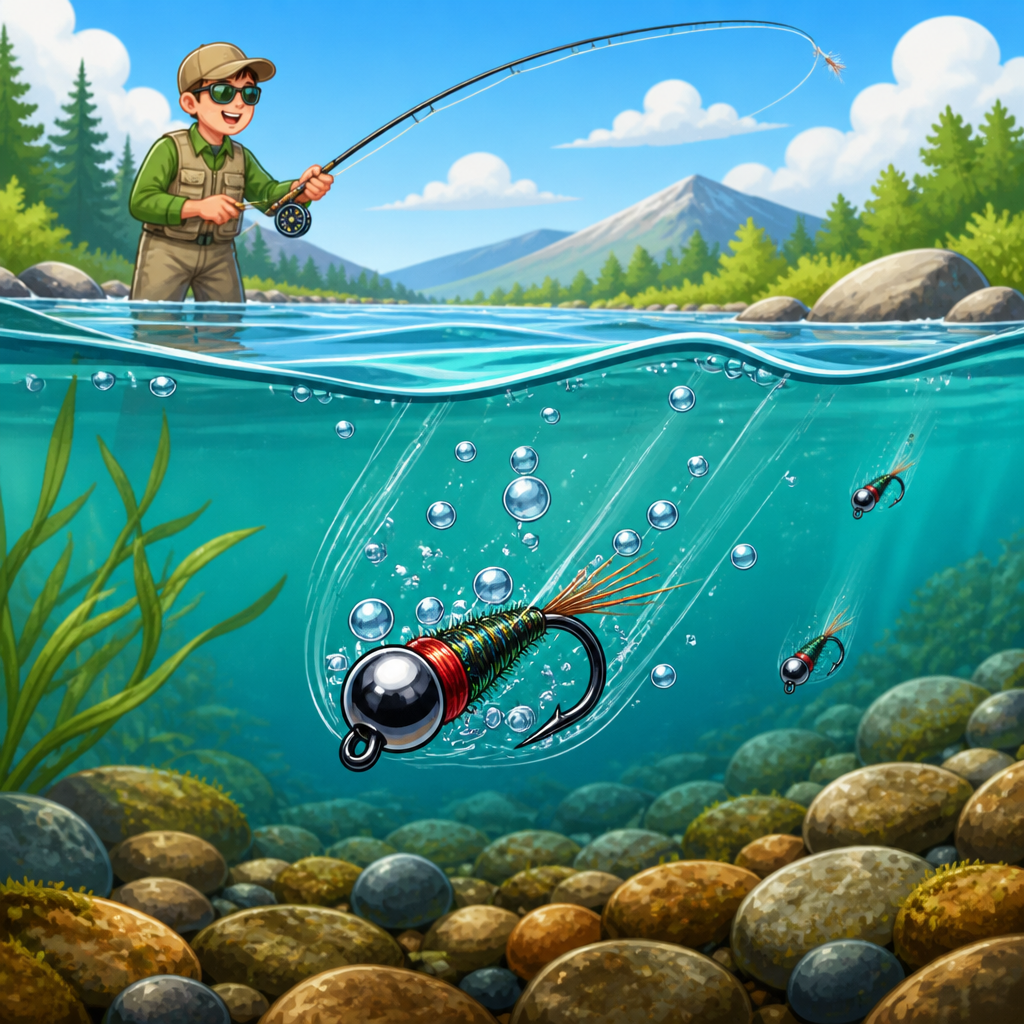
A perdigon nymph sinks quickly because it combines high mass with low drag. In water, descent is governed less by raw weight alone than by the relationship between weight, shape, and resistance. The tungsten bead supplies concentrated mass at the front of the fly, helping it break surface tension and nose downward. The slim abdomen avoids the parachute effect created by dubbing, hackle fibers, or long tails. The resin coating compresses everything into a hard shell that slips through currents rather than catching them. When tied correctly, the pattern behaves more like a small weighted dart than a fuzzy traditional nymph.
Material science explains much of the difference. Tungsten has a density of about 19.3 grams per cubic centimeter, nearly twice that of lead and far above brass, which is around 8.5 grams per cubic centimeter. In practical fly-tying terms, that means a modest tungsten bead can carry enough weight to sink rapidly without forcing the tier to enlarge the fly. Keeping the fly small matters because trout commonly key on tiny food items, especially in clear water or during winter. A brass-beaded fly of the same size and shape simply does not penetrate the water column as fast in comparable current.
Hydrodynamics matter just as much as density. A buggy hare’s ear with picked-out fibers, a soft hackle collar, or rubber legs all create turbulence and lift. Those can be advantages when you want motion or a slower drop, but they work against fast depth gain. Perdigons strip those features away. The glossy resin body smooths transitions from bead to thorax to abdomen. Sparse tails reduce flutter. Even the thread underbody is usually tapered carefully so there are no abrupt shoulders to catch current. In swift pocket water, these details add up to measurable depth differences over a very short drift.
I see anglers misread this point often. They assume the secret is only the bead size, then tie a heavy fly with a thick dubbed thorax and wonder why it stalls above the strike zone. In real fishing, the fastest-sinking pattern is usually the one with the best weight-to-drag ratio, not the one with the most material. That is why a clean size 16 perdigon with a 3.3 millimeter tungsten bead can outfish a bulkier size 14 stonefly imitation, even if the heavier-looking fly seems more substantial in hand. Underwater efficiency beats visual heft.
Where Perdigons Fit Among the Main Types of Flies
Fly patterns are commonly grouped into dry flies, emergers, nymphs, wet flies, and streamers. Dry flies imitate adult insects or terrestrials riding on the surface. Emergers imitate insects transitioning through the film, often one of the most vulnerable and heavily targeted stages. Nymphs imitate immature aquatic insects below the surface. Wet flies usually suggest drowned insects, ascending pupae, or general movement during swings and soft presentations. Streamers imitate larger prey, from sculpins to baitfish to crayfish. The perdigon belongs to the nymph family, but understanding the category is easier when you compare it directly with nearby pattern types.
Against a classic mayfly nymph such as a pheasant tail, hare’s ear, or Frenchie, the perdigon offers quicker depth and cleaner drifts but less built-in motion. Against a caddis larva tied with chartreuse dubbing and a soft shellback, it gives up some segmentation and translucence for speed. Against an emerger, it fishes deeper and more directly. Against a wet fly, it is less about swing and more about controlled dead drift. These tradeoffs matter because no single pattern solves every feeding situation. I carry perdigons as anchor flies, point flies, and search patterns, but I still switch to softer or more impressionistic flies when trout want movement.
| Fly type | Primary zone | Design goal | Typical materials | Best use |
|---|---|---|---|---|
| Dry fly | Surface | Float and silhouette | Hackle, CDC, deer hair, foam | Visible rises and surface feeding |
| Emerger | Film to shallow subsurface | Half-in, half-out vulnerability | CDC, antron, sparse dubbing | Selective trout during hatches |
| Classic nymph | Mid-depth to bottom | Imitation plus some movement | Dubbing, pheasant tail, rib, soft fibers | General subsurface fishing |
| Perdigon nymph | Bottom third | Fast sink and low drag | Tungsten bead, thread body, resin | Fast water, deep runs, euro nymphing |
| Wet fly | Mid-column | Swing and pulse | Soft hackle, schlappen, silk | Active fish and downstream presentations |
| Streamer | Variable, often lower column | Trigger predatory response | Zonker, marabou, bucktail, lead eyes | Larger trout or aggressive takes |
As a hub topic, “types of flies” should be understood by function. Ask three questions. Where does the fly need to fish? What food source or behavior is it suggesting? How fast must it get there? Those questions make the perdigon’s role obvious. It is not the best choice for every underwater situation, but it is often the best choice when immediate depth and drift control are the primary problems to solve.
How to Fish, Tie, and Choose Perdigons Effectively
The most common way to fish a perdigon is under a tight-line or euro nymphing system using a long leader, a sighter, and direct contact to the flies. In that setup, the perdigon often serves as the point fly because it anchors the rig and reaches depth quickly. A lighter tag fly above it can then ride naturally at a slightly higher level. Strike detection improves because the dense lower fly keeps the leader tight. On indicator rigs, perdigons still work well, especially in deep runs where split shot would otherwise be needed, but they are at their best when the angler can guide them precisely through narrow feeding lanes.
Color and pattern selection are simpler than many anglers expect. Black, olive, brown, purple, and metallic bodies all produce consistently. Silver, copper, and gold ribbing or body flash can imitate gas bubbles, segmentation, or simply provide a trigger. Hot spots help in off-color water, cold conditions, or pressured fisheries where a bit of contrast helps trout locate the fly. I usually start with a dark-bodied perdigon in clear water and a brighter collar or flashback version when flows rise. Size matters as much as color. In winter and on heavily fished tailwaters, a slim size 18 often beats a chunky 14.
Tying perdigons requires restraint. Start with a properly sized hook and tungsten bead, then build the thinnest body you can without creating gaps. If you use too much thread, too much UV resin, or a bulky thorax, you lose the pattern’s core advantage. Good tiers cure resin in thin coats, rotate the fly to avoid sagging, and leave the bead clean so the head remains compact. Coq de Leon tails are popular because they are stiff, durable, and naturally mottled, but synthetic tailing fibers work well too. The goal is never decoration. The goal is a balanced fly that drops fast, tracks straight, and survives many fish.
There are limitations. In slow pools, flat water, or situations where trout inspect flies closely, a perdigon can look too glossy or too sparse. During active hatches, soft emergers or more anatomically suggestive nymphs may outperform it. In snaggy boulder gardens, the same fast sink rate that makes the fly effective can also put it into rocks quickly if your angle and lead are wrong. Even so, every serious nymph angler should carry several weights and colors. If you want a reliable starting point, build a box around black, olive, and brown perdigons in sizes 14 to 18 with 2.5, 3.0, and 3.5 millimeter tungsten beads, then adjust from there.
The perdigon nymph matters because it solves the central problem of subsurface fly fishing: getting a convincing fly into the trout’s feeding lane quickly and keeping it there long enough to be eaten. Its fast sink rate is not magic. It comes from an intentional combination of tungsten weight, slim profile, sparse materials, and a smooth resin finish that cuts drag. Once you understand that formula, the pattern makes immediate sense, and so does its growing importance in modern fly fishing.
As a hub within types of flies, the perdigon also helps organize the bigger picture. Dry flies float, emergers hang in the film, wet flies swing, streamers move big prey, and nymphs cover the underwater food trout eat most often. Within that nymph category, classic buggy patterns, imitative forms, and streamlined tactical flies all have a place. The smartest anglers do not choose one camp forever. They match fly design to feeding depth, current speed, fish behavior, and presentation style.
If you want to improve your subsurface success, start by adding a few well-tied perdigons to your fly box and fish them where depth matters most. Then explore the rest of the fly pattern families with the same question in mind: what job is this fly built to do? That approach will help you choose better patterns, tie with more purpose, and catch more trout in every season.
Frequently Asked Questions
What exactly is a perdigon nymph?
A perdigon nymph is a streamlined subsurface fly pattern built to sink quickly, ride efficiently in fast current, and imitate the small, compact aquatic insects trout commonly feed on below the surface. Unlike many traditional nymphs that use soft dubbing, legs, collars, and bulkier profiles to suggest life and movement, a perdigon is intentionally slim and smooth. Its body is usually formed from sparse thread, tinsel, or quill material, then sealed under a hard coat of resin or UV finish. That glossy shell creates a durable, hydrodynamic shape that cuts through the water with very little resistance.
The pattern originated in competitive fly fishing, especially in European nymphing circles, where anglers needed flies that could get into the strike zone fast and stay there through short, controlled drifts. In that environment, efficiency matters. Trout often feed very close to the bottom in moving water, and if your fly spends too much of the drift sinking instead of fishing, you lose opportunities. A perdigon solves that problem by minimizing drag and maximizing density relative to its size.
In practical fishing terms, a perdigon is not meant to be an exact, delicate copy of one insect species. It is more of a tactical imitation: small, suggestive, and effective. It can represent mayfly nymphs, midge larvae, caddis-like subsurface food, or simply a generic bite-sized drifting insect. That combination of speed, simplicity, and fishability is why perdigons have become one of the most trusted modern euro nymph patterns on pocket water, tailwaters, and technical competition-style beats.
Why does a perdigon nymph sink so quickly compared to other nymph patterns?
A perdigon sinks quickly because every part of its design reduces water resistance and helps the fly penetrate the current faster than bulkier patterns. The biggest factor is profile. A perdigon is tied thin, with very little excess material. There is no fuzzy dubbing to trap water, no long fibers to flare out, and usually no soft hackle or heavy tailing to slow the descent. That slim shape alone makes a major difference, especially in fast or broken water where drag can keep a fly riding too high.
The second reason is its hard outer coating. Most perdigons are finished with UV resin, epoxy, or another smooth clear coating that seals the body and creates a slick surface. That polished body helps the fly slip through the water column instead of tumbling or hovering. Think of it as the difference between a streamlined object and a soft, fuzzy one dropped into current. The streamlined one gets down faster and stays more stable.
Weight placement is also critical. Perdigons are commonly tied on jig hooks with tungsten beads, often oversized relative to the fly’s body. Tungsten is much denser than brass and significantly denser than many traditional tying materials, so it adds a lot of concentrated weight in a very small space. Because the rest of the fly stays sparse, that bead is not fighting against unnecessary bulk. The result is a pattern with a very favorable sink-rate-to-size ratio.
All of this matters because trout feeding lanes are often narrow and close to the bottom. In real fishing, especially under euro nymphing conditions, a fly that sinks even a few inches faster can start fishing earlier in the drift, maintain bottom proximity longer, and pass through prime holding water more effectively. That is why the perdigon has earned its reputation: not because it is flashy or complicated, but because it gets where the fish are with remarkable speed and consistency.
What materials and design features make perdigon nymphs so effective?
The effectiveness of a perdigon comes from a very deliberate set of materials chosen for function first. The core ingredients are usually a jig hook or standard competition-style nymph hook, a tungsten bead, a sparse body material, a tail if desired, and a resin topcoat. None of those choices are accidental. Each one contributes to a fly that sinks efficiently, holds up well, and presents a compact silhouette trout recognize as food.
The tungsten bead is the engine of the pattern. It provides the mass needed to get down quickly, and because tungsten is extremely dense, it does that without forcing the tier to use an oversized fly. That allows anglers to fish small imitative patterns while still achieving the depth usually associated with larger or clumsier weighted nymphs. On many perdigons, the bead is paired with a jig hook, which not only helps with hook-up efficiency and bottom contact but also tends to reduce snagging by allowing the fly to ride hook point up.
The body is where the perdigon separates itself from more traditional flies. Instead of building a thick body with dubbing, chenille, or layered natural materials, the tier keeps things minimal. Thread, floss, quill, tinsel, or synthetic body wrap is applied in a very thin layer. A small hotspot, wingcase accent, or collar may be added for visibility and trigger appeal, but the overall shape remains narrow. Once coated with resin, the body becomes smooth, durable, and fast-sinking.
Color and flash are usually subtle but strategic. Many productive perdigons use dark olive, black, brown, purple, copper, or pearl tones, often with a fluorescent hotspot in pink, orange, or chartreuse. The idea is not to create a gaudy fly for its own sake, but to give trout a simple visual cue in moving water. Because the pattern is small and efficient, even tiny details can make it easier for fish to locate and commit to in a short drift.
Put together, these materials create a fly that is more than the sum of its parts. It is durable enough to survive repeated fish and rocky bottoms, heavy enough to sink fast, and simple enough to imitate a broad range of aquatic food forms. That blend of durability, depth control, and versatility is exactly what makes perdigons so consistently effective.
When should you fish a perdigon nymph, and in what water does it work best?
A perdigon is at its best anytime trout are feeding subsurface in moving water and getting the fly down quickly is a priority. That makes it especially effective in fast riffles, pocket water, runs with broken surface current, tailwaters with defined feeding lanes, and deeper seams where trout hug the bottom. In these situations, the biggest challenge is often not convincing the fish that the fly looks perfect. The challenge is reaching their level before the drift ends. A perdigon excels because it starts fishing almost immediately.
It is particularly useful in euro nymphing setups, where short-line contact and direct drift control let anglers take full advantage of the fly’s sink rate. On competition-style beats or technical water with limited time and lots of pressure, that speed can be a major edge. When trout are holding behind rocks, along current seams, or in narrow slots, a perdigon can drop into those windows before drag pulls it out of position. That is why so many anglers rely on it in high-efficiency presentations.
That said, perdigons are not limited to one style of water. They also shine in cold conditions, during winter and early spring, when trout often stay near the bottom and conserve energy. They can be deadly in clear tailwaters where small, clean profiles outperform larger buggy flies. They are also useful when fish are keyed on tiny mayfly nymphs or other compact food items and refuse bulkier patterns that drift unnaturally.
There are, however, times when another nymph may be the better choice. In very slow water, soft edges, or situations where trout want more movement and a more lifelike silhouette, a softer fly with dubbing, rubber legs, or partridge fibers may outproduce a perdigon. The key is understanding that a perdigon is a tool designed for depth, speed, and efficiency. When bottom contact and a quick drop matter most, it is one of the best tools you can tie on.
How should you rig and fish a perdigon nymph for the best results?
To get the most from a perdigon, fish it in a way that takes advantage of its fast sink rate and compact design. The most common approach is under a euro nymphing setup, where a long, light rod, thin leader system, and direct connection to the flies allow precise depth control and strike detection. In that context, a perdigon often works as either the point fly or the anchor fly in a two-fly rig because it gets the system down quickly and helps maintain contact through the drift.
If you are fishing one fly, cast or lob slightly upstream or up-and-across, then lead the fly through the drift with as little slack as possible. The goal is not to drag the fly, but to stay connected enough to feel or see subtle takes while allowing the perdigon to sink naturally. Because the fly descends fast, many strikes happen early, often just after the fly reaches depth and begins moving along the bottom at current speed. A tight or near-tight connection helps you recognize those brief, soft eats.
In a two-fly rig, anglers often pair a heavier perdigon with a slightly lighter or more expressive second fly. The perdigon acts as the delivery system, bringing the rig into the feeding zone, while the trailing fly offers a different profile or