Baetis vs. Pale Morning Dun is one of the most useful comparisons a trout angler can master because these two mayfly groups drive major hatches, demand different fly sizes, and routinely fool even experienced fishers standing over rising trout. In practical terms, anglers confuse them for three reasons: both are mayflies, both often appear in overlapping seasons, and both can produce selective feeding that punishes a sloppy match. Yet they are not interchangeable. Baetis generally refers to small blue-winged olive type mayflies, while Pale Morning Duns, usually abbreviated PMDs, are larger, paler western mayflies in the genus Ephemerella and a few related groups commonly imitated under the same hatch label. Understanding that distinction affects fly choice from hook size to body color, thorax profile, tailing material, and emerger design.
I have seen this play out on tailwaters, freestones, and spring creeks where anglers fish the right stage but the wrong bug. A size 18 olive parachute may draw refusals during a PMD spinner fall. A size 14 pale sulfur-toned cripple can look absurd when trout are keyed on size 20 Baetis emergers in cold rain. Identification matters because trout frequently lock on size first, silhouette second, and color third, especially during dense hatches. If your fly is off by two sizes, the pattern name on the package does not save you. That is why a serious approach to types of flies starts with bug families and hatch behavior, not just famous pattern names.
This article serves as a hub for the broader Types of Flies topic within fly patterns and tying. Rather than treating fly categories as a random list, it organizes them around a real identification problem: telling Baetis from PMDs and selecting the right size. Along the way, it connects dry flies, emergers, cripples, nymphs, and spinners, because hatch matching works best when you understand how each stage changes the trout’s feeding lane. If you build or buy boxes intelligently, this comparison can simplify dozens of decisions on the water. The result is more accurate imitation, fewer refusals, and a more disciplined method for selecting effective flies.
What Baetis and Pale Morning Duns Actually Are
Baetis is a broad label anglers use for small mayflies in the family Baetidae, especially olive-bodied species commonly called blue-winged olives. They are streamlined swimmers as nymphs, often with darker olive to brown-olive bodies, slate to gray wings as duns, and a hatch profile closely tied to cool weather, overcast days, and stable tailwater conditions. Many species fall under the Baetis umbrella in angling conversation, which is why the hatch can seem to happen almost any month somewhere. On western rivers, sizes 18 to 22 are common, with size 20 a standard starting point. On some tailwaters and spring creeks, anglers go even smaller.
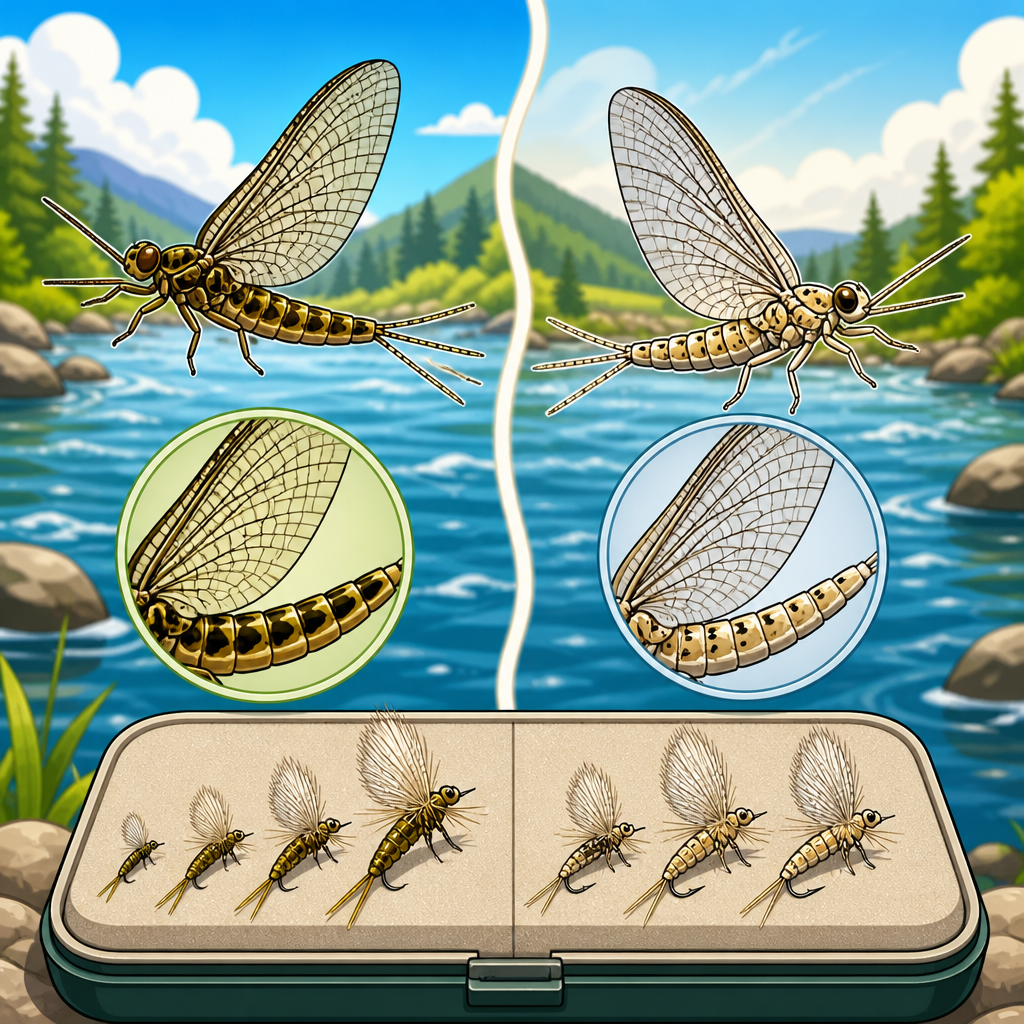
Pale Morning Dun is an angling term rather than a strict single-species label. In most western contexts it refers to pale yellow to pinkish-tan mayflies, frequently in the genus Ephemerella, that hatch from late spring through summer. Their nymphs are clinger-crawler types, not sleek swimmers like Baetis, and their duns often ride the surface longer. PMDs are usually larger than Baetis, commonly size 14 to 18, with 16 a classic middle ground. Their coloration ranges from creamy sulfur to apricot or light olive-yellow, and the exact shade can shift by river, sex, and life stage. That variability explains why anglers carry several tones, not one exact color chip.
If you reduce the comparison to field marks, the simplest rule is this: Baetis are usually smaller, darker, and more olive; PMDs are usually larger, paler, and more yellow. That rule is not perfect, but it is dependable enough to improve first-fly selection on most trout streams. From a fly-tying perspective, Baetis patterns lean toward sparse bodies, fine tails, slim thoraxes, and darker wing posts or CDC. PMD patterns can support fuller thoraxes, more visible wings, and body colors that move from pale yellow into pinkish dun. In both cases, exact imitation matters most when trout are feeding rhythmically in one lane on one stage.
How to Identify Them on the Water
The fastest way to identify Baetis versus PMD is to observe four things in order: size, body color, weather context, and behavior on the surface. Start with the natural in your hand or on a seine. If the insect looks tiny, around size 20, and olive to gray-olive, think Baetis. If it looks closer to size 16 and distinctly pale yellow, think PMD. Then check the conditions. Cool, cloudy, breezy afternoons strongly suggest Baetis. Bright late morning to early afternoon hatches in late spring and summer suggest PMDs, especially on classic western riffles and tailouts.
Behavior adds another clue. Baetis often emerge quickly but can create prolonged feeding because many individuals get trapped in the film, and their hatches can be staggered over hours. PMDs also produce important emergers and cripples, yet their duns are often easier for anglers to see and can bring fish into gentler, more visible rise forms. Spinner falls differ too. PMD spinners often collect over riffle tails and slicks in evening light, where trout feed with confidence. Baetis spinner activity can be subtler and heavily weather dependent. If you watch rise forms carefully, sips in a flat during drizzle often point toward small Baetis emergers rather than larger PMD duns.
Anglers who struggle with identification often look only at wing color or rely on shop shorthand. That causes misses. Wing tone overlaps and local common names vary. Instead, carry a small aquarium net or fine-mesh seine and compare the natural against your hook gauge. I have done this on technical rivers where changing from a size 18 PMD sparkle dun to a size 20 Baetis emerger immediately turned refusals into takes. The lesson was not that one famous pattern beats another. It was that the insect’s dimensions, posture, and stage dictated the answer. Accurate observation always outperforms guesswork.
Fly Size, Hook Selection, and Pattern Categories
For most anglers, fly size is the practical heart of the Baetis vs. PMD question. If you need a starting matrix, use size 18 to 22 for Baetis and size 14 to 18 for PMDs. On many rivers, that means carrying Baetis in 18, 20, and 22, and PMDs in 14, 16, and 18. Hook style matters as much as nominal size because a standard dry-fly hook, a 1x short emerger hook, and a curved scud hook all alter the insect’s apparent profile. A size 18 curved emerger can read closer to a size 20 natural on the water. Good anglers compare actual body length, not just the printed number on the fly box.
These mayflies also make a strong case for organizing fly boxes by types of flies, meaning by life stage and function rather than only by hatch name. You need at least five categories in a hatch-matching system: nymphs, emergers, duns or adults, cripples, and spinners. Baetis often reward a nymph-and-emerger approach because trout key on ascending insects before adults become obvious. PMDs can demand all five categories, especially on pressured rivers where fish switch from nymphs in riffles to cripples in seams and then to spinners at dusk. A hub page on types of flies should make this point clearly: the best pattern is often determined by stage before species.
| Feature | Baetis | Pale Morning Dun |
|---|---|---|
| Typical hook sizes | 18-22 | 14-18 |
| Common body colors | Olive, brown-olive, gray-olive | Pale yellow, cream, pinkish tan, light olive-yellow |
| Best hatch conditions | Cool, cloudy, windy, drizzly | Late spring to summer, often bright late morning |
| Key life stages to carry | Nymph, emerger, cripple, spinner | Nymph, emerger, dun, cripple, spinner |
| Go-to starting size | 20 | 16 |
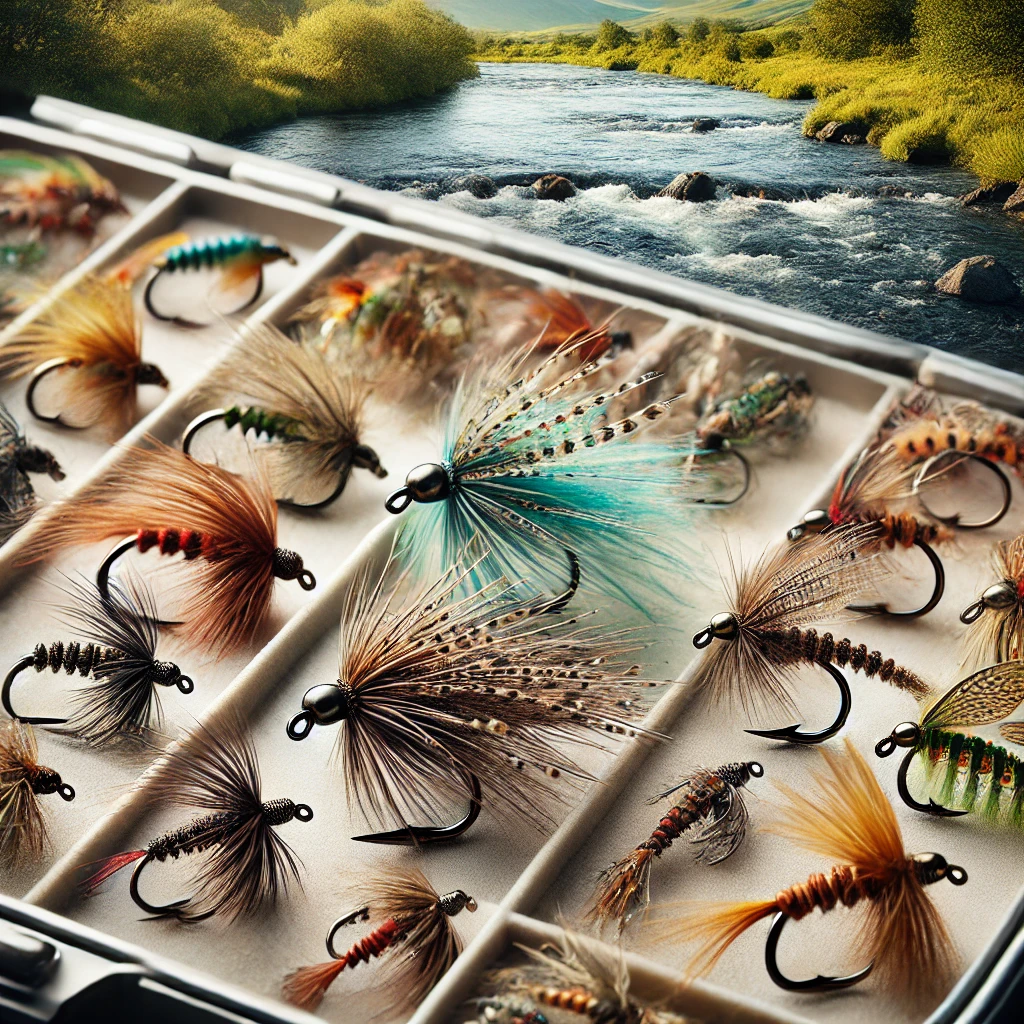
Pattern examples help translate these categories into buying and tying decisions. For Baetis, proven standards include RS2s, Barr Emergers, Pheasant Tail variants in olive, CDC emergers, and slim parachutes. For PMDs, Sparkle Duns, Comparaduns, split-case nymphs, CDC cripples, and rusty or cream-tinged spinner patterns cover most situations. None of these patterns is magic. They work because they present accurate size, profile, and stage. If you are building a sub-pillar around types of flies, these examples are useful internal pathways to deeper articles on emergers, dry-fly design, mayfly nymphs, and cripple patterns, each of which deserves its own detailed treatment.
When Trout Prefer One Stage Over Another
The most expensive mistake in hatch fishing is assuming trout are eating the most visible stage. I learned this the hard way on a Missouri River-style tailwater where Baetis duns floated everywhere and trout still ignored standard dries. The fish were taking emergers a half inch under the film. Switching to an unweighted RS2 on 6x changed the session immediately. This happens because emerging mayflies are vulnerable for longer than airborne adults. Baetis especially create these technical situations. Their small size and frequent cool-weather hatches mean trout can feed efficiently beneath the surface with little risk and high reward.
PMD hatches can be more theatrical, but the same rule applies. Trout may slash at emergers in riffle seams, then settle into gentle nose-up rises on cripples drifting through a foam line. During spinner falls, they may ignore every dun imitation in the box. If you only carry one type of fly for PMDs, make it a cripple or low-riding emerger rather than a high-floating traditional dry. On heavily fished rivers such as the Henry’s Fork, Delaware, or technical spring creeks, cripples consistently outfish perfect adults because real insects fail often enough to train trout. Anglers who understand types of flies as feeding signals, not categories on a retail wall, fish more efficiently.
Line control and presentation complete the equation. A perfect Baetis pattern in size 20 still fails if micro-drag skates it across a flat. A PMD spinner tied with exact segmentation still fails if it lands hard over feeding fish. Match the insect, then match the drift. Long leaders, fine tippet, and reach casts matter because both hatches frequently occur in smooth water where trout inspect offerings closely. The tactical takeaway is simple: choose the stage first, the size second, the profile third, and then protect the drift at all costs. Most refusals blamed on color are really stage or presentation errors.
Tying and Buying the Right Selection
If you tie your own flies, start by standardizing proportions for each hatch. For Baetis, keep bodies slim, tails sparse, thoraxes modest, and wing materials low bulk. Use olive dubbing blends, superfine dry materials, stripped quills, CDC, and sparse hackle. Avoid overdressing; too much material makes a tiny fly look wrong immediately. For PMDs, allow a fuller thorax, brighter but still natural body tones, and visible wing treatments such as CDC tips, deer hair comparadun wings, or poly posts on parachutes. Split tails and trailing shucks are especially effective because many refusals occur on insects not fully escaped from the nymphal shuck.
If you buy rather than tie, evaluate commercial flies with a critical eye. Factory patterns often run heavy, bright, or inconsistent in hook sizing. Compare two brands labeled size 18 and you may find one matches a true 16 in profile. Trusted hooks from Tiemco, Firehole, Daiichi, Fulling Mill, and Hanak tend to be more predictable, but even then, model geometry varies. I recommend choosing a few benchmark patterns in each hatch and testing them against naturals on your home waters. Once you know that one company’s PMD cripple runs large or another’s Baetis emerger sinks too quickly, you can stock intelligently instead of buying by label alone.
A practical box for this hub topic should be compact but complete. For Baetis, carry olive nymphs in 18 to 20, emergers in 20 to 22, low-riding adults in 18 to 20, and rusty-olive spinners in 20. For PMDs, carry nymphs in 14 to 16, emergers and cripples in 16 to 18, adults in 14 to 16, and spinners in 16. Add duplicate shades because rivers differ. Pale yellow works on one stream; a pinkish blush or cream body works on another. This is the broader lesson behind types of flies: build around recurring insect problems and feeding behaviors, not around the impulse to own every pattern ever marketed.
Baetis and Pale Morning Dun hatches reward disciplined observation more than encyclopedic fly ownership. When you know that Baetis are usually smaller, darker, and tied best in sizes 18 to 22, while PMDs are usually larger, paler, and most reliable in sizes 14 to 18, you eliminate much of the confusion that leads to refusals. From there, the real gains come from fishing the correct stage: nymph, emerger, dun, cripple, or spinner. Trout often tell you the answer through rise form, water type, and timing if you slow down enough to watch before casting.
As a hub within the Fly Patterns and Tying topic, this comparison also shows how types of flies should be organized in your thinking and in your box. Species matters, but stage, size, and silhouette drive most hatch decisions. Build your selection around those fundamentals, and you will be prepared not only for Baetis and PMDs, but for caddis, midges, drakes, and other major trout foods as well. The more systematically you classify flies, the easier it becomes to choose patterns with purpose instead of habit.
Use this page as your starting framework: identify the bug, confirm the size, choose the feeding stage, and then match the drift. If your current box treats all mayflies as generic dries, refine it now. Add a measured range of Baetis and PMD nymphs, emergers, cripples, adults, and spinners, then test them against naturals on your local water. That simple process will make every future article in this subtopic more useful and every hatch you fish more productive.
Frequently Asked Questions
What is the main difference between Baetis and Pale Morning Dun on the water?
The biggest practical difference is size, color tone, and overall profile. Baetis are usually smaller mayflies, often showing up in the olive-to-gray-olive range, and they commonly hatch in sizes that fall around #18 to #22, though regional variation matters. Pale Morning Duns, by contrast, are generally larger and lighter, often appearing pale yellow, creamy sulfur, or soft tan, with many common imitations tied in sizes #14 to #18. For an angler trying to match what trout are eating, that difference is not academic. A fish feeding confidently on tiny olive Baetis may ignore a larger pale mayfly pattern even if the drift is perfect. Likewise, during a PMD hatch, a small dark Baetis imitation can look too slight and too muted to trigger the same response.
Another key difference is the visual impression each insect creates during a hatch. Baetis often give the water a subtle, technical feel: small bugs, picky trout, and close scrutiny. PMDs tend to be easier to see and often create more obvious feeding rhythm, especially when duns are riding cleanly in the film. If you are standing over rising fish and trying to decide which hatch is underway, ask yourself three questions: how big are the naturals, how pale do they look, and do the bugs read as tiny olive mayflies or larger creamy-yellow ones? In many cases, that alone will point you toward the correct fly box.
How can I identify Baetis versus PMDs if both are hatching in the same season?
Start with size first, because it is often the fastest and most reliable field clue. If the naturals are very small and delicate, you are likely dealing with Baetis. If they are noticeably larger and easier to spot on the water, PMDs become more likely. After size, look at body color. Baetis usually trend toward olive, gray-olive, or darker muted tones. PMDs usually look lighter and warmer, with pale yellow, straw, sulfur, or light tan bodies. Even when light conditions are poor, the overall impression can be enough: Baetis often look darker and finer; PMDs look paler and fuller.
Wing appearance and hatch behavior can also help. Duns from both groups have upright wings, but PMDs often stand out more clearly because the body is larger and lighter against the water. Baetis, especially on cloudy days or in broken light, can be hard to separate unless you get close. If you can capture one in a small vial, on your fingertip, or even observe a dead drifter in an eddy, compare it to your flies directly. This is where disciplined anglers gain an edge. Instead of guessing from memory, they use the actual insect to choose between a size #20 olive Baetis emerger and a size #16 pale PMD dun. In overlapping seasons, trout often punish assumptions, so careful observation beats confidence every time.
What fly sizes should I carry for Baetis and Pale Morning Dun hatches?
For Baetis, most anglers are safest carrying patterns from about #18 through #22, with #20 being a particularly useful middle ground on many rivers. In some systems, especially during stronger hatches or with slightly larger blue-winged olive-type insects, a #16 or #18 may still be relevant, but the classic Baetis problem is usually about going small enough. That is why experienced anglers rarely show up with only one Baetis size. A row of #18, #20, and #22 patterns in duns, emergers, and nymphs gives you room to adjust when trout become selective.
For PMDs, a practical range is usually #14 through #18, with #16 often being the anchor size. On some rivers PMDs can run larger and justify #14 patterns regularly, while on others #18 may be the more realistic small end. The important point is that PMDs are generally tied bigger than Baetis, and that difference matters far more than many anglers initially think. If trout are refusing your fly during a visible hatch, one of the first corrections should be to shift a single hook size up or down before changing everything else. Often the wrong size, not the wrong species name, is the reason fish slide under the fly and refuse.
Why do trout become so selective when anglers confuse Baetis with PMDs?
Selective feeding happens because trout are not responding to a generic “mayfly” idea. They are locking onto a specific food form, size, color, stage, and drift behavior. When a hatch is heavy, fish can inspect dozens or hundreds of naturals and become efficient at taking only what matches the dominant bug. That means the difference between a tiny olive Baetis emerger and a larger pale PMD dun is enormous from the trout’s point of view, even if both seem close enough to the angler. During technical hatches, the fish are not grading on effort. They are comparing your fly against the real thing in real time.
Confusion between these two mayfly groups also causes anglers to fish the wrong stage. Baetis often produce excellent emerger fishing, and trout may key on insects trapped in or just below the surface. PMD feeders may also take emergers, cripples, or duns, but the way those insects sit and show on the water can be different enough to matter. If you choose the wrong insect and the wrong stage, you double the mismatch. This is why anglers sometimes make a decent cast with a good drift and still get refusals. The fly is simply telling the wrong biological story. When you match the hatch correctly, refusals often turn into clean, confident eats very quickly.
What is the best strategy for choosing between a Baetis fly and a PMD fly when trout are rising?
Use a simple, disciplined sequence. First, watch the rise forms. Are fish sipping delicately in a technical, almost microscopic feeding pattern, or are they taking more visible adults with a steadier rhythm? Second, inspect the bugs if at all possible. Seine the drift, check streamside rocks and vegetation, or scoop a natural from an eddy. Third, match size before fine color details. A trout is more likely to forgive a near-right shade in the correct size than a perfectly colored fly that is two hook sizes off. If the bug is tiny and olive, start with Baetis. If it is larger and pale yellow-cream, start with PMD.
From there, refine by stage. If fish are rising but not fully breaking the surface, try an emerger first, especially with Baetis. If duns are floating visibly and fish are taking confidently in the film, a PMD or Baetis dun pattern matched to size may be right. Keep in mind that one clean refusal is useful information. Two or three refusals usually mean you should change something specific, not randomize your choices. Adjust size first, then profile, then shade, and then stage if needed. Anglers who make logical, evidence-based changes usually solve these hatches much faster than anglers who just cycle through favorite patterns. In the Baetis vs. PMD comparison, careful observation and fly size discipline are what separate educated guesses from consistent success.