Mayfly dun vs. spinner is one of the most useful distinctions an angler can learn, because trout often tell you exactly which stage they are eating if you know how to read the rise. In practical terms, a dun is the freshly emerged adult mayfly riding high as its wings dry, while a spinner is the sexually mature adult that returns to the water later, spent and flat, usually after mating. Those two stages look different on the surface, behave differently in current, and trigger different feeding rhythms from trout. Misreading them is the reason many otherwise sound presentations fail.
I learned this lesson the hard way on technical spring creeks, where fish ignored perfectly decent dries simply because the silhouette was wrong. A high-floating Comparadun presented over noses feeding on flush-floating spinners will often be refused. So will a low-riding Rusty Spinner drifted through fish keying on vulnerable duns trapped in the film during an emergence. The hatch may appear to be “mayflies everywhere,” but trout are selective for reasons tied to energy efficiency, drift angle, profile, and timing. Reading the rise is therefore not guesswork; it is field observation linked to insect biology.
As a hub for types of flies within fly patterns and tying, this article connects insect stage, rise form, and pattern choice. Understanding mayfly stages also sharpens broader fly selection, because the same logic applies across caddis, midges, terrestrials, and attractors: match what the trout can most easily intercept. Here, the goal is simple. By the end, you should be able to watch a feeding trout, decide whether it is taking duns or spinners, choose the right dry fly style, and adjust leader, drift, and hook size with confidence rather than habit.
Why dun and spinner stages matter to trout
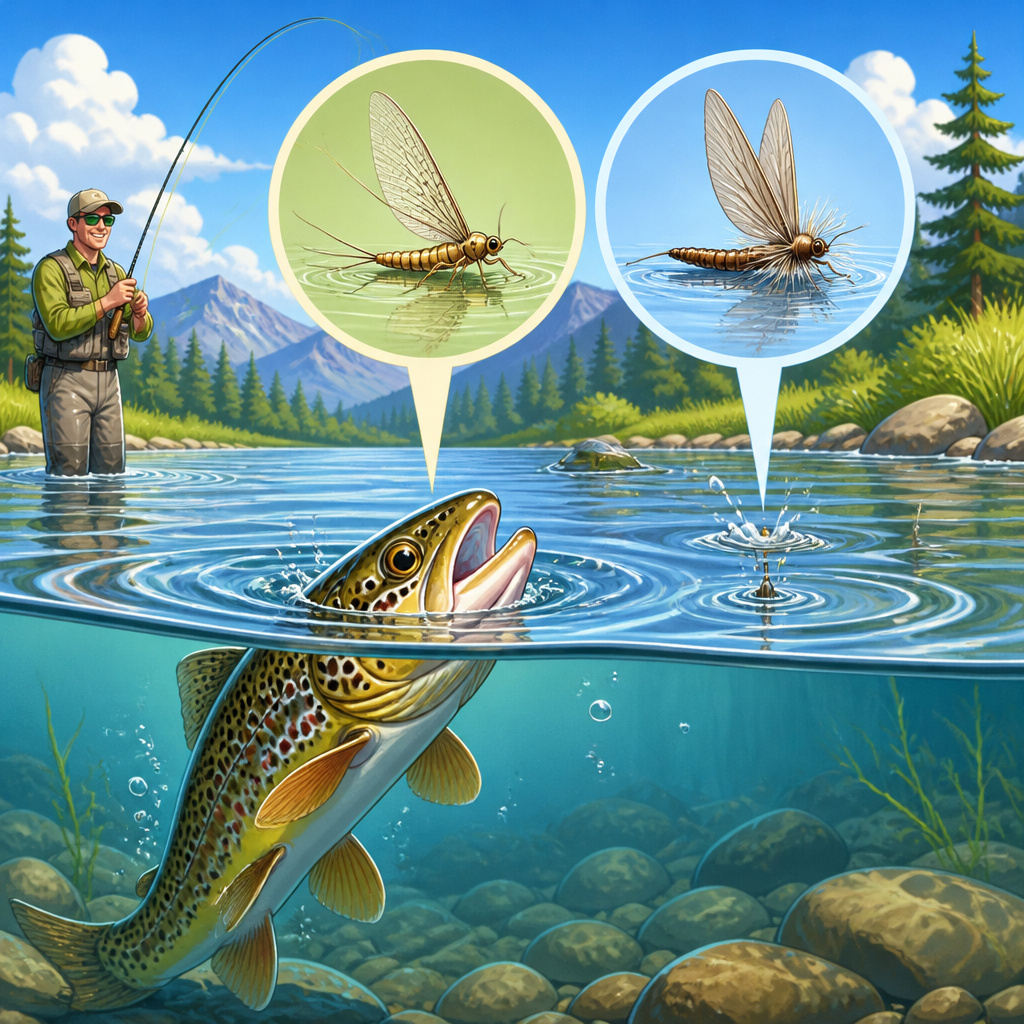
Mayflies pass through nymph, emerger, dun, and spinner stages, but on the water the dun and spinner are the adult forms most often confused. The dun, technically the subimago, emerges from the nymphal shuck and rides the surface while its body hardens and wings become functional. It usually sits upright, with a distinct sail of wings and an abdomen that rides partly above the film. The spinner, or imago, returns later after mating and falls spent to the water with wings outstretched horizontally. Because it is dead or dying, it cannot escape. That makes it a high-value, low-effort meal.
Trout respond to vulnerability more than romance. During a strong hatch, they may feed on ascending nymphs and emergers just under the film, then switch to duns as adults drift away, then focus almost exclusively on spinner falls in softer water at dusk or early morning. Each switch changes the feeding lane and the visible rise form. On rivers with dense hatches of Blue-Winged Olives, Pale Morning Duns, Hendricksons, or Green Drakes, this progression can happen within hours. On tailwaters, where water temperature is stable, spinner falls may also become remarkably predictable over several evenings.
For fly selection, this means “mayfly pattern” is too broad to be useful. Pattern category matters as much as color or size. A Catskill-style dry with hackle and divided wings suggests an upright insect. A spent-wing spinner uses a low profile, split tails, and flat wings to imitate a dead adult. Tying materials follow the same rule: CDC or deer hair can help a dun sit correctly, while sparse hackle and spent poly wings suit spinners. When I build fly boxes for guiding days, I organize by stage first, species second, because stage errors ruin more drifts than shade mismatches ever do.
How to identify a dun rise
A trout taking duns often rises with purpose and a little urgency. You may see the snout break the surface, sometimes followed by the dorsal fin or even the tail if the fish is in shallow water and moving vertically through the feeding column. The rise has shape. It is usually not a lazy sip, because duns are mobile compared with spinners and can skate, drift, or lift off. Trout know the food item may disappear. As a result, they frequently intercept duns in riffle seams, heads of runs, and broken glides where emergent insects first collect after hatching.
Look closely at the water around the rise. If you see upright wings, insects drifting a few inches before takeoff, or shucks collecting in eddies, you are in dun territory. Duns often appear in the main current where nymphs emerge from the substrate. On freestone rivers, that means pocket water, riffles, and oxygenated runs. On spring creeks, it can mean slick but steady lanes over weed beds. Refusals to your fly often happen when anglers choose an overly flush pattern during a dun event. Trout expect a taller footprint and a body suspended in or just above the surface film.
The classic visual clue is a rise that leaves a more pronounced ring and a sharper break of the surface than a spinner sip. Think of it as an intercept rather than a vacuum. During PMD hatches on Western rivers, for example, fish may station just off the faster seam and tilt up every few seconds to pick drifting duns. In those moments, patterns such as a Sparkle Dun, Comparadun, or traditional upright-wing dry in sizes 14 to 18 make sense. Floatant placement matters too: keep hackle or wing buoyant, but avoid pasting the abdomen so stiffly that the fly rides unnaturally high when naturals sit partly in the film.
How to identify a spinner rise
Spinner rises usually look calmer, slower, and more economical. The trout often barely dimples the surface, creating a neat ring without much splash or body exposure. Because spent adults lie flat and cannot escape, the fish does not need to accelerate. It can simply position beneath the insect and sip. On smooth tailouts and gentle glides, this rise can be so subtle that anglers miss it entirely, especially in low evening light. If trout seem to be feeding steadily but you never see heads, only expanding rings, suspect spinners first.
Water type provides another clue. Spinner falls commonly accumulate in softer current, eddies, and foam lanes where dead insects collect. Timing is critical. Many species mate in the air and return near dusk, though some morning spinner falls occur, particularly after cool nights or on certain spring creeks. During heavy falls of Tricos, Rusty Spinners, or Hendrickson spinners, trout may line up in glassy water and feed rhythmically with almost no disturbance. If your high-riding dun pattern is ignored during this situation, you are almost certainly showing the wrong silhouette.
The naturals confirm the diagnosis. Pick one from the water or your shirt sleeve and inspect it. Spinners show clear or opaque spent wings held out to the sides, long tails, and a body lying flush in the film. Females can carry egg masses, which slightly changes the abdomen shape and color. Effective patterns include the Rusty Spinner, CDC Spinner, and dedicated spent-wing imitations sized to species. Fine tippet becomes more important here because calm water magnifies drag. I commonly drop to 6X or 7X for Tricos and small olives, not because trout count tippet diameter, but because thinner material lands softer and drifts longer.
Reading rise forms, water type, and timing together
No single clue should be used in isolation. The most reliable reads come from stacking three observations: rise form, water type, and timing. I tell clients to ask three direct questions. Is the fish breaking the surface aggressively or only dimpling? Is it feeding in fast seam water or soft collecting water? Is this happening during the main hatch window or after mating flight time near dusk? When two of those three indicators agree, pattern choice becomes much easier. When all three agree, you can usually commit with confidence.
| Clue | Dun feeding | Spinner feeding |
|---|---|---|
| Rise form | Sharper surface break, snout or dorsal often visible | Soft sip or dimple, mostly rings |
| Water type | Riffles, seams, run heads, broken glides | Tailouts, slicks, eddies, foam lanes |
| Insect posture | Upright wings, body partly above film | Spent wings flat, body flush in film |
| Best patterns | Comparadun, Sparkle Dun, Catskill dry | Rusty Spinner, spent CDC spinner |
| Presentation priority | Natural drift with visible profile | Drag-free drift and low silhouette |
Real rivers add complications. Wind can push spinners into riffled edges, making the rise seem more like dun feeding. Heavy hatches can put trout into opportunistic behavior where they take emergers, duns, cripples, and spinners within one feeding lane. Light angle can also fool you. On overcast days, a BWO hatch may continue long enough that late insects overlap with an evening spinner fall. In those moments, inspect naturals and watch two or three feeding fish before tying on. The extra minute saves twenty frustrating ones. Good anglers are rarely faster at knot tying; they are better at diagnosis.
Best fly patterns and tying considerations for each stage
For dun imitations, choose patterns that present an upright profile and the right amount of support on the water. The Comparadun and Sparkle Dun are standards because deer hair creates a visible wing and the body can sit naturally in the film. Catskill dries still earn a place because hackle props the fly in rougher water where visibility and flotation matter more than a perfect footprint. CDC-wing duns excel in slower water but demand better maintenance. Match size first, then profile, then body tone. With mayflies, size errors are often more costly than slight color errors, especially on selective trout.
Spinner patterns should be sparse. The fish are often close to the fly and the naturals are dead flat, so bulk hurts you. I favor spent wings of poly yarn, CDC, or hackle tips, slim dubbed or thread bodies, and split tails for balance. Rusty Spinner is a broad category rather than a single exact insect, but it works because many mayfly spinners oxidize toward rusty brown tones after death. For pale species, cream, sulfur, olive, and light gray variants matter. Hook style helps too. A standard dry-fly hook works, but a slightly wider gape can improve hookups when the body rides flush in the film.
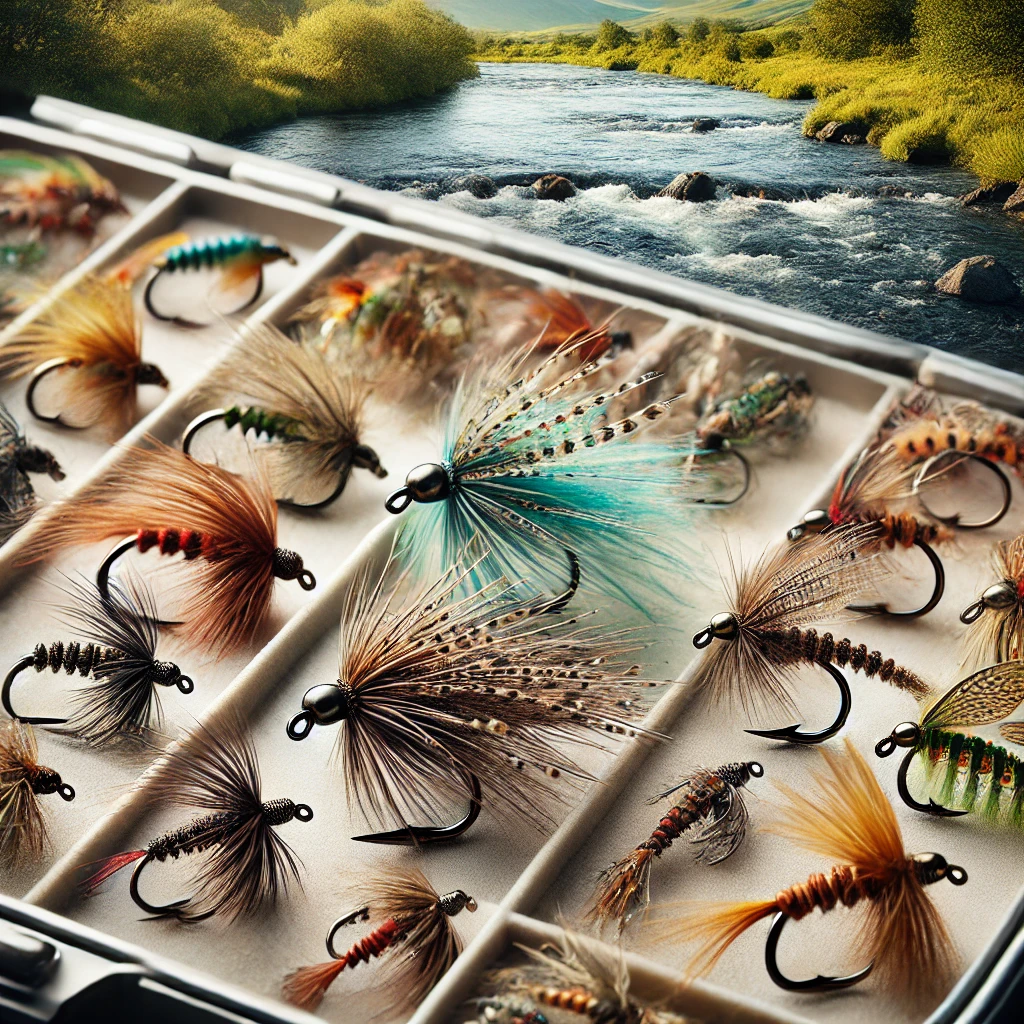
This hub also sits inside the larger world of fly types. Dry flies imitate surface adults, emergers represent insects trapped at transformation, nymphs cover subsurface immature stages, and wet flies or soft hackles suggest movement and transition. Streamers and terrestrials belong in the broader pattern conversation because trout are not always locked on mayflies. Still, when rises point to adult mayflies, narrowing to dun or spinner is the key decision. Build your boxes accordingly: mayfly duns by species and size, spinners in matching shades, plus cripples and emergers for the inevitable days when trout split the difference and punish rigid thinking.
Presentation mistakes that cause refusals
Even the correct pattern fails when presentation does not fit the feeding stage. For duns, the common mistake is fishing too delicately in water that allows a slightly more assertive drift. Trout feeding in riffle seams expect insects arriving at current speed, not a fly that stalls because of a poorly aligned cast. Reach casts, parachute casts, and stack mends are useful because they buy a short drag-free lane without unnatural skid. In broken water, slightly heavier tippet can be acceptable if it turns over the fly cleanly. A visible drift over the fish is better than a perfect knot attached to a fly you cannot control.
For spinners, drag is the great killer. Because fish often feed in calm slicks, even micro-drag from a thick leader butt or poor positioning is enough to trigger refusals. Long leaders, fine tippet, and side-angle presentations matter more than false casting style. I prefer to cast from below and across when possible, using slack strategically so the fly lands first and the leader follows. Watch the natural spinners; they do not wake the surface. Your imitation should not either. Another overlooked error is over-dressing the fly with floatant. A spinner that perches above the film stops looking spent and starts looking suspicious.
Hooking timing also changes. Anglers often strike too hard at spinner sips because the rise is subtle and delayed to the eye. Lift only after the fish closes and turns. With duns, especially in quicker water, a firmer but still controlled lift is fine because the take is more decisive. Polarized glasses help, but positioning helps more. Put the sun at an angle when you can, and study one fish rather than the whole pool. Reading a single trout accurately teaches more than casting over five fish badly. Consistency in observation beats constant fly changes.
Reading a trout rise is ultimately about connecting insect stage to fish behavior, and mayfly dun vs. spinner is the most important surface distinction to master. Duns ride upright, appear during the hatch, and usually draw more assertive takes in riffles, seams, and active glides. Spinners fall spent, collect in softer water, and produce quiet sipping rises, often near dusk or during morning falls like Tricos. When you combine rise form, water type, and timing, your odds improve quickly. Add a quick inspection of the naturals, and fly choice becomes evidence-based rather than hopeful.
As a hub for types of flies, this lesson extends beyond one hatch. It teaches the broader principle that trout key on life stage, vulnerability, and drift more than on simple color labels. Organize your fly boxes by function: duns, spinners, emergers, nymphs, terrestrials, streamers. Tie and buy patterns that match posture on the water, not just names on packaging. On your next outing, pause before the first cast, watch the rises for a full minute, and decide what the trout are truly eating. That single habit will catch more fish than another dozen random fly changes.
Frequently Asked Questions
What is the difference between a mayfly dun and a spinner?
A mayfly dun and a spinner are two separate adult stages of the same insect, and that distinction matters a great deal when trout are feeding selectively. A dun is the freshly emerged adult mayfly that has just come up from the nymphal stage and is sitting on the surface while its wings expand and dry. Because of that, duns usually ride upright and fairly high on the water, with a more vertical, alert posture. They are active in the sense that they are newly emerged, but they are also vulnerable because they are briefly trapped in the film before they can fully fly off.
A spinner, by contrast, is the final adult stage. After the dun molts into a sexually mature adult, it later returns to the water to mate and die. Spinners are typically found spent on the surface with their wings held flat and out to the sides. Instead of floating high and upright like a little sailboat, they lie low and flat, often flush in the film. That spent profile creates a very different silhouette to trout. In practical fishing terms, if trout are eating duns, they are usually targeting insects that are freshly emerging and riding high. If they are eating spinners, they are often keying on dead or dying adults that are trapped, motionless, and easy to intercept. Recognizing that difference is one of the most useful skills in dry-fly fishing because it tells you what fly shape, posture, and drift matter most.
How can I tell from a trout rise whether it is taking duns or spinners?
Reading the rise starts with looking at how the trout breaks the surface and how much urgency there is in the take. When trout are feeding on duns, rises are often more deliberate but slightly more visible. You may see a nose, a head, or even part of the back as the fish comes up to intercept a bug riding high. Since duns sit more prominently on the surface, trout often do not need to be as subtle. The rise can look confident and rounded, sometimes with a noticeable sip followed by a clean submergence. If the hatch is active and newly emerged mayflies are drifting through different current lanes, trout may also shift slightly left or right to take individual insects.
Spinner rises are commonly softer, flatter, and more economical. Because spent spinners lie flush in or on the film, trout often barely break the surface to eat them. Instead of a pronounced pop or head-and-shoulders rise, you may see a quiet dimple, a subtle kiss, or just a widening ring. Fish feeding on spinners often look extremely rhythmic and efficient, almost as if they are vacuuming tiny items from a conveyor belt. Another clue is timing. Dun feeding is usually associated with the emergence itself, while spinner feeding often happens later, frequently in lower light or after mating flights return to the water. The best way to confirm your read is to watch the rise forms, inspect a few naturals in the drift, and compare whether the insects on the water are upright and riding high or flat and spent.
Why do trout sometimes become so selective during a mayfly hatch?
Trout become selective because, during a hatch, they are often surrounded by a very specific food item available in large numbers and in a consistent form. When that happens, they no longer need to sample broadly. If the majority of insects on the water are duns drifting upright, trout can tune in to that exact silhouette, footprint, and drift behavior. If a spinner fall is underway, they may key even more narrowly on insects lying flat in the film. That selectivity is not trout being mysterious; it is simply efficient feeding. When one easy, abundant food source is available, especially one with a predictable size and posture, trout can afford to ignore patterns that do not match.
This is why seemingly small details become decisive. A fly that is the right size but sits too high can be refused during a spinner fall. A pattern with the correct color but the wrong wing profile can be ignored during a dun hatch. Selectivity also increases in smooth water, where trout get a longer look at the fly, and in heavily pressured fisheries, where fish have seen many imitations. The good news is that selective feeding often gives you useful information. The rise form, the insects drifting by, and the trout’s rhythm all narrow the possibilities. Rather than thinking of selectivity as a problem, it helps to see it as a clue-rich situation: the trout are telling you exactly what they want if you pay attention to stage, size, profile, and presentation.
What fly patterns and presentation adjustments work best for dun versus spinner feeding?
When trout are taking duns, choose patterns that ride upright and relatively high, with a visible wing profile and a clean, natural drift. Comparaduns, parachutes, Catskill-style dries, and other upright emerger-to-dun imitations are often effective, depending on the hatch. The key is that the fly should suggest a freshly emerged mayfly that is still on the water long enough to be vulnerable. Presentation matters just as much as pattern choice. Because duns are drifting naturally with the current, drag-free float is critical. Position yourself to get a clean drift over the feeding lane, and mend early so the fly arrives naturally. If fish are taking cripples rather than fully emerged duns, a lower-riding transitional pattern may outperform a high-floating dry.
For spinners, the priorities shift. You usually want a slimmer, flatter pattern that sits flush in the film, often with spent wings extending out to the sides. Classic spent-wing spinner patterns, low-riding CDC spinners, and sparse imitations are strong choices. Trout feeding on spinners are often inspecting a helpless insect that cannot escape, so even slight drag can ruin the illusion. Long leaders, fine tippet, and careful angle control are especially important. Cast so the fly reaches the trout before the leader does, and avoid micro-drag caused by conflicting currents. In many cases, anglers fail during spinner falls not because the fly is wildly wrong, but because it rides too high, lands awkwardly, or skates unnaturally. Matching the stage means matching both the look of the insect and the way it behaves on the water.
What are the most common mistakes anglers make when trying to read a trout rise during a mayfly hatch?
The most common mistake is focusing only on the fact that trout are rising, without identifying what stage they are actually eating. Many anglers see surface activity and immediately tie on a generic mayfly dry, but that skips the crucial question: are the fish feeding on upright duns, emerging insects, or spent spinners? If you do not answer that first, you may be close in size and color yet still far off in profile and behavior. Another frequent mistake is overreading a single rise. One splashy take does not always define the pattern. It is better to watch several rises, look for consistency, and inspect the water for actual insects before changing flies.
A second major error is underestimating the importance of posture and drift. During dun feeding, anglers often use a pattern that is too low-riding when trout are clearly taking insects floating high. During spinner falls, they do the opposite, offering a buoyant dry that sits unrealistically above the film. Presentation errors are just as damaging. Drag, poor casting angle, and leader splash can all turn a good match into a refusal. Finally, many anglers ignore timing and conditions. Duns are tied to emergence windows, while spinner falls often occur later and can be concentrated in specific light, temperature, or weather conditions. The best habit is to slow down, observe carefully, and let the trout and the naturals tell the story. Once you separate dun from spinner, the rise form becomes much easier to interpret, and your fly choice becomes far more precise.