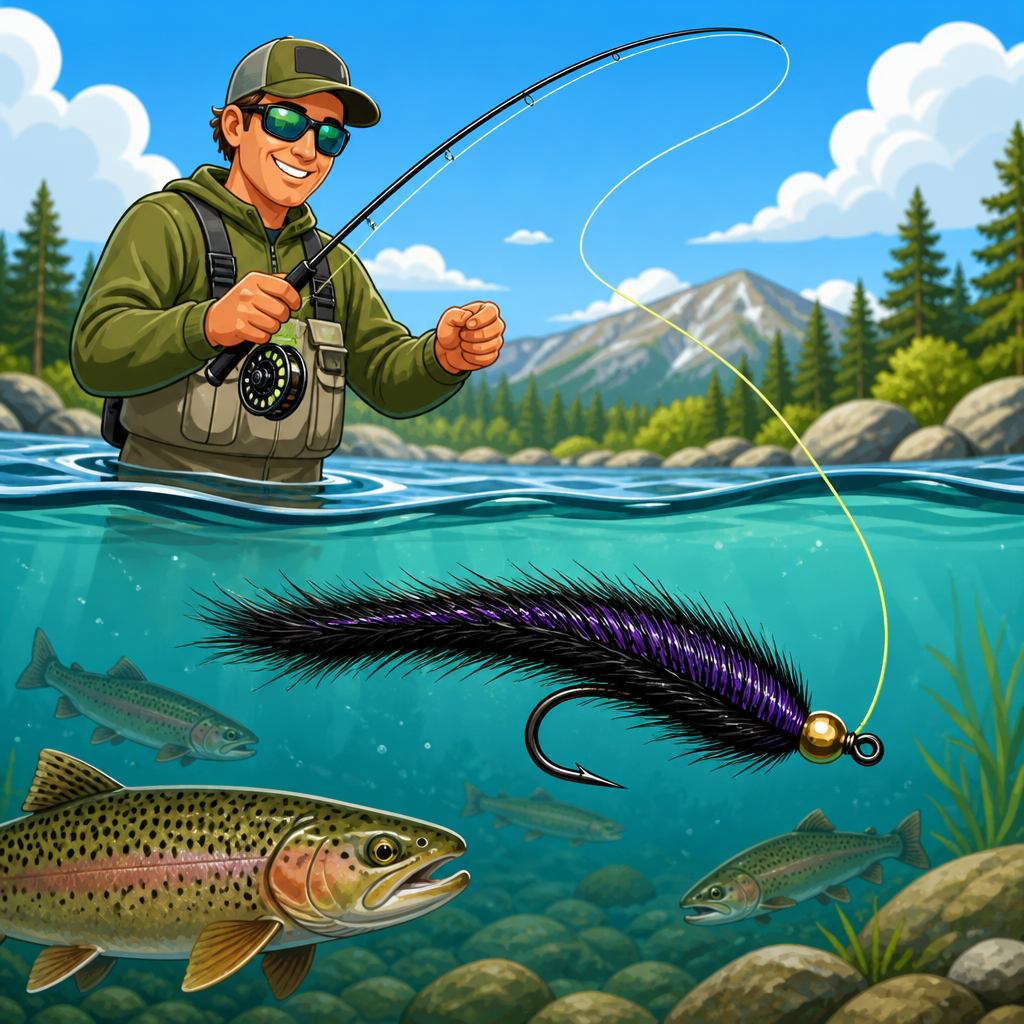
A balanced leech is a stillwater fly pattern tied so its hook rides horizontally beneath a buoyant indicator point, usually a bead or foam post extended in front of the eye, allowing the fly to suspend level under a strike indicator and move with a lifelike, undulating posture. For anglers trying to understand types of flies within the broader world of fly patterns and tying, the balanced leech matters because it sits at the intersection of nymphs, streamers, and chironomid-style suspension tactics. I have fished and tied balanced leeches for trout across Western reservoirs, British Columbia interiors, and local farm ponds, and few patterns teach presentation more clearly. When the fly hangs motionless at the exact feeding depth, fish often take with extraordinary confidence.
The term balanced refers to center of gravity. A conventional woolly bugger or rabbit leech tied on a standard hook usually hangs nose down when suspended. A balanced leech, by contrast, uses a jig-style arrangement that offsets the bead forward on a pin, needle, or short tube so the hook shank levels out in the water. That simple change transforms how marabou, rabbit, or ostrich fibers breathe. Instead of collapsing beneath the hook bend, the materials pulse evenly around the body. In practical fishing terms, balanced means natural profile, precise depth control, and a presentation that remains effective even when you are not actively retrieving.
This article serves as a hub for anglers exploring types of flies. Balanced leeches belong in the same conversation as dry flies, emergers, nymphs, wet flies, streamers, terrestrials, chironomids, and attractor patterns because they borrow traits from several categories. They imitate leeches, damselfly nymphs, dragonfly nymphs, baitfish, and general swimming prey, yet they are commonly fished under an indicator like midges or chironomids. Understanding when to choose one helps you make sense of fly selection overall: match the food source, match the depth, and match the fish’s level of activity. If you fish lakes, slow rivers, or deep eddies, a balanced leech deserves a permanent place in your box and in your thinking about modern trout flies.
Where Balanced Leeches Fit Among Types of Flies
Most fly categories are defined by what they imitate and how they are fished. Dry flies imitate adult insects on the surface. Emergers represent insects trapped in or just under the film. Nymphs and larvae imitate subsurface aquatic insects such as mayflies, caddis, stoneflies, and midges. Wet flies suggest drowned insects or soft-hackled movement. Streamers imitate minnows, leeches, sculpins, or large swimming prey. Terrestrials copy land insects like ants, beetles, and hoppers. Balanced leeches technically fit best under streamers, but in actual use they occupy a special stillwater niche where suspension is as important as imitation.
That distinction matters because anglers often search for one perfect category when fish behavior is more nuanced. Trout in lakes do not always chase. Much of the time they cruise specific depth bands and inspect prey hanging almost motionless: chironomid pupae, callibaetis nymphs ascending slowly, bloodworms, freshwater shrimp, and leeches swimming in short bursts then pausing. A balanced leech covers that pause better than a stripped streamer and covers larger prey better than a tiny midge pupa. In my experience, it often becomes the best searching pattern when fish are feeding subsurface but not revealing a single dominant hatch.
Balanced leeches are also central to fly tying progression. They teach proportion, material control, weighting theory, and rig design. Tiers learn to extend a bead on a front pin without twisting the hook gap closed, to distribute marabou so the tail does not foul, and to select hook models strong enough for suspension presentations. As a hub topic in fly patterns and tying, the balanced leech opens the door to related subsurface flies: bunny leeches, woolly buggers, chironomids, damsel nymphs, dragon nymphs, bloodworms, and balanced minnows. Once you understand why this fly rides level, many other pattern designs start making immediate sense.
How a Balanced Leech Is Built and Why It Works
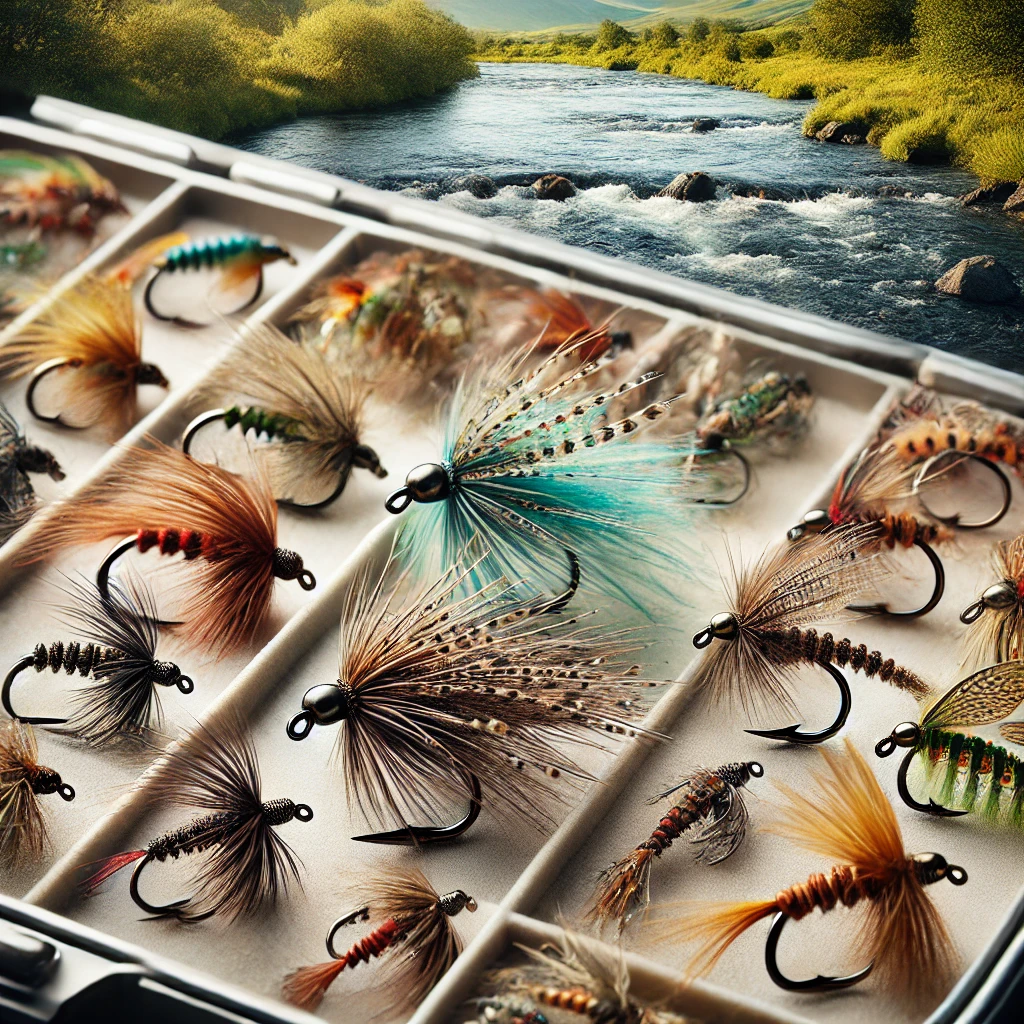
The defining feature is the forward support point. Most tiers use a straight pin, sewing needle stub, or purpose-built balancing wire lashed onto the top of the hook shank so a tungsten or brass bead sits ahead of the eye. Some use foam instead of a bead, though bead-forward designs remain more common because they combine flotation leverage with visual trigger and a little sink control. Hook choices typically include curved nymph hooks, jig hooks, or heavy scud hooks in sizes 8 through 14 for trout. Popular materials are marabou tails, rabbit strips, UV chenille, seals-fur blends, ice dub collars, and sparse schlappen.
When suspended below an indicator, the bead acts like a counterpoise. The hook does not tip downward because the leverage of the bead and extension balances the rearward mass of the hook and dressing. Hydrodynamics then take over. Marabou barbs open and close with micro-currents, wave action, and tiny rod movements. In clear lakes, that neutral orientation can matter more than exact color. I have watched trout track a black balanced leech from several feet away in shallow water, then refuse a standard bugger hanging vertically just inches beside it. The silhouette looked wrong, even though the materials were similar.
Balance does not mean buoyancy by itself. The fly still sinks unless supported by an indicator, tight-line suspension, or a very slow intermediate setup. That is an important limitation. Many beginners assume a balanced leech will hover on its own; it will not. Its strength appears when fished in a controlled hanging presentation, often 6 to 20 feet below an indicator depending on water depth. Because depth is exact, anglers can keep the fly in the feeding lane for long periods. That level of control is one reason balanced leeches have become staples on productive stillwaters from Oregon to Alberta.
When Should You Fish a Balanced Leech?
Fish a balanced leech when trout are feeding subsurface at a specific depth and are willing to inspect a larger morsel without chasing aggressively. Prime conditions include cold water in spring, stable summer mornings before bright sun pushes fish deeper, fall turnover periods, and winter fisheries where metabolism is reduced but trout still respond to an easy meal. Lakes and reservoirs are the classic setting, especially over shoals, drop-offs, weed edges, and chironomid flats. Slow rivers, spring creeks, and backwaters can also be excellent when current is gentle enough to let the fly suspend naturally.
Use one when you need a searching pattern between tiny midge imitations and active streamer retrieves. If fish are bulging nowhere, birds are not signaling a hatch, and sonar or a sounder shows suspended marks, a balanced leech can solve the puzzle quickly. Start at the depth where the thermocline, weed tops, or cruising fish suggest life. In many fertile lakes, that means suspending the fly 12 to 18 inches above weeds or one to three feet off bottom. Trout often feed upward, so a fly slightly above them gets eaten more readily than one dragging beneath.
It is also excellent after a front, during light chop, or whenever natural movement from waves can animate the fly without much retrieve. Conversely, it is less ideal in heavy current, over extremely snaggy timber, or when fish are visibly keyed on a narrow hatch such as tiny chironomids, callibaetis emergers in the film, or damselflies moving quickly toward shore. In those moments, a more exact pattern wins. Balanced leeches are versatile, not universal. Their value lies in presenting a convincing, broad-profile food item at a precise depth for a long time.
Best Colors, Sizes, and Setups
Color selection is simpler than many anglers think. Black is the anchor color because it throws a strong silhouette in almost every light condition and resembles natural leeches, dragonfly nymphs, and generic dark prey. Olive is next for weedy lakes, then brown, maroon, and rust. White or pearl balanced minnows can be deadly where stocked trout or baitfish are common, but for a true leech box I would carry black, olive, and wine. Sizes 10 and 12 cover most situations. Larger size 8 flies excel in stained water or trophy lakes, while size 14 works when fish want a slimmer profile.
The standard rig is a slip or fixed indicator above a long leader, usually 9 to 15 feet overall depending on depth. Fluorocarbon in 3X to 5X is common because it sinks and transmits subtle takes. Rod choice matters less than line control, though a 10- to 11-foot stillwater rod in 5- or 6-weight helps manage long leaders and hook sets. I prefer a buoyant indicator large enough to suspend the fly without dragging it upward unnaturally. Too small an indicator causes the fly to pendulum and sink off-level; too large creates splash and resistance.
| Condition | Recommended fly | Starting depth | Notes |
|---|---|---|---|
| Clear lake, calm morning | Size 12 black balanced leech | 8 to 12 feet | Use sparse marabou and long pauses |
| Weedy shoal with light chop | Size 10 olive balanced leech | 12 inches above weeds | Wave action provides enough movement |
| Cold water early spring | Size 12 maroon balanced leech | Near bottom on drop-off | Set very deep and move little |
| Stained reservoir | Size 8 black balanced leech | 4 to 8 feet | Larger profile improves visibility |
If you fish two flies, place a chironomid or small nymph above the balanced leech on a dropper. That combination covers both meal sizes and often reveals what fish prefer. However, check local regulations, because some waters limit the number of flies. On highly pressured lakes, downsizing tippet and reducing flash often outperform constant color changes. Presentation beats novelty more often than tackle catalogs suggest.
Presentation Tactics That Catch More Fish
The simplest method is often the best: cast, let the rig settle fully, then do almost nothing. Balanced leeches excel on the hang. A slow hand twist, one-inch figure-eight, or occasional six-inch lift can trigger fish, but overworking the fly destroys the illusion. In light wind, use a slip indicator so you can fish deep without impossible casting mechanics. In shallower water, a fixed indicator keeps depth more consistent. After the cast, watch for any stall, dip, sideways slide, or unnatural bounce. Takes are frequently soft because trout inhale the fly while it is stationary.
Boat position and angle are major overlooked factors. From a float tube, pontoon, or anchored boat, set up so the wind drifts your line tight enough to maintain contact without towing the indicator. On shoals, I anchor broadside only if wave direction is stable; otherwise I prefer a bow setup that keeps the line straight. Long casts are not always superior. Many fish patrol within a disciplined, repeatable lane. Once you get a take at a certain depth and distance, duplicate it precisely. That repeatability is where balanced leech fishing becomes almost technical rather than merely hopeful.
Strike detection and hook setting should stay measured. Do not trout-set with a sharp upward jerk on slack line. Sweep firmly sideways while stripping or lifting smoothly until the rod loads. Because the fish often turns away after inhaling a suspended fly, a lateral set pins more securely and moves less leader off the water. If you miss fish, shorten the delay before setting and inspect whether the fly is truly balanced. A pattern that hangs tail-down can still catch trout, but it will not convert as many neutral inspections into committed eats.
Tying Considerations, Common Mistakes, and Related Fly Choices
Good balanced leeches are sparse, mobile, and durable. The most common tying mistake is overdressing the fly. Too much marabou or chenille makes it bulky, inhibits movement, and alters the center of gravity. Another mistake is extending the bead too far forward, which can create casting spin or leverage fish loose during the fight. A practical benchmark is enough extension to level the hook, no more. UV resin over the thread wraps that secure the pin increases longevity, especially when tungsten beads add repeated impact. Many tiers use Firehole, Hanak, Fulling Mill, or Daiichi hooks because gap width and wire strength remain dependable.
Choose related patterns based on fish behavior. If trout are clearly chasing, switch to a standard woolly bugger, bunny leech, or mini streamer and retrieve actively. If they are feeding on tiny suspended insects, tie on chironomids, buzzers, or slim pupa patterns. If fish are cruising weedlines during damselfly migration, a dedicated damsel nymph usually outfishes a balanced leech because profile and movement are narrower and more directional. For dragonfly nymph situations, however, a thicker olive or brown balanced leech can be close enough to excel, especially when trout are opportunistic rather than selective.
As a hub within types of flies, the balanced leech illustrates a larger truth: fly categories are tools, not rigid boxes. The best anglers think in terms of prey form, depth, speed, and fish mood. A balanced leech succeeds because it answers all four. It offers a broad subsurface profile, exact suspension depth, minimal but constant movement, and an easy target for trout that do not want to burn energy. Build a small selection in proven colors, learn to suspend them accurately, and connect that knowledge to your understanding of nymphs, streamers, and lake tactics overall.
Why Every Stillwater Angler Should Understand the Balanced Leech
A balanced leech is more than a niche pattern; it is a lesson in how design and presentation work together. By keeping the fly horizontal under an indicator, it presents a natural silhouette, holds a precise depth, and keeps moving even when your hands are still. That makes it one of the most effective trout flies for lakes, reservoirs, and slow water where fish cruise methodically and inspect prey closely. It also helps anglers make sense of the broader landscape of types of flies, showing how imitation, posture, and technique combine into practical fly selection.
The key takeaways are straightforward. Fish a balanced leech when trout are subsurface, depth-specific, and not aggressively chasing. Start with black or olive in sizes 10 or 12. Suspend it just above weeds, near bottom on drop-offs, or at the level where trout are marked or seen. Let wave action and micro-movements do the work. Keep your tying sparse and your rig balanced enough to hang level. When conditions demand more exact imitation, shift to chironomids, damsels, or other specialized flies, but keep the balanced leech ready as your high-confidence searching pattern.
If you are building your stillwater box or refining your understanding of fly patterns and tying, tie a handful of balanced leeches and test them in a clear margin before fishing. Watch how they hang, adjust your depths carefully, and record what works on each water. That practice will improve not just your results with one fly, but your judgment across every major type of fly you fish.
Frequently Asked Questions
What is a balanced leech in fly fishing?
A balanced leech is a stillwater fly pattern designed to hang horizontally in the water rather than tipping head-down like many standard beadhead flies. It achieves that posture by placing buoyant or weight-offset material, most commonly a bead mounted on a short pin or tube that extends forward from the hook eye, so the fly’s center of balance shifts and the hook rides level when suspended. That horizontal attitude is the defining feature. In the water, it gives the fly a natural, hovering look that closely resembles a leech, damselfly nymph, small baitfish, or other swimming food forms that do not usually drift straight up and down.
For practical fishing purposes, the balanced leech is especially important in lakes and other stillwaters where trout often inspect flies slowly and carefully. Because the pattern suspends level beneath an indicator, it pulses and undulates with even slight wave action, subtle hand-twists, or tiny retrieves. That lifelike motion is a major reason the fly is so effective. It occupies an interesting middle ground in fly design: it borrows the suspended presentation of chironomid tactics, the suggestive silhouette of nymphs, and the profile and movement of small streamers. That versatility is why many anglers consider it one of the most useful stillwater patterns to understand.
Why is it called “balanced,” and how is it different from a regular leech pattern?
It is called “balanced” because the fly is tied so its weight distribution causes it to suspend in a stable, horizontal orientation. On a regular leech pattern, the bead or primary weight is usually attached directly at the head, which makes the fly tilt downward when it is hanging under an indicator or paused in the water. A balanced leech shifts that front mass outward and redistributes how the fly hangs, so instead of dangling vertically, it sits level. That may sound like a small detail, but underwater it changes the entire profile and action of the pattern.
The difference shows up most clearly when the fly is fished slowly or nearly motionless. A standard leech can still catch fish, of course, but when suspended it often looks less natural because the rear of the fly hangs below the head. A balanced leech, by contrast, appears to hover and breathe. Materials like marabou, rabbit, schlappen, or soft hackle continue moving while the body remains horizontal, which creates a more convincing impression of living prey. In situations where trout are feeding deliberately, especially in clear stillwater, that presentation can be the deciding factor between being ignored and being eaten.
When should you fish a balanced leech?
You should fish a balanced leech whenever trout are holding at a defined depth and responding well to slow, suspended presentations. This often happens in lakes, ponds, reservoirs, and calm backwaters where fish cruise shoals, weed edges, drop-offs, channels, or flats and are not actively chasing fast-moving flies. Balanced leeches are especially productive during cool-water periods in spring and fall, but they can be effective all season if you can locate the right depth. They are also excellent when fish are keyed on leeches, damselfly nymphs, general swimming invertebrates, or simply want a larger, more visible offering than a chironomid.
They shine during the pause. If fish are refusing strips, following without committing, or feeding in a way that suggests they want something hanging in front of them, a balanced leech is a smart choice. Many anglers fish them under an indicator in six to fifteen feet of water, but the exact depth depends on temperature, oxygen, structure, and where food is concentrated. Over weed beds, along marl flats, near the first drop from shore, and around shoals adjacent to deeper basins are all prime situations. In mild chop, the fly often becomes even more effective because wave action gives it constant subtle motion without any effort from the angler.
How do you fish a balanced leech effectively under an indicator?
The key is depth control and patience. Start by determining where fish are feeding, then set your indicator so the fly hangs slightly above that zone rather than below it. Trout generally feed upward more comfortably than downward, and a balanced leech suspended just over their heads looks vulnerable and easy to intercept. Use a leader and indicator setup that allows the fly to hang freely, and give the pattern time to work. One of the biggest mistakes anglers make is moving it too much. The whole advantage of the balanced design is that it remains alive-looking even when nearly still.
That said, “still” does not mean “dead.” Small adjustments matter. A slow hand-twist retrieve between pauses, a short inching strip, or simply allowing wind ripple to animate the marabou can all trigger strikes. Watch the indicator carefully because takes are often subtle: a slight dip, sideways slide, hesitation, or unnatural stop is enough reason to set the hook. If nothing happens, change depth before changing flies. In stillwater fishing, a balanced leech presented at the wrong level is often ineffective, while the same fly moved up or down a foot or two can suddenly become the best pattern on the water. Color, size, and silhouette matter, but precise suspension is usually what makes the system work.
What colors, sizes, and situations make balanced leeches most effective?
The most reliable balanced leech colors are black, olive, maroon, brown, and combinations that include subtle flash. Black is a universal producer because it creates a strong silhouette in a wide range of light conditions and suggests many different food forms. Olive is excellent around weeds and when fish are feeding on natural swimming insects. Maroon and dark red can be especially effective in chironomid-rich lakes or anytime trout seem tuned to bloodworm and midge-related tones. In terms of size, patterns in the size 8 to 14 range cover most situations, with larger flies used for aggressive fish or stained water and smaller profiles favored in clear water or during more technical fishing.
Use brighter or flashier versions when visibility is poor, when fishing deeper water, or when trout need help finding the fly. Choose slimmer, more natural patterns when fish are pressured or the water is exceptionally clear. Balanced leeches are at their best in stillwaters, but they can also be useful anywhere a suspended, level presentation matters. What makes them especially effective is their ability to imitate more than one food source convincingly. They are not just “leech patterns” in a narrow sense. Depending on color, size, and retrieve, they can suggest leeches, dragon or damselfly nymphs, baitfish fry, or simply a protein-rich morsel hanging naturally in the trout’s feeding lane. That adaptability is exactly why they have become such a staple for anglers who want a dependable searching fly with refined stillwater presentation.