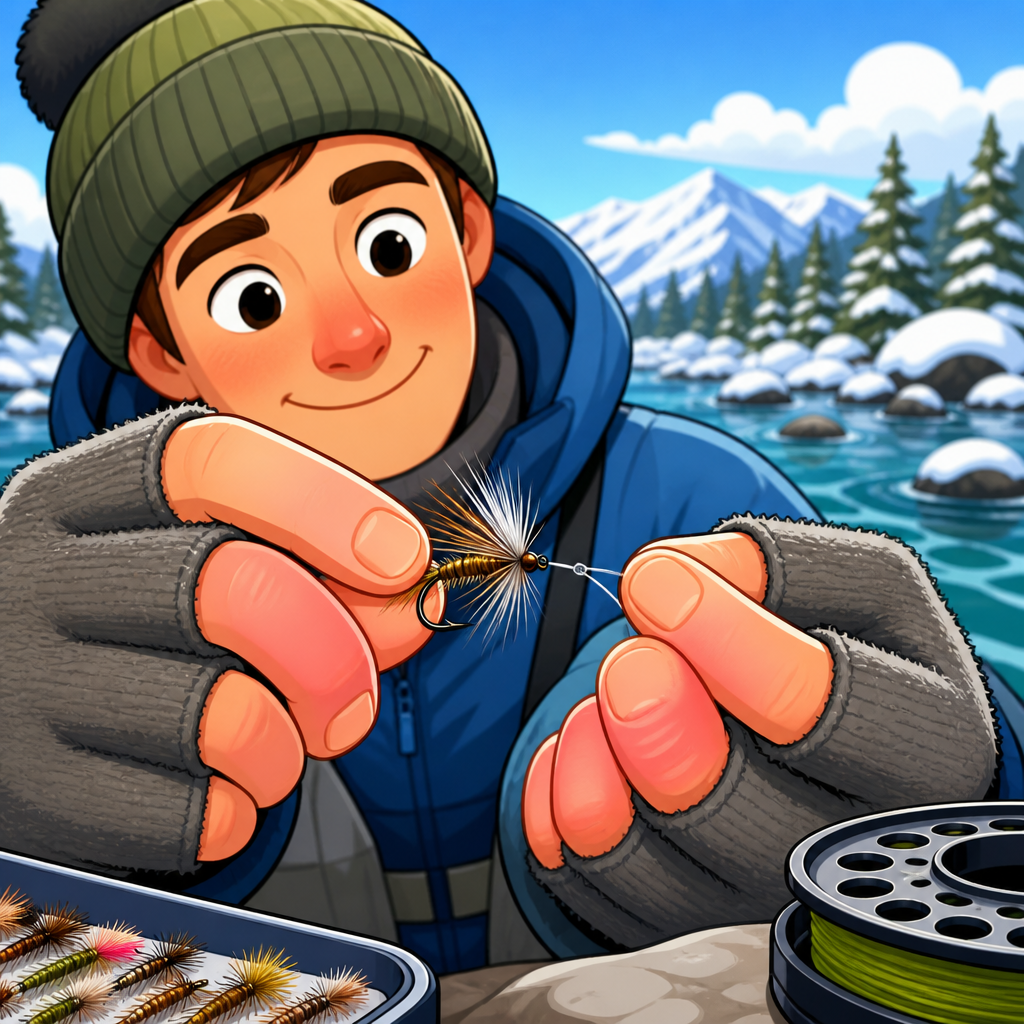
Cold fingers turn a simple rigging task into the hardest part of fly fishing. Learning how to tie a fly to tippet when your hands are cold is not just a comfort skill; it is a fish-catching skill, a safety habit, and a core part of knot tying within fly fishing basics. In practical terms, “tippet” is the final, thinner section of line attached to the leader, and it is the material you tie directly to the fly. “Cold hands” usually means reduced dexterity, weaker pinch strength, slower sensation, and less confidence, all of which increase dropped flies, wasted time, and bad knots. I have watched anglers miss the evening hatch because they spent ten numb minutes trying to thread 5X through a size 18 eye, and I have been that angler on winter tailwaters and early spring freestones.
This hub article covers the complete knot-tying picture for cold conditions: which knots are easiest to tie, how to prepare leader and tippet before your fingers stiffen, how to position your hands, what tools genuinely help, and how to check that a finished knot will hold. It also connects the broader knot-tying system every beginner needs. If you understand when to use the improved clinch knot, Orvis knot, Davy knot, and non-slip mono loop, you can handle most trout situations. If you understand tippet diameter, hook eye size, material memory, lubrication, and tag management, you will tie faster and break off less. That matters because efficient rigging keeps your fly in the water, and in fly fishing, time drifting correctly is what produces fish.
Knot tying in the cold deserves a direct answer. The easiest reliable method is to choose a simple knot with few wraps, prepare the tag end before your hands get numb, hold the fly with forceps if needed, thread the eye using a stable pinch close to your fingertips, lubricate the knot, and tighten it in stages while inspecting for crossed coils. Those steps sound basic, but they are exactly where most failures happen. Anglers often blame tippet strength when the real problem is a kinked tag, a dry cinch, or wraps piled on top of each other. The sections below explain how to prevent those mistakes and build a repeatable system that works when the weather is working against you.
Why Cold Hands Make Knot Tying Harder
Cold reduces blood flow to the fingers, which means less sensitivity and less fine motor control. In fly fishing terms, that shows up as trouble separating a single strand of 6X, difficulty seeing and feeling the tag end, and an increased tendency to overgrip small flies. Overgripping matters because it bends tippet, masks the hook eye, and makes a delicate threading motion jerky. Wind compounds the problem by moving the tag end and stealing body heat. Add low winter light, and a standard trout knot becomes a genuine coordination test.
The tackle itself also behaves differently. Nylon monofilament can retain coil memory from the spool, especially in cold air, while fluorocarbon often feels stiffer and slicker. Stiff material is harder to guide through small eyes and easier to spring out of position before the knot is seated. Tiny dry flies and midges are the worst case because the eye is small and often partially blocked with head cement, hackle fibers, or floatant residue. Understanding those mechanical issues helps you make better choices before you start tying.
Best Knots to Use When Dexterity Is Limited
When your hands are cold, simpler usually beats theoretically stronger. In normal trout fishing, the best fly-to-tippet knots for cold conditions are the Orvis knot, the Davy knot, the improved clinch knot, and, when you want more action, the non-slip mono loop. I use the Orvis knot most often in the cold because it is compact, strong, and easy to tie with controlled movements. It requires less wrap management than a clinch knot and is easier to inspect before cinching. The Davy knot is even faster and excellent for small dry flies, though it rewards careful dressing. The improved clinch remains useful because many anglers already know it well, and familiar motions are valuable when fingers are stiff.
The key principle is not chasing a lab number; it is choosing the knot you can tie cleanly every time. A sloppily tied “stronger” knot fails sooner than a well-dressed simple one. For most fly fishing basics situations, consistency matters more than complexity.
| Knot | Best Use | Why It Helps in Cold Weather | Watch For |
|---|---|---|---|
| Orvis Knot | General trout flies, nymphs, dries | Few motions, easy to inspect, strong with nylon or fluorocarbon | Do not cross the loop when cinching |
| Davy Knot | Small dry flies and midges | Very fast, minimal wraps, excellent with tiny hook eyes | Dress carefully; leave an adequate tag |
| Improved Clinch Knot | All-around use, especially if already mastered | Familiar to many anglers, dependable with correct wraps | Too many wraps in fine tippet can bunch |
| Non-Slip Mono Loop | Streamers, stillwater flies, movement-focused presentations | Can be tied methodically with gloves off for a moment | Bulkier and slower than direct-attach knots |
How to Tie a Fly to Tippet When Your Hands Are Cold
Start before your fingers fully chill. Pull off enough tippet to work comfortably and stretch it gently to remove coil memory. If the fly eye is clogged, clear it with a hook-eye cleaner or the point of another hook. Hold the fly securely with hemostats or forceps if that steadies the eye. Then brace both hands close to your body or against your wader chest to reduce shaking. I often trap the fly patch or tool leash against my jacket to create a stable platform.
For the Orvis knot, pass the tippet through the eye, then back through to form a small loop at the eye. Pass the tag over the standing line and through the large loop you created, then through the small loop at the eye. Moisten the knot. Tighten by pulling the tag and standing line gradually until the knot begins to form, then seat it firmly against the eye. Trim the tag, but not too flush on very fine tippet. This knot works well in the cold because every step is deliberate and visible.
For the Davy knot, pass the tippet through the eye, lay the tag across the standing line, form a simple overhand-like turn, then pass the tag back through as required to complete the knot. Lubricate and snug slowly. With small flies, the Davy knot saves time because there are no multiple wraps to manage. For the improved clinch, use fewer wraps with lighter tippet, usually five on 4X or 5X and four or five on 6X, then feed the tag through the first opening and back through the big loop. Tighten smoothly. In all cases, if the coils overlap or twist sideways, cut it off and retie. A bad knot never improves once seated.
Cold-Weather Techniques That Make Threading Easier
Most anglers struggle more with threading the eye than with the knot itself. The fix is controlling the last half inch of tippet. Cut the tag cleanly with sharp nippers so the end is crisp, not mashed. If the tag is curled, pinch and straighten it. Present the tag to the eye by moving the fly to the tippet, not the tippet to the fly; the tippet is too flexible to steer well in the air. Bring the fly eye into the tag while your hands are braced together. That single adjustment improves success dramatically.
Another reliable method is the “short tag pinch.” Pinch the tag end so only a tiny section extends beyond your fingertips, then push that short section through the eye. A long free end wobbles. A short end behaves like a stiffer needle. If vision is the main issue, rotate the hook until the eye catches light. Matte black hooks can disappear against dark gloves, so use a lighter background such as your palm, a gray sleeve, or the sky. On tiny flies, removing gloves for thirty seconds is often better than fumbling for three minutes with gloves on. Warmth is conserved by speed, not by stubbornness.
Gear Choices That Reduce Frustration
Good knot tying in the cold starts with gear selection. Tippet material matters. Softer nylon is usually easier to handle than stiff fluorocarbon in freezing weather, especially on small dries and emergers. Fluorocarbon still has advantages for nymphing because it sinks and resists abrasion, but on tiny hook eyes it can be less forgiving. Match diameter to fly size sensibly. Trying to push heavy 3X through a delicate size 20 eye is unnecessary punishment. As a general trout guide, 5X covers many dry-fly and light nymph uses, 4X suits larger dries and nymphs, and 6X helps with small technical presentations.
Tools can help, but only if they are simple. Hemostats stabilize flies. Quality nippers create a clean tag. A hook-eye cleaner solves cement-blocked eyes fast. Some anglers like magnetic fly holders or threader tools; they can work, but they are slower than good hand technique unless you practice. Gloves should allow quick transitions. Half-finger wool or fleece gloves with a fold-back mitt section are practical because you can expose fingertips briefly without fully removing the glove. Chemical hand warmers in jacket pockets are worth carrying on cold rivers. Warm fingers tie better knots, and there is nothing theoretical about that.
Common Knot-Tying Mistakes and How to Avoid Them
The most common cold-weather mistake is rushing the cinch. Anglers finally get the tippet through the eye, hurry to finish, and tighten a dry knot with crossed turns. Friction weakens the material, especially fine nylon and fluorocarbon. Always moisten before seating. Another mistake is using too many wraps. Extra wraps create bulk, cause overlap, and make a knot harder to dress cleanly with numb fingers. Follow a tested wrap count and keep it consistent.
Cutting the tag too close is another avoidable error. Fine tippet can slip slightly under load if the knot was not fully seated, so leaving a small tag provides insurance. Failing to test the knot is equally costly. After tying, pull steadily on the fly and standing line with controlled pressure. Do not “snap test” light tippet; that creates artificial shock. Instead, use a firm pull that approximates fishing pressure. If the knot curls, clicks, or visibly shifts, retie immediately. Finally, remember that knot tying is part of a chain. Weak leader-to-tippet connections, wind knots, and abraded tippet sections can all fail near the fly and be mistaken for a bad terminal knot.
How This Fits Into the Bigger Knot-Tying System
As a hub within fly fishing basics, this topic connects to the full knot-tying system every angler should learn. Fly-to-tippet knots are only one category. You also need a reliable leader-to-fly-line connection, usually a welded loop to loop-to-loop setup or a nail knot; a leader-to-tippet connection such as the double surgeon’s knot or blood knot; and a dropper connection if you fish multi-fly rigs. Each knot has a job. The goal is not memorizing dozens of options but building a short list you can tie under pressure, in poor light, and with cold hands.
My recommended progression for beginners is straightforward: first master the improved clinch or Orvis knot for tying on flies; then learn the double surgeon’s knot for adding tippet; then learn the non-slip mono loop for streamers; finally add the blood knot if you want a slimmer leader build. Practice indoors with heavy cord, then actual tippet, then small flies. Time yourself. Tie with dry hands, wet hands, and while wearing the gloves you fish in. Skill transfers best when practice matches river conditions. Once these knots become automatic, cold weather stops being a barrier and becomes just another variable you manage.
Knowing how to tie a fly to tippet when your hands are cold is one of those small skills that changes your whole day on the water. It shortens downtime, reduces break-offs, preserves confidence, and keeps you fishing through winter tailwater mornings, windy spring hatches, and chilly alpine evenings. The practical formula is simple: choose an easy, proven knot; prepare the tippet and fly eye carefully; stabilize your hands; lubricate and tighten in stages; then inspect and test the finished knot. That process works because it addresses the real causes of failure: poor dexterity, stiff material, rushed cinching, and weak inspection.
As the central knot tying page in a Fly Fishing Basics series, this article should also guide what you learn next. Build your system around a few dependable knots rather than a long list of rarely used ones. For most trout anglers, that means one primary fly knot, one tippet-joining knot, and one loop knot for movement. Practice them until you can tie them without hesitation. If you do, cold hands stop dictating your rigging decisions. They become an inconvenience, not a limitation. The payoff is more time with your fly drifting correctly, which is where successful fly fishing always begins. Practice these knots at home tonight, then test them streamside on your next cold-weather outing.
Frequently Asked Questions
What is the easiest knot to use when tying a fly to tippet with cold hands?
For most anglers dealing with numb fingers, the improved clinch knot or the standard clinch knot is usually the easiest place to start. Both are common fly fishing knots, they are simple to remember, and they require fewer fine-motor movements than more technical options. When your hands are cold, the best knot is not always the strongest knot on paper. It is the knot you can tie cleanly, consistently, and quickly without fumbling the tippet or dropping the fly into the water. A knot that is slightly less efficient in ideal conditions can still be the better choice if it helps you rig up reliably in real cold-weather conditions.
The reason simple knots work better with cold hands is that reduced dexterity makes small threading tasks much harder. Passing fine tippet through a tiny hook eye, maintaining tension, and controlling wraps can become frustrating fast when you lose sensation in your fingertips. A clinch-style knot keeps the sequence straightforward: thread the eye, make several wraps, pass the tag end back through a visible opening, and tighten. That predictability matters when your fingers are stiff and your patience is limited.
If you are comfortable with it, the Orvis knot is another strong option because many anglers find it easier to tie than it first appears, especially with slightly stiffer tippet. It can be efficient and strong, but only if you have practiced it enough that the steps feel automatic. That is really the key point. In cold weather, familiarity beats complexity. Use the knot you have tied hundreds of times, not the knot you watched in a video once and hope to remember while standing in freezing water.
A smart approach is to choose one primary fly-to-tippet knot and make it your cold-weather default. Practice that knot indoors, then with wet hands, then while wearing the exact gloves or fingerless setup you fish in. When conditions turn harsh, your goal is not to show technical range. Your goal is to attach the fly securely with as little wasted motion as possible.
How can I thread the fly eye more easily when my fingers are numb?
Threading the fly eye is often the hardest step when your hands are cold because it demands precision at exactly the moment your precision is worst. The first thing that helps is preparation before your hands get too cold. If you know you may need to change flies, organize your tippet spool, nippers, and fly box so everything is accessible without digging around. The more time your bare fingertips spend exposed to cold air and water, the more difficult threading becomes.
Visually, it helps to create contrast and stability. Hold the fly firmly by the bend of the hook or with forceps rather than trying to pinch the eye area directly. Bring the tippet to the fly eye instead of moving both at once. Many anglers have better luck bracing their hands together to reduce shaking, or pinning their elbows lightly against their body to create a steadier platform. If the tippet end is curled or frayed, trim it cleanly with nippers before trying to thread the eye. A sharp, fresh-cut tag end goes through much more easily than one that is bent, fuzzy, or flattened.
You can also make the tippet itself easier to control. Slightly stiffer tippet material is often simpler to thread than limp, coiled material, especially in the cold. Stretching a short section of tippet between your hands can reduce memory coils and help it point straighter. Some anglers lightly moisten the end and pinch it smooth, though this works best before your fingers lose too much feel. Magnification can be a major advantage as well. If your close vision is not perfect, polarized readers or clip-on magnifiers can turn a frustrating minute of fumbling into a quick, clean pass through the eye.
Finally, use tools without feeling like you are cheating. A hook-threading tool, hemostats, or forceps can be extremely practical in winter or shoulder-season fishing. Cold-weather efficiency is part of good rigging, not a shortcut. If a simple tool lets you tie on the fly faster, keeps your hands warmer, and gets you back to fishing sooner, it is doing exactly what good gear should do.
What should I do if my cold hands make me tie weak or sloppy knots?
If cold hands are causing weak knots, the solution is part technique, part pacing, and part prevention. Start by slowing down just enough to be deliberate. Most bad knots happen because the angler rushes while frustrated, misses a wrap, crosses the line incorrectly, or cinches the knot unevenly. In cold conditions, that risk goes up because you may not fully feel the line moving through your fingers. Instead of trying to tie faster, focus on making each step obvious and clean.
Use a simple routine every time. After threading the eye, leave yourself enough tag end to work with. One of the most common cold-hand mistakes is trying to tie with a tag end that is too short. A little extra material gives you something to grip when sensation is limited. Make your wraps neatly and count them. Then lubricate the knot before tightening. Moistening the line reduces friction and helps the knot seat more smoothly, which matters because fluorocarbon and nylon can both be weakened by heat generated during a dry cinch.
When you tighten, do it in stages instead of yanking once. First snug the wraps so they begin to align, then pull steadily on the standing line and tag as needed to seat the knot properly. Look closely at the finished result. If the wraps are bunched, crossed, or sitting away from where they should be, cut it off and retie it. In cold weather, a bad knot should never get a “good enough” pass. A failed fly knot costs fish, flies, and time, and in some cases can create unsafe delays if you are standing in current while trying to fix avoidable problems.
It also helps to warm your hands before tying rather than after repeated failures. Put the rod under your arm, step out of the water if needed, and restore some dexterity. Chemical hand warmers, insulated pockets, fingerless gloves with fold-over mitts, and short warm-up breaks make a real difference. Good knot tying in the cold is not just about hand skill. It is about managing your body so your hands can still do precise work when it matters.
Are there ways to prepare in advance so I do not have to tie as much in the cold?
Yes, and this is one of the smartest habits in cold-weather fly fishing. The easiest knot to tie with cold hands is the one you do not have to tie streamside. Before you leave home, think through the likely flies, tippet sizes, and conditions you expect to face. Pre-rigging one or more leaders, tying on likely patterns in advance, or preparing extra tippet sections can dramatically reduce how often you need to perform fine knot work on the water.
Many anglers carry a few pre-tied leaders or tippet sections wound neatly on foam, small spools, or rigging cards. If you know you often fish a specific nymph rig, dry-dropper setup, or streamer connection, having those components staged can save time and frustration. Even something as simple as selecting a handful of likely flies and placing them in an easy-access corner of your fly box reduces exposure time. You are less likely to stand in the cold with bare fingers sorting through dozens of patterns while your dexterity disappears.
Equipment setup matters too. Keep nippers on a retractor where you can reach them immediately. Store tippet where it does not tangle or disappear into a pack pocket. Wear gloves that balance warmth with enough access for knot tying, and test that system before the trip. If you use readers or magnifiers, keep them where you can deploy them quickly. Good preparation turns a difficult task into a manageable one because it removes all the extra motions and decisions surrounding the knot itself.
There is also a mental side to preparation. Practice your chosen knot until it is automatic, then practice changing flies under less-than-perfect conditions. Try it outside on a cold morning or after wetting your hands. That kind of repetition builds a useful form of muscle memory. When you are on the river with stiff fingers, wind, and fish rising, you will not have to think through every step. You will simply execute a familiar sequence with less stress and fewer mistakes.
Why is learning to tie a fly to tippet in the cold considered such an important fly fishing basic?
Because it affects far more than convenience. Tying a fly to tippet in cold conditions is a core fly fishing skill because it sits at the intersection of presentation, efficiency, fish landing success, and safety. The tippet is the final, thinner section of material attached to the leader, and it is the direct connection between you and the fly. If that connection is weak, bulky, poorly seated, or hastily tied, everything downstream from it suffers. Your fly may not drift naturally, your knot may fail during a strike, or you may spend valuable fishing time fixing preventable errors.
Cold hands make this basic task harder because they reduce dexterity, pinch strength, and tactile feedback. In other words, your body becomes less capable of doing the precise work that knot tying