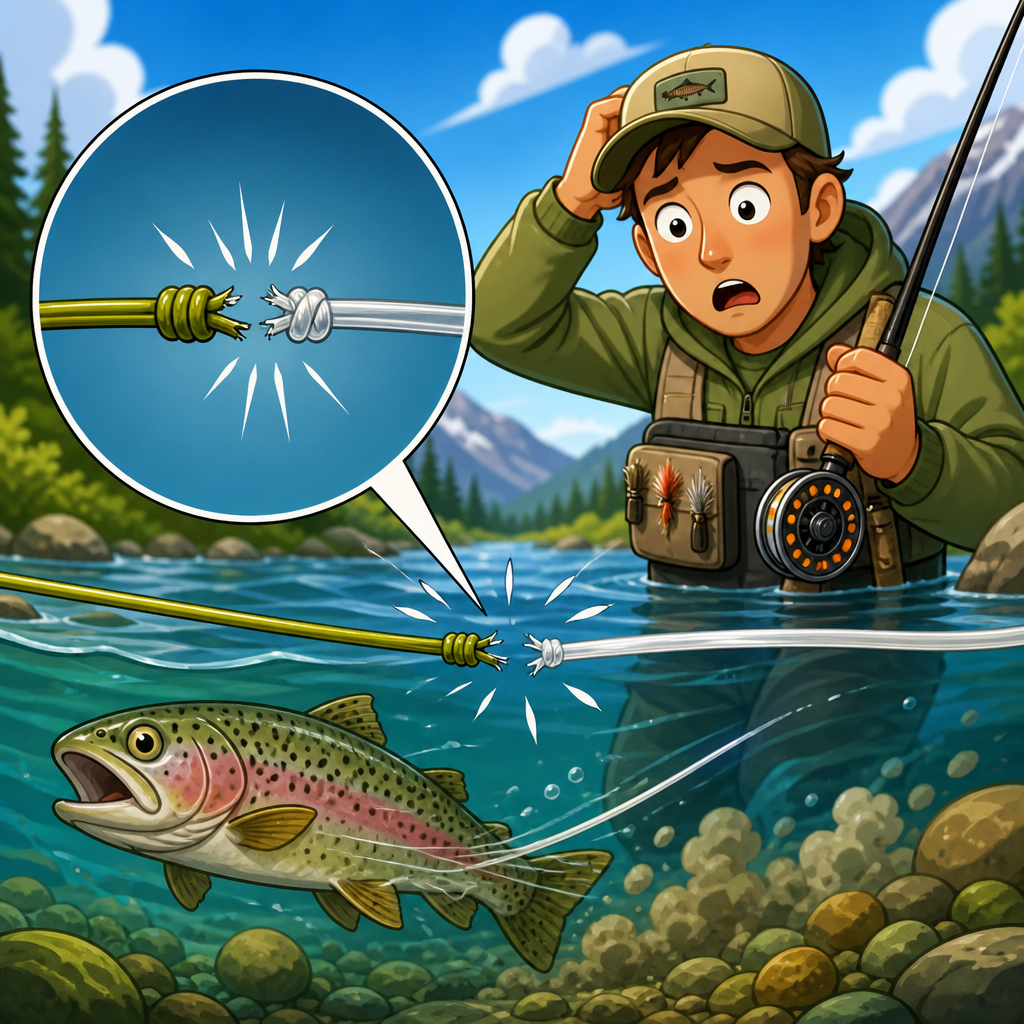
Why does your tippet break at the knot instead of the line? In fly fishing, that question sits at the center of knot tying, because the knot is almost always the system’s weakest point. A tippet is the final, fine-diameter section between leader and fly, and its job is deceptively hard: transmit energy during the cast, let the fly move naturally, and survive shock from strikes, head shakes, current, and abrasion. When anglers say a knot “tested weak,” they usually mean the material failed at or immediately beside the knot under load. I have seen this countless times on trout streams and salt flats, and the cause is rarely bad luck. It is nearly always friction damage, poor seating, wrong knot choice, mismatched materials, or micro-abrasion that went unnoticed before the fish ate.
Understanding why a tippet breaks at the knot matters because knot strength determines practical breaking strength far more than the label on the spool. A 5X nylon tippet rated around 5 pounds does not deliver 5 pounds once tied; every knot reduces line strength to some degree. Good knots may retain roughly 80 to 95 percent under ideal conditions, while poorly tied or poorly matched knots can fail far lower. That is why knot tying is a foundational skill within Fly Fishing Basics. It affects trout, bass, steelhead, and saltwater setups alike, and it links directly to leader construction, fly presentation, hook-setting pressure, and fish-landing success. If you want fewer break-offs, cleaner drifts, and more confidence in every connection, you need to know what actually weakens tippet at the knot and how to prevent it consistently.
Why knots create weak points in tippet
A straight piece of tippet distributes force evenly along its length. A knot changes that instantly by bending the material into tight curves, compressing some sections while stretching others. Those bends create stress concentration. In plain terms, the load no longer spreads evenly; it piles up at the turns, tag exit points, and crossing wraps. The finer the diameter, the more important this becomes, because thin tippet is less forgiving when sharply bent. This is especially noticeable in 6X and 7X nylon used for technical dry-fly fishing, where a small error in knot geometry can cost a fish.
Heat is another major reason tippet breaks at the knot. When you snug down dry line, friction between wraps generates heat, and heat damages polymers at a microscopic level. Nylon and fluorocarbon both suffer from this, though fluorocarbon is typically stiffer and less forgiving during seating. That is why lubricating the knot with water or saliva is standard practice: lubrication reduces friction so the wraps slide into place rather than burn into each other. When I inspect failed knots streamside, I often find a curled, pigtailed end or a cloudy white section near the break. Those are classic signs of damage during tightening.
Knot efficiency also depends on how the knot seats. A knot that cinches unevenly leaves crossed turns, trapped tag ends, or gaps that cut into the standing line. Instead of one stable structure, you get a bundle of pressure points. Under steady pull it may hold, but under dynamic load, such as a fast hook set or a trout surging downstream, it can pop immediately. In other cases the knot does not actually fail inside the wraps; the line breaks just above the knot because the knot created a hard hinge where repeated flexing weakened the tippet.
Common causes of breakage at the knot
The most common cause is simply tying the wrong knot for the connection. An improved clinch knot may work fine with small dry flies on nylon, yet underperform with larger hook eyes, stiffer fluorocarbon, or slick saltwater tippet. A surgeon’s knot is fast for joining similar diameters, but when the diameter gap becomes large, it can seat awkwardly and cut into the thinner material. The blood knot produces a slim profile for leader building, but it demands careful wrap counts and clean dressing. Choosing a knot is not just habit; it is an engineering decision based on material, diameter, and intended load.
Another frequent problem is using too many or too few wraps. With light nylon on a clinch-style knot, five to seven wraps may be appropriate. With heavier fluorocarbon, fewer wraps often seat better because excess turns stack and bind badly. Too few wraps can allow slippage; too many can create bulk and friction. I see this a lot with beginners who learn one knot and apply the same wrap count to every spool from 0X to 6X. Consistency is good, but materials do not behave identically, and knot tying requires adjustment.
Tag length matters more than many anglers think. Leaving the tag too short before tightening can let it pull through as the knot compresses. Cutting the tag too close after tying can also cause failure, especially with slick fluorocarbon or knots that settle further under first load. I usually leave a small but visible tag rather than trimming flush. A neat knot is fine; a cosmetically perfect knot that slips is not. Finally, old or damaged tippet often gets blamed on the knot unfairly. UV exposure, heat inside a vehicle, repeated stretching, insect repellent, and sunscreen can all degrade monofilament. If the spool is suspect, even a well-tied knot may break low.
How material choice changes knot performance
Nylon monofilament and fluorocarbon do not tie the same way, and treating them as interchangeable leads to break-offs. Nylon is generally softer, more elastic, and easier to cinch smoothly. That stretch helps absorb shock, which is one reason many dry-fly anglers prefer nylon tippet for delicate presentations and sudden takes. Fluorocarbon is denser, sinks faster, resists abrasion better, and is less visible underwater due to its refractive properties, but it is also typically harder and stiffer. Those traits make certain knots less forgiving if tied carelessly.
Diameter and brand formulation also matter. Two spools both labeled 4X may differ in actual diameter, coating, suppleness, and knot strength. Manufacturers publish tensile ratings, but those figures are not fully standardized across the industry. In practical use, a soft nylon like Rio Powerflex may seat differently from a harder copolymer, and fluorocarbon formulas from Seaguar, Trouthunter, or Orvis can behave noticeably differently at the same nominal size. When I change brands, I test my standard knots by pulling firmly by hand before ever trusting them on the water. That quick habit reveals seating problems fast.
The table below shows how common tippet materials influence knot behavior and what that means for anglers building leaders or attaching flies.
| Material type | Typical strengths | Common knot behavior | Best use cases |
|---|---|---|---|
| Nylon monofilament | More stretch, easier seating, strong shock absorption | Handles clinch, improved clinch, Davy, blood, and surgeon’s knots well when lubricated | Dry flies, small nymphs, technical trout fishing, delicate presentations |
| Fluorocarbon | Greater density, abrasion resistance, lower visibility, less stretch | Needs careful lubrication and seating; some knots perform better with fewer wraps | Nymphing, streamers, subsurface fishing, abrasive bottoms, clear water |
| Copolymer or specialty blends | Balanced suppleness and strength depending on formulation | Performance varies widely by brand; test preferred knots before fishing | General-purpose leaders, warmwater, anglers seeking a specific handling feel |
Best knots for fly fishing tippet and when to use them
For attaching tippet to a fly, the improved clinch knot remains a staple because it is easy to learn and reliable within its comfort zone. It works well with nylon and many standard trout flies, especially in moderate diameters. The Orvis knot is another excellent terminal knot, often easier to tie in low light and respected for high strength with both nylon and fluorocarbon. The Davy knot and Double Davy are popular for small flies because they are compact and fast, preserving movement and saving time during frequent changes. However, they reward precision; a rushed Davy with a too-short tag can fail.
For joining tippet sections, the double surgeon’s knot is the streamside workhorse. It is quick, strong, and ideal when conditions are cold or your hands are wet. It handles moderate diameter differences reasonably well and is why so many anglers use it for adding fresh tippet to a tapered leader. The blood knot, by contrast, creates a slimmer, cleaner leader that passes through guides better and aligns sections in a straight axis. It is excellent for building hand-tied leaders, though it takes more dexterity and usually works best when diameters are fairly close.
Loop knots deserve mention because knot breakage is not only about raw strength. Sometimes you need movement more than a rigid attachment. Non-slip loop knots are common in streamer and saltwater fishing because they let the fly track naturally. A loop knot tied correctly can be very strong, but if the wraps are not dressed uniformly, the knot may slip or create an abrasive hinge. The key takeaway for this knot tying hub is simple: there is no universal best knot. There is a best knot for a specific material, diameter, fly style, and fishing method.
How to tie stronger knots consistently
Start by inspecting the tippet end before tying. If it shows curl memory, nicks, milky discoloration, or roughness from rocks or fish teeth, cut back to clean material. Thread the eye cleanly without scraping the line against a burr. Make the intended number of wraps neatly, side by side if the knot calls for it, and avoid crossing coils unless the pattern requires crossing. Before tightening, moisten the knot thoroughly. Then draw it down in stages rather than one hard pull. I pull the tag and standing line gradually so the wraps organize themselves before final seating.
After the knot seats, test it. Not with a casual tug, but with a firm pull approximating actual fishing load. Many anglers skip this because they fear wasting time, yet it saves far more time than re-rigging after a lost fish. Watch how the knot compresses. If the coils jump, twist, or bunch unevenly, retie it. Trim the tag with nippers, leaving enough length to account for any final settling. On fluorocarbon especially, an extra fraction of a millimeter is cheap insurance.
Practice under realistic conditions matters as much as reading instructions. Tying perfect knots at a desk does not guarantee clean knots in wind, cold, or fading evening light. I recommend practicing with actual streamside tools: forceps, nippers, glasses if you use them, and the tippet sizes you fish most often. Time yourself, then inspect the finished knots with magnification. That kind of deliberate repetition builds muscle memory, and better muscle memory reduces rushed errors when a hatch is on and fish are rising.
Troubleshooting break-offs on the water
If your tippet consistently breaks at the knot, diagnose the pattern instead of changing everything at once. First ask where the failure occurs: at the eye knot, at the tippet-to-leader knot, or just above it. A break exactly at the terminal knot often points to heat damage, slippage, or a bad seating sequence. A break a few millimeters above the knot usually suggests stress concentration or abrasion near the eye. Breaks at joining knots often come from diameter mismatch or a knot choice that does not suit the materials. This simple location check tells you more than guessing.
Next examine your hook and fly. Some inexpensive hooks and bead-head patterns have rough eye edges or incompletely closed eyes that abrade fine tippet. Run the line around the eye and feel for scraping. If needed, switch flies or smooth minor burrs carefully. Then look at your drag and fish-fighting style. Trout anglers using light 6X often break fish off not because the knot is poor, but because the rod angle is high, the hook set is too sharp, or the fish is clamped against a locked reel. Even perfect knot tying cannot compensate for overpowering light tippet.
Environmental factors also play a role. Cold weather can make hands clumsy and knots poorly dressed. Saltwater adds another challenge because crystalline salt and repeated hard runs expose every weakness. In fast freestone streams, tippet may get nicked by rocks while drifting weighted nymphs near the bottom. The practical fix is disciplined retie intervals. After every fish, after every snag, and after contact with structure, run your fingers over the last foot of tippet. If it feels rough, replace it. Tippet is cheap; fish lost to preventable breakage are not.
Building a complete knot tying system for fly fishing
The strongest anglers do not know dozens of knots; they know a small system extremely well. For most freshwater fly fishing, that system can be four knots: a terminal knot for flies, a fast joining knot for adding tippet, a slim joining knot for leader building, and a loop knot for streamers or specialty presentations. Learn when each knot excels, how many wraps each material likes, and how it should look when properly seated. Then standardize your process so every knot gets the same inspection, lubrication, and pull test.
As a hub within Fly Fishing Basics, knot tying connects naturally to leader design, tippet selection, nymph rigs, dry-fly presentation, and fighting fish on light tackle. Your knots should match the rest of your system. A delicate spring-creek setup with long leaders and 6X nylon calls for different choices than a short fluorocarbon nymph rig or a warmwater streamer leader. Keep notes if needed. Many experienced anglers quietly do this, especially when dialing in new materials or preparing for travel where species, flies, and water conditions differ. Reliable knots come from repeatable habits, not superstition.
The answer to why your tippet breaks at the knot instead of the line is straightforward: knots concentrate stress, and small mistakes magnify that stress until the material fails. The good news is that knot-related breakage is highly fixable. Choose the right knot for the material and connection, lubricate before tightening, seat the knot smoothly, leave an appropriate tag, inspect for abrasion, and test every tie. Those fundamentals raise real-world tippet strength far more than chasing a new spool with a higher printed rating.
If you want better results in fly fishing, make knot tying a deliberate skill rather than an afterthought. Build a compact knot system, practice it with the tippet you actually fish, and troubleshoot failures based on where and how the break occurs. Do that consistently, and you will lose fewer flies, land more fish, and trust your leader every time you come tight. Start by mastering one terminal knot and one joining knot this week, then expand from there.
Frequently Asked Questions
Why does tippet usually break at the knot instead of somewhere along the straight line?
The short answer is that a knot concentrates stress. A straight piece of tippet spreads load fairly evenly along the material, but the moment you tie a knot, you introduce tight bends, compression points, friction, and uneven loading. Those changes weaken the material compared with its original, unknotted strength. In practical terms, the knot becomes the most likely failure point because it is where the line is being pinched, curved sharply, and asked to absorb sudden force all at once.
That is why anglers often say, “the knot is the weakest part of the system.” It does not necessarily mean the knot was tied badly, although poor tying absolutely makes things worse. It means that even a well-tied knot reduces the line’s theoretical breaking strength to some degree. Different knot styles preserve different percentages of the tippet’s strength, and different materials respond differently as well. Fluorocarbon, for example, can be less forgiving of tight, poorly seated turns than some nylon monofilaments.
When a tippet breaks at the knot, it is usually because one or more stress-raising factors were present: the knot was cinched too fast, the line was burned by friction during tightening, the wraps crossed over each other, the tag end was trimmed too closely, the knot was tied incorrectly for that material, or the tippet was nicked before or after tying. Add a hard strike, a violent head shake, or a fish changing direction in current, and that weak point gets exposed immediately.
So if the break happens at the knot instead of in the line, that is generally normal physics rather than a mystery. The goal is not to make the knot stronger than the tippet itself, because that is rarely realistic. The goal is to choose the right knot, tie it cleanly, lubricate and seat it properly, and inspect the material so the knot retains as much strength as possible.
What are the most common mistakes that make a tippet knot fail prematurely?
The most common mistake is simply tying the knot imperfectly. Small errors matter a lot with fine tippet. Overlapping wraps, twists that do not seat evenly, and loops that collapse out of alignment can all create pressure points that dramatically reduce strength. A knot may look finished from a distance but still be structurally flawed enough to fail under a strong hook set or a fish’s first run.
Another major issue is tightening the knot dry. As the knot cinches down, friction builds between the coils and the line itself. Without lubrication from water or saliva, that friction can generate heat and micro-damage the tippet. You may not see the damage, but the material can become weakened right at the point where it needs to be strongest. This is especially important with lighter diameters and stiffer materials.
Anglers also run into trouble by pulling the knot tight too quickly. A good knot should be snugged gradually so the wraps settle into their intended positions. If you jerk it down hard in one motion, the coils can bite unevenly, cross over, or scar the line. That creates a knot that may hold under light pressure but fail abruptly under shock load.
Trimming the tag end too close is another overlooked cause of breakage. Some knots can slip slightly as they fully seat under load, especially with slick fluorocarbon. If there is not enough tag left, the knot may creep and fail. Leaving a small, appropriate tag gives the knot a margin of safety. Likewise, using the wrong knot for the material, diameter, or connection type can cost strength. A knot that performs well in nylon may not be the best choice in fluorocarbon, and a fly knot is different from a line-to-line knot in how it distributes load.
Finally, anglers often blame the knot when the real issue is damaged tippet. A line that has been scraped on rocks, pinched by forceps, exposed to UV for too long, or weakened by age can fail right at the knot because that is where the stress peaks. The knot did not create all the weakness, but it revealed it.
Does tippet material type affect whether the knot breaks, and if so, how?
Yes, material matters a great deal. Nylon monofilament and fluorocarbon do not behave exactly the same under tension, abrasion, or knot compression. Nylon is generally a bit more supple and forgiving, which can make it easier to tie strong knots consistently. Fluorocarbon is often stiffer and harder, and while it offers important advantages like abrasion resistance and lower visibility underwater, it can be less tolerant of poorly tied or poorly lubricated knots.
That difference shows up most clearly during knot seating. A supple material tends to let wraps align and cinch with less internal stress. A stiffer material can create sharper bends and more concentrated pressure inside the knot if it is not tied carefully. As a result, a knot that seems perfectly acceptable in nylon may test weak in fluorocarbon if the turns are not neat and evenly loaded.
Diameter also changes the equation. Very fine tippet is naturally less tolerant of handling errors because there is less material to absorb damage. A tiny nick, burn mark, or crushed section represents a larger percentage of the line’s total strength than it would in a heavier diameter. That is why delicate spring-creek trout setups and fine dry-fly tippets can feel unforgiving: precision matters more as diameter goes down.
Brand and formulation matter too. Not all 5X or 6X tippet behaves identically. Different coatings, resin formulas, stiffness profiles, and manufacturing tolerances influence knot performance. Some materials are known for excellent knot strength; others may excel in abrasion resistance or sink rate but require more careful knot selection. That is why experienced anglers often develop confidence in specific tippet brands and use knots they know perform reliably with those products.
The practical takeaway is simple: match your knot choice and tying technique to the material. Test your knots at streamside by pulling firmly before fishing. If a certain knot repeatedly breaks with one tippet type, do not assume all knots are equal. Change the knot, adjust your technique, or switch materials until you find a combination that holds consistently.
How can you tell whether the knot failed because of bad tying, line damage, or too much force from the fish?
The break itself often leaves clues. If the tippet separates right at the knot with a tight little curl or a pigtailed end, that can indicate slippage, heat damage, or overstressing from a poorly seated knot. If the break is clean and right where the line enters the knot, that often points to a sharp stress concentration, possibly caused by an incorrect knot, crossed wraps, or material fatigue. If the failure occurs slightly above the knot rather than in it, abrasion or a hidden nick may be the real culprit.
Think about what happened just before the break. If the fish struck and the line snapped instantly on the hook set, shock load is a likely factor, especially with light tippet and a sudden, aggressive strike. If the fish fought for a while and then the line broke during a run or head shake, the knot may have held initially but weakened under repeated stress, or the tippet may have been abraded during the fight. If the line breaks while simply testing the knot by hand, the problem is almost always in the knot or the condition of the material.
Inspection helps. Run your fingers over the remaining tippet and look for roughness, cloudy spots, flattened sections, or tiny white stress marks near the knot. Those signs often indicate the line was damaged during tying or from contact with rocks, fish teeth, logs, or split shot. Also consider the age of the spool and how it has been stored. Old tippet exposed to heat, sunlight, or long-term compression can become brittle and underperform even if the knot itself is tied correctly.
One of the best habits is controlled testing. After tying, pull steadily on the knot before you fish. If it breaks during that test, better at your hands than on a fish. If it survives a solid hand test but fails on the water, then consider dynamic forces such as shock, current pressure, rod angle, drag setting, and abrasion. Fish do not apply pressure in a smooth laboratory manner; they surge, twist, and use current to multiply load.
In other words, knot failure is usually not caused by one thing alone. It is often a combination of reduced knot strength, line condition, and sudden force. The more methodically you inspect, tie, and test, the easier it becomes to diagnose the true cause.
What can anglers do to keep tippet from breaking at the knot as often?
Start with the fundamentals: use a knot that is appropriate for the exact connection you are making. A fly-to-tippet knot, a tippet-to-tippet knot, and a leader-to-fly line connection all place stress on the line differently. Reliable knots tied correctly usually outperform “stronger” knots tied carelessly. Consistency matters more than novelty. If you can tie one or two proven knots perfectly every time, you will usually get better results than rotating through complex knots you do not fully trust.
Always lubricate the knot before tightening. Water