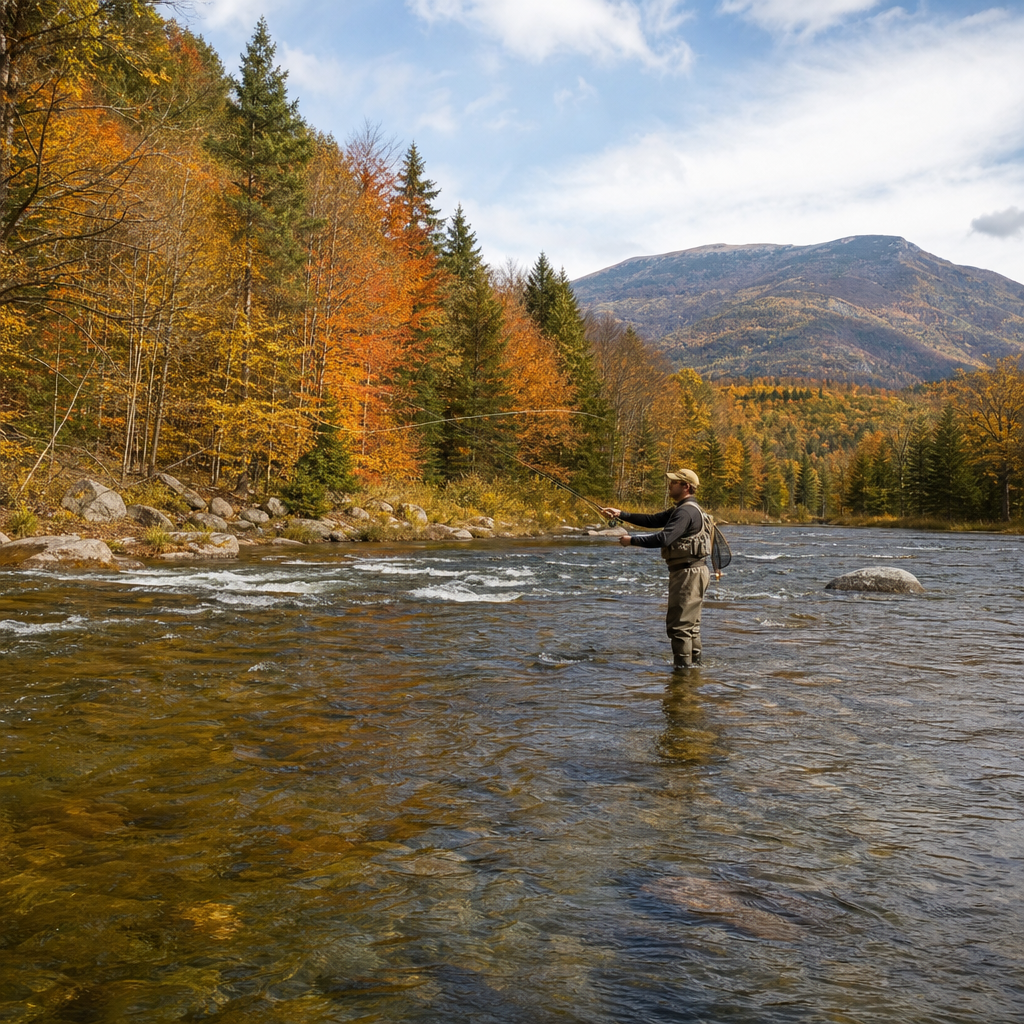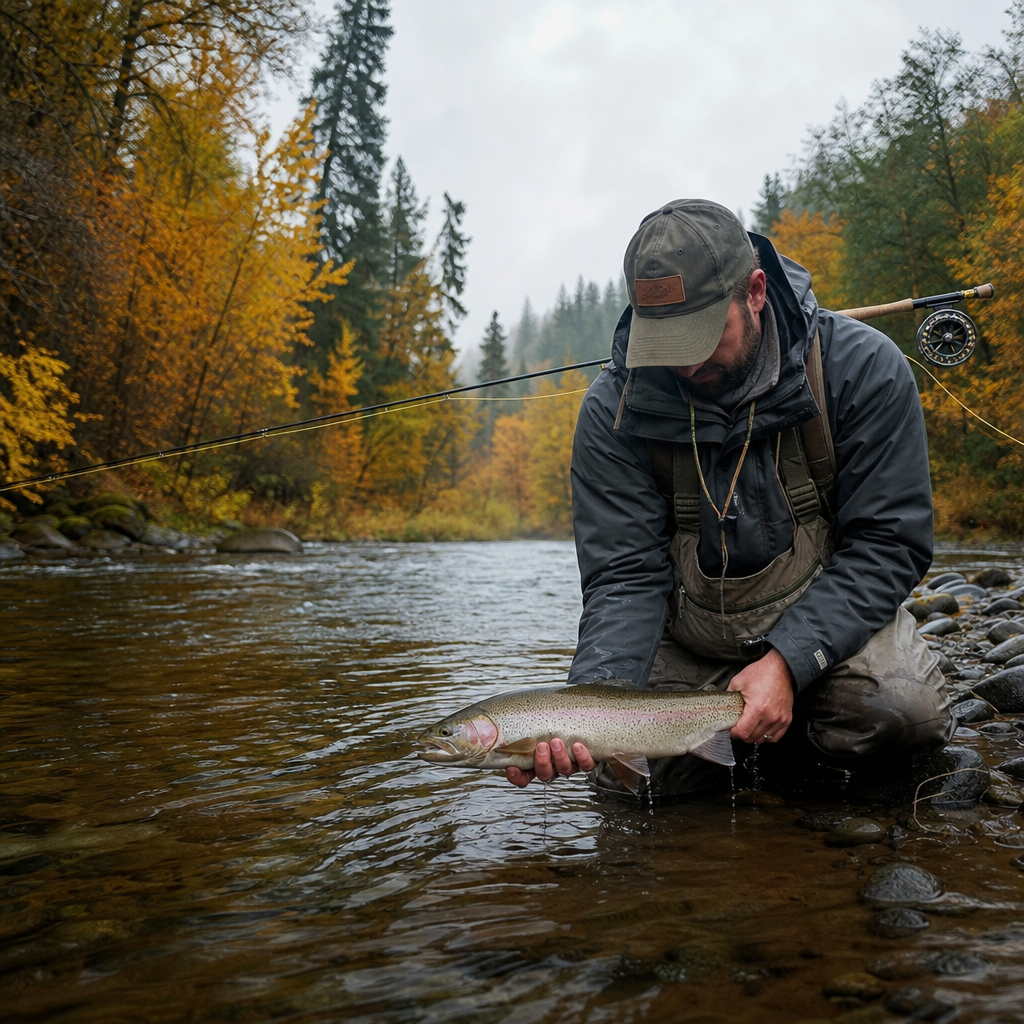
Fly patterns for winter hatches demand a different mindset than spring and summer fishing because insect activity narrows, trout feeding windows shrink, and presentation errors become more obvious in cold, clear water. In practical terms, winter hatches are the small but reliable emergences of aquatic insects that occur during the coldest months, most often midges, blue-winged olives, winter stoneflies, and in some rivers tiny black caddis. Seasonal hatches refers to the repeating cycle of these insects through the year, and this article serves as the hub for understanding how winter fits into that broader calendar. After years of fishing tailwaters, spring creeks, and moderate freestones from December through February, I have learned that success rarely comes from carrying more flies; it comes from carrying the right flies, in the right sizes, with a clear sense of what trout are actually eating. That matters because winter trout conserve energy. They often hold in softer seams, feed selectively for short periods, and reject patterns that are too large, too bright, or poorly drifted. An angler who understands winter hatches can fish confidently when many others stay home.
The key terms are straightforward. A hatch is the emergence of aquatic insects from nymph or pupa to adult. Matching the hatch means selecting a fly that imitates the life stage trout are focused on, whether subsurface or on top. Fly patterns are the artificial imitations, tied to mimic size, silhouette, color, movement, and sometimes behavior more than exact anatomy. Winter hatch fishing therefore is not just about dry flies. In many cases, the most important flies are midge larvae, zebra midges, RS2s, pheasant tails, soft hackles, and sparse olive nymphs drifting below the surface before a single fish rises. As the hub page for seasonal hatches, this guide explains what insects define winter, which fly patterns you need, how to organize a winter box, and how winter choices connect to broader hatch progression later in the year. If you understand this season, spring hatches make more sense because you will already recognize the relationship between water temperature, insect timing, trout metabolism, and presentation.
Which winter hatches matter most
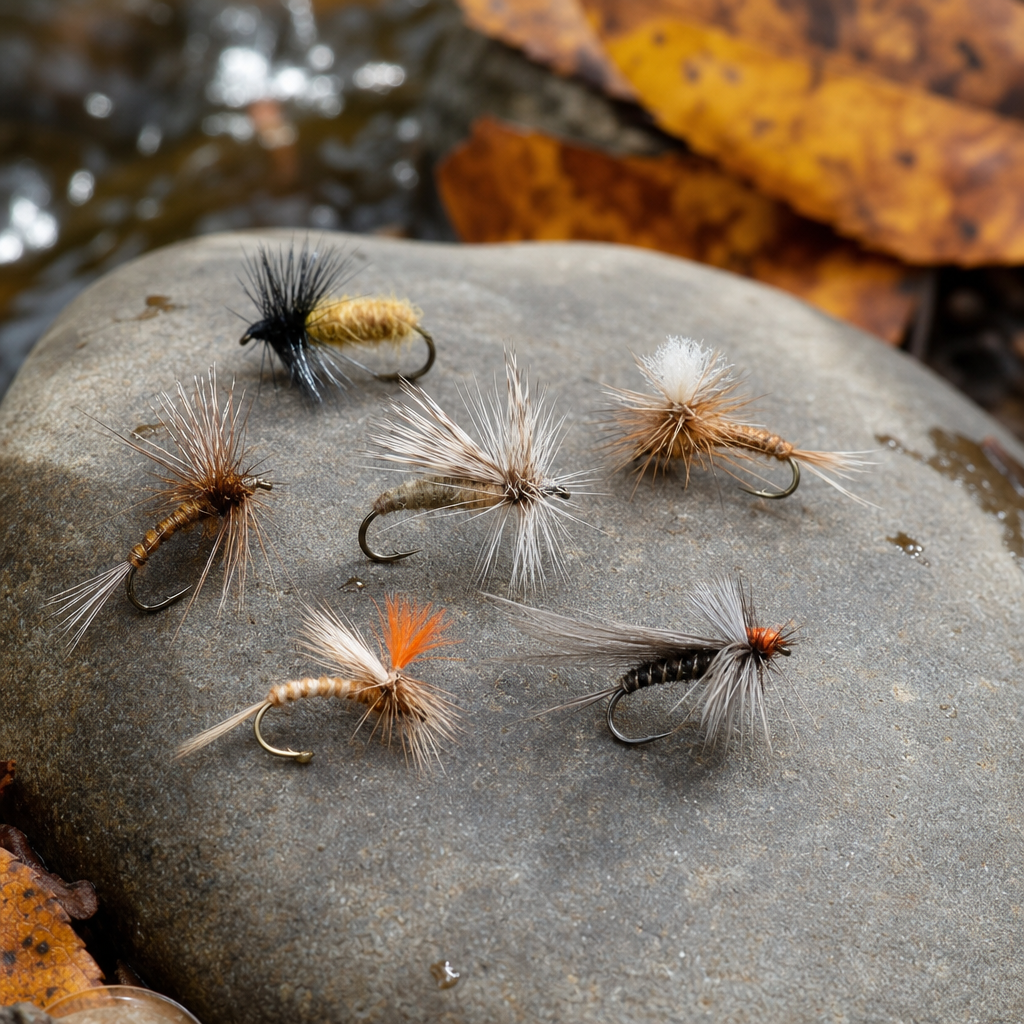
The most important winter hatches in trout water are midges and blue-winged olives, with winter stoneflies and occasional caddis rounding out the list depending on river type. Midges are present almost everywhere, especially on tailwaters and spring creeks where water temperatures remain stable. They hatch in size ranges that commonly run from 18 to 26, and trout may focus on larvae, pupae, emergers, or adults. If an angler asked me for one winter category to build around, I would start with midges because they produce fish even when no obvious hatch is visible. Zebra Midges in black, red, olive, and brown are standard for a reason: slim profile, flash rib, and fast sink rate match the natural pupa well in cold current. Griffith’s Gnats, small parachute midges, and CDC midge emergers cover surface feeding when fish begin sipping.
Blue-winged olives become critical on overcast, damp, relatively mild winter afternoons. Most are small mayflies in the Baetis group, usually sizes 18 to 22, and trout often key on emergers more than clean-floating duns. I rely on Sparkle Duns, RS2s, Barr’s Emergers, and tiny pheasant tail variations because they imitate the vulnerable stage trapped in the film. Winter stoneflies are different. Adults are visible crawling on snow or streamside rocks, and they can bring fish up in slower margins, but their nymphs often matter more than the adults. Small black or brown stonefly nymphs, Pat’s Rubber Legs tied very lightly, and simple biot-body stones are useful where these insects are common. In some fertile rivers, black caddis can show during late winter, and a soft hackle pupa or sparse elk hair style dry in small sizes becomes relevant. Knowing these categories gives you the foundation for all seasonal hatch planning.
The fly patterns you actually need
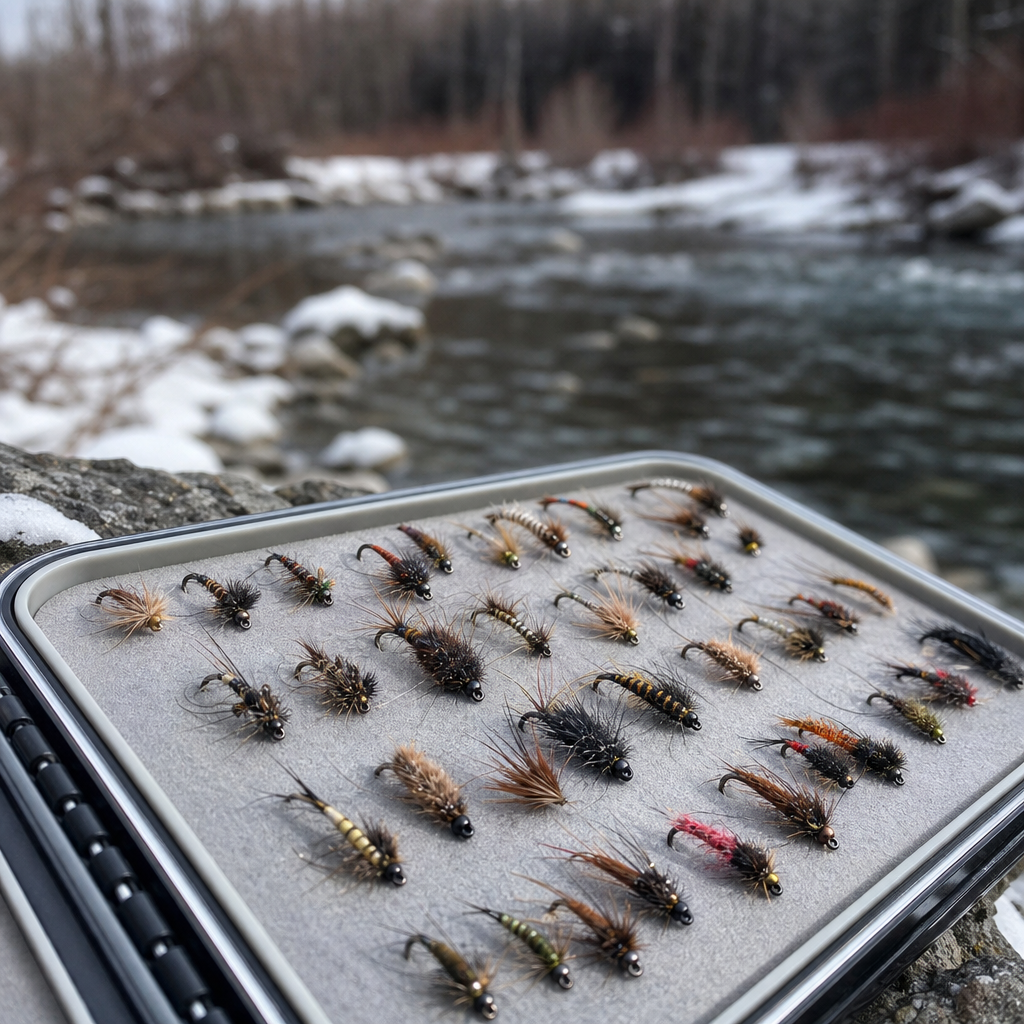
A strong winter box is compact, not complicated. On rivers where I guide friends or fish repeatedly, the patterns that consistently earn space are Zebra Midges, RS2s, Griffith’s Gnats, WD-40s, Mercury Midges, small pheasant tails, Baetis nymphs, Sparkle Duns, parachute BWOs, and a few winter stonefly nymphs and dries. The reason these flies work is not brand loyalty or tradition; they solve specific feeding situations. Zebra Midges and WD-40s imitate midge pupae and tiny mayfly nymphs in a slim profile. RS2s bridge categories beautifully because they resemble midge emergers and small mayflies depending on color and size. Griffith’s Gnats imitate mating clusters and individual adult midges well enough that trout accept them readily in smooth water. A Sparkle Dun or CDC Comparadun for BWOs sits flush and matches delicate duns better than a high-floating attractor pattern.
Size matters more than pattern name in winter. Trout that ignore a size 18 may eat the same fly in size 22 immediately because the natural insects are that small. Color matters too, but within a narrower spectrum: black, olive, gray, cream, brown, and dark red dominate. Flash should be restrained. Heavy tungsten can help in deeper slots, but too much weight under a tiny indicator in slow water often creates unnatural drift. Hook choice is another overlooked variable. Curved-shank hooks suit emergers; straight-scud hooks help pupa imitations; light-wire dry hooks improve surface posture on tiny flies. During winter hatches, silhouette and drift routinely outperform intricate detail. When choosing what you need, carry variations in size, stage, and sink behavior before you carry novelty. That approach catches more trout and simplifies on-stream decisions.
| Hatch | Typical Size | Best Patterns | Best Conditions |
|---|---|---|---|
| Midges | 18-26 | Zebra Midge, Griffith’s Gnat, Mercury Midge, midge emerger | Tailwaters, spring creeks, calm winter afternoons |
| Blue-winged olives | 18-22 | RS2, Sparkle Dun, Baetis nymph, parachute BWO | Cloud cover, light rain, stable flows |
| Winter stoneflies | 14-18 | Small stonefly nymph, black stimulator, biot stone | Freestones, stream edges, sunny midday periods |
| Black caddis | 18-20 | Soft hackle pupa, sparse caddis dry | Late winter on fertile rivers |
How to match life stage and water type
The biggest winter mistake is assuming every hatch should be fished with dries. In reality, trout often feed below the surface long before adults appear. On tailwaters, I usually begin with a two-fly nymph rig built around a Zebra Midge and a slightly larger mayfly imitation such as a size 18 pheasant tail or olive RS2. Tailwaters support steady midge activity because dam releases buffer temperature swings, so subsurface fishing remains productive even on bright, cold days. Spring creeks add another layer: clear water and educated trout. There, patterns must be sparse, leader systems long, and drifts nearly perfect. Fluorocarbon tippet in 6X or 7X can make a real difference when fish inspect tiny flies in slow current. Freestones are less consistent in winter, but during stable periods they produce meaningful stonefly and BWO action, especially from late morning into early afternoon when water temperatures tick upward a degree or two.
Life stage matching means reading trout behavior. Splashy rises often indicate fish chasing emergers just under the film, while gentle nose-up sips in flat water suggest adults or cripples. If you see no rises but occasional flashes below, fish pupa or nymphs. Midges are especially stage-sensitive. Trout may refuse dry adults while feeding aggressively on ascending pupae. That is why a trailing midge emerger behind a dry, or a lightly weighted pupa under a tiny yarn indicator, is so effective. Blue-winged olive hatches also reward stage awareness because many naturals struggle in the surface film during cold weather. Emerger patterns with trailing shucks consistently outfish upright dry flies when the hatch is sparse. On larger rivers, target soft seams, tailouts, and foam lines where tiny insects concentrate. On small streams, fish slower pockets and sun-warmed margins first. The right winter fly pattern is inseparable from the right life stage and water type.
Rigging, presentation, and timing for winter success
Presentation is the force multiplier for winter hatches. Because trout move less in cold water, your fly must come to them at the correct depth and speed. I shorten casting distance whenever possible and fish more quartering drifts than long hero casts, simply because close control produces fewer micro-drag errors. For subsurface rigs, use enough split shot or tungsten to reach the feeding lane, but not so much that the flies plow bottom unnaturally. On many winter tailwaters, the productive zone is only inches off the substrate in softer current beside a seam. A yarn indicator or small air-lock style indicator offers sensitivity without excessive splash. For dry-dropper work during midge activity, a Griffith’s Gnat or parachute midge can suspend a tiny emerger effectively, but only in moderate current; in flat water, separate dry and nymph presentations are often cleaner.
Timing is equally important. Winter hatches generally compress into the warmest part of the day, often between 11 a.m. and 3 p.m., though tailwaters can produce earlier. A stream thermometer is one of the most useful tools you can carry. Even a one- or two-degree rise can trigger insect movement and trout feeding. Cloud cover often improves BWO hatches, while bright sun can stimulate winter stonefly activity along banks. Wind complicates tiny-fly fishing, so adjust by targeting protected runs and slightly shortening leaders if turnover becomes impossible. Tippet management matters too. Fine tippet helps natural drift, but cold fingers and brittle material create break-off risk. Inspect knots constantly. In winter, catching fish is less about covering miles of water and more about recognizing the one productive hour, the one active seam, and the one life stage trout are taking. Fly patterns matter, but only when delivered with disciplined timing and control.
Building your winter hatch hub and seasonal plan
As a hub within the broader seasons and conditions topic, winter hatch planning should connect directly to the rest of the year. The same observations that help with January midges prepare you for spring blue-winged olives, early caddis, March Browns, sulfurs, PMDs, golden stones, terrestrials, and fall baetis later on. Start a hatch log that records water temperature, weather, insect type, life stage, fly size, and the time fish began feeding. Over a single winter, patterns emerge quickly. You may find one tailwater peaks on black midges during low-light periods, while another produces olive BWOs after light rain. That information is more valuable than generic hatch charts because it is specific to your river. Use recognized resources such as state agency insect guides, USGS flow data, and river reports from reputable shops, but verify them on the water. Local knowledge is helpful; direct observation is decisive.
A practical winter hatch system also includes maintenance and restraint. Keep tiny flies sorted by size in labeled compartments because a size 20 and 22 look similar streamside but fish very differently. Replace drowned or twist-damaged dries. Sharpen hooks obsessively; small hooks dull fast on rocks and frozen net mesh. Carry desiccant, amadou, and a quality floatant suited to CDC or standard hackle. If you tie your own flies, prioritize consistency over artistic detail. Sparse dubbing, clean thread heads, and proportionate tails matter more than decorative touches. Finally, think of this page as the launch point for every article in the seasonal hatches cluster: winter midges, winter BWOs, tailwater hatch strategy, spring transition insects, and river-specific hatch calendars all belong beneath it. Mastering fly patterns for winter hatches gives you an annual framework, not just a cold-weather tactic.
Fly patterns for winter hatches are best approached as a system built around small insects, short feeding windows, and exact presentation. The essential takeaway is simple: carry a focused selection for midges, blue-winged olives, winter stoneflies, and occasional black caddis; vary size and life stage more than color; and match each pattern to water type, depth, and trout behavior. In my experience, anglers improve fastest when they stop asking for a magic fly and start asking what stage the trout are eating, where in the column they are feeding, and why the hatch is happening at that moment. Those questions produce consistent answers on every winter river.
As the hub for seasonal hatches within seasons and conditions, this article should anchor your planning for the coldest months and point forward to the rest of the hatch year. Winter teaches precision. It rewards careful observation, clean rigging, accurate sizing, and disciplined drifts. Build a compact box with proven patterns such as Zebra Midges, RS2s, Griffith’s Gnats, Sparkle Duns, and sparse stonefly imitations, then fish them where and when they make biological sense. Keep notes, compare rivers, and refine your approach each trip. If you want more trout during the hardest season, start by tightening your winter hatch box and treating every rise, drift, and insect as useful evidence.
Frequently Asked Questions
What fly patterns are most important for winter hatches?
The most important fly patterns for winter hatches are usually the smallest and most understated ones in your box. In cold months, anglers should focus on imitating the insects that remain dependable when water temperatures are low and trout become selective. On most rivers, that means midges, blue-winged olives, winter stoneflies, and occasionally tiny black caddis. For midges, a solid winter selection includes zebra midges, thread midges, midge larvae, and small midge pupae in sizes 18 through 24, often in black, red, olive, cream, and silver-ribbed variations. For blue-winged olives, carry slim pheasant-tail style nymphs, RS2s, WD-40s, tiny soft hackles, and parachute or comparadun-style dries in sizes 18 through 22. Winter stonefly imitations are often more effective as nymphs than adults, especially in dark brown or black patterns tied small and lean. If your local water has black caddis, a few pupa and adult patterns in sizes 18 to 20 can be worth carrying.
What matters most is not just matching the insect family, but matching the stage and profile. Winter trout often key in on larval and pupal forms because hatches are sparse and feeding windows are short. A flashy, bulky pattern that might work in warm months can look unnatural in clear winter water. Think slim bodies, sparse materials, and subtle weight. In many situations, a simple pattern tied correctly will outfish a complicated one because it drifts more naturally and better reflects the tiny insects present. If you want a practical winter box, build it around confidence patterns in very small sizes, and prioritize natural drift over novelty.
Why do trout seem so much more selective during winter hatches?
Trout often appear more selective during winter hatches because the entire environment becomes less forgiving. Cold water slows a trout’s metabolism, so fish typically do not move as far or feed as aggressively as they do in spring or summer. Instead of chasing a wide range of food items, they tend to hold in efficient lies and wait for predictable, easy meals. Since winter hatches are usually sparse and consist of very small insects, trout get repeated looks at nearly identical food drifting in a concentrated lane. That makes inconsistencies in size, silhouette, color, and especially presentation stand out much more than they might during a heavy, chaotic hatch in warmer months.
Water clarity is another major factor. Winter flows are often lower and clearer, giving trout more time to inspect your fly. In those conditions, drag becomes a serious problem. Even a good pattern can be refused if it skates, stalls, or drifts unnaturally for a second. This is why successful winter fishing is often less about finding a magical fly and more about refining the entire system: lighter tippet, accurate depth, long drag-free drifts, and careful observation of what trout are actually eating. The fish are not necessarily becoming smarter in winter; they are simply feeding in a slower, clearer, more selective environment where mistakes are easier for them to detect.
Should I fish nymphs, emergers, or dry flies during winter hatches?
The best choice depends on what stage of the hatch the trout are feeding on, but in winter, nymphs and emergers usually produce more consistently than dry flies. Before surface activity begins, trout commonly feed subsurface on larvae, nymphs, and pupae drifting near the bottom or rising slowly in the water column. For midges, that often means larvae and pupae; for blue-winged olives, it may mean small nymphs and emergers; for winter stoneflies, it is often the nymph stage that matters most. A two-fly rig built around a small attractor or lightly weighted anchor fly with a tiny trailing imitation can be very effective, especially when fish are holding deep and feeding quietly.
Once you start seeing noses, dimples, or subtle porpoising rises, emergers become especially important. Many winter refusals happen because anglers switch too quickly to a fully formed dry when trout are actually taking insects trapped in or just beneath the surface film. Patterns like RS2s, unweighted soft hackles, CDC emergers, and trailing-shuck olives can be deadly because they match that vulnerable stage. Dry flies absolutely have a place, particularly during steady midge or blue-winged olive activity, but they are often most effective when matched precisely in size and presented delicately on fine tippet. A smart winter approach is to start subsurface, watch closely for feeding clues, and only move to a dry or emerger setup when the trout tell you they are focusing near the surface.
How small should my flies and tippet be for winter hatch fishing?
In many winter hatch situations, smaller is better, but it should still be practical. Fly sizes commonly range from 18 to 24 for midges and blue-winged olives, with winter stoneflies usually a little larger depending on the river. If you are seeing tiny insects but getting refusals, size is one of the first things to adjust. Anglers often match the general insect type correctly but fish a pattern that is one or two hook sizes too large. In winter, that difference can be enough to turn interested trout into non-committal followers or short takes. A slim size 22 may outperform a bushier size 20 simply because it better matches the naturals and lands more softly.
Tippet choice is just as important. Fine tippet helps tiny flies drift naturally and reduces micro-drag, which is critical in cold, calm conditions. For many winter situations, 6X is standard, and 7X can make sense on flat water, spring creeks, or technical tailwaters where trout are inspecting minute patterns. That said, tippet should still match the water, fly size, and fish you are targeting. Going too light in faster current or around larger fish can create landing problems and unnecessary break-offs. The goal is balance: use the lightest tippet that allows a natural drift while still giving you control. If your presentation is good and fish are still refusing, stepping down in fly size or tippet diameter is often one of the most effective adjustments you can make.
How do I choose the right fly pattern when a winter hatch is happening but trout are not rising?
When a winter hatch is underway but trout are not visibly rising, the safest assumption is that they are feeding subsurface. Many winter insects become available to trout before anglers ever notice surface activity, and fish often take them deep, mid-column, or just under the film. Start by identifying the likely hatch: midges if you see tiny clusters or very small adults, blue-winged olives if overcast conditions bring out small olive-bodied mayflies, winter stoneflies if you spot dark adults on snow, rocks, or streamside brush, and black caddis if tiny dark adults begin fluttering low over the water. Once you have a probable match, fish the subsurface stage first. That usually means midge larvae or pupae, olive nymphs or emergers, or small dark stonefly nymphs.
Depth and drift should guide your decision as much as insect type. If fish are holding deep in slow winter buckets, use a lightly weighted setup or an indicator rig to put your flies in the feeding lane for a long, natural drift. If fish are suspended higher or you suspect they are intercepting ascending insects, switch to unweighted or lightly weighted emergers and soft hackles. Watch for subtle signs: a flash below the surface, a fish tipping rather than fully rising, or repeated movement in one seam. Those clues often tell you the trout are eating emergers rather than bottom-drifting nymphs. In winter, selecting the right fly pattern is really about narrowing the hatch, matching the most vulnerable life stage, and presenting it precisely. If there are no rises, think below the surface first and let the trout’s behavior help you refine the pattern from there.