Cold-weather fly fishing is won or lost at the base layer, because the fabric next to your skin controls heat retention, sweat management, and comfort long before your shell, waders, or jacket can help. In practical terms, the best fly fishing base layers for cold weather are the pieces that stay warm when damp, move moisture during active wading or hiking, and fit smoothly under insulating mid-layers without bunching. I have spent enough winter mornings on tailwaters and spring creeks to know that a poor base layer turns a good hatch into an early drive home, while a well-chosen one lets you fish safely through freezing wind, sleet, and numb-finger conditions. This clothing reviews hub explains what a cold-weather base layer is, which materials actually perform, how to choose tops, bottoms, socks, and layering systems, and which products deserve consideration. If you are comparing merino wool, synthetic polyester, grid fleece, or hybrid knits, the most important question is simple: which option keeps you dry and warm for the longest period in your fishing conditions?
A base layer is the first garment worn against the skin. Its primary jobs are moisture transport, thermal regulation, and friction reduction under outer layers. For fly anglers, that role is more demanding than it is in many winter sports because fishing alternates between stillness and movement. You may hike to the river, row a drift boat, scramble over ice shelves, stand chest-deep in current, then stop moving for an hour while dead-drifting nymphs. That stop-start pattern punishes clothing systems that trap sweat or lose loft. Good base layers matter because cold stress reduces dexterity, concentration, and safety. According to guidance from outdoor medicine and cold-weather work standards, wet clothing accelerates conductive and evaporative heat loss dramatically. In other words, if your base layer stays clammy, everything above it performs worse. That is why experienced anglers talk about layering as a system, not a single product purchase.
What makes a fly fishing base layer effective in cold weather
The best cold-weather fishing base layers balance four traits: moisture management, insulation, fit, and odor control. Moisture management is first because sweat is unavoidable even in subfreezing air. Polyester and polypropylene move moisture quickly and dry fast, which makes them strong choices for anglers who hike long distances or row hard. Merino wool manages moisture more slowly but insulates well when damp and resists odor better over multiday trips. Fit matters because trapped folds create pressure points under wader suspenders, belts, and layered waistbands. A base layer should be close to the body without restricting casting or high stepping across boulders. Flatlock seams, gusseted crotches, raglan sleeves, and offset shoulder seams are not marketing trivia; they solve real comfort problems. Fabric weight also matters. Lightweight layers suit mild winter days or anglers who run warm, midweight layers are the most versatile, and heavyweight or expedition weights are best for prolonged stationary fishing in severe cold.
Anglers also need to consider how fishing-specific conditions change performance. Waders reduce airflow around the legs, so lower-body moisture can build up even when the upper body feels comfortable. Boat anglers often need slightly less insulation than wade anglers because they spend less time submerged and can adjust activity more easily. Tailwater fisheries create a special challenge because stable cold water and canyon winds keep temperatures low all day. On these rivers, a damp cotton shirt under fleece is a common mistake. Cotton absorbs moisture, dries slowly, and becomes a heat sink. That is why serious cold-weather systems avoid cotton entirely, from underwear to socks. If you want one rule that solves most winter layering mistakes, it is this: wear fabrics that still perform after sweat, spray, and condensation enter the system.
Merino wool versus synthetic base layers
Most buying decisions come down to merino wool or synthetic fabric, and each has clear strengths. Merino wool is naturally thermoregulating, comfortable across a wide temperature range, and far more odor resistant than polyester. Brands such as Smartwool, Icebreaker, and Duckworth build strong cold-weather layers in 150, 200, and 250 gram fabric categories. For anglers fishing consecutive days without frequent washing, merino is often the more pleasant option. It also feels less clammy during slow-paced fishing. The tradeoff is durability and dry time. Fine merino can abrade faster, especially at the knees, seat, and cuffs, and once saturated it dries more slowly than quality synthetic knits.
Synthetic base layers from Patagonia, Simms, Under Armour, Helly Hansen, and Sitka usually win on drying speed, abrasion resistance, and price at equivalent warmth levels. Polyester grids and brushed interiors dump moisture efficiently during high output. That matters if you hike into small streams, carry a raft frame, or climb steep banks. The downside is odor retention and, in some cheaper fabrics, a plastic feel against the skin. Many modern synthetic layers use Polartec Power Grid, Capilene Thermal Weight constructions, or anti-odor treatments to improve comfort. In my experience, merino is best for mixed activity and multiday comfort, while synthetic is best for hard exertion, repeated wetting, and anglers who prioritize fast drying above all else. Hybrid designs, including merino-blend jerseys and synthetic cores with wool faces, often split the difference well.
| Material | Best Use | Key Strength | Main Limitation |
|---|---|---|---|
| Merino wool | All-day wading, multiday trips | Warm when damp, odor resistant | Slower drying, can wear faster |
| Polyester synthetic | High-output hiking and rowing | Fast drying, durable | Holds odor more easily |
| Merino blend | Versatile mixed conditions | Balanced comfort and drying | Performance varies by blend ratio |
| Grid fleece base layer | Very cold, active fishing days | High warmth-to-weight efficiency | Too warm for mild conditions |
Best base layer tops for winter fly fishing
For most anglers, the base layer top drives overall comfort because the torso generates significant heat and sweat. The best fly fishing base layer tops for cold weather use either midweight merino around 200 to 250 gsm or high-efficiency synthetics with lofted channels or grid interiors. Patagonia Capilene Thermal Weight is a benchmark synthetic because it combines fast moisture transport with impressive warmth for its bulk. Smartwool Classic Thermal Merino and Icebreaker 260 Tech are reliable merino standards that layer well under fleece or insulated jackets. Simms’ thermal tops deserve attention from anglers specifically because their cuts often account for casting mobility and wader use. A quarter-zip can be valuable for venting during a hike-in, but in very cold wind, a crewneck or hooded design seals heat better.
Look closely at cuff construction, hem length, and neck comfort. Extended hems keep skin covered when reaching to mend line or release fish. Thumb loops are useful under jackets but can create bulk if the sleeve fit is already tight. Hoods are excellent under beanies and shell collars on brutal days, though some anglers dislike layering interference around the neck. I usually recommend one versatile midweight top for most winter fishing and one heavier option for true subfreezing days. That two-top system covers more scenarios than buying a closet full of narrowly specialized pieces. If you fish from late fall through early spring, prioritize a top that can serve under a rain shell on wet days and under a puffy during static periods. Versatility is where the best clothing reviews separate useful gear from niche gear.
Best base layer bottoms, socks, and full lower-body systems
Cold legs end fishing days quickly, yet many anglers underinvest in base layer bottoms because waders already feel protective. In reality, breathable waders provide weather resistance, not insulation. Your lower-body warmth comes from the combination of base layers, fleece or insulated mid-layers, and socks. For bottoms, midweight merino or synthetic tights work on average winter days, while grid fleece or heavier thermal bottoms are better for drift boat trips, steelhead fishing, and long sessions in near-freezing air. Patagonia Capilene Midweight and Thermal Weight bottoms, Smartwool Thermal Merino bottoms, and Helly Hansen Lifa Merino options are all proven performers. Pay attention to ankle bulk. Thick cuffs can bunch inside wading socks and create pressure points after hours on your feet.
Socks deserve the same scrutiny as tops and bottoms. A high-quality merino sock from Darn Tough, Smartwool, or Simms usually outperforms cheap thick socks because fit and moisture control matter more than sheer bulk. Overstuffing boots with overly thick socks reduces circulation, which makes feet colder, not warmer. A common cold-weather setup is a lightweight liner sock under a medium or heavy merino outer sock, but this only works if your boots still fit with room for blood flow. Some anglers also benefit from insulated wading boots or slightly larger boot sizing for winter. If your feet routinely get cold, evaluate the whole system: base layer bottoms, wader fit, boot volume, standing time, and whether you are compressing insulation at the ankle and forefoot. Troubleshooting lower-body cold is rarely solved by socks alone.
How to layer base layers with mid-layers and waders
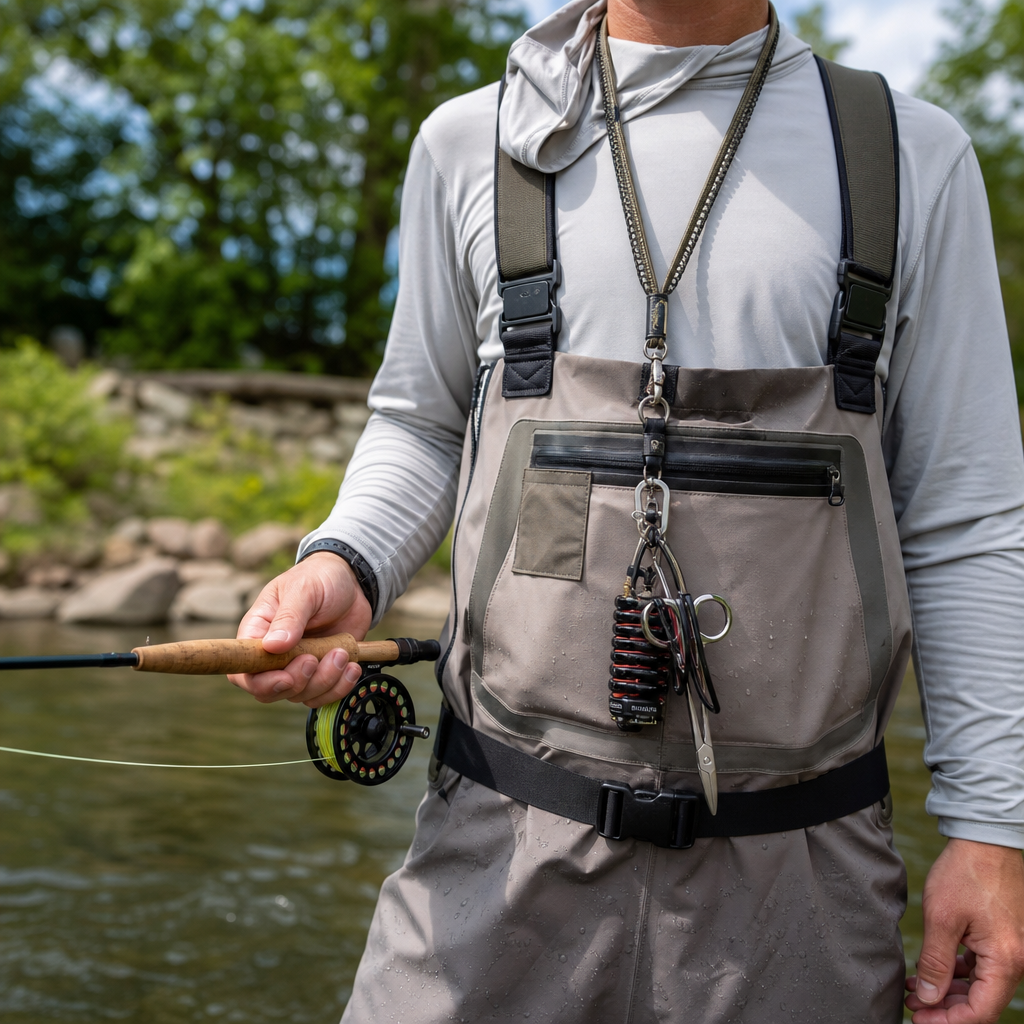
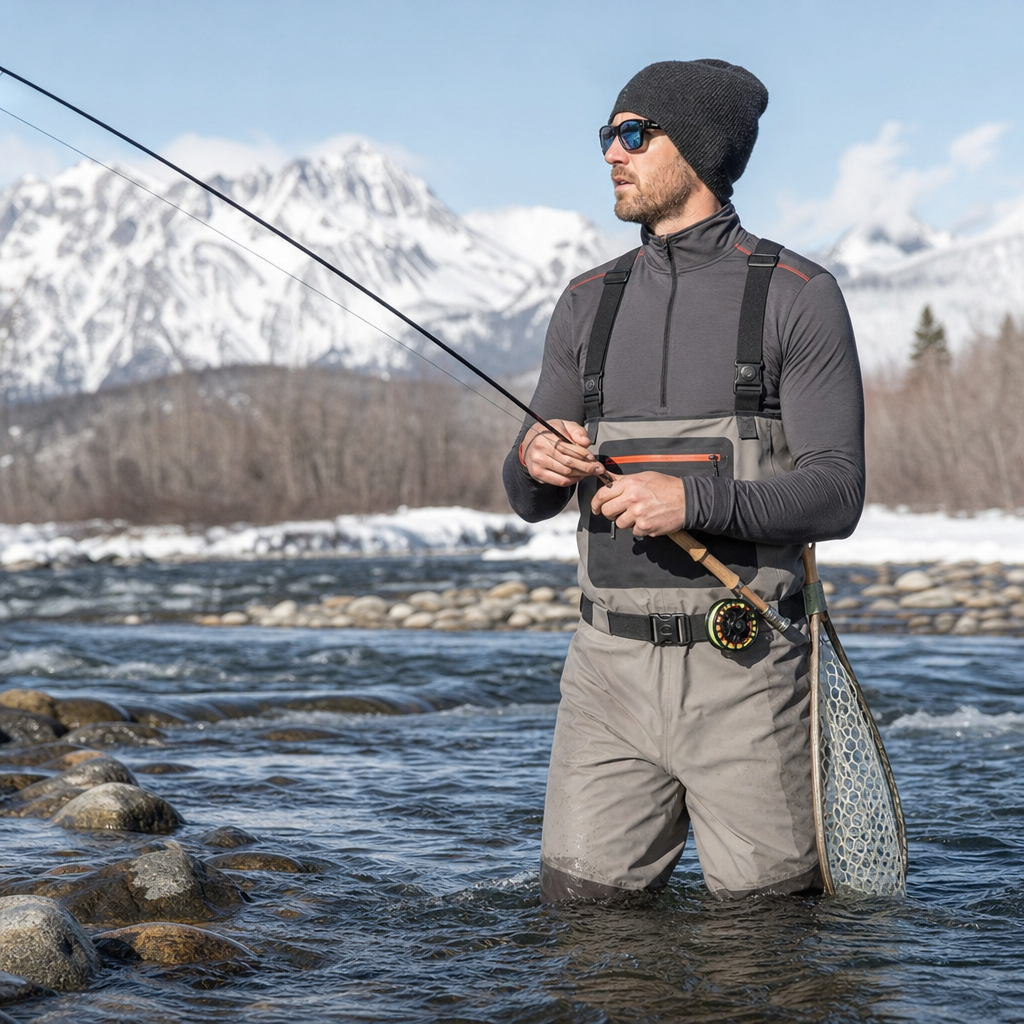
The most effective winter clothing systems follow a simple sequence: moisture-moving base layer, insulating mid-layer, protective outer layer. Under waders, that usually means a fitted base layer, then fleece pants or insulated bib-style pieces depending on temperature. Up top, a merino or synthetic base layer pairs with fleece, active insulation, soft shell, or waterproof shell based on wind and precipitation. The key is avoiding overlap that creates tight spots. If your waistband, suspenders, and jacket hem all stack heavily at the torso, mobility drops and moisture stays trapped. I have found that lighter, better-patterned pieces outperform thicker, cheaper layers that simply add bulk.
Matching insulation to activity is equally important. On a long walk to the river, start slightly cool. If you begin warm, you will sweat heavily and lose heat once you stop. Vent zippers, remove hats briefly, or delay putting on heavy gloves until you are at the water. When fishing in freezing rain or snow, use a shell that blocks wind and keeps upper layers dry, because even high-end base layers cannot compensate for soaked insulation. For anglers learning winter layering, one dependable formula is midweight synthetic or merino next to skin, medium fleece over it, then a waterproof shell above breathable waders. In harsher weather, upgrade one layer at a time rather than maxing out every layer. Controlled layering gives you room to adapt, which is essential during variable winter conditions.
Recommended cold-weather base layers by fishing style and budget
The best choice depends on where and how you fish. For mobile trout anglers hiking into small water, synthetic options such as Patagonia Capilene Thermal Weight or Helly Hansen Lifa Merino hybrids are excellent because they vent and dry quickly. For all-day tailwater wading with lower exertion, Smartwool Classic Thermal Merino and Icebreaker 260-style layers are consistently comfortable. For steelhead, Great Lakes tributaries, and drift boat winter fishing, heavier bottoms paired with durable synthetic tops can be a smart mix because legs stay static while the torso sees more output during rowing and bank access. Simms, Patagonia, Smartwool, and Duckworth are recurring names because their quality control, seam construction, and patterning are usually better than generic alternatives.
Budget matters, but cheap base layers often fail at seam durability, odor control, and long-term fit retention. If you need value, start with one premium top and one good merino sock pair, then build out the system over time. Costco and military-style polypropylene layers can work as temporary solutions, yet they rarely match premium garments for comfort over full fishing days. Buying strategy matters more than brand loyalty. Prioritize the piece that fixes your biggest problem first: torso sweat, cold legs, or numb feet. From there, build a system that works together. Explore related clothing reviews across this hub, compare materials honestly, and choose the base layers that fit your waters, your activity level, and your winter season. The payoff is simple: longer, safer, more comfortable days on the river. Start with the layer next to your skin, and the rest of your cold-weather setup becomes easier to get right.
Frequently Asked Questions
What makes a base layer good for cold-weather fly fishing?
A good cold-weather fly fishing base layer does three jobs at once: it retains warmth, moves moisture away from your skin, and stays comfortable under the rest of your layering system. That first layer matters more than many anglers realize because if it traps sweat or feels clammy, your body cools down fast once you stop hiking, rowing, or actively wading. The best options are usually merino wool, high-quality synthetic blends, or merino-synthetic hybrids designed to regulate temperature while drying efficiently.
Fit also matters just as much as fabric. A base layer should sit close to the skin without feeling restrictive, because that contact helps it wick moisture effectively. If it is too loose, it cannot manage perspiration as well; if it is too tight, it can limit movement and feel uncomfortable under waders or bibs. Flat seams, a longer hem, articulated patterning, and non-bulky cuffs all make a noticeable difference on long days. In real fishing conditions, the best base layers are the ones you forget you are wearing because they stay warm, dry, and smooth from the first cast to the takeout.
Is merino wool or synthetic better for winter fly fishing base layers?
Both can work extremely well, but they shine in slightly different ways. Merino wool is often the favorite for cold-weather fly fishing because it stays warm even when damp, resists odor naturally, and feels comfortable across a wide temperature range. That matters on winter tailwaters and cold spring creeks, where conditions can change from freezing mornings to surprisingly mild afternoons. Merino also tends to regulate temperature better during stop-and-go activity, so you are less likely to overheat while walking to a run and then chill when standing still to fish it.
Synthetics, on the other hand, usually dry faster and are often more durable and more affordable. They can be excellent if you sweat heavily during hikes into access points or if you want a piece that can take a lot of abuse over a long season. The downside is that some synthetic layers can hold odor and may not feel as comfortable over extended wear. For many anglers, the sweet spot is a merino blend, which combines wool’s warmth and odor resistance with synthetic durability and faster drying performance. If your fishing involves long, cold, relatively low-output days, lean toward merino or a blend. If your winter fishing includes hard hikes, frequent movement, and repeated use, a premium synthetic may be the better match.
How heavy should a fly fishing base layer be in cold weather?
The right weight depends on your activity level, air temperature, water temperature, and how warm or cold you naturally run. In most cold-weather fly fishing situations, a midweight base layer is the most versatile starting point. It offers enough insulation for chilly mornings but still breathes well enough when you are walking riverbanks, climbing in and out of drift boats, or covering water on foot. Midweight tops and bottoms also layer cleanly under fleece, soft-shells, or insulated pieces without making your waders feel tight.
Heavyweight base layers make sense when conditions are truly severe, such as sub-freezing temperatures, icy wind, or long periods of standing in cold water with minimal movement. They can be a smart choice for anglers who fish slow winter days and spend more time waiting, nymphing methodically, or watching indicators than hiking aggressively. Lightweight layers, meanwhile, are often underrated because they can perform very well when paired with a warmer mid-layer. In practice, layering flexibility usually beats simply choosing the thickest possible base layer. If you wear something too heavy and start sweating, you can end up colder later. The best system for many anglers is a moisture-managing midweight base layer combined with an insulating mid-layer that can be adjusted as conditions change.
Should you wear base layer bottoms under waders in winter?
Yes, in most cold-weather conditions base layer bottoms are a smart move under waders, but the key is choosing the right material and thickness. Waders alone do not create warmth; they mainly provide a waterproof barrier. Your insulation and comfort come from the layers underneath. A good pair of base layer bottoms helps manage perspiration, reduces that cold, sticky feeling inside waders, and adds critical warmth when standing in frigid water for hours. Merino, synthetic fleece-grid, and performance knit bottoms are all strong choices depending on conditions.
The biggest mistake is over-layering to the point that circulation suffers. If your base layers and insulating layers are too bulky inside your waders or boots, your feet can actually get colder because blood flow is restricted. That is why slim, well-fitted base layer bottoms are usually better than thick, cumbersome options. On moderately cold days, one solid midweight bottom may be enough. In harsher winter conditions, you can add an insulating layer over the base bottom, provided your waders and boots still fit properly. Comfort under waders is about balancing warmth, moisture control, and mobility, not simply piling on the heaviest clothing you own.
How do you care for fly fishing base layers so they last longer and perform well?
Proper care matters because base layers only perform at their best when the fabric can still wick moisture, breathe, and retain loft or structure. For merino wool, use a gentle detergent, cold or cool water, and avoid harsh fabric softeners or bleach. Fabric softeners can coat fibers and reduce moisture management in both wool and synthetic pieces. Many anglers also make the mistake of washing base layers too aggressively after every short use, especially merino. Unless they are heavily soiled, wool pieces can often be aired out between trips. That helps preserve the fabric and extends the life of the garment.
For synthetics, regular washing is more important because they tend to hold body odor more readily, especially after high-output days. Turn garments inside out, wash on a gentle cycle, and follow the brand’s drying recommendations. Low heat or air drying is often best, since excessive dryer heat can damage elasticity and shorten the life of performance fabrics. It is also wise to inspect seams, cuffs, and high-friction areas periodically, especially if you wear them often under suspenders, belts, pack straps, or snug waders. Well-cared-for base layers not only last longer, they stay more comfortable and dependable when you need them most on cold, unforgiving days on the water.