Climate change is reshaping fly fishing faster than many anglers realize, altering water temperature, streamflow, insect hatches, fish distribution, access, and the ethics of how and when we fish. In practical terms, climate change refers to long-term shifts in temperature, precipitation, snowpack, runoff timing, drought frequency, wildfire intensity, and extreme weather driven largely by greenhouse gas emissions. For fly fishing, those changes are not abstract. They show up as warmer rivers in July, thinner snowpack in winter, flashier runoff in spring, smoky summers, estuary flooding, and trout or salmon that no longer occupy water they held reliably a generation ago.
I have seen this shift on rivers where cold morning windows now close by noon, where reliable caddis evenings have become erratic, and where stream gauges matter as much as fly choice. That is why this topic belongs at the center of conservation and ethics. Fly fishing depends on functioning aquatic ecosystems: cold water, stable flows, healthy riparian cover, connected habitat, abundant aquatic insects, and fish populations with enough resilience to withstand pressure. Climate stress weakens each of those foundations at once. Anglers who understand the mechanisms can fish more responsibly, support better policy, and make smarter local decisions.
This hub on conservation challenges explains the main pathways through which climate change affects fly fishing and the species we pursue. It also clarifies where impacts differ among trout streams, tailwaters, warmwater fisheries, steelhead rivers, and saltwater flats. Some waters may benefit briefly from longer shoulder seasons or expanded habitat at higher elevations or latitudes, but those limited gains do not offset the wider pattern of heat stress, hydrologic instability, habitat fragmentation, invasive species pressure, and declining water quality. The essential point is simple: climate change is now a fishery management issue, an access issue, and an angling ethics issue.
Warmer Water, Lower Oxygen, and Heat Stress on Fish
The clearest climate signal in many fisheries is rising water temperature. Trout, salmon, char, and many aquatic insects are cold-water dependent. As water warms, dissolved oxygen declines, fish metabolism rises, and the margin for survival narrows. For wild trout, stress increases well before lethal temperatures are reached. Many agencies use afternoon closures or voluntary restrictions when water temperatures approach roughly 68 degrees Fahrenheit for trout fisheries, because catch-and-release mortality rises sharply in warm water. Brown trout can sometimes tolerate slightly warmer conditions than brook trout, but tolerance is not the same as health. Fish may survive repeated heat exposure yet feed less, grow poorly, become more susceptible to disease, and abandon productive reaches.
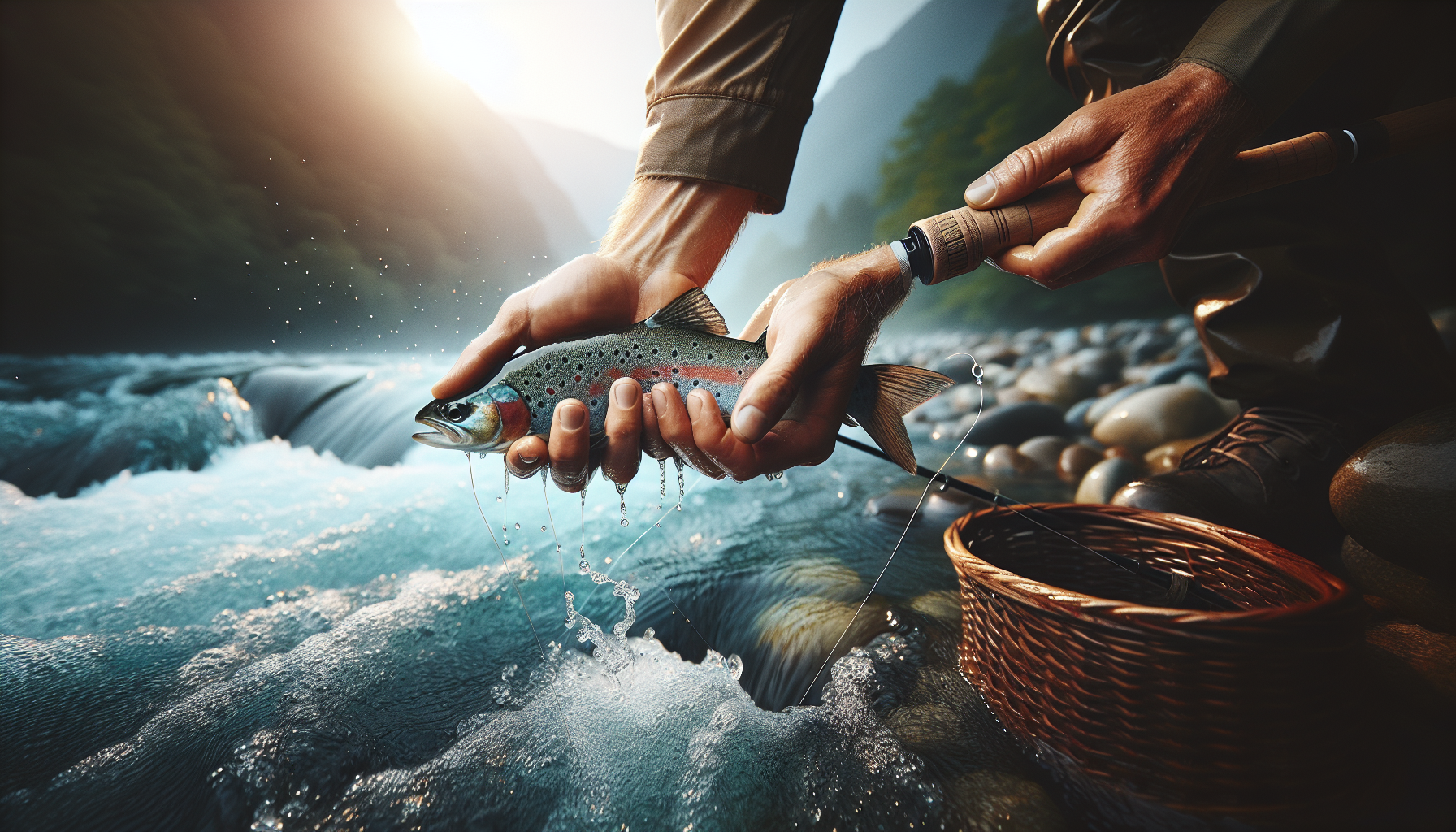
From an angler’s perspective, warmer water changes both opportunity and responsibility. Midday fishing that once seemed harmless can become unethical in late summer. Long fights, prolonged photo handling, and fishing deep pools where stressed fish congregate all add risk. Thermal refuges, such as cold tributary mouths, spring seeps, and shaded side channels, become critical survival zones; they are also places anglers should often avoid. I have watched trout stack at creek confluences during hot spells, and the lesson is obvious: finding fish is not the same as having a defensible reason to target them.
Warm water also changes species geography. Native brook trout in the Appalachians and interior headwaters are pushed higher upstream, compressing their range into smaller fragments. In the Rockies, cutthroat populations already isolated by culverts, dewatering, or past land use lose room to move. In Europe and North America alike, the broad pattern is elevation and latitude shift. Some rivers that historically supported strong summer trout fishing increasingly fish like spring-only systems unless they are groundwater fed or managed tailwaters.
Changing Snowpack, Runoff Timing, and Streamflow Volatility
Climate change affects fly fishing as much through water quantity and timing as through heat. In snowmelt-driven basins, reduced snowpack and earlier melt shift peak runoff forward on the calendar. That means less cold water stored naturally for late summer, lower base flows in August and September, and narrower windows for both fish and anglers. A river that used to remain fishable through summer may now experience a short, intense runoff, then drop early into warm, thin conditions. The result is less habitat depth, less cover from predators, and more crowding in remaining pools.
At the same time, precipitation is becoming less predictable. More winter rain instead of snow can create midwinter high-water events that scour redds, displace juvenile fish, and alter channels. Flash floods following drought can be especially damaging in smaller watersheds because dry soils shed water quickly, carrying sediment, ash, and debris downstream. Tailwaters may seem insulated, and some are, but they still depend on reservoir storage, dam operations, and basin-level water demand. In drought years, releases can be reduced, temperatures can climb, and aquatic weed growth or low oxygen can affect entire reaches.
For anglers, these hydrologic shifts change where and when success is possible. Reading stream gauges from the USGS, checking reservoir conditions from the Bureau of Reclamation or local utilities, and understanding snow water equivalent data from NRCS SNOTEL sites are now basic planning tools. Good fly fishing increasingly starts with hydrology, not optimism. Fisheries managers use the same data to time stocking, set hoot-owl closures, prioritize habitat restoration, and evaluate drought contingency plans.
Insect Hatch Disruption and Food Web Changes
Fly fishing is uniquely tied to aquatic insects, so climate-driven changes in hatch timing and abundance matter immediately. Mayflies, caddisflies, stoneflies, and midges depend on specific temperature ranges, flow patterns, water quality, and photoperiod cues. When runoff arrives earlier, summer low water extends longer, or heat spikes interrupt development, hatches can emerge earlier, become shorter, or lose synchronicity across a river. That affects feeding behavior and angler expectations, but more importantly it affects fish nutrition.
Aquatic entomologists have documented declines in some insect biomass where warming, nutrient imbalance, sedimentation, and altered flow regimes combine. Not every hatch disappears, and some systems temporarily shift toward warm-tolerant taxa, but diversity often declines before casual anglers notice. I have seen rivers where dependable pale morning dun activity became inconsistent over a decade, forcing fish onto smaller windows and more subsurface feeding. That matters because juvenile trout and salmon need predictable drift and abundant forage to grow through their most vulnerable life stages.
Food web effects also extend beyond classic hatches. Warmer water can favor algae blooms, microbial shifts, and nonnative prey communities. In some tailwaters, prolific midge or worm-driven fisheries may persist even as broader ecological integrity weakens. Anglers may still catch fish, but catch rates can hide simplification. A healthy fishery is not just one where fish eat; it is one where the underlying invertebrate community remains diverse, seasonally stable, and connected to intact riparian and floodplain processes.
Species at Risk, Habitat Fragmentation, and Migration Barriers
Climate pressure rarely acts alone. It compounds existing conservation challenges such as dams, culverts, irrigation withdrawals, bank hardening, logging legacy impacts, grazing, mining contamination, and urban runoff. When fish need to move to colder water, spawn in tributaries, or recolonize after wildfire or flood, fragmented habitat turns climate stress into population decline. This is especially serious for migratory fish. Salmon and steelhead already face a gauntlet of ocean conditions, dams, warm tributaries, and altered hydrographs. Higher river temperatures can delay migration, increase disease risk, and reduce spawning success before fish ever reach natal water.
Connectivity is therefore one of the most important climate adaptation tools in fisheries conservation. Removing outdated culverts, improving fish passage, reconnecting floodplains, and protecting cold tributaries allow fish to access thermal refuges and diverse seasonal habitat. Brook trout in eastern headwaters, cutthroat in western tributaries, Arctic grayling in northern systems, and redfish or tarpon on coastal routes all benefit when movement pathways remain open. The science is straightforward: resilient populations need options, and connected landscapes provide them.
| Climate challenge | Effect on fly fishing | Best conservation response |
|---|---|---|
| Warmer summer water | Higher fish stress, shorter safe fishing windows | Thermal monitoring, riparian shade, voluntary or mandatory closures |
| Earlier snowmelt | Lower late-season flows, habitat contraction | Water conservation, floodplain restoration, flow management |
| Flash floods and wildfire runoff | Sediment, ash, channel instability, access loss | Watershed rehabilitation, erosion control, road improvements |
| Habitat fragmentation | Fish cannot reach cold refuges or spawning areas | Culvert replacement, dam removal, reconnecting tributaries |
| Sea level rise and salinity change | Shifting estuary and flats habitat | Marsh protection, living shorelines, adaptive coastal planning |
Wildfire, Sediment, and Water Quality Degradation
In the American West, western Canada, Australia, and parts of southern Europe, wildfire has become a major fisheries issue. Fire is a natural process in many landscapes, but hotter, larger, and more frequent fires combined with drought can transform watersheds. Immediately after a burn, streams may warm because riparian shade is lost. The greater danger often arrives with the first intense rain, which can push ash, fine sediment, heavy nutrients, and debris flows into channels. Spawning gravel becomes embedded, macroinvertebrate habitat is smothered, and entire reaches can suffer fish kills or severe juvenile mortality.
Recovery is possible, and many streams do rebound, but outcomes depend on burn severity, rainfall intensity, watershed size, and whether intact refuges remain nearby. From experience, the biggest mistake anglers make is assuming a river that looks clear again has fully recovered. Aquatic food webs and year-class strength may lag for years. Managers increasingly use post-fire monitoring, culvert upsizing, road drainage upgrades, riparian planting, and meadow restoration to reduce erosion and speed resilience. Supporting those projects is one of the most concrete ways fly anglers can contribute beyond simply skipping a river for a season.
Water quality decline is broader than fire. Higher temperatures can intensify nutrient pollution and harmful algal blooms, especially in lakes, reservoirs, and slow river reaches. Low flows concentrate pollutants from agriculture, wastewater, and urban stormwater. Estuaries can experience oxygen-poor zones that compress fish habitat. These changes matter because fish can tolerate only so many simultaneous stressors. A trout handling event that might be acceptable in cool, high-oxygen water can become damaging when heat, sediment, and low flow are already in play.
Saltwater and Stillwater Fisheries Are Changing Too
Climate change and fly fishing are often discussed through trout, yet saltwater and stillwater anglers face major shifts as well. On coastal flats, sea level rise, stronger storms, erosion, and warming water alter seagrass, mangroves, marsh edges, and prey distribution. Bonefish, permit, striped bass, redfish, tarpon, and sea-run cutthroat all depend on habitat mosaics that can unravel when salinity patterns shift or nursery areas disappear. In some regions, fish move earlier, stay longer, or expand northward; false albacore, for example, have shown temperature-linked changes in seasonal availability along parts of the US East Coast.
Lakes and reservoirs experience longer stratification, warmer surface water, lower deep oxygen, and altered turnover timing. That can squeeze cold-water species such as lake trout into narrow bands of suitable habitat during summer. It can also favor warmwater species, nuisance algae, and invasive organisms. Chironomid, damselfly, or leech fisheries may remain productive, but the species mix beneath that productivity can shift significantly. Anglers should not confuse adaptation with stability. A fishery that still produces today may be moving toward a different ecological state entirely.
What Ethical Angling and Effective Conservation Look Like Now
The practical response to climate change is not despair; it is disciplined adaptation. Ethical fly fishing now means carrying a thermometer, checking stream temperatures and flows before leaving home, fishing early during warm periods, shortening fight times, keeping fish in the water, and honoring closures without argument. It means avoiding thermal refuges, using stronger tippet to land fish quickly, and recognizing that not every legal opportunity is a responsible one. Guides, shops, clubs, and lodges have an outsized role here because they normalize standards for visitors and newcomers.
Effective conservation works at multiple scales. Locally, the highest-return actions are riparian restoration, beaver-based stream restoration where appropriate, meadow and wetland reconnection, water leasing or instream flow protection, and barrier removal. At the watershed level, agencies and nonprofits increasingly prioritize cold-water mapping, climate vulnerability assessments, and habitat connectivity planning. Trout Unlimited, Backcountry Hunters & Anglers chapters, state fish and wildlife agencies, Native tribes, watershed councils, and land trusts all contribute, often using LiDAR, thermal infrared mapping, PIT tagging, and long-term temperature logger networks to guide decisions.
For this conservation challenges hub, the core lesson is clear: climate change affects fly fishing through temperature, flow, habitat, food webs, migration, and ethics all at once. Anglers who understand those links become better stewards and better advocates. Start by learning your home watershed, following agency alerts, supporting restoration, and adjusting your own fishing behavior to current conditions. The future of fly fishing will not be protected by nostalgia. It will be protected by informed choices, honest limits, and sustained conservation work that keeps rivers, lakes, estuaries, and fish populations resilient enough to endure.
Frequently Asked Questions
How is climate change affecting fly fishing conditions on the water?
Climate change is changing fly fishing at the most practical level: the day-to-day conditions anglers rely on are becoming less predictable. Warmer air temperatures raise water temperatures, and that matters because trout, salmon, and many other coldwater species depend on a fairly narrow thermal range to feed, recover, and survive. When rivers warm beyond those comfort zones, fish often become stressed, move into colder tributaries or deeper pools, feed less aggressively, and become more vulnerable to disease. For anglers, that can mean slower fishing during periods that were once reliable, especially in midsummer or during extended heat waves.
Streamflow is also shifting. Earlier snowmelt, reduced snowpack, longer droughts, and more intense rain events are changing runoff timing and water availability. In some places, spring runoff now peaks earlier than it used to, which can shorten the window of ideal flows for fishing. By late summer, streams may run lower and warmer, concentrating fish in limited habitat and making them easier to disturb. At the same time, heavy storms can cause sudden spikes in turbidity, channel changes, or flood damage that alter access points and fish-holding water. Taken together, climate change affects where fish live, when they feed, how insects hatch, and whether a river is even fishable on a given day. For fly anglers, adapting now means paying closer attention to water temperatures, flow data, seasonal timing, and fish stress than ever before.
Why do warmer water temperatures matter so much for trout and other coldwater fish?
Water temperature is one of the most important factors in coldwater fisheries because it controls fish metabolism, oxygen availability, and overall stress. Trout and similar species evolved in cool, well-oxygenated water. As water warms, it holds less dissolved oxygen, yet fish often require more oxygen because their metabolism speeds up. That creates a difficult imbalance. Even if fish are still present in a river, they may not be feeding normally or recovering well after a fight. In extreme cases, prolonged exposure to high temperatures can lead to direct mortality, increased susceptibility to fungal infections and parasites, and reduced spawning success.
For fly fishing, this has direct ethical and tactical consequences. A trout caught and released in cool water may swim away strong, while the same fish caught during a hot afternoon in low, warm water may be pushed beyond its ability to recover. That is why many fisheries managers and responsible anglers pay close attention to threshold temperatures and voluntary or mandatory afternoon closures. It is also why early morning fishing has become more important in some regions. Warmer water does not simply make fish less active; it can compress habitat, push fish into thermal refuges such as spring creeks and shaded tributary mouths, and make entire stretches of river unsuitable during parts of the year. Understanding temperature is no longer just about improving success. It is central to protecting the fisheries themselves.
How does climate change influence insect hatches and what does that mean for fly selection?
Insect hatches are tightly linked to temperature, streamflow, and seasonal timing, so they are especially sensitive to climate change. Many aquatic insects emerge according to accumulated temperature patterns, water conditions, and photoperiod. When winters are milder, snowmelt arrives earlier, or rivers run lower and warmer than normal, hatch timing can shift as well. Some hatches may occur earlier in the season, become more compressed, or lose the consistency anglers once counted on. In drought years or after severe flooding, certain insect populations may decline locally, while warmwater-tolerant species become more common. That can ripple through the entire food web.
For anglers, this means matching the hatch is becoming less about memorizing a traditional calendar and more about reading current conditions in real time. A river that historically produced dependable mayfly emergences in a certain week may now peak earlier, later, or more sporadically. You may find that caddis dominate where mayflies once did, or that terrestrials become a bigger part of the equation during longer, hotter, lower-water periods. Flexibility matters more than ever. Carrying a wider range of patterns, watching for subtle signs of insect activity, and checking stream conditions before a trip are increasingly important. Climate change does not eliminate hatches everywhere, but it does make them less predictable in many fisheries, which rewards observant anglers who adapt instead of relying solely on historical expectations.
Are fish distribution and species ranges changing because of climate change?
Yes, and this is one of the biggest long-term changes happening in fly fishing. As water temperatures rise and flow patterns shift, fish tend to move toward habitats that better meet their biological needs. For coldwater species, that often means retreating upstream, seeking spring-fed tributaries, occupying deeper or more shaded reaches, or disappearing from lower-elevation waters that were once productive. In some systems, native trout are losing range while warmwater species expand into areas that historically stayed too cool for them. This can fundamentally change the character of a fishery over time.
The consequences go beyond simply having to drive farther upstream. Habitat compression can crowd fish into smaller coldwater refuges, increasing competition and making those areas more sensitive to pressure. Fragmented river systems, dams, degraded riparian cover, and limited connectivity can prevent fish from reaching suitable habitat when they need it most. In addition, species already under pressure from development, invasive species, or poor water quality are often less resilient to climate shifts. For anglers, that means some beloved fisheries may become seasonal rather than year-round, some may decline noticeably, and others may transition toward different target species altogether. From a conservation perspective, protecting connected habitat, cold tributaries, wetlands, and streamside vegetation is increasingly important because those features give fish room to adapt as conditions change.
What can fly anglers do to fish responsibly as climate change impacts rivers and fish populations?
Responsible fly fishing in a changing climate starts with accepting that ethics may need to evolve along with conditions. One of the most important steps is monitoring water temperature and avoiding fishing when fish are under severe heat stress. In many trout fisheries, that means fishing early in the day, carrying a thermometer, and respecting both official restrictions and voluntary closures. If temperatures climb into stressful ranges, the best decision may be not to fish at all. Anglers should also minimize handling time, use appropriate tackle to land fish quickly, keep fish in the water, and avoid repeated catch-and-release in heavily pressured thermal refuges where fish are concentrated.
There is also a broader stewardship role. Anglers can support habitat restoration, riparian planting, barrier removal, water conservation efforts, and science-based fisheries management. Reporting poor conditions, respecting wildfire and flood closures, and staying informed about local watershed issues all help. On a personal level, being flexible with timing, target species, and destinations can reduce pressure on vulnerable fisheries. More broadly, many anglers also see climate action itself as part of protecting the future of the sport, whether through supporting conservation groups, advocating for resilient watershed policy, or reducing their own environmental footprint. Fly fishing has always depended on healthy water, seasonal rhythms, and functioning ecosystems. As climate change disrupts those systems, the most skilled anglers will not just be the ones who still catch fish, but the ones who know when to adapt, when to back off, and how to help protect the resource for the long term.