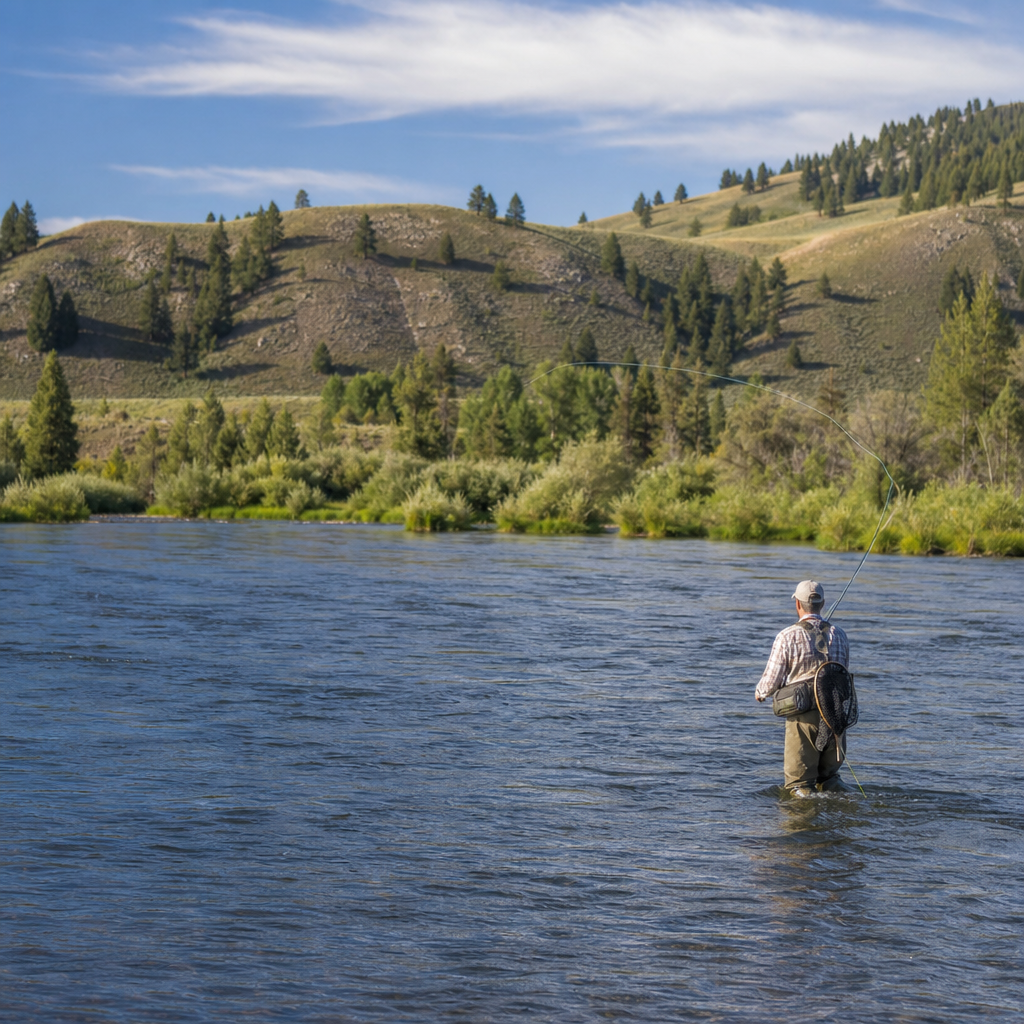
The Henry’s Fork is one of the defining rivers in American fly fishing, a place where technical dry-fly hatches, varied water types, and storied history meet in a single destination. When anglers talk about iconic waters, they usually mean rivers that shaped modern tactics and still demand thoughtful fishing today, and the Henry’s Fork in eastern Idaho belongs at the top of that list. It is not one river in a simple sense, but a system of reaches with distinct personalities: the Railroad Ranch, Box Canyon, Harriman State Park water, lower river banks, broad flats, and productive sections around Ashton and St. Anthony. That range is why this river works so well as a hub within fly fishing destinations. A visiting angler can encounter spring-creek style sight fishing, pocketwater nymphing, powerful streamer runs, and evening spinner falls in the same trip.
In practical terms, fishing the Henry’s Fork means matching strategy to location, season, and insect activity more precisely than on many Western rivers. Water clarity is usually high, trout are often selective, and the fish see serious pressure during peak months. Success depends less on lucky casts and more on observation, rig control, and disciplined presentation. I have found that anglers who approach the river as a series of separate fisheries improve faster than those who treat it as one continuous float or one generic trout stream. Understanding current speed, weed growth, light angle, and bug timing matters here. So does knowing when to stop casting, watch feeding rhythm, and change one detail at a time.
The Henry’s Fork matters because it teaches transferable lessons. If you can fool a Ranch rainbow on a flat calm afternoon, you become better on spring creeks everywhere. If you can read Box Canyon currents and keep a nymph in the strike zone without drag, you become better on freestone pocketwater. If you can plan a trip around water temperatures, dam releases, and hatch windows, you fish more efficiently on any destination river. This article covers the Henry’s Fork as an iconic water and as a practical base for anglers exploring the broader fly fishing destinations category, with strategies, seasonal planning, access guidance, and gear recommendations that hold up on the river itself.
Why the Henry’s Fork Is an Iconic Water
The Henry’s Fork is iconic because it combines history, challenge, and diversity better than almost any trout river in the West. It rises from Big Springs near Island Park, gathers character through meadows, canyons, and irrigation-influenced lower sections, and eventually joins the Snake River. Along that path, it supports robust populations of wild rainbow and brown trout, rich aquatic insect life, and a culture of technical fly fishing that has influenced guide techniques, fly design, and tackle choices for decades. Names such as Harriman State Park, Railroad Ranch, and Box Canyon carry weight because they represent specific styles of fishing that advanced anglers study and travel for.
Its reputation was built in part on difficult dry-fly fishing. Ranch trout often feed in smooth water where drag is obvious and refusal is immediate. Long leaders, exact fly choice, and careful positioning are not optional there. Yet the river is not only a dry-fly showcase. In Box Canyon, weighted nymphs, Czech-style contact drifts, and small streamers can produce explosive days. On lower reaches, hoppers, beetles, and attractor dries can bring less technical but still rewarding fishing. This range keeps the Henry’s Fork relevant to beginners, intermediates, and experts. A river becomes iconic when it keeps teaching people after the first trip, and this one does.
Key River Sections and How to Fish Each One
The upper system around Big Springs and the Ranch is classic clear-water trout fishing. Here, stealth is everything. Wear muted clothing, stay low, and avoid false casting over fish. I usually begin with a twelve- to fifteen-foot leader tapered to 5X or 6X, then extend tippet as needed during flat-water hatches. Cast from below and to the side when possible so the fly arrives before the leader. Reach casts, pile casts, and aerial mends are useful, but the cleanest solution is often better wading position. If fish are feeding in lanes between weed beds, target the first confident riser rather than casting through the group.
Box Canyon is nearly the opposite experience. Fast, complex currents and structure reward close-range control. A shorter leader, heavier flies, and an indicator or tight-line setup make sense. Many anglers fish a stonefly nymph paired with a smaller mayfly or caddis imitation, adjusting split shot until flies tap bottom occasionally without constant snagging. This is where a high-stick drift shines. Keep as much line off turbulent currents as possible. The fish here are strong and opportunistic, and streamer swings near shelves or deeper slots can move larger browns, especially during lower light or rising flows.
Lower river sections near Ashton, Chester, and St. Anthony offer more forgiving water and broader tactical options. During summer, bank grass, undercut edges, and foam lines set up terrestrial fishing with hoppers, ants, and beetles. In shoulder seasons, nymph rigs and streamers cover water efficiently. These sections are often better choices for anglers who want less technical sight fishing and more chances at aggressive takes. Wind can be a factor, so slightly stouter leaders and more aerodynamic patterns help. If the Ranch humbles you, the lower river can restore confidence without giving up the chance at excellent trout.
Seasonal Strategy: Matching Tactics to Conditions
Timing matters on the Henry’s Fork more than many visitors expect. Spring often means variable weather, cold mornings, and productive subsurface fishing. Blue-winged olives can provide dry-fly windows, but nymphs usually carry the day until water and air temperatures stabilize. Runoff affects some reaches less dramatically than on freestone rivers, especially around the spring-fed Ranch water, which is one reason the system is so attractive in late spring and early summer. Still, conditions shift by section, and checking flows, weather, and local reports before driving between reaches saves time.
June and early July are famous for major hatches, especially salmonflies in the right stretches, along with golden stones, green drakes, flavs, PMDs, caddis, and spinner falls depending on timing and reach. During these periods, fish can become both more active and more selective. A common mistake is assuming a big hatch guarantees easy fishing. In reality, abundant naturals often mean trout inspect flies carefully. Match silhouette first, then size, then behavior. A cripple, emerger, or spent pattern frequently outfishes a clean high-floating dun when trout feed just below the surface or on trapped insects.
Late summer and early fall bring terrestrials, tricos in some areas, mahogany duns, lingering caddis, and excellent morning or evening windows. Weed growth can complicate drifts, but it also creates feeding lanes and security for trout. Autumn can be one of the best times for anglers who prefer fewer crowds and a mix of dry flies, nymphs, and streamers. Browns become more aggressive, and weather is often ideal. Winter is specialized but not impossible, especially on milder days in certain reaches; however, most destination anglers will find the river at its broadest and most instructive from late spring through fall.
Hatches, Fly Selection, and Presentation Details
If there is one rule on the Henry’s Fork, it is that presentation outranks pattern, but pattern still matters enough to ignore at your peril. The core hatch list includes salmonflies, golden stones, pale morning duns, flavs, green drakes, gray drakes, caddis, blue-winged olives, tricos, and terrestrials. Carry adults, emergers, cripples, and spinners in multiple sizes. On difficult fish, profile and stage are often more important than exact color. A fish refusing a size 16 PMD dun may eat a size 16 cripple immediately because it sits lower and looks vulnerable.
I organize fly choice by feeding behavior. Splashy rises near banks during stonefly activity suggest adults or skated dries in the right water. Quiet sips in slicks usually call for flush duns, emergers, or spinners with long drag-free drifts. Random bulges beneath caddis often mean swinging pupa or dead-drifting emergers in the film. When no insects are obvious, a small pheasant tail, perdigon, zebra midge, or soft hackle often reveals what level fish are using. This process is more reliable than changing flies blindly every five minutes.
| Condition | Best Starting Tactic | Typical Patterns | Key Adjustment |
|---|---|---|---|
| Flat water with visible risers | Long leader dry-fly presentation | PMD cripple, spinner, CDC emerger | Lengthen tippet and reduce false casts |
| Fast canyon runs | Indicator or tight-line nymphing | Stonefly nymph, perdigon, caddis pupa | Add weight until flies tick bottom occasionally |
| Evening caddis activity | Film or swing presentation | Elk hair caddis, pupa, soft hackle | Fish both dead drift and short swing |
| Windy summer banks | Terrestrial search fishing | Hopper, ant, beetle | Target undercut edges and grassy seams |
Tippet choice should match both fish behavior and water type. On the Ranch, 6X is common and 7X is occasionally justified for tiny flies or ultra-flat conditions, though knot strength and fish-fighting margin drop quickly. In broken water, 4X or 5X is usually better because turnover improves and trout are less line shy. Fluorocarbon helps subsurface presentations because it sinks and resists abrasion, while nylon remains excellent for dry flies because it floats better. Those are small details, but on this river small details turn refusals into eats.
Gear, Access, and On-the-Water Decision Making
A nine-foot five-weight is the standard Henry’s Fork rod for good reason. It covers dry flies, moderate nymphing, and smaller streamers without compromise. I also like a dedicated four-weight for Ranch dry-fly work and a six-weight for Box Canyon or windy lower-river streamer fishing. Bring spare spools or reels with floating and sink-tip options if you plan to fish multiple sections. Waders are useful all season because even summer mornings can be cold, and careful footing matters around weeds, slick rocks, and soft banks.
Access ranges from straightforward public pullouts to more regulated and etiquette-sensitive areas. Harriman State Park and Railroad Ranch demand patience, walking, and respect for other anglers because many fish are targeted visually. Give wide space. Do not step into a flat someone is carefully stalking. In canyons and roadside stretches, boat positioning and bank access can create conflicts if anglers rush water. The best approach is simple: communicate early, rotate through productive lies, and never assume your line of travel outranks another angler’s established position.
Decision making on the river should follow a sequence. First, identify water type and likely feeding level. Second, confirm insects or forage. Third, choose the least complicated rig that reaches the fish effectively. Fourth, evaluate after a handful of quality drifts, not after one imperfect cast. I see many anglers over-adjust because the Henry’s Fork has a reputation for difficulty. The river is demanding, but it is not mystical. Trout still respond to food delivered naturally at the right depth and speed. Staying methodical is usually the difference between a frustrating day and a strong one.
Why This River Anchors the Iconic Waters Hub
As a hub within fly fishing destinations, the Henry’s Fork connects nearly every theme anglers search when they plan iconic waters trips: legendary hatches, technical dry-fly opportunities, family-accessible stretches, guided float options, walk-and-wade challenge, and nearby regional pairings with the South Fork of the Snake, Yellowstone area waters, and other Idaho trout streams. It is the rare destination that supports a beginner’s first memorable rise and an expert’s lifelong obsession with one difficult fish. That breadth makes it an ideal starting point for a larger exploration of marquee rivers.
The practical advantage of treating this page as your central resource is that trip planning becomes clearer. Start by choosing the experience you want: sight fishing to selective risers, covering fast water with nymphs, throwing streamers for larger browns, or building a trip around hatch timing. Then match lodging, shuttle needs, guide days, and daily drive times to the relevant reach rather than booking a generic Henry’s Fork vacation. That simple planning step improves success more than buying another box of flies.
The Henry’s Fork rewards anglers who prepare carefully, observe patiently, and fish with intent. Learn the character of each section, carry patterns for the major insect stages, respect access and angling etiquette, and let conditions dictate your tactics. If you are building a serious list of fly fishing destinations, this river belongs near the top because it teaches as much as it gives. Use this hub as your starting point, then map your season, narrow your target water, and get on the river when the next hatch window opens.
Frequently Asked Questions
What makes the Henry’s Fork so challenging compared with other trout rivers?
The Henry’s Fork is challenging because it asks anglers to do more than simply find fish and put a fly in front of them. In many stretches, especially technical dry-fly water, trout see steady pressure, inspect food carefully, and often feed in slow, clear currents that give them plenty of time to reject an imitation. That means success usually depends on a complete presentation: choosing the right fly size and profile, matching the stage of the hatch, approaching from the correct angle, controlling drag, and placing the cast with precision. On a river like this, a close-enough drift often is not close enough.
Another reason the Henry’s Fork is so respected is that it is really a collection of different fisheries rather than one uniform river. Some reaches reward careful wading and long leaders with tiny dry flies, while others fish better with attractors, terrestrials, nymphs, or streamer tactics depending on the season and water conditions. The river’s character changes from section to section, so anglers who do well tend to think in terms of specific water types instead of assuming one strategy will work everywhere.
Perhaps most importantly, the Henry’s Fork exposes weaknesses in timing and observation. Anglers often arrive eager to cast, but the better approach is to stop, watch, and let the river reveal what is happening. Are fish feeding consistently or only in short windows? Are they eating emergers just below the film rather than adults on top? Is the current speed where the fish sits different from the current speed where your fly lands? Those details matter tremendously here, which is why the river has such a reputation for both frustration and brilliance. It can humble experienced fly fishers, but that same technical demand is exactly what makes it so memorable.
When is the best time to fish the Henry’s Fork, and how should tactics change through the season?
The best time to fish the Henry’s Fork depends on the experience you want. For anglers focused on famous dry-fly fishing, late spring through summer often gets the most attention because that is when many of the river’s well-known hatches occur and when trout can be found rising selectively in classic slicks, flats, and seams. Early season can offer strong nymphing and streamer opportunities, fewer crowds in some windows, and fish that are more willing to eat subsurface patterns before they become fully keyed on surface insects. As the season progresses, dry-fly fishing becomes more central, but so does the need for precision.
Summer is typically when anglers dream about the Henry’s Fork, and for good reason. This is the period when careful hatch matching, spinner falls, PMDs, caddis, and terrestrial patterns can all play major roles, depending on the stretch and timing. The key is not simply to show up with a generic summer fly box, but to fish the daily rhythm. Mornings may call for searching with attractors or prospecting with nymphs, midday can bring hatch activity, and evenings may provide some of the most consistent surface feeding of the day. Wind, cloud cover, temperature, and angling pressure can all shift that rhythm quickly.
In late summer and early fall, terrestrial fishing often becomes especially important. Hoppers, beetles, and ants can pull excellent trout to the surface, particularly when hatch intensity becomes less predictable. Fall can also be an outstanding time for anglers who enjoy a quieter river and a mix of dry-dropper, nymph, and streamer tactics. In every season, the broad strategy remains the same: match your method to the specific reach, pay attention to insect activity before tying on a fly, and be willing to switch from dry flies to emergers or nymphs when trout are present but refusing your surface offering.
What flies and leader setups work best on the Henry’s Fork?
A strong Henry’s Fork setup usually starts with versatility rather than a single magic pattern. On such a varied river, anglers should carry a thoughtful selection of mayfly duns, spinners, caddis adults and emergers, midge patterns, small attractors, and terrestrials such as hoppers, beetles, and ants. In addition, a well-rounded box should include nymphs in sizes and profiles that reflect the insects present in the river, along with a few streamers for lower-light periods or more aggressive fish. The best fly choice is almost always the one that matches what trout are actually seeing at that moment in that specific piece of water.
For technical dry-fly fishing, leader design matters nearly as much as fly selection. Long leaders are standard because they help separate the fly line from the fish and allow a more delicate presentation. Many anglers fish leaders in the 12- to 15-foot range, often tapering to fine tippet when fish are especially selective and water is calm and clear. The exact tippet size depends on fly size, wind, and trout behavior, but downsizing can make a major difference when fish are refusing otherwise good drifts. At the same time, going too light can make it harder to turn over the fly or land fish efficiently, so balance is important.
For nymphing or fishing larger terrestrials, leader choices can be shortened or adjusted for better turnover and control. If you are fishing a hopper-dropper rig, for example, you may want a setup that can still land softly but has enough power to handle two flies and changing wind. On the Henry’s Fork, it is wise to carry multiple pre-tied leaders or the materials to rebuild them on stream. Conditions can shift quickly, and anglers who adapt leader length, tippet diameter, and fly style to match current speed, fish position, and insect activity consistently outperform those who rely on one standard rig all day.
How should I approach rising trout on technical water like the Henry’s Fork?
The first step is to avoid rushing the shot. On technical water, a feeding trout often gives you more information than you realize if you take a minute to study it. Watch the rise form, the cadence, the lane the fish is using, and whether it is moving side to side or holding tightly in one feeding seam. A confident head-and-tail rise may suggest adults, while subtler dimples can indicate emergers or very small insects in the film. Just as important, identify all the conflicting currents between you and the trout. Many failed presentations on the Henry’s Fork happen because anglers focus on distance and accuracy but overlook how quickly drag will develop.
Once you understand the feeding lane, plan your approach to minimize visibility and maximize drift length. That may mean wading less, not more. In clear, calm water, every unnecessary step can alert fish. Often the best position is slightly downstream and off to the side, where you can present the fly first and keep most of the leader off the most sensitive current seam. Reach casts, aerial mends, and slack-line presentations are especially valuable because they buy the fly a few extra inches or seconds of natural drift, and on this river that can be the difference between a refusal and a take.
If a trout refuses repeatedly, resist the temptation to cast over it again and again with the same setup. Change one variable at a time. You might switch from a dun to an emerger, lengthen the leader, drop tippet diameter, alter the angle of presentation, or target the fish with less line on the water. Sometimes the trout is not rejecting the fly pattern at all; it is rejecting micro-drag, leader flash, or an imitation sitting too high in the film. The Henry’s Fork rewards anglers who treat each fish like a small problem to solve rather than a target to force. That patient, analytical style is often what turns difficult risers into landed trout.
What are the most important practical tips for a successful first trip to the Henry’s Fork?
For a first trip, one of the smartest things you can do is narrow your focus. Because the Henry’s Fork is a system with multiple reaches and personalities, trying to fish everything in a short visit usually leads to rushed decisions and shallow observation. Pick one or two sections that match your goals. If you want the classic technical dry-fly experience, devote the time to that style of water and accept that you may spend as much time watching as casting. If you want a broader introduction, choose water that allows more than one tactic and learn how fish behavior changes throughout the day.
Preparation matters here. Bring a range of leaders and tippet sizes, enough fly patterns to cover both hatch matching and searching tactics, and clothing for shifting mountain weather. Good wading judgment is also important. Some sections are more straightforward than they look, while others require real care because current speed, footing, and weed growth can complicate movement. Polarized glasses are essential, and not just for spotting fish. They help you read subtle current seams, identify feeding lanes, and see how your fly drifts in relation to conflicting currents.
Finally, fish with humility and flexibility. The Henry’s Fork has a way of punishing rigid plans. A hatch you expected may be light, trout may feed subsurface when you wanted dry-fly action, or a stretch that looked perfect may simply not come alive until later in the day. Successful anglers adjust without frustration. They observe first, fish second, and let conditions dictate tactics. If you approach the river that way, your first trip is far more likely to be