Preparing for an international fly fishing trip starts long before you zip your rod tube or check your passport. It is a planning exercise that combines travel logistics, fisheries knowledge, border compliance, equipment protection, and realistic expectations about weather, culture, and guide services. In practical terms, international fly fishing travel means leaving your home country to fish waters governed by different laws, seasons, currencies, languages, and conservation rules. The difference between a smooth trip and an expensive mistake usually comes down to preparation. I have learned this firsthand on destination trips where a missing customs form, an overweight duffel, or the wrong fly line mattered more than casting distance.
This guide is the hub for tips for international travel within the broader fly fishing destinations topic. Its purpose is to help anglers prepare for saltwater flats, Patagonia rivers, New Zealand backcountry streams, Nordic salmon beats, or jungle peacock bass lodges with the same disciplined process. The core issues are universal: documents, flights, baggage, tackle selection, health and safety, money, communication, and on-the-water etiquette. International fly fishing also carries special risks. Airlines lose rod cases. Border officers question reels and flies. Wading boots may trigger invasive-species concerns. Medical care may be remote. A guide’s definition of “expert caster” may not match yours. Good planning reduces those risks and protects the most valuable part of the trip: fishing time.
Why does this matter so much? Because destination fishing is usually expensive, seasonal, and difficult to rebook. Peak weeks for Atlantic salmon, giant trevally, sea-run browns, or golden dorado can be narrow. Weather windows can close. Permit systems can be strict. If your luggage arrives three days late on a six-day program, you cannot recover that lost opportunity. That is why experienced traveling anglers build redundancy into everything. They carry one fishable outfit onboard when possible, duplicate leaders and critical flies, document every booking in writing, and confirm local regulations directly rather than relying on forum advice. A successful international fly fishing trip is not luck. It is a repeatable system.
Research the destination before you book
The first step is matching the destination to your actual fishing goals and skill level. Ask direct questions: What species are realistically available during your exact dates? What water types will you fish? How much walking, wading, or boat time is typical? What casting distances are normal? A week targeting permit on foot in Belize requires different preparation than floating for trout in Chile or swinging for salmon in Iceland. I always ask lodges and outfitters for a sample week, not just a highlight reel. The useful details are wind expectations, average daily run times, preferred rod weights, and whether fishing is sight-based or blind. Those answers determine gear, clothing, and physical preparation.
Verify seasons and regulations with primary sources whenever possible. National fisheries departments, park agencies, and official outfitter materials are more reliable than social posts. Check license requirements, protected species rules, catch-and-release mandates, barbless-hook policies, and boot-cleaning standards. New Zealand, for example, has strict biosecurity expectations, while many saltwater destinations have marine park rules affecting access and species handling. If the trip involves migratory fish, confirm whether conservation closures are possible in low-water or high-temperature periods. Also review import and transit rules for medications, satellite communicators, and drones if you plan to carry them. International travel problems usually begin when anglers assume fishing gear is treated differently from normal baggage. It is not.
Choose outfitters, guides, and lodges carefully
A strong outfitter is risk management, not just hospitality. Look for operations that answer questions precisely, provide current tackle lists, explain cancellation terms clearly, and describe backup plans for weather or blown rivers. I pay close attention to whether they discuss limitations openly. A trustworthy guide service will tell you when a destination demands advanced double-hauling, difficult boat entries, or long horseback approaches. Ask who owns the concession, who actually guides your days, whether transfers are private or shared, and what happens if weather delays internal flights. Read independent reviews, but give more weight to detailed accounts that mention logistics, communication, and fish handling than to emotional five-star praise.
It also helps to understand the structure of your trip. Some international fly fishing packages are lodge-based and all-inclusive. Others rely on charter flights, moving camps, liveaboards, or mixed hotel nights in transit cities. Every transfer adds complexity and more chances for delayed bags or missed connections. Before paying a deposit, request a written itinerary with flight times, baggage limits, tackle recommendations, and emergency contacts. Clarify gratuities, loaner gear, alcohol policies, Wi-Fi availability, laundry service, and whether non-angling companions are realistic at the property. These details matter because they affect packing, budgeting, and expectations. In destination travel, vague promises are a warning sign.
Build a travel plan around documents, flights, and insurance
Your passport should generally have at least six months of validity beyond travel dates, plus blank pages for entry stamps where required. Many anglers also need visas, reciprocal fees, or proof of onward travel. Keep printed and digital copies of your passport, travel insurance, flight confirmations, fishing licenses, prescriptions, and outfitter contacts. I store these in cloud access, on my phone, and in a waterproof pouch. For international fly fishing trips with remote segments, use flights that leave buffer time before charters or lodge transfers. A same-day connection from an international arrival to a bush plane is often a gamble. One weather delay can erase the whole chain.
Insurance deserves more attention than many anglers give it. Standard trip insurance may cover cancellations and baggage delay, but remote fishing travel often needs broader medical evacuation coverage. Read the policy wording for adventure activities, baggage value caps, and exclusions for political disruption or severe weather. If you are carrying premium rods, reels, and camera gear, document serial numbers and replacement values before departure. Take photos of each item and your packed bags. That makes airline claims and insurer claims easier if equipment is lost or damaged. Also notify credit card companies of foreign travel and carry more than one payment method. Rural lodges and transfer operators sometimes cannot process a single card brand reliably.
Pack the right tackle and protect it in transit
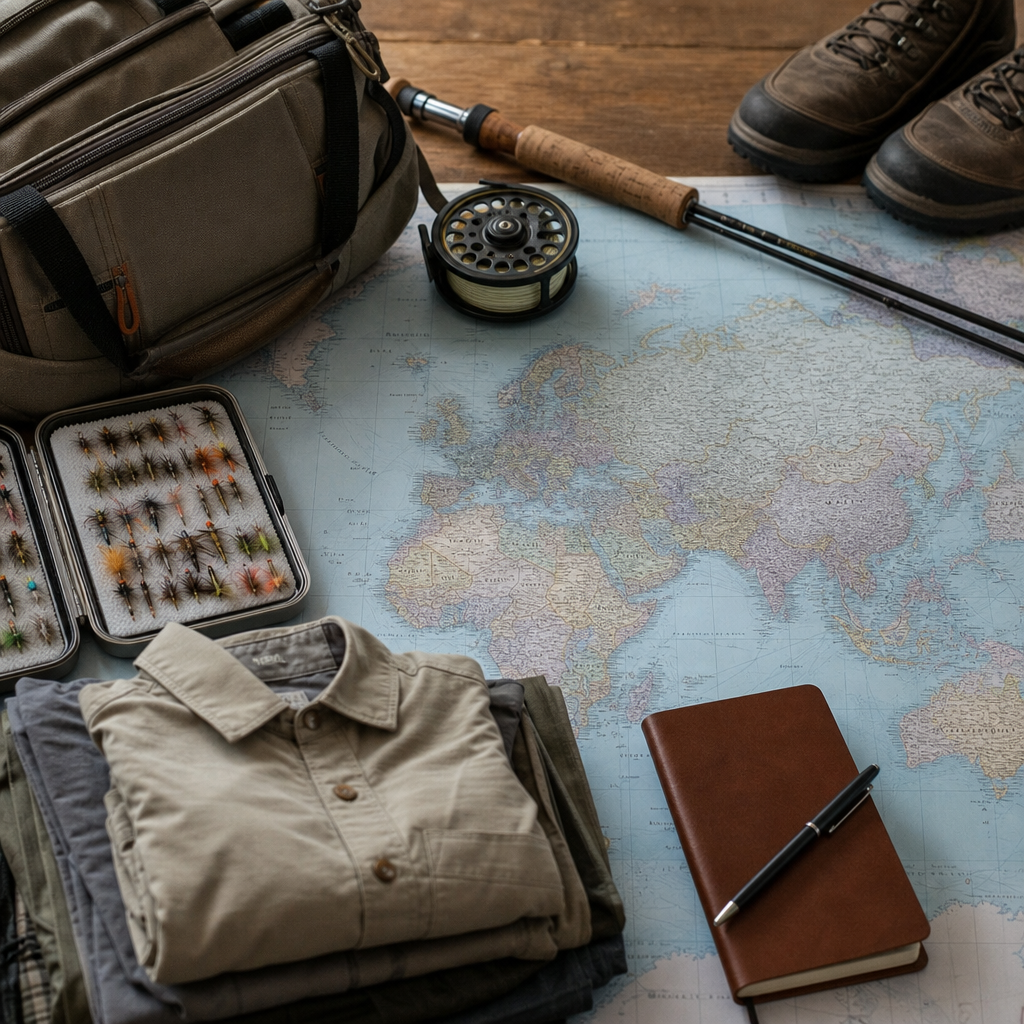
The best packing strategy is modular redundancy. Carry the critical items that let you fish if checked luggage is delayed: one rod if allowed, one reel, essential fly box, leaders, tippet, medications, and a change of fishing clothes. Checked bags should hold backups, boots, tools, and bulkier items. For destination-specific tackle, follow the guide’s recommendation first, then add one contingency setup. Trout travel usually means floating and sinking options, long leaders, and locally effective nymphs or streamers. Flats travel usually means tropical lines, abrasion-resistant leaders, and duplicate pliers and sun gloves. Big-fish destinations need tested knots, fresh backing, and reels with smooth drags. International fly fishing punishes improvised gear choices.
| Trip Type | Typical Rod Weights | Critical Backup Item | Common Packing Mistake |
|---|---|---|---|
| Trout rivers | 4 to 6 weight | Extra floating line | Too few indicator and euro nymph leader options |
| Saltwater flats | 8 to 10 weight | Second tropical line | Packing coldwater fly lines that wilt in heat |
| Salmon or steelhead | 7 to 9 weight or spey setup | Spare sink tips | Ignoring local hook and fly size rules |
| Jungle warmwater | 8 to 10 weight | Wire or heavy bite tippet | Underestimating fly durability and hook strength |
Hard cases protect rods, but reels and fly boxes need equal attention. Use padded reel cases, crush-resistant boxes for delicate saltwater patterns, and waterproof labels inside every bag. Avoid loose tools that can puncture waders or clothing in transit. Weigh your luggage at home and compare it with each airline’s allowance, including regional carriers, which often have stricter limits than long-haul flights. If your itinerary includes floatplanes or helicopters, soft duffels are usually better than rigid suitcases. Finally, clean and dry all boots, nets, and wading gear thoroughly before departure. Many countries take invasive species seriously, and a muddy sole can create avoidable delays at inspection.
Prepare for health, safety, money, and communication
International fishing travel often reaches places where small problems become big ones quickly. Start with a travel-health review four to eight weeks before departure. Check vaccine recommendations, malaria guidance if relevant, drinking-water advice, and prescription rules for the destination and any transit country. Pack medication in original containers, plus a basic field kit with blister care, anti-diarrheal tablets, pain relief, antihistamines, disinfectant, and waterproof bandages. Sun exposure, dehydration, and foot injuries are more common on fishing trips than dramatic emergencies. Polarized glasses with full coverage, high-SPF sunscreen, a buff, and lightweight sun gloves are not optional in tropical or high-altitude environments.
Safety also includes practical communication planning. Download offline maps, save the address of every hotel and lodge, and understand whether your phone plan supports roaming. In many destinations, a local SIM or eSIM is cheaper and more reliable than international roaming. Use messaging apps your guides actually monitor. For money, carry a mix of cards and some local currency in small denominations for airport tips, taxis, or roadside purchases. Know whether gratuities are expected in cash and in which currency. I also recommend discussing emergency procedures with the lodge before arrival: nearest clinic, evacuation route, satellite communication capability, and what happens if weather cuts access. Calm trips are built on clear contingencies.
Fish effectively by adapting to local conditions and etiquette
Good preparation does not end at the airport. Once on the water, successful international fly fishing depends on adapting quickly to local methods. Practice the cast your destination requires before you leave. For saltwater flats, that may mean fast shots at 40 to 70 feet in wind, with one back cast and immediate line management. For New Zealand-style sight fishing, it may mean accurate presentations on long leaders with minimal false casting. For salmon or steelhead, it could mean sustained-anchor spey casts and depth control. Guides can improve your execution, but they cannot compress months of muscle memory into the first morning. Pre-trip practice saves prime fishing hours.
Etiquette matters because you are a guest in both a fishery and a culture. Listen closely to your guide’s instructions on fish handling, wading lanes, boat positioning, and rotation through productive water. Ask before photographing local staff or sensitive locations. Respect private water boundaries and community access rules. If the guide says a fishery depends on quick releases or keeping fish wet, follow that standard exactly. Cultural awareness is just as important off the water. Learn a few phrases in the local language, be punctual for transfers, and dress appropriately in towns and airports. The best-traveled anglers are remembered not for the number of fish they caught, but for how professionally they traveled.
Use a simple system to avoid common mistakes
Most costly failures in destination travel are repetitive and preventable. Anglers overpack clothing and underpack terminal tackle. They trust one airline tag with all their rods. They arrive unpracticed for wind, current, or boat shots. They ignore baggage limits on domestic legs, forget adapters and charging cables, or assume the lodge shop will carry exact flies and line sizes. Another common error is planning every day around trophy outcomes rather than fishable realities. International trips improve when you prepare for the median condition, not the brochure image. Ask what happens on tough days, then pack and train for that version. Prepared anglers salvage marginal weather; unprepared anglers lose confidence quickly.
A reliable system is simple: confirm documents, confirm transfers, confirm baggage rules, confirm tackle, and confirm health needs. Then create two checklists, one for carry-on essentials and one for checked gear, and review both forty-eight hours before departure. Share your itinerary with someone at home. Label every piece of luggage inside and out. Keep one day of clothing and your core fishing setup with you whenever airline rules allow. When you land, recheck your next segment, hydrate, and sleep aggressively before the first fishing day. These habits are not glamorous, but they consistently protect time on the water. If you are planning a destination trip, use this hub as your starting checklist and build your own travel system before you book.
Frequently Asked Questions
What should I plan first when preparing for an international fly fishing trip?
Start with the destination, the fishery, and the legal entry requirements, then build everything else around those foundations. Many anglers make the mistake of focusing first on rods, flies, or dream-species lists, but international travel works best when the planning sequence is practical. Confirm the best season for the target species, whether the river or lodge is operating during your intended dates, and whether water levels, migration timing, or weather patterns can affect success. A famous fishery may be technically open, for example, but fish poorly during runoff, extreme heat, or seasonal closures.
Once the fishing window is clear, review passport validity, visa rules, vaccination or health requirements, and any entry forms needed for the country you are visiting. Some destinations require your passport to be valid for six months beyond your travel dates, and some airlines or border officials are strict about that detail. After that, look at domestic transfers, baggage restrictions, travel insurance, and how much buffer time you need between flights in case gear is delayed. If your trip depends on remote charter flights, boat departures, or lodge pickups, small timing errors can create major problems.
It is also wise to communicate with the lodge, outfitter, or guide service early. Ask what is included, what licenses are required, what equipment they provide, and what local regulations apply. This is the stage where you clarify whether you need sinking lines, specific leader strengths, barbless hooks, felt-free boots, or waterproof duffels for skiff or floatplane travel. Good trip preparation is not just packing well; it is reducing surprises. The best first step is to treat the trip like both an angling adventure and an international logistics project.
How do I make sure my fly fishing gear complies with airline, customs, and border rules?
Begin by separating airline rules from country-specific import rules, because they are not always the same. Airlines care about carry-on dimensions, checked baggage weight, and restrictions involving sharp objects or sporting equipment. Border and customs officials are more concerned with what you are bringing into the country, whether it must be declared, and whether it poses agricultural, biosecurity, or commercial concerns. Rods, reels, lines, flies, boots, and tools may seem routine to an angler, but they can draw scrutiny if packed carelessly or declared inaccurately.
Check your airline’s policy on rod tubes, reels, and fly boxes before departure and again shortly before the trip, because policies change. Some airlines allow rod tubes as carry-ons if they fit overhead, while others require them to be checked. Forceps, nippers, knives, and certain tools are commonly better packed in checked luggage to avoid security issues. For valuable reels and fragile rods, use hard cases and label everything clearly. It is also smart to spread critical gear across bags when possible, so one delayed duffel does not ruin the first several fishing days.
At the border level, pay close attention to items that may trigger cleaning or declaration requirements, especially used wading boots, wet gear, or anything carrying dirt, algae, plant matter, or animal residue. Countries with strong biosecurity laws can be very strict about invasive species prevention. Clean and dry your equipment thoroughly before travel, and if possible, travel with gear that looks obviously sanitized and well maintained. If you are carrying expensive equipment, having a gear list with approximate values, serial numbers, and proof of ownership can help with customs questions and insurance claims. The goal is simple: pack in a way that protects your gear, satisfies airline rules, and avoids avoidable border complications.
What documents, permits, and insurance should I have before leaving for a fly fishing trip abroad?
You should have more than just a passport and plane ticket. At minimum, prepare your passport, any required visa or arrival authorization, travel itinerary, accommodation or lodge confirmations, emergency contact information, and copies of your travel insurance policy. Beyond standard travel documents, anglers often need fishing licenses, access permits, park entries, conservation stamps, or species-specific regulations depending on the country and fishery. In some places, the outfitter handles these details; in others, the responsibility is entirely yours. Never assume they are included unless that has been clearly confirmed in writing.
Insurance deserves special attention. Basic trip insurance may cover cancellations or lost baggage, but a serious international fishing trip often justifies broader coverage. Look for protection for medical emergencies, evacuation from remote areas, trip interruption, and loss or damage to sporting equipment. If you are going far from major hospitals or traveling by bush plane, skiff, horseback, or vehicle over rough terrain, evacuation coverage can be especially important. Also confirm whether fishing-related injuries and remote outdoor activities are covered, since policy exclusions vary more than many travelers realize.
It is helpful to carry both printed and digital copies of important records, including passport identification pages, policy numbers, vaccination records if relevant, and outfitter contact information. Keep one set in your carry-on and another accessible on your phone or cloud storage. If the destination requires customs declarations for high-value gear, temporary imports, or medications, handle that before arrival rather than trying to improvise at the counter. Well-organized documents do not just help you enter a country; they make delays, claims, and emergencies much easier to manage.
How should I pack for changing weather, local conditions, and different fishing regulations?
Pack for the actual fishery, not the fantasy version of the trip. International fly fishing travel often means dramatic swings in weather, terrain, and daily routine. Even in classic destinations, you may face cold mornings, warm afternoons, strong wind, heavy rain, intense sun, or long boat rides in the same week. Start by asking the outfitter for a current packing list specific to the season, then compare that with long-term weather patterns and recent reports. A river trip in Patagonia, saltwater flats week in the tropics, and alpine trout program in New Zealand all demand very different layers, footwear, sun protection, and line choices.
From a clothing standpoint, focus on systems rather than single-purpose items. Moisture-wicking base layers, insulating mid-layers, quality rain gear, quick-dry pants, sun gloves, buffs, hats, and reliable wading or boat footwear are usually more useful than bulky extras. Pack medications, polarized sunglasses, sunscreen, lip protection, and a compact waterproof bag for daily essentials. If your destination is remote, assume that replacing forgotten items will be difficult or expensive. For fishing tackle, carry the core tools needed to adapt: a sensible range of leaders and tippet, extra lines or spools, flies matched to local food sources, and backup versions of the most critical pieces.
Regulations matter just as much as weather. Some fisheries require barbless hooks, prohibit felt soles, restrict wading in spawning zones, limit catch-and-release handling, or ban certain fly types or weights. Others have cultural or conservation expectations that may not be printed on a standard license. Ask in advance what is legal, what is considered ethical locally, and what your guide expects. Smart packing is really about compatibility: your clothing should fit the climate, your gear should fit the fishery, and your approach should fit the rules and norms of the place you are visiting.
How can I set realistic expectations and get the most out of guides, lodges, and local fishing culture?
The best international trips happen when anglers arrive prepared, adaptable, and respectful. Start by understanding that success abroad is not measured only by fish count or trophy size. Water conditions, weather shifts, travel fatigue, local regulations, and the natural unpredictability of fishing all influence results. A destination may be world-class and still produce difficult days. If your expectations are built entirely around social media highlights or brochure photos, you risk missing the actual value of the experience: learning a new fishery, fishing in a different cultural setting, and becoming a more versatile angler.
To get the most from guides and lodges, communicate clearly before the trip. Share your casting ability, species goals, physical limitations, dietary needs, and preferences honestly. A guide can tailor the day much better if they know whether you are comfortable with long wades, saltwater quick shots, streamer fishing, technical dry-fly presentations, or beginner-level instruction. Ask what a normal day looks like, how fishing time compares with transfer time, what equipment is available on site, and whether tipping customs differ from your home country. These details help align expectations and prevent awkward misunderstandings.
Respect for local culture is just as important as fishing skill. Learn basic phrases if a different language is spoken, understand local etiquette, and avoid treating the destination as a backdrop built solely for visiting anglers. Conservation priorities, land access traditions, and guide-client dynamics vary widely by country. In some places, stream access is highly regulated; in others, community relationships are central to the fishery’s future. Anglers who listen, adapt, and show appreciation usually have better experiences on and off the water. In practical terms, realistic expectations mean being prepared for challenges, trusting local expertise, and recognizing that a great international fly fishing trip is about far more than a single perfect day.