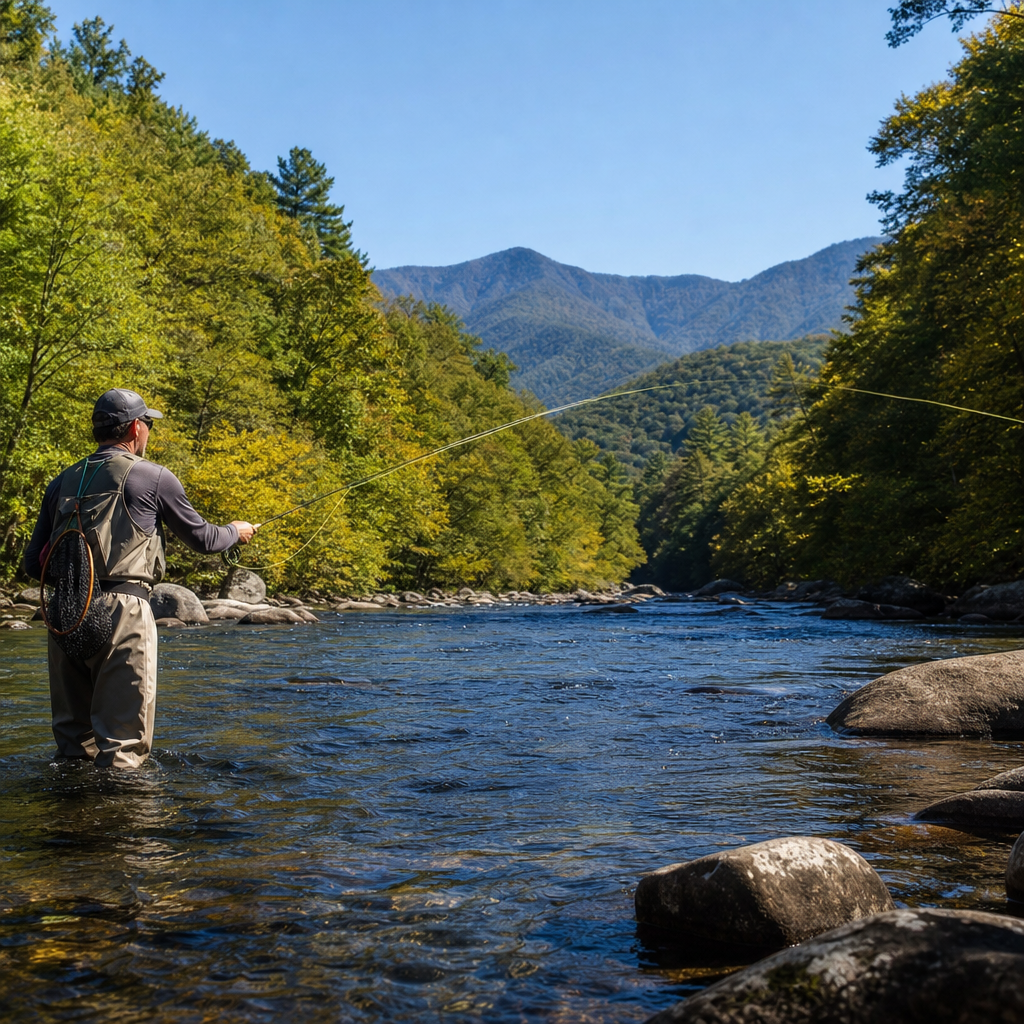
Fly fishing in the Smoky Mountains spans two states, dozens of coldwater streams, and one of the most accessible wild trout fisheries in North America. For anglers planning a trip to North Carolina and Tennessee, the Great Smoky Mountains region offers brook, rainbow, and brown trout; freestone streams from tiny rhododendron tunnels to broad pocketwater; and a long season shaped more by water temperature and elevation than by a strict opener. I have fished both sides of the park in high spring flows, low summer water, and clear autumn conditions, and the Smokies reward anglers who understand geography, hatches, access, and the practical differences between park water, tribal water, delayed-harvest streams, and tailwaters. This hub article covers the region comprehensively as a North America fly fishing destination, giving you the foundation to choose where to fish, when to go, what to carry, and how to connect this destination with related fisheries across the continent. If you want wild trout, short hikes, technical dry-fly opportunities, and scenery that feels remote even near popular towns, the Smokies deserve a place on your list.
The Smoky Mountains fishery centers on Great Smoky Mountains National Park and the surrounding mountain waters of western North Carolina and eastern Tennessee. In practical terms, “Smokies fly fishing” usually means freestone trout streams draining high-elevation watersheds, but the destination is broader than the park boundary. It also includes the Qualla Boundary in North Carolina, stocked and wild-trout waters managed by the Eastern Band of Cherokee Indians; classic Tennessee tailwaters such as the South Holston and Clinch within driving range; and destination towns including Bryson City, Cherokee, Waynesville, Sylva, Gatlinburg, Townsend, and Pigeon Forge that serve as access points. The key terms matter. Freestone streams rise and fall with rainfall and snowmelt, making wading safety and water clarity central decisions. Tailwaters are controlled by dam releases, often creating steadier temperatures and larger fish but requiring strict attention to generation schedules. Delayed-harvest water is managed under seasonal regulations that typically protect stocked fish for a period before harvest opens, making it a useful option for beginners and shoulder-season travel. Understanding those categories helps anglers match expectations to conditions instead of treating the entire region as one uniform fishery.
This destination matters within North America because it offers something many famous trout regions do not: a dense network of public water where wild trout are still the central attraction. In the western United States, anglers often think of long rivers, drift boats, and large ranch valleys. In the Smokies, the scale is tighter, the canopy is heavier, and presentations are shorter, but the quality of fishing can be exceptional. Southern Appalachian brook trout restoration has also made the region important from a conservation perspective. Great Smoky Mountains National Park contains one of the largest expanses of wild trout water in the eastern United States, with fisheries science and restoration work influencing stream management far beyond the park. For travelers building a broader North America fly fishing roadmap, the Smokies complement Rocky Mountain destinations, Canadian stillwaters, and western tailwaters by delivering a very different style of trout fishing: intimate, mobile, weather-driven, and deeply tied to mountain ecology.
Why the Smokies stand out in North America
The first reason anglers choose fly fishing in the Smoky Mountains is variety. On the same trip, you can fish tiny tributaries for Southern Appalachian brook trout, medium-sized park streams for wild rainbows, larger valley runs for browns, and nearby tailwaters for technical midge and sulphur fishing. That range is unusual within a compact geographic area. A second reason is access. Great Smoky Mountains National Park contains roughly 2,900 miles of streams, and while not all hold trout, the density of fishable water is immense. Roadside access along Little River, Deep Creek, Cataloochee, Oconaluftee, and other drainages means anglers with limited mobility or limited time can still reach productive water. Hikers can push farther into backcountry camps and tributaries for lighter pressure and higher-elevation fish.
The region also stands out because it teaches good angling habits. Smokies trout are not generally huge, though larger browns exist in lower reaches and adjacent rivers. Success comes from stealth, line control, reading pocketwater, and adapting quickly to changing conditions. In my experience, anglers who improve in the Smokies become better everywhere else. You learn to shorten drifts, approach from below, use current seams instead of fighting them, and carry flies that solve real situations rather than filling boxes with novelty patterns. The mountain setting adds another draw. Dense hardwood forests, mossed boulders, spring wildflowers, and clear runs beneath laurel make this one of the most atmospheric trout destinations in North America, especially for anglers who value wild fish over trophy metrics.
North Carolina waters: park streams, Cherokee, and gateway rivers
North Carolina offers the broader mix of public mountain options around the park. The Bryson City side gives quick access to Deep Creek, Noland Creek, and the North Carolina reaches of the Oconaluftee drainage inside the national park. These are classic Smokies freestones: plunge pools, pocketwater, boulder gardens, and short feeding lanes where a high-floating dry or dry-dropper shines. Deep Creek is especially useful for visiting anglers because it combines easy access near the lower section with hike-in opportunities upstream. The Oconaluftee can provide larger water and better high-water visibility than some smaller streams after rain, though flows still need close attention.
Cherokee deserves separate treatment because it operates under tribal management rather than state park regulations. The Qualla Boundary includes heavily stocked catch-and-keep sections, permit waters, and trophy water that can be a strong option when you want higher fish density or are introducing newer anglers to fly fishing. It is not the same experience as chasing wild trout in the park, but that is precisely the point: it expands the destination. Nearby, the Tuckasegee River adds another layer. This larger river around Bryson City and Dillsboro supports strong trout fishing, with sections known for floating, streamer opportunities, and productive nymphing. Delayed-harvest streams in western North Carolina, including waters near Sylva, Waynesville, and Cashiers, further widen the menu for anglers traveling during cooler months. For a North America destination hub, that diversity is central: the North Carolina side lets you build a trip around wild fish, stocked fish, walk-and-wade freestones, or float-friendly rivers without changing regions.
Tennessee waters: Little River, Abrams, and nearby tailwater options
Tennessee is the classic entry point for many Smokies anglers, especially through Townsend, Gatlinburg, and the Little River corridor. Little River is one of the most important trout streams in the park because of its accessibility and range. The lower sections near Townsend offer broad runs, pocketwater, and year-round opportunity, while upstream reaches become progressively more intimate. It is one of the best classrooms in the Smokies for learning where trout hold in broken water. Abrams Creek, entering through Cades Cove, fishes differently. It is more fertile than many park streams and can produce better aquatic insect diversity, stronger hatches, and trout that see more pressure. It is also less forgiving; stealth and precise drag-free drifts matter more there than in classic pocketwater.
West Prong, Middle Prong, and tributaries around Tremont add options for anglers who want roadside access with the chance to explore side streams for smaller wild fish. Outside the park, eastern Tennessee broadens the destination with nationally respected tailwaters. The South Holston, Watauga, and Clinch are not “Smokies pocketwater,” but they are close enough that many serious anglers combine them in one itinerary. The South Holston is especially known for sulphur hatches and technical dry-fly fishing, while the Clinch can produce excellent midge fishing and strong numbers. If a storm blows out the freestones, tailwaters can save a trip. That is a practical reason Tennessee matters in this regional hub: it gives anglers a weather hedge and a path to larger trout without leaving the broader Smoky Mountains travel footprint.
Best times to fish and how seasonal conditions change the game
Spring is the prime season for many anglers, and for good reason. March through May brings active trout, comfortable temperatures, and strong aquatic insect activity. Quill Gordons, Blue Quills, caddis, March Browns, Light Cahills, and assorted stoneflies all matter depending on elevation and timing. In high spring flows, larger visible dries such as stimulators or parachutes work well, often with a bead-head dropper beneath. Summer can still be excellent, especially early and late in the day and at higher elevations where water temperatures remain favorable. Terrestrials become increasingly important, and inchworm patterns under overhanging trees can be deadly in June and July. Afternoon thunderstorms can spike flows quickly, so anglers need to treat weather radar as part of their tackle.
Autumn is underrated and, in my view, one of the finest times to fly fish in the Smoky Mountains. Crowds thin after summer, browns become more aggressive ahead of spawning, and dry-dropper rigs remain effective well into October. Low clear water makes approach critical, but trout often feed confidently. Winter is the quiet season. Midday fishing on warmer afternoons can be productive, especially in lower elevations and on tailwaters, but freestone trout become less willing to move far. The right answer to “when should I go” depends on your priorities. For hatches and broad opportunity, choose spring. For solitude and foliage, choose fall. For family travel and high-country brook trout, summer works if you fish smart around temperature. For consistency during unstable weather, pair the park with a tailwater backup plan.
Essential flies, tackle, and methods for Smokies success
You do not need a complicated setup to fish these mountains well. A 7.5- to 9-foot 3- or 4-weight covers most park situations, though a 5-weight is useful on larger rivers and in windy conditions. Short, accurate casts matter more than distance. A standard floating line, tapered leaders in 7.5- to 9-foot lengths, and tippet from 4X to 6X will handle most scenarios. I carry more split shot and strike indicators for adjacent rivers than for classic pocketwater, where tight-line contact and small dry indicators often fish better. Wading staffs are wise during spring flows, and felt alternatives or sticky rubber soles with studs can make a major difference on algae-slick rock.
| Situation | Best Fly Patterns | Useful Tactic |
|---|---|---|
| Fast pocketwater in spring | Parachute Adams, Yellow Stimulator, Elk Hair Caddis, Prince Nymph | High-stick short drifts through seams and plunge pools |
| Low clear summer water | Inchworm, beetle, ant, small Pheasant Tail, Green Weenie | Longer leaders, stealthy approach, fish shaded banks |
| Autumn brown trout water | BH Hare’s Ear, soft hackle, small streamer, Neversink Caddis | Dry-dropper by day, streamers in low light |
| High-elevation brook trout streams | Orange Stimulator, Thunderhead, small nymphs | Cover water quickly; brook trout are eager but habitat is tight |
| Tailwater backup day | Midges, Zebra Midge, sulphur emerger, scud | Check generation schedule and match drift depth precisely |
As for flies, the Smokies are refreshingly practical. A well-built box with Parachute Adams, Elk Hair Caddis, Yellow Stimulators, Neversink Caddis, Thunderheads, Pheasant Tails, Hare’s Ears, Princes, Green Weenies, soft hackles, and a few terrestrials will solve most freestone problems. In the park, attractor dries often outperform strict imitation because broken current reduces inspection time. On flatter or more fertile water such as Abrams, exact size and stage can matter more. Streamers are underused by visitors; a small olive or black pattern can move better fish in stained water, autumn conditions, or low light. The biggest tactical mistake I see is overcasting. In the Smokies, getting closer, controlling one current seam, and fishing ten good feet effectively beats throwing thirty poor feet every time.
Regulations, conservation, and trip-planning realities
Good trip planning starts with regulations because this region crosses jurisdictions. Great Smoky Mountains National Park requires a valid Tennessee or North Carolina state fishing license but no separate park license. Park regulations differ from surrounding managed waters, and anglers need to review current rules directly before fishing. Tribal waters in Cherokee require separate permits. Tennessee and North Carolina each maintain their own trout regulations outside the park, including delayed-harvest designations, hatchery-supported sections, and special regulations. If you are building a multi-day itinerary, keep a simple spreadsheet or phone note listing each day’s river, license requirement, and backup option. That reduces the common mistake of assuming one permit covers every stream in the region.
Conservation is not background information here; it shapes the fishery you are coming to enjoy. Brook trout restoration in the southern Appalachians has involved barrier construction, nonnative removal in select systems, and long-term monitoring. Park biologists and partnering agencies have protected and expanded native brook trout presence in many high-elevation streams, though rainbows and browns remain established across much of the watershed. Warmwater pressure is also real. In drought summers, low-elevation streams can reach temperatures that justify stopping early or choosing higher water. Ethical anglers carry a thermometer, avoid handling fish excessively, and skip fragile tributaries when conditions are poor. For travel logistics, book lodging by access style. Townsend suits Little River and the Tennessee side. Bryson City works for Deep Creek, the Tuckasegee, and western North Carolina. Cherokee is ideal for tribal water and southern park access. Choose a base that reduces drive time, because in mountain country an extra hour on the road is often one less prime hatch window on the water.
Fly fishing in the Smoky Mountains rewards anglers who understand that North Carolina and Tennessee offer one connected destination with distinct personalities on each side. The park provides the heart of the experience: wild trout in freestone streams, beautiful pocketwater, and enough public access to build trips for beginners, families, and experienced anglers alike. North Carolina expands the destination with Cherokee permit waters, the Tuckasegee, and a deep bench of delayed-harvest streams. Tennessee adds the Little River system, Abrams Creek, and nearby tailwaters that protect a trip when rain or heat makes freestones difficult. Across all of it, the core principles stay the same: fish seasonally, match your water type to the conditions, keep your tackle simple, and prioritize stealth over distance. The biggest benefit of this region is choice without confusion once you know the structure.
As a hub within a larger North America fly fishing plan, the Smokies deserve attention because they offer something increasingly rare: a destination where wild trout, public water, and genuine variety intersect at a high level. You can spend a weekend learning short-line dry-dropper tactics, a week exploring both states, or a longer trip linking mountain streams with famous tailwaters nearby. Start by choosing your base town, checking flows and weather, and identifying one primary river plus one backup option for each day. Then fish the water in front of you instead of chasing reputation. That approach consistently produces better days here. If you are mapping future destination pages, use the Smokies as your benchmark for Appalachian trout fishing and build outward from North Carolina and Tennessee to the rest of North America.
Frequently Asked Questions
When is the best time to fly fish in the Smoky Mountains in North Carolina and Tennessee?
The best time to fly fish in the Smoky Mountains depends less on a traditional opening day and more on water temperature, stream flow, elevation, and weather patterns. In both North Carolina and Tennessee, trout can be caught year-round, but most anglers find spring and fall to be the most consistently productive periods. Spring brings stronger aquatic insect activity, cool water, and aggressive fish, especially from March through May. Lower-elevation streams often come on first, while higher-elevation streams may fish better later as they warm. Fall is another standout season because water temperatures usually settle into an ideal range, browns begin to show pre-spawn behavior, and fish feed hard before winter.
Summer can still offer excellent fishing, particularly in the mornings, during cloudy weather, or at higher elevations where water remains colder. Midday fishing on low-elevation streams can become tougher when water temperatures climb, so anglers need to pay close attention to fish safety and avoid stressing trout in warm conditions. Winter fishing is often overlooked, but on mild afternoons it can be surprisingly good, especially in lower sections that receive more sun. Across the Smokies, successful timing often comes down to matching your destination to the season: lower water early in the year, mid-elevations through much of spring and fall, and higher elevations during summer. If you plan around temperature and recent rainfall rather than just the calendar, you will usually fish more effectively.
What kinds of trout can you catch in the Great Smoky Mountains, and where are they typically found?
Fly fishing in the Smoky Mountains gives anglers a chance to catch all three classic trout species in the region: brook trout, rainbow trout, and brown trout. Wild rainbow trout are the most widespread and are often the fish many visiting anglers encounter first. They thrive in a broad range of Smoky Mountain streams and are known for their willingness to rise, slash at dry flies, and hold in pocketwater, runs, and plunge pools. Brown trout are also established in many waters and tend to be more selective, especially in heavily fished areas or under bright conditions. Larger browns are often found in deeper runs, undercut banks, bouldery structure, and lower to mid-elevation sections where they have more room and forage.
Southern Appalachian brook trout, the native trout of the Smokies, are usually found in the highest and coldest headwater streams. These fish often live in smaller, steeper water with dense canopy cover, cascades, and short plunge pools tucked beneath rhododendron and laurel. While they are generally smaller than rainbows or browns, they are one of the region’s most treasured fish because of their beauty and native status. In practical terms, anglers looking for numbers often target rainbow water, anglers looking for larger fish may focus on brown trout streams, and anglers seeking a classic backcountry experience often hike into brook trout tributaries. On both the North Carolina and Tennessee sides of the park, elevation is one of the best clues to which species you are likely to find.
Do you need different tactics for fishing Smoky Mountain streams on the North Carolina side versus the Tennessee side?
The overall character of Smoky Mountain fly fishing is similar on both sides of the state line, but there are meaningful differences in stream size, access, pressure, and drainage layout that can affect how you fish. The Tennessee side is often associated with some of the park’s most well-known access points and larger roadside waters, which can make it very approachable for first-time visitors. Streams there can offer a mix of broad pocketwater, plunge pools, and classic freestone runs where short drifts, high-stick nymphing, and attractor dry flies work well. Because many of these areas are easy to reach, fish may see more pressure, so paying attention to stealth, presentation angles, and leader length can make a real difference.
The North Carolina side also has excellent roadside and trail-access fishing, but many anglers feel it offers a slightly different rhythm, with some watersheds featuring more gradient changes, remote tributaries, and opportunities to spread out. In either state, the core tactics remain rooted in freestone trout fishing: keep casts short, approach from downstream when possible, stay low, and focus on getting a natural drift through likely holding water. Dry-dropper rigs are especially effective, and in higher or stained water, larger attractor patterns or weighted nymphs can be the right call. The bigger tactical adjustment is usually not the state itself but the specific stream type—small headwater trickles demand precise bow-and-arrow casts and quick reactions, while broader pocketwater streams reward efficient water coverage and line control. Anglers who adapt to stream size and current speed will do well on both sides of the Smokies.
What flies and gear should you bring for a fly fishing trip to the Smoky Mountains?
A light and versatile setup is ideal for the Smokies. Most anglers do very well with a 7 1/2- to 9-foot rod in a 3- to 5-weight, depending on the size of the stream they expect to fish. A shorter 3-weight or 4-weight is excellent for tight headwaters and small tributaries, while a 4-weight or 5-weight offers more reach and line control on larger streams. Floating lines handle the vast majority of situations. Since much of Smoky Mountain fishing involves close-range casting, high sticking, and mending in broken current, the rod’s ability to protect light tippet and place short casts accurately matters more than long-distance power. Wading gear should be chosen carefully as well, because slick rocks, uneven footing, and fast pocketwater are standard conditions. A wading staff and felt alternatives or sticky-rubber soles with studs can be very helpful where regulations allow.
Fly selection does not need to be overly complicated, but it should cover the major freestone basics. Productive dry flies often include attractor patterns such as Parachute Adams, Elk Hair Caddis, Yellow Stimulators, and smaller terrestrials in warm weather. For subsurface fishing, pheasant tails, hare’s ears, prince nymphs, and stonefly nymphs are reliable staples, along with green weenie-type patterns in certain conditions and local traditions. In higher water, larger, more visible dry-dropper combinations can be especially effective, while lower, clearer water usually calls for smaller flies and finer tippet. If you are visiting during spring or early summer, it is smart to carry flies that suggest mayflies, caddis, and stoneflies without becoming overly obsessed with exact matching. In the Smokies, presentation, drift, and stealth usually matter more than carrying hundreds of specialized patterns.
Are the Smoky Mountains a good destination for beginners, or is this fishery better suited to experienced fly anglers?
The Smoky Mountains are one of the best places in the country for anglers to learn wild trout fishing, but they also offer enough complexity to keep experienced fly fishers fully engaged. For beginners, the region is attractive because there are so many accessible streams, trout are widely distributed, and fish often respond well to straightforward tactics such as short drifts with attractor dries or dry-dropper rigs. A newcomer can learn a tremendous amount here about reading pocketwater, approaching fish carefully, managing line in fast current, and recognizing how trout hold behind rocks, in seams, and at the heads and tails of pools. Many Smoky Mountain trout streams reward simple, solid fundamentals rather than technical long-range casting, which lowers the barrier to entry.
At the same time, this is still a wild-trout environment, and that means it can humble anglers who underestimate it. Dense vegetation, slick boulders, shifting flows, and highly varied stream structure make the learning curve real. Fish can be opportunistic one day and surprisingly selective the next, especially in low, clear conditions or on heavily traveled stretches. Experienced anglers appreciate the region because each drainage has its own personality, and success often comes from making good decisions about elevation, weather, water color, and stream choice. In short, the Smokies are beginner-friendly if you keep expectations realistic and fish appropriate water, but they are far from simplistic. That balance is exactly what makes fly fishing in North Carolina and Tennessee’s Smoky Mountains so appealing: it is accessible enough to start in and deep enough to spend a lifetime exploring.