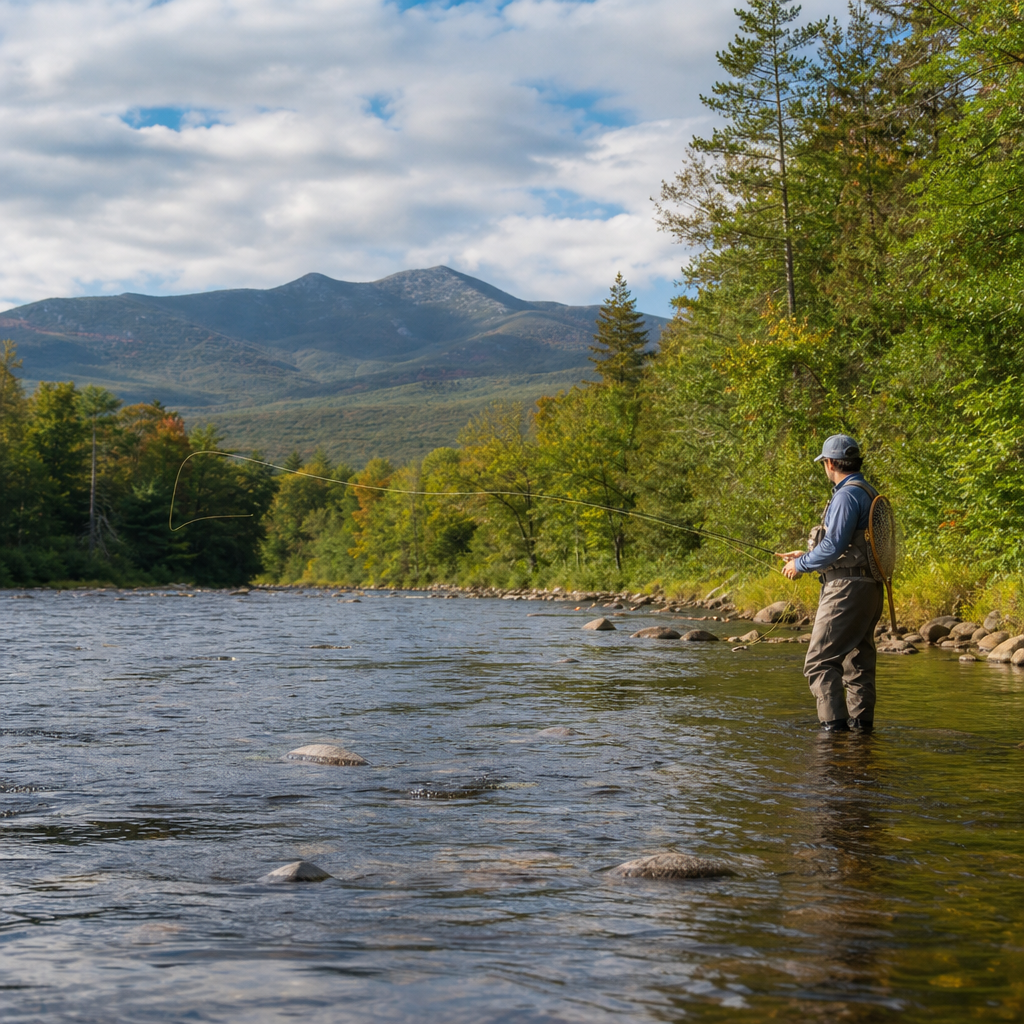
New England packs an unusual amount of fly fishing variety into a compact region, which is why anglers across North America treat it as a destination worth planning around rather than merely passing through. In one trip, you can cast tiny dry flies to wild brook trout in mountain freestones, swing streamers for landlocked salmon in deep lakes, drift nymphs through famous tailwaters, and sight-fish striped bass on tidal flats. When I build New England itineraries for anglers, I describe the region as six states connected by short drives but divided by distinct watersheds, hatches, fish behavior, and regulations. That mix is exactly what makes exploring the best fly fishing in New England so rewarding.
For clarity, fly fishing in New England usually refers to freshwater trout, salmon, bass, and pike fishing across Maine, New Hampshire, Vermont, Massachusetts, Rhode Island, and Connecticut, plus a major saltwater game centered on striped bass, bluefish, and false albacore. A destination hub article must do more than list famous rivers. It should explain what each state does best, when conditions line up, and how to choose waters that match your skill level. In practical terms, the best fly fishing destination is not always the most famous river. It is the place where access, timing, water level, insect activity, and target species fit the kind of day you actually want on the water.
New England matters within the broader North America fly fishing map because it offers diversity without the scale barriers of the Rocky Mountain West or northern Canada. Distances are manageable, lodging ranges from remote sporting camps to coastal inns, and the seasonal calendar creates multiple peaks rather than one narrow window. The region also has deep angling history. Maine’s Rangeley country helped define streamer fishing through Carrie Stevens’ patterns, Vermont tailwaters became technical trout classrooms, and Cape Cod shaped modern Northeast saltwater fly tactics. If you want one sub-pillar hub that points toward the richest mix of coldwater and saltwater opportunities in eastern North America, New England is the logical starting point.
Understanding a few key terms helps. A freestone river flows largely from rain and snowmelt, so levels and temperatures swing with weather. A tailwater runs below a dam, often with more stable flows and colder summer temperatures. Spring creeks are groundwater influenced and usually demand finer presentations. Anadromous fish move between salt and freshwater; in New England, anglers most often discuss sea-run species and migratory striped bass in that context. Matching the hatch means selecting flies that imitate the insects or baitfish trout and other game fish are feeding on. These concepts determine where you should fish in May versus August, and whether a 4-weight trout setup or a 9-weight saltwater rod belongs in the truck.
Maine: wild trout water, landlocked salmon, and classic streamer country
Maine is the cornerstone of New England fly fishing because it combines scale, cold water, and heritage. The best-known waters include the Rapid River, Kennebec River, Roach River, East Outlet of the Kennebec, the Magalloway, and the lakes of the Rangeley region. In practice, Maine excels when you want native brook trout, sizable lake-run fish, or landlocked salmon in places that still feel genuinely remote. I have found that anglers arriving from outside the Northeast often underestimate how technical Maine can be. Fish may be wild and aggressive during the right windows, but flows, insect timing, and long runs of pocket water still reward careful planning.
The Rangeley area deserves special attention because it links several iconic fisheries within a drivable circuit. Rivers and ponds there are tied to the history of streamer design, especially patterns associated with Carrie Stevens, whose flies remain effective when smelt are present. Early season and fall are especially productive around lake outlets and tributaries where salmon and brook trout move with purpose. On rivers such as the Rapid, strict regulations and limited access points help protect quality, but they also mean anglers should read current state rules closely before stepping in. Maine’s Department of Inland Fisheries and Wildlife publishes detailed law summaries, and following them matters because many top waters have fly-fishing-only sections, seasonal closures, or tackle restrictions.
Maine also stands out in summer if you pick the right water. While many freestones warm beyond ideal trout temperatures, dam-influenced systems and deep, well-oxygenated flows can remain viable. The Kennebec below Harris Station is one example anglers regularly target for brook trout, rainbow trout, brown trout, and landlocked salmon. Drift boat access expands the fishable water and can turn a good trip into a great one when releases are favorable. If your goal is numbers, streamer action, or a realistic shot at a trophy brook trout, Maine deserves first billing among New England fly fishing destinations.
Vermont and New Hampshire: tailwaters, mountain streams, and dependable hatches
Vermont and New Hampshire provide the most balanced freshwater trout portfolio in the region. Vermont’s Battenkill, White River, Connecticut River tributaries, and Otter Creek system offer different styles of fishing, from classic dry-fly presentations to streamer work and warmwater opportunities. New Hampshire contributes the Upper Connecticut, the Pemigewasset drainage, small White Mountain streams, and a surprising amount of public access for anglers willing to walk. When people ask me where to start in New England if they want a realistic chance at learning several techniques in a single week, I usually point them toward these two states.
The Battenkill is famous for selective trout, abundant insect life, and a tradition-heavy culture that appeals to anglers who enjoy technical fishing. It is not always easy, and that is part of the value. Fine tippet, careful wading, and drag-free drifts matter there. By contrast, the White River system can provide more varied pocket water and seasonal flexibility. In New Hampshire, smaller mountain streams are ideal for native or wild brook trout, especially in late spring and early summer when flows are healthy and canopy cover protects water temperature. These streams reward short accurate casts, high-sticking, and small attractor dries.
Both states are also strong choices for anglers who value hatch-driven fishing. Hendricksons, caddis, sulphurs, and blue-winged olives all play a role depending on river and weather pattern. Local fly shops remain the best source for current insect timing, because emergence windows can shift quickly with runoff and temperature. The major advantage of Vermont and New Hampshire is consistency. They may not always produce the headline fish size associated with the biggest western tailwaters, but they offer enough quality water that a well-timed trip almost always finds fishable conditions somewhere nearby.
Massachusetts, Connecticut, and Rhode Island: overlooked trout and top-tier saltwater access
Massachusetts and Connecticut are often overshadowed by Maine in freshwater discussions, yet both belong in any serious New England fly fishing hub. In Massachusetts, the Deerfield River is the benchmark trout fishery. Its cold releases, insect-rich runs, and broad wadable sections have made it one of the East’s best technical trout rivers. Good presentations with nymphs, dry-dropper rigs, and streamers all produce there, and the river’s different sections can fish very differently depending on generation schedules. Nearby, the Swift River offers a much smaller but highly specialized tailwater environment known for dense insect life, clear water, and educated trout. It is a place that exposes weak drifts immediately and rewards anglers who can manage light tippet and tiny flies.
Connecticut’s Farmington River belongs on any list of the best fly fishing in New England. It fishes well across a long season, supports holdover and wild trout, and gives anglers a legitimate year-round option because cold releases moderate summer heat. I have recommended the Farmington to traveling anglers more than almost any other eastern trout river because it is approachable yet deep enough to satisfy experts. Productive tactics range from winter midge and small mayfly nymphing to spring caddis and summer terrestrial fishing. Rhode Island has less marquee trout water, but it contributes accessible ponds, stocked streams, and, more importantly, excellent saltwater positioning for the coastal game.
For stripers, bluefish, and false albacore, southern New England is elite. Cape Cod, Rhode Island’s oceanfront, and the Connecticut shoreline all offer migratory pathways rich with sand eels, menhaden, squid, and silversides. Estuaries and flats can produce sight-fishing shots at school bass, while breaches, rips, and boulder fields hold larger fish. False albacore typically arrive in late summer into early fall, and when they pin bay anchovies near shore, a fly rod becomes one of the most efficient tools in the lineup. This coastal fishery is a major reason New England deserves hub status within North America fly fishing destinations: few regions let you trout fish a tailwater in the morning and chase blitzing stripers at dusk.
When to go and how to match the season to the destination
Timing determines success more than any other factor, because New England is strongly seasonal. Spring begins with runoff and cold water, then transitions into prime trout fishing as flows settle and major hatches build. Summer narrows the coldwater map but strengthens tailwaters, high-elevation streams, bass ponds, and saltwater. Fall is the broadest high-quality window, with spawning movements for salmonids in some systems, renewed streamer fishing, cooler water, and migrating stripers along the coast. Winter is specialized but not irrelevant, especially on tailwaters like the Farmington and Deerfield.
| Season | Best New England Targets | Top Example Waters | Practical Notes |
|---|---|---|---|
| Spring | Trout, salmon, early stripers | Deerfield, Farmington, Battenkill, Rangeley outlets | Watch runoff, key in on Hendricksons, caddis, and smelt migrations |
| Summer | Tailwater trout, brook trout in headwaters, bass, stripers | Farmington, Swift, high-elevation streams, Cape Cod flats | Prioritize cold water, fish early, carry stream thermometer |
| Fall | Streamer trout, landlocked salmon, stripers, false albacore | Rapid system, Kennebec, Deerfield, Rhode Island coast | Excellent for aggressive fish, mobile bait, and cooler conditions |
| Winter | Tailwater trout | Farmington, Deerfield, select Connecticut River tributaries | Focus on midges, small nymphs, slow seams, warmest part of day |
If you want the simplest rule, plan freshwater trout trips for late April through June and September through October, then build saltwater around June through October with late summer and early fall highlighted for albies. Always verify temperatures before targeting trout. Once water pushes into stressful ranges, especially above about 68 degrees Fahrenheit for extended periods, ethical anglers shift species or fish cooler water. That decision protects fisheries and usually improves results anyway.
Gear, access, and trip planning for a New England fly fishing hub itinerary
A true hub article should help anglers plan, not just dream. For trout, a 9-foot 4- or 5-weight rod covers most New England rivers, with a 6-weight useful for larger streamers and windy conditions. For small mountain brook trout streams, a shorter 3-weight can be more fun, but it is optional rather than essential. Floating lines handle most dry-fly and nymph scenarios; sink tips or full sinking lines become more relevant for lake outlets, streamer fishing, and saltwater. On the coast, a 9-foot 8- to 10-weight outfit with a sealed drag and intermediate line is standard for stripers and false albacore.
Wading gear deserves careful attention because New England rivers are often slippery, boulder-strewn, and cold. Felt soles are restricted in some places nationwide due to invasive species concerns, so rubber soles with studs are the safer all-around choice. A wading staff is not excessive on rivers like the Deerfield, upper Maine systems, or dam-influenced flows that can change character quickly. Polarized glasses are mandatory for reading current seams and spotting fish, especially on flats and clear tailwaters.
Access varies by state and is one reason this New England hub supports broader North America destination planning. Maine offers exceptional remote experiences but often rewards advance lodging reservations and local knowledge. Massachusetts and Connecticut provide some of the easiest destination logistics, with airports, lodging, fly shops, and guide services near major rivers. Vermont and New Hampshire strike a middle ground: enough infrastructure to simplify travel, enough wild water to feel exploratory. Start every trip by checking state regulations, generation schedules where relevant, weather, USGS flow gauges, and local reports. Good planning in New England is rarely complicated, but it is always consequential.
How New England fits into a larger North America fly fishing strategy
Within North America, New England is best viewed as the eastern angler’s multi-species counterpart to larger western destination regions. It may not offer the same density of giant tailwaters as Montana or the same wilderness lodge model as northern British Columbia, yet it competes through diversity, season length, and cultural depth. An angler can build an annual destination calendar around it: spring trout in Massachusetts and Connecticut, early summer brook trout in northern New England, midsummer striped bass on Cape Cod, fall salmon and streamer fishing in Maine, and late-season albies off Rhode Island. Very few regions compress that range into such efficient geography.
This is also why New England works so well as a sub-pillar hub. From here, anglers can branch into state-specific pages, river guides, hatch calendars, saltwater primers, gear lists, and seasonal itineraries. If your priorities are clear, choosing becomes easier. Pick Maine for wild character and salmonids, Vermont and New Hampshire for balanced trout variety, Massachusetts and Connecticut for premier tailwaters, and Rhode Island plus coastal Massachusetts for saltwater mobility. The main benefit of exploring the best fly fishing in New England is not simply catching fish in one place. It is gaining access to an entire destination network where every short drive can reveal a new technique, species, or seasonal pattern. Use this hub to map your route, narrow your timing, and book the waters that fit your style best.
Frequently Asked Questions
What makes New England such a special fly fishing destination compared with other regions?
New England stands out because it offers an unusually broad range of fly fishing opportunities within a relatively compact area. In a single trip, anglers can move from small mountain streams holding native and wild brook trout to larger rivers known for brown and rainbow trout, then shift again to deep lakes with landlocked salmon or saltwater flats where striped bass and bluefish feed aggressively. That variety is hard to match. Instead of committing to one fishery style for an entire vacation, anglers can build a trip around multiple experiences, often without spending full days in transit.
Another reason the region is so compelling is the character of its waters. New England includes classic freestone streams, spring creeks, productive tailwaters, ponds, natural lakes, estuaries, tidal marshes, and rocky coastlines. Each creates a different style of fishing and demands different presentations, fly choices, and timing. For anglers who enjoy adapting their approach and learning new water types, New England delivers constant variety while still feeling geographically connected and easy to navigate.
There is also a strong sense of tradition here. Many rivers and coastal areas have long fishing histories, and local communities often understand the seasonal rhythms of hatches, fish movements, and access patterns extremely well. That means visiting anglers can tap into a deep reservoir of regional knowledge, whether through guides, fly shops, or conservation-minded local anglers. Combined with scenic mountains, forests, villages, and coastlines, New England becomes more than just a place to catch fish. It becomes a region where the fishing experience itself feels layered, varied, and deeply rooted in place.
What species can you realistically target on a New England fly fishing trip?
New England gives fly anglers the chance to pursue an impressive list of species, and that diversity is one of the biggest reasons the region appeals to both first-time visitors and experienced travelers. Brook trout are often the iconic starting point, especially in smaller upland streams and cold headwaters where wild fish still thrive. Depending on the state and watershed, anglers may also encounter brown trout and rainbow trout in rivers, tailwaters, and stocked or managed fisheries. In some areas, there are opportunities for larger fish on streamers, while in others, technical dry fly fishing becomes the main attraction.
Landlocked salmon are another major draw in parts of New England, especially in certain lakes, river systems, and connected fisheries where they provide exciting takes, strong runs, and memorable days on the water. Smallmouth bass are available in warmer rivers and lakes and can offer excellent topwater and streamer action during the right months. In select waters, anglers may also target pike, carp, or panfish, particularly if they want to mix in warmwater opportunities between trout outings.
On the saltwater side, striped bass are the headline species for many traveling fly anglers. New England’s beaches, estuaries, inlets, boulder fields, and tidal flats can all produce excellent striper fishing, especially during migration windows and feeding periods tied to bait movement and tide stages. Bluefish may also enter the mix in some coastal areas, adding an aggressive, hard-fighting option. The key takeaway is that a well-planned trip can be highly specialized or intentionally broad. If you want to focus exclusively on trout, New England can support that. If you want to combine brook trout, salmon, bass, and striped bass in one itinerary, it can support that too.
When is the best time of year to go fly fishing in New England?
The best time depends on what species you want to target and what style of fishing you enjoy most, but New England offers productive windows from spring through fall, with certain winter opportunities as well. Spring is one of the most popular seasons because rivers are replenished, trout become active, and many waters begin producing strong insect activity as temperatures stabilize. Early spring can mean higher, colder water in freestone systems, but tailwaters and lower-elevation rivers often fish well, and as the season progresses, dry fly opportunities improve significantly.
Summer can be outstanding if you choose your waters carefully. Higher-elevation streams, cold tributaries, and well-managed tailwaters can continue to fish very well for trout, while dawn and dusk become especially important on many rivers. Summer is also prime time for warmwater species and can be excellent for smallmouth bass on poppers and streamers. Along the coast, summer and early fall often provide some of the most exciting striped bass fly fishing, especially around tides, bait concentrations, and low-light periods.
Fall is a favorite for many experienced anglers because water temperatures often improve, fish feed aggressively, and the scenery is exceptional. Trout and salmon fishing can be excellent, streamer action often improves, and crowd levels may ease after peak summer travel. Coastal fishing can remain strong as migratory patterns shift. Winter is more limited, but there are still opportunities on selected tailwaters, mild coastal periods, and stocked or managed fisheries depending on local conditions and regulations. For most anglers planning a first trip, late spring through early fall is the most flexible window, but the ideal answer always comes back to target species, water type, and the kind of fishing day you want to build.
Do you need a guide to have a successful fly fishing trip in New England?
No, a guide is not strictly necessary, especially for anglers who are comfortable researching regulations, reading water, and adapting to changing conditions. New England has many publicly accessible fisheries, established access points, and a strong network of fly shops and local resources that can help independent anglers put together productive days. If you already have experience with trout rivers, small streams, lakes, or saltwater shore fishing, you can absolutely create a rewarding trip on your own with good planning.
That said, hiring a guide can dramatically improve the quality of the experience, particularly if your time is limited or your goals are ambitious. A guide can help you match destinations to current conditions, avoid unproductive water, understand local hatches, adjust tactics for seasonal fish behavior, and navigate access issues that may not be obvious from maps alone. This is especially valuable in a region where an itinerary might include very different fisheries in close succession. For example, the skills and timing that matter on a brook trout stream are not the same as those needed for striped bass on a flat or landlocked salmon on a lake system.
Guides are also useful for anglers who want to accelerate the learning curve. If you are new to tight mountain casting, reading tailwater currents, fishing from a drift boat, or handling tides in the salt, a single guided day can save a great deal of trial and error. Many anglers choose a hybrid approach: book one or two guide days early in the trip, learn the seasonal patterns and access details, then fish independently afterward. That strategy works very well in New England because the region rewards both local knowledge and exploratory fishing once you have the right framework.
How should you plan a New England fly fishing itinerary to make the most of the region’s variety?
The smartest way to plan a New England fly fishing trip is to begin with priorities rather than geography. Decide whether your trip is primarily about native brook trout, technical trout fishing on famous rivers, landlocked salmon, smallmouth bass, coastal striped bass, or a little of everything. Once you know the core goal, you can build a route that connects complementary fisheries instead of trying to cram in too many disconnected stops. Because the region is compact, it is tempting to over-schedule, but the best itineraries usually combine enough variety to stay exciting without forcing constant travel and rushed fishing.
It also helps to organize the trip around seasonal timing. If you are traveling during runoff or colder spring conditions, focus more heavily on tailwaters, lower rivers, and fisheries less affected by snowmelt. If you are visiting in midsummer, prioritize coldwater refuges, higher-elevation streams, or early and late fishing windows, while setting aside prime tide periods for striped bass if saltwater is part of the plan. In fall, you can often build a highly varied itinerary with trout, salmon, and coastal options all in play. Matching species to timing is more important than trying to follow a rigid state-by-state checklist.
Practical logistics matter as well. Review state licensing requirements carefully, since regulations differ and some trips cross multiple states. Check access rules, seasonal closures, catch-and-release zones, gear restrictions, and current water conditions before you leave. Bring tackle that allows flexibility: a lighter setup for small trout streams, a versatile trout rod for larger rivers, and heavier gear if you plan to fish streamers, salmon water, or salt. Finally, leave room in the schedule to adapt. Weather, flows, water temperatures, bait movement, and hatch timing can all shift quickly. Anglers who approach New England with a well-informed plan and enough flexibility to pivot usually get the most out of the region’s remarkable range.